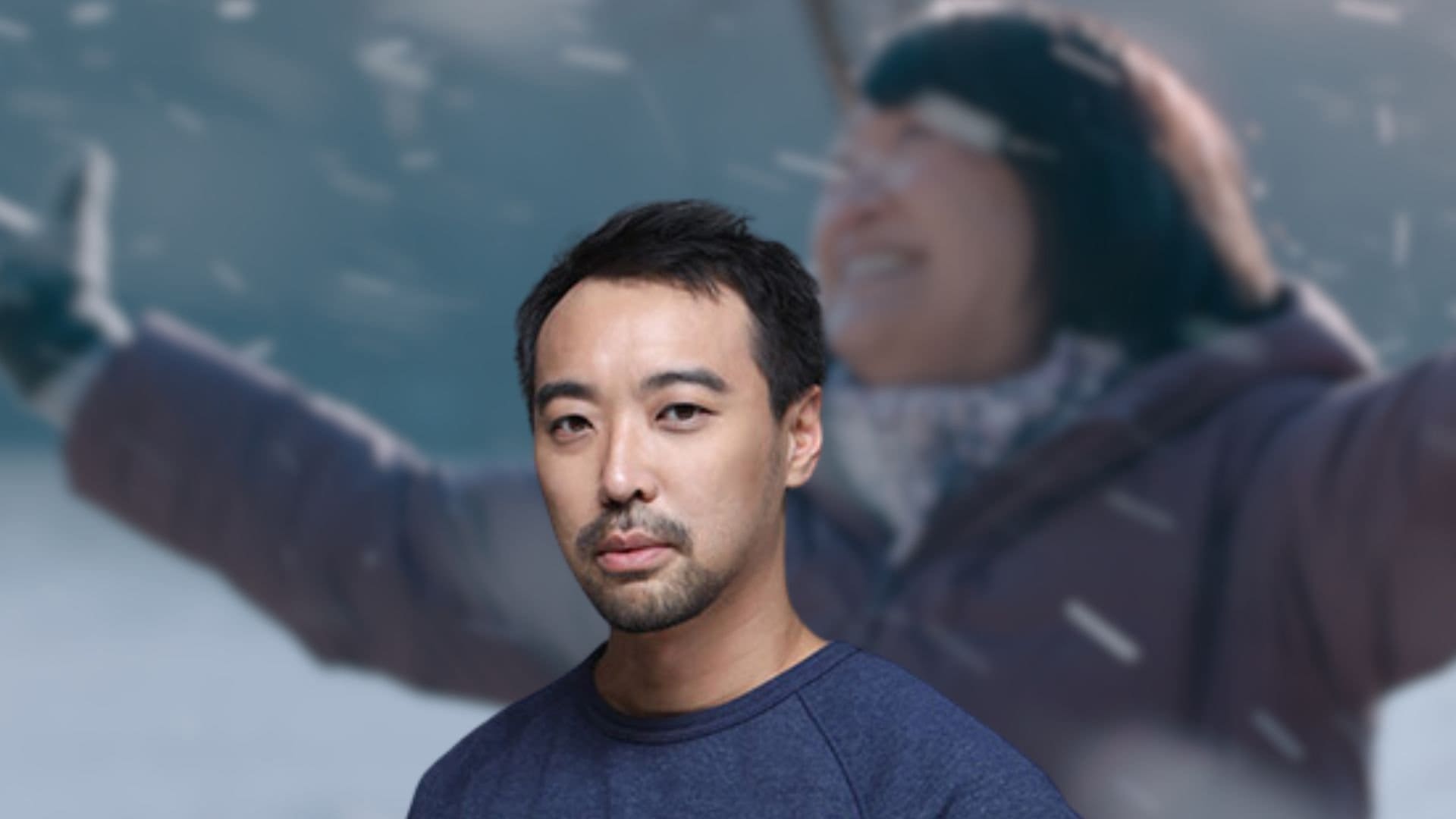
Interview with “Ajooma” Writer/Director, He Shuming


Hosted by
KT & Oti
Show Notes
Singaporean film director and screenwriter, He Shuming premiered his debut feature film, Ajoomma at the 27th Busan International Film Festival and was nominated across 4 categories at the 59th Golden Horse Awards, including Best New Director.
Ajoomma screened as a part of 2023 Sydney Film Festival.
Episode Details
- Duration
- 0:00
- Released
- June 27, 2023
- Category
- Interview
- Hosts


Transcript
Transcript (3,641 words)
Full transcript of Interview with “Ajooma” Writer/Director, He Shuming.
KT: Film director and screenwriter, He Shuming, premiered his debut feature film, Ajoomma at the 27th Busan International Film Festival and was nominated across four categories at the 59th Golden Horse Awards, including Best New Director. He Shuming, thank you so much. And welcome to the For Your Reference podcast.
Shuming: Thank you so much for having me.
KT: I think I need to thank you. You brought so much joy in this film and I'm very excited to talk about it with you today. I think the best way to get started is how did this idea come about? You know, it's exactly what the synopsis is. It brings so much fun and joy. Where did it, where did it all come about?
Shuming: Um, so. When I was living in LA, uh, about 10 years ago, I was studying, uh, doing my graduate studies at the American Film Institute, uh, doing my masters in directing. So at that point in my life, I was living away from Singapore and Los Angeles and, um, and do a lot of, I do a lot of Skype, um, catch up with my mom. And at that point, um, I realized my mom's obsession of Korean drama was Interesting to me, like we would chat and she's always sort of going off about, you know, whatever drama that she's watching, just really giving me the breakdown of what's happening. And at some point I'm not listening and I thought she was talking about, you know, my aunt or someone in her life.
KT: It's like who dramatically got hit by a car.
Shuming: It's like, Oh, you're recapping a Korean drama. So, um, I think at that point it allowed me to assess our relationship as mother and son. And, you know, she's getting older and I'm at a point in my life where, um, you know, I'm trying to carve out something for myself. And. And I think for her, it's been so much of that sacrifice, um, of a mother who has given everything to a family. And, and for the first time, her kids are all grown up. She has to, for the first time, she can think about herself. Um, and, and she never thought it would be possible. So I think it was really the genesis of the film came from that.
Shuming: And, and. And I think it was just sort of fun to when I tell people this is a film about a Singaporean auntie who was obsessed with Korean drama. She gets lost in Korea. It's a fun premise. You know, when I pitch it, so that's how we ended up making it. We shot it last year.
KT: Yeah, um, there's definitely a K-wave and if it's not the aunties, maybe it's ourselves, um, that are definitely riding the wave as well. The dynamics between mother and son was definitely something I wanted to talk about. So, um, if we can talk about it now, it's, I think the best ways to experience and to write film is from experience. And you talk about that as well. And, you know, wanting to connect, the only way to connect. And using that time to talk about, I guess, storylines in a Korean drama.
Shuming: Yeah. Yeah. I think a lot of, um, how we process, um, I think our obsession with melodrama with soap opera, with, with, with, with all of that, um, I think sometimes inside kind of brings out a certain emotion that we never thought, but, you know, deep down inside for us, and I think it's the same way for the auntie in the film where she sees or connect something in her life with the drama that she has been watching. Um, and sometimes we find like, maybe as filmmakers, we always feel like, Oh, we, you know, soap opera and, and, and, and all of that are cheap emotions, but I don't agree. I think sometimes it brings out something deeper in us that we don't know how to process. And I think through that, I see, I think as, as even as at home, when I see my mom watching these drama and connecting with her through the things that she watched, um, allowed us to get closer.
Shuming: Or at least understand what she's, um, going through, you know, um, so I wanted to present that in the film as well, that kind of relationship, um, that can be, that may be a bit of a distance, I think, and then you see a bit of the change at the end.
KT: Yeah, there's definitely moments of reflection, because with the son, I'm like. Oh, you need to do better. And I'm like, Oh, I need to do better as a daughter as well. So it was that, you know, sort of bringing and coming together as well. Um, another thing that I, I really love and I really resonated with was the grief. You know, whether it's explored through auntie or whether it's explored through, you know, not spoiling, but through other characters as well. It's pretty much what you're saying. There's so much light and shade and, you know, bringing able to bring all different sort of tones into this film. One moment we're in some sort of hijinks and we're trying to understand each other in a car. And in other moments, we're feeling very somber and, you know, trying to figure out as auntie, where do we go next?
Shuming: Yeah, yeah, I think, um, that that kind of, there's a certain fun to, uh, the kind of what's happening in real life in the film. I remember there are times when I'm kind of thinking, Oh, but that's not really, maybe it's a little romanticized, almost like a Korean drama. So it was really about. Um, balancing the line between reality and what you watch or you know, the melodrama and something that, that something that's a bit more realist. Um, but at the end of the day, I feel like, um, this is a film that is, that I try not to take too much, take myself too seriously with it also. Yeah. You know, and, and, and at least even when we filmed it and we were, you know, rehearsing and, and, and workshopping it with the cast and crew. Um, I, this was right towards the end of the pandemic also because so everyone's kind of back at work for the first time in a while.
Shuming: So it was, it was a brief to my cast and crew about like, let's have fun. Let's, let's just, you know, um, I think that's what sometimes we need now is there's something a little light and, and, and, and I feel like the energy would then show on the film itself. Um, so at least that was the, the, um, feeling behind to make the making of this film, but also for me, I, I think when I was making it, it was also thinking about, um, having a route or having something that connect every single person that worked on the film.
Shuming: And and so with my cast with my production designer with my cinematographer. Um, everyone, I usually tell them to, um, think of what their mom would do in answering, you know, like, oh, how do, what is she going to wear? Like, you know, my, my, sometimes my wardrobe would come in and show me, um. wardrobe of what auntie would wear, and I kind of go like, what would your mom wear? You know, so using that as a way to connect to the character and what the story really is about. And even for Hong Huifang, the actress who played auntie, so she came in with a lot of her own Life experience as a mother, as a daughter, as a sister, but also, of course, as, um, you know, many years of experience working as an actress.
Shuming: So a lot of that combined into who this woman is someone that I think we all recognize. So it's not just like 1 person, but it, it, it's, it's. She is a representation of many women in our lives, a lot of aunties that we don't. Um, and, and so I think there is a bit of resonance to that.
KT: Yeah, it's an exciting time. Um, especially someone that loves films because there's so much texture in storylines. You know, it can be. Super fun. And it can also be, you know, really talking to true stories. We can, we can essentially be crying and laughing at the same time. And that's absolutely, um, what this film does for me anyway.
Shuming: Yeah, I think it was very much, there were scenes where I, I remember when we were, we were writing, when I was writing it, when we were shooting it and editing it, um, and I would kind of go, I want the audience to, at this moment, Yeah. And then in the next 20 seconds, I would want you to feel a sense of balance and maybe cry. So it's a quick switch, but it's a tricky thing to do. And I think a lot of, I thought the actors did, um, an amazing job trying to kind of straddle that and, and, and figure out, um, how to do that. Um, this one particular scene, not to spoil it, well, it's in the car and you might know which scene I'm talking about, but, um, It was a moment that if you watch it from the beginning of the film, when she said something and then it happened, and then she said it again, that you don't expect it to come.
Shuming: Um, so there is a certain sense of laughter to that, but then in the next 10 seconds, you would feel like, Oh my God, this is, this is, I didn't expect to cry. So, um, so I'm hoping that would succeed.
KT: But that's, I think that's the beauty of life and, you know, not, not hiding from that. Um, was definitely an ajumma and I absolutely loved it. And speaking of triumphant moments, the final scene in this film, I'm just like, I was like, this is beautiful. It's happy. And it's glorious. But I'm like, I'm feeling everything I need to feel. Um, and this kind of comes into, um, the music and also the score in the film, it was done so. It was done so beautifully, you know, sometimes it can feel like a playlist, sometimes you can feel disjointed, but it just wove together so beautifully.
KT: I'd love to hear about the process of picking music and score inside of this film. Yeah.
Shuming: So, uh, the film obviously is. is bookmarked, or not bookmarked, but um, um, what do you call it? It's, it's, yeah, bookended. Yeah, bookended by this one song in the film. And if you are a fan, a historian of K-pop, you would probably recognize the song. And, and so I've always wanted this song to Um, it's always been in the first draft that this song was sort of open and close, um, the film. And it's very important to Auntie in some ways. And I wanted the film to have a bit of resonance to it. And I went, we went through a whole long list of music. And then at some point, um, the song choice came from my line, the line dancing instructor that we worked with, who is also in the film.
Shuming: Um, cause all the line dancing ladies and aunties are part of a group that meets every. every week. Um, and so they, and I ask her, like, do you have, do you guys dance to Korean songs? And if there's, can you send me some of the, you know, choreography and songs that you have? And she said, Oh, we always answer this. This is a really good song to dance to. So she sent it to me. I've kind of recognized it. Um, and I looked at the lyrics, um, and I thought, This is perfect. This is a very empowering song. Um, but I also made a conscious effort to not, especially if you don't speak Korean, um, you wouldn't understand the meaning of the song until the end.
Shuming: Um, and, and it, Sort of bookmarks the, uh, the film punctuates the film in some ways, um, so that you recognize it and it's, it's, it's a bop. I mean, it's, it's, it's, you can't run away from it. Um, the soundtrack itself, I felt it was, it was a fantastic collaboration I had with my composer. So he, I think when we worked together on, on the score, it was very much about, okay, how can this moment be sort of elevated with the music? Um, It, it has a sense of of magic to it, but also not too sentimental. So it was, it was, I don't want to make it such that it's, it's overpowering the film, it just enhance it a little bit, but also creating a sort of texture, I think, where. It elevates this idea or the tone of Korean drama. And I think Korean dramas sometimes have this certain tone of romanticism and that sort of feel to it.
Shuming: So I wanted to have that. And I also wanted A ballad, a K-pop ballad. So we worked with, um, uh, an independent singer who lived in, uh, in the US. She's a Korean American singer, and, and she wrote the song, so I said I wanted the, um, this is the premise of the film, well not the film, premise of the drama in the film. Can you write something that, um, could, could be, um, kind of connected to the story, but also to, to To not just to the drama, but to the film itself. Um, so she wrote this beautiful ballad, which when I was like, I thought it was an existing song. It's just like, yeah, yeah, yeah, yeah, no, I, I wrote it and it was, it was perfect.
Shuming: It was, I thought it was, um, so we also kind of use that. tone to kind of, you know, make it a sort of mark to the film itself, um, music wise. So, um, and, and little things you hear, even choices of sound design and the music you hear in a restaurant and all of those things, it's really to kind of Create this texture that of what Seoul is, what Korea is, um, and, and how much of, of, of, um, how instantly you recognize that this is Seoul and this is Korea because of, of, of the music because of, of the, the, um, the achievement that they've had in terms of, um, uh, pop culture.
Shuming: I think, um, that was very featured prominently in the film.
KT: Yeah, it was a very grounded hopeful joy. I think that was through the music as well as through the film and, you know, even talking about, um, creating the creativity is gorgeous the same way watching this film like you never know what you're going to get out of it and what you brought to this film. Really, I think we'll make everyone feel everything they need to feel, um, which is a beautiful thing. Um, before I get to the last question, I just wanted to quickly talk about, um, you know, so I'm Tongan, I'm from the Pacific Islands. But even I could tell there were moments where the language was changing.
KT: So we have cultures, we have different characters that are Singaporean, that are Chinese, that are also Korean as well. And I kind of want to talk about the sort of balance or how fun it was, perhaps.
Shuming: Um, yeah, that's a good point, because coming from Singapore, where we are very multicultural, um, but there are also certain influence of the things we watch and the things we listen to. Um, it's incredibly diverse. So, I grew up watching, you know, Hong Kong films, um, Hollywood films, uh, um, British movies or television and all of those things have always been, and also Singaporean, um, production. So, um, I think language for me, it was important for me to kind of, uh, um, and because I don't speak Korean, um, it was very important for me to kind of understand that. What's being said from the actors or even just crafting certain scenes are authentic to the experience. Um, and I'm very aware that, um, uh, at the end of the day, I'm a lot of the scenes I'm writing it as an outsider.
Shuming: I'm not Korean, so it was very important for me. My response, it was my responsibility to make sure that I'm portraying, um, a society that is truthful to the people. Um, so it was a lot of research, but also a lot of working with my Korean colleagues to create, like, make sure that this, this makes sense, you know, this is sort of, um, and, and it would tell me, and they're very helpful in the sense, they know what I'm trying to say, but they would tell me the specificity. It's not super. Um, um, uh, local, like what I would suggest maybe doing this. Um, and, and then, so we will make certain adjustments to, to things like as simple as props or as simple as, or as complex as, um, um, how the scene is devised, so it was really to make sure that, um, uh. I'm as authentic as I can be to the story.
Shuming: Um, and just the merging of the language itself. Um, it was also something that was very important to me that from a Singaporean context, uh, there are certain things that she says, which is very. Singaporean. So, and I noticed that I've been traveling with the film around the world, and even in Singapore. In Singapore, there's one moment, which is very simple, where the audience would always laugh and react to it. And it's just, it's just her saying, thank you. And they just, Everyone would always laugh because it's, and they, they, someone said, that's because how, that's how our aunts and our moms say thank you. Yeah. Like the aunties you see on the street, you know, the way they say it, that's just how they say it because it's, and it sounds, you know, it sounds cute and it sounds, but it sounds only, only Singaporeans would get it.
Shuming: So obviously I don't get that reaction in, in anywhere else in the world. Like it's always quite silent or they smile. Um, Other things that wherever we go, I think the, the, the moment where, uh, they had to speak in English in, in, um, security guard. So that moment was, was also something universally, I think people react to it because they recognize how. Um, sometimes comedy ensues with, with, when, when they don't speak the same language and it's trying to communicate. And he said he could speak Chinese. And I'm like, well, I can speak Chinese.
Shuming: Everyone can speak Chinese. And it's just one word, you know, it's just hello. Yeah. So, so, um, so there are little things like that, that I feel like. Um, connects the audience in some ways, where, where, um, you might necessarily, you might not understand the language, but after a while, the beauty of it is that you, you kind of get a sense of these are the little nuances that, that, um. Makes you feel at home or familiar. Yeah.
KT: Especially cause if you know, you know, it just hits different. Right. Yeah. Um, well let's finish off with the last question. Um, we finish off our reviews with the recommendation. So what would you pair with Ajoomma? As a double feature,
Shuming: uh, one of the film I really, uh, I saw, and I know it's play, I'm, I'm actually meeting him on Friday for lunch. Uh, Anthony Shim's Riceboy Sleeps, um, which is the Canadian, Canadian, Korean, uh, uh, Korean Canadian feature. Uh, there was also, there also premiered in Busan. Um, It is a story about a Korean immigrant, a single mother who moved to Canada with a child, and sort of, it's a beautiful film with a beautiful soundtrack and a really grounded performance from the lead actress. I, we, I watched it for the first time in, in Jeddah at the Red Sea International Film Festival.
Shuming: And they watched my film there also. And then we realized in both films, there's one moment where we had the exact same line. Where when I watched it, I remember I watched it, I was like, Oh, my God, I have that same moment in my film and then, but in a completely different context, but, but it's sort of, we found it so funny because we were like, it's, it's, um, this 1 moment, it's obviously totally and all of that are completely different. Um, um, but I thought, um, it's, I think it's a beautiful film, um, that, that I highly recommend. Um, uh, audience at the film festival to go watch. And of course, come watch my film, which is, um, playing this weekend.
KT: I think that's one of, we, we, um, have a handful of filmmakers that we've interviewed. And I think that's one of my favorite responses, like the intersection of two films with the same line. I love it. So yeah, it was so lovely chatting with you, Shuming. I really, really thank you so much. Thank you for a gorgeous film. Thank you for your time. Thank you.
Related on FYR
Discussion
Loading comments...