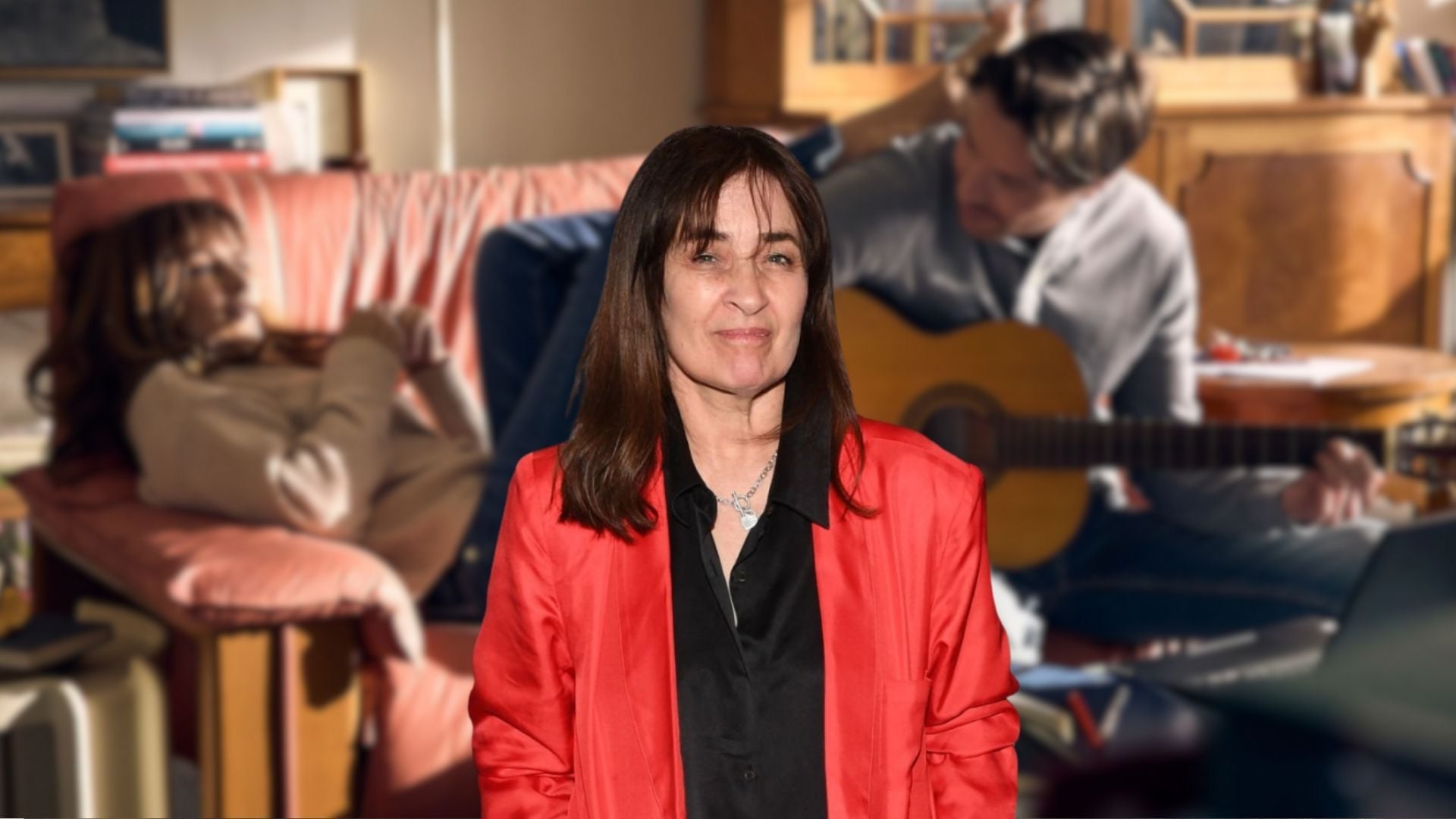
Interview with “Addition” Director, Marcelle Lunam


Hosted by
KT & Oti
Show Notes
This week we chat to Director Marcelle Lunam for her debut dramatic feature film, Addition. Marcelle reflects on the journey of film festivals to cinemas, ensuring the portrayal of Grace was ‘more than her diagnosis’ and acknowledging all the hands that made Addition possible.
ADDITION is in AUS cinemas January 29.
As suggested by Marcelle, double feature watching of Addition & Worst Person in the World.
Note: this interview is audio only. For other video interviews check out our YouTube playlist.
Episode Details
- Duration
- 0:00
- Released
- January 20, 2026
- Category
- Interview
- Hosts


Transcript
Transcript (3,620 words)
Full transcript of Interview with “Addition” Director, Marcelle Lunam.
KT: Grace counts everything because numbers hold her world together. But when a chance encounter with a man turns her world upside down, her meticulously ordered, life starts to unravel. That feels very relatable. A lot of us probably, um, Addition is in Australian cinemas from January 29. Marcelle, thank you so much for your time and welcome to the For Your Reference podcast.
Marcelle: Thanks for having me, KT. It's nice to be here.
KT: It's so great. We've talked about the heat, we've talked about being cutie kitty cat, girls, and now it's gonna talk about falling in love in the mess of it. I'm very excited to get into this today. Um, just in general of, you know, researching and watching interviews with yourself as well as Teresa, um, for this interview premiering at TIFF, which was really cool. And now we're going to have it on Australian cinemas. Your first dramatic. Feature film. Yeah. How are you? I guess I just wanna check in and see how you're feeling in this moment.
Marcelle: Well, it's pretty exciting. I mean, look, we, to be honest, it's been a long time, um, in between like TIFF and now it's been about a year. Yeah. And TIFF was, you might imagine, was like fantastic. It was amazing. It was super exciting and you know, like a dream really. It was so cool. And it was great to be there with Joe and Teresa, and we had a really fantastic time and a great response from the audience. And, and, and it could have been, couldn't have been better like with, um, the step and repeats with like Collider and IndieWire and all those guys. It was really fantastic. Um, great response to the film, which is amazing. So yeah, I'm really looking forward to the premiere, which is, couldn't it be a more beautiful place really on the harbor, which is amazing at the Westpac OpenAir cinema.
KT: And I, I'm pretty sure it's like probably for a masterclass, people want to hear it, but it's probably a dry topic just to hear how trying to get films at festivals then to be in cinemas like, 'cause you point that, you know, obviously it takes time to do that, but we can get cute today and talk about other stuff, but I just wanted to know.
Marcelle: Oh yeah. Yeah. I mean, look, it's the work involved making a film like anyone will tell you, Bruna will tell you that to the best to say, you know. It. You have to be very persistent. You know, it's not something that happens overnight by any means. It's a lot of money. There's a lot of moving parts, there's a lot of stakeholders. A lot of things have gotta come together, you know, and it's sometimes it's. You know, a combination of like serendipity and you know who you know. I mean, I do say film's all about relationships all the way along the line. It's the relation, you have a great team to get the film together, but you have an amazing team to make the film. I mean, I was really lucky. I, I had just the best team around, you know, from the first ad to the amazing DOP production designer. Costume designer here, you know, the art department. Absolutely incredible crew. Like, we had like an 80 person crew, you know, and it's, um, that enabled us to really work relatively quickly, I guess. Uh, I mean, you know it, that said, it's pretty grueling when you shoot a film, you know, like it's, I don't think I slept for probably five months. We did it. You know, you've got a 30 day shoot, you've got the seven week pre and the 30 day shoot, and you know, all of, all of that time, you know, mom, I guess maybe I would've slept. Averaging probably three hours a night.
KT: That's a long nap.
Marcelle: That's, that's, it was a long nap. Yeah. Yeah. But I mean, yeah, to your point, it's, yeah, you've gotta be kind of persistent and stick with it. And a lot of things have gotta sort of fall into place, you know? So I was really lucky, like I had an, I've been friends with Bruna for a long, long time. Um. We'd worked together. Like when I finished film school, we worked together with, um, two other Australian filmmakers actually, when we were much younger. Doing like ads and stuff. And we got first, first got out of film school.
KT: We need a documentary slash filmed. I feel like there's a whole story or stories.
Marcelle: Yeah. Yeah. So there was all of that, you know. And then I've also been involved in lots of stuff. Like, you know, as the creative director of Mambo for a while I had my fashion label. I'm also a designer. And I'm an animator as well. I do a lot of different things. Mm-hmm. And so when they had the script for Addition, um. They came to me because it had a lot of different skill sets that they needed to, to utilize, you know, and one of them as well was I'd also been, um, involved in advocating for mental health. Mm. Particularly for my brother who has a pretty chronic illness, but I had a big group of people together and we were trying to get a new, innovative mental health facility happening, and Bruna had known that, so she knew that. And the fact that I just shot a youth culture doco in Cuba. And, um, you know, about a skater and a dancer and, um, you know, techno DJ and all that kind of stuff. So I think it was all those sort of things together kind of came to play. And they had a, uh, new draft of the, and an adaptation that Becca had done. And they, yeah, they came to, they came to me with it and said, you know, what would you do? And I said, but I Gross really said, well. What, what for to direct it. I'm like, yes. So that was when I, uh, you know, I spent the weekend and I read the novel and the screenplay. And I just fell in love with the character of Grace, really. And also about what I could bring to it and how I could, you know, play with it and visualize the film and bring the story to life. So I, you know, put a treatment together and that was the journey. That was the starting of it. And yeah, then we had a lot of development, you know, script development, uh, over a couple years and then casting, which. You know, takes, it can take some time. Mm-hmm. Uh, and then of course, you know, pre-production and shoot. So yeah, it was, it was, and when it was a dream of a lifetime, I wanted to, you know, ever since finishing film school, I wanted to make film. And I'm consider myself very lucky. I've gotta say like a lot of people, they really wanna do it, but, you know, it's hard. It's hard to make it happen. So, yeah, I'm very, very fortunate and I have to thank. You know, Made Up Stories really. And Christina Pizan and all of the people who are enormously supportive. Um, you know, on that journey. You don't get there by off.
KT: And I think what one of the cool things is of like, especially talking to filmmakers or even just people that are very creative in general, even hearing you recount this, it felt like, of course you were direct. A film and a film like this as well because it's obviously there's a profession and there's a respect to it. But if you are a creative, of course you would tap into different sort of textures and mediums 'cause it's all telling stories at the end of the day. And visually Addition was a lot of fun. To experience kind of trippy sometimes, but it was like, I think it was a bit trippy. I guess that was the point, right? Like, I don't know about, I've had the most mundane toothbrush, uh, grocery shoppings. I don't think I've had anything so wild. But it was really, it was fun. It was exciting. There was a lot of texture.
Marcelle: Yeah. Well, I mean, that was a part of it. Part of it, you know, for me, I wanted to bring. Some visual excitement around it and tell that kind of story of Grace's inner a world visually. So it's not a documentary and it's not, you know, real and inverted commas and those things. It's like a, yeah, it's elevated because of that. And it's a bit, that's kind of what I like about the Tesla character turn away like Anthrop, he's anthropomorphizing an illness in a way. So you're kind of bringing a human characteristic to something that's not human to, yeah. To explain it visually, you know.
KT: But I think it's also 'cause it's like, uh, of how prominent the presence of him is for Grace. Right. Even if it's not real. It's real for her and her at the forefront of her experiences, right?
Marcelle: Yeah. Yeah. That's exactly the point. It is. He's very real for her. Mm. And um, and he validates, you know, she uses him rather to validate. Her position or her standing, you know, like, okay, so he was a counter and he was a genius and go, I'm okay, you know? Yeah. I'm a genius and I'm, you know, too, and so therefore other people are like that. And so that's okay. I mean, the big, the big, big, big thing for me with the film really, uh, was to show that, you know. Grace is not her diagnosis and that it's really important to celebrate difference and to be tolerant of it. And that's a good thing, you know? Mm-hmm. You don't all have to fit in a box
KT: and Yeah, and it, it can be presented with nuance 'cause it's not like you have blinker identifiers of. You know, you, you don't want people to know exactly what they're getting into because you get to know the character first. And you know, it all happens to be multifaceted, whether it's orange, poppy seed cake, whether it's a very, uh, delicious Italian man romancing you by your bedside. Like it's all, it's all quite interesting to it. And I think more than a diagnosis is because I think. Layers are important. You know, like I think it's just that, gimme that 15 second viral social media and it's like, no, we have so much layer to us. And Grace had a lot of layer and you know, even seeing her interact with her sister and her family, like there's so much to it. And you kind of need that patience to get to know people or even just to enjoy your film, to get the whole meat.
Marcelle: Oh, I love that you, I really love that you say that because I think that's a really important thing too. The layers. Uh, important and just like an understanding, you know, where you're going with the story. I mean, amongst all of this too, I might say. It is. So, it is fun. I think it's a, it's a, it sounds like there are elements to the film and there are, you know, there are serious elements too, obviously, but I do think that amongst it all, there's a sort of deliciousness of that Grace is she's a bit wild and she's sexy and funny and that really drew me to the film as well, you know, so it's not like you, it's just not like this sort of misery porn thing. I mean obviously it's a romcom, but it's a romcom with a twist and, um. Yeah, I think those layers are the things that bring the story together. So, yeah, it's good. It's refreshing, but it's great to hear that you liked that.
KT: Uh, yeah. And, and I love a rom-com too, like the cutesy meet, cute cuties. That ki there was lots of meeting, lots of cutie and it was very lovely. Um, to be able to see. It was like we had another chance, like a Pride and Prejudice, a nice little chance encounter again. Um, how was it, I guess, being able to have those, like you said, it, it's not just like. A dramatic, heavy film. There are like cute, lighter, you know, sort of moments. How was it being able to, I guess, get that sort of chemistry? Because Teresa and Joe were very nice the way that they were, you know, interacting with each other and it did feel a bit cat and mouse, like don't let him have it all the time.
Marcelle: Yeah. Well, to be honest, they just had fantastic chemistry. I mean, they're both really great people and we were just super lucky that. Because you know, Joe had been, was in London before he came across and they hadn't really met, it's over Zoom maybe, but you know, it's hard to gauge. And they just got on really well. You know, they had very strong chemistry. They, and they really liked each other and enjoyed each other. 'cause each other's company and we had, um. We had a bit of rehearsal because Teresa's in every scene in the film, right? Mm-hmm. So it's like, um, you know, it's a lot of work and it's a lot to take on. So we had a couple of days, we managed to fit in a rehearsal before the shoot, and we did a lot of work with, um, this fantastic Urg, Marianne Har court, just connecting with the both of them and allowing them to kind of play with stuff and. That really helped, I think too, kind of then to understand their characters and who they were. Joe spent a lot of time, you know, painting what, what Seamus would be. He's, you know, very forensic actor. Mm-hmm. Um, yeah. And so they worked really quite closely together. So that sort of cat and mouse, you know. Rep that they have was quite natural in a lot of ways, you know, and it was fun. I mean, I think too, the physical stuff helps when you're acting like that, you know? So some of the things that really helped were dance scenes. Mm-hmm. There's a scene where Joe's wearing her kimon, uh, is, Seamus is wearing Grace's kimono. And they're sort of doing this nuts dance, you know, just silly dancing around together when they're getting to know each other. And we, that was a really fantastic moment actually, because they didn't have to speak, they could just physically be in the space with each other. And from that came a whole lot of interesting things too, you know, it was, was really quite good. And of course, you know, we are working with an intimacy coordinator and, and there's sex scenes. There's not that many sex scenes, but you know, there'll be intimate scenes.
KT: Yeah. And I, I, I feel, I feel like even just like while we are talking, um, the dynamic is really interesting because. Having your family, and I guess your family know you, but it's like not updating the software so they know you a particular way or they might see, not necessarily limitations, but it's like this is who you are, and then you have Seamus come in and be like, she's vibrant, she's vivacious. She can like. It was so interesting to see that sort of dynamic on who they saw Grace was and who she could be, and that sort of friction. I don't wanna spoil too much, but I would say I'm a fun gal, but I would say that was my favorite scene of having, not necessarily a showdown, but you know, both sort of parties loving Grace and trying to come to an understanding because their understanding of her was very different.
Marcelle: Yeah. Well, I, I, that's, that's a really good point too, because, you know, we show different sides of ourselves to different people and I think, you know, Grace has grown up with that family. Right? And so, you know, her sister, obviously, there's a lot of. You know, unsaid frustration, that sim is underneath the surface there, you know, and you can see all that that come, that's born out. Oh. And I won't say the same, but I don't see any talking about, and you know, there's a, I think that happens with people who are caring for someone who's going through a rough time too. You know, you sort of see that side 'cause you're doing the work. I guess to be there to support them, whereas Seamus, on the other hand, also on my add, you know, trying to help Grace through stuff, but he's like, as you say, sees a completely different side of her. He also doesn't see exactly who she is yet. 'cause they don't, they haven't known each other that long. No, we're still dancing in kimonos, we're still having a great time. Oh, that's right. We're still falling in love with, we're still giving it a moment, you know. But, um, but what I love about it is that he is, he makes the decision to be committed to her. You know, he wants to be there, so he's all in, you know, which is,
KT: which is rare. Can I just say Yeah. Like first sign he is like, yeah. Yeah, yeah,
Marcelle: yeah. Well
KT: it is a film. Well, yes it is. The happily ever after. It's the pumpkin carriage. It's,
Marcelle: well, to be, to be fair, I think, you know, these things do happen. I have friends where they have, you know, romances that work out and they're great and you know, they go through their rocky moments and, uh, always to her. But yeah, she's definitely not in a situation where she's been ghosted, that's for sure.
KT: Yeah. And, um, I, I guess just quickly I want to talk about the camera work. Um, I did reference the toothbrush, uh, sort of scene. We don't need to get into spoilers of it, but it seemed like beyond the shooting of a film, there was some really interesting sort of camera work, uh, involving rigging. Um, and I wanna talk a little about, about that. 'cause we talked about being creative. It wasn't just a straightforward shot film. There were very interesting sort of visuals. Yeah. Yes.
Marcelle: Yeah. We spent a lot of, um, well I worked with Ginny Loane and they, they are, um, an amazing New Zealand DP in incredibly gifted. They'd worked, um, with Lee Tamahori and done a lot of stuff and, um. And they'd also done a lot of, a lot of their background is with, um, commercials as well. And as well as that with, um, lighting, they done a lot of, um, you know, gaffing and their lighting is extraordinary. So we spent, in pre-production, we spent, uh, a good five, six weeks developing the look. So a particular lunch because we wanted the, like a. You know, like a, uh, color, color, particularly the film that we had and the Cooke lenses that we, uh, Ginny wanted to use for the film that we, we spent a lot of time developing that look and we had gin board over there. Um. Their key grip, Terry and Terry, and, but Terry and Ginny had worked in Russia on a commercial along a while ago and had seen this unbelievable rig, which is, it's like a big metal concertina scene you put on a. On a dolly and it's got a pan on it. It's got like, well it's quite a wild wagon. You pull, pull it out and back. What it enables you to do is shoot really quick so you can get like way up above a bed on it. Instead of just doing jib shot. You can get way up high. You can come right down, you can sweep around with it 'cause you're pulling it back along with the dolly so you can. Basically what it meant was we could move quickly and get really beautiful, smooth moves into the, into the scenes. 'cause a lot of what I wanted to do was I wanted to stage them so that we had that movement within it. Um, quite mm-hmm. Inspired by like, um, some of the nouvelle vague films. Yeah, I, you know, I'm really interested cinema and stuff. So anyway, we,
KT: I love it. And I'm so sorry, I, I do need to wrap up, but I have had so much fun chatting to you, Marcelle, um, and just getting a vibe of yourself and also the film. But, um, I wanna wrap up with our final question, but I do want to thank you so much for your time and acknowledge Yeah. How many times you were shouting out people. It just shows how collaborative and generous you are. And that's such a beautiful thing, um, to witness. But just very quickly, um, we finish our reviews with a recommendation. So what would you pair with Addition as a double feature?
Marcelle: Um. Oh, I don't know. Worst Person in the World, maybe. Beautiful, gorgeous.
KT: Marcelle, was so lovely to chat to you. Thanks. Nice to meet. Thanks KT. Thanks a bunch.
Related on FYR
Discussion
Loading comments...