

Show Notes
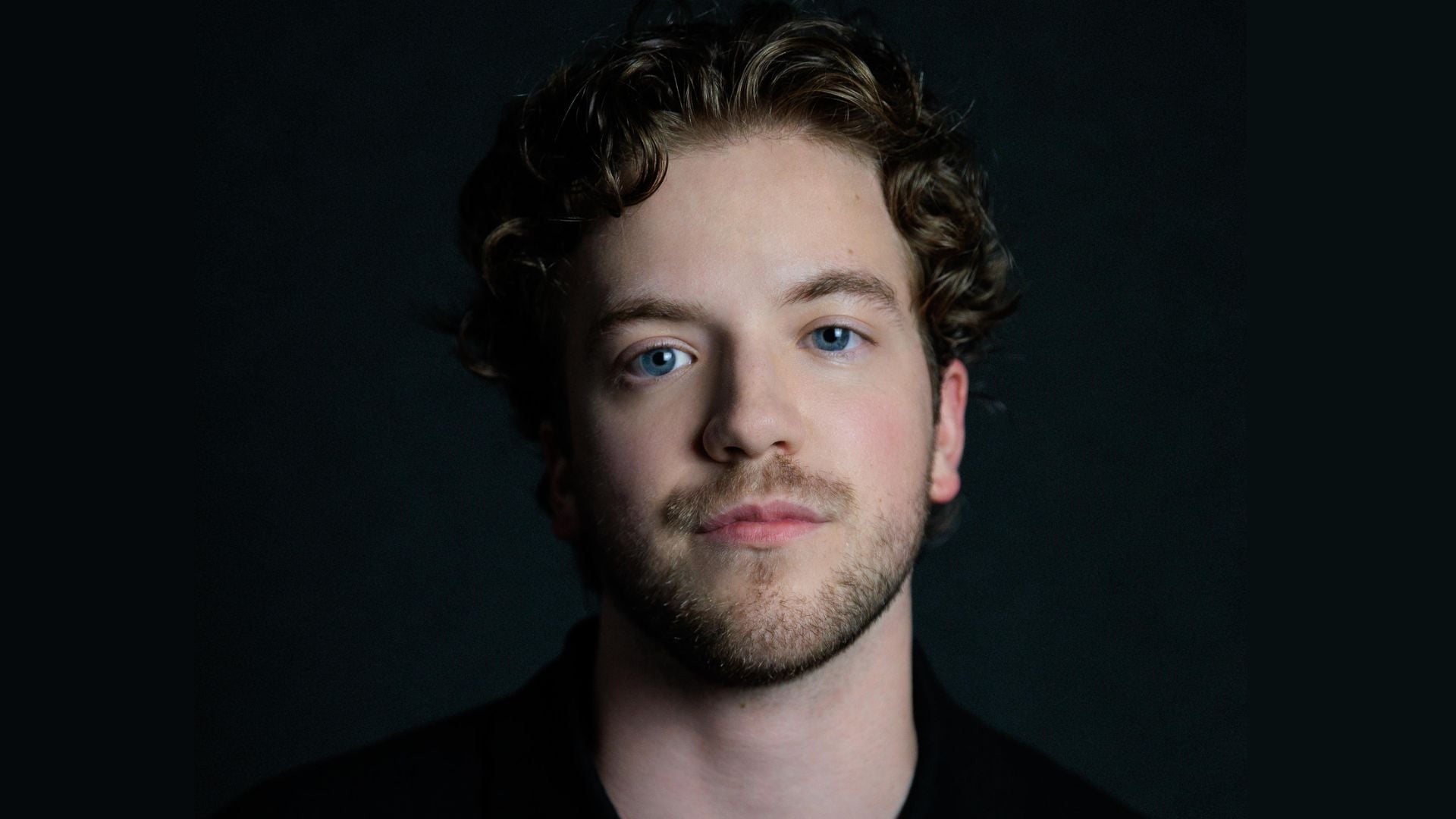
Named in this year’s CGA Rising Stars, Luke Wiltshire shares his excitement about building community in creative spaces, the interconnectedness of storytelling and feeling how his work resonates with audiences. Luke can be seen as Darcy leading the Logie award-winning series, Homebodies and keep an eye out for his work on stage, friends and lovers!
Episode Details
- Duration
- 0:00
- Released
- November 16, 2026
- Category
- Interview
- Hosts


Transcript
Transcript (3,508 words)
Full transcript of Interview with Actor, Luke Wiltshire.
KT: Luke Wiltshire is a transgender actor and writer, best known for his leading role in Logie award winning series Homebodies, but is also an up and coming stage actor and is currently developing a self perform autobiographical play. The Casting Guild of Australia come together to identify a group of extraordinary actors they believe have the potential to break out on the world stage. The CGA Rising Stars. And we have the opportunity, friends and lovers, to chat to one of this year's recipients.
KT: Luke, we're bigging it up today. I hope you're ready for all of the love and praise. Thank you so much for your time, and welcome to the For Your Reference podcast.
Luke: Thank you. What an intro. Woo hoo.
KT: It's it's all the way up from here. I I first off want to say congratulations. We have had the lovely opportunity to chat to Rising Star throughout the years, including Roxy Mojebi.
Luke: Great.
KT: I love Roxy. Oh, we had a chat. We had a yarn. We kinda tried to dismantle everything in twelve minutes.
Luke: So no I bet she did. No pressure, Luke. No pressure. I fear I I fear I cannot speak as intelligently as Roxy can. She she completely takes the crown.
KT: I think we're all here for the feels as well. And I guess what's also interesting is because it's a very creative industry. So I as much as there is an excitement over the title throughout the years having these chats with the CGA Rising Stars, there's not necessarily a pressure, but I guess a responsibility that sometimes the CGA Rising Stars feel. So I guess for you in this moment to sit with
KT: being a CGA Rising Star, how does that feel for you? Was it a conflict, or is it just pure elation? You worked hard for this. Yes. Acknowledge me. I am here.
Luke: I missed the second half of what you said. But
KT: What what does it mean to be a CGA Rising Star? Is it exciting? Is is it a bit of a mix of emotions?
Luke: It's very exciting. It's very exciting. I think I think it's very it's a very low I don't feel it so much pressure. I feel it more like it's a very lovely validating thing to have a group of people say that they believe in you essentially, you know, in a career where that's a few and far between. So it's nice to have the Casting Guild say, hey. We think you got something. It's nice. Yeah. I feel like it's very lovely.
KT: Yeah. I I wasn't sure if we're going down the the the tortured artist. Yeah. But I'm sure at times, you know, you can oscillate We can lean in. Yeah. But speaking speaking of joy and speaking of credits, credit, credits award winning series, Homebodies, SBS Friends and Lovers, you can go and watch it now if you haven't already. How did it feel being able to lead the series? Because there were so many emotions as well and so many different textures throughout. How how did it feel in that process of being to take that on?
Luke: It was amazing. I think that TV show is, you know, a gift that keeps giving. I it like I it was like one of the great privileges of my life, I think, to have that be the first thing I do. And to be a part of a show like that, and to be a part of a show that has such a, like, strong heart and, like, a strong purpose is like it's it's just yeah. I feel very privileged to have been a part of it. And I feel very proud of it. It's it's like
Luke: made up of a really lovely groups of people in every every way you would turn on set. Everyone was so kind and so lovely and and cared deeply about what we were making. And seeing the way it's been received has been really lovely as well. Like, yeah. I have yeah. I could speak about how much I love that show for forever.
KT: And even the cast, Claudia, Jazzy, like, everyone knew the assignment, so to say, and and they were into feel. I I think there was a lot of feeling in this series. If I can have just a personal shout out to AP, many, many years ago, the Festival of Dangerous Ideas, I we met many years ago and being able to hear them talk about creativity and and now being able to see create a writer of the series and also directed episodes as well.
KT: It's so great to be able to see that come to play. How was it being able to work on set, not just with AP, but, you know, behind the screen, in front of the screen? How was it being able to make such a meaningful story? And from what it feels like a team that knew that they were in there to make something beautiful?
Luke: Yeah. It was it was very special. I feel like I learned a lot as well about everything because I was surrounded by such talented, intelligent people. Like to be doing scenes opposite Claudia and Jazzy and Roxy who are all just like incredibly talented actors. I feel like it's, you know, like, that, you know, acting is a team sport, I do believe. So to be surrounded by such a strong team only was a benefit to me. And working with
Luke: AP is it was so beautiful. Like, I I look up to AP so much and and Harry, the direct the setup director as well. They both held the show in a way that, you know, I don't think the show would be what it is if not for the two of them and and Kaina, the producer, holding it in such a strong way and having the show's back and, like, you know, AP knew what this show
Luke: needed to be and what it wanted to be for a very long time and fought very hard to make it. So,
Luke: yeah.
KT: When we we reviewed TV and film on the podcast, we talk a lot about frame of reference. So, you know, when we're consuming things, there's a certain lens that we have. There's a certain sort of shorthand that we have. And I can only imagine how nice it was to be on set to not have to you know, what's understood doesn't have to be explained. Right? So to be on a set, how was it being able to just get in and feel that work and,
KT: for lack of better term, safety on set, just being able to release as much as possible in that creativity?
Luke: It was really cool. I mean, even on a personal sense, I had never I had never been in a room with like I remember standing in a room with Harry and AP, I was like, I actually don't think I've been in a room with this many people who feel like they share a similar story to me. Like Yeah. I'm lucky enough, my wonderful friend Harvey Zelinsky, I remember when I met him, I was like, oh, this is the first person in my entire life who I feel like
Luke: understands me. This must be what community feels like. Because I hadn't, I just hadn't felt that up until meeting him. So And I like to say he's he's my community because it feels like he really understands me and we have that shorthand. So being in the room then with AP and Harry, it was really yeah. It it was it was a very lovely personal moment for me as well to to be able to be like
Luke: this thing that that I, you know, had sort of had a very fluctuating relationship within myself about to see it be celebrated and to see it be seen as a positive and to be in a room with other people who had felt the exact same things that I had felt was very, like, validating as a human being beyond just, like, an actor and a story.
KT: Which I think comes very nicely into, you know, when you're talking about the CGA. It's you can be wholly yourself, but it can also be recognized and it can be enjoyed by everyone, but it's still a very personal experience, right?
Luke: Yeah. Yeah, definitely.
KT: Speaking of very personal experience, your play Squid and also parallels with Homebodies as well. Like, what's so great about the arts is expression. And if you're not using all of the expansion pack Faber-Castell, if you had the money to afford the expansion pack and have, like, five different blues, I think you're living quite a good life.
KT: Hell yeah. But if you're not if you're not utilizing that when you're storytelling and and and the in the arts, you're not really getting to there. In Homebodies, we saw that. And in Squid, there's there's, you know, motifs and literary devices or comparisons and, you know, reflections and being able to represent that. Is it is it quite freeing to be able to really tap into different textures and how you want to be able to express emotions?
Luke: Yeah. Well, weirdly, with Squid, that play I wrote before I even knew Homebodies at all. So I remember the first time I chatted with AP because there is this the first time I chatted with AP about AP's show about Homebodies, he was telling me about, you know, the way they're exploring transness was through two different characters, essentially, a before and an after kind of thing. And I was like, that's so weird because my play that I've written, I I it's an autobiographical play, and it's about the character Luke talking to his younger self, Squid.
Luke: So it's about him coming to terms with himself through the dialogue with his younger self. But that was we we completely unrelated to each other, had, like, accidentally written a very similar story, which I think was kinda it speaks to what I was saying before. Like, it just was so weird to have that moment of, like, oh, you really get Yeah. What I feel. And that's so, like, I'd never I'd never felt that before. But it was yeah. I kinda love that that it it has these weird mirrors. And
Luke: I'm trying to remember there's a part of your question I didn't answer. I'm trying to remember the second part of it. Sorry.
KT: That's okay. I'm I'm sure we'll we'll we'll pick it up
KT: along the way. And your character, Darcy, in Homebodies, and you can also pick up on Squid as well. I'm glad you talked about it because I try not to go too much into the plot. But now that I know we're here, we're here. And it was so nice watching it with my partner, Oti, when we were watching Homebodies to see that duality and also sometimes supernatural, but it's it's it's a out of body sort of experience. And can you hold two truths? Can you still honor
KT: who you were or who you thought you were and still embrace who you are today? And I, again, friends and lovers, if you haven't watched Homebodies or go and watch it again to feel something in this cold world. It really came to an emotional crescendo at the end of the I was Luke, once it started, I just kept but it it there was a catharsis in, I don't hate you, but I need this for me right now.
Luke: Yeah. Yeah. I feel like Homebodies captures a very true nuanced experience. Like, I think there's a desire sometimes when we're telling stories that have not been seen on, you know, screens ever really to, like, simplify and and make it really easy to understand. But the truth is there is a lot of grayness. And I think what resonates with so many people with Homebodies is that there's a whole breadth of of experience and human experience in there. Like, none of the characters are bad people,
Luke: But I also think none of them are really doing exactly the right things. Like they're all flawed. They're all struggling. They all make mistakes. It's not like, you know, Darcy is some sort of white knight who's educating everyone on how to see him or how to how to accept him. He also he, like, he has his own work to do. He has this deep shame about about his younger self. And
KT: Yeah. Like, some of that is you, my guy. Like, you can't put that on mama. Like, you can't
KT: like like some of that is is our own
Luke: Yeah. Exactly. Exactly. Exactly. That's what's so wonderful about it. Like, I think the story wouldn't work if it was, you know, that Darcy didn't have his own things to to deal with. And like, I think that's that's human. Like, no matter what, there's always
Luke: gray. These are these aren't simple, simple stories, but the more nuanced I think it gets, the more people can see themselves in the story. Like, it's such a relatable thing. It's not just a trans story. Like, it's such a relatable feeling there of, like, trying to connect with your mom as an adult or trying to
Luke: shed shed this version of you that you feel a parent or whoever is attached to, like and be seen as yourself. And then go, well, what is it that I'm trying to shed that I'm so desperate to be seen as now? Like, where's the line of acceptance and shedding? And how do we move forward? And I I think that stuff is is that we I've had, you know, with my play. Mhmm. What I found so interesting the first time I performed it to an audience. I had thought that it was
Luke: you know, this was a few years ago, and I I had thought that because it was such a I hadn't heard any other stories like mine. I didn't expect people to relate to it. Mhmm. But then I had these beautiful conversations that I'll never forget with my friends who'd seen it and peers who'd who'd it was like because I'd shared this part of me, they shared these beautiful stories of themselves. And so I had like went around the foyer and had these amazing connections with people of like everyone's telling me
Luke: telling me these stories that are completely different to mine on paper, but we're connecting up the same core feelings. I I I yeah. I I think that's really
KT: lovely. The power of storytelling, really. Yeah. And I one of the cool things about it in being an indie TV and film podcast is independent filmmakers will reach out to us. And we recently did an interview. It was a trans documentary called What Will I Become? And it screened at Cannes. And, you know, it's so lovely being able to chat and have interviews. And we talked about, you know, the Q and A screenings. And at Cannes,
KT: one, like the first question that they got for all of the screenings I've been doing around queer festivals all around the world was someone had to travel days to go and see that documentary. And it's like you're saying, we're talking about not needing to explain because it's for everyone, but there is a very succinct sort of experience that it's speaking to. And I think that's one of the most beautiful things about art, especially in a world that is super transactional,
KT: just skipping on to the next know, sort of dopamine hit. There there is an audience, and there are friends, and there is community to be able to dig deep and really share what you're experiencing, especially because there's so much interconnectedness
KT: between us. But I guess also care for the artist as well. It's like, that's the money. That's the currency. Right? You want it to be able to resonate with people. But is there a part of you that feels like, oh, that's a bit too close. You need to keep it to yourself. Or is there like, oh, this is getting a bit close. I need to draw back a bit. Or is it you feel safe enough to well, not necessarily. You can still feel safe and wanna keep stuff for yourself. But is there like a balancing of pouring yourself into
KT: your storytelling, all your performances? Or is it really leaving it all out on the stage or on the screen?
Luke: I think it's a good question. I think
Luke: no matter what, as an actor, you have to find for yourself a line of protecting protecting yourself while still completely throwing yourself into a role. I think, like, I will always bring all of myself into every role and throw myself completely. But I know myself well enough that I I know how to hold myself. And I think I think a big part of it for me was writing my play and learning how to how to tell an autobiographical story and be truthful and vulnerable,
Luke: but in a way that was gonna protect me when I stood up and did it. That it doesn't feel like I'm, you know, bleeding from my art or or standing there in a complete state of vulnerability that should someone not resonate with the story I'm telling, that would deeply affect me as a human. So I think writing that play really helped me understand, like, okay. I know the way that I can bring everything in me to a role, and I always will and I always do. But I would never be personally affected if
Luke: if there was rejection involved in it because, you know, that core part of me I hold and is mine.
KT: I can't imagine how difficult that is to do, but you do it so well, Luke. And I am so excited to continue to see you flourish and hopefully not bleed for you out, but for us to feel, you know, that that sort of chemistry. And I wanna I wanna thank you so much for your time and wrap up with our final question. Even though I feel like, hopefully on your end too, could speak for lifetimes together.
Luke: Absolutely.
Luke: Very mutual.
KT: I wanna wrap up with our final question. We because we are a TV and film review podcast, we finish off our reviews with a recommendation, usually like a double feature sort of watching. But we have the space and and the boundary to play in you as a person. So in a double feature recommendation, TV show film, you can either recommend
KT: for our audience to know more about you or just something that you think will be like a really fun or maybe an informative sort of experience, but a nice like double feature TV film. If you need help, you can also pair it with Homebodies, but it's it's up to you, whatever you want to go.
Luke: A double feature, like, a movie and a TV show. Is that what you mean?
KT: It can be two TV shows. It can be two movies. Up to you. But, like, watching experiences that you feel like people would really
KT: get a great experience out of.
Luke: My gosh. I'm so notoriously bad at these questions, but I watched recently that you've enjoyed? Actually, you know, one of my favorite movies is the old Cher film, Mermaids with young Winona Ryder. I will always recommend that movie. I was saying to a friend recently that I think, and I kind of touched on it, but I do think the stories that always resonate with me are the p people stories, like stories about people. And I think that that's a beautiful movie about about people. And I actually think I've been watching absolute
Luke: reality TV trash at the moment. The duality of Luke. It's it's like that or a crime documentary. So it's like I'm terrible with my doc with my recommendations. I need to remember when I watch good things and not only remember my crime documentaries.
KT: Think that's I think that's great. And you you already did that. You had that on hand already. And I think that's a nice balance Because Great. And I'm also, like, a sad documentary indie film galie, so I know I need to balance But I know I need to balance it with some
Luke: reality. Some real art.
KT: Some real art. Some reality TV. Love Is Blind. Put that on the tote bag, Luke, and I I will be your first customer. But thank you so much for your time. I really appreciate it.
Luke: Thank you. Thank you very much. It was very lovely.
Related on FYR
Discussion
Loading comments...