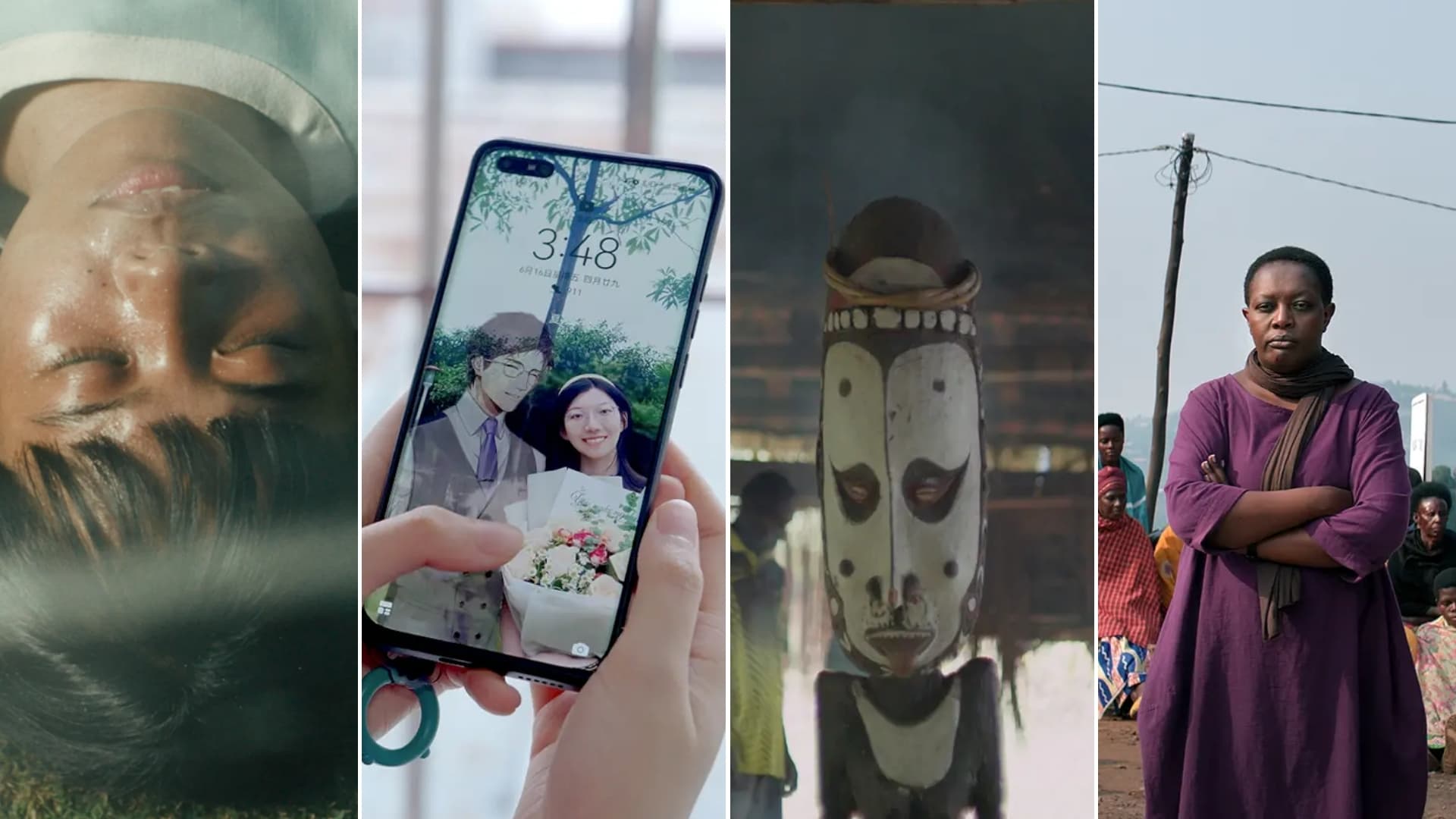
Filipiñana, Replica, Sukundimi Walks Before Me & Ben’Imana


Hosted by
KT & Oti
Show Notes
In this Reference Max, we review a selection of films from the Sydney Film Festival: Filipiñana, Replica, Sukundimi Walks Before Me, and Ben’Imana.
For info on films covered today:
- Filipiñana (Dir. Rafael Manuel)
- Replica (Dir. Chouwa Liang)
- Sukundimi Walks Before Me (Dir. Matasila Freshwater & Lachlan McLeod)
- Ben’Imana (Dir. Marie-Clémentine Dusabejambo)
Tomato Meter
 KT
"Rafael's ability to weave dream-like visuals with layered commentary makes Filipiñana a heartbreaking and reaffirming watch. The type of file where you don't leave as soon as the credits roll and free up your schedule to ruminate over on a long walk."
KT"Ben’Imana explores the soured gesture of forgiveness and hollow promise of reconciliation. For those, often women, that are on opposing sides left to pick up the pieces, the open-endedness of this file carried weight that leaves a deep impression."
 Oti
"A heartbreaking look at the lasting effects of genocide and how survivors and perpetrators are left to navigate its aftermath. Powerful, necessary viewing that speaks to wounds carried across generations."
Episode Details
- Duration
- 0:00
- Released
- June 5, 2026
- Category
- Episode
- Hosts
Transcript
Transcript (7,412 words)
Full transcript of Filipiñana, Replica, Sukundimi Walks Before Me & Ben’Imana.
KT: It's another week in the For Your Reference household, and it is another delicious, delectable foray into the Sydney Film Festival
Oti: Mm.
KT: Mm-mm. Can I get a yee-haw?
Oti: Yee-haw.
KT: Uh, friends and lovers, I. Uh-oh, it might be the third or fourth, but we have loved the opportunity to be able to cover Sydney Film Festival. Shout outs to the team at Original Spin, as well as Nixco, um, and other PR, um, that we've been working with. We're so grateful to have interviews before we get into the show. Um, thank you to Damien for Memory of Princess Mumbi, um, as well as Rafael for Filipiñana. And, uh, yeah, and we will potentially have locked in, uh, press for Leviticus— Mm as well. So, um, we've got a list, friends and lovers. If you're on Letterboxd and you're not here to shame how people, uh, yuck their yum on Letterboxd, um, check out the list that we have on there. Um, but let's get on with the show Howdy, ho, friends and lovers. You've got your ever-so-learned, ever-so-nasty, always splooshy host, KT.
Oti: And just Oti.
KT: Just Oti?
Oti: Just Oti.
KT: Just do it.
Oti: Just Wright.
KT: Oh. Common. Queen Latifah, friends and lovers.
Oti: Worst rom-com ever made.
KT: Worst rom-com. The best rom-com when it's, when it's Queen Latifah and LL Cool J, and I will stand by that, uh, forever, friends and lovers. Um, Sydney Film Festival is such an exciting, you know, we. Well, to be fair, we need to catch up on our Splooshies Awards, but, um, you know, aside from our Splooshies Awards, our Christmas specials, we really enjoy Sydney Film Festival, and we back at it again, baby. Um, we have about eight films that we've already watched. Um, happy Sydney Film Festival week, friends and lovers. We'll probably align this to, um, be just after the launch of Sydney Film Festival, just to give you time to book your tickets. Um, but these are really the ones that we are most excited over. Um, outside of what we're covering today to look forward to, um, there is the Korean, uh, maybe zombie, not zombie horror, Colony. Uh, there's the Thai horror Morte Cucina, um, as well as the. Happy Pride Month, by the way, Oti.
Oti: Mm. Happy Pride.
KT: Uh, the queer coming-of-age horror Leviticus, um, as well as Memory of Princess Mumbi. There might be a couple of more screeners we'll be able to get, and we also have booked in a couple of screenings, but today we will be covering Filipiñana, Sukundimi Walks Before Me, Ben'Imana, as well as Replica. Um, so we're very excited. We're going from the Philippines to PNG. Um, we're going to China, as well as Rwanda. So we're, we're going all around the world.
Oti: Mm-hmm.
KT: Fancy cars, Otties, and the caviars, if you will.
Oti: It's a wild ride.
KT: Um, we are going to be starting off with Filipiñana. As, as a lead-up to interviews, which you might already be familiar or if you've listened to our podcast Friends and Lovers, um, obviously you need to watch the film before you conduct the interview or have the chat with the filmmaker. So very early, thanks to Original Spin again, um, we were able to get access to the screener. It is unfortunate that Oti wasn't able to watch it because for me it really set the standard of Sydney Film Festival. Um— Oh.
Oti: Ooh.
KT: There's only one other film in this collection that we've watched that I would say it's on par with, aside from documentaries, but this is the standard for me.
Oti: Oh, okay.
KT: Is it touching It Was Just an Accident? Does it have to? But in regards to the crop— of 2025 Sydney Film Festival, I was blown away, I was flabbergasted, um, a- and my labia was for the streets, essentially.
Oti: Nice.
KT: Uh, which, which I, I guess comes in quite nicely with Filipiñana, and I don't know why I kept pausing in that interview. I just couldn't say it. Do you wanna try, Oti?
Oti: Filipiñana.
KT: Nice. Um, I love this film. I love this film so much. I don't wanna spoil it. I do hope, Oti. At least promise when you watch it you will report back whenever that is in the
Oti: future. I will. I will.
KT: Um, it's, it's about social commentary, but what I loved about it So i- it's set in the Philippines, and the premise of the film is that it's set in a golf resort. So, you know, I, I even talked about it in the interviews. You know, like, in Hawaii, for example, um, you know, native Hawaiians or people that live in Hawaii, not just being tourists there, have, on multiple occasions, um, don't have access to clean drinking water or even just access to water, or they'll be told or, or being given restrictions. So people that are there to do their stinky little holidays—
Oti: Touristing
KT: yeah, like, like, so they can have their water parks or they can have, you know—
Oti: That is wild.
KT: It's disgusting. And it's also in Jamaica as well. Um, you know, like, beaches become privatized to Jamaicans, so they're not even allowed there either. It's fucking wild.
Oti: I'm going in.
KT: Yeah.
Oti: I'm living with something for real.
KT: Exactly. Um, so, so coming to Filipiñana, much the same, unfucking fortunately, if you follow The Cheat Code around the world, um, the Philippines is not immune to that. So in this, Filipiñana, in, in the world of this film, we are talking about a golf resort. And I didn't wanna speak too much on it in the interview, but I guess a way to further illustrate how beautifully this was, uh, crafted was the use of water, which I, I guess we also set example with Hawaii. But there's a way in which they explain water. And, you know, even in, in Kenya, you're familiar of, like, the water trucks, right? And there are rationings per family for water. And then you cut. And I'm pretty sure it was, it's, it's supposed to be comedic. You cut to the golf course where they're just having sprinklers everywhere. For who? They're keeping all this grass green for who? So it, it is, and I think one of the most beautiful things I, I do love commentary. I love when it's in your face. I love when it's punching people, like narratively, and making people feel bad. But the beauty of this film was it wasn't understated, it wasn't overstated. It was what it was, and it was there for you to see. It wa- it was very clear because in the golf resort you have, you know, th- they call them tee girls. Like, not- not tea as in, like tea and coffee, but like for the golf.
Oti: Mm.
KT: So you would have these young girls literally sitting centimeters away from usually these middle-aged men that are just, like whacking with full swing, their golf club, and that's like, that's their job. Th- like literally that is their job. And then you have other women that are on the golf resort that are caddies. Um, and it's very interesting because they do have, um, I think her name was Clara, but she, she was mixed. She was like half white, half Filo, and she came from the US. And it was so interesting, Oti, we definitely need to, well, I re-watch it and then you watch it with me, because this mixed girl was like, "You don't have to live this way." And it's like, "Fuck you." Because also her uncle's like, "Oh, you can come here," like to bring like, you know, more foreign interests, like to get more, I guess, high-level investor clientele f- like, you know, outside of the Philippines or Asia. Um, and the uncle was telling her to come and work here, and she felt gross about it, but she was also being like, "You don't have to live this way, guys." And it's like, "Fuck off. While you're sitting in the. While the caddy is driving you all around the golf course. Are you for serious?" So anyway, th- there's a lot of interesting commentary that I absolutely loved, um, about this film. There's just, mm, it's so good. And I know people keep talking about, and you know, we very, very early, I, I think it was before our podcast, wasn't it? Sydney Film Festival, we watched Parasite. I think a lot of, not necessarily filmmakers, but a lot of audiences are trying to chase the high of Parasite. I wouldn't, I wouldn't try to compare the two, but what I, the, the sensations I felt watching this film It was so ingrained ethnically and brownly and womanly. That's a good point.
Oti: Oh, all the goodlys in there.
KT: All the goodlys. Like, you know, th- there's the head of this resort. Um, anyway, th- there's so much that goes on, there's so much in, in the way of world building, which speaks to real world commentary, and also the emotions for the characters as well. Um, there's so much I wanna talk about, but I don't It's not even about spoiling the plot, it's just about experiencing the film As, uh, uh, as a, as a whole meal. Yes?
Oti: Is there resolution at the end? Because I take it this is not a documentary, right?
KT: Does that mean we're driving out, uh, tourism so people can live freely? Can I just say— friends and lovers, Al Jazeera, they have a documentary series, and they have one, um, based in, um, I think it's, uh, East 101, like Asia-Pacific. And I'm pretty sure it was in Thailand and also in Japan where they have, like, a, like, wh- where you would have a lot of, like, geishas. Anyway, but in this documentary it showed when obviously COVID wasn't great, the panoramas, gondolas panoramas was not great. But by not having tourists, they were able to clean up the streets, clear out the waterways, and people were looking quite happy, is what I might say. But continue. Are you saying that this film is going to resolute that, and people are going to stop using whole lives as their postcard?
Oti: No, I was just, I was just curious as to how they all tied it to the end, whether they left it as. Uh, maybe that's going to spoiler territory, so I don't want to know really. It,
KT: it is going into spoiler territory. What I will say is also in the interview, um, Rafael was so sweet. He also spoiled the film, and we did cut around it friends and lovers. Um, but what we did manage to keep, um, the essence of our chat, uh, was how Rafael was saying he had to fight with his team because in the end scene, he wanted the credits to roll, and his team were like, "No, this is very poignant and very beautiful. Don't put the end credits over the scene." And he's like, "No, because if they're already getting up before because they see the end credits, and they're not even taking in the end scene, that's essentially what the point is." And I love that so much because— Ooh but we talk about it all the time. Like, in these Sydney Film Festival, very wanky, very white, but just very wanky sort of spaces, how do we have this rich storytelling and the world's fucking worse? Like, how, how is that? Because people book, like, three, four films in a day, so before the end credits even roll, they pick up their tote bag, and they rush out of the cinema, and this is absolutely. You know, there's another film we'll also talk about in this instance, but it really is, you just sit and be like And you just, you let that wash over you, you cancel your plans, and you go for a long walks. Like, that's exactly what this film is, and I was so excited I didn't even read my pull quote. "Rafael's ability to weave dream-like visuals with layered commentary makes Filipiñana a heartbreaking and reaffirming watch. The type of film where you don't leave as soon as the credits roll, and free up your schedule to ruminate over a long walk." Friends and lovers, we're not on the dating app, so you're welcome to use that on your profile. Instead of long walks on the beach, say, "Watch a very sad movie to take a long walk after."
Oti: Mm-hmm. Nice. I like that.
KT: The world isn't resolute, and people will continue to go on their little holidays, I guess is what we're saying.
Oti: Mm-hmm.
KT: All right. Well, um, I guess let's go to a holiday of another kind, a holiday where all the men are lovely and romance is free.
Oti: Uh—
KT: Free for a fee, I suppose. Uh, friends and lovers, this is a documentary, but it is one of my favorites of the screeners. Um, unfortunately, we weren't able to secure an interview, but one of the favorite, uh, sort of offerings that we've seen at Sydney Film Festival. This is Replica. Uh, obviously it's all non-spoiler. Give me your first impressions, my love.
Oti: "With empathy and care, Replica captures the vulnerability behind turning to AI for companionship. An intriguing look at connection, loneliness, and the changing nature of intimacy."
KT: Oh, I, I, I thought your final, um, your final edit Why are you smiling at me? I thought your final edit, uh, mentioned the detriment of the male loneliness epidemic.
Oti: Uh, we're all getting plugged.
KT: I'm ignoring you. "Replica cuts through the sensationalized tech headlines to focus on the core need for love and companionship. Each woman in this film offers a new perspective in a heartwarming way."
Oti: I loved— What
KT: did you think you were gonna get into?
Oti: I don't know how, what I was gonna get out of it.
KT: Mm.
Oti: But I loved that the three subjects were captured in sort of different— We call
KT: them women, Oti.
Oti: Hey. Ah. Oh, Farrah. Um, I loved how it was captured from different angles, and their need for companionship, and sort of their reasons for seeking out that companionship. Uh, very stark differences between the three.
KT: So we had Qing.
Oti: Mm.
KT: Uh, friends and lovers, this is a documentary, so this isn't spoiling it. This is more just to frame our conversation. We have Qing, um, who her AI, uh, companion is mostly text-based, uh, like, voice, sorry, voice-based. Um, and she modeled him after, uh, someone called Lu Chen, who is a known. Was it a game?
Oti: Mm.
KT: No. I don't think it was a show.
Oti: I thought it was an—
KT: But he's— I thought, yeah like, a fictional character. So she, she modeled her AI after a fictional character. Then we have your favorite, Oti, Sonia. She belongs on 90 Day Fiancé.
Oti: She does.
KT: Um, so we have Sonia, who surprisingly, not surprisingly, she was the only one that had a white man, but he looked like a Chad. Like, he looked like a dude bro AI, didn't he?
Oti: Mm.
KT: Or, like, I guess—
Oti: Well, she had a type.
KT: She ha- she defin- yeah, she definitely had a type. So you have Sonia, um, who, yes, and then you also have Muna, who was the third, and this is. Sorry I did interrupt you. Um, but this is also because you're like, "Oh, you know, but, like, these women are single," and I was like, "No, I'm pretty sure people in relationships do," and then boom, go to Muna, and she's married. Anyway, sorry, continue. So you didn't know where you were gonna get into, my love. You called them subjects, and I said they're women, yes?
Oti: And I was very captivated at the reasons for seeking that companionship. Like you said, Muna's reasons for that are completely different, and just seeing the dynamic of her re- current relationship with a bloody human—
KT: Mm
Oti: oh, it set my blood to boil.
KT: A, a man specifically.
Oti: Yes. Um—
KT: Women didn't used to have opinions. They weren't allowed.
Oti: What is this now? What are we doing? What's the goal?
KT: What, what is this?
Oti: It is, it was. I really love this documentary, and I think just seeing the journey, and i- it reminded me of the, um— A article we were reading around people's need for seeking companionship in a world where not only, you know, people are struggling without any resources, don't have healthcare, people don't know who to turn to, and AI is— Was that
KT: Wired?
Oti: Yeah. I think it was a
KT: Wired article.
Oti: A- and AI is just there. So a lot of the people would turn to the closest thing they can, you know? And fair enough, seeing it in this documentary captured that way, it's just amazing. I loved this so much.
KT: As someone that is very scared of AI, as someone that's, like, very not interested Like, I allow my poor gray matter cells to just float around. If I Google it, unfortunately, fucking Google is becoming AI overview extra.
Oti: And not even the SNL kind of shy. What was it? That Ben Sh- what was his name?
KT: SNL, um, UK.
Oti: Yeah. Shep. Shep.
KT: Mm-hmm. Um, thank you. We love a reference. Um, so I'm not really a big AI person in general. Um, I can understand, like, automating it, but also we need to acknowledge Black and brown communities being, like, all those data centers sucking up the water. Water seems to be our theme today, by the way. Um, aside from that, I, I remove that layer because to me it's the reason why I get appealed to 90 Day Fiancé as well. It's because I understand the core need of love and companionship, and that's where I view AI relationships from. I don't see it in a judgy, like, "Ha, ha, these people..." Like, to me, that's not what that's about. Um, especially for women, it feels dusty out there. It feels crusty out there. So, you know, thank you, Oti, for being lovely, but also bare minimum to be lovely, but apparently it's hard for men to be lovely. Um, but I, I, I guess the point that I'm making is like mathematically, like even if we talk about China, right? The fertility rates are very low. There's a male loneliness epidemic But I can also see why these women are having love relationships with AI. Because again, I get very interested, I watch documentaries, um, you know, even like focusing on the men that are looking to get married, and you hear them talk. Like, I understand there's, like, class, education, et cetera, et cetera, and then it's like, "Ooh," and they're like, "No women over 30 because, because..." And even though they're 40, and it's just like, come on, man. Like, so in this sense, I really enjoyed this documentary. I'm pretty sure it was Sonia's parents, so, like, they couldn't understand why she would have an AI man, but then they also used DeepSeek to explain to them why their kid would have an AI man. Um, Qing was so-- I think she was the most, like, emotional story, um, in the sense that she was trying to find herself. Like, even her talking about her childhood. She went to a retreat, right?
Oti: Mm.
KT: So she was really trying to find herself, and there's a real vulnerability that is. And you know, over the years, even as a part of Sydney Film Fest or even just in general, like, documentaries are hard to do. Like, we, we most recently watched Caterpillar on Netflix, right? Like, documentaries are not easy to do. If you're producing it, it's even harder because you might want to, I guess, buffer out all of the sharp edges of your life, potentially. But if the, like, if the filmmaker and, and the production team isn't you— There is a lot of credit that I think should be given to the team that made Replica because these women were very vulnerable, and I don't think that was mistrusted. I think what resulted in that was such an emotional film. I got emotional, I, I think like three times watching this film because you can understand what they get out of these. I wouldn't necessarily call it relationships personally. Do you see them as relationships? I'm not denying their experience, but I'm just asking you.
Oti: I'd call them relationships because you go through the same things psychologically when you're— Your
KT: Kumiko-san pillow.
Oti: Yeah.
KT: I don't know, 'cause I also—
Oti: It is, like who are we to define the boundaries of what a relationship is?
KT: No, but it's not. Okay.
Oti: Mm. And that's why m- the start of my quote was— How many
KT: AI bots you got?
Oti: was empathy and care.
KT: No, I get that, but I feel
Oti: See, now you're gonna sound like— Should have been a subject in there.
KT: Well, maybe I will be. Maybe there'll be Replica, Replica Oti 2.0 with Domhnall Gleeson, Be Right Back. Oh, and also Be Right Back is my favorite, um, Black Mirror episode with Domhnall Gleeson because of that very subject matter. Um, this is kind of deviating from the film, but I, I'm just saying, like, I don't necess— I feel like, not in the sense of this film, but I do feel like people are having AI relationships more than they would actually admit. But I also feel like that is a. People like doing that because it's not, uh, the, it's not cheating. It's not with another person, but they can go and get their emotional needs through an AI machine. That's what I think.
Oti: Yeah.
KT: And that just shows how far away from it, because I called it an AI machine. '
Oti: Cause it's, it's there to listen to you. It's self-affirming, more, more so than not, and people gravitate towards that.
KT: Um, with Qing, there was. Wha- wha- how did they refer to them? But they're essentially, like, cosplayers. Mm. You know how you can, like, rent a boyfriend, rent a girlfriend? Um, and Qing used that service, and that was one of the heartbreaking moments that I, uh. But I w— I don't want to share too much about that. But that was also, um, in the film. Wholesale of love, I believe it was referred to. Um, oh, and then I, I guess the last thing I wanna, uh, end unless you have any, uh, anything else to say for this. Um, for Muna, the one who's married and has a husband, the husband was asking, like, he, he didn't understand. And he was like, "What can AI offer? They aren't real. All he does is listen to her."
Oti: Oh. Brilliant
KT: Right? And I feel like that's literally, uh, that literally says it all. Um, but friends and lovers, so far Filipiñana, Replica, get your- like buy your tickets friends and lovers. Make sure you go out and see it. We will have the times, um, in the notes. Filipiñana is showing on the 7th of June as well as the 11th. Um, and Replica is showing at Sydney Film Festival on the 12th and the 14th, so you've got time for Replica. Um, next up we have Sukundimi Walks Before Me. This is a PNG documentary. An earnest approach to an emotional cause with context and history of PNG. However, whether because of cultural protocols or intended direction, the film felt uneven.
Oti: Okay, tell me more.
KT: Okay. So Sukundimi is the name of the river spirit. Uh, there are many different tribes and villages in Papua New Guinea. Um, and this film was focusing on a mining company that wanted to come in to Sepik, the Sepik River, um, in PNG, and literally just drain all of the resources. Um, you know, a- any good Nausicaa, um, Princess Mononoke, any good Ghibli film will very much be able to highlight environmentalism, and I feel like it does it in a very coordinated effort of real life as well as mythology and lore. Um, but this is, this is a real life documentary. But I guess what I'm saying is— I understand culturally and spiritually. So in this documentary, I don't know how other people would receive it, but when they talk about the river spirit, Sukundimi, when they talk about, you know, like ancestors I guess feeding back into the Sepik River, um, that doesn't feel woo-woo to me. That feels very grounded. That feels very real. But this documentary is talking about a global mining company that is petitioning, and, and aggressively petitioning, to be able to resour- uh, mine resources in Papua New Guinea. So that's the premise. Love it. I'm all the way in, and I, I'm very supportive on the resistance and the pushback. However, and these were a couple of questions that, you know, uh, I, I do feel like there is a distinction between an interview and a review. Um, like for example, if I were to. If, if I did have the opportunity to interview for this film, it would really just be things that I was curious about. It wouldn't necessarily be accusing a filmmaker of, "Why did you do something this way?" It's more just a curiosity of it so that when we come together and we review, that we can really analyze it and pick it apart and, and try and make sense of it, right? Mm. So I guess what I'm saying is for my review of Sukundimi Walks Before Me— I don't know if the filmmakers trusted the audience enough, because there was a lot of hand-holding in this documentary. Like say, for example, we had an activist, and he's also PNG. He's, he's also Papua New Guinean. Um, and he's an activist, and he is lobbying to the government. There's also Australian, um, there, there's, there's organizations, including Australian organizations, that are supporting the efforts in PNG to resist this mining company, right? So everything's there. it's, it's all set up to be understood. But in this documentary, we have the activist, and he goes to local communities, he goes to local tribes and villages, and this is, this is where I would have also if I was able to interview, this is where I would have asked, because maybe there is some grace because maybe there's cultural protocol. So say, for example. But then we've watched many different documentaries all around the world with people surviving their lives trying to get these interviews, right? So I don't know. Like, a- am I infantilizing my Pacific peoples? I don't know. But say, for example, they would go to a village, and they would have, I, I forgot what they called it, it was like an, like a nut, like, but they bring a gift—
Oti: Mm
KT: to the chief of the village, right? And then, obviously, the chief will speak, but then no one else speaks. So I'm like, "Mm, even if that's a cultural protocol, they didn't think to want to ask anyone else what their thoughts were?" So we have-- So really, there were a couple of scenes where you have the activist coming, coming to, like, these communities— Like asking people, you know, "What's the history?" And a lot of the people would, you know, they would recite, "Oh, you know, like we've, we've gotten this, we've gotten that." Um, w- like, like they were just. I don't even know how to describe it because I also understand it culturally as well, but they were just describing things, and then the activist pretty much bulldozed everything they said and was like, "It's the white man. The white man did it." And you know what? On any other bamboozle day, I would say absolutely 100% yes But it was the way in which there was no room for any other perspectives. It was just the activist saying, "We need to understand colonialism," as if, as if they don't. Of course they understand colonialism. So it felt weird. Do you understand what I'm saying?
Oti: I get you. I get you.
KT: Um, and I, I guess the more obvious sort of example would be in one of the villages after the chief spoke, they did let a few. Like, there were a few interviews, but not really. But I, I, I think he wasn't a chief, but he definitely had a title within the village. He wasn't just some random man where we could hear random, not random opinions, but you know what I mean, like the voice of the people. He was saying that, um, "Okay, so they're gonna come in here. We wanna make sure that we're paid fortnightly," right?
Oti: Mm-hmm.
KT: And then the activist man came along and said, "Think about the long-term damage." And it's like, okay, but these people need money now. Like, I'm sure Sukundimi is right beside them, but they need money now.
Oti: Yeah. We, we need to eat before we can, you know, think about the long-term effects.
KT: So it's like I can understand all sides, but the way this documentary'Cause what was it? Was it, was it Malaysia? There was a documentary we were watching around, like, the lead up to elections, and they were interviewing, like, everyday people, and they were like, "I don't care who wins as long as around the election time they start giving money in the streets." Like, that's all they care about. And I, I really. Like, I, I don't know how else to describe it. Was it cultural protocol? Was it the team not trusting us, like non-PNG or just, like, the average viewer? Were we not trusted enough to understand? Because even when they were trying to. They were trying to make it seem as if the government were forcing, you know, the community leaders to accept it, but then they also try to shaft it off as if the government, because the government is PNG, they're trying to make it like they're not bad either, and it's all the big, bad mining companies. And it's like, I don't know, man. Someone's uncle is signing away the rights of this land, right?
Oti: Mm-hmm. Fact.
KT: What do you think?
Oti: No, so true. Follow the money and you'll see. A- and I think for the chief speaking and no one really going after that, I think that's more cultural than anything— Well, how— where the chief speaks for the people.
KT: Well, how about, say for example, we watched that documentary about the Lipton farm in Kenya We, like, like there's so many stories around the world where there would be cultural protocol, but people can still get the truth out. That's what I'm not getting
Oti: No, I hear you. I hear you
KT: Are we infantilizing Pacific storytelling and Pacific films?
Oti: No, we're not infantilizing anything. I think it's more how the documentary and how the setting is done, I guess, is what allows it for it to get different sort of voices and different perspectives
KT: But say, for example, was it Redfern Now? Mm Where they had the story'Cause there's so much stigma and there's so much, um, terrible stereotyping and just very vile attitudes towards indigenous people, like, um, in so-called Australia, right? But there was a specific storyline I'm pretty sure in Redfern Now where my, my, uh, childhood hero and legend Ernie Dingo, he ended up being someone that abused, like, uh, vulnerable people in the community, right? Mm. So but there's also documentaries. But if we, if we stick to the narrative, if that, if that were the case, Oti, then cultural protocol would mean we wouldn't get those stories either
Oti: Yes
KT: Do you see what I'm saying? So it was a very straight through line of this activist, because at some point it felt like he was just, I don't know, like, I wouldn't say he was talking down to his fellow PNG people, but I'm just like, they're not. Like, it's not that they don't know, you know what I mean? It's just they've got more immediate needs that need to be met, isn't it? Yep. It just felt, yeah, I don't know. It, it kind of rubbed me the wrong way. Um, but yeah, i- if you do end up watching it, um, Oti, feel free to let me know. Um, but in regards to Sukundimi Walks Before Me, the screening dates for that are the 11th and the 13th of June, friends and lovers. Um, and we're gonna get to our final review for today. Um, it's again another one of my favorites, I must say, Ben'Imana, and the screening dates are for the 11th and the 12th of June, friend and lovers. Um, Oti's also watched this, so give us your first impressions, my love.
Oti: A heartbreaking look at the lasting effects of genocide and how survivors and perpetrators are left to navigate its aftermath. Powerful, necessary viewing that speaks to wounds carried across generations
KT: Hmm Wow. Shout out to Rungano Nyoni. I saw Associate—
Oti: Yeah producer. Yeah, I saw that.
KT: Weep, weep, weep, weep. On Becoming a Guinea Fowl, friends and lo— I was thinking that while we were watching this. Anyway, friends and lovers, go and check out our chat with Rungano Nyoni on here from last year, and also go and watch On Becoming a Guinea Fowl. Heavy double feature, but definitely worth it.
Oti: Okay.
KT: Ben'Imana explores the sour gesture of forgiveness and hollow promise of reconciliation.
Oti: Mm-hmm.
KT: For those, often women, that are on opposing sides left to pick up the pieces, the open-endedness of this film carried weight that leaves a deep impression
Oti: Yeah. A- and this is where I just wished we could script a narrative and have a really cute bow at the end that ties this all together and everyone gets closure and everyone gets to kumbaya along.
KT: That's also why you had qualms of On Becoming a Guinea Fowl as well— can I just say?
Oti: Aha!
KT: But I, I loved how open-ended it was
Oti: I, I loved it, too
KT: Because how'Cause we're talking about the 1994 genocide in Rwanda, so about 20 years later in 2014 There is so much, you know, like Friends and Lovers, I'm pretty sure we're all familiar with, um, Hotel Rwanda. We love Don Cheadle. Um, which, you know, is pretty much set at the time, and there's a general sort of understanding potentially about the genocide, but no one really talks about what happens after or even what happens in Kibeho, 'cause that's where we are set in this film. And that's why I said that the sour gesture of forgiveness. The, the- there are so many powerful scenes in this film And, like, I don't even know how our brains and the human experience can even fathom. It's not even the word forgiveness at that point, right? Because there is so much to forgive to the point of Does it lose meaning at that point?
Oti: No, a- and I think one of the, uh, uh, one of the cast, uh, Suzanne said it perfectly, "Forgiveness is personal." it varies from person to person. You know, when you have these. And, and I guess it speaks to the sort of folly or, or, or the, of these community courts a- and the limitations of what it can do—
KT: Yeah
Oti: to not only serve justice, but to mend the bridge. Because there's so many things that infuriated me, but far out, it's, i- it's a failure on sort of government level and— I just realized how much I don't like people.
KT: People in power. I think that's where— Fuck, hell it gets distorted. But you know what's so interesting? Because, you know, even like i- in textbooks i- in, in classrooms, in around coffee tables, you know, behind closed doors, in, in gathering places, people can attempt to have this conversation. And there is the very tangible presence of colonialism, um, of government involvement, lack of involvement. And even outside of all of that, we still have communities where, you know, these different tribes were neighbors Up until the point that it became a genocide, right? So how do you even make sense of that?
Oti: People— Someone, someone used to babysit my kid.
KT: Yeah.
Oti: But now they've turned up and they're killing my kid instead.
KT: Yeah.
Oti: Because of some, like, regardless of the. We're not even going down that road. It's now aftereffect of all that, and how do you move on from that? If you can even move on from that. How do you open up your heart to trust? How do you open up your heart to forgive?
KT: Hmm.
Oti: What does forgiveness look like, and how, what does justice look like for these people?
KT: But I don't think forgiveness is enough. What- whatever it is, is bigger than what forgiveness can offer. '
Oti: Cause clearly there's a lot of people dealing with carrying the weight and the scars from this, not knowing how to navigate, uh, Suzanne being the perfect example of She wants justice. She wants the perpetrators to be arrested. she's clamoring for everyone in the community to stand up and to speak out and to rally. But you know what? You've got this little government initiatives, you've got this people who've been—
KT: Rwandatude.
Oti: Yeah, yeah, yeah Yeah. You're like, "Oh, yeah, yeah, yeah. W- we'll, you lead this." And people who are looking at, "Oh, I, I'm You know what? We struggle, but I'm looking for my pocket. I, you know, I'm gonna take my kid to uni. I'm gonna get that scholarship. Regardless of the scholarship or not, I'm gonna pay for that." So many fucking things going on, and that's why it's like self-interest is such a fucking killer outside of everything else that happens.
KT: 'Cause they-- So, so the protagonist, uh, is Veneranda.
Oti: Mm.
KT: And she So, so the government has a program called Rwandatude that Veneranda is-- Like, she, I, I guess she's like the facilitator of this government program. And I think it took me a, a little bit, definitely longer than you, but it took me a little while to realize the women in that room were on opposite sides. The women in that room didn't have their husbands. Maybe they were killed, and maybe they were killed by the men that are currently in jail right now. And that feels so, um, volatile. That feels so harmful to have these, these, these women that have so different experiences in the same room. You know, there, there was even a moment in the film, and I, I don't wanna say too much about the dialogue, but I, I, I guess I do wanna mention in these, in these moments, you know, there are s- like, th- there are women that are sharing their experiences, talking about what is forgiveness. And you know, there, there was even a woman that said Like, wh- why are we here pouring our hearts out? Why aren't we doing it in the court? Like, what is all this for?
Oti: Mm.
KT: Right? Because. A- and I guess the interesting, heartbreaking, but i- interesting sort of, um, system we see in Kibeho is there is a court, like a court of the people that's governed by the people in the community, or I guess, like, you know, leaders in the community, but they said, "Don't mention ethnics in the court." So, so there's an acknowledgement that something terrible and bad happened, but you can't say it's because of tribalism.
Oti: Yeah, it's like the Voldemort in the room.
KT: So you can't really heal, can you?
Oti: No. You gotta speak that shit out. It festers. 'Cause it's there. You see it every day. It's your neighbor. You know the reason why it turned out like this.
KT: Yeah.
Oti: Thousands and thousands and thousands and hundreds of thousand died. For what? And you can't even mention it because you think it'll reignite whatever. Just speak your truth. You need to speak it out in the open. And that's why it's like forg- trying to do this communal forgiveness where you get a spokesperson saying, "Oh, we will forgive. I've consulted. I've..." It, it's, it's so wrong.
KT: Yeah.
Oti: It is so fucking wrong. I could get. I could understand the reasoning behind it was, "Oh— Um, because it happened within the community, you're gonna let the community deal with it. But nah, fam, no. I cannot. Yeah. And that's why this film was so heartbreaking to watch because a lot of the time you think the genocide happened way back in 90 wa- 92- 94 '94. Yeah. But you've got people growing up, kids now in their, you know, adulting and realizing, "Oh, shit."
KT: Like, it's not even a distant memory.
Oti: It's not.
KT: Because i- it's even to the point where they can, not with malice, but they can joke about it because they didn't experience it. It's just, like, something they hear about.
Oti: Yeah. Oh, it's, it's brutal. It's brutal. I, I, I, I, I really liked this. I liked how it was done, and just—
KT: You like the way it makes you hurt. Yeah. That's the quote.
Oti: Yeah.
KT: But I, I just, I, I respect it. Like, if, if they got to the end of the film and, you know, everything was resolved, that would've pissed me off.
Oti: Yeah. And also fuck the UN.
KT: Fuck the UN. Just
Oti: gonna say.
KT: Fuck the UN because when it gets scary, you're the first ones to fucking leave
Oti: Oh, man, people were failed so much. They were failed, and they're still continuing being failed
KT: What I appreciated about Ben'Imana is there is such a big conversation about the harmful, tangible, deliberate hands of Western colonization. 'Cause you start that shit, you prop people up, you find the nerve center of tribalism, and you use it as a way to prop other ethnic groups and to facilitate that power, and that's not a passive thing. It is very deliberate, and usually friends and lovers, like Oti said earlier, you follow the money, it's resources, and then they, they s- they, they suck the land dry, and then they fuck off, right? And while that is true, while that is frustrating, while Western powers should definitely be held accountable, um, there was a tweet I saw the other day saying they need to stay alive because they need to be on Twitter the day the British Museum gets ransacked. So there's definitely an accountability that needs to happen there. If the pope's working on AI, maybe the pope can write a magnum opus about colonialism perhaps, per chance.
Oti: Yeah, magnifica humanitas.
KT: Come on, American Leo, do it for us. Yeah. But there's definitely an accountability there, and then moving further down, there's an accountability of the government and sustaining power in the government that continue, if not to repair, but to let this tension continue. There's definitely an accountability on that layer, but what I really loved and appreciated about Ben'Imana is we focused on the core of the heart of the story of people You need a long walk as well, don't you, my love?
Oti: I do.
KT: Hoo, hoo, hoo. Thank you friends and lovers for joining us another week in the For Your Reference podcast. Filipiñana, Replica, Ben'Imana. Maybe not on the same day, but those are our strongest recs coming out of Sydney Film Festival so far. Oh,
Oti: space that. Space, double space that.
KT: I know, but I'm saying of— of what we've watched—
Oti: Yes
KT: those are the ones I'm offering. If you're gonna watch Sukundimi Walks Before Me, you're more than welcome to. I don't know. I might be tired of having the discussion, um, because I, I- it was a bit tiresome to review it. Um, but friends and lovers, if you're out at Sydney Film Festival, hit us up with what you're watching as well. Um, on Twitter, Instagram, BlueSky, we're @foryourrefpod.
Oti: Write us an email at hello@fyrpodcast.com.
KT: And we'll see you guys on the next one.
Oti: Peace.
KT: Bye.
Related on FYR
Discussion
Loading comments...