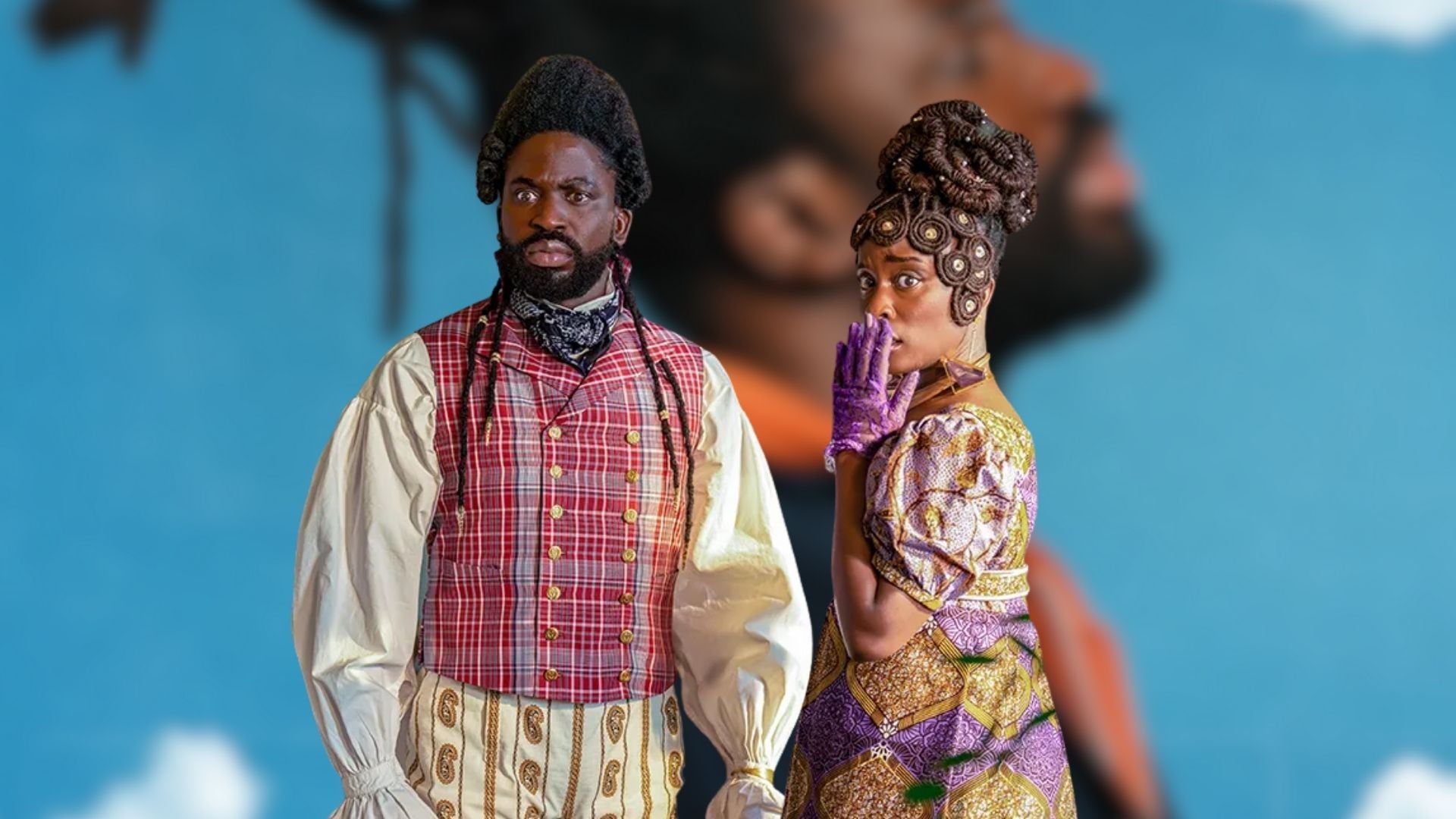
Dreaming Whilst Black – How Much A Dollar Cost


Hosted by
KT & Oti
Show Notes
Network your way into the room and evaluate how much a dollar cost between your dreams and the future of those around you. Find the realest love with Dreaming Whilst Black this week.
Referenced

KT's Picks
Referenced in this episode


Oti's Picks
Referenced in this episode

Episode Details
- Duration
- 0:00
- Released
- November 5, 2025
- Category
- Episode
- Hosts
Transcript
Transcript (9,076 words)
Full transcript of Dreaming Whilst Black – How Much A Dollar Cost.
KT: It is another week in the For Your Reference household, and it is a reminder that usually those that are at the brunt of climate change emit the least. We've talked about this on the podcast, friends and lovers all over the world, including the Pacific. Today specifically, I am talking about Jamaica in regards to Hurricane Melissa. It is a category five storm. This isn't necessarily to do with Dreaming Whilst Black, but if you follow Adjani, he is also sharing resources. Um, stay grassroots where you can be aware of fraudulent sites. Um, and also the Jamaican government has also set up resources as well as a place you can donate. Friends and lovers supportjamaica.gov.jm. We'll also have it in the show notes as well. Let's get on with the show. Hey, friends and dreamy, creamy lovers. Welcome back to the For Your Reference Podcast. You got your host, KT
Oti: and Oti
KT: network your way in the room and evaluate how much a dollar cost between your dreams and the future of those around you. Find the realest love with Dreaming Whilst Black this week.
Oti: Mm. How much dollar cost
KT: your soul?
Oti: Oh,
KT: wow. That's so
Oti: true.
KT: Whew. I, you know what friends and lovers we can watch and love and consume and devour shows and just not have the time to do full reviews. And, you know, we talked about, I'm pretty sure we referenced it throughout the podcast of how much we love the first season of Dreaming Whilst Black. Um, and, you know, sometime has passed since the second season, but we are here, friends and lovers. 'cause the time, right? Time is now.
Oti: Mm. I, I recommend it to the real ones. You know, uh, it's, it's, it's very, very, very, I don't think we've watched it in a, we've watched an episode and just walked away. It's always been the whole season in one sitting.
KT: Mm. Credits, credits, credits, Adjani Salmon, Dani Moseley, Babirye Bukilwa, Demmy Ladipo, Rachel Adedeji, as well as Joe Martin, as well as such a beautiful, gorgeous, if they're women, they're not frustrating. Everyone else may be frustrating. Cast. Oh, I am very excited. Um, friends and lovers, we will be speaking about the show generally. Obviously season two is at the forefront of our minds, but, uh, literally bless yourself. Get a snack and watch Dreaming Whilst Black season one and two back to back.
Oti: Hmm.
KT: The Dodgers in Kendrick. We up baby. Uh, and then come back to this episode. I will just say off top, spoiler, spoiler, spoiler, spoilers, spoilers, spoilers because we fucking love this show. Um, let's start off with general first impressions, even before our season two pull quotes. How do you feel about this show? My love?
Oti: Um, I loved it. I loved what we were taking through the first season, which, and I don't think I comprehended what more could be done on this show for season two.
KT: Yeah,
Oti: I guess the
KT: growth of the Black man is what you,
Oti: you know, man has to, but what they delivered for season two just blew my mind and we get to see so much more. Um. It's hard, you know, if you are regular listener of the pod, the season two castes, something that's live and well, and many of shows have been faced with that.
KT: Mm-hmm.
Oti: But Dreaming Whilst Black has this, the way Adjani writes
KT: Yeah.
Oti: You can just tell a lot of thought and a lot of things that are personal to his core
KT: Yeah.
Oti: Are being unveiled on screen and that just carries everything through.
KT: Yeah, absolutely. And um, there was a addition of black women in the cast of, in the writing, sorry, in the writer's room in season two. And I will say that that is very present,
Oti: Uhhuh,
KT: because I was telling you, well no, like season one was great, but in season two I was like. We're getting,
Oti: uh,
KT: who dimensional, layered storytelling. Mm. Of the women you did in this season. And I was like, I don't wanna put too much on this man, but I was like, the way season two is being written is being done in such a beautiful way. I don't know how we want to tackle it in regards to themes or characters, but, you know, from from Amy's career growth, you know, from Vanessa having to like back it up and bring it back one more time. And also for Grace, you know, there's so much in, in regards to the women in season two in particular, that just felt so delicious. And it, it wasn't just having, um, layered writing for the women characters. It was also holding Kwabena accountable. Mm. Because he, he needed to be gathered many times, maybe a bit, a bit softer than Uncle Claude. But he needed No, but he needed to be gathered.
Oti: Uncle Claude was just, that was violence.
KT: Well, but it's be Uncle Claude than Uncle Tom's the way he was moving with these white peoples.
Oti: True. That.
KT: Mm. A great show. Um, we loved it so much and you know, we've mentioned before that it doesn't need to do anything different to make it good, but I would say, you know, not even in Black American shows, I don't think we've seen the show and the lens and the depth and the vulnerability outside of this show.
Oti: Yeah. And, and the introspection of, of self, of, of, '
KT: cause you have Atlanta, but that's not necessarily vulnerable.
Oti: Mm. Yeah.
KT: Mm. Okay. Well, let's get into the pull quotes. Oti, season two.
Oti: All right. Um, Kwabena returns with more heart, flaws and humor, his balancing heartbreak and the ever shifting goalpost of being black on tv. It's a journey of self discovery to Boo. Bring on season three. Woo.
KT: Kwabena has his foot in the door, but soon realizes his ideals aren't as easy to maintain in an industry set on profiting, not platforming.
Oti: Mm.
KT: Layered writing and realness to the world. Make this series special.
Oti: So true.
KT: Because you can be so fucking virtuous when you ain't got shit because that was Kwabena in season one.
Oti: Yeah,
KT: right. He's like, how dare they? They're literally just whited. The skin is black, they're white, he was talking some mad shit, right? Mm-hmm. And then you get into season two, okay man, you've still got struggles ahead, but you're in the door now.
Oti: Mm-hmm.
KT: Now what? Jump Bitch. Sorry, that was Bitch Strong, but I'm remembering the Kwabena of season two. But it was very interesting because even when we see him. You know, try and wriggle on in, try and like, you know, um, cozy himself up to Bridget, for example.
Oti: Mm.
KT: He was ready to, you know, fair enough. He didn't know the guy at the door, but he, there was no way that he was, it didn't even, it didn't even trouble him. None. But he didn't, you know what I mean? Like, it, it just felt cutthroat at that point.
Oti: It did. It did. And this is what we, we as is it, we as a people.
KT: Yeah. But I'm not the, we, I am supportive and an ally of the we.
Oti: It's, it's when do you, when do you lower the ladder? Because it feels the struggle is real. As soon as you get an inkling, a sniff o of climbing man, you are pulling that shit up with you.
KT: But that's that scarcity mindset that you need to work yourself out. I know I sound hot. No, but it's true because they'll make you feel like,
Oti: tell me Fury. I know, I know, I see it.
KT: Check out our Boyz n the Hood episode. Friends and lovers, rest in love, uh, John Singleton. No, but it's true. They make you feel like you are the only one that can be in the room, and then you turn into Bamboozled, bro. That's why you need to be aware.
Oti: We've seen it transpire in sort of not real time, but when we're watching Project Greenlight, you see, once you've given that opportunity, it's, it's that scarcity mindset that you said that just makes people wanna move weed. Like, I can't fuck this up, so I can't, I can't even look at anyone else that, you know. I don't say black.
KT: Okay, but how about, how about Issa Rae? How about Ryan Coogler? Granted, they had to get to a certain, probably double, triple level to their white counterparts, but they got to a point where they could, they could bring that abundance mindset.
Oti: Mm-hmm.
KT: You know?
Oti: No.
KT: And don't you think
Oti: it's a thing though? It's a thing. It's a thing that you know in, in as much as,
KT: but do you see, how, do you see how choosing not to or not feeling comfortable to say it doesn't necessarily make you complicit, but it makes it harder to speak up the next time? True. 'cause then you are not the nodding along marginalized person that they thought they had a bro in.
Oti: Mm. No. Not hear you. And I agree. I agree.
KT: Because he was judging Bridget. He was judging Bridget. It's like you don't know what
Oti: she had to go through, not knowing what Bridget is actually doing behind the scenes for you.
KT: Yeah. But the jobs that she had to take to become the director of this show.
Oti: And the reason why she was the director of the show in that regard anyway.
KT: Wow.
Oti: And that's why I said the the, the goalpost is ever shifting because you think in yourself, all I have to do is get that job, get that direct opportunity. But she comes with, with consequences comes with strings attached to everything.
KT: Okay. Well I don't wanna speak too much outta turn because as I acknowledge I'm not the we in the collective. We, so I will succinctly focus on Kwabena in Dreaming Whilst Black, there needs to be an acknowledgement of Kwabena's character. A lot of that shit was just for him, not for No, it wasn't a uplifting of a movement.
Oti: True.
KT: And it wasn't necessarily to reflect his community. 'cause his community was Uncle Claude telling him to get a damn jab.
Oti: Yeah,
KT: I, so can we acknowledge that sometimes it's a personal pursuit as opposed to a collective community?
Oti: Oh yeah. It's a personal pursuit. And, and, and we,
KT: and that's okay.
Oti: And it makes sense because we can
KT: see, well, let's not make it what it isn't.
Oti: You can see what he's sort of been through in season one and how he accumulated to him being like, you know what, I'm not even letting this guy go into the same route with Bridget because you are, you are not sniffing that chance away from me.
KT: If there can only be one of us.
Oti: If the according could only be one, which he thinks they can only be one. No. In that instance,
KT: no. If we want to keep the complexity,
Oti: opportunities are bad,
KT: but that's what I'm saying. Maybe there is only one because then it gets too scary. Or what was it? Was it um, it wasn't Aziz Ansari's Master of None, was it? Mm-hmm. Or was it a Mindy Kaling show when they said there were two Indian leads? It makes it an Indian show.
Oti: I said, I'm sorry. I think
KT: yeah. Mm-hmm. But you know what I mean? And then it, and then it becomes too loud. Too reckless.
Oti: Yeah. Yeah. I hear you.
KT: But how do you, how do you, um, how do you grapple with Kwabena? I, I'm not saying him as a man. We can, we can go through all the layers, but I'm just saying him, you know, I, I can't even call it ambition man, because he just, I dunno. Did he just expect things to happen for him?
Oti: He did expect things to happen. He thought he's done the hard work. He's put in effort. He's got up, he's got a show written. No one's just picking it up and season only see him struggle with just trying to get that ad. Trying to push to, to make a road. Yeah.
KT: Yeah. The film.
Oti: So season two, he is more like, you know. I'll try and pivot. I've got my agent with me. Let's try and see what jobs I can get. But everything that he's getting or he's trying to, the putting in front of him is like, I ain't doing that. So Kwabena has his, his idealistic sort of, Ooh, my opportunity has to be this because I'm better than,
KT: okay. Well, I guess just to illuminate the point, let's just talk about it for a second. Keke Palmer. Hmm. KeyTV. She's not the writer creator, but she's the producer. Of,
Oti: oh, Southern Fried Rice.
KT: Yes. Southern Fried Rice. Granted, I don't like to give my whole thoughts if I haven't fully watched something, so I can't really give my review. But optics are looking questionable.
Oti: Hmm.
KT: And I guess this is what I'm coming to with Kwabena's character because to find out that we said spoilers to find out that the origin of this new TV show in Sin and Sensibility was based off The Help. Excuse me. So it wasn't even, 'cause you can talk about trauma porn. I, I don't know. Actually let, let's, let's bookmark, let's bookmark, uh, Keke Palmer show for a second. 'cause I actually wanna come to the trauma point. Actually. It is effective, it can be the sharpest way to get people to feel things, whether it's, you know, identifiably, you see the sort of, um, films with black talent that get nominated for Oscars, for example, are usually rooted in struggle, slavery, et cetera. So there's a general conversation about the very telling of those stories. You know, Oti talks about working overtime, watching Emancipation for the Fuqua and Smith support. I see you grimacing. So there's, there's the very telling of the story. But then there's the who's telling of the story. And even just watching Dreaming Whilst Black, knowing who we are, we probably wouldn't have even watched Sin and Sensibility. I probably wouldn't have wanted to watch it if I knew it was a white creator of the show.
Oti: Yeah.
KT: So I wanna hear your thoughts on the effectiveness, the redundant ness of trauma porn, and who gets to tell it?
Oti: I don't think I can state it harder that person that wields the pen is the most sort of, it's important. Mm. It's not just telling a, a story that I, if it's fictional and you're just not covering anything, but you know, they never do that because they wanna talk on shit. It, but you can't talk on shit that you can't speak on properly.
KT: This feels like One Battle After Another.
Oti: It is, isn't it?
KT: Check out our review Friends and lovers. It was very good. It was my favorite level. Final boss, Oti.
Oti: It's, it's, it's the misconception of, yes, it's this creative writing, but when you are trying to delve deeper and talk on things that don't really align itself with what's being shown, then you're just fucking up everything else.
KT: Yeah.
Oti: With Sin and Sensibility, there was, you know, the most telling thing was the blind casting, where they're like, we know what Sin and Sensibility is gonna be about. It's gotta be the what, 18 hundreds. Mm. And they're talking about, oh, it's gonna be both black leads.
KT: Well, it's supposed to be a, a lead black woman.
Oti: Yeah. It's
KT: locked in. Mm-hmm.
Oti: Mm-hmm. Mm-hmm. And they're think, oh, okay, we are going to cast also a, a leading black man. But then,
KT: but you can't have both unless you're Ryan Coogler or Spike Lee.
Oti: You can, you have both though. In that time, how do you explain then how they came to be? Because then the connotation is
KT: they both profited off it like Woman King
Oti: then. Yes. Have
KT: as many wives,
Oti: many for people who are not following it means that they're actually slave
KT: adjacent
Oti: owners and they're doing that business.
KT: Yeah.
Oti: So
KT: because it's not like, uh, Shonda Rhimes blind casting.
Oti: Yeah. Because then you're like, okay.
KT: That's the thing. It's how Game of Thrones call us. Yeah, yeah,
Oti: yeah. So you, Kwabena does not want that. 'cause then that goes into some,
KT: but then to have the white woman as well, doesn't that also bring, I feel like he was more weighted by the implication of a white spouse.
Oti: Yeah. Because then you can plate off is, Ooh, he married into this or they did this. Mm-hmm. So it's not as, the questions are not as, so I
KT: heard a whisper,
Oti: but it is. Right. So there's this weird thing. So they do all this casting dancing and the get to cast influencer Roxy whose acting was Wow.
KT: No, but you see it all the time.
Oti: We see it all the time. It happens.
KT: Yeah.
Oti: Um, with my barber, he was like, how do shows or movies get to a point where they get released and something is so jarringly bad and they don't even understand? I'm like, there's inter, why
KT: don't think they care?
Oti: There's interference. Once money's out, once someone's put money in a project, that shit's gonna come back. Somehow they're gonna release that shit. When you, when you were watching, uh, Project Greenlight and they saying This is what the budget is, this is what is gonna happen. And then you go to the exec meet exec meetings or who do you wanna cast? We wanna cast
KT: big name.
Oti: Yeah. We wanna cast big name. We wanna cast, uh, the darker skin girl. But then there's the whole interference with the executives who are like, Ooh, actually, you know, we gotta, and you pick your battles, you conce, you, you concede on a few things, but the things that you actually stand on there, like, you know what I'm gonna,
KT: was it Sheryl Lee Ralph?
Oti: Uh,
KT: there was a, a black American actress talking about, like a casting director told it to her face. They couldn't see the white male lead being attracted.
Oti: Yeah. And you hear all this sort of shit all the time.
KT: Yeah. And then it's like, that's not reflective of life. You are creating a world that's perpetuating that hatred really at the end of the day.
Oti: So they'd have all this logic on who they can cast, but they would come and say they can write about anything as well.
KT: Ah.
Oti: So it's like. No one will believe you together, but we can write whatever we want. Pick something, man. Stick to it. What is it?
KT: Yeah.
Oti: Miss me man.
KT: So, and I, I think, I think the crux of that is you want, you want the world to feel real and you want it to ring true, but it doesn't necessarily need to be your experience, but it needs, you need to be wielding a pen of a world that you understand, right? Because historically in hip hop, you know, many of your favorite rappers will be talking about shit or, you know, certain sort of activities that maybe they necessarily weren't really involved in, but it felt true to the world.
Oti: Mm.
KT: Right. Unless you're Clipse. They'd be passing out bricks and just happen to have their CDs there. Um, so, so in, in that essence, you need to be living in the neighborhood of the stories that you're writing.
Oti: Mm-hmm.
KT: Not gentrifying the neighborhood, but you need to be in the vicinity of the neighborhood where the stories are being written. The, the, the repetitive nature of what gets attention and what gets nominated, I think is a different conversation for another day. But it's also why Sinners is an outlier and what made Sinners so special and has the lasting power. Because in spite of all of those asterisk that you are talking about, Oti, in spite of two black leads, in spite of a wholly centered on black experience story, unflinchingly, unapologetically black, it's still became so successful. Right. Because. From that, I'm pretty sure execs are like, oh, they want vampires. And it'll always just serve whatever it is. Back to your barbers query and quandary. It doesn't fucking matter. They don't care about the quality. All of these tech companies, this is annoying that we have to talk shop, but all of these tech companies, they don't care about art. They don't care how it's made back. Girl. Whole, whole, um, catalogs, whole shows, whole film, franchises, uh, getting pulled off of streaming services so that can they, they can make a profit or they can project their expenses however they want to shout out to 30 Rock. Even back then in 30 Rock, they had an example of a script getting passed all the way around to the point where there were just ads fucking everywhere and it didn't matter 'cause no one was gonna watch the movie anyway. Right? So. It's not even about art, which is so sad and so frustrating. And that's what also makes Dreaming Whilst Black even more special that we do get this show. Hmm. As much as you have a way about Queenie, we get Queenie, we get Boarders.
Oti: Oh,
KT: we get Michaela Coel's I May Destroy You.
Oti: Mm mm-hmm.
KT: There's a succinctness in the specificity of storytelling that will save us all.
Oti: A hundred percent.
KT: Well, let's move into our next topic. Uh, I, I wrote representation. I feel like we have kind of covered it in some sense. I wanted to talk about it in its vapid form that we see, uh, I don't even know how you wanna tackle this, so, Oti, I'm talking about the coworker. I'm talking about Amy's coworker.
Oti: What do you mean? The, the biracial girl?
KT: You lost it when she showed up with edges. Oh, did you say all the non black to the back?
Oti: I was, jeez. So we get, Amy is walking in an agency and you know, she is pitching her ideas, you know, they put thought into it, you know, I think with, was it William? Mm-hmm. And nothing's sticking. It's getting bypassed, but for whatever reason, you know, oh my God, they get to do, what was it, what was the concept of the show?
KT: Uh, something about being naked. Was it cooking as well?
Oti: Probably. And, and it's. And this is where like you can't question anyone's sort of identity and how they see themselves and how they want, you know,
KT: how they identify.
Oti: Yeah.
KT: Yes.
Oti: So Amy could not say anything. Just look
KT: Well yeah. Isn't looking part, oh, we, we, we don't need to get too in the weeds and, and in too much detail. But, you know, Erie, for someone that was born and raised in Kenya, not in a western country like the UK or even Australia, for example, is the word interesting to you?
Oti: Yeah, she goes, shit's easy from, from where? From.
KT: Oh,
Oti: oh. Michael Jackson's song comes to mind, but that's just it.
KT: I, you know, I think I will just say, I, I'm just talking about just general mixedness. I, I feel like if you Southern fried rice or otherwise, if you have been raised and steeped in the culture, even if you are white passing, that shouldn't bother you. That shouldn't be the reason why you start slam poetry and start posting your living in two worlds on social medias. Right. Because at the end of the day, you know who you are.
Oti: Mm-hmm.
KT: Mm-hmm. Even if you're not Daz old and you've got, you know, the cred, if you, if you act funny and you are white passing, you can't make that the biggest struggle in the hierarchy of race and color, is what I'm saying.
Oti: There's levels to shit, and that's all I'm gonna say on the matter.
KT: Yeah, fair.
Oti: But I think the most interesting bit was also what we get to see in season two is sort of like you had touched on a bit more was the growth.
KT: Yeah.
Oti: Because then we get to see Amy pushing a bit more as well, because there's this. Uh, there's this onus on her where she feels that she has to, I have, I have to get this certain amount of money to provide for my family to, to take care of my
KT: mom. It's not, she feels that's a reality.
Oti: It is
KT: because that, okay, well let's
Oti: be, she, she feels, 'cause if you had talked to your mom, which I don't think is something you do in culture 'cause it's not a matter of, oh, mom
KT: to your Nigerian mother.
Oti: Yeah. Oh mom. You know, gotta, you know, can't be sending this check every month like this. No,
KT: but she also had to pay for a carer for a mom.
Oti: Yeah.
KT: So, feelings aside, there were necessities. I know the mom like was like, nah, I don't need one. But at the end of the day, we all need help. It is what it is. Yeah. But also as a daughter, I can relate to Amy feeling like she needs to do. More. Mm-hmm. And feel like she's not doing enough. And that means there are facets of your life in this instance, her career that went on hold.
Oti: Mm-hmm.
KT: Maybe it was easier because it's scary to take that leap and maybe there is comfort in being that, in that caring sort of capacity. But we, we, we, we find her, I guess reluctantly via the sister finding a way to get through that. But I think that's also what makes this show so real because it's not easy. And I think that's part of, 'cause this show works on so many layers. Yeah. That white man that created Sin and Sensibility, he is emblematic. And you also see it in Australia as well. You have people in Newtown, you have people in the eastern suburbs that literally remic their way to Western Sydney. To extract the stories out of our mana
Oti: Mm.
KT: You know, and in a very, in a very analytical way, you can see the layers. And I would absolutely say it's deliberate in this show, but you have this white man
Oti: Yeah.
KT: That is harnessing the stories from The Help. And he's legitimizing his outfit by bringing on black cast, black, uh, directors, like people behind the scenes to legitimize it. Right. And to make it feel like, again, like One Battle After Another. I don't know why it was so hard for people to see through it. But anyway, that's their own qualm for their own bing bat boomba bam day. Right. But it's one of those things where those that have the most to say, those that have the most vibrant, interesting things to say. Never get to say it because those, 'cause they don't have the luxury. Right. Amy doesn't have the luxury to sit around writing sonnets. She's working in the job, she's trying to pitch shit that she knows she's passionate about. But the end of the day, the job is what's going to, you know, you are always interconnected. Whether it's her sister going to Cambridge to become a surgeon, whether it's her mother, whether it's all of this expectations she has, there's no, like you're literally dreaming on the side.
Oti: Mm-hmm.
KT: You are not dreaming like at the forefront. And then you have all of these like elite, upper middle class people that are doing art. That means nothing. Right. And sometimes art doesn't need to mean anything, but the opportunity isn't there.
Oti: Yeah.
KT: And I guess that's the difference that we see with Amy's character.
Oti: Yeah. Uh, it, it was good to see the growth. It was good to see the, the, um, the willingness to sort of allow herself to get help as well. To accept, help, to accept that a, it doesn't have to fall all on me
KT: to do so emotional.
Oti: Yeah. And the sister
KT: Yeah.
Oti: Being like, I got you.
KT: Yeah.
Oti: You've been doing all this for me all these years. Let me, let me do something for you.
KT: Yeah.
Oti: Bra.
KT: You know what I hope, not in my experience, but I hope that ethnic families are that supportive because
Oti: how needs to watch this shit.
KT: But Grace. But Grace was so supportive of Kwabena.
Oti: Yeah.
KT: Like almost confusingly. So, but she was so. Supportive and she wouldn't let anyone speak ill of herself
Oti: apart from Uncle Claude.
KT: Well, no one, no one was gonna stop him. Yeah. But it's actually, it's actually quite nice in this show to have very supportive parents.
Oti: Yeah. Like, I know what you're capable of. I got you. Don't even sweat it. Mm. You'll get there. Mm. You know, whatever Uncle Claude says, fuck that. It as much as I, I, I did think Kwabena was being a bit ridiculous in season two. In terms of, what do you
KT: mean a
Oti: bit in terms of just accepting that you had to start somewhere while you still find your perfect sort of project?
KT: Yeah,
Oti: because there has to be some give or take. You just can't be. Moving like that.
KT: Like I know I can do this. Let me in front.
Oti: Yeah.
KT: Yeah.
Oti: It's like those people you hear on America's Got Talent or American Idol or whatever, you know, with a kid in hand, kids like eight years old. Oh, we've been living in the car for a year now because I've been dreaming about this moment right here, you know, like bra.
KT: Yeah.
Oti: And no singing is all you got, but Jesus, you gotta prioritize some shit.
KT: Yeah.
Oti: That kid can't be sleeping in a car, with a kid just because you are pursuing music. I'm sorry. You cannot.
KT: Yeah.
Oti: Dreams are important. Happiness is important, but there are ways to do that shit. I'm sorry. There's just ways.
KT: I feel like the African daddy came out.
Oti: Maybe it's my trauma. Fa
KT: maybe Trauma Whilst Black.
Oti: Oh, you can't, you can do this. You gonna be academic and shit fan.
KT: But possibility,
Oti: possibilities. Yeah.
KT: Possibility is so important.
Oti: Mm.
KT: Um, yeah. Kwabena, I don't know. He moved in a way that was very frustrating to me. Um, we haven't really talked about the set of Sin and Sensibility. We haven't talked about Rudolph because this, this hurt man, this hurt watching this scene about the scenes throughout. But you know, when he first, when Kwabena first meets Rudolph. He's like, I got your back man. I'm a big fan of you. Don't worry, yo, dad, I got you.
Oti: You got a black director for me means something.
KT: Because, what do they call it? Like when they, when they're just filming him? Is it caught aside? Mm-hmm. Like they were talking about doing and he was like, yeah, I wanna do yours first. And then Roxy wasn't very good, so she took up all of the time and they couldn't film his side or whatever you call it.
Oti: Yeah. And they had to like, just, he only had one take of it.
KT: Yeah.
Oti: Like, just go and do it because you're good. I know you're good and you can do it.
KT: That's not nice.
Oti: We're just gonna do, you know, you're gonna get five minutes to do that shit.
KT: Yeah.
Oti: Well, other kids
KT: all this time because you don't help this, this little white influencer girl needs help.
Oti: Mm.
KT: So I'm gonna give all my resource to her.
Oti: But then what, what Rudolph says really hit though.
KT: Yeah.
Oti: All his career,
KT: all my life.
Oti: He
KT: had, he was David Jonsson in The Long Walk.
Oti: He had to seed or he, he always just had a chance to do the bare minimum.
KT: Yeah.
Oti: And no one could give him a platform to actually, for him to go above and beyond on what he knows he can do with time.
KT: Mm.
Oti: Yes. Of course I can perform this in a way and it'll be serviceable, but I wanna do it properly. Give me fucking an hour to nail this shit.
KT: Yeah.
Oti: He's never highlighted his career.
KT: And he was a lead and
Oti: he was a lead in this and he's a lead with a black director.
KT: Yeah, exactly. So how much worse would it have been?
Oti: And that's what Ru said, like
KT: what's the point?
Oti: What's the point?
KT: Yeah.
Oti: Why am I, why, why, why, why did you come to me? Gimme this call.
KT: You looked me in my eyes. Yeah.
Oti: Only for you to not Oh man. And I think, uh, Sin and Sensibility had to happen in Kwabena's life for him to actually understand. Who he is as a person.
KT: Did he understand? Okay.
Oti: He did.
KT: Okay. Okay. Okay, okay. Okay. Okay. Okay. Let, let, let's actually talk about don't take
Oti: blackman's growth away.
KT: It wasn't even there. Bebe? No, because he kept hiding behind everyone else. He never took accountability. He never said my bad or not my bad, but like, I'm so sorry. Rudolph like, like he never, it was never, he never wanted to look it in the eye Him again. He got his foot in the door. And how much a dollar cost, because you were talking mad integrity before you got in and now you're understanding why those people that you were judging, like all of the black creatives that you were judging, why they were moving funny. Because you are moving funny now. So maybe it's a system thing. My guy. Mm. You definitely have pickies in the industry, but maybe it's a systemic reason why people that are trying to make the change, get tired, lack the resolve, or they just bend to the will because that's essentially what he did.
Oti: Mm-hmm.
KT: That just hurt that that hurt seeing Rudolph. 'cause then it's, again, it's coming back to it. Personal pursuit over collective community because you didn't really care about the overall, uh, representation and experience of black people on set. You were just trying to get your director nut off, which, you know, is admirable in its own sense, but that's why the gate is so rigid and closed.
Oti: Yeah.
KT: Oh my God, I just remembered they put that light skinned boy in, in, in blackface.
Oti: Oh, yeah.
KT: As, as our cultural expert. Please navigate that with me, Oti. Or maybe you navigate by yourself.
Oti: It's,
KT: was it funny in your head and then shocking and then funny when you saw it, or was it not funny at all? Because we, let's be clear, we watch Bamboozled where I personally learned for the first time how they made blackface paint. I guess I never thought to thunk to think of how they would do it. So there's a very real sobering seriousness to blackface in, in, in, um, Bamboozled. And then there's this, not to say that this was comedic in any way, but how did you, I, I guess I would like to know how did you experience. The, the exploration of this theme. It's okay. I'm black, like white lady makeup artist. I'm telling you, you can do it. I just wanna, um, navigate that with you. My love
Oti: it. It's, it, it was at the height of pressure for Kwabena.
KT: Mm-hmm.
Oti: Where we get the head of the studio being there, you know, he has to deliver. He feels like this is his chance. He cannot fail regardless. So decisions he is making are not even fully thought through. It's, how can I just get from point A to B as quickly as possible to, to sort of make appease everyone and make the, make the head of the studio be like, ah, he knows what he's doing because then it's his, this was his audition where everyone's giving comments. Everyone's saying this is working. Why is the chariot not moving? Why is the all that. So a, you get a light-skinned brother. He is like, you know what, putting blackface on the black person isn't that bad. Right? And you can get, you can see he's co tanning. It's like, yeah, let's just do it because it's he, he had no other option.
KT: Okay.
Oti: I I, I
KT: are you absolving him and I'm are absolving him fully
Oti: because I'm not absolving him. I like, he was already moving
KT: because this is all fictional. We, we, speaking fictionally,
Oti: he was already moving widely at that point. Like he wasn't opening, he wasn't being truthful to himself. And, uh, and a less pressurized atmosphere. He doesn't make that decision at all. I think it's just with everything piling up, I can't, I can't fault him for making a decision because I feel like most would, given the circumstance of that place,
KT: just curiously,
Oti: I wouldn't,
KT: most just curiously, the jury would like to know what is he at fault for, because he, he seems quite faultless at the moment.
Oti: He's at fault for everything. He's at fault for a lot of things.
KT: Okay.
Oti: And he owns it at the end.
KT: Okay.
Oti: I'm not, I'm not absolving him from making, I'm, it's, it's a mild decision to do. He put a lot of people, the poor makeup lady was like, Rob, I don't wanna do this.
KT: I don't feel comfortable.
Oti: Because you can imagine there's a lot of, this is social. Imagine if that was a real situation that makeup artist would be getting flamed.
KT: Yeah. Oh, absolutely.
Oti: Yeah. I'm not absolving him for anything. It was a mad, it's a mad thing. And for, for them, everything to unravel the way he did and him getting fired, rightfully so, because he just, at, at some point he stopped caring, like he said so many times in this episode, he is not, he wasn't for it, it wasn't for the collective good. It never really was.
KT: Mm-hmm.
Oti: And, and I think that's where we were heading with him up until the awards.
KT: Okay. Can I bring a meta layer into this?
Oti: Mm-hmm.
KT: Shout outs to the post credit scene podcast. Uh, they had Dani Moseley on their podcast as well as Ali Hughes, who isn't credited. I'm showing you a photo, Oti
Oti: mm-hmm.
KT: Who isn't credited. On the show, but he's been involved since Dreaming Whilst Black was a web series.
Oti: Yeah.
KT: You can see his face.
Oti: Mm-hmm.
KT: He's white.
Oti: Mm-hmm.
KT: This show talks about Dreaming Whilst Black. Mm-hmm. With your white best friend maybe.
Oti: Mm-hmm. Oh, I thought it was the man on the right.
KT: No, that's, that's one of, that's one of the hosts of the podcast.
Oti: Okay.
KT: Um, funny guy,
Oti: uh,
KT: um, I just wanna hear your thoughts. I wanna hear your thoughts on this.
Oti: Mm.
KT: So, so this, 'cause I didn't, I actually didn't know that this guy, he's not credited, so I don't know if you'll be able to find it. Um,
Oti: and he's involved in actual tv.
KT: He's been involved since the web series, since the start, like with Adjani
Oti: involved in what capacity though?
KT: Involved in co-creating.
Oti: He's a co-creator.
KT: Yes. Does it, so, so my question is, it seems like it is changing. Like, does that then dilute, because I feel like so much of this show is like, it's nice that black people can write this way, right? Or not. I feel like a lot of this show is like, Ooh, that's nice. It's like even the casting, even the, you know, the decisions of particular storylines. Like, Ooh, that's nice. I, I just wanna hear from you. Because personally, in Woman King, when I found out there was a white lady writer, it made sense to me because of how they framed Woman King. They needed a heroine. Heroine in a setting where it's hard to have heroines, right? But this is different. I didn't feel that way. Because I didn't like it. It felt like it was centered on black people. Right. I just wanna know, does your, does your feelings change at all?
Oti: Damn.
KT: You look like the Kendrick album cover.
Oti: Uh, why is he not credited though? I feel like you put it out with your chest. Right? I don't, I don't have anything
KT: because that feels weird then. 'cause if he was legitimately there from the start, like co-creator, um, co-creator,
Oti: was he on the pod saying he felt away that he wasn't credited?
KT: No, I think he's like, he's cool. He knows himself. He knows he's been involved in it. Ohanian is like the co-owner of Proximity production. Um, Autumn Durald Arkapaw. She's Filipino like. Proximity, Ryan Coogler's, uh, frequent collaborators. Ludwig Göransson, he's white, but his dad played the blues, so, you know, he's rooted that way. Black Panther soundtrack and all of that. So I'm not necessarily saying it needs to be an all black production, but I think it's more the way it's positioned,
Oti: it is positioned as an all black production, or at least that's what I thought. Um, okay. I don't think it takes away, it,
KT: it doesn't have to take away, I'm
Oti: just
KT: asking. It
Oti: doesn't, it doesn't take anything away from what I watched or what I feel for Kwabena the character and how he moves. I don't think, because with season two we get a different perspective of what we delve deeper into the different characters within the world and not just fully focused on Kwabena. Um. Some of the things that I loved about the show, I just feel like a black person wrote it. Honestly. Maybe, maybe,
KT: but, but, but probably, yes. I'm not saying this guy wrote, I'm saying I didn't know about his existence until the show. But also in that podcast, I also learned that they brought on black women writers for season two. So I, I learned a lot listening to that podcast. Okay. So I'm not, I'm not saying it takes away from anything. I just wanted to know your thoughts, that's all.
Oti: Yeah, I think it sucks. I think it sucks for, it
KT: sucks.
Oti: No, it sucks for him not being credited, because yeah, you can't be putting work like that. And not, especially for a show as good as Dreaming Whilst Black,
KT: especially if he was there from the start. He is obviously done a lot of work
Oti: on it. Like, I don't know if it's an optics thing that doesn't fucking matter at this point. Like, put mans on, you know, he's done the work
KT: and shout outs to, um, Alexandra's. The Greek
Oti: ah,
KT: ad. So this, so this was interesting because like I said, friends and lovers, you can be white and ethnic. And he was an ethnic white.
Oti: He leaned into that.
KT: He was heavy on the f.
Oti: Wow.
KT: That was funny. Mm. I I, I think it probably, there's probably a deeper more, um, like if you're in the know, in the know sort of thing. I just thought that was really funny.
Oti: Yeah.
KT: Because you gotta get him where you fitted.
Oti: Mm-hmm.
KT: And if he's Alexandra's today, he's Alexander tomorrow. Who knows?
Oti: Tick those boxes.
KT: I wanna speak about Kwabena and Vanessa's love story.
Oti: Oh, yay. Yay.
KT: Personally. Kwabena. I don't know. He had a lot of growth, as you said. Let's not take his growth away from him, but to also have him as a present and vulnerable romantic partner. I think we were biting off a bit too much that we could chew in this show.
Oti: Mm-hmm.
KT: Especially because there's not that many episodes in it because man, I'm pretty sure when he was very vulnerable when they had their carriage ride. I'm pretty sure I was crying at that scene.
Oti: You are. But I told you it's not true. It can't be
KT: for a black man to be vulnerable in this world. Yeah. How should I
Oti: know? No, because knowing Kwabena, how he's moved this no way. This guy is being this open right now. It had to be his halluc in his dreaming his. It couldn't be.
KT: Well, you are very lovely and you are very vulnerable and I love you very much, but as our residential black man, I would like to know 'cause what's the point of that? Because you also have Stack in Sinners that would love, would love Mary till he dies and never really be there presently and vulnerably. And you also have Kwabena like this with Vanessa. What is that? Wouldn't you rather just be vulnerable? I know it's hard, but isn't it better to be vulnerable with the one you love than just be in regret for the rest of your life?
Oti: Because then he, he, he, he has his fears and his insecurities that he needs to work on.
KT: But isn't his love more important?
Oti: I thought it was more important to the point where it was like, you know what, this man is gonna sacrifice his relationship or the possibility of getting back with Vanessa because he didn't want to just say like, I'm fucking broke and I was scared.
KT: Yeah,
Oti: bro. That was like, what do you, do you think Vanessa, maybe she cares about money you don't know until, I don't know. Like, just say,
KT: yeah,
Oti: it looked like he was really, she was really into you anyway.
KT: Yeah.
Oti: I his damn fear. And you feeling like he had to like, have this bravado of all the restaurants scene killed me. Oh. I don't think I'd be able to face anyone if I, if I moved like that.
KT: Well, how you gonna act like that?
Oti: Oh, I'll, I'll, I'll wash my hand in the soup.
KT: Well, no, Oti, you remember very, very lovely. And young Oti and young KT. There's
Oti: nervousness, but there's no,
KT: but we, we watch videos to learn how to say Sauvignon Blanc.
Oti: Yeah. It's different from what he was pretending as if he's been there for
KT: Yeah. But Vanessa knew that was not his world.
Oti: Yeah. She knew
KT: she saw him.
Oti: Yeah. But he didn't realize
KT: that he didn't wanna be seen.
Oti: Hmm. So when, when he ran up to Vanessa's apartment at the end, were you like, shut the door.
KT: Why are you asking me?
Oti: Because I need to know where you are at with Kwabena and Vanessa as a, as a, as a relationship. Are you looking at him as I see
KT: him up for Black love?
Oti: Are you looking at it more like, ah, this is Lawrence and Issa all over again. Just cut it.
KT: Is this what they call leading questions
Oti: 60 minutes style? You know,
KT: I just feel like Kwabena has, has more demons to face and everyone is deserving of love. However, the depth at which you can experience and reciprocate love is dependent on your vulnerability to others and to yourself.
Oti: Mm. Yeah. Okay, I hear it.
KT: Any other characters? Grace. Ah, Kwabena just stuck around like a bad smell. It's like, bro.
Oti: Yeah.
KT: Mom's trying to get it in.
Oti: Yeah. I was like, who are you, Kwabena, to even try and judge this.
KT: Yeah.
Oti: Don't even attempt if, if you see anything like, I'm dad,
KT: when they showed Vanessa stay the night, I thought it was a dream.
Oti: Oh, nah, nah. I, I knew that happened. It's just more the scenes where he's actually talking sense and being vulnerable. I'm like, nah, that's not happening. That's not our man. I know
KT: my answer. Um, I wanna talk about Grace and Rol. Remember that scene where Uncle Claude, uh, and Auntie Polly came into the restaurant
Oti: mm-hmm.
KT: And she didn't claim him.
Oti: Yeah.
KT: That was sad. I just, just give your thoughts on that.
Oti: Yeah. 'cause, because man, he's out here wanting, you know, I'm not playing games. I'm not at age to play. Yeah.
KT: Fair.
Oti: I just, I, I like you, like I'm not asking you to marry me or anything mad. Just, just, just let's be together fam.
KT: Yeah.
Oti: And, and just that was very sad. Like, I, I understand Grace's perspective where she was like scared that things were moving too fast. This was the first sort of time she, I think
KT: it was more optics she was worried about.
Oti: I don't think she was worried about optics that much
KT: when they saw her in the restaurant of Rol.
Oti: She just didn't want them to judge her on a business.
KT: Okay. Interesting. I see that. I see that
Oti: like in no, Claude. What? Claude. Claude. Like I don't, I I would say random shit just so Claude can walk away.
KT: Okay. 'cause sometimes I feel like I see and he Claude on the daily,
Oti: I would not be vulnerable with Claude around
KT: actually Buzzfeed quiz, who are you in this show? Claude.
Oti: Oh, those are only two options.
KT: Or Maurice?
Oti: I'm Maurice. I'm Maurice. I'm chill. I know my shit. Got my girl moving nicely, man. I'm getting, you're running,
KT: you're running for the delivery.
Oti: Same thing, man. It's a, it's a, it's a struggle. There's people trying to get your apartment. It's wild.
KT: Okay, so you don't want to identify with, um, I, is there anything else? There is one more thing I want to bring up before we wrap up. Is there anything else you wanna mention?
Oti: No,
KT: I don't necessarily think it's social media, but it's the way, because even the, the way that they got the result for Jamaica Road. The way, you know, kids are saying, crash out like the club's cr crash out special.
Oti: Mm-hmm.
KT: How did you feel about that? Because don't you think he was also potentially, you know, at, at, at, at, at, at least complicit, at worst, a perpetrator of the very shit he was accusing them of?
Oti: Yeah. It, it wasn't as he, he was handed a losing battle and he did his, the best he could. I wasn't mad at him calling it out, but him making it as safe. He didn't play our part in how things stand out, felt a bit, uh, it took some responsibility here, but then I think. His project was greenlit until this thing happened with this crasher and all like, now we gotta pause it until we see how things pan out. Uh, so I guess season three, hopefully we get a version of Jamaica Road.
KT: Do you think Kwabena
Oti: is ready for Jamaica Road? He is not ready for Jamaica Road, but come on now. You know, he, he'll have opened up in the first episode. He'll open up to Vanessa. They'll have, you know, a touching, uh, you know, relationship.
KT: You're really trying to say without sounding like a pervert. Now you just sound like double pervert.
Oti: What do you mean?
KT: Okay. What do you mean by a touching relationship?
Oti: Vulnerable.
KT: Tempted to touch
Oti: vulnerable. All
KT: right.
Oti: Oh my God. Um. Yeah. No, but he, he, I think he's, he's getting ready to do Jamaica Road. I think he is understanding that he's flawed and that this shit that he has to deal with and he has to open up.
KT: Mm.
Oti: And we got semblances of that in the season, so it's only up and beyond, man. Hopefully he gets into therapy in third season. 'cause that's something we need to start off standardize. And he needs it.
KT: Uh, is he on his Sopranos tip
Oti: actually?
KT: Literally,
Oti: yeah.
KT: Was that good for you, Oti?
Oti: It was good. I, I love this show so much.
KT: It's a great show. Do you love the podcast?
Oti: Yeah.
KT: Well, I love you too. We're gonna finish off in the segment we call For Your Reference, Oti.
Oti: I was thinking about this and I think I talked about, I mentioned it at the start of the episode and our reference, Project Greenlight, uh, the reimagining, Issa's version where we get to see creators being given an opportunity to, uh, make their projects come to life, sort of like Jamaica Road. And it's interesting aspects of how the behind the scenes of filmmaking and, and pairing that with Dreaming Whilst Black, will just give you that better sort of picture.
KT: Nice.
Oti: Mm-hmm.
KT: Michaela Coel's I May Destroy You. I think of it often.
Oti: I think about our disagreement often in that show as well.
KT: Our disagreement.
Oti: Mm-hmm.
KT: About sexuality,
Oti: about the movement of that. Not that just
KT: illuminate me.
Oti: No, just how, um, what was it, Kwame?
KT: Yeah.
Oti: And how he was moving. Like he just don't play with people's emotions like that. Especially when you know nothing.
KT: Also. So you are talking about the movement of sexuality
Oti: a little bit, but then again, a lot of it was, was based off Kwame anyway.
KT: No, but you, not for today. But you're wrong in that instance. And I'll uphold that to this day. Mm. Wow. Mm. You couldn't just let me have my own reference segment.
Oti: No, you can't. Come on, go on, go on. We,
KT: no, just thanks for reminding me. I'm not the collective we, you say big cat and then you make it clear. Draw the line, sir.
Oti: Oh, you know, you're my only corn bread. Come on now.
KT: Well. From the lens of a woman I very much appreciate I May Destroy You. Thank you very much.
Oti: I love I May Destroy You too.
KT: No one asked why you bring it back to you. I just wanted to finish off my reference.
Oti: Ah, all right. I'll give you a and scene.
KT: Oh, what's the, um, Mitchell and Webb?
Oti: Yeah. Mitchell and Webb destroy something.
KT: Something like that.
Oti: Yeah.
KT: But watch this sketch show. It's very good. But back to my reference, I May Destroy You. On Twitter, Instagram, and other places we are at, @ForYourRefPod,
Oti: write us an email. hello@fyrpodcast.com.
KT: We're also on make sure you check the donation link, friends and lovers, supportjamaica.gov.jm podcast. Um. And yeah, we'll see you on the next one.
Oti: And scene.
Related on FYR
Discussion
Loading comments...