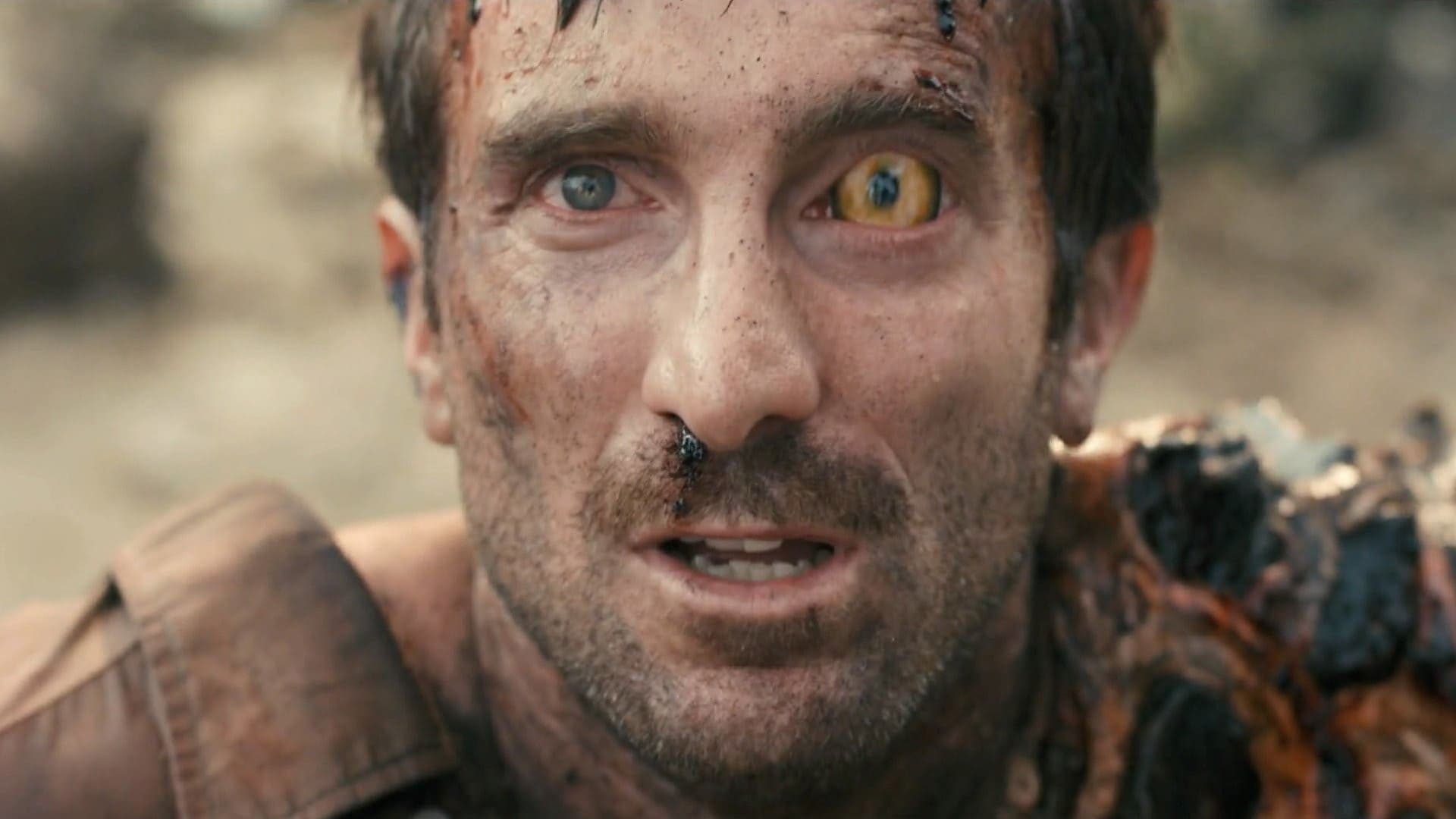
District 9 – Hard Core Prawn (with FilmBusters)


Hosted by
KT & Oti
Show Notes
Produce that good juice and hide the eggs because Sweetie Man is coming for you. Join us in the ranks as we discuss District 9. Quid Pro Mo brought to you by FilmBusters.
Stats
Director: Neill Blomkamp
Released: August 2009
Writers: Neill Blomkamp, Terri Tatchell
Budget: $30,000,000
Worldwide Gross: $210,888,950
Actors: Sharlto Copley, David James, Jason Cope
Breakdown and Analysis
- Paul: 8/10. This movie has changed Paul and his wife’s lives for always referring to prawns as fucking prawns. All the accolades to Sharlto for his first role and stealing the show. If aliens arrived today this is what would happen and continues to happen.
- Adam: 7/10. Third watch. Every watch is enjoyable at the start but the style is commonly used for comedies so it’s hard not to take it seriously. He gets what the film is doing but it loses him. Can see all the messaging but that is not enough. It’s not a bad film, it’s just not great.
- Ben: /10. Agrees with Adam. Really enjoyed the themes and idea but after getting over that, it goes nowhere. He appreciated the personal transformation but did not care for the last 30 minutes at the end. Wikus is an asshole and not a sympathetic character. We are made to see Wikus as heroic and Ben was not buying. He’s only upset because he wasn’t part of the system anymore.
- KT: 8.5/10. Similar to El Hoyo, she felt it wasn’t perfect but loved the themes and conversation it brings. The social commentary exemplified through characters learning or not learning. KT has managed to evade this movie for 10 years and this was a first watch. She agrees with Ben in regards to Wikus. Worried this would turn into a white saviour complex, which it wasn’t until 3/4 way through. It was a white self-serving dickhead that graduated into white saviour. Where Avatar failed in drawing Sci Fi with tangible themes, District 9 thrived. If you took nothing from this film, that is on you as it was there.
- Oti: 8.5/10. Frame of reference is everything. Oti was in awe of how he could draw parallels. District 9 is what he’s watched through news coverage. He resonated on many levels and experience. It’s far from perfect but it is Oti’s perfect Alien movie. This trascends Sci Fi and delves deeper than other in this genre that aim for social commentary. Delved into his love for Sci Fi, drawing out human nature. ‘Dehumanising’ aliens and putting them out of your memory. Oti was volunteering in NGOs and could see the themes being pulled. It was the first type of movie that surface these issues in a blockbuster film.
- If cinema resonates with you, it is so important.
- We are experiencing the story through Wikus lens. Our audience needed to identify with him so he was made to be more heroic. Would have been more interesting to explore the prawns. It felt like Jake Sully takes an acid trip in Johannesberg.
- We talk in abstract of aliens but there are real life parallels. It’s always the ‘other’. KT is not naturally a blonde hair, blue eyed gal in Australia. It’s always about needing to learn the language, integrate in some way, keep traditions to themselves. No one should have to experience being homeless but don’t build a drop in centre near me. A lot of the time the Aliens serve as a proxy for whatever you want to project on them. There is a negative connotation with projecting but in this case, it is about self reflection. There’s some real existential quandries that need to be reconciled, either on your own or with this movie. I will go to Africa to volunteer but not my actual neighbour.
- Blomkamp made a short film called A Life in Joburg and interviewed South Africans about Nigerians and Zimbabweans and the footage are genuine responses.
- This film is being approached more light hearted but if you change the word prawn, it totally changes the mood of the film. District 9 is based on District 6 an actual place in South Africa.
- It’s interesting to watch media that tackle racism and the impacts of it because it used to feel like a triumph because we have gotten past it. It is harder for KT to watch Lovecraft Country and Watchmen because of the steps we have gone backward.
- There are so many things to draw in real life. In Eastern Africa, there are cases where Albinoism is seen as a way to cure diseases.
- The Nigerians in this film felt like the Jamaican gang in Predator 2.
- The sense of stress and anticipation of what is going to happen held KT’s attention. It felt like an endless stream of scenes cut together which again helps to build that anticipation. The score accentuated how KT was already feeling. Oti felt the same sensation of playing a game especially with the hand held camera. It brought a sense of realism. The talking heads created some curiousity over how the well to do character could break bad.
- Ben likens Wikus to their current Prime Minister as a clown and goof. He is never the good guy. Always the idiot. The coward and super racist.
- Is there a stock photo for a scapegoat because it would certainly be Wikus. He is the Cyril Figgis in this movie.
- There are people that are outrightly shit people. There is a spectrum of racism. Wikus was someone that you wouldn’t necessarily punch you in the face but definitely call you a prawn. He was doing a celebratory dance and giving souvernoirs when he was literally aborting their offspring.
- With anything that resembles KT’s small cold heart, there’s only so much emotional investment to deposit in the film. Wikus was unashamedly and bravely sacrificing his life for Christopher Johnson took away from the compelling escape of Christopher Johnson and the wee baby Seamus.
- When Wikus starts to become an Alien but is resistant, what is he rebelling against? It’s the engrained hatred for the Aliens for so many decades was so strong that he would rather go back to where he was rejected instead of becoming the inevitable.
- We can’t rely on others to help and the liquid is the culture. Wikus starts to turn into a prawn when he starts to learn more about the culture. Ben has entered the chat, motherfuckers.
- We theorise what cat food could mean. Being viewed lower so not given human food. Oti and KT took it on a deeper level and bring example of crack cocaine to America.
- Wanted to take and use the Alien weapons felt similar to Vibranium in Black Panther.
- There is a skillset to be able to discuss films regardless of how you felt about it.
Unrelated but vital points
- KT makes a Mormon reference for the millionth time.
- Wishes upon all the stars to have an in the room collaboration.
- KT is running out of blazers for official announcements.
- No one drinks Fosters in Australia, or anywhere in the world.
- Lesson of the day: Don’t be an intentional dick.
- MVP: Adam’s Coco pops bowl.
For Your Reference
FilmBusters Paul
FilmBusters Ben
FilmBusters Adam
FYR Oti
FYR KT
Referenced

KT's Picks
Referenced in this episode


Episode Details
- Duration
- 0:00
- Released
- September 29, 2020
- Category
- Episode
- Hosts

Transcript
Transcript (15,674 words)
Full transcript of District 9 – Hard Core Prawn (with FilmBusters).
KT: Howdy. Howdy. Welcome. Welcome to our eightieth review episode. We are starting off with Quid Pro Mo. Just wanna say a super, super thanks to Paul, Ben, and Adam for joining us on this episode. It was a super amazing time. We got into some very real conversation, and we also had some Splooshies
KT: along the way. Take the promo away.
Clip: Hello. I'm Paul. I'm Adam. And I'm Ben. And welcome to FilmBusters.
Clip: Three friends who love each other but hate each other's taste in movies.
Clip: You just take some brilliant, don't you? Was annoyingly. I think when I was watching it, I was in a mood to be irritated because I get irritated when I see Tom Cruise straight away. How do you even
Clip: get into a fucking acting career when you're that shit? The lines are awful, but you can't even deliver a shit line. Yeah. Listen listen right now. Let me just say that I wasn't bored at any point during the film.
Clip: Say something? No. I don't know. No. I'm going first.
Clip: I'm done with it. Fucking white male here, I save everyone all the time. It's particularly starting to piss me off.
Clip: I don't think they should make any more Toy Story films. After this one, because Because it's the perfect ending to a Toy Story franchise. It's 10 out of 10. Fuck off. I
Clip: don't think I can continue podcasting with you boys. I'm shocked, Tim.
Clip: Find FilmBusters on Apple Podcasts, Spotify, and all other major podcast platforms.
KT: Produce that good juice. Hide the eggs because Sweetie Man is coming for you. Yes, friends and lovers. We are covering the 2009 District 9 film today. We are a very delightful episode. We are very referential. This is the For Your Reference podcast. Thank you. Welcome. This is your host, KT.
Oti: And Oti.
KT: And we also have some reinforcements to battle the powers that be. Would you like to introduce yourselves?
Paul: Hello. I'm Paul.
Adam: I'm Adam.
Ben: And I'm Ben. And we're the FilmBusters.
Ben: We are. Look at that. That's not the first time we've had to introduce ourselves. Is it? It's not the first time.
KT: Very professional. Absolutely love it. I hope you have, like, rings that, like, connect together and activate.
Oti: Like Captain Planet. Yeah. It's Captain Planet. It is, man.
KT: Yeah. It's a film And buster
Ben: the other one.
KT: I will grant you a planet like Kolob. That's a Mormon reference, but you don't need to know what that means, kids, because it doesn't exist in the realm of District 9. Let's get into the stats, friends and lovers. We have the director Neill Blomkamp. This film was inspired by Blomkamp's childhood in South Africa during apartheid, and that's obviously going to influence our discussion as well. It was released in August 2009. We have writers Neill Blomkamp, Terri Tatchell, and a budget of $30,000,000 and a worldwide gross of $210,800,000. Sweet.
KT: Yeah. That's a lot of alien juice. The actors Fantastic. We have Sharlto Copley, David James, and also Jason Cope. Welcome, welcome, welcome to the For Your Reference household. We take kindly to your kind around here, especially if this is a foreign experience for you. If you've listened to our episodes before, if you have listened to our Lebowski Extraordinaire episode, you should be very familiar with at least one of our hosts. And I think it was this year, earlier this year, we also did a collaboration with FilmBusters on the unfortunate
KT: but not recognized sequel, The Jesus Rolls.
Ben: Thank you for adding not
Ben: recognized because that suggests that it is an undiscovered gem. I think everyone's taking a little more kindly to it as time passes as well. So I'll just wait about ten years. I'll wait ten years, and then you'll all see your mistake.
Paul: Yeah. You try to push this line in the podcast, and they we just don't believe it, but it's not gonna become a classic. No one's watching it again.
Oti: Well, the topic of Big Lebowski, so it's I I'm not putting anything past it. Oh.
Ben: The heat that Oti is bringing down on my beloved cinematic universe of Lebowski is just criminal. Cinematic universe. It's the only universe. It's the cinematic universe I accept.
KT: By definition, with universe, you need to include The Jesus Rolls with Lebowski, and they need to be on the same standing. So you'll besmirching your legendary iconic movie, but I guess that's a story for another day, Ben. Very interestingly, as we mentioned in our, hopefully, many more loving years with FilmBusters. Oti was not a fan of Lebowski. He also wasn't a fan collectively, we weren't fans of The Jesus Rolls, but this was actually Oti's pick for the film.
KT: So It was. Right? Yeah. So as a knee jerk reaction, we might just be dicks for the sake of being dicks.
Adam: He very
Adam: was very on the spot with his pick.
KT: Yeah. Yeah. Yeah. Yeah. Because we we said it during your episode. Right?
Adam: I think we cut it out there, didn't we? So we know we need to know that. Okay. Well, You can make up a whole new way if you want.
KT: I just revealed the the not so polished curtain of podcasting just now. Look at me for my expose, my sixty minute sound bite. Let's start off with first impressions. So if you're new to our podcast, this is generally where we give, you know, how we felt about the film. If we've watched it more than once, how did we feel then? How do we feel now? It also helps to frame our reference, if you'll pardon the pun, of who we are as viewers and how we digested and how we enjoyed, if we did,
KT: this film. So let's start off with you guys. I guess just generally, you know, give us a peppering of how you felt about the movie and even just now if anything has changed since you've watched it.
Paul: Okay. So this is Paul, by the way, for anyone listening.
Paul: So I'm not gonna beat around the bush about this film because this film, like, actually significantly changed me and my fiance's life together. What? Ever since our ever since our first watch of District 9, we have never, ever in my knowledge, referred to a prawn as anything but a fucking prawn since that day, the first watch.
KT: Okay. Not the social commentary, not the scathing, biting self reflection, just the prawn. Okay. Got it.
Paul: So I'm pretty sure I saw District 9 in the cinema upon release, and it's a very solid film. And I think it still is since my my watch the other day. It's incredibly fun, has some great one liners. The CGI the CGI is still on point, apart from some clunky like vehicle work sometimes, but it's incredibly fun. And I'm incredibly fond of the handheld documentary feel, which also helps to kind of cover that aforementioned clunky CGI. And my man, let me just let me just do a reference for you, reference here. Oh, oh.
Paul: Love Because Van De Merwe, aka Sharlto Copley, is fucking fantastic, or should we say, fucking fantastic. Fucking And he is so funny. God. He's a jordie. Fit To fit this American film. To fit this guy who never even aspired to be an actor can take on this role, his first role, and be the best part of the movie is absolutely amazing, and I love him. But I also appreciate the the parallels to our world in this story, like the the correlation to apartheid, immigration, racism, segregation.
Paul: And let's get it straight. If aliens arrived on Earth today, this is exactly what would happen because it's happened before and it's still happening.
Paul: So that is my take and my first impression.
KT: It would be cute to know if that's how you genuinely felt or because we booed you of talking about prawns literally.
Ben: He had to reel it back in. Yes. Go on, Adam. You hit him with the good stuff.
Adam: So this is probably, I think, the third time I've watched this film now. Every time I watch this film, I always start off thinking, oh, this is good. This is good. I love the style of it, the mockumentary style.
Adam: It always reminds me of a comedy, though, because that's how you comedies do it, like, What We Do in the Shadows, like, The Office, all that kind of style. So I never take the beginning of the film seriously while I remind myself they're not really going down that comedy route as much. Like, there's obviously elements of comedy in it.
Adam: I get what the film is doing, but every single time I've watched the film, I never get on. I it always loses me halfway through. There is something in this film that doesn't stick with it. I know it's got a like, there's a there's a message in there, and I get all of that, and it's got a good start. But every single time, it just loses me halfway through. And, yeah, that is my initial thoughts on the film.
KT: I with
KT: with with my negative bank account, I am going to say it on this podcast. We are going to make a For Your Reference FilmBusters live podcast or at least in the same room podcast Oh, yes. Happen. The reason why and the catalyst of why was Oti's face when Adam said he was not having it. And if you wanna keep slinging mud at each other, I am all for some mud wrestling. So Yeah. Definitely,
Adam: I am all for it. I'll give I I I do want me to give my score? Because Go on. Give a score. This is what I'm worried. I do give it a seven out of 10 because it is a good film in deep down,
Adam: but it's just something about it that always loses me in this film. Like, I get all the message surrounding it all. That's all great. But it kinda just gets lost. The storyline kinda goes a bit in there. And then yeah. But I'm not gonna offend Otenewall at the moment. We'll say that for later on.
KT: Okay. Silence is just happening. The date is the March
KT: 2020. This KT from the For Your Reference household. I would like to retract our request because Oti is seething. I am seeing a literal scene. I don't think a seven was good enough, Adam, so I'm not sure I can save you from any sort of physical interactions.
KT: Well, let's go for Ben now. Then you're just gonna go one way or the other here.
Ben: Guess what? Guess what? Everything you said, Adam, I agree with 100%. Oh, no. I've never agreed with you. And this is not revenge, Oti. This is not revenge. Exactly what you said, you took the words out of my mouth. From memory, I I feel like this is the third or fourth time that I've watched this film. And agreed. I really like the themes. I really like the idea
Ben: behind it, but once you get over that initial forty five, fifty minutes of of that theme, it goes to nowhere for me. I do I appreciate more the stuff which is about his personal transformation and what that means in in his personal life and the comparisons to the prawns than I do anything with the whole MNU operation swooping in at the end. It's like that final twenty, thirty minutes is like a Marvel film for me personally. And, also, the thing that really sticks with me is that Wikus is an asshole.
Ben: He's not a sympathetic character. And despite his supposed transformation by the end of the film, it all comes from a place of self gain. And I will talk about it in the episode, no doubt, but I think you are supposed to feel like he is heroic by the end. But the only reason he does something heroic by the end is for personal
Ben: gain. He doesn't care about the prawns. He doesn't care about the people who are struggling beneath him. He was part of that fucking system. He's only upset because he's now no longer part of that system, and he's become a victim. And it just doesn't fly with me. I don't I don't appreciate them making me wanna sympathize and empathize with him.
Ben: Despite Sharlto Copley's absolute brilliance, I agree. He is a fantastic actor. And if he wasn't in this film, I don't think I would enjoy it quite as much. I also give it a seven out of 10, and a lot hinges on his performance and a lot hinges on the original concept. But that the novelty wears off. Yeah.
KT: You guys, I am running out of blazers for official statements. This is KT from the For Your Reference podcast. And I would like to specifically apologize
KT: to Paul of the FilmBusters podcast. I'm sorry that you weren't the first and only guest from the FilmBusters podcast that we've invited onto our show. We are mature and we can talk about films that we love. And Ben was right. We are going to talk about it and maybe just some of us are going to talk about the film. Let's leave let's leave Oti to last because he is so tantalizing and he's very patient, so he'll let everyone else finish. Let him go somewhere and cool down first.
KT: And I I I don't have the capacity to sit on him right now. So let me go with my first impressions. I very similar to El Hoyo or for those non Spanish speaking listeners, including myself, The Platform, which is now available on Netflix. I felt I feel like El Hoyo and The Platform, it's not a perfect movie, but I do love how you can sync yourself in conversation and the themes it introduces and, you know, the social commentary that is
KT: exemplified through characters, whether it's through learning or whether it's through them not learning. And I do feel like District 9 was very similar. So as much as I am ready to push out our guests, I might need to push out myself. Because the the interesting thing is, I guess, also, just to give a pepper in, because you guys have mentioned that you've watched it quite a few times. This is actually the first time I've watched this movie. And after ten years, I don't know how I've managed to escape it.
KT: But Oti absolutely loves this movie, he's always asked me to watch it. And when we did mention many moons ago on the Jesus Rolls episode that we were going to cover it, I was like, okay. Let me just wait, and let's watch it then. So I think a lot of my initial feelings about the film, about it not being so perfect, is because it's literally just the first watch. I definitely agree with Ben. In regards to Wikus, I I I guess we can talk about Wikus specifically, so I won't go into too much detail.
KT: I I was worried that this will turn into, like, a white savior sort of film Absolutely. Which it wasn't until three quarters. For the first three quarters, it was a white self serving dickhead. Mhmm. But he definitely graduated, whether by pen or by acting, into that white savior, unfortunately. So I think it definitely did take away from the bite of the commentary that we had. But I I do appreciate that, you know, even with Avatar, I feel like a lot of a lot of the times where I feel like Avatar failed
KT: in regards to trying to draw sci fi and some sort of key message, District 9 definitely exceeded with that. I would say my biggest qualm would be the direction that they chose near the end of the film, but I definitely love, you know, the ideas of, you know, like Paul was saying, with refugees, with racism. There's a lot that you can hold on to. There are some really tangible themes about this. And I just do wanna make a comment after we had watched the movie. I said, you know, there's a lot to latch onto
KT: in this film. And if you choose or if you say that you didn't get anything from it, I think that's kind of you as a viewer. So I'm calling you out, brother. Meet me in the ring if you didn't. If you took nothing from this film, it's not because it wasn't there, I guess, is my point. Yeah. Mhmm. So I think we're all well lubricated for Oti now.
Adam: Oh, yeah.
Oti: Let's do it. So we always say here on the podcast, the frame of reference is everything. So when I first watched this movie, and I was just mind blown by the sheer parallelism that I could draw with what was happening in the world and what I've been, what I grew up watching on the news on a daily basis.
Oti: District 9 is just another refugee camp that you watch and you feel like, oh, yeah. You just shove it away. Like, you know, it's happening to those people. You don't really care about it. But then they delve deeper. Like, I've not seen or at least at that point, I hadn't seen a sci fi movie that delve that deep to things that I could relate with. So it hit a place where I could really resonate with the sort of themes they were going for, and it hit me in a way that I could not really explain at the moment. And then after several rewatches, this was like my sixth time watching this movie. You know? And it's far from perfect,
Oti: except. But if I was to be told that, you know, choose one alien movie that is the best ever, this would be mine. This simply would be mine. You know? You could go with Sigourney Weaver's Aliens, and it'd be like, yeah. But, you know, we tried rewatching that just a few weeks ago, and it just doesn't age well. District 9.
KT: Weaver is delightful, and she will But always be
Oti: District 9 just goes through transcends to a different level. I loved the movie. Wikus as a character is flawed. And as Ben said, I agree a 100%. But that's beyond the point. I wasn't watching this for Wikus. I wasn't watching this for any white savior sort of moment that you thought you saw in the movie. I was merely watching it for a movie that delves into my love of sci fi that correlates two things that I didn't really think they would ever merge, drawing out the the sort of human nature.
Oti: I don't think anything any movie I've watched in sci fi has shown human nature as much as District 9 has. You know? We come from dehumanizing, in quotes, the aliens as prawns, you know? So you can distance yourself from their plots and their struggles and, you know, their prawns, their bottom feeders. I don't know. I feel like I I watched this movie from a different prism and it just really resonated with me because at that time, I was volunteering
Oti: at not for profits, and I was like, oh, oh my god. This is actually what's happening on the ground. And it was such a it was such an opportunity for for people who didn't know anything about this sort of issues to see it in a blockbuster sort of way, and I was all for it. Well, don't you feel like dicks? I know. Don't we?
Adam: I
Adam: agree with everything you've just said there, Oti, and I can see everything you did. Like, I get all the themes from it. I get all of that. But the actual film, as an actual film, at the end of the day, it lets itself down. I can see everything it does. I can see all the message it's trying to get across, and it is obviously like Paul said, it is probably the most accurate
Adam: interpretation of aliens did land on earth. That is exactly what would happen. That is exactly how it would happen. You'd dehumanize them by giving them the the name prawns,
Adam: everything like this. So when you're killing them all, they're getting pushed around. People don't feel so bad about it. They accept it. But as an actual film, after a while, once all those messages have been said and all of this is done played out, it there's not much left below that. But it's not a bad film, though. It's just not great. And I accept that. Like, I wouldn't even even my rating wouldn't mean the high because we were talking with KT just so rate it out of interest, Oti?
Oti: I'll give it an 8.5.
Paul: So Okay.
Adam: Okay. So it's not vastly more than what you gave it. But It is kind of. In one and a half is a lot more. Would you round it up to an eight, or would you rather round it up to a nine, sorry, or down to an eight if you had to?
Oti: Down to an eight.
Adam: Okay.
Oti: So it it is flawed, but I accept that. I'm merely giving it the extra points for how it resonated with me personally.
Ben: And that's important. That is important, and you can't discount that. Right? That that's what is significant about a bit of cinema, particularly if he if it resonates with you on a personal level and you're seeing a life experience that, as you say, otherwise, you just don't see in cinema. They've managed put it in a blockbuster film. And, also, this is, like, for me anyway, the first film I've ever seen about specifically about South Africa and what's happening in South Africa. I I've seen other films made in South Africa, but nothing
Ben: about and and nothing so clearly about apartheid. But and I totally dig it. I get how how, important it is and how even now, it's very reminiscent about, like, current sentiment the whole world over. Like, I'm sure you have it in Australia. Everywhere has it. But over here, there's constant worry about, illegal immigrants coming across, at into Dover.
Ben: Societal opinion, public opinion is always constantly negative, that's how it's pushed out in the media. We dehumanize these people. We see images of them coming over on on boats, and, we don't look at them and and think, oh, shit. They're about to die. We're just watching them. Oh, yeah. Look at them coming over in their dinghies. Let's take pictures of them.
Ben: It's a sentiment that still goes all over the world, and so it was good to see a film that covered it in the way that it did. And there were different levels and layers to it, but for me, I I I couldn't separate and I I get what you're saying, Oti, about you're not watching it for for Wikus. I I get that. But I couldn't separate the fact that we are following Wikus through this journey. Like Yeah. We are experiencing
Ben: everything through his lens. Right? We're we're never really seeing anything. Occasionally, we go over to Christopher Johnson, but for the most part, we're with Wikus, and we're seeing it through his lens. And it almost is is like, well, we need our audience to identify with Wikus. Our blockbuster going audience needs to identify in some way with Wikus, so we need to make him heroic. I would have much rather have seen, to be honest, Wikus go out of the equation and die an hour in and follow Christopher Johnson and make it his story. Because ultimately, that's what this should have been. I wanted to see the story of the prawns rather than Wikus,
Ben: becoming becoming one of the prawns or or or sort of being, one around the prawns way of thinking. It that's just where it let lets itself down for me. Like I say, that first half, I'm really with it. I I would have loved to have kept that momentum all the way through.
KT: Yeah. Yeah. And I I guess the interesting thing is when we were watching this, I I mentioned Avatar before because I felt like there were some parallels there. And I turned to Oti while we're watching, and I'm like, this feels like Jake Sully takes an acid trip to Johannesburg. Because it it really is. You're, like, trying to peek behind Wikus to see what else is going on because there are more interesting things,
KT: you know, going on in his particular world. But what I think is quite interesting is we're talking about the abstract. We're talking about, you know, if aliens came, this is how it would be. But, also, there's real fucking parallels here. You know? We kind of talked about it already. And, you know, what what's interesting is we have, you know, people getting interviewed as this sort of storytelling style. And one of the one of the, you know, interviewers was mentioning, oh, if they were from Earth, it would be okay.
KT: But they're not from this world, so we don't want them here. And, you know, it's always the other. You know? And, you know, I I live in Australia, but I'm not that blonde hair, blue eyed gal. No. Maybe after a couple of $100, but not not naturally. Anyway,
KT: so it is very much the oh, as they're okay to be here, I guess, but they need to speak the language or, know, they they need to integrate in some way or they need to keep their they need to keep their traditions to themselves. They need to adopt our, if you can argue, their Australian traditions, except for Vegemite and Fosters that no one drinks in Australia, by the way. Can if we can expand stereotype, no one drinks Fosters in Australia.
KT: And then everyone Fosters regardless of where they're from. No. Yeah. Yeah. Exactly. Right? Everyone shits on it. It's the piss of the world. Yes. You know, and a lot of the time, you know, even with, like, detention centers or, you know, it's like, oh, we really love the homeless. People should look after them, But don't put, like, a drop in center, like, next door to me. You know what I mean? Like, there's there's so much tangible parallels that you can draw to real life. And a lot of the time, the aliens are a proxy
KT: for whatever you want to project onto it. And I I know there's a negative connotation with projecting, but I would say in this case, it is really that sense of self reflection. Like, if you can watch it on surface level and understand that it's like aliens and it's people are different and that sort of thing, then that's absolutely cool, guy. But if you do really dig deep and you do feel deeply like Oti was saying, then, you know, there are some real existential quandaries that you have in your hands that you'll need to reconcile
KT: either on your own or through way of this movie. And I think that's also something that's really interesting as well because it's always the other. It's always Always. Yeah. And it's like, I will go to Africa to volunteer, but I won't help my neighbor. You know what I mean? Like, there's there's so many there's so many parallels that you can draw to this film if you choose to or if you don't choose to. Again, I'm not going to fight anyone, at least in that regard anyway.
Ben: Do you know you you mentioned at the beginning when they're interviewing people and and they're saying, like, if they were from our planet, it would be fine. Mhmm. Something and I had to look into this because I thought those interviews at the beginning of the film look so, like, genuine rather than rather than scripted.
Ben: And apparently, Blomkamp made a short film before he made this that was called Alive in Joburg where he Mhmm. It was like it was kinda like his basis of getting the funding for this film. He made a very stripped back version. And he spoke to South Africans and said, what do you think about these Zimbabwean aliens that are here now? And all of their honest responses about them formed the basis of what was said in this film. So that really was what people were saying, obviously, without the embellishment from another planet. Yeah.
Ben: Gabe was asking about sort of asking black South Africans about black Nigerians and black Zimbabweans. And they were saying things that that's where they were saying things like, if they try and steal, I have my gun on me, you know, all of that Yeah. Transferred over.
Paul: I felt that. I that's speaking of that, with the documentary and how they they're approaching it with a real life aspect on it, I felt that. So so this whole film has been approached in kind of a light hearted kind of
Paul: it's not not comedy, but Yeah. You kind of find comedy in the prawn kind of aspect of it. But if you just change if you just change the word prawn, what everyone's saying, to a derogatory word that people use for another another race, then it totally changes the whole aspect of the like, what you're watching. And, like,
Paul: like, seeing the way the prawns are treated, I mean, I think it's horrific, like, seeing when they're just shooting in the head and stuff. But it's like, this is actually happening, and this is, like, based on something real. It's like, it's horrible. It's horrible. Just change anything to to something that's in our in our reality right now, and it changes this film into something really, like, sinister. Yeah.
Ben: And it and it fucking was like that that District 9 that they were clearing out,
Ben: that was District 6 in South Africa Yeah. Where they where they swept them out and just now a lot a lot of white people live there.
KT: It's it's interesting to I I guess also with the Black Lives Matter movement and everything that's going on right now. I don't know about you guys, but I feel like before it was it was interesting to watch films like this that that tackle racism and have this sort of social commentary because you know that we're kind of we've kind of, like, jumped over that hurdle in in a certain sense. But I do feel even with Lovecraft Country and also Regina King's Watchmen, I I kind of find it harder to watch now because
KT: I feel like we've taken so many steps back.
Ben: Yeah. Well, fucking hell. Yeah. I know. That's the thing. Moving forward with the arts, the arts are always gonna move forward. Storytelling will always be the most progressive,
Ben: much more so than real life. Yeah. It's fucking sad, but you need it for that reason.
Oti: Yeah. Even in different aspects of the movie, like, there's so many things you can draw to reality. Even the basic that they ate the prawns to think think that they get special healing capabilities or they'll they'll it'll cure certain diseases. Yeah. We get a lot of these sort of in in in Eastern Africa where you get people trying to hunt down people with albinism,
Oti: thinking that it'll cure all their diseases or cure cancer or some shit. Like, happens all over. This is something that's truly unique to the human nature. And I don't know. Like, to me, this movie just symbolized a lot more than just was that just was on the script. It was it was a reflection of who we are. And once you accept that, then change. You can start perceiving yourself differently and at least start changing your ways.
KT: Yeah. Yeah. And and speaking of, the film was banned in Nigeria because the government felt like it yeah. It portrayed Nigerians as gangsters and cannibals.
Oti: That that sort of sorry. That sort of felt like Predator 2's Jamaican gang.
Ben: Think But see, look, that is an example. Right? So that is within this film that's essentially dealing with racism. Inherently, it's exhibiting its own racism. Yeah. Don't forget, it's this is the racism produced by white men as well. Mhmm. Yeah. Mhmm. Mhmm. I mean, it does feel like that in particular, any scene involved in that Nigerian group felt a little bit like it was straight out of an eighties exploitation movie rather than this movie. You know what I mean? Yeah. Can get that. Yeah. And fun fact,
KT: the lead guy, the the leader of the Nigerians, you mentioned he was speaking some Swahili. Yeah. There were some Swahili in there. Oh, yeah. So there's a mixture of languages. Yeah. Do you think that was on purpose or they just kind of, like, slap stuff together?
Oti: Oh, definitely on purpose. Because mzungu is white person in Swahili. Yeah. Yeah. And just while we're Mzungu makes us sound so exotic.
Ben: Yeah. Much more exotic than Caucasian.
KT: Maybe there's like a makeup brand or foundation for white people just to sound more exotic. I went on holiday and I used the foundation, Yeah. When like, in Kenya, it was it was interesting. You know, one of our good friends is from Uganda but born in Kenya, lived in Kenya all their life, but they still have what's called an alien card as well. So
KT: I thought that was quite interesting, but that's me in my Western world. I'm coming over and not realizing anything. It was just kind of a, yeah, that's fine. That's my ID. Interesting.
Ben: Sorry. Where did you say they were born in Uganda? Yeah. And they live in Kenya? Yeah. And they have to carry that card? Yeah. Wow. You but, you know, it's very so in my job, which I'm not going to specifically state because I never talk about it on the on the podcast because I don't want to get in But trouble in any in my job, I do a lot of stuff dealing with like I get membership applications from regions
Ben: around the world and I get a lot of membership applications from Africa and whenever Nigerian applications come through, there is a bias that came from my organization but also from other members in Africa to scrutinize the Nigerian members more. Like, they would be they would be relying they would be, fiddling the data on their forms. Beyond that, a lot of the countries within Africa are they're they're definitely the most passionate members that we've got, but there's a lot of politics in between them. Oh, there's almost like a hierarchy
Ben: of countries within the region who's who say, alright. They're from Uganda. Down there, they go. Nigeria goes up here. Ghana goes up here. Kenya goes up here. Oh, wait. Mali, no. They go down there. And it's an unspoken well, it's not an unspoken thing. It's spoken about very much. So I think there's a lot of politics within Africa itself, as we know with with what goes went on in South Africa. So it's a very, very interesting region
Ben: to discuss anyway without all of the prejudice that comes from the rest of the world, certainly the Western world. Just within Africa, there is a lot of politics in within country. So having a bunch of them represented in this movie makes sense. Yeah. It does.
Oti: Like, even applying
Oti: for visa to Australia, like, you have an hierarchy. Like, you'd get the high risk countries, and majority of those are from Africa. Yeah. It's classified as high risk. So Yeah. High risk. Yeah. Just being super PC about it.
KT: It's like, obviously, there there are words that could be used, but I love it. Do you see you see how great this film is? It's bringing some actual personal, some real life
KT: stories.
Ben: That is what's good about it because it allows you to talk about your own personal experience and talk about the themes. You know, we're not really talking about the film. Yeah. That's gonna get that's the issue. Right? It's the film. The thought the all of the the themes and the stuff it brings up and it makes you think about absolutely. But if we talk about the film, it fucking falls apart.
Paul: I think I think that's why it makes it one of the better sci fi films for me because it actually is part of our reality rather than this this that's something we don't even there's nothing to do with us in outer space kind of thing, but this is actually our Earth. It's just put into a sci fi form.
KT: Oh,
KT: absolutely. And just like Ben promised, let's get on with the film. I think it's a very rough, but we like it rough sort of segue that we just had. But let's dive into, I've got cinematography slash score. And I guess I will pepper in what I mean by that or wherever you guys wanna go with it. You know, we've we've had some very frustrating films in every sense of the world that we've covered on this podcast. Uncut Gems, Whiplash,
KT: for example, where it feels like all of the scenes are cutting together and you're not necessarily getting a chance to breathe. Or as I like to call it, the KT commentary moment where I turned to Oti, and I like to have discussion with him. And I think he liked that there was no there was no opportunity for me to talk to him about anything in regards to the film, so I had to wait until the end, unfortunately. But I like, that sense of stress and that sense of anticipation of what's going to happen next,
KT: I actually really enjoyed it. I enjoyed that I was stressed in every sense of the word. And I think it just depends on what sort of movie it is, but this definitely held my attention. And every single moment, I'm like, okay. Like, what's going to happen? Are we going to get here?
KT: A lot of it was focused on Wikus. And I guess if you're going to say there's a protagonist, it would be Wikus. But, you know, a lot of the moments that we're going through, it literally was like an endless stream of scenes cut together. And I think that really did build to, you know, the anticipation of the film and what's going to happen. We'll talk about the storytelling next. But in regards to the cinematography and also with the score, I liked how
KT: the score kind of accentuated how I was feeling, and it didn't, like, it didn't play the music as seen before for me to know that it's going to get emotional, but it helped draw in the emotion I was already experiencing
KT: on the film.
Ben: And it was good that they didn't really have any soundtrack during, like like, opening documentary style footage because that would have been weird. It only really kicks in after that. But that was a bit jarring. Did you think? Because I I I watched it with Jenny with Jenny's first time. And after, like, twenty minutes, she she was she was like, is the whole film feeling like a documentary? And I was like,
Ben: I can't remember actually. And then it stopped being like that. And it's kinda weird that they spend so long setting it up as a documentary, and then they go into full blown cinematic universe. But then they still intersperse some talking heads throughout.
Paul: It was a little bit little bit jarring. They kind of keep it with that handheld kind of feel, though. So it's as if someone's there kind of filming the action. Oh, yeah. Because I feel like we we only ever see stuff from Wikus' point of view or through CCTV
Ben: as well. So it's Yes. Yes. It's not as if fair bit of CCTV.
KT: Yeah. Yeah. So it's not as if we're seeing a scene where it's not captured through someone's point of view or through the CCTV. Even at the end, oh, fuck. Spoiler spoiler spoiler or prawns, prawns, prawns if you're nasty. You know, even at the end of it, they were like, this is the last CCTV footage that we have of Wikus. Right? And they kind of just left it there until they, you know, continued the scene. So I think they try to approach it from that sort of sense.
KT: In regards to whether it felt jarring or not, not as good as a Queen song, but I felt like it was a cinematic, like, note change. So I I didn't find it jarring. I just took it as, okay, I am I'm putting on a different costume. It is just as flamboyant,
KT: but I am here.
Oti: Yeah. Yeah. It felt it sort of felt like playing a game, you know, when you get cut scenes and all? Yeah. That's that's what it reminded me of. So it wasn't like and the fact that it was also the sort of handheld effectors I just mentioned, like, it's not Taken level Pierre what was his name? Pierre Morel or something, the director? Director? I was like, whoo. This guy needs to stabilize his cover a bit more. It was
Oti: I I I I truly enjoyed the cinematography in this. I think it it brought a sense of realism. And then when they switched it on, I was like, oh, I'm enjoying this quite much.
Paul: I totally agree with the
Paul: because the documentary feel, it also it kind of a call to what's gonna happen. So when they're talking about, I can't believe it happened to Wikus, he was such a nice guy, it kind of think makes you think, oh, what's gonna happen? It's almost that documentary feel where it builds up it builds up kind of a a sense of, like, oh, oh, this is gonna be a good story. It's like because everyone's given, like, a sense that he's a a bad guy. So how did, like, this this bumbling idiot turn into this this massive
Paul: person that everyone's speaking about? It's like, I I love how they did that. It's really good.
Ben: Yeah. He he they add a lot of mystery about him and what's happening to him. So you you do think, like, okay. So what's he gonna do? So he's clearly gonna break ranks, and he's gonna help them. But then it's like, okay. Two two problems there. You then have the potential white savior storyline, which, like you said, KT, it does seem like it might be going that way. And then it it half does, but it it half doesn't.
Ben: But the sec that the second thing is it's like, well, this guy's an asshole, though. He is. He's an asshole. So if he dies, I don't really care. He's our protagonist, but he does a lot of fucking immoral things from the off immediately. Yeah. He has that bumbling. Do you know what he's like? You know what he's like? I don't know if you guys over there in Australia know much about our prime minister, but he is he is a fucking idiot.
Ben: He's an absolute idiot, but he's the clown. He's the buffoon. He makes people laugh because he bumbles around. Yeah. And that's what Wikus does. When you see him in those opening ten minutes, he's, like, making all these comments, oh, they won't keep that in the video. Here's my wife. Oh, look at this. Look at that. But then we go and see him kicking fucking prawns out of their home. He's he's
Ben: a really bad guy. The only way that they can make him sort of sympathetic early on is a, okay, he ingests liquid, but then we need to immediately create another villain who's worse than him. And that cartoon like guy from the MNU organization is is so, like, two d cardboard cutout. But it's like, yeah, well, a bigger asshole, but Wikus is still an asshole. I don't think he's ever the good guy, really, Wikus. He he kind of stumbles in to help help Christopher
Ben: out of the end, but he's always the the idiot. He's always the person who's who's who's the coward, who's running away from the situations, and he's he is the one being racist at the beginning.
Paul: He is. Yeah. It's like, I don't think you're supposed to think of him as the hero. He just kind of falls into helping Christopher at the end. That's all he does. And he doesn't he doesn't even do it. He even just before it, he was running away from the situation. It's it's not like he's had this massive
Paul: character building where he decided, oh, yes, I'm gonna be the hero. Just like, okay, let me help because I I have a I have a, like, a my conscience won't let me run away from this anymore. Yeah. Yeah. Literally a sudden change.
KT: In my in my learned podcasting experiences, especially when we have, like, guests come on, I try and keep notes down. And my first note that I wrote writing this film was, is there a stock photo for a scapegoat? Because I think Wikus would be the one. Yeah.
Oti: Like, literally the first minute KT saw Wikus, he was like, he
Oti: looks like a scapegoat. Like, they're gonna need to pin it on someone if this all goes awry, and this is the guy.
KT: Yeah. He is the Cyril Figgis
KT: of this movie.
Ben: Oh, he is Cyril. Hey, I get that reference now.
Paul: Although, he's not having as much sex as Cyril. I think you come out the the end of this film thinking
Paul: he's a hero because of the fact you love Sharlto Sharlto Copley in this role so much. Yeah. Yeah. Yeah. And you feel like, oh, he's the hero. But he's really not. He's just really good at being an asshole and an idiot. That's all it is. He's gone for the love of an asshole, and it's not worked. Yeah. I don't yeah. I needed him to be less of an asshole because even, like, towards the end, like you say, he's running away from situations. He's he's gonna take that take the little ship up to the mother ship with Christopher
Paul: Johnson's kids, like, just separating from his dad. All of those things. He's a bad guy. And it's just like any villain. Like, if you if you see the Joker, like, he's a villain, but you love him. I bet you not saying that I'm not saying that he's villains, but I'm saying I'm not saying
Paul: that Wikus is a villain, but you love a villain. Why can't you love the the bumbling idiot? Love, like, Darth Vader, not him.
Ben: They're not re they're not I I really feel like I get that, Paul, and I agree with what you're saying, but I think Neill, my mate Neill, wants you Old to mate Neill. Yes. I think that he wants you to think that he is something of a hero and that he he is heroic by the end.
Ben: And I just don't buy it. That's the only thing. And I think that's the problem. That's that's part of the problem.
KT: And I think I think something interesting about Wikus' character is, you know, you can have, like, people that are outrightly shit people and and it's super, super racist,
KT: but, like, there is a spectrum of racism. Right? Yes. And I think Wikus is a good example of, okay, he's not gonna punch me in the face, but he's definitely going to call me a prawn. You see what I'm saying? So there's Or behind my back, call me it. Exactly. Well, not even then because he was literally having a celebratory dance and giving away souvenirs when he was essentially aborting those alien nest eggs. Like, you you were some way fucked in the head to, like, do that to, you know In complete disregard. Like offspring
KT: of some sort of kind. And he he I wrote down, he said it was like a noise like popcorn,
KT: and he was kind of reveling Yeah. In
Paul: And you guys laughed too when I said he was a villain. He is? Well, thanks.
Oti: Wikus was never meant to be loved. And I think he is the most realistic thing about this. Because if you've listened to a Queen & Slim episode, I never I said never go full Queen. Like, you can never just go fully bat just like that. And you can see Wikus struggling. Like, he really tries to remain human or retain his, you know, his standard Vomit. Or what he thinks is
KT: I wrote no. I actually wrote down, I don't feel bad for Wikus. Am I supposed to?
Oti: No one feels you should not feel bad for Wikus, but it's most it's what most of us would do in that situation. No. We're always
Oti: trying to go back to what we know.
KT: How dare you? I am a celestial being.
Oti: They think they're superior. They don't want to be part of the monsters inasmuch as it's ironic how, you know, they have the prawns looking all monster y and all, but it's the humans that who are really the true monsters in this movie. Don't Wikus playing this to me, Oti Morrison? Wikus is just signifying
Oti: how hard it is. Like, most of us would not just switch switch a flip and be like, oh, my hand is all alien like now, so I'll just flip sides. It's not gonna happen. He struggled with that up until the end where it's not that he turns into being a good or a savior or a hero because he truly understands what it's like. It's just merely acceptance.
Oti: He accepts that I can't change this shit now. This is who I'm gonna be. I might as well just fucking make my chance of getting back to my humanity later on by letting this Christopher Johnson escape and come back to me with a cure three years later.
KT: You you brought up a very, very good example because this is something that if everything else falls to the wayside, I definitely want to discuss this. And Adam and Paul have kind of alluded to this in their first impressions as well.
KT: This particular point I wanna talk about is nearing the end of the film, and it's when Wikus is coming to save Christopher Johnson. Because we have you know, with with anything that resembles my very tiny cold, cold heart, there's only so much emotional investment that I can deposit into a film or into a story. So I very early on, I was like, fuck the humans. I'm all for Christopher Johnson
KT: right now. Right? And then we have a sequence where Christopher Johnson was doing just fine. He did not need Wikus to come along. Right? So they got that fucking alien juice
KT: and they were about to go away in the spaceship. And then you see Wikus fucking hitting him on the head, and then he knocks out. And then you see that eighties guy, like eighties action villain come along and, like, fully beat him to death. But it ends up being a good thing. And I guess that the furthest to the white savior thing, because if he had been on that ship, he probably wouldn't have made it out. It was only because of the wee baby Seamus of the alien.
KT: He was so tiny, he was able to get out. That's another Archer reference, if you'll pardon the pun. It is. But what I guess what was really bothering me was this particular scene where Wikus was so unashamedly and so bravely giving up his life, even catching that fucking bazooka thing, saving the ship from being hurt. So you have these, like, interspersed cuts of Christopher Johnson and the wee baby Seamus trying to get away up into the mothership. And then you have Wikus crawling and trying to run away from this eighties fucking villain.
KT: And it's like it's such a it's such an emotional pull for the movie, and we've worked up to this moment. And every time they cut to Wikus, I'm like, this is why I fucking don't love this movie as much as I want to. Yeah. Thoughts?
Oti: It's his best chance to
Oti: gain his humanity again or become
KT: I human said thoughts. You are or you have a feeling, sir.
Paul: I I know that you guys love characters with many different levels. It's not about being the villain. It's not about being the hero. It's about being human.
Paul: And I feel in that situation, he was just like, I'm fucked right now. Let me just do what I can to save these people because I fucked them over. So let me do my let let me do my part now.
Ben: He only wants to save those people so that they go to the ship and return in three years to fix him.
Paul: Well, of course, because he's selfish. He's a human.
Ben: But here's Okay. Considering that this film is, like, allegory all the way through it, it's the the aliens represent something else all the way through. Mhmm. Wikus
Ben: turning into one, right? And then him rebelling against that, not wanting that. Okay. On surface level, yeah. He's turning into a prawn. He wants to be a human, so he needs to go back to being a human. On the deeper level, was it what is and I this is a genuine question because I don't know. What is he rebelling against? Once he starts becoming like the other, why does he wanna go back? Do you you know what I mean? Like, if if we're saying he is becoming more like
Ben: the people that he's trying to evict from District 6. What what's a real life scenario like that
Ben: where someone would not want that to happen? Because is it if if it's empathy, it can't be because he's rebelling against it. It's like, no. No. No. Let me go back to my white oppressor. Oh, yes. It's like understanding the situation that they're in. But understanding should make you more open. That's the thing. Right? The more you understand But then the less you fear.
Paul: He's rebelling against to what his basic instincts, which he's been taught by the MNU,
Paul: is how he should feel about them, which is that they're savages, apparently. Mhmm. And that's what he's rebelling against. He doesn't wanna be one because that's what what he's been taught his whole life. Well, not his whole life, however long it's been, like thirty thirty something years or whatever it is.
KT: Yeah. True. I think even on, like, you know, even on a smaller sort of scale, like, you know, as much as we look fondly in some cases back on our childhood and, like, on our family. Like, sometimes there are motherfuckers that are your family, but they fuck you over. Right? Mhmm. And if if we would if we would liken that to Wikus' case, like, he that's all he knew. And like Ben mentioned earlier, he's working for a system that protects the system. It doesn't care about specific individuals.
KT: It's going to protect the system and the greater good, I guess, if you could say in a corporate sort of way. So I guess it just it's that ingrained hatred for years and for decades that they had for the aliens. Even going back to a place that doesn't accept him is better than him becoming what he's been hated for whatever reason, whether it's justified or not. He would rather go back into exile somewhere else than to accept who he was becoming. That kind of sounds like Crossroads with Britney Spears, but
KT: that was the uncut version.
Oti: I don't know. Maybe sometimes the simplest answer is a correct one because I think he just wanted to go back to his wife.
Oti: Like, you know
Ben: Oh, Oti. Oti. His wife why does he wanna go back to his wife is one of the things that made me so angry. Number one, first of all, when you first meet her, he is punching above his weight. There is no way that that button down geek is getting that woman as his wife. Right? That was the most unbelievable thing in the whole film. But then then her dad
Ben: just whispers in her ear and all of a sudden, oh, Wikus, I don't want you ever touching me again. Never touch me again. Don't come home. And then she has the balls to call him up and say, oh, come home. I miss you. All forgiven. Just so that they can get his coordinates. And then at the end, she loves him again. Oh, maybe he sent me this little rose. Fuck that bitch. Fuck bitch. I agree.
KT: Well, you you said that he was punching above his weight, but you don't know what he was punching below.
Paul: Oh, yeah. That's true. I think I think the idea actually is that he want to get back to the wife regardless of how she felt. Yeah. Yeah. She thought that she thought that he was having pornographic relations with a fucking creature. That's the one. That's
KT: That's Wikus Puddin. I think I think the correct term is doggy style with a demon. That's the one.
Paul: Dongy style.
Ben: But that that also is why the end of the film particularly didn't resonate for me because at the end, it's meant to be this sweet thing that he's left this little metal flower for her. She's a terrible person. Your bit wouldn't have been out her. He's a terrible person. That's true. They deserve each other. Isn't all human race terrible people? We're all very fine people in this in this podcast. We've never done anything wrong. We're all surface. We're two d. We're just good people.
Ben: But she did annoy me. She did she and that that that annoyed me as a plot device because I couldn't I couldn't hope for him to go back to something better because I knew that that was a situation that wasn't good because she turned on him, whether it was her dad's or whether it was her own prejudice against the the
Ben: aliens and the prawns and not wanting anything to do with anyone who could have been anywhere near them, it I just didn't buy it.
KT: Well, I think the fact that we were struggling to to, you know, theorize
KT: why he would go back to human sort of life, it shows how weak that sort of catalyst or that plot device was in The Wife. They didn't necessarily flesh out The Wife in every in any sort of sense, really. But while we're talking about lack of fleshing out, in one of the news reports that we have very early on in the film, they talk about how there are 1,800,000 aliens. I don't know if it was a lack of budget, but I thought it was very weird that there were barely any aliens.
KT: But then we had a handful of them come and save fucking Wikus, like, near the end of the film.
Ben: Oh, yes. A
Ben: a nice settlement spaceship.
Adam: The whole film, they're just chilling out there.
Ben: Yeah. And they just piled off at the end. Deus Ex Machina, I think they call that. Oh, look at you pronouncing it properly.
KT: Yes. I don't know if I said it right. I I have no idea.
Adam: Machina is definitely the right way to say it. I don't I think it's machine up, but there we go. I always call it x machine, you know? Think it doesn't back up your argument at all, does it, then? No. It doesn't. You downgraded your argument, if I agree.
KT: It reminds me of the there's a Family Guy reference where, you know, how you only ever see something written and you've never heard it audibly. Yeah. And Peter Griffin is he says wind instead of wind because he's never heard the word before. So if if you wanna find solace in a Family Guy reference, there you go. Otherwise, that's absolutely fine as well. Another note that I had about Christopher Johnson and also the wee baby Seamus is, like, the mothership, as far as I understood, was uninhabitable.
KT: But I think you guys just mentioned that there were aliens on there. But let's let's just continue on the on the sake that all of them were in the slums and none of them were in the mothership and it was not operable at all. So I understood that they build the ship to get to, like, the mothership. But instead of the ship that requires their fluid, why couldn't they just, like, steal a helicopter and then fly up there?
Paul: No. Because I I believe that that ship was the part that fell from the mothership at the beginning. Yep. And it was and it was covered over. And that's the part that needed to be up there for the ship to work. Also,
Adam: he just leave and leave all the other prawns behind? I thought about that as well. Yeah. He did. Like Christopher was looking after None of none of them everyone else just left there behind. He just fucked off. He was not in this situation to save all those
Paul: prawns at that time. So he but he was the only person who got away then? Yeah. Because he's gonna come back with reinforcements.
Ben: He's gonna come and kill humankind, I'm sure. No. He won't get Christopher won't come back. He's learned that from Wikus that there's some that that are savable. Nah. He'll come back and kill all human guys. He'll come back and kill all human guys. I don't think they're making a second film. So
Paul: The only the only guy who actually kind of helped through the end was a prawn at the end anyway, so he would have taken him with him. Yes.
Ben: Can I can I bring something up about the technology and the liquid that they need to use? It. Thank you. I present my case that the so alright. The first time that that we hear about prawn or alien technology and this liquid is when they're scrounging through that tip. And
Ben: his Christopher's friend picks up some tech, and he's like, no. No. No. That's human tech. It's garbage. We need our technology with our liquids. Right? Yeah. Mhmm. Our liquids is what's gonna fuel the ship and get us up to the mother ship and get us home. For me Uh-huh. And I only caught this the last time that I I watched it. I felt like what it was saying I particularly,
Ben: I'm getting it now the more and more aware I become of this way of thinking, but for me it was like them saying we need to look inwards, look to our own own creations, our own history, our own culture in order to get free. Like, we can't rely on these people to help us. Their stuff is not important. We need our culture, and the liquid is their culture. So the liquid is the fluid that returns him home home whether it's a state of mind or whatever, so that when Wikus is exposed to that culture,
Ben: that's what makes him start turning into a prawn because it's that liquid which inhabits his body. Right? Exposed to that culture, he becomes more and more prawn like. Yeah?
KT: Ben has entered the chat, motherfuckers.
Ben: That's my only good point. But it it so it felt to me like that, yeah, being exposed to that culture, it it made him, by the end, despite all his flaws, that bit more empathetic, maybe appreciative, a bit more of an ally. I don't know. Because the more the more you're exposed to, the the the more you know. It's like if you if you grow up and you go to a school full of full of white people, you're not exposed to other cultures. You go to school that's got like Anglo Indian, Caribbean Jamaican,
Ben: Eastern Mediterranean.
KT: You think he got the braids on holiday, but he got more than that. Yes. He stole a shell. He got the braids, but he also learned the culture as well. He did.
Ben: Anyone who braids their hair on holiday, fuck them. I'm sure you did there. That's the most basic white bitch attitude ever.
KT: Well, the the demand,
KT: you know, it it speaks to the supply, and the supply was created because of the demand. If this is true, yes. Speaking of symbolism and what things might mean, I wanted to talk about the cat food for a little bit. Mhmm. Okay. And what we might think that means.
Ben: I just thought it was a really it's quite clever because it made total sense that the prawns, as in, like, surface level prawns, aliens would love cat food, just like mushed up food like that. Is that it? End of discussion?
Oti: Well, I think it's kind of like a parallel to, like
Oti: like, pets, things that that we own kind of thing. They're eating they're eating the dog food and the cat food and that parallel. I took it more to a deeper level. Like, you know how in America where they introduce sort of crack cocaine Yes. To do something to you. Get addicted to.
KT: That's what I I thought that was as well. Because it behind
KT: and then you have like the Nigerian side dealing the cat food as well. And they kind of made an illusion that it was counterfeit, that it wasn't fully genuine sort of cat food as That's a good point. Okay. Yes. Yes. Yeah. Yeah. Because it wasn't necessarily that they needed the sustenance of it. They just really liked it. It was introduced to them. Yeah. So not the diseases, but the cat food was introduced to them. And I also wanna give a kudos to the movie because it took longer than I thought it would to mention
KT: colony. They didn't say colonization, but they said colony.
Paul: Yeah. That's
Oti: a good point. I like that. That makes total sense. Absolutely. Yeah. It does. Of it a think of it lot. Way to control a group of people rather than give them something to be addicted to so you can control their behaviors and their, you know Interesting. It's it's the sort of basic fundamentals in trying to control anyone. That's interesting.
KT: And religion. You forgot religion, but I'm not sure that aliens had a religion. Maybe Wikus. Maybe Wikus is their He's the savior. Yeah. Because I wrote it down when they introduced the Nigerians, they mentioned the cat food, which, like you mentioned, are vices, prostitution, which are also vices, and weapons. And I think weapons is something that might be a little bit interesting to talk about because, you know, if if we wanna get real for a second,
KT: weapons are really what drive the world and and and wars and how you can get those weapons and how they can be used politically. Mhmm. So they they mentioned how the Nigerians had the weapons, but they couldn't even use it themselves. And I think that's quite an interesting dichotomy to bring into the film as well.
Ben: Do
Ben: you know what it also makes me think of? It makes me think of Black Panther. And I know that Nice. That's more of an obvious reference, but it makes me think of Black Panther where Wakanda has the resources that the colonizers wanna get to so that they can control the world. As we know, Africa has so many resources that the rest of the world pillages and plunders for their own gain.
Ben: And for me, I guess the the weapons were a big, big thing because that was the main takeaway from the prawns coming down. It's like, need their tech. Mhmm. We need their advancement. Let's exploit them. We will take their shit, stuff that belongs to them, and we will use it for our gain to probably oppress them if we can as well. Like, to the extent of their match, you know, like,
Paul: them, like, cutting them apart just to try and get to these weapons and get some use out of them.
Ben: Is that so, you know, when when all all of the prawns were
Ben: in, like, the surge surgery room and they've been all cut up, their skin was hanging up and everything. Yeah. What were what were they doing? Was that them trying to find out how they could use the weapons, or were they doing some other shit there?
Paul: I thought it was that. I think it's part partly that and also studying them. It it kind of takes you back to, like,
Paul: I'm pretty sure, like, World War two where, like, Nazis studied
Paul: Jews and stuff like that and they cut them open and all I say didn't even know. Yeah. Yeah. Yeah. Yeah. It's like whole stuff like Nazi labs and stuff like that. As if they were like yeah. Yeah. Yeah. Nazi labs. As if they were like some other creature that weren't human. Like, they're gonna be something completely different to us. It's ridiculous. Oh, wow. Yeah.
Ben: It's well, and and, you know, that's something closer to home for you guys over in Australia as well because wasn't it only very very recently
Ben: that the Aboriginal people there were taken off the classification as flora and fauna? That's fucking mental. Mental.
KT: I guess I actually love the way we're getting into actual real life right now because if you guys are new to the podcast, we've talked about it. It's been peppered in a lot of our episodes. I was born and raised in Australia. Again, I'm not born near blue eyed, at least with a bit of a budget. I am Tongan,
KT: and Oti's Kenyan, and he's come over from Kenya to Australia. But even when we first met, I was trying to explain to you, you know, the way that people that are indigenous to Australia get treated or get mistreated. And, like, even to understand we love Kenneth Branagh. He's in Rabbit-Proof Fence. We don't necessarily love him in that film. But, you know, there there's a scene and there's historical evidence of talking about, you know, breeding white into the culture so they're more amicable. Again, that's terrible stuff, but it's it's genuine history.
KT: And, you know, to have to have children that were taken away from their homes for this specific purpose, whether it's to be subservient or whether it's to get an education or what have you, to have people still alive that have experienced that and you know, have gone through that trauma still alive today. You know, it it talks to as much as there have been progress, there's still a lot that we don't acknowledge and especially with Australia because, you know, we're we're all great. We're great on a tourism ad,
KT: but the way we the way we treat indigenous Australians is fucking terrible.
Ben: Yeah. Mhmm. I mean, every country is guilty of that. None but none more so than The United States Of America, of course. Oh, absolutely.
KT: Absolutely. And and and and as again, it might not be a perfect film, but it's definitely something that brings up, you know, real world shit. And Well, you're right. The fact that we can have this conversation
Ben: goes to show. But that's why sometimes the conversation that a film provokes is often better than the film itself. Mhmm. That's that's what I think in in this instance. The film is great for allowing these sorts of discussions to take place, So it it deserves credit for that. But its own execution as a piece of cinema is less
Ben: less good.
KT: Yeah. And I I I think it also there's there's a certain skill set to instead of just saying, this movie was bad or Oh, yeah. This movie wasn't perfect because you can there are still some tangible themes that you can discuss and you can talk through and you can self reflect on as well. And I definitely think District District 9 did that very well. Mhmm.
Paul: Another another scene that I really appreciated was when Christopher's son went up to Wikus, and he put his arm up next to his, and he said, look, we're the same. We're the same. Aw. And then and then he was like, I'm fucking nothing like you kind of thing. And it's like, I think that's very poignant. Fucking. I'm fucking nothing like you.
Ben: Why did okay. Was anyone else like,
Ben: every time he said fuck, I was not expecting it to come out like fuck so much. It's a really northern way of saying fuck in England. And I in South Africa, I've I've heard South Africans say fuck before, and they don't say it like Wikus does. He switches between, actually. He says fucking, and he says fucking. I thought he always says fucking. There's fucking prawn. He always says fucking fucking fucking. It was really disorientating to hear it in a South African film.
KT: Maybe he went to the same
KT: dialect school that Karl Urban went to to try and sound like Michael Caine.
Ben: He sounded like who?
KT: Oh, The Boys. If I don't know if you've watched The Boys, but Karl Urban is our neighbor across the ocean. He's a Kiwi, and he's supposed to sound like Michael Caine Yeah. But he doesn't.
Ben: I have a picture of me with Karl Urban. I will send it to do not. Yeah. Yeah. I met him at, like, a Comic Con about seven, eight years ago. He was promoting Dredd at the time. Great film. Yes. And in the in the picture, you were posing as Dredd. I'll send you the picture on Twitter afterwards.
KT: Here's a nice one. Oh, okay. And and I'll I'll I'll reshare my picture with my best friend, Aisha Tyler.
Ben: Remember seeing that. I remember seeing that. You put that on Twitter, like, four, five months ago. Right? I think more or Every other week. Can I ask you Aussie guys a question again? Mhmm. About following on from what you're saying. So in terms of your time spent in Australia, KT, were you born in Australia? Yes. Okay. And Oti, when did you go to Australia?
Oti: 2015.
Ben: Oh, shit. Relatively recently. Oh. Yeah. Okay. So what to to ask you the question, what's been your experience going to Australia having not grown up with the culture and the way of life? Do do you feel obviously, this feels like a a question that has only one answer. But do you feel that your ability to integrate as much as you may be willing to is there's too much force against it?
Oti: Well, no. Like, it's it's weird because before I got here, I googled a lot of things about Australia because I was super nervous about what I'd expect. Weirdly so, in school, I'd learned about history from all other countries and continents apart from bloody Australia. Yeah. Right. So
Oti: it was a blank slate. I didn't know what to expect. And when I googled stuff about Australia, it was just all super negative. Like racist people on trains. Yeah. And I was like, what the fuck am I putting myself into? Yeah. So coming here was a bit of a shock. Sydney is quite multicultural, so there's a lot of people who looked like me, not where we lived, but in the city who looked like me. I was like, oh, cool. It wasn't really different from what Nairobi was. Right. So
Oti: yeah. And that made it really easy to sort of integrate and and and feel comfortable in my skin and to be able to mingle out there and to find a job.
Ben: That's good. That is that is that is refreshing to you say that because, like you say, Australia does have a very bad reputation from the outside. I UK does as well. But Australia has a bad reputation for for racism. Oh, yeah. I've I've I've been spat on and told to go back to my country. I'm like, I'm in my country.
KT: Yeah. It's fucked up. Right? Yeah. And it was like in high school when I was at a bus stop, but I think I talked about that in maybe the Get Out episode. But yeah, Australia is a very interesting place, but because I'm I'm Polynesian, we're seen as like big friendly people, but I'm skinny in my family, but anyway, I I don't mean to brag. But yeah, so we're not like, I've obviously, I obviously just gave an example of racism, there are definitely groups that experience way more, especially if they're seen as like
KT: people that have come here recently, you know, refugees or what have you. Yeah. It's it's definitely an interesting sort of space to be in because, you know, I don't even see my face on TV. So I it's an interesting thing. And even going to Kenya, like, I would I would tell people I'm from Australia and they're like, no, you're not. And I'm like, yeah, I am. Yeah. Yeah. There are other people that look differently from there. But it it it's a very interesting experience
KT: living in Australia. But, yeah, it's just I guess it depends on your circles and what your circles look like. Totally. Definitely.
Ben: And being in the city, of course, Sydney is totally different to the rest of the country for the most part. Like, all that you got all that fucking land out there, all that Outback ways of life and mentality is gonna be totally different there.
KT: So this is a cute this is a cute story because when Oti first came here,
KT: he was like, why why is everyone just living in clusters? Like, why don't people live in the Outback? And I'm like, do you wanna live in the Outback? Who wants to? Well, there you go. Everyone's clinging onto the coast to have some sort of sea breeze. Like, no one wants to live in the Outback.
Adam: And there's The
Ben: snakes are the people in the Outback, mate. I I tell you I tell you a story that's not that isn't as nice as that one. There is a place in Australia called Leaton. I don't know if you've heard of it. It's about six hours drive from Sydney and the the only time I've been to Australia, the second day I was there, we drove to this place called Leighton, and there was a road
Ben: that was called Black Man's Hanging Rock, and that was the name of the road. Yes. I've heard it. It's like, how the fuck do you get away with that? How? I don't understand. In in because it's history. It's history, Ben. But, I mean, we're we're stripping shit down. Like, at least with statues, you could plead ignorance. You could say, oh, we didn't know what he did. Yeah. But a street name like that. Your face. That's in your face. Shit, man. That's like proudly
Paul: displaying it still. It's like, come on now.
KT: Yeah. Exactly. And if we wanna talk about potentially harmless white ignorance, I will share a little story of when I used to work at a stock and station job. And essentially what that means is, like, it's like country town people looking after cattle. That was one of my first jobs that I ever had. Like, one of my first office jobs I ever had. And we I think our heating was broken or something like that. So I was wearing a scarf and I was also wearing a beanie.
KT: And when I say stock and station agents, I guess the visual is old white men. Mhmm. And they're all gathered around the reception. And I think I was ducking out to get lunch or something, and I was walking past with my scarf and my beanie. And one of the men said, oh, that's that that's a nice head covering. And I'm like, oh, thanks. And he's like, is that a religious thing? Oh, shit. Like I was like, no, mate. It's fucking cold. Like, I've got a beanie on. But I think it's I think it's also,
KT: you know, just your frame of reference. Yeah. If I can have some sort of graces for that old white man and just not knowing any better and being ignorantly ignorant, I guess, is the word as well. Yeah. But I think the end of the day, just don't be a dick. Don't be don't be an an intentional dick, I think is the lesson for today. 100%. Yes. Moving on to something lighter related to the film. I did write something down in regards to the MNU. So this is pretty much near the end of the film
KT: when Wikus and Christopher Johnson are trying to get into the building. And he was able to use the same passcode he remembered as well as his biometrics. Oh, yeah. Oh, yeah. And I was I I I guess I just wrote a note down saying they didn't disable or change the password or disable his biometrics.
Ben: How long how long had the window been by that point? Were we on forty eight hours?
Paul: Something like that. Yeah. Was ended up being seventy two, didn't it, when he was right at the end.
Ben: Was clearly before Wikus'
Ben: eye went massive and yellow. Yes. Yes. Yeah. Which was a good effect. Probably the best effect in the whole movie. They they probably had better things to do than change passwords. True. They were probably There's always some grunt in the background who gets charged with changing the password, though. This is k this is KT's IT brain acting up. Yeah.
Paul: Is. She wanted to change that password.
KT: In in my IT brain, Paul, I think you need some penetration testing because you've got some big flaws there. You just you need to change as soon as someone leaves, you need to change the admin passwords. You need to change everything. It's true. Well, thank you guys for joining us on this journey. I don't really have anything to add. I I I absolutely, absolutely love every we pretty much covered almost all of the continents of the world.
KT: Hashtag pay more attention to the Uighur people. Yeah. I covered Asia. So we've pretty much covered every continent. Did you do South Africa? Today. No. South America, sorry. No. We didn't. No.
Adam: Alright. Hit them anyhow.
KT: Oh, I thought you guys were going to look after that. Pay attention to the Amazon because it's more than just a postcard. There you go. There you go. So is there anything else you guys want to add to the discussion, whether it's about the film or whether it's about laugh?
Ben: I have one covered everything. I have one scene from the film, which I find funny and kind of touching and just nice. It's when Wikus goes back and there's the surprise birthday party being held for him. And he's doing he's doing so well at holding it all together. And then his birthday cake comes up, and he throws up that black shit all over the cake. And then he uses those shitty paper napkins to mop it up like people are gonna eat that fucker after you've just done that.
KT: Like, he's about to pass out, and he's still trying to do the dutiful thing. Yeah.
Paul: I think he's so great. I really enjoyed him in this. He did such a good job. He he did that.
KT: I did I did write down,
KT: surprise party with shit in your pants. We've all been there before. Oh, yes.
Paul: Literally said it before just before he turned the light on. Yeah. But
Ben: that's it. That was my final comment on the film.
Paul: Sick on the birthday cake. Oh, I just wanna say one thing. I really appreciate that you said sweetie man at the beginning, because I really like that line.
KT: Oh, thank you. And if we can't have Candyman until next year, I guess that's all. We'll do. Yeah. Is this sweetie man coming?
Ben: We've said it, oh, we've said it more than five times, actually. We're we're in trouble. The other thing the other thing that was funny about him, he has a lot of underrated funny lines, but it was when he goes up to that prawn and the prawn whacks the paper out of his hand. And he's like, did you see that? He signed it. He hits it with his hands as I was saying it. It's counts as signature. Oh god.
Ben: I feel like because we we've done such a good job at talking about this film, we have, like, undersold how how, like, funny his performance was at times. It was very good.
KT: I didn't find him funny, but that's that's just something I need to reconcile within myself. That's okay. It was very frustrating to me.
KT: Paul, Adam?
Adam: Oh, well, I've totally covered everything. I've said my last piece. Peace out. A town.
Ben: Oti, how do you feel about KT's KT's opinion on this? That's
Oti: what he feels. No. No. It's it's a star of silence. Actually
KT: I did tweet that he said verbatim, he he doesn't know why we're together if I didn't love the film. And I did tweet it as evident that this might be our last podcast.
Oti: Oh, surprisingly,
Oti: KT's rating is pretty much similar to mine.
KT: Oh. Good. Okay. What did you rate it, Paul?
Paul: I I rate it an eight out of 10. Okay.
KT: And we're 8.5.
Paul: Oh. Can you have to So you're
Paul: you're just re revealing it in the podcast now? You're not waiting till Christmas?
KT: Well, you know what the interesting thing is? I'm going to ask you guys come Christmas time, so feel free to amend if you need to, shit in pants or not. Is there anything else you wanted to add, Oti?
Oti: No. I just I love because his performance.
Oti: Not everyone can deliver a sweetie man like he did.
KT: I
KT: think we've got a new role play, apparently.
Oti: Yeah. Definitely.
Paul: Yikes. But
Oti: overall, it was it was an enjoyable movie that if you don't take it too seriously, it's fun. And, you know, you can enjoy it in whatever layer you want to enjoy it in. I love that. We were talking about detention camps. We were talking about the Jews. We're talking about, like, Australia and, like, Aboriginal, and you're just, like, fun. If you don't wanna draw parallels and you just wanna watch it on surface level, you can. I agree. I
Ben: would never watch this on surface level, Blow, I have to say. For me, the pleasure from this comes from reading into it. On surface level, it's less good. Okay. I agree. That's my boy.
KT: Yeah. Yeah. You've you've definitely got the right dynamic going on. Let's finish off in a segment we call, For Your Reference. So, again, if you are new here, you've potentially learned some secrets that hopefully you won't use against us in the future. But we are going to finish off with recommendations of TV shows or movies that you might enjoy or you might enjoy more than District 9. FilmBusters.
Paul: Should I start? Kick us off. Yeah. Kick it off. Okay. I recommend a film called Free Fire from 2016, directed by Ben Wheatley. It stars Sharlto Copley, as well as Cillian Murphy, Armie Hammer, Brie Larson. Is such a great film, all based in a warehouse, and it's the dialogue's on point, and it's such such a great film.
Ben: You stole my For Your Reference.
Paul: Yes. I knew it. Because I knew you were gonna say it, so I'm glad I said it first.
Ben: I've got a backup one.
Ben: I'll tell you my backup one, shall I? I agree with Paul. That was gonna be my reference because because of Sharlto Copley. But if we wanna go with thematics instead, there is a film that I believe came out in the late eighties or early nineties called Alien Nation, and it stars James Caan as a cop who is partnered with, an alien, an alien who's only just been accepted onto the police force. And, the alien, gets subject to a lot of abuse by all the other cops, and then they are forced to investigate
Ben: this small camp of aliens who may or may not be committing crime. And as you might expect,
Ben: it has a lot of similar themes to District 9, and we find out who the real villains really are. It was actually a precursor to that awful film that we reviewed in the early days of our podcast called Bright. Yes. That's it sounded very familiar. It's much better than I thought
KT: I I thought thought this movie would be similar to Bright, but I haven't watched Bright.
Ben: Don't.
KT: Oti is giving me the death stare, so I'm going to stop. Adam?
KT: I
Adam: I only feel I could think of I said it earlier, just what you do in the shadows? What We Do in the Shadows? Just same similar style. Obviously, that's straight up comedy instead of serious tones like this one. But, yeah, people trying to fit in in a new world and go undercover in a mockumentary style. Nice.
KT: I think we made the mistake of watching the American version before the proper Taika version. Oh, yeah. It felt very muddled.
Ben: Yeah. Yes. You should have seen when it's like who it was done. Fucked up. That TV series is not good is is not as good as the film. It's a very big letdown. It's not as good, but it's still good. Mhmm. Yeah. That that was our fault, definitely.
KT: Speaking of our fault, Oti, what would you like to recommend?
Oti: I'd reference The Expanse.
Oti: There's a lot of themes that it it also covers similar to District 9. And we love Steven Strait. Yeah. The first season is a bit hard to get through, but it's just a matter of getting through the details. And once you understand every nuance, you'd love Expanse. It's really rich in details.
Oti: One of the best sci-fis out there. And we love Steven Strait. Oh, thank you for that combination. Dominique Tipper. She's she's amazing.
Ben: I tried to start watching that the other day, and I watched the first, like, ten minutes, and I figured maybe I wasn't in the right mood. I was like, oh, I don't know about the tone of this thing. So I stopped. So I should give that another go. Yeah?
Oti: Give it another go. Season one is just more about you getting to learn about the background of everything
Oti: Okay. And and the world. But once you you click, it's amazing. Okay.
KT: And I will reference Regina King's Watchmen. Nice. Always call it Regina King's Watchmen. Yeah.
Paul: Great recommendation.
Ben: Great. Just one of the best because it's limited. It's hard to say, but gotta be one of the best television shows I've ever seen. Oh, absolutely. Absolutely. And I think everyone went out to buy some blue dicks after that. Oh, yes.
Paul: When
Ben: you see that blue big blue dildo, that is one hell of a reveal.
KT: Oh, abs absolutely. In every sense of the word, thank you very much. I am definitely picking up what you were putting down. Speaking of what you were putting down, where can we find you when you want us to find you on a day to day basis?
Paul: You can get to us on @FilmBustersPod on Instagram and Twitter. We we got website www.filmbusterspod.co.uk. We got all our podcasts now and some great reviews from us as well if you wanna check them out. But we also have our individual account, I am @FilmBustersPaul.
Adam: I'm @FilmBustersAdam.
Ben: I am @FilmBustersBen.
KT: Thank you so much, guys, for joining us Thank you. This week. Make sure you go and check out FilmBusters, and they are fucking great, and we fucking love you. Thank you so much for coming on to our podcast. We've definitely enjoyed this conversation, and there's not many people in your life that you can have real shit and real life conversations with. And I'm so glad we could share this episode with you. Thank you, man Thank you. For having Yeah.
Ben: Thank you so much. It's good to have this conversation.
KT: And we'll see you guys wherever we see you in the next platform that we see you. See you. Laters. Bye. Bye bye. Jesus Rolls.
Related on FYR
Discussion
Loading comments...