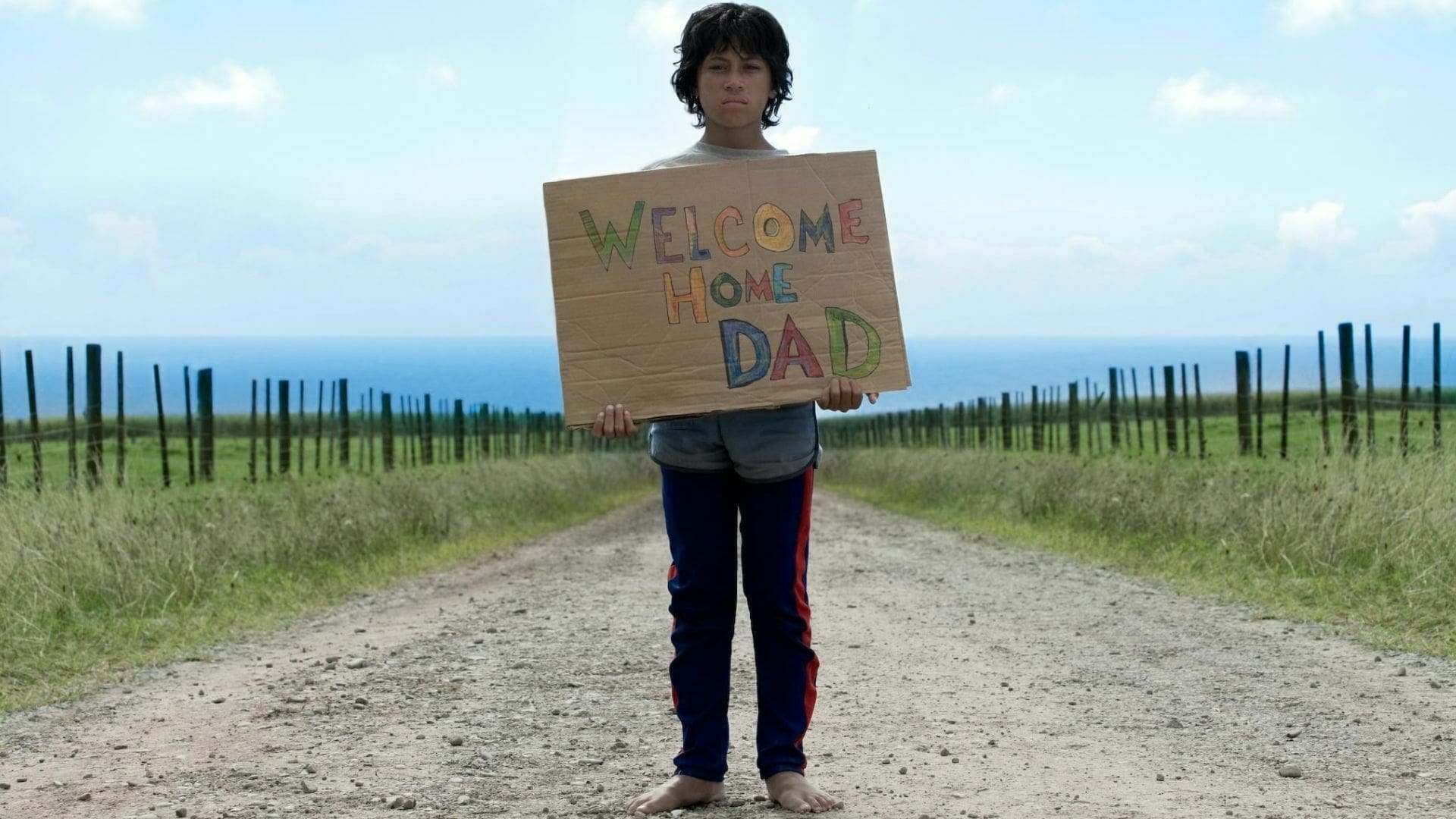
Boy – Regionally flavoured Chuppa tea


Hosted by
KT & Oti
Show Notes
Serve the doorknobs at room temperature and round up the 3 member gang as we immerse ourselves in the 2010 film, Boy.
Director: Taika Waititi
Writer: Taika Waititi
Released: January 2010
Actors: James Rolleston, Te Aho Eketone-Whitu, Taika Waititi
Thank you to our patrons for contributing to the themes throughout our Taika Waititi Reference Degustation.
THEMES
Directing: Oti felt that even though he hasn’t been to NZ the film was shot in an authentic way. Being taken on a journey where each scene encapsulates a character’s emotions. KT gives all the love and plaudits. You can tell they are writing it from their truth, they didn’t need to hire cultural consultant to get all the details right. It is the pen that you yield and the camera that you helm.
Tone
Quirky/eccentric tone: One of the better components in this film are the moments of levity.
Comedy as a way of dealing with harsh realities: There is an element of humour so it isn’t just a tearjerker and we can further resonate. It’s not all sadness and gloominess. There’s an element of fun and humour. Comedy can be used as a way to disarm people. So they are more receptive for the real messages that are about to be delivered.
Story
Belonging: The most important messaging in this film. Boy is struggling to reconnect and finding love from his father. Best performances of a child actor in a long time. Home can mean a lot and it is carried throughout the film.
Characters
Childlike Wonder (Precocious kids, The lovable fool): KT offers that Alamein is the lovable fool but Oti does not agree at all. The decisions he made was not of someone trying to dig themselves out. Looking for an exit door instead of who is around. No precocious kids. Rocky fulfilled the parts of us we want to revisit again.
Father son dynamic: Definitely delivered in the film. Whether you like it or not, we have some semblance of father/son dynamic. It’s an ongoing story of revelation. Of Boy rediscovering himself and finding his place in the world. Seeing his journey grow between Rocky and Alamein.
He makes a cameo: More than a cameo as one of the main character.
Real people as fantasy figures: Michael Jackson plays a big part where he symbolised the dreams and aspirations. Before any disillusion set in.
Breakdown and Analysis
- When you’re a kid you don’t even know you are dealing with is outside of your understanding. That as a kid, you shouldn’t even need to go through.
- The grittiness that gets applied to your life happens when you get older and reflect on your childhood.
- There was vulnerability with Alamein. He was a broken person. It feels impossible to ever feel whole again.
- The boys are forced to prove themselves useful to Alamein and we see this clearly in the weed farm scene. There is no room to feel sorry for Alamein because the of fragments of pain he leaves behind.
- Oti and KT find common ground when we see the Alamein apology as a fantasy scene. It is that little part of us, even through a film, that can experience healing we will not get in reality.
- The difference in age reflect the way they consume and be able to reconcile the death of their mother and absence of their father. Siblings prepare you for the real world. Boy was always ready to ready Rocky.
- There was a touching moment between Rocky and Weirdo. He was so young and nonchalantly mentions him being so strong that’s why his mum died. He was told he had too much powers. His interactions with the Weirdo are the best parts of the film. Rocky feels left out and he missed out on getting to know his mum.
- ‘Risk your life and be really poor’
- While Boy still holds some innocence, Dynasty understands real world consequences. She went through a lot and knows exactly how to handle herself.
Unrelated but vital points
- KT transcended and reached her final form of breakdowns watching Boy. Crying into her ancestor’s bosoms and all.
- KT references Once Were Warriors being half DMX trauma half levity. Oti retorts it was DMX trauma all the way through.
- For Your Reference is a perfect balance of talking about trauma and laughing it off.
- ‘Laugh at nothing, cry at everything’ is on the top of KT’s tattoo list
Episode Details
- Duration
- 0:00
- Released
- February 9, 2021
- Category
- Episode
- Hosts


Transcript
Transcript (9,610 words)
Full transcript of Boy – Regionally flavoured Chuppa tea.
KT: Malo e lelei friends and lovers, and welcome to the second course of our second annual Reference Degustation, a month long celebration of tantalizing Taika Waititi tastetations.
KT: If
KT: this is the first time you are purveying the podcast, what a very exciting time to be at. We have a full course offering of Taika Waititi's filmography that we are celebrating all of this month. The first course was very accessible. It's the hip new food that everyone wants to try. The second course is very much very specific to a cuisine, and we hope you guys are well satiated and ready to get into the show. Friends and lovers. Welcome back to the For Your Reference podcast. We got your host, KT.
Oti: And Oti.
KT: Serve the doorknobs at room temperature and round up the three member gang as we immerse ourselves in the 2010 film, Boy. Let's start off with the stats. We have director and writer, Taika Waititi. If you have listened to the first course, Taika was just the director for Thor: Ragnarok. So I'm very excited to get into this film because we're going to get more of a satiating discussion on all of the meaningful levels. Mhmm. It was released in January 2010 in the Sundance Film Festival.
KT: It is based on a short Two Cars, One Night that won a lot of awards and was also nominated for an Academy Award Oti for short film. Mhmm. Boy specifically has won and also been nominated for a lot of awards as well all across the world. We have a cast of James Rolleston, Te Aho Eketone-Whitu, and Taika Waititi. Also, I think we don't have it on our themes in particular, but we should definitely have a Rachel House bingo. I haven't watched the What We Do in the Shadows film,
KT: but if she's in it, she wins all the bingo. Mhmm. With our Theo director budget, I guess we'll see how much the prize is. And also a shout out to Pana Hema Taylor who plays Juju in Boy because we do see him in Spartacus. We do. I kept staring at him and I'm like, I know this Juju guy. I've seen him before. I didn't recognize him immediately.
Oti: He wasn't clothed. Well, didn't recognize him at all until you mentioned it. He was clothed the whole time. That's probably why.
KT: But
KT: welcome, welcome, welcome friends and lovers. This is also a time to mention that if you are allergic to spoilers, if it is not on your set menu, just be aware that we will be discussing this film. I think globally, it's available on Amazon.
Oti: Yep. Yes. You can catch it on Stan in Australia,
KT: Australia. Australia or SBS as well. Mhmm. But yeah, I would definitely encourage you all to watch this film. Even though some of you are nasty and you want us to sploosh you in all the spoiler places, continue along this journey as well, but we're definitely going to dig deep emotionally, thematically, cinematically in all of the tantalizing ways. But let's get into our first impressions. And if you're familiar with the format of a Reference Degustation, we do tackle recurring or common themes throughout Taika's filmography. So let's start off with first impressions.
KT: I think this is both the first time that we've watched Boy. So I guess give your general sort of thoughts and feels in regards to the film and we can go from there.
Oti: Yeah. It was didn't
Oti: know anything about it. I think I'm not well versed in what Taika's been his past works. And it was interesting watching this for the first time because it I I wasn't sure what to expect, especially after watching Two Cars, One Night. Mhmm. I was I was I was really eager to see how this would all unfold, and it just got really vulnerable. I'm not sure that I would classify this wholly as a comedy because it transcends that in my opinion. Mhmm. We're invited. Just
Oti: the corporate man, guy. You know, you don't need to put labels on it. It's how it makes you feel, guy. Yeah. I think the humor that's there is just to alleviate all the sort of other emotions that are there. Mhmm. And it could get dark pretty quickly. Yep. So I fully I wholeheartedly
Oti: enjoy this movie.
KT: Also shout out because Cliff Curtis is credited as a producer.
Oti: Oh, is he now?
KT: Yeah. And, you know, there was a time that we were going to cover Avatar The Last Day of Midnight, that probably would have been the first introduction for Cliff Curtis onto the podcast. But it got replaced by Twilight instead. But we'll definitely find a way to put our love accolades and Splooshies for Cliff Curtis. Are we getting into my first impressions?
Oti: Yeah. Yeah.
KT: I transcended and I achieved my final form of breakdowns
KT: in this film.
Oti: Yes, you did.
KT: Thank you.
Oti: Can confirm.
KT: It is very interesting to be someone that really loves and appreciates and loves to get lost in film and television. You know, Farewell by Lulu Wang is one of I would say right now is my favorite film ever, maybe competing with Boy right now. I talk about Issa Rae. I talk about Tina Fey. I talk about Michaela Coel and the ability to be able to tell stories that resonate on universal levels. Mhmm. I feel wholeheartedly. We love the Jordan Peeleesys in this household.
KT: You know, I love Get Out. There there's so many films that I love and I feel and I get emotional over, but nothing ever entered my innermost chambers than watching Boy. I in my very short kind of ongoing YouTube career, I did do a video essay on how I feel as a Polynesian and whether it bothers me if I don't see my face on screen or not. I think for a long time, I was used to not seeing
KT: my face and hearing similar voices that I hear on a daily basis. And I was fine with that. I was fine because I knew that we were never going to get there or at least at the same time, you know, my life is my life and then there's the life on screen. You know, we talked about Thor with the Americanisms and then it kind of contextualize itself when Korg came up and you could hear the Kiwi accent. Yeah. Right? It's a very interesting experience. It was a deeper emotion,
KT: but it also triggered deeper pain. You know, there are some things that, you know, it won't be shared in a podcast sort of format, but just know that there were figures in this film. There were also themes in this film that hit me in ways that I've never felt before. And I guess while we're here, you know, thank you for tuning in to the podcast. I am Tongan. I was born in Australia. Taika is indigenous to New Zealand. He's got Maori descent. He's also Russian Jewish with some European background.
KT: The reason why I mentioned that, I guess, is also to highlight how deprived Polynesians are on a global scale of cinema. A lot of the time, and I guess I'm gonna be that person that speaks on behalf of all of Polynesia, but it is an oral history. We share through stories, singing, through dance and through arts, not necessarily documented in that sort of way. So the fact that I'm not Maori and the fact that I'm not even an islander that lived in New Zealand at some point and migrated into Australia,
KT: The fact that it's so far removed, if you wanna classify it that way, and I still felt all I needed to feel can perhaps be my sort of empathy that I can stretch out, but it can also be the lack of, or even just the closeness of experiences that islanders have in general. But I really felt a lot with this film. I think I kind of transcended into another plane of existence while Oti was still on earth watching the film. And I was somewhere with my ancestors crying into their bosoms. I have no idea.
KT: But I really love this film. And and the experience of watching it for the first time is something that I'll always hold dear. I mentioned in the Thor: Ragnarok episode that I was aware that Boy was around. You know? They were like, oh, because have you watched Boy? I'm imitating my people. And I just I was like, yeah, I'll get around to it. I'll get around to it. But I'm glad I didn't watch it around my family because I would be a blubbering mess.
Oti: Well,
Oti: it's really exciting you say that because I think
KT: So my blubbering excites you.
Oti: Yes.
KT: That explains a lot.
Oti: No, just watching you break down certain scenes where I understood what was going on but it just didn't connect with me as deeply as it did you. So I think delving into that once you start talking about the movie I think will be something really interesting to get those sort of different perspectives on what we saw or what meanings we took at certain aspects of the movie and how we re resonated with the characters especially Boy or even Taika's role in this.
KT: Oh, absolutely.
KT: I've also developed or maybe identified that I have a kink for thinking I've resolved my own personal shit and having multiple breakdowns when characters and themes manifest themselves in films. That's kind of where I get off apparently. And according to Oti a few minutes ago, that's also where he gets off. But it's it's interesting. And there's so much to consume just in regards to cinema. You know, Thor: Ragnarok is kind of like being at a party with the coolest, the most beautiful of people. And then you have more personal
KT: intimate stories where you're having a one on one conversation with someone. And that's kind of the dynamicisms I'm seeing, you know, in Taika's work. And obviously, I enjoyed this more than Thor. So let's get into the themes. We do have some lovely contributions from our patrons as well. This will also be even more pleasurable if you've listened to the Thor: Ragnarok where we went into the themes. We're going to see how and if that applies in Boy. So the first thing we're going to talk about is just the directing in
KT: general. How did you feel about it?
Oti: I think I enjoyed
Oti: not a thing, I enjoyed watching this in terms of because I think we're set in 1980s New Zealand and I felt that even though I've never been there it looked authentic it did look authentic it gave me a vast understanding of how New Zealand was at the time, at least according to Taika's experiences. So it was really interesting just following along and being taken on a journey through where each scene is either encapsulating or each shot is encapsulating a different character's emotion, reaction,
Oti: or just enjoying the beauty that is New Zealand.
KT: Oh, that is a campaign ad if I've ever heard one. I guess while we're here before I talk about the directing, you know, we watch a lot of yes, I'm going to pull all of my monocles up, but we watch a lot of subtitled stuff, whether it's TV shows or whether it's movies and even like the humor of something that isn't in English,
KT: you kind of have to turn the dial on, if you'll pardon the pun. You kind of have to adjust to. What do you find harder? Do you find it harder watching something in a different language than English or watching people speak English, but it's a different slang? Because I saw you squinting sometimes when we were watching it, even Korg scenes in Thor.
Oti: Because
Oti: it's weird. I I just can't guss my head around the accents in this. Yeah. And And they're all different. They don't they they don't all sound the same. Yeah. So subtitles helped a lot in this. Mhmm. So even when we are I am digesting content that is in English,
Oti: subtitles still played a part in at least trying to convey that message easily for me.
KT: Yeah. And I think even watching Two Cars, One Night, there was a lot of Kiwi Islander slang in that. And I was trying to explain while we were watching it and you're asking me what an egg is and I'm like, oh, it's like a dumb person, like an idiot. You're like, how is that an egg? And I'm like, I don't know. It just is. Like sometimes, I'm not gonna give you a dissertation on how slang originated
KT: in the vernacular, but it's one of those things where it's just so natural to me and I understand it and I pick it up. So it was interesting watching you watch the experience, I guess. The directing, I give all of the love and all of the plaudits. There's something about storytelling and directing, and you just know that whoever is writing it is writing it from their truth. They didn't need to get a cultural consultant to tell them, you know, what side of the ketchup bottle should be on the table.
KT: Right? Not to say there's anything wrong with that because it's always good to make sure if you don't have that experience and you wanna write about different characters that you should do that. But there is something so effortless. There is a way of capturing the world when you are of that world. It is the pen that you yield and it is the camera that you helm. Yeah. Absolutely. Absolutely. So let's get into the themes that we have for Taika's filmography. The general sort of tone. So when we talk about Taika,
KT: if you've watched an interview about him, he's very quirky, he's very eccentric. Ben from Film Busters, our beloved patron, mentions comedy as a way of dealing with harsh realities. How do you think that was fulfilled, if fulfilled in this film?
Oti: Oh, it was definitely met in this. I think one of the better
Oti: things about this movie was that with every sort of heavy emotion and not to lack the thought degree where we are not left to sort of simmer in vulnerability, it's not to that extent but there is an element of humor and at least comedy playing a part in at least alleviating some of that tension so that we are not just it's not just a tearjerker of a movie, but there are light elements to it. And I think it depicts better how we resonate with, at least you see an aspect of coming to age for
Oti: Boy. Yeah. And how he transposes the world because it's not all sadness and and and and gloominess. There's an element of of of humor and fun that a kid is exposed to even at at his darkest hour. So it was really interesting to have that balance, and I think it was it wasn't done in a way that it distracted from the movie. Yeah. It's not that, oh,
Oti: we all I I spit out a a very emotional word, and then the next line is something humor based level comedy that just doesn't work. Yeah. And I appreciated that. I was I appreciated the fact that we were left to simmer for a bit before any sort of alleviation came in our our way.
KT: And, you know, I I guess it depends on
KT: talent and it also depends on, I guess, who you wanna be as a storyteller and also a director. But if done well, which I believe it was done in this case, comedy can be used as a way to disarm people. Right? Just to rattle off, you know, any sort of initial defenses people might have. So they're more receptive to
KT: the key messaging that you wanna deliver. And I do think that was used quite well. You have moments of happiness and joy and, you know, we did mention spoiler spoiler spoiler, and we'll get into some real discussion. But I guess just to highlight the tone that we have, there's a moment where Boy finds the money and he uses it to treat all of his friends and family. And they're all sitting around eating popsicles and they're having fun, they're making jokes, Boy gets more comfortable with himself and he's like, don't wanna be called Boy anymore.
KT: And then it cuts to a scene where Alamein shows up. Yeah. And it gets really serious real fast. And it's one of those really delicate balances that you need to traverse when you are a storyteller and when you are a director because you don't wanna overwhelmingly shock someone. And I'm not saying it wasn't done effectively, but if you compare it to Once Were Warriors, for example, it was DMX comedy, DMX trauma all around.
Oti: For my memory, it was DMX trauma the whole way through. I barely remember any sort of comedic alleviation from that movie. But it's been so long ago, I remember watching it the first time with you, and I was just like, Jesus. And you watched this when you were kids?
KT: I didn't in my Mormon girl household. I didn't get to watch Once Were Warriors until I was an adult, but I guess sadly, you could say a lot of the depictions in the film I was used to seeing. Just open handed abuse and alcohol abuse, like abuse of partners as well. Like, I was used to seeing that. So, you know, when they're when they're giggling the next moment and singing around a guitar,
KT: I I was used to seeing that too. So maybe for you, it was shocking and maybe it's sad that it's shocking to me that it's not shocking, but that was kind of what I was balancing. But I would say in regards to Boy, there was a more conscious balance of it. And, you know, even after I was picking up the pieces and all my tissues after the film, not your happy tissues, but my sad tissues, I was mentioning to you on
KT: they could have gone harder on it but if it means that more people can see it especially kids at a formative age like Boy, like Rocky, then this is exactly the way to do it. So
Oti: I think I'm interested to see those at least to understand the aspects of the message you you got that weren't really put out there or laid out there for people to to sort of consume and understand.
Oti: And I know it might get really sad really quickly, but I think it's important to sort of understand because maybe I watched a scene and I thought differently from you Yeah. Just based from our both different frame of references. So it will be something interesting to go into.
KT: Well, I I guess even just taking it from the example with them eating the ice blocks or the popsicles,
KT: and then you have Alamein show up, it it felt like I felt a lot. I'm not sure how other people felt, but when he grabbed Boy, like I felt it. And even though the screen had only shown so much, my experience is filled in the gaps and that's why I was overcome with emotion. So, you know, it's similar to when we covered our Rafiki episode. Yeah. The Kenyan queer film. Go and check out, we have an episode on that. I felt like it could have gone harder, but your experiences,
KT: your frame of reference filled the gaps. Right? So that's how I felt, you know, watching Boy specifically because, you know, we joke about it all the time. One of my good friends in high school was Samoan, I'm Tongan, and in class, we would just joke about getting beaten by our parents. And I do apologize if this is triggering, but we're talking to our experiences.
KT: And we would laugh, like, we would openly laugh it would become a competition about who got beat the worst. Right? About their parents. And the fact that I can laugh about it is something we can talk about another day. But we had a well meaning white Australian teacher and she felt very uncomfortable by us joking around. And she pulled us up after class one day and she said, you know, there
KT: are services that are available to you. Oh, no. Would you like for us to contact? And it's one of those things because I think this is also what bothers me about the world of people being like, oh, you shouldn't swear or focusing more on what people shouldn't be doing as opposed to what they're actually saying, what they're actually delivering. Right? I'm I'm one of those people where there's not a lot that I don't think can't be joked about. Right? Because if you've lived a hard fucking life,
KT: you need that sense of reprieve, you need that sense of comedy. And I see that with Taika as well. Yeah. And I think he balances it very well. You can call it whimsy. I don't think it gets in the way of real emotion like we said in Thor, for example. I do think it allows itself to feel where it needs to feel. And we do have a theme that I wanna get to later. But yeah, in regards to the actual messaging
KT: and why I resonated with him all, I guess it was just my experiences growing up. Wow. And, you know, it can be tragic, but you know what the funny thing was because when I was watching Boy, I could see a lot and maybe I could see more than someone else that didn't, that couldn't relate to anything that was happening on the screen aside from the fact that it's a kid and he's trying to manage the world. Right? It's a really interesting is a lack of a word and I don't know what the placeholder
KT: word would be, but like no matter what you've gone through in your life, when you're a kid, you don't even know that you're dealing with things that are out of your realm of understanding. You see what I mean? And you don't even realize that as a kid, you shouldn't even have to be trying to reconcile what that means and your standing in the world. Yeah. So when you're a kid, you're living it. So the imagination is a great way to escape from the realities of your life. So I really
KT: resonated with that. Like, I lived my life the way I lived my life. And then when I started working in the corporate world, I got close with someone and, you know, just casually she was asking me about my life and really, I don't know if there's a part of my brain that's missing, but I got like, I just used to tell people what my life was like, right? And it's not the most sad, depressing story, but it also is a lot, Right? And when I just told them without any sort of hesitancy,
KT: they had a fucking breakdown. And they're like, I and then you kind of feel like that charity case. And she was like, oh, I'm so sorry you had to go through with that. That must have been such a terrible time. I feel like the color grading, the grittiness
KT: of the portrayal of your life gets applied later when you have time to sit and really reflect on what you've been through in your life. Because when you're a kid, there's still sunshine, there's still rainbow, there's still ice blocks with your pals. It isn't until you get older when you realize, yeah,
KT: probably didn't have to go through with that.
Oti: Yeah, for sure. We've definitely covered a lot of from my childhood that we were like, yeah, shit, that wasn't right. So I fully understand Absolutely.
KT: And we're kind of already talking about storytelling. So let's bring up another theme from our pals from Smoke and Mirror's patrons, belonging.
Oti: All of the films have a common thread of home and finding your place in it. Off. I'd say that was one of the most important at least messaging in my opinion in this. Yeah. Because Boy is struggling is struggling to at least reconnect or have a sense of belonging that his father loves him that he has he has potential yeah you know Even in the last scene when he was hitting Alamein,
Oti: you know, even there when my mother, you know, when my mother was passed away, you know, he it was really, really heart gut wrenching and Yeah. Emotional for him. And then he walks out and says, I guess I don't have any potential, you know, he doesn't belong, he sees himself like he's not meant for this world to a point where he sought to kill himself. Yeah. All this I love the way that was covered by the way. Yeah and all this from an 11 year old. Yeah. So we talk a lot about actors
Oti: at least child actors you know doing the bare minimum at least passing the message along but with Boy I think that's one of the best performances I've seen from a child actor in a really long time.
KT: Oh, yes. Oh, absolutely.
KT: Absolutely. I do feel like this theme was hit on the head. I guess home can mean a lot. I guess if if anyone cares or would like some sort of background, growing up, yeah, kids were kind of left in a house, not for long periods of time, but you know, like I've had my mom go to Tonga and we just get left by ourselves. And then like my auntie will drop in every couple of days just to make sure we're still breathing.
KT: And like trying to make our own meals, concoctions or whatever it is like, whether that's whether that's to say whether it's right or not, I'm just saying it wasn't some alien sort of concept like ET, for example. But that whole sense of where do you fit in the world and and finding your home is definitely something that carries throughout the film
KT: as well.
Oti: And yeah. 100%. I think the best quote they did for ET in this movie was that you could be happy here or we could grow up together. You know? Yeah. That's just it hits home,
Oti: if nothing else.
KT: And it's interesting because I love Parasite. I love Boy. Maybe not equally, but I I love them to the depths that I could ever love a film. But they're both vastly different. You know, there are days when I wanna talk about the housing bubble and the South Korean economy and all of the guppjils and that sort of thing. But sometimes I want a story that is just a story that doesn't have anything to say about society,
KT: and it is just about the characters and how they make it through the film. It is so interesting how they're so different, but I can feel so much from two vastly different films. Yeah. Let's carry on in the themes with characters. So this particular point is childlike wonder. So we have Julio from the contrarians talking about precocious kids and Paul talking about the lovable fool.
Oti: Would you call you call Boy a lovable fool?
KT: I think Alamein would be the lovable fool, not Boy.
Oti: I
Oti: would not agree with you at all in that statement.
KT: Since when do you ever? Why do you say that? Why do you say that like that's a controversial?
Oti: No, because watching the movie, Alamein just did not do it for me at all. I understood everyone's suffering, it's a hard time, it was hard losing his wife, I get it. But the decisions he made up until then were not of someone that is trying to to dig themselves out. It's of someone who's let themselves go. It's of someone who's trying to find
Oti: an exit door without thinking about what he's leaving behind.
KT: Well, we'll we'll come to a later theme that specifically references that. The lovable fool, I would say, is Alamein, even though you don't agree with me. I don't think, Julio, we have precocious kids. We don't have annoying snooty snoot kids that, you know, more know more than adults. Like, these are just kids. So I guess in that sense, potentially, especially for you, childlike wonder was not met No. In this film.
Oti: Actually, Rocky. Yeah. Maybe Rocky. Fulfilled
KT: fulfilled the parts of us that we wanna revisit again.
Oti: I've forgotten about Rocky. Yeah, definitely.
KT: Yeah. So let's move on to the next theme of characters.
Oti: There's usually a father son dynamic. I think that was definitely delivered in this film. Whether you like it whether you like it or not, there was it was definitely fulfilled. Yeah. Because it's a story about a boy trying to reconnect with Alamein and trying to have this bond or recreate this imaginations
Oti: memories that he thought he had of Alamein being a father and the memories they had when we were together as a happy family, just the three of them. Yeah. So it's it's an ongoing story of revelation and then Boy finding himself and understanding or trying to figure out his life. Mhmm. So it
Oti: it's definitely, man.
KT: A 100%. Oh, yeah. I I definitely agree. I wanna talk more about Alamein because it seems like you have a lot to say. So we'll leave that for general discussion of the film. Usually, with Taika films, another theme is he makes a cameo. Yeah. He plays Alamein. I think more than a cameo in this sense. So tick tick tick. The last theme that we have is bolstered by Ben again. Hello.
KT: Real people is fantasy figures. Michael Jackson or Hitler, for example.
Oti: Oh, so he gave us the bread crumb in here.
KT: Oh, yes. Oti, he some the bread crumb. He he he buttered our toast.
Oti: Oh my. Yeah. Michael Jackson is featured as, you know, Boy is is
Oti: especially in the eighties, you know, Michael Jackson was super big. Peak Michael Jackson. Peak Michael Jackson, you know. So everyone everyone wanted to be like Mike, that Oh, Mike. Lil Bow Wow Morris Chestnut.
KT: When are we going to cover that little chestnut, my love?
Oti: We've already covered it in this sentence alone.
KT: I keep saying we need to honor Morris Chestnut and you won't let us.
Oti: But, yeah, his is covered. I think Michael plays a big part in, you know, at least for me, he symbolized the dreams and the aspirations and the sort of
Oti: before any disillusionment came to him.
KT: But I think it was also even the narration at the start, it talks about Michael Jackson, you know, hanging out all day, having a cool house and, you know, his best friend's a monkey. Like, I think it was just playing to that imagination and anything is possible.
Oti: Oh, yeah. For sure.
KT: Yeah. Which I guess provides even more of a contrast to where we get to the end of the film, unfortunately, with Boy. Yeah. Okay.
KT: Well, those are the general themes. It is the scorecard, so make sure you mark it off and pass it to Oti, your professor, if you're nasty. We're going to get into just the general discussion of the film, Boy.
Oti: Boy. Oh, boy.
KT: You are waiting. You are fucking waiting for that, you asshole.
Oti: Oh, but it was what can I say? Like, I enjoyed it wholly, but it's it's not my favorite. Yep. It's a good, well written story that has really important messaging in it. But to me, the main character or at least not the main character, but Alamein just route me in all the wrong ways. Okay. I felt that he was weak. He was he was especially after coming from jail, he was jailed for not sure how many years, but once he's released, he's he shows very
Oti: little determination or interest or effort to bond and reconnect with the kids.
KT: Hang on a second. Because aside from Paul Delroy Lindo in Da 5 Bloods, we usually give credence to veterans.
KT: And it was mentioned that Alamein did fight World War two.
Oti: He did,
Oti: but maybe this again is in the writing that we weren't shown any sort of PTSD on his part because all of it, from my understanding, stemmed from him feeling guilty for not being there when the wife died.
KT: You know what's really interesting?
KT: And, you know, maybe this is just me, it's the KT For Your Projection podcast, but I did feel sadness and maybe even pity to some extent for Alamein because I there were moments with him that I did see vulnerability. I don't think there were many times where he allowed vulnerability. Maybe that is just me projecting onto his character, but he was a broken person. Like, even as adults,
KT: there are some things that are just too hard to reconcile, to be able to not only move on from, but kind of be whole or be the person that we were before that trauma came to us. So imagine that happening to a kid. And at the same time, we don't need to know, but we don't know what Alamein went through as a kid as well. And, you know, it's that that constant cycle of broken people having broken children and it just perpetuates a broken trauma generational line, unfortunately. And
KT: maybe you're saying where the fuck am I getting that from? But again, maybe it is my frame of reference and I'm just saying
KT: that there were moments where Alamein was kind of waiting for a lifeline and it wasn't coming to him.
Oti: I wouldn't put it as him waiting for a lifeline because I felt like as soon as he got that money, if he got that money, he would have played so hard. He would have gotten so far away from those kids. Yeah. I believe that. Yeah. And it was just a matter of coincidence that, you know, the money got lost, which he got really angry and really reacted in such a bad way,
Oti: especially for a kid who is giving their all to bond with you, finding marijuana, going to steal marijuana from a friend's farm. Towards the end of the of the movie, we have this scene where the three of them, Rocky, Alamein, and Boy Yeah. Were all in the farm and stealing all pretty much all of the marijuana plant. Yeah. And they have this shot of where Boy is looking at the girl and it's just, you know, it tells you everything. He doesn't want to be doing that shit. Yeah. He's just doing it because
Oti: he wants the dad to stay around. So he has to prove himself useful. So for me to really come down to that level to even feel any sort of pity or or or sadness on Alamein? For Alamein?
KT: Well, there's no room to feel sorry for him because of the fragments that he left behind in Boy and Rocky.
Oti: I get that. I get it. And I guess one of my my my frame of reference for all this is I've seen a lot of this shit growing up Yeah. Where a parent dies and the other guy the other parent just completely fucking vanishes. Yeah. And it's part of the community to come together and raise this person's family because no one else would. Yeah. So I I I understand tragedy
Oti: and and trauma can hit people differently and hard in a lot of different ways. Yeah. I get it. But there's some things that are just bigger than yourself.
KT: But I also think at the same time, it was the choice of
KT: storytelling because, yeah, they could have made Alamein a lot more meaner and a lot more violent, and they didn't. And maybe that was why I don't fully denounce him.
Oti: Do you think that's one of their sort of
Oti: liberties that why Taika took to sort of not show everything, but their insinuations where because I don't believe that Boy would come and hit and Alamein will just be sitting there.
KT: Well, he I I guess this is a perfect
KT: example because it reminds me, and we do love a Dan and Eugene Levy in the For Your Reference household. It was a very Schitt's Creek approach to it, I think, in regards to, you know, parents beating their kids. Because there's a moment where Alamein comes to the window and he says, I act out, I get angry, will you accept a Hulk as a dad? And he actually said, which never happened in my migrant household, I love you, I'm sorry. And I was like What's that? If you wanna talk genres, that makes it a full fantasy.
Oti: Hey, dad. I found a movie about someone saying Maybe
Oti: we should watch it together so you'll finally say you love me, you bitch.
Oti: Pause and rewind that scene over and over again until it gets the message.
KT: But when that scene
KT: happened, even though I had tears in my eyes, I said, isn't that what every kid feels like they want their father to say?
Oti: Oh yeah,
Oti: I'd fucking lose a foot to get my father to say that shit.
KT: It's called gout, my love.
Oti: Well, I'm halfway there then. Yeah. Like yeah. It's it's it's, you know, that's one of the things that I also I chuckled at that. You know? You felt it as it was deep and emotional. I chuckled because to me, it just felt outside the realm of my possibility. It was like, oh, that's cool. Rocking the emotions in 1980 New Zealand. Woo But, yeah, it I'm okay, guys, by the way.
KT: It's
KT: that Astronomy Club sketch where they're making jokes and they don't realize how getting beaten as kids or
KT: the abuse that he suffered as kids affected them.
KT: Very similar to my high school classrooms as well. But yeah, it was one of those things where I wouldn't say that it was definitely unrealistic, but it doesn't bother me because it's also that little part of us, if we can experience healing, even if it's just through a film, then that's what we will experience.
Oti: Yeah. And I can I can remove myself from that and and accept it from a movie perspective and see that, you know, albeit the fact that Alamein is fully flawed, he does have some some qualities that endear himself to the kids at least, you know? But how come he don't say I love you, man?
KT: Sup, kid wimp. I love you, man. Fresh Prince Oti in the house if you're nasty. And I guess, you know, if if you wanna take it on a grander scale, this podcast is a perfect balance of talking about trauma and laughing it off. But also at the same time, I do feel like if I get a sense that I'm talking to someone and they haven't really gone through anything in life, I know I'm never really going to get along with them. Because I have a very debased level of communication.
KT: And if you're a whole perfect human, I don't think I'll ever be able to relate to you. I forgot what we were watching, but I was saying, you know, imagine growing up with parents loving you and praising you. Like, I don't I don't even know what kind of person I would be. Maybe I would be happier. Maybe I would be more whole, but I wouldn't be the me that I am today. Definitely not.
Oti: But, man, this movie took me on a whirlwind of emotions though. Yeah. You know, if it's not Alamein frustrating me and making me feel sorry for him at times
KT: Okay. So you did. Because at first you were saying that you didn't
Oti: Like, in not not in the specific scene we mentioned, I didn't feel sorry for him there. Yep. But the aspect to it, I felt sorry that he wasn't there to,
Oti: you know, to to see the wife giving birth and and then when she passed away. That's such an that's such a fearful thing. Yeah. You'd want to be there to to to see that. So I felt sorry for him for that, you know. It might have been his fault. He must have been away gambling or doing shit things. He might have even been in jail still. Maybe. But I did feel I did feel for him there.
KT: Yeah. People that we feel for, I definitely wanna we can circle back to Boy because I feel like we have, you know, touched on his character and, you know, his journey a lot. I wanna talk about Rocky. I think the differences in age, even though they're a couple of years, are vastly different in the experiences and the way that they consume and be able to, many decades possibly later, be able to reconcile. And as as much as Boy gets annoyed at Rocky, that's just sibling shit.
KT: You know? Like a lot of the time we'll be watching something. I love seeing sibling shit all the time. We also saw it in the 1960 Housemaid. Go and listen to our Parasite episode if that makes no sense.
KT: But I love seeing sibling shit because there's a very fine line. I also believe that siblings prepare you for the real world because not everyone maybe your parents will say they love you and hug you and tell you you're the best, but your siblings will call you shit and kick you around. And that kind of gets you primed for kids out in the real world. Right? So even though Boy got annoyed and he called him an egg and, you know, he kicked him around,
KT: there was some real love there and he was always ready to defend Rocky. But at the same time, of them were trying to deal with something again that kids shouldn't have to deal with. The death of a parent at such a young age. And Rocky was so young, how do you even explain that? And you have Boy as, you know, the primary sort of caregiver, even though they have the grandma, it's usually just them two. Right? Aside from all the cousins that they have around.
KT: And there's a really touching moment. Like, I could've watched the whole movie of just Rocky and the guy they call the Weirdo. Like, I could've just watched them. It would've been like the lobster version, but just a kid and an adult, like, for the rest of the film. But Rocky was so young and so heartbreakingly, he just nonchalantly says that he was so strong that his mom died giving birth to him. And it's sad, but it's also understandable that a kid will be able to absorb that as opposed to the actual truth.
Oti: Oh, yeah.
KT: That sometimes life is just fucking hard and childbirth is is a beautiful and in some cases, life threatening thing.
Oti: Oh, for sure. He saw it as, you know, or at least Boy told him that he had too much powers. Yeah. You know? And he grew up thinking that he has this sort of superhero power. Yeah. Where he can maybe through the power of telekinesis, he can do stuff, but his interaction with the Weirdo was one of the best moments in the movie.
KT: Oh, absolutely. Absolutely. Because you you can tell that Rocky is just trying to understand why
KT: his mom isn't there anymore. He's trying to create that bond And he that stays at the grave and he draws his drawing. Because he feels he feels left out. He feels like he's missed out on an experience. He never got to meet the mom. And I think there's there's a very touching scene at the start of the film where Boy, he is annoyed and and he says he's annoyed at Rocky, but you can tell that it's hard for Boy to visit the grave because he actually experienced
KT: spending time with the mom. And maybe that's just something that he's not ready to deal with yet, which is fair enough. He's a fucking kid. He's nine years old. Right? But Rocky never got that. Yeah. Because he sees the picture of the mom and
KT: the boy all over
Oti: Yeah. The So he definitely wants to have that bond and have that connection with her. So it's fully understandable why he took that path and why he is the way he is. Yeah. Oh man, like Rocky, his storyline, know, and even when he was sitting on a tree just overlooking the graveyard and saw Alamein go there. Yeah. He formed a bond based on that because he saw that, oh,
Oti: Alamein is just like me as well.
KT: And there was the draw oh, that drawing took me out where where Alamein's character is flying over the grave and all of tears are Jesus going on the
Oti: Christ. Yeah. That was his connection. And that's why it was like, we're the same. Yeah. We're the same. So it's oh, man. Jesus Christ.
KT: Having
KT: kids dealing with loss is never easy. Yeah. And it's it's interesting because, you know, we have our own individual experiences that we went through as a kid, and we would never wish the experiences we've gone through to anyone, let alone kids. And to see even through a film, to see a kid go through that, it's hard for like, it's hard for anyone to watch really. But it's necessary and there's definitely healing to be had as well. But Rocky yeah. Rocky is great. And,
KT: yeah, you just never know until you get through it. And then you look back and you're like, shit. How? Like, did Rocky get through what he got through? And it's just a matter of getting through that moment. Oh, for sure. For sure. I do just wanna mention something in regards to the Weirdo. I don't know if that was offensive to you because, you know, we do live in 2021 and there are some things that, you know, dutifully are offensive, you know, especially with the kids in the classroom talking about AIDS
KT: and the sheep and the kid. But in any case, with the Weirdo, I don't know about you, but I have an uncle in Tonga that just lays on the road all day. And everyone everyone just waves at him and they carry along their merry way. So I definitely appreciated that there was a character like that. And I guess in some cases, can talk about it as mental illness as well. And it's just our community not understanding or not wanting to face that it is mental illness and it's not just a crazy uncle.
Oti: Yeah. We we had a lot of that in our in our neighborhood and we'd all just pass it off as, oh, that guy's just crazy. Yeah. You know? Like eat your vegetables or you'll turn out like him. Yeah. And and no one really bothered to understand or get what what's happening. And it's just a matter of ignorance in the community. Like, we don't know these things. But at least there's an aspect of, yeah, Africans don't get that shit. Yeah. And oh my God. Yeah. It's ridiculous.
KT: Yeah. So I I definitely appreciated that. I wanna spend some time talking about Dynasty. She has a couple of great lines of dialogue, especially when they're in the car, she's waiting for her mom at the Pokies and we have Boy and Rocky's dad at the pub. Right? And this is very reminiscent and I guess if you're going to say it's based on Two Cars, One Night, this is, you know, the allusion to it. She makes a couple of comments.
KT: One of them is about the mom. She reckons it's better to risk your life on something big and be real poor than sit around being a bit poor. And then she also said something that I don't even need to read because I remember it. I might even get it tattooed. Laughing at nothing, crying at everything.
Oti: Yeah. I think she's the flip side of what Boy is. Yeah. While Boy is still holds some innocence, Dynasty doesn't have that choice. That was shipped ages ago from her. She seemed like she's lived already,
Oti: which is sad.
KT: But she's still real world consequences, unfortunately. Yep. She does. And that was like, yep. Yeah. She's just a different side of the coin that's Boy. Yeah. And, you know, it's one of those things where and we'll talk about dialogue in a second. But, you know, the next scene we see her in, you can see that she's been beaten. And without any dramatic falling to the floor, sweeping shots of a camera, you knew what the fuck happened.
KT: Yep. They found out about it. I don't think she ratted anyone out, but she had to bear that consequence. And as shocking and as sad as it is to see that a kid has been beaten, unfortunately, maybe just for us, we know what that meant. Right? And yeah, Dynasty had to go through a lot and she she's she's got this astuteness about the world. And
KT: I have that hope in Dynasty as a character that no one's going to pull one over on her. Oh, no. Oh, no. She knows exactly what the fuck she's doing. She'll probably be like auntie Gracie at Rachel House. More than likely. Yeah. Auntie Gracie has one of the best moments in the film where Boy asks for an ice block and she says no. And Boy is like, it's not fair. She's like, get a job then.
KT: I don't know how many times every auntie that ever existed in my life told me the same thing.
Oti: But that's weird, know, I never got that
Oti: because in in Kenya, at least if I can speak for East Africa, it's it's different where jobs are not for kids. Are we the United Nations?
KT: I'm speaking on behalf of Polynesia. You're speaking on behalf of East Africa. Yeah.
Oti: It's jobs are not a thing for kids, you know. When you get here, like, you see Macca's and you see kids doing that. In Kenya, it'll be people's fathers doing that to pay for the kids' school fees and tuition and shit.
KT: Maybe this is going to be a Patreon discussion,
KT: but it was very interesting me experiencing Kenya and you getting confused at me not understanding things, and then you coming to Australia and realizing why I was confused in the first place. Because exactly like you're saying, for our American friends and lovers, Macca's is McDonald's. So like fast food chains, that's like high school sort of jobs that people get. And like you're saying in Kenya, for example, you would actually have breadwinners of the household. Doing that. Exactly. And it's just the differences
KT: in the world and forgive us if you were well, I guess maybe on Thor, you're expecting slapstick sort of shit. But here we are in the real world experiencing the world through our lives. Mhmm. Yeah.
Oti: Which is weird. I just thought you'd losing your mind. I was like, what are you talking about? Is that attractive to you? Yeah. Ex KT Muscle. I see the crazy ass goes with everything else.
KT: She got a crazy ass.
Oti: Yep.
KT: Oh, dear. So let's finish off with Boy. I know we've talked a lot and a lot of it did touch on Boy as a character. I love the story of Boy. The film, but also the character Boy. I love how he's just called Boy. He's very nondescript. And I don't know how other people feel about it, but I feel like it it's really just it could be anyone.
Oti: Yeah. I take it as that as well.
KT: But it's also, you know, you touched on it earlier in the episode, he had this really
KT: dreamlike quality to the way he viewed his father and how he was a part of their lives. He just happened to be away at that time. Yeah. Right? It wasn't he's a deadbeat. It's just he's just not here at this moment. And as soon as Alamein showed up, he was doing everything, even simulating a hickey with a vacuum, which is what Oti does as well. Feel free to buy his portraits, but I need to expose him. You know, he was doing so much just to be close to Alamein.
KT: And
KT: as sad as it was, because you know it wasn't real, because Alamein was just there for the money, As sad as that was, at at least he kept that innocence that you were talking about. And the moment that that bubble bursted broke my fucking heart. And you could see on a really small scale, it was talking to troubled youth and how he started to smoke and he started to drink. And it just became too hard for him to handle, which is fucking understandable, man. It was for fucking adults. Right? And what I really love
KT: about Taika and even watching his interviews is he talks about wanting to be able to highlight, you know, childhood poverty and also to highlight the high teenage suicide rates in New Zealand. And, you know, a lot of the time and there's nothing wrong with thinking that Taika is an upbeat, happy go lucky guy, but there are interviews of him where he talks very seriously about the issues that uniquely face Maori and Pacific youth in New Zealand. Oh, yeah. You know, it even got to a point where
KT: they were calling they were calling his comments traitorous or at least from one New Zealand journalist, and you can sit on my Jupiter's cock, that specific journalist. Because there you go. Right? He is able to deliver some really hard messaging. And yes, you can talk about whimsy. You can talk about the Taika quirkisms, but he's really doing it from a place of love and from a place to be able to, you know, deliver these creative outlets. You know, even watching an interview of Taika, he talked about being able to go through creative writing
KT: as a kid, but as soon as you turn 11, for example, it's all about numbers and science, which is fine, but it kind of stifles the creative ability. And he kind of denoted creativity to be able to channel emotions. And I fucking love that. Because
Oti: why why stifle that? They don't want us asking questions out there, man.
KT: Who's they?
Oti: They. The people. The keys.
KT: I don't think there's another way to close it other than Oti Khaled. No. No. But wow. Wow. Wow. Wow. What a film. We talked about some heavy topics. I got deeper, I think, than I ever gotten on a podcast.
Oti: If we ever do cover Moana, you're not going to hear this deepness from me in particular. Are you sure? No.
KT: Actually, hi friends and lovers. This is KT from the For Your Reference podcast making another Polynesian PSA announcement. You know, we talk about diversity all the time, and I know, you know, black stories, African American stories, particularly in regards to Disney, lackluster, and they need to do better or animation in general. But please stop using Moana as an example of how well Disney is portraying Polynesian stories because the keyword there is Polynesia, and it's not a specific island. So even the fact that you have like Lion King,
KT: as much as Oti resonates with it, it's a generalized African view. I know you will claim it because they speak Swahili, but still. So that's just my PSA for the day. I'll leave you with your PSA. Why thank you, my love. Because this is a tantalizing Reference Degustation, instead of For Your Reference, we would recommend that you continue on the Reference Degustation. The first course being Thor: Ragnarok and this current course being Boy. We hope that you are,
KT: you know, you have been disarmed with any sort of layers or barriers or walls that you might've brought up because we are going to continue on this buffet and we are going to have a lovely time. If you would like to feast on our verbal buffets on Twitter
Oti: You're a dick.
KT: On Twitter and Instagram, we're not your dicks, but we're at @ForYourRefPod. You can write us an email at hello@fyrpodcast.com. And we're also on Apple Podcasts if you like to leave us a rating and review. And we'll see you guys in the next course. See you. Bye.
Related on FYR
Discussion
Loading comments...