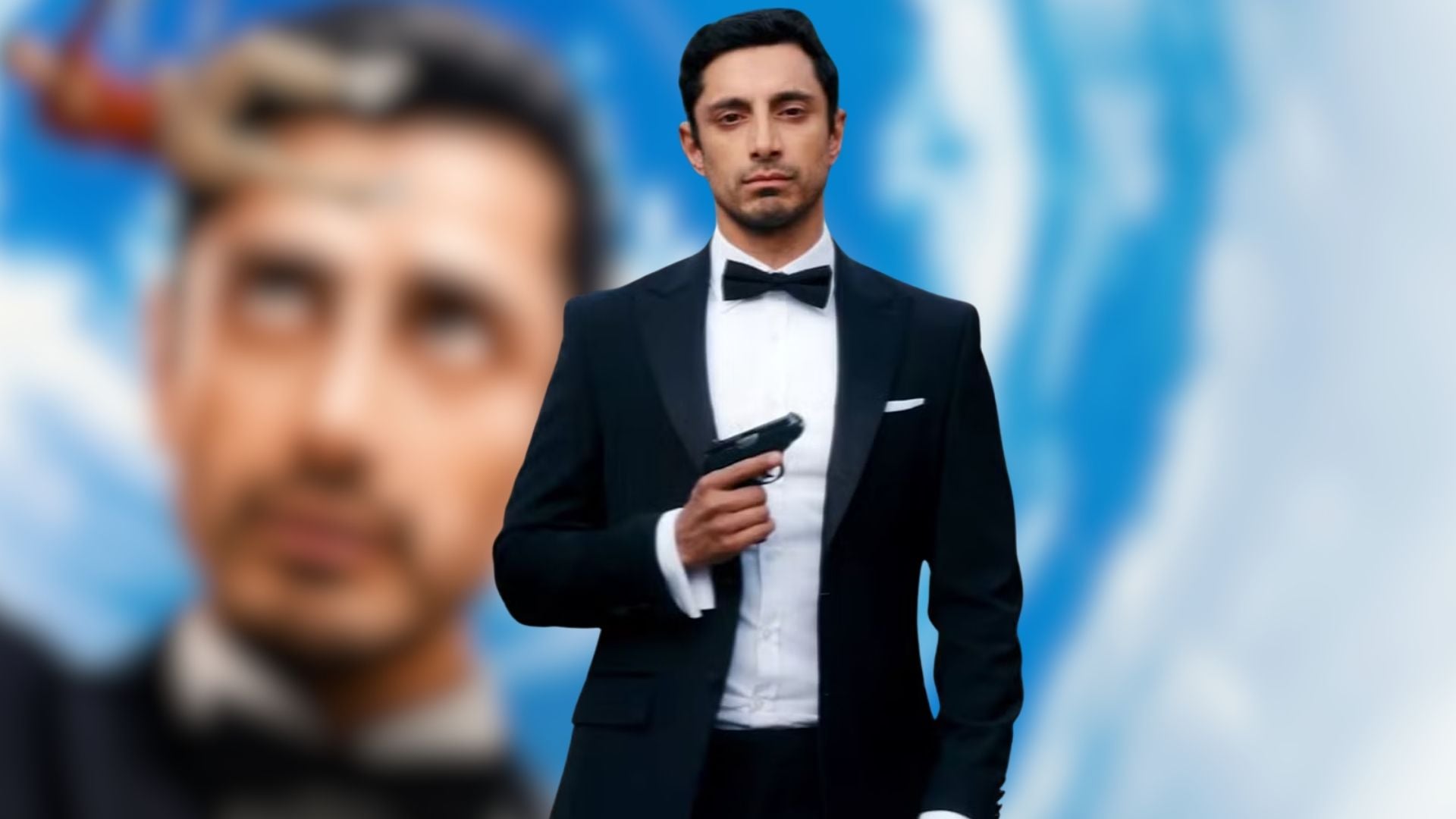
Bait – Porco Rizzo


Hosted by
KT & Oti
Show Notes
Compose yourself before the performance of a lifetime. Is the fame for people that look like you or just to be the only one that looks like you? Sell out or stay grounded with Bait this week.
Tomato Meter
 KT
"Riz Ahmed finds a perfect outlet to explore broad commentary on visual representation and perhaps reflections of his own experiences. It hurts when it digs deep but that’s art."
 Oti
"Riz Ahmed shines in this funny series that explores deeper themes. While I had my frustrations along the way, it never shies away, building to one of the most emotionally strong finales you’ll see."
Episode Details
- Duration
- 0:00
- Released
- March 25, 2026
- Category
- Episode
- Hosts
Transcript
Transcript (6,993 words)
Full transcript of Bait – Porco Rizzo.
KT: It's another week in the For Your Reference household, and Oti, prove me—or you can always tell me I'm wrong—I'm pretty sure this is the first Riz Ahmed-led full review we've done
Oti: Yep.
KT: on the podcast.
Oti: Mm-hmm.
KT: Bum-bum-bum! We covered The Night Of as a part of a Patreon format, and yeah, I think this is the first lead Riz Ahmed, and what a great time.
Oti: Mm-hmm.
KT: Friends and lovers, let's get along with the show. Hey, friends and Dev Patel lovers. Welcome back to the For Your Reference podcast. You got your host, KT
Oti: And Oti.
KT: As the other brown, Oti, I'm very excited to talk today.
Oti: I'll let you lead the way.
KT: Maybe you are the only brown; maybe I'm the other brown and you are the only brown. Compose yourself before the performance of a lifetime. Is the fame for people that look like you, or just to be the only one that looks like you? Ooh! Sell out or stay grounded with Bait this week.
Oti: Mm, mm.
KT: Oh, you know it's muy caliente when the intro's cooking, friends and lovers.
Oti: Kwabena would've liked that.
KT: I think we both might need to beat each other to the For Your Reference segment, because Dreaming Whilst Black is absolutely—friends and lovers, we have a full review, definitely go and check it out. It was out recently in the US, and I believe, if not already, it's out in Australia as well, obviously a UK show, it's been out for a while. Tap in, friends and lovers, and welcome, welcome, welcome if you are new around here! If you are the Riz Ahmed fan stan account, why are you ignoring me? And also welcome to the For Your Reference podcast. We have interviewed Dev Patel; maybe one of these days we'll get to interview Riz Ahmed—that auntie, man: "That's not Dev Patel!" I'm so excited to talk about this today. Again, if you are new to the For Your Reference podcast, welcome, welcome; if you are nasty as we are and you've been here since day one, we love ya, we see ya, forever sit on Batiatus's cock! Did we do a Spartacus: House of Ashur full review? We have not, right?
Oti: Oh, not yet.
KT: Ooh, scintillating, tantalizing, friends and lovers. So this will be a full-spoiler whole discussion. The embargo has passed, so we can finally talk about the show, which is coming out this week, and we're going to get into our first impressions and then we'll discuss into themes. So give us your non-spoiler, and it will be spoilers ahead, friends and lovers.
Oti: Riz Ahmed shines in this funny series that explores deeper themes. While I had my frustrations along the way, it never shies away, building on one of the most emotionally strong finales you'll see. Woo!
KT: Wow.
Oti: Mm.
KT: Maybe he can be James Bond. Riz Ahmed finds a perfect outlet to explore broad commentary on visual representation and perhaps reflections of his own experiences. It hurts when it digs deep, and that's art, baby.
Oti: Mm.
KT: Let's see if Rotten Tomatoes will let me put the "baby" in my pull quote, baby.
Oti: It's been copyrighted, Keke Palmer will come for your ass.
KT: Well, it's just One of Them Days, what can I say?
Oti: Mm-hmm.
KT: We also interviewed Keke Palmer! Let this not be the name-dropping episode, though, friends and lovers, we're very humble to be cast as James Bond. How did you feel watching this? And shout-outs to the UK.
Oti: Shout-out to the UK.
KT: SNL UK, not bad.
Oti: Yeah. Watching this with you was trippy, because in as much as I loved what the show was doing, what Shah was going through, appreciating sort of—you know your frustrations with Kwabena? I might reference it a little bit.
KT: Please, please, please! It's gonna be like a double study, yes.
Oti: It was understanding and also holding space that I can understand how he's like this, and also—
KT: You are hurting us!
Oti: Yeah.
KT: Like, why do we have to feel pain while you are feeling pain?
Oti: So a lot of that I felt with this and Shah, in as much as he is flawed—oh my word, he's flawed—
KT: He's messy.
Oti: Yeah. I love this for him, I love this for Riz.
KT: Yes.
Oti: Love that we could also put it out there in the ether: you know what, why can't he be James Bond?
KT: Okay, there's gonna be a theme on that, and if I could quote his non-brother Dev Patel: why does it have to be James Bond? Because even Monkey Man, they kept asking him, they were like, "Are you gonna be—" And it's like, why does it have to be that? Stop being annoying! And then again, Paapa, I saw another pull quote of him saying he got death threats—
Oti: Oh, for Snape, man.
KT: You are injecting something into an existing IP, whether rightly or wrongly—definitely racistly, people are gonna be fucking—
Oti: There's a flying ball somewhere around there, and you draw your line at a Black Snape! Jeez.
KT: Maybe he's a Velaryon, you don't know! Yes, big Rizzy—Riz stands for Riz Ahmed—longtime fan, longtime friend and lover in my head, respect to his wife. I don't think Riz Ahmed is listening to this—not everything, there was something most recently and we're like, "Hmm"—he is someone that I gravitate toward if I see he's in something. Like Ryan Coogler, I got involved in that, I just need to know what he is doing. He frustrated me in The Night Of, mind you; I loved Riz as a person listening to him talk, and him in The Night Of frustrated me as well. So I think it was just learning how passionate he is about the arts and about his people—quote-unquote "people", which we'll come to talking about Bait—I was so interested in this, and I'm so glad that we got screeners for this show as well. So I was all the way in, I wanted it to be good, right? And like you said, I got absolutely frustrated. Friends and lovers, I've mentioned many times that my therapist recommended that I read Yellowface, and I've briefly talked about on the podcast where I can understand, for R.F. Kuang, the author, I can understand the catharsis in writing about how overly white and indulgent white author spaces are, so I can understand how cathartic it would be to write a book about a white author stealing an Asian author's work. I can understand that, and it was painful for me to read it. And that's also because it's hitting on a level that a lot of non-white people experience, right? And it's also what Dreaming Whilst Black did, and it's also what Bait, in the most complimentary ways, Riz did in this show. I do have a theme, so we will get to it later, Oti. And I did say to you watching this show, as well as I wanna put it onto this podcast: there was a difference between Dreaming Whilst Black Season 2 and this Bait.
Oti: Yeah.
KT: Because there are instances in this show where I'm like, "Ugh"—not necessarily that Shah is being a man-child, even though he pretty much was—there were moments where, especially in regards to Yasmin's character, Ritu Arya, we love her in The Umbrella Academy, this is probably the most heteronormative role we've seen her in, she's usually more cunty and more fun, less traditional, I guess is the way to say it; she was the most traditional we've seen her in this show. And there were moments with Shah where even if this is how he was, he wasn't necessarily being held to account by the world, i.e., the women characters in this show. And I told you when we were watching Dreaming Whilst Black Season 2, they definitely got women on the writers' team specifically in regards to the second season, you could just tell.
Oti: Hmm.
KT: And it wasn't in this, and we will definitely get into that. It was painful, as we acknowledged; did you enjoy the show, my love?
Oti: I did, I did.
KT: 100% on Rotten Tomatoes with six critic scores, and we are not going to be tainting that.
Oti: Oh, it is definitely fresh. I enjoyed—I loved the characters, it was really good performances. My frustrations, like I said, it was a lot of the trajectory of how it was going, plus some of the pacing on what—
KT: Yeah.
Oti: —I felt Shah was focusing too much on. Overall, I enjoyed this, and like I said, it all paid off at the end, the finale did.
KT: Yeah, oh, absolutely. First theme, we got a big one, my love: messy non-white characters—we can say Black and brown, Asian characters. We've mentioned Kwabena, so Dreaming Whilst Black; even Beef, the Netflix show Beef; even Phoebe—what was that show called? 2 Dope Queens—
Oti: Oh—
KT: Everything's Trash!
Oti: Everything's Trash.
KT: So we have characters—
Oti: Jeez, you're trying to get me angry now.
KT: No, my point is: why not, right? Because that's the point—Lena Waithe, Queen & Slim—why is it always about Black excellence? Why can't we just be—it wasn't even mediocre, you know what I'm saying, right? So yes, it would behoove us to have different representations, because in our families and communities there are many different representations, and it's fucking frustrating! So we are adding it to the unfortunate—and glad it exists—collection of messy, in this case I'll just say Black and brown characters. How did you feel about Shah as a character? Are you glad he exists?
Oti: Glad he exists.
KT: A white actor would be praised for the level of mania—this is like a Timmy, this is like a Safdie-level thing.
Oti: Yeah, Shah Supreme, eh?
KT: Wow!
Oti: No consequence.
KT: Actually, yeah!
Oti: Shah was very, very annoying.
KT: Yeah.
Oti: Self-indulgent, he was so, so selfish. And like you said, it's good to have brown characters that can be dickheads as well.
KT: Yeah.
Oti: Like, it doesn't have to be the exemplary, "Oh, I have to be like this to be in a show." I get it, and what he highlighted in the show as well and the learnings that he comes across—
KT: Yeah.
Oti: —it's all important.
KT: Yeah.
Oti: My word, were there episodes in there in between that just were so grating for me to go through, because it just felt as if it was fighting with every fiber of my being in watching it. It wasn't letting up. 'Cause it was a block of, I think, two episodes back-to-back just focusing on the selfishness and the indulgence that I just couldn't—
KT: Some levity! I think at the end of the day, this is a narrative, and it is a writing exercise to continually twist the knife in your Black and brown and Asian audiences. Come on, man, give us a little sweet treat, give us a little cuddle, give us some sort of levity! And I don't even think it's a responsibility thing, I think it's just care.
Oti: Yeah, it's care. And there's also—whilst he's doing all this, there's the aspect of you knowing that this is a dream sequence, and they're not trying to make it as if it's anything else, and it feels we are living in this dream sequence for such a long time that I'm like, bro, what?
KT: Nolan needs to show up or something!
Oti: Yeah, maybe that will be one of the first times you would be like—
KT: John David Washington!
Oti: Yeah, exactly! Where's John David? Come on now.
KT: He's with Gemma Chan, that's who he's with.
Oti: Is he?
KT: No, the movie! This is a film podcast, not a Gemma Chan podcast.
Oti: I could be convinced.
KT: Yeah, fair.
Oti: Yes, the devices being used to tell the story, I can understand why they're doing it, and the payoff was not as great as I thought or as I wanted it to be.
KT: Well, I think it's like, in my limited gaming experiences in Mortal Kombat, for example: real ones don't fucking block, they don't dodge, and they mash the buttons until they win or die, that's it, right? That's how this writing was! We need to corral the baby a little bit, let's have a little bit of—it's not even finesse, you know, there's a reason why therapy sessions are 50 minutes and then you have a break and you live your life and you find your little bits of joy and you process your shit one session at a time, right?
Oti: Mm-hmm.
KT: This show—and I don't know anything about Riz—he's trying to do the Sound of Metal, baby, and I was like, there's a little bit of therapy that needs to go on, 'cause you couldn't even see where the end of the cliff was.
Oti: Yeah.
KT: Right? It was just, "We're just gonna keep moving forward in this story, and whether us or the pig head or Patrick Stewart, if they could afford him, that's it for you." "Safety" isn't the word, you know what I'm saying, right? It's one thing to make art for an outside lens, and it's another thing to give yourself a soft landing.
Oti: Hmm.
KT: You never know where you're gonna fall apart and how it's gonna crumble, how you're gonna have to put yourself together. And I love how this was way deeper than just having messy characters. I guess the comforting thing for you is, usually if there's a messy Black character and it's a sea of white people, you're like, "Oh, fucking hell." So at least in this, we've already removed that layer, and I think that's one of the biggest things that I praise about Bait: people just wanna have entry-level conversations about diversity, and that's why I call it visual representation. You know what I mean? There's one thing of just saying, "Oh yeah, let's get some brown people in there"—see, I even champion other brown, even if it's not my brown, I'm just like, as long as there's a brown face, we are getting somewhere—and that's not enough, right?
Oti: Mm-hmm.
KT: And I love that this show, to me, is an inside lens. I don't see this as an outside lens. I don't see him making this for—obviously people that aren't Pakistani and Muslim can watch it, and it's very rooted in that, right? It's got universal themes, and it's got a succinct grounding anchor.
Oti: Yeah.
KT: Right? It was so refreshing in this One Battle After Another world! We don't need to go into that specifically, and I feel like people don't know or they don't care that the visual representation isn't the lens, isn't who it's for.
Oti: Mm-hmm.
KT: So yeah, I don't like messy characters, it doesn't even matter what race or gender, I just don't need messy characters, and there we are. Now, James Bond, my love! Lupin proved a lot of things—why are you laughing?
Oti: Oh my God. What did Lupin prove? Lupin proved that people are blind!
KT: Maybe Europe's the motherland, you don't know!
Oti: Maybe so. Alright.
KT: Now, you touched on it earlier. Obviously this is a big conversation, we can have a bigger conversation, and I just wanna hear your thoughts on the topic, 'cause that's literally the hook to the Bait, that's the premise of the show: you later find out—we said spoilers—that it's not necessarily that he landed the role, he's auditioning for it.
Oti: Mm-hmm.
KT: And even to be able to audition for it, right?
Oti: Yeah.
KT: What are your thoughts? If you wanna have layered thoughts or if you just wanna get your shit off for a couple of minutes, that's cool too: what are your thoughts on the premise and the hook of this show being succinctly brown, and also that James Bond is, I guess you could call it, a white institution?
Oti: I can get the Dev Patel angle of, "Why fucking Bond? It could be anything, you have your Monkey Man, you can do whatever." And my argument to that would be: why not?
KT: Why are you arguing with Dev Patel?
Oti: Not Dev Patel, the sentiment of "build your own table." I understand that, I can see what Tyler Perry is doing, I get it. And why not fucking James Bond? Why can it not be Dev Patel? Why can it not be Riz?
KT: Do you wanna get real, real, real, real, real?
Oti: Mm-hmm.
KT: Because perhaps if the Dev Patels, the Omar Sys, if they are a part of the existing white institution, will they ever really be valued and positioned on the same level? The answer to that would be all of the up-and-coming Rising Star BAFTA Awards: Black and brown, beautiful, talented, Asian faces, right? Once you get to the Lead Actor, nah, that's real time now! We even did our Oscar prediction, Best Director: once I saw that Jordan Peele won for writing, I'm like, yeah, that directing is too prestigious, they're keeping that for the white director. So let's be real: if you say don't build your own table over there, if you're saying be at the existing table, can we have a very real conversation about how that table isn't going to value the legs that you brought in?
Oti: Yeah.
KT: Actually, why would you bring your own legs? The chair would be there. I'm just very enterprising! Give me your thoughts, please, because then that just sounds very kumbaya, that sounds like, "Be talented enough and then they'll give us a look."
Oti: No, no one's saying "be talented enough." We have plenty of people who are talented enough, way more than any other Bond has ever been.
KT: Do they get the accolades, though?
Oti: They don't get the accolades.
KT: Exactly, so why not build your own table?
Oti: It's not saying because they're not gonna get the accolades, then we're gonna stop and just do our own thing. While I understand the sentiment, I feel like it behooves us for the kids. Imagine you're a kid, you grow up watching all these different Bonds, it's part of your tapestry, you know what it is, and imagining being like, "Oh my fucking God, a Black Bond, a brown Bond!" What it would do for the kids growing up, and the possibilities and the aims and the reach that they feel—like watching Chadwick Boseman in Black Panther—
KT: Rest in peace.
Oti: —and feeling as if, "Oh my God!" Instead of, "Oh, let's take them away from Avengers so that you build your own world somewhere." No!
KT: Well, shout-outs, love and luscious, to our friend Jordan Clark, who is a comics creator as well as has been collabing when we did the Kendrick run: I learned the other day listening to his interview that there were comic book artists that worked on Marvel IP that actually decided to create their own comics 'cause they were fucking sick of it, and they're like, "Let's go create our own characters."
Oti: Good!
KT: So it can happen.
Oti: It can happen, and I support it 100%, and I'm also here excited to see our Black Snape. Not that Paapa would be like, "Nah, I'm not gonna do Snape 'cause I'm gonna make my own show." Cool, I'll support that show—
KT: And not everyone will!
Oti: I know! Fuck those everyone! We do it until it's not an issue, until it's not a thing anymore.
KT: I feel like we need to create a new segment—we kind of always do big real talk anyway—we should call it "The Big Riz", 'cause I'm gonna get into some very deep, layered talk. Because you presented it, right? And again, we're for the daddies and the mummies, we're not for your babies, friends and lovers. So as much as I wish the world for these babies, babies need to understand what real life is. When you are selling the dream of a Black Bond, are you also making that baby understand that that Bond isn't gonna be treated the same as the other Bonds, vagabonds? No, seriously, because it's the same thing with trying to make it famous, trying to be big, trying to be an actor, trying to get on American Idol, et cetera, et cetera, and no one talks about the depravity of the industry and how kids can be vulnerable in there, or even just in general, if you're a young talent, if you're not seen as desirable, you need to make yourself desirable or whatever, there's a deeper context there. Now, do the babies need to be burdened with that? Not necessarily, and I think to sell them a dream without the tools is kind of leaving them bare and vulnerable, is what I'm saying. Maybe not babies—I'm not talking about babies specifically, maybe like Dukie and Randy in The Wire, that age, 'cause they're still babies. You understand what I'm saying?
Oti: No, I get you.
KT: 'Cause what will you do? If you are Black and brown and you try and tap into Hollywood or the UK—fuck Australia, I don't know how far you're gonna get here—if you try to tap into an industry, say you want to be an aspiring Black and brown actor, do you wait for people to tell you that you are never gonna get to that level even if you're the most talented, or do you embed that within yourself? It's not even about limiting yourself, because realistically we see how this shit goes.
Oti: We know how this shit goes, and it's up to us to break it, to mold it into what we want it to be, into something that is not seen as a different path—"Ooh, a brown Bond, oh my word!" No, we normalize this shit.
KT: Yeah, it's normalized to us, and to audiences. See, I'm sorry I had to bring out my 60 Minutes card from my pocket: we are not a major outlet, my love. We didn't aspire to integrate ourselves into being a major film podcast network outlet; we built this shit brick by brick because we are reviewing TV and film exactly the way we want to without any overlords telling us what the fuck we can and can't say. Is that not building our own table?
Oti: It is.
KT: Unless you wanna be the next Marc Maron, that could work. I love the idealism, can I just say I'm not knocking the idealism?
Oti: No, I wanna see a Black Snape, I'm here for it. I'll be one of the first people in line.
KT: And how about with Tom Holland and Zendaya in the recent trailer, and they have this handsome brown man, so now it just looks like Tom Holland is breaking up a beautiful Black and brown couple?
Oti: Don't even get me started. The industry's gotta do what it does. When they had our man in Star Wars—
KT: Yeah.
Oti: And people flipped.
KT: He was not protected, though.
Oti: He was not protected.
KT: And that's what I'm saying! Imagine, back to that example, if you are a little kid and you are watching Boyega: it's so beautiful to see, right? This is that representation you're talking about. So it's beautiful for a kid to see that, and then that kid has to see him get bullied and step down from that prestigious sort of role, and then his parents probably are already having a conversation about race and how the world doesn't treat him fairly. I guess what I'm saying is there's an aftercare, you know what I mean? It's not like it's the pumpkin and it's a happily ever after, I guess is what I'm saying. It doesn't necessarily fix anything, and I do acknowledge that it does feel good and it does have lasting change.
Oti: Yeah. And it's fucking good watching Michael B. Jordan winning Best Actor.
KT: Woo! On merit.
Oti: Yeah.
KT: In an industry that doesn't care about merit, on merit.
Oti: On merit, 100% on merit. And I loved seeing it. I'm not gonna sit here and be like, "Eh, the Oscars doesn't mean shit."
KT: Well, it does, and you are cognizant of the very structure of it.
Oti: Yeah, two things can be true.
KT: Two things can be true. I wanna talk a little bit about "Who do you do it for?" and we're gonna focus on Shah. Actually, before we even do that, what is your read on Shah? Is he insecure? Is he overly confident? Is this confidence rooted in a fake sort of bravado? Like, I just couldn't, as our man correspondent, get a read on him. Was he genuine? Does he have such a deep-seated resentment for everyone? What was it?
Oti: He is insecure. You saw the flashbacks of him being a kid, getting beaten up, getting bullied—
KT: And he is looking for acceptance from the same people that beat him up!
Oti: Because that's the only way he's seen that you can get success and you get some semblance of a career, especially in the field he's in.
KT: Okay, okay, okay.
Oti: So he has to put his half-brother in a closet, make sure that you distance yourself when you feel like he's embarrassing you, because that's what he's been feeling as if he had to do to assimilate into this sort of life that he wants to be part of, rather than him—and that's why when he truly realized he can just be himself and look inwards, you have the best fucking audition you could ever do.
KT: See, you have a thing for insecure men, because even Lawrence, I see the glimmer in your eye: "I can fix him!"
Oti: You don't need to have perfect characters, because that's just—
KT: No, I get that.
Oti: You know what? We watched the SNL UK yesterday, and it was this sketch with the baby pretending to be shy—
KT: "He's not shy, he's worse: he's pretending to be shy!"
Oti: Yeah, he is pretending to be shy to get attention. He is insecure and just pretending to be confident and being about it when he knows he really isn't. He's terrified of the fact that—oh my word, I don't even think we touched his mother and the relationship there, jeez!
KT: No, we're getting there, we're getting there. So you are the man correspondent; I am the diaspora, born-and-raised-in-a-Western-country correspondent. Again, I have a lot of shit I need to work through, and I never felt the need to, A, be white, and second—that's public schooling, friends and lovers—B, I never felt the need to become white or align myself to white proximity, right? So in that case, I can't relate to it. I think it's 'cause Western Sydney was such a melting pot—I hate that term, I'm using it for the purposes of this show.
Oti: Yeah, Kenya was a melting pot of Blackness as well. Mm-hmm.
KT: Nice, delicious, nutritious.
Oti: Mm-hmm.
KT: So I can see it and I can understand trying to blend in, even if the blending in is to avoid the violence or the vitriol or the discrimination towards you. I can understand that. However, there is a part of me—and I'm speaking specifically, fictionally about Shah's character—he didn't need to do all that, is essentially what I'm saying. Like, yes, white people will beat up on you figuratively, professionally, et cetera, and you didn't need to do all that. There was this grossness—I don't know if it's trauma, if it's self-hatred, whatever you want to call it—the fact that he was saying the uncle was buying busted cameras and stuff for surveillance, he might have been right, and it was the venom, it was the disgust in his tone, and then he would rather hire some random white man to do the surveillance and the security for his family. To me, that speaks deeper than just "he was beat up and he's trying to get their acceptance." I feel like there's a deeper level there, is what I'm saying.
Oti: No, 100%. You know, we saw it with Queenie, we've seen it a lot.
KT: How did we take so long to talk about Queenie?
Oti: I've been avoiding it. No, it's there, it just manifests in different ways, and with Shah's character, he wants to be seen a certain way, he wants to be seen as prosperous, he's big, he's made it, and this is one of the best examples: I wish that man could have gone to real therapy rather than talking to a pig's head, because I felt like it would've added a much-needed grounding of Shah's character and opened the show to—you're asking a lot? This is Season 2 Bait!
KT: Oh!
Oti: Season 2 Bait—
KT: Oti in the writers' room, I see it!
Oti: Shah has gotten the Bond role, he's in therapy, and then we're getting to peel all those layers, you know? Actually, Bridgerton 3 should be that as well, because they need it.
KT: Yeah.
Oti: They need it to undo all that shit they've been trained or it's been instilled in them to feel as if they're less—
KT: Yeah.
Oti: —to feel as if you have to be ashamed of your people, of your culture. He probably hid his food or doesn't even eat certain types of foods outside in public, because it's associated with all these weird stereotypes out there.
KT: Yeah.
Oti: Shah is that person.
KT: He put on the skin they gave to him.
Oti: Mm. Needs to unlearn all that shit, unlearn it.
KT: Speaking of unlearning, let's talk about the mom.
Oti: Ah, yeah.
KT: We don't need to go too deep into anti-Blackness, and when she found out that his agent—
Oti: You could see that—
KT: Michaela Coel's I May Destroy You!
Oti: It was like, "That's why my son isn't getting as many roles."
KT: Right! Right.
Oti: Yeah, oh my God.
KT: Is it annoying to you? Like, you can watch something with so much richness and be like, "Oh, for fuck's sakes," or is it just like, "Yeah, fine"? How do you feel watching it?
Oti: I was like, yeah, I knew it was there, 'cause that's just how it is.
KT: Yeah.
Oti: That's just how it is.
KT: That is just how it is. Speaking of "that's how it is" and mommy's boys: it wasn't to the level of Cartman and his mom, and it was getting there, the reliance that the mom had on Shah.
Oti: Oh, I'd say it's that level!
KT: Oh, okay!
Oti: I'd say it's there.
KT: Oh, so we got our brown Cartman before we got our brown Bond!
Oti: Yeah.
KT: Alright.
Oti: And you could see why Shah is the way he is as well, because a lot of it is borrowed from the mom.
KT: Even the way he was making up gossips to whet her palate!
Oti: All the insecurities that the mom had as well: "Never leave me, Shah, never leave me!"
KT: "How dare you leave me!" And you know she was saying that when he was a kid too, not just now.
Oti: Yeah.
KT: The auntie's vicious, and she's also a bitch as well.
Oti: "Let's make up these weird scenarios and wish her kid is knocking up hookers somewhere else and struggling—"
KT: Messy!
Oti: It is not a good space, and that's what I fucking hate about, at least me growing up, being compared to my fucking cousins—like, nah, fuck that shit.
KT: Yeah. It was also 'cause my cousins were younger, so we were the fuck-ups, and it's like, well, look at them now! You can't say that, I'll say it on my podcast. It's just so frustrating, you know? And again, it was just so good because it was real, and that's why I said everything just worked. It was frustrating. We need to talk about Xavi. What I will say, friends and lovers—I think I've talked about it on the podcast at least once, we've had this podcast since 2019, friends and lovers—there was a random Uber driver that was telling me it was hard, they were Māori and they were saying it was hard to explain to the white wife, his words, the fact that they have his nephew staying with them, and it was hard to explain it 'cause "it's weird." And I said, "No, that's not weird! Even in Tonga we have a term for that, pusiaki, it's normal." And it was normal even growing up to have family members that weren't necessarily your nuclear brother and sister, not just your grandma and grandpa—you would just have family come and stay with you and they were just your brother and sister, you know what I mean? So I appreciated even that side of representation in this show. With Xavi as well as Q, there were things that they just didn't take for granted, and I think they moved in ways that weren't running from their own shadow—and their shadow being their culture and what they're rooted in.
Oti: I get that. The sad thing is, when Shah was talking to the security guard and he had to clarify that it was actually his half-brother, you took it as if it was putting him on game; I took it as him trying to create that extra layer of distance between the two of them.
KT: Hmm.
Oti: Because to me, Shah is very much just in it for himself—
KT: Yeah.
Oti: —and he's embarrassed by the association he has with his people.
KT: Especially when it makes him more ethnic.
Oti: Yeah.
KT: Like, what was it, was it Aziz Ansari's show? There was a show where it said if it's a three-person cast and there are two Indians, then it becomes an Indian show—
Oti: Yeah.
KT: —it's not just a quote-unquote "normal" show, you know? And he's got—like there's a Bechdel test, based off Riz Ahmed's name, it's more so about Muslim representation, which is pretty cool, right? Anyway, let's talk a little bit about being in that museum. It's just written so well, because it's not even on the nose, and the themes are there: they're in a very old, stuffy institution literally putting shit that doesn't belong to them encased in glass for people to gawk at, right? And you even have the pro-Palestinian protesters that are outside, we have that young brown man that unfortunately gets tackled by Shah. You could say it's PTSD, and come on, man, like I said, there's something more there, right? You know when your parents would beat you and you'd cry and be like, "I wish I was part of a white family!" Maybe he just kept carrying that notion, I don't know—it wasn't about physical violence in this show, you know what I'm talking about. So I wouldn't necessarily give Shah's character that leeway of PTSD, "he saw a skinhead and that's why he tackled that poor brown boy." You are welcome to give it that lens if you want, and I kind of wanna focus on Xavi and the fact that he's like, "No, I don't know him."
Oti: Yeah, distancing himself from him in every opportunity. And that's why when I circled back to him and the security guard and being like, "Hey, that's my half-brother, so I'm not like them, I'm the good one"—
KT: Oh!
Oti: That's the energy Shah gave me throughout the show: he's "the good one."
KT: Mm.
Oti: And that just created a barrier between him and Xavi, up until he starts realizing that, "Hey, this is my family." Because we have a scene where he pretty much shoots his own family—
KT: Yeah, I wanted to talk about that. You talk about it.
Oti: And that's just a manifestation of how he feels and how ashamed he feels—
KT: Yeah.
Oti: —of the relations, and just how detached he wants to be from all that.
KT: Yeah.
Oti: Yes, they're flawed; yes, there's issues stemming back from the mom and how the dad doesn't even open up and he's just like, "This is the right way to do things," and super religious as well. So there's things there, and a lot of it in that scene just showed me who he was and where his head was at the time.
KT: We see you.
Oti: Yeah, 'cause he did it without hesitation! Because when Felicity was like, "Here's the gun, you can do it or I'll do it," and Shah was like, "Nah, give me that gun, I can do this, I've been waiting for this"—
KT: "I've been waiting for this!" Yeah, resentment!
Oti: Subconsciously, man, he was like, "I'm done." And how easy it was as well.
KT: Oh, yeah. And even before that, there were all the people gossiping, even the auntie talking about Dev Patel, and I am understanding that there's violence in the channeling of art, and given the fact that Shah was in conflict, in resentment, in hatred of his own cultural identity, seeing him, albeit fictionally, kill off his cultural ties, including his family, that was hard for me to watch. Because it wasn't just him shooting—maybe it's visually me seeing brown people be shot, and I think we understand how deeply we can't articulate it, he can't articulate it, and it was rooted in something. So for him to shoot his family, it just shakes me to my core.
Oti: The only closeness to culture he would accept is when it gets him further in the white spaces.
KT: And that's what I said in the intro: do you wanna do it for people that look like you, or do you want to be the only one that looks like you?
Oti: Yeah.
KT: Because his only unique selling point for Bond was that he was brown, and then there was another brown boy in the ring, and it's like, so what are you now?
Oti: Yeah, it's a sad state of affairs.
KT: I loved it! Like, friends and lovers, we love watching TV shows and movies even before the podcast, even things that we don't even cover on the podcast, and I am very quick to be like, "Eh, I would rather stare at a wall, rather read a book," if it's not something that I'm passionate about. So as much as I was taken on a very frustrating journey, and as much as I feel like Shah kind of positioned his pain over the pain of Yasmin, for example, I thoroughly enjoyed this show. I loved the catharsis that was experienced in this show—I would hope for Riz and everyone involved in the team—and I also felt a catharsis, and I felt pain, I felt a material weight to this show, and I just loved that it was here. Before we wrap up, I do just wanna talk about genres, and this is probably gonna be the most negative thing I say in this whole review: I don't fucking care for it! Do your artistry on a canvas or something! Atlanta, fine, 'cause we got many seasons of Atlanta and we would have one random Mr. Chocolate episode, and I just didn't care for the genre swerves. Maybe it wasn't too much of a challenge for Riz to write just a straightforward show, right? And I actually really liked that, 'cause I'm a very grounded person. Even then, I don't think the fantastical elements really took us anywhere, and like you were saying earlier, to get to the level of talking-pig-head mania, I don't think there was a runway to take off for that.
Oti: Mm.
KT: What did you feel about the different genres?
Oti: I'm with you, it was just—you could tell the device being used and why, and the payoff was minimal, just adding to the frustration of him avoiding everything that would actually help him overcome all this stuff or even just open up a little bit, and the trajectory in which you see the character growth was stalled by a lot of that.
KT: Yeah.
Oti: Because the fact that it's happening in this outer-world sort of experience, it does very little to help him progress from point A to B in his realization.
KT: Yeah.
Oti: It wasn't until he actually snaps out of all that, meets the family, sees the effect, misses them, thinks things have happened—"Oh, I've lost my family, I need to fucking get them back at all costs"—understands the implications of the things that he said and them being sort of the last words, and him feeling as if that cannot be—
KT: Mm.
Oti: All those are the different types of things that made him progress as a character, and the distractions in between all that—"Oh, I'm now going to go on this adventure with a pig"—nah, man, miss me. Appreciate it, people can do their own thing, and far out, man.
KT: I mean this very facetiously, and I think the best way to describe how I experienced this show just on a creative level is like, you know in Criminal Minds where you'll see kids and they've gone through something very traumatic, and then the child psychologist will ask the kid to start drawing shit, and it's the most depressing, dreary, dark thing you've ever seen drawn known to man? I feel like that's what happened to Riz Ahmed in this show! It's like, you don't know what's in this vessel, you don't know what's lingering, what's festering, what weight he's holding, and this is what this show is. And I don't think that's a bad thing; I think we are just being given very, very deep, real, and raw insights.
Oti: Yeah, 100% agreed.
KT: Ooh, that was a big boy of a review, wasn't it, my love? We're gonna finish off in a segment we call For Your Reference. Oti, what you got?
Oti: Oh, I'm gonna reference Monkey Man.
KT: Ooh!
Oti: I feel like it's about time we go and revisit some of the good work that Dev Patel did.
KT: Nice. I wanna reference Queenie.
Oti: Damn! Hold up, she don't love you like I love you!
KT: Well, the new Queenie book's coming out this year, so tap in, friends and lovers.
Oti: Bro, I need an exorcist.
KT: That's Oti, baby! On Twitter and Instagram, we're @ForYourRefPod.
Oti: Write us an email on hello@fyrpodcast.com.
KT: We're also on Messy Characters if you'd like to leave a rating or review, and we'll see you guys next week.
Oti: See ya.
KT: Bye.
Related on FYR
Discussion
Loading comments...