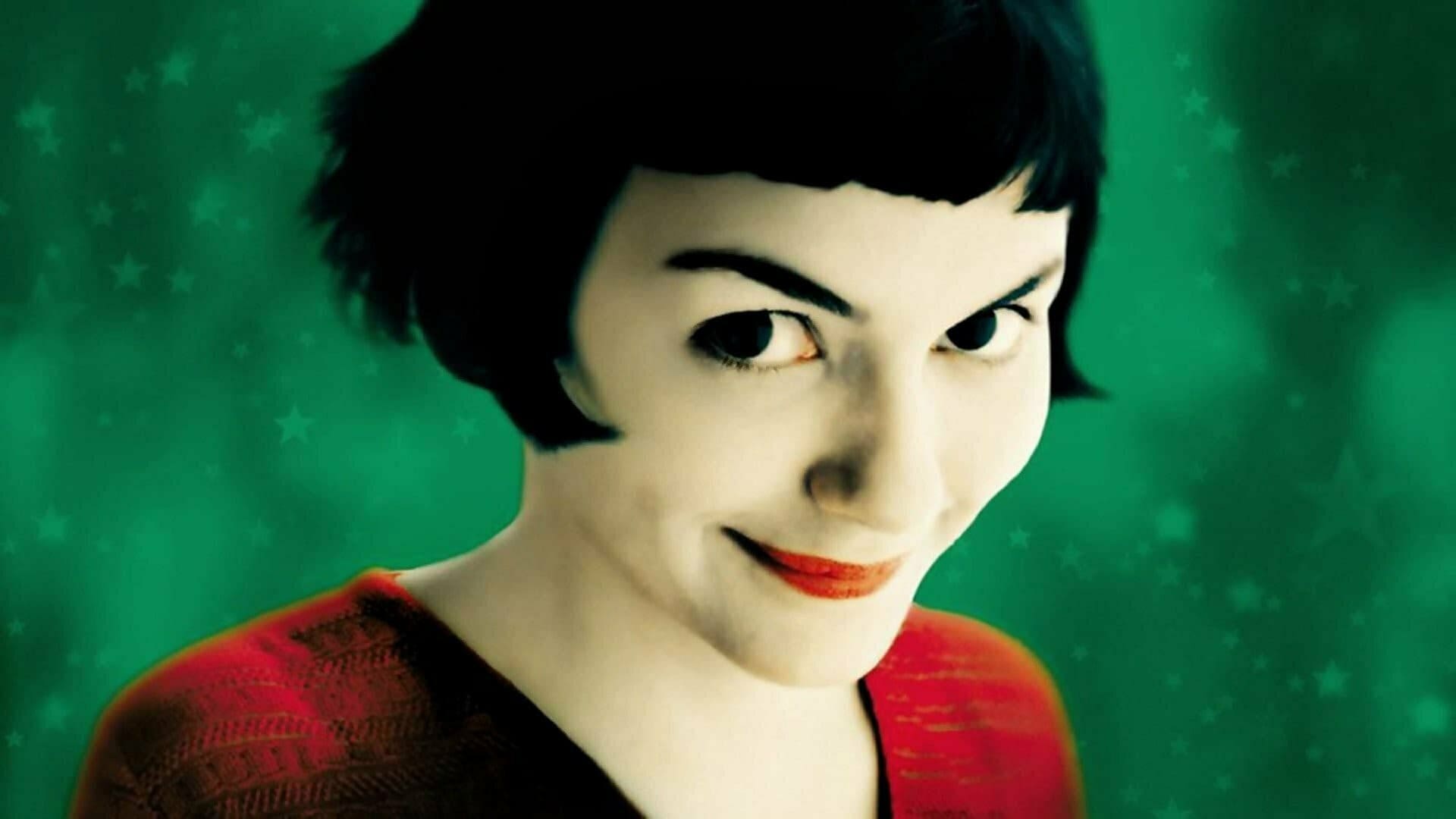
Amélie – A house is not a Gnome (with The Contrarians Julio)


Hosted by
KT & Oti
Show Notes
Stay away from blood sucking critics but don’t get too attached to your childhood pet because we are covering Amélie with Julio this week. Quid Pro Mo brought to you by the legendary Contrarians podcast.
Stats
Director: Jean-Pierre Jeunet
Writers: Guillaume Laurant (scenario), Jean-Pierre Jeunet (scenario)
Budget: $10,000,000
Worldwide Gross: $173,924,742
Breakdown and Analysis
- We talk a lot about how important it is to buy into Amelie and her world. Scenes that resonate with Julio were eye roll inducing for KT and evoked indifference in Oti.
- We have quirky quirks of all the quirks but what are we doing with this?
- KT didn’t latch onto Amelie as a character because she wasn’t rooted into why she should care about Amelie and the film was more just following her adventures.
- We are taken through a series of vignettes in which we delight in Amelie and this is bolstered in her want to help people.
- Julio was bought in and had a front row seat at the Amelie show.
- Like Julio, Oti bought into the world and enjoyed her fulfillment through others. The bump in the road was introducing a love story and that is her driving force.
- Surprisingly, KT didn’t mind the love story.
- KT rolled her eyes so hard when Amelie was helping the blind man across the road and giving him a tour. It is not to the level of westerners going to developing countries putting a brick and feeling like they are helping. Certainly not. Righteousness of saying I am helping you but really I am gaining something out of this in altruistic ways. But at the same time, we need to understand that this film is through the perspective of Amelie. How do we know if that’s where the blind man wanted to go? What if he was on his way to pick up medication? If you think you are helping and the person that is being helped isn’t helped in any way, then take a step back and see what that person needs.
- Julio retorts that we are in a different movie. It has established that it is not realistic. A disneyfied world. There could have been negative consequences to her helping but we were always leaning to a happy ending.
- When KT is introduced into a world that makes sense, she is all in. If we are a couple of steps away from reality or morality, KT is generally fine with that. The job of the movie is to get us to care. The delivery and how we get to the world is also important.
- Julio reflects it could have been a movie where she thinks she helped only to realise she didn’t make a difference at all. The focus is more on her helping and how that distracts away from her own self reflection. She is spending all her time and energy towards others and is not taking care of herself. It is unfortunate that she starts to take care of herself through her love interest, Nino.
- KT had no expectations for the film aside from the fact that it was well adorned. She likes going into something knowing as little as possible. KT was expecting to be able to immerse herself in the world. She didn’t need to get challenged but it was difficult to indulge her so much as a character. KT relates to focusing on other people to avoid dealing with her own shit. It is more the packaging and how it was done. As long as it doesn’t look terribly bad, KT is fine as long as the story is there.
- Cinematography was stunning. The use of photography helped convey to us how Amelie was receiving the world. Once KT saw the birthing scene, she knew she was in for an artsy film.
- Oti enjoyed the film more the first time he watched it by the breathtaking visuals. Colours and interesting perspectives played a big part of what the story was. It’s good to have technical aspects, which play a big part on what makes the movie what it is. But that alone is not enough. Oti draws examples through the Kenyan film, Rafiki.
- Julio notes how the director chose to portray Paris in his mind. Colours are vibrant and it does a good job and prepares us for the tone of the movie. If the movie didn’t look this way, we would get KT’s Joker film. If it looked different, the story would feel different. Julio enjoys when the film goes fully surreal, when Nino is talking to the polaroids. When Amelie goes to bed and the animals contemplate if she is in love. Julio believed the director chose the visuals for the story and not to appease critics.
- In regards to the writing, it was fun to have Amelie and her parents be introduced with what they love and hate but they further extended this for characters that have little impact to the overall movie. If KT feels like this is taking away from her investment in Amelie and an opportunity to see different perspectives, this is why she is not a fan. There is nothing wrong with a character not wanting to face reality, it is actually one of the most compelling themes in the movie. This was left to the side to accommodate the vehicle of quirkisms. Fantastical elements were at the forefront and if we get to a compelling story, we get to it.
- If Amelie was the only quirky character, Amelie would get on Julio’s nerves. Manic pixie dream girl could affect Amelie but everyone has their quirks in the movie. Julio references Garden State where Natalie Portman plays a similar character in a ‘normal’ setting. The archetype of the quirky girl doesn’t work anymore.
- Reality can be the beast of conformity. There’s always that trepidation of how much you relinquish yourself to be a part of real life but Amelie was feeling that at a heightened sense. KT felt that drawing from her own experiences but not necessarily through Amelie as a character.
- When Raymond confronts her for the second time, it reminded Julio of when he had a video camera as a kid. He came to realise the camera can become a social shield and not needing to actively participate. Coming to a realisation of putting the camera down and interacting with people. This helped through Amelie’s reluctance. If tasked to it, Julio would remove the love story and focus more on her efforts.
- Oti offers that not everyone needs a boyfriend or girlfriend. We have themes of change and isolation where she is always helping others and not caring for herself. Once she found love, he was able to capture her essence in the Renoir painting. Nino got in the way when there was such real depth. It takes real courage to put yourself out there. It had the potential to be great. Us seeing, as broken as she is, breaks through her isolation and helping people.
- Amelie is not fully active in her pursuit with Nino. Nino was meeting more than halfway to her. It would have been more rewarding if she had put in more work, stepping outside of her comfort zone. Instead, when she opens the door, he is there. It is not as satisfying or powerful as seeing her visually overcoming her issues.
- Nino is literally a copy and paste of Amelie. If courage is a theme, where do we see that? As much as we see her go through complications in the story, there really isn’t any tangible character development for Amelie.
- Just to see her extend herself, in a little way, would have been much more rewarding.
- Julio would envision Nino as someone who isn’t French, perhaps an American. Real world complications would have made the story much more interesting.
- The Renoir painting was the anchorage in the movie and gives further meaning to the vignettes of her helping. It’s not the most subtle but KT will take what she can get.
- They alluded to Amelie not having the best health and the Dad talks about how they couldn’t travel because of that. He would tend to the shrine that he builds for his deceased wife. Seeing the storyline reminded KT of Edgar Allan Poe’s Annabelle Lee of a lover going to the sepulchre by the sea. Not being able to grieve in a sense to continue your life in a meaningful way. Amelie’s idea was to take a gnome around the world. Oti felt this is to show the dad that he can work through that fear and travel. Julio enjoys how they do a lot without focusing too much on it. He put his life on hold and changed little by little as he saw more photos of the gnome. The dynamic didn’t afford a dialogue between Amelie and her dad so her gnome idea was heartwarming. KT understands that we love and receive love in the capacity that we are able to. In many senses it can be too much or not enough. KT wasn’t expecting a perfect response, she wanted to live a bit more in the dad’s world. Bring the pain!
- Dominique was KT’s hope that this would be the first challenge to Amelie. His first response was to shuffle off this mortal coil. Hamlet reference.
- There is a veneer to this film and a lot of people that admire that.
- The saving graces that Oti loved is what KT hated.
- A big example that removes the Amelie tinted veneer was the mysterious bald man. It speaks to how Amelie and Nino give the real world a magical tint. They take little things that may not mean anything and turn them into epic quests.
- She fantasises how admired and how sad people are at her funeral. Lady Diana meant a lot to a lot of people across countries, KT felt as though Amelie wanted the same adoration. Our understanding of her and how she processes is through a screen. Amelie is the original Black Mirror. Joseph is the first podcaster with his recorder.
Unrelated but vital points
- The ones that didn’t take to Amelie are probably falling into a film abyss. Which KT is about to join.
- KT wants an engine to thrust her from beginning to end.
- Under the right tutelage, KT enjoys being lead.
- Viewers feel like they’ve watched one of type something and may not delve deeper into it. It would be interesting to see when the next non English speaking film will win Best Picture at the Oscars.
- Merch: Vehicle of quirkisms
- If KT still has badges in the film cinephile sphere, it would quickly vanish as she hasn’t dived into any of Wes Anderson’s works.
- The blind man will feature KT’s Daredevil fanfic.
- Shoutout to our beloved FilmBusters, we will always have The Jesus Rolls.
- Compelling, gut wrenching grief is KT’s kink.
- Make sure you listen to The Contrarians episode on The King’s Speech.
For Your Reference
Delicatessen Alien: Resurrection
FYR
Referenced

KT's Picks
Referenced in this episode

A Single Man
"It's November 30, 1962. Native Brit George Falconer, an English professor at a Los Angeles area college, is finding it difficult to cope with life. Jim, his personal partner of sixteen years, died in a car accident eight months earlier when he was visiting with family. Jim's family were not going to tell George of the death or accident, let alone allow him to attend the funeral. This day, George has decided to get his affairs in order before he will commit suicide that evening. As he routinely and fastidiously prepares for the suicide and post suicide, George reminisces about his life with Jim. But George spends this day with various people, who see a man sadder than usual and who affect his own thoughts about what he is going to do. Those people include Carlos, a Spanish immigrant/aspiring actor/gigolo recently arrived in Los Angeles; Charley, his best friend who he knew from England, she who is a drama queen of a woman who romantically desires her best friend despite his sexual orientation; and Kenny Potter, one of his students, who seems to be curious about his professor beyond English class."

The Platform
"A mysterious place, an indescribable prison, a deep hole. An unknown number of levels. Two inmates living on each level. A descending platform containing food for all of them. An inhuman fight for survival, but also an opportunity for solidarity."

Episode Details
- Duration
- 0:00
- Released
- August 11, 2020
- Category
- Episode
- Hosts

Transcript
Transcript (16,483 words)
Full transcript of Amélie – A house is not a Gnome (with The Contrarians Julio).
KT: Howdy. Howdy. We are starting off with Quid Pro Mo for The Contrarians podcast. Also, spoiler, spoiler, spoiler. Take the promo away.
Clip: Let's see, Alex. What do you think of Jaws, which is at 97%
Clip: Rotten Tomatoes? I find it to be anti shark propaganda. What do you feel about the Entourage movie, which is at a meager 33%?
Clip: I think they finally got Hollywood right. How about It Follows? 97%.
Clip: Worse than your parents giving you the sex is evil talk. How do you feel about Juno, which is at 94%?
Clip: That would be a movie that celebrates a teenage home wrecker. How about Bewitched at 25%?
Clip: Best television adaptation ever put to film. How do feel about American Hustle? The towering 93%?
Clip: Overwrought awards bait. Righteous Kill, 19%.
Clip: The movie that Michael Mann wishes he had made when he created Heat. Sounds about right. I'm Julio.
Clip: I'm Alex, and we are The Contrarians. As you can tell, our thing is that we rage against the Rotten Tomatoes machine. Regardless of what we really feel. Find us on Apple Podcast, SoundCloud, Stitcher, TuneIn. Facebook, Twitter, we're everywhere.
KT: Friends and lovers. Welcome back to the For Your Reference podcast. We got your host, KT.
Oti: And Oti.
KT: And we have a very special guest OT. Mhmm. The first of the year. Oh, wow. Sometimes agreeable, always delightful. Would you like to introduce yourself?
Julio: Hi. This is Julio from The Contrarians podcast.
KT: Nice. Always delightful. I thought you were going to argue that you wouldn't introduce yourself just for the fanfare.
Julio: No. No. No. I know, it it is a beautiful Sunday afternoon. I I take time off being a contrarian on Sundays. Oh, nice. We we all need to take our rest on the seventh day, definitely.
KT: So strap in, friends and lovers. Strap on if you're feeling nasty. Stay away from blood sucking critics, and remember to not get too attached to your childhood pet. Because this week, we are diving into the Cinephile's wet dream. Mhmm. Amelie. What?
Julio: I mean, is it is it supposed to be a wet dream? I don't know.
KT: I've read the reviews. I I I've done a little bit of my research.
Oti: Yeah. Like, there's complete, like, different ends of the spectrum sort of stuff. It's either you really liked it or you just didn't take to it. And the ones that didn't take to it are probably falling in a film abyss somewhere. Yeah. The ignorant viewers as we once we we read somewhere. Yeah. We were we were watching some review
KT: and they were saying, to the ignorant eye, these themes wouldn't translate. And it's like, fuck you, guy. So let's start off with the stats, which is what we do around here. Mhmm. Directed by Jean-Pierre Jeunet, we have a budget of $10,000,000, a worldwide gross of $173,900,000. In way of cast, we have the ever eternal Audrey Tautou, Mathieu Kassovitz and also Rufus. Oh, delightful. Absolutely delightful. We are armed with the most learned, with the most loving, with the most effervescent of guests. And I'm very, very excited.
KT: However, I feel about the film, I'm very, very excited to have Julio. Yeah. And you're and this is going to lead into quite a lot of tasty discussions, perhaps fights if you're feeling nasty. Let's start off with our first impressions. I guess if you have stumbled across the contrarian land and you found yourself in the For Your Reference household, welcome, welcome, welcome. We take kindly to your kind around here. First impressions is really where we, I guess, give our sort of frame of reference, who we are as people, who we are as viewers,
KT: and I guess how we received this film, what we thought about it. And then I guess that will give some sort of understanding, maybe in some cases, some grace to how we feel and also how we discuss the film because this is a film as much as we will say. So, Julio, let's start off with you because as generous as we are, this was your choice. I'm not I'm not pulling I'm not putting the blame on you. I'm just saying this was your choice.
Julio: No. I think I think it's it's the right order. I, if I go first, and I'm going to just talk about how awesome this movie is and why. And then we're gonna move on to, at least, I imagine, just from everything I've sensed since we started talking, at least one of you is not so hot on this movie. So, yeah, it's probably better if I go first. That way, I don't I don't feel too shy about being positive, you know, because I I don't know yet what your problems were with the movie.
KT: I I am dying to find out. I love that you love us even though we're not so hot. That's why we're on podcasting platforms.
Julio: No. I here's the thing I especially doing the kind of show that Alex and I do, it's, there's a lot especially over the last couple of years, there's been a lot of I don't want to sound pretentious about saying that like, you know, my mind has expanded, but I've definitely I find that I've, I feel that I've become a little more accepting of just differing opinions. It's not that I was particularly close minded before. But the idea that a movie is either good or bad is just something that I've, I try not to really
Julio: I try to get away from that. It's more like, well, this movie worked for me or this movie didn't work for me. But when you phrase it that way, then it leaves room for somebody to say, well, it worked for me. That doesn't mean that it's a bad thing or it's the wrong take. So a movie could work really well for me and it could not work at all for you and we can both be right. So that's definitely that also makes the conversation more interesting because it never really feels like,
Julio: like you're in a battle. It's more like an exchange of ideas. That said, there are some things that if you guys didn't like it's probably gonna break my heart. So tread lightly. No. I do have a bit of a history with Amelie. I saw it in theaters when it opened. It opened in Peru probably around the same time it was opening around the world.
Julio: I went in to see it with my parents and my brother didn't know a thing about it. It was just, you know, we would go to the movies a lot. And that just happened to be the big movie that was opening at the time. We just went in, didn't know what we're getting into. And we walked out of there. And everybody was happy. My I'm sure my dad probably made a comment of, you know, that it was a good pick that that, you know, that we had picked the right movie to watch that night.
Julio: I'm pretty sure I guess I went to film school in Peru, I probably had seen a couple of French movies before. Not sure if I had seen them in theatres. This might have been my first French movie seen in a movie theatre. So of course, all that gives you a it frames my experience. My memory of Amelie is, Oh, watching it with my family, having a great time, being impressed by seeing it on the big screen.
Julio: And I've seen it since then a few more times just on video at home, share it with other people. And it's never really dipped down in Every quality for time I come out of it, it's just kind of joyous. I think it's a very happy movie. It's a very colorful movie. I'm not blind to its flaws. I every time I see them, I notice some things that I'm like, I wish they'd done something better with this. But but I it's definitely to me, least, it's a feel good movie. So
Julio: it was no different this time. I just finished watching it right before we started recording. And I was I was laughing. By now, I think I know the movie so well that I can just anticipate the the big moments. So I start enjoying them even before they happen. So it's to me, it's just, you know, just like an all around great movie. I'm sure we'll get to talk about the things that maybe don't work or that could be done better. But as far as first impressions and just the history of it,
Julio: to me it's comfort food. I don't even think of it, you know, because you were mentioning that it's kind of like a I guess it is an artsy movie and it's kind of the kind of movie that critics would fawn over. But I never when I think of Amelie, I never think oh, you know, it's just artsy. To me, it's always felt very accessible. I don't feel that it's pretension. I think that it actually manages to walk that line about being feeling
Julio: like it's art, but also feeling like it's not talking down to you. So I don't know. You guys may disagree. But and and finally, I like the language. I I'm not a Francophile. I tried learning French a few months ago when the quarantine started, and it was so hard. I mean, I'll get back to it eventually. But it's
Julio: I'm far from an expert. But I like the way it sounds. I think that Amelie and other French movies I've seen that I like are one of the reasons why I want to learn French because the the language just sounds
Julio: so it just sounds pretty.
KT: It does. And so that's like a cherry on Like, even the insults. Like, oh, on top of memory. Insults are like, yes. Say it again, daddy.
Julio: Well, you know, my wife spent a semester abroad as an exchange student in France. She hates French. Oh, wow. She But she has that experience of relating it to her school experience and she didn't have the best teachers while she was there, so I think that that created some sort of resentment. So every time that she hears me just wax poetic about the French language, she just kinda rolls her eyes. But, you know, she watches me with me and it didn't bother her.
KT: Fair enough. And, you know, what what you love is what you love. You don't need to go back on it, Julio. It's like you explaining to your friends that you have a new lover and your friends are like, they're ugly. And you're like, yeah, they are. Nah. Just love what you love, Julio. You know? You love the film. That's great. I guess something that we've also learned as well in this ever growing landscape of podcasting is,
KT: you know, a lot of the time, it wasn't until our Christmas special that we started rating things actually officially on our podcast. So before we had done that, even though we didn't like something, we were able to discuss it. And I feel like now that we know we're working towards that Christmas sort of rating, it always kind of it's a bit of a block because it's like, okay. We didn't like it, but let's still try and discuss it sort of thing. Right? Speaking of trying to discuss it, Oti,
KT: would you like to dive into your sort of first impressions? I think you mentioned that you've watched this movie before, so feel free to share that as well and how you felt overall with the film.
Oti: So to start off, I watched this when it sort of came out probably
Oti: three months later.
KT: This is cute. And So we have Julio in Peru. We have you in Kenya. Yeah.
Oti: But I watch it at home with my brother and his friends.
KT: Okay. So not so legal, but it's okay.
Oti: And it was it was I think at the time, I thought it was
Oti: good without understanding too much from the movie. I think now that I've gotten older, I sort of saw it in a different kind of light. I felt like it was just metaphor town. I felt like it was a bit pandering to the critics to the point of it getting into the sort of story and the goodness of the movie. And I get it. It's it's a feel good movie. It's whimsical, and it's you get that sort of childlike feel when you watch it. And Mhmm. I get I get all that, and I get all the sort of points that people would love.
Oti: But to some degree, the sort of everything had a meaning to it, you know, from Dufayel's painting and the gal with the half, what was it, the half glass who Dufayel's painting for, like, twenty years and all that. Like, that's a that's a critic's wet dream right there. And how it
KT: We're all getting we're all getting wet, apparently.
Oti: Like, how it overlays with Amelie's life. Because when he was talking about her, she she was pretty much describing
Oti: Amelie. And I I I get that. But to the end of it all, I just felt like it was it was a bit too pandary, and I just didn't enjoy it as I thought as much as I thought I did at the first time I watched it. Mhmm. But it does have its quality and it's the aspects of it I enjoyed. Just not it as an overall movie.
KT: Our most our most collectible
Julio: I'm already I'm already cracking my knuckles.
KT: Most learned and our most casual friends and lovers. You know, Julio talked about how he loves the way the French language hits his ear. It's the same as when Oti insults me. Do it again, daddy. Wow. Right out of the gate, Oti, when are you dropping your mixtape? Oh, it's already dropped.
Oti: Okay.
KT: Okay. So this is my turn. Right? You know what? It it is very concerning because, you know, as as a film and TV podcast, we are, you know, in a in a sea of other podcasts, and I'm very aware of how popular not as not as popular as true crime, but that's a that's a topic for another day. But I guess in that, there is that sort of sense of wanting to stay in the majority sort of opinion. And while watching this, both of us had the sense of
KT: this is not what we thought it was going to be, and we're not really attaching our avatar tentacle sexual nature into this movie, unfortunately. And we'll talk about that. But I guess it's like, I was a bit wary about it, but then we're also not the type of people just to say something like we like it even if we don't like it. So I think I would say I didn't enjoy it as much as I thought I would. It's kinda like The Godfather where it was in my periphery,
KT: but I just never got a chance to watch it. People talk about how legendary it is, how great it is, how it changed the landscape of cinema. I do agree with with changing the landscape of cinema. I do like how it opens up potential of, you know, if you haven't really watched a lot of, like, non English speaking movies, maybe Amelie was kinda your gateway to that. I also appreciate that it was in 2001, so we weren't necessarily
KT: unless you're kind of embedded in, like, film school or in that sort of sphere, maybe this was one of the first sort of non English speaking movies that you've come across. And it was in 2001, not now, when you kind of get more it's kind of more of an normal viewing experience to have different languages. Right? So I definitely appreciate that. However, if you've listened to even half of the episodes on our podcast, the the biggest like, the biggest thing that gets me off is story.
KT: And I really don't feel like we were working towards an overarching narrative. Like, it kind of the way I felt was very similar to the way I feel with a lot of Tarantino films, specifically Pulp Fiction and most recently with Once Upon a Time in Hollywood. We have quirky quirks of all the quirk sort of characters, which is cool, which is nice, and we'll we'll talk about, you know, more of the interplays in the film. But it's like, but what are we doing with this? Is it just to have characters,
KT: you know, doing ridiculous things? You know, it looks pretty. It's great. I'm not going to knock the way it looks. I understand. You know? And, again, that's a lot of the Splooshies that people have for this. You know? I was I was I was deep diving into Rotten Tomatoes, and I was and I found myself agreeing with a lot of the Rotten reviews. And I'm like, what does this say about me? Am I going to fall into the abyss
KT: after this episode? I guess we'll see. Of all the things that I thought I might get canceled or shunned upon, I didn't think it would be Amelie. But there you go. Obviously, there's a lot we can talk about. I think just at the crux of it, I didn't emotionally latch on to Amelie as a character because beyond the quirks and be I I why a lot of people that analyze film love it. But for me, the foundation of enjoying a film is the the characters were established, but it I wasn't really
KT: rooted into why I should care about her. And it was more just following her misadventures through the movie. That's more how I feel. Mhmm.
Julio: I I don't think I I don't disagree definitely with that last part. I but I think that like, it's definitely episodic. And I think that that can get in the way of somebody enjoying the movie because it feels like you don't have,
Julio: you know, an engine that's thrusting you from beginning to end.
KT: And I want an engine to thrust me from beginning to end, Julio.
Julio: That's that's Oti's job. No. They they definitely structure it more as a series of once she decides that her mission in life is going to be making everybody else's lives better, it's just basically a collection of vignettes of just her helping And different those progress on their own. But there's really you know, when it boils down to just the bare minimum element, it's just about her finding a boyfriend, which is not my favorite thing in the world. I literally, Alex and I just finished
Julio: doing an episode on Little Women, the '94 version. And my one problem with that movie was that the ending boils down to Oh, Jo just needed a boyfriend. And so, I think that that's I I don't know. It's a problem I have with the movie, but I can see how it can be a problem to to somebody
Julio: if you're not connecting with her. And then the endgame is just that, oh, well, now she she's dating the guy that she thought was cute. Well, you know, it's not like they have an epic love story. It's just a very quirky story, very quirky road that they take to get the happy ending. That said, I the things that grabbed me the first time I watched it are things that still grab me now. And those are the the effect that she has in other people's lives
Julio: to this day. I mean, I got chills today when I was watching it, and you get to that scene where she she grabs the blind man and they have that she walks with him and she's describing everything to him as they walk. That moment to me was I'd never seen anything like that in movie. Yeah. Because, you know, the way it's shot is just very, very specific, very vibrant. You can definitely feel that this old blind man is suddenly his life is changing. And and it also marks a very
Julio: definitive turn in the movie. Know, now it's like, oh, now this is what she's gonna be doing for the rest of the movie. It's just I don't know. It's exhilarating. And so from then on, the movie keeps hitting those moments. On different levels of intensity, like what she does with her dad, what she does with the woman that misses her husband, and she fakes the last letter from her husband. All those things that she does every time that she does good for someone,
Julio: as misguided as it may be, sometimes, I really get a jolt of, you know, just just joy, because it's just, I don't know, it's just, it feels a little magical. And and that entire the entire canvas that they're using for this movie is kind of, you know, magical realism. So so while I find the the love story that's the closest to a through line, a main story in the movie, I find that kind of weak and I don't really care. Else that's going on around it I find fascinating.
Julio: So, I think that that's what carries me. But I'm curious because you guys said that this was not what you expected from the movie. So what expectations did you guys go in
Julio: go with into the movie? Were you expecting just, like, a a rom com or I I mean, it's not even, the poster tells you anything. It's just her face. So so what were you expecting when went in?
Oti: I expected exactly what you just said. We have Amelie and I was fully bought into the idea that she could not sort of live the normal life of
Oti: the having the happy family, having a, you know, having a boyfriend, having having children on the line because we saw a montage of her living through that and her having sex, and it wasn't for her. She didn't really enjoy it. And I thought she found us she found a fulfillment through helping others. But to come later on and see her look at Nino, and then I was like, oh, fuck off. Is this what you're driving us towards? Like, I was fully bought in. Like, not everyone has to have that life.
Oti: And I was fully accepted that Amelie is gonna live this life. She's gonna help others, and that's gonna be a thing. And that's what I'm looking origin story. That that's that's that's a fulfillment because you already saw her having a relationship or having at least sex with someone else, and it wasn't really for her. And she didn't really enjoy it, and I thought, cool. Mhmm. That's not for her. Accepted. And I'm happy to see this sort of collection of her helping people in in sort of fulfillment for her and herself. And and when she was helping the father with the gnome, I was like, yes.
Oti: And then Nino comes into the picture, it's all about Nino. She literally melts into a puddle of water.
KT: Which is how Julio Julio tweeted before this that that's how he would feel if we didn't like the movie. Yeah. And I'm like, come on now. Like,
Oti: it always boils down to this in movies, doesn't it? And I thought Amelie at least would be bold enough to go beyond that.
KT: You know what's interesting? Because it's not Titanic level of unnecessary love story. I actually didn't mind the love story at all. I I think the crux of what was annoying me, you know, Julio so perfectly captured how he felt and the first sort of interaction that Amelie has when she's trying to help people, that old blind man. I have never rolled my eyes so fucking hard until that happened. It's not to the level of, like,
KT: Westerners going to developing countries and putting a brick somewhere and feeling like they've actually helped. Helped, it's not to that level. Oh, not slum tourists. Wow. I didn't wanna get I'm not trying to make this episode what it isn't, but you know what I mean? Like, that that sort of righteousness of I say I'm helping you, but I'm really helping myself in other sort of altruistic ways. It's not to that level, but at the same time,
KT: what we need to understand is we're seeing the film from her perspective. So perhaps she wasn't really helping that man, but because it's from her perspective, it changed his whole world. He had a whole Disney sequence after she left. How do you even know that that's where he wanted to go? What if he needed to continue to go somewhere else? What if he was going to pick up his medication?
KT: And she just fucking left him there. And then she just twiddly deed down the street. And I was like, mate, like, are you actually trying to help, or are you just trying to get yourself off? And, like, I love Julio so much. Thank you for coming on our podcast. I don't know if we'll ever talk after this, but I hope we do. You know, Julio Julio was one of the first people to mention my my sort of hot takes. You know? They're muy caliente. They are, like, spicy cayenne pepper,
KT: like, sort of and I don't mean to do that. I think I just process things in different ways. Maybe like Amelie. Maybe I should relate to her more. But I feel like there is I feel like there is a danger, not not to the level of this film, but hello, friends and lovers. If we can't change you through the talking of art, then what are we here for aside from dicks? Right? If you think you're helping
KT: and the person that you're helping isn't helped in any way like that blind man, then take a step back from your own sort of altruistic sort of nature and actually see what that person needs.
Julio: I mean, yes. But I my counterargument to that would be that it's not that kind of movie. You know? It's a I agree with the logic behind it in the real world. But I think that by the time we get to the sequence with the old man, with the blind man, the movie has kind of established that it's not necessarily realistic. I mean, there's a lot of just Disneyfied they live in a Disneyfied world where
Julio: kind of you kind of have to accept that if the movie's telling you that this that she helped the man by giving him a tour of of the market And it's so magical. Yeah. Then that's probably what really happened. You know, like, right before that she does the thing where she gives the the that older man, she gives him the childhood box that has his mementos from when he was a kid. I mean, that sort of thing is implausible. And just the way that he behaves is very,
Julio: you know, it could have gone wrong in many different ways. But I think that the movie gives you a solid like twenty-twenty five minutes of buildup where it slowly tells you what kind of world you're in. And it's the kind of world where you're gonna lean towards a happy ending. Yeah, absolutely. I think that the only characters that don't really have a sort of happy ending are the is the maybe the boyfriend that's obsessed with or the ex boyfriend that's obsessed with the lady in But the everybody else kind of
Julio: gets a happy ending that in some cases it's extremely improbable, right? Like the writer that walks towards the end and sees one of his quotes on the wall. Yes, you could argue it's like, what are you doing? You know, how does that make any sense? But really,
Julio: I think the movie wants you to take it at face value and just go like, oh, it's nice. It's a nice little pat on the back.
KT: I think that also talks to the fact that you were already bought in. And I think that was part of my I wasn't bought into the movie. So something that is as as, you know, nice and, you know, you you can enjoy, you know, this young woman helping this old blind man over the puddle and giving him a a scenic route around the city.
KT: Yeah. Like, if you're bought into the movie, that's going to help you further establish how you feel about the movie, but I wasn't there. And I I I get your point, but I would also disagree with your disagreement because we recently did El Hoyo, which is not a Netflix movie, but it's available on Netflix. And it's a Spanish
Julio: Oh, I've seen it.
KT: Seen it? Yes. Mhmm. Mhmm.
Julio: I liked it a lot.
KT: The reason why I bring that up is because that is they established that world. And I I guess just to quickly
KT: explain it just so I can further my correct 100 is that they established that this was all for gore, and it was literally for survival. And I said in that El Hoyo episode, if I was in that situation, I would be that old man with a knife stabbing everyone. So I am Trimagasi. So in that sense, when I'm introduced to a world that makes sense and I'm in it, I am all the way in. So I don't think that's necessarily
KT: of the problem. The problem that I had with Amelie was I just wasn't bought into it. If you have some sort of whimsy or even just a couple of steps away from reality, even a couple of steps away from morality, I am absolutely fine with that. I think it's more just the delivery and the way that we get to there. I think since we've already been talking about it, we can talk about
KT: how she I feel like she thinks she's helping, which isn't a bad thing. But then, again, this film is through her perspective. So whether she's actually helping or not is, I guess, a KT discussion by herself because no one wants to have that discussion. But we we talked a lot about examples where, you know, she she made it her conquest to help people, and that is such a noble thing. But, you know, the the the path to destruction is paved with good intentions. I'm pretty sure.
Julio: I think that that's a I didn't mean to bring my guns up. That's a valid thing. I I think that you could definitely make a movie, and this movie could have been it. Mhmm. A movie that is about a woman that spends ninety minutes of the movie thinking that she's helping. Yep. And then the last twenty minutes of the movie is about her realizing that she never made a difference. Yeah. That movie, that structure, that story 100% works. I mean, if you if you have a, you know, competent team making it.
Julio: But I yeah, that's definitely not it. This is a movie, if if nothing else, I think that the movie is not expecting you to debate whether she's actually doing good or not. Like we said, you know, the movie is expecting you to just accept that, oh, she's doing good. And really, the real dilemma is whether she, in the in the process of doing good, she is neglecting herself, which is not really something that I think I picked up much the first time I watched
Julio: because I was, you know, much younger and I was just dazzled by the visuals and the comedy and whatever. But certainly, as I was watching it today, it I mean, not like it's hidden, right? The movie ends with her neighbor, her older neighbor that can't leave his house, basically leaving her a video saying, Hey, you can leave your house, so you should. You should live life. But I think that I didn't really connect to it emotionally until, you know, this last time where I think that
Julio: it's easy for sometimes for us to fall into the trap of kind of like burying ourselves to like, let's say I, you know, I work a lot. And it's easy for me to just say, well, it's okay. I'm working a lot and that's a good thing. It's a noble thing because I'm, you know, I have bills to pay and I'm sacrificing a lot for a noble goal. But sometimes you can delude yourself into thinking that that justifies you not taking care of yourself on a more personal level. And
Julio: that's in a much more colorful way. That's what's happening to Amelie, right? She's just is she's spending all her energy and all her time worrying about doing these nice gestures towards everybody else. And, and she's not really taking care of herself. It's like we've established, it's kind of unfortunate that the way that the movie decides to show you that she's finally taking care of herself is by giving her a boyfriend. Finding her a man. Yes. But it's still I found it just kind of affecting
Julio: that she's so oblivious about it or that she's very effectively in denial about the fact that she's just not really doing anything for herself. She's just doing stuff for everybody. But like I said, I'm pretty sure I didn't really connect to that aspect the first time I watched it, probably not even the second or third. I don't know how much it worked for you guys. Like I said, there's a tape at the end that basically spells it out but
Julio: if it's not really hitting you throughout the movie, I don't think that that tape really has has much of an impact.
KT: Yeah. I was like, put the camera back to when they were having the sex scene through the curtains. Like, just go back to that. You know, we we we all we all think we're, you know, Amelie, but we're really Lucien in the movie. Yeah.
KT: I I don't know. And I guess just to just to go back to your initial question and under the right tutelage, I do enjoy being led. So thank you for leading that, Julio. You you said, what did you expect coming into this movie? I actually didn't have any expectations aside from the fact that it is well adorned. It it there is there is much love and adoration for it. I I I kind of like going into things
KT: and not knowing as much as possible. You know? Sometimes it gets to a point where you have, like, the third or fourth release of a teaser trailer, and I'm like, why do we need to see this? Like, we get the crux of it. We know who's in it. Like, I don't need more of it because you're just gonna show us that while we're watching it, and then we'll roll our eyes because we've seen it already. So in that sense, I was absolutely fine with it.
KT: But I I didn't I wasn't expecting anything, but I was expecting to at least be able to immerse myself in the world. And, unfortunately, I didn't. And, you know, maybe that's a conversation for another day of why I can't attach myself to her character. But it felt very it felt very Truman y. You know what I mean? Like, everything was set up to for her in there. And like you said, she didn't get challenged in any way. She didn't need to get challenged, but it kind of took me away from it.
KT: You know, more more than anyone, I can definitely relate to focusing on other people so I don't have to deal with my own shit. That that is a theme that I definitely relate with. So I think it's more the packaging. It's more the way it was done. I I'm not really a visual sort of person. I more like to know that things are operating and functioning properly. That's in a, you know, a real sense, and that's also in a film sense. As as long as it doesn't look bad, like, terribly bad,
KT: I'm absolutely fine with a film just being a film as long as the story is straight. So I guess let's talk a little bit about the cinematography, and that kind of, you know, comes together in how Amelie sees the world. Because I think we can all agree that it is pretty much from her perspective. All of the fantastical sort of natures are coming from the fact that it's from her point of view. Right? So, you know, if if you've done two seconds of reading any IMDb or any sort of article,
KT: you will know that the use of the colors in the film, green, yellow, and red, are inspired by the paintings of the Brazilian artist Juarez Machado. And for, like, for I I think for most people, they'll be like, ah, yes, and stroking their film beards or other film hairy places. You know what I mean? And a lot of the sort of positive reviews talk about that. And it's like, yeah, I see that. But where's the story? Why am I supposed to care? And I guess I'm just that other person. Like
KT: and I guess that's just how I feel. But in regards to the cinematography, it was beautiful. It was lovely. The use of the colors really helped us convey how Amelie was receiving the world. And not necessarily how I was receiving her, but, again, I think that's just more of a qualm that I have. You know, there there's a lot of sequences that we have, which is, I guess, is more of a storytelling sort of thing. But in regards to the opening scene,
KT: you know, once they had the birthing scene and the baby coming out, I was like, oh, this is going to be an artsy one, isn't it?
Julio: Yeah. My wife turned to me, and she goes, well, that was not necessary. Yeah. I was like, well, just strap on.
KT: Strap on, literally. But, yeah, that's why I was like, okay. Alright. I think I kind of know where I'm going. So there's gonna be a lot of, you know, a lot of pause moments where you'll have people being like, oh, look at the way the sun is set and look at the way the shot is. Like, I get that that's what a lot of the,
KT: you know, the Splooshies are for this film. But, again, no I've already said what my qualms are, but how did you how did you guys feel generally about the cinematography and also how she perceives the world and how that ties in together?
Oti: I think I enjoyed it. I enjoyed it more the first time I watched it because I think just the fact that I was younger and I really couldn't take too much out of it, that was sort of this shining light for me in the movie. Yep. It shot really fantastically.
Oti: It's whimsical, and you love that. You'd love to see that. It takes you back to when you're a kid and you're seeing all the sort of colors and interesting sort of perspective because I think it it played a big part to what the movie is. Yeah. So we see a lot of the director's intentions in this and how that sort of overlays in the story and how it paints
Oti: Amelie as a character or as at least the protagonist in this, which is all well and good. You know? It it's good to have this sort of technical
Oti: aspects of it, which make which play a big part in making the movie what it is. Mhmm. But to rely solely on that, for it to be the fundamental reason why of why you like it all because it uses it references an artist. We have heaps of movies that do that. We just covered Rafiki the other day and they call they based their color grading of an artist's work. And we're like, yeah, that's fantastic. By the end of it, the storyline was there that we could all sort of reason it with, that we didn't have to take out our monocles so that we could enjoy it.
KT: Well, I just wanna preface Rafiki is is a is a great film, but it's also Kenyan. And Oti Oti has a whopping Kenyan tax as well. Well, I guess, Julio, in regards to and this was Oti's statement. This wasn't even me. I'm not puppeting him right now. He he said that this is the crux. The cinematography is why people say this is so good for lack of story. Thoughts? Feelings?
Julio: I I don't know. By the lack of story in a society? Honestly, I did not I did not go on on Rotten Tomatoes, so I'm not up to I I'm not familiar with the quotes from the critics. I it's definitely one of the most, guess, powerful elements in the movie or one of the most noticeable. It definitely doesn't look like your average movie. And I did not know that it was that the look was based on on,
Julio: you know, the work of a painter. I remember, not the first time I watched it, obviously, but I think I was listening to either the commentary or behind the scenes featurette on the DVD years ago. And I know the director was talking about how he wanted to project. He was like, I know this is not what Paris looks like. This is it's a
Julio: you know, it's the Paris in my mind. I wanted to show you what Paris looks like in my mind because it's that kind of story, you know, it's kind of somewhat a fairy tale. But that's knowledge after the fact. When I was watching the movie, I just think, you know, I'm not an art critic. I just think it looks pretty. The colors are vibrant.
Julio: And, okay, more so than that, I think it does a good job of setting up the tone and preparing you for what's coming in the movie help you kind of set that that baseline of what to expect. I think that a movie that did not if the movie didn't look this way, if it looked more realistic, then we would go back to to the movie that that you were pitching earlier,
Julio: KT, right?
KT: Starring Joaquin Phoenix. Was Movie like a Joker type movie.
Julio: Exactly. The movie about a girl that's deluded, thinking that she's doing good and then finds out that that no, in the real world, more than likely these things go go wrong. But because it's just so, so vibrant, so colorful, excuse me, then it looks like, then you feel comfortable expecting good things and just kind of leaning towards the positive side of the story. So I think that it goes beyond just being pleasing to the eye and it actually has a purpose. The main
Julio: proof of that would be that if it looked different, the story would feel different. Know, it would be a lot harder to buy that all these fantastical things are happening if it looked if the world itself didn't look like it was coming out of a fairy tale. I really like the brief moments where it goes just completely surreal, not just when she melts into the puddle of water, but I really like when Nino is in bed and he's talking to the four pictures It's of the funny and it's just so
Julio: You know, by the time that you get to that part, you're already halfway through the movie, you are it fits into the world. So you're so comfortable with just seeing that kind of stuff happening, When you she goes to bed and the little animals in her paintings are talking about her, saying that she might have fallen in love, that sort of thing only works if the movie looks the way it looks. Absolutely. You toned it down, then it just,
Julio: you know, then the the the spell is broken. So I I I think that it's it's little more than that. Now, as far as it did he do it because he knew it would please critics? I I would like to give him the benefit of doubt and say, no, he did it because he thought that that's what served his story better. You know, he had a pretty good idea of what he wanted to do with the movie and
Julio: that movie would benefit from looking the way it looks. But, of course, I could be wrong. Maybe Jean-Pierre Jeunet is just he's playing all of us. He's going for the critical acclaim. Although, that said, I've seen a few of his movies and I think that this might have been his biggest success easily. We'll get to our recommendations later on, but even though all his movies are very much his movies,
Julio: if you watch Amelie and then you watch a movie of his, you're like, oh, yeah. It's definitely the same guy. I think that Amelie might have been the only one that really brought him success and got him Yeah. Attention, positive attention.
KT: Well, think and I I know I'm taking shots everywhere, but I think that's also, like, viewers. Sometimes they feel like because they've watched one thing of a certain genre of a certain type, they don't need to explore other sort of ones. Like, I would I would it would be interesting to see when the next non English speaking film will win Best Picture for the Oscars, for example. Like, I've watched I've watched the the the go to
KT: Parasite. I've watched Train to Busan, but I'm not gonna watch any sort anything else in sort of Kenya sorry. Not Kenyan. I'm looking at my manga. In Korean cinema. So maybe maybe that also speaks to it as well. But that is that is a complex sandwich that I'm not biting into today. But I I definitely like, I I can appreciate how beautiful it was, and it definitely fit Amelie as a character. I think I think it was also a bit of the writing as well. Like, it was fun and it was really quirky
KT: the way that everyone would be introduced including the mom and dad and talking about what their pet peeves were and what they liked as well.
Oti: But But Everyone collected something, by the way. Everyone had a thing. Everyone had a thing they collected.
KT: Yeah. But even characters that had no consequence also had their own little quirks, which is cute. But then if I feel like that's taking away from my my chance to invest in the character and to see possibly different dimensions and different perspectives of Amelie, then that's why I get annoyed. I I guess that better illustrates how I feel about it. It's like, oh, yeah. Cool. Yeah. Nice quirks. But at the same time, you know and and, again, there's nothing wrong with the protagonist, you know, not wanting to face
KT: reality, and that's quite of the most sort of compelling themes that we have in this film. But I I I guess it just didn't really gel with me the way it was done. I kind of felt like it it it was sacrificed in way of the vehicle of quirkisms. I need to put that on a T shirt. But
KT: I I could see that. I I just kinda felt like all of all of the fantastical sort of stuff was at the forefront. And then if we get to it, we get to it. But if you're enjoying the journey, then it's not going to bother you, I I guess, is also the point as well.
Julio: Yeah. I as I was watching it today, I realized that if Amelie was the only quirky character in the movie, she would probably get on my nerves. I I was watching it and I was like, you know, because you're right, you know, everybody's introduced. Every time somebody's introduced, we get that little snapshot of, oh, they like this, they don't like this. And they have the one quirk, right? The woman that's always coming up with different ailments that she has, the guy that's obsessed with his ex and is constantly recording her actions and so on.
Julio: I'm sure you guys have heard of the now almost retired term, manic pixie dream girl. But that's The manic pixie dream girl, I mean, that's something that could affect Amelie as a character. And I'm sure some people would say that it does affect it, that, know, she's just too quirky and too, know, women are not like that. Nobody is like that in real life. But I think that what this movie does is introduces the way that they normalize it is by making everybody quirky.
Julio: And so now she is she has her quirks, but everybody has their quirks. So that makes it a lot easier for someone like me at least to to to go with it. Because there there's movies where, I say like Garden State, don't if you guys have seen Garden State, but the Natalie Portman character in Garden State is just like a
Julio: little bit like a real life family and that's, you know, she's just so quirky and impossibly cute and all that. And but it's set in the real world. And it just I have a hard time
Julio: just enjoying it, right? Even though the movie, I know, wants me to enjoy it. Yeah. I didn't have that problem here. And I kind of liked that I had forgotten that the movie ends and it just gives you a little view it gives you a couple more characters giving you their stats. They have nothing to do with the story, but it's just as Amelie and Nino are just riding
Julio: down the street The man on the phone. You hear about the guy that's reading. Yeah. Yeah. It it it's just kind of telling you, yes, the entire world is like this. You're living your life, you have your own story, and everybody is kind of living their own stories, having their own quirks. It's definitely a very precious way of looking at the world. But I think that the way that the world is set up in this movie, it works. Yeah. So
Julio: I I I really appreciated that that element of the writing because, like I said, I I've learned over the past few years that the the archetype of the super quirky girl doesn't work on me anymore. It did, you know, maybe There twenty years was definitely a time for it. Yeah. And but the fact that Amelie still works for me, even though at the center of it is a super quirky girl. I
Julio: think that's, at least for me, it's commendable because they they figure out how to crack the formula. The formula is, well, make everybody else kinda quirky.
KT: Yeah. And I think if if I still have any badges in in the film cinema cinephile sphere, I also haven't dived into I also haven't dived into Wes Anderson because, like, he is full like, it's it's it's also aesthetics. Right? Oh, yeah. I'm sure there's story there, but I just feel like I need to be in a particular well, especially for me because you're hearing what I'm saying about Amelie, I need to be in a particular mindset. I need to be receptive and open in some ways, to be able to receive
KT: those sorts of movies. And I think that's just me as a person. You know? We talk about frame of reference, like where we grew up and that sort of thing. But it's also who we are as viewers as well. And I think that's just me. It just doesn't get me off these sorts of movies where, okay, I'll I'll enjoy it, but I'm waiting for the anchorage. I'm waiting for that sort of emotional
KT: sort of investment. And I get and I guess something that we've kind of already touched on, but if you wanna further expand on, a lot of the I guess if you if you do wanna say there's an overarching narrative aside from the love story is Amelie struggled to leave her fantasy and to enter reality. Mhmm. And I I I guess it can be a very scary sort of thing because reality can be that sort of beast of, you know, conforming,
KT: which, you know, is is a scary thing to do. But, you know, bills need to be paid. Cats and dogs need to be fed. You know? And so, you know, there there's there's always that trepidation of how much do you relinquish yourself to be a part of real life. But I think Amelie was feeling that at a heightened sense. I knew that because I have that personal experience, but I didn't necessarily feel it through her character. So I just wanted to talk a bit about her reluctance to leave fantasy and enter reality.
Julio: I I was thinking today as as when it gets to that moment, it might be like, I think it's the second time that the painter confronts her with the fact that she's kind of hiding away from her own life. It it reminded me for the first time ever, maybe because I was trying to think of things that I could that we could delve into in this conversation. It reminded me of when I was a teenager, I
Julio: had a video camera with me all the time. So anytime I would go out to any sort of get together, I would go out with my friends or go out, you know, there'll be a family get together or Yeah. Some sort of, like, party with my friends. I would just have the video camera with me. If I was going on that trip, I had the video camera with me, and I would just be recording everything. And it was it was cool because on one end,
Julio: I wanted to be a filmmaker and I I like recording stuff, I like editing, but it also eventually I realized that it was also sort of a social shield. It's like when you're recording everybody, you don't have to really participate. You're in question for not participating. Know, you're just you're recording, so nobody's gonna wonder, oh, you know, why is that guy just standing there awkwardly, not really interacting? Oh, that guy's recording. So
Julio: I remember having that realization when I was younger and thinking, wow, maybe it's healthier for me to put the camera down and just be part of the world when I go out and interact with friends. And I and suddenly, that that memory came back when I was watching Amelie here, just kind of wrestling with that with that acknowledgement, wrestling with the things that the painter had told her and just the idea that, you know, maybe she was missing out on life because she was in this fantasy world,
Julio: you know, being everybody's hero. So, yeah, I found that really compelling. It's definitely another, you know, I would say it's definitely the strongest theme of them all. It's just that, you know, like we said before, the way that they resolve this is by having her find a relationship with Nino, which is fine. I mean, it works, but it's not as powerful. I couldn't tell you
Julio: how to make how to give this movie a better ending. I will have to sit down and really think about it and, and, you know, break it down a lot more than I would like to. But if I was given, if I was given the job of remaking Amelie and, you know, giving it a better ending, yeah, I'll have my work cut out for me. But I know that it would be I would probably try to just go away from the romantic angle and focus more on the
Julio: other aspect of it, just the idea that she needs to just live her life more. And just if that means maybe not helping everybody as much, or maybe having more follow through when she helps somebody, you know, because I think it's a lot easier to just kind of, to go back to the blind man, to walk with the blind man for five blocks and then leave and not have to worry about what happens next. And maybe the end of the movie would see her actually befriending the blind man and becoming
Julio: an active part of his life and doing so, actually living instead of being sort of a tourist in everybody else's lives. That could be maybe more compelling, but that's also a lot more complex, you know, and this movie is going more for the for the fairy tale aspect of it.
KT: Isn't that the origin story of Daredevil? He became a villain because some girl left him on the side of the street when he needed his medication? Watch out for my fan fiction, friends and
Oti: You know what I really loved about this? There's a call back for me.
KT: Oh, you loved it. Okay.
Oti: What I love know. The aspect I didn't hate everything. I'm not that guy. And definitely aspects of the movie that I love. I'm that guy. And and there was this sort of cutie. Because I think when when you grew up in the nineties, was this Zorro? I think everyone should know Zorro at this point. Yeah. Wish we we could've watched that. Yeah. Like, I saw her she
Oti: saw herself as Zorro. I saw her as Zorro. And to go sort of to the lowest hanging fruit of, oh, it's just a boyfriend that she needs, I felt like that was a cop out. I wanted her to find fulfillment in a different way. And I think that would be harder, of course, for the writer, but it's a journey worth taking, especially if your sole protagonist
Oti: is sort of not not doesn't have to follow sort of this same social norms that we all follow. Uh-huh. You know? Not everyone needs a fucking boyfriend or everyone needs a girlfriend to get fulfillment in life. And that's just a fact. Why are you looking at me so intensely?
KT: I thought what we had was special, Oti.
Oti: Because because you have this sort of overlaying themes of love, isolation, and change. And in that way, isolation where she's always like Julio just said, like, the person behind the camera. And when you're helping others and you're really neglecting yourself, I think the Dufayel Dufayel or Raymond Uh-huh. Picture portrait sort of Renoir painting. Yeah. Mentioned
Oti: that, and that was pretty much how in the portrait because once she found love, that's when he finally decided that he'd found the right she he finally painted the gutter essence and and sort of captured up perfectly. Yeah. And fair enough. I loved all that. I really did. And it just got in the way that it had to be Nino for me. When there was such real depth and it was covering such important themes Uh-huh. Where not everyone not everyone
Oti: sort of can find love or whatever. And I think it's it's it takes real courage to sort of break that and trying to put yourself out there. And I think that's what she sort of did with Nino. But for it to be Nino, I think I'm keep on going back to this is because
KT: Don't contact that man. He's an actor. Okay?
Oti: Because
KT: Leave him alone.
Oti: I felt like this movie had a potential to be great.
Oti: And people would argue that it's great the way it is. Mhmm. I felt that was the lowest hanging fruit of half finding resolution that could have been pushed farther to sort of give give this a realistic sort of tie or at least a neatly sort of packaged neatly sort of packaged parcel at the end of it, where it really wasn't in terms of her breaking through her chains far enough. And I think that was sort of the overarching narrative of this is us seeing Amelie,
Oti: as broken as she is, finding the courage to sort of break free from her isolation. And through that, the journey of where she goes to get to that point of helping people. Mhmm. And I get that. That's all makes sense in the sort of real world point of view without
Oti: really digging deep into who Amelie is as a character and how she grew up. She she wasn't really touched by her father, and she has daddy issues. Fine. You know? What? She saw her mother killed right in front of her. Someone literally fell on top of their mother.
Julio: I think I I've I've as as I was hearing you guys talk, I think I might have figured out something else that bothers me or maybe part of what bothers me about the ending, why it doesn't work so much is because she is she's not fully active in it. It feels a lot like Nino meets her halfway. Yeah. So she kinda has it easy. You know, after seeing her spend the entire movie working overtime to help everybody,
Julio: I feel like maybe it would be a lot more satisfying if she put that much work in just being direct in. You know, like, just imagine that she watches the tape that the painter left her, and then she, instead of opening the door and Nino standing there, instead she opens the door and she just goes straight into the porn shop where he works and just goes directly and talks to him directly. They think that she hasn't been able to do the entire movie. But we never see that. Instead,
Julio: when she opens the door, he's there. So, we never it doesn't really feel like a triumphant moment for her. Like, she really overcame what she she never puts the camera down, you know what I mean? Like, the closest that comes to that is her opening the door because we can assume that that's what she wanted to do. But it's not as satisfying because he's already there. And, you know, they have the little kisses and all that stuff, but that's not the same. It's not as powerful as seeing her visually overcoming her
Julio: issues and just, you know, being straightforward with what she wants and going after the boy that she likes and going there and kissing him. Not giving her like giving him little kisses, you know, on face but just going and just full on make out. I think that that would be a little it would be stronger. You know, it wouldn't be perfect if still you're building it around the relationship, but at least it would make you feel a little more like Amelie,
Julio: that change going from the fantasy world to the reality. I think it would be more just more marked. It would be stronger. So that would help. The other thing is also and I I kinda got it from the way that Oti keeps referring to Nino. Maybe we would all feel better about it if Nino was a little more interesting. I know they try to make him as parallel to Amelie because he's quirky.
Julio: You know, he collects the pictures and everything, but I don't know. How do you guys feel about that? Do you do you feel that this story would work better for you if Nino was somebody that was more captivating?
Oti: Probably. Because Nino is literally a copy paste version of Amelie. Even growing up, they show a montage of them pretty much doing the same thing.
KT: So it's like you're you're letting your brain take a rest again. Yeah. So at at at what point, if courage is a theme,
Oti: where did she really break free? Because it's it's literally handed to her. Yeah. It's handed to her. Yeah. She didn't have to do too much to get it.
KT: I think it would be fair to say that as much as we see her go through complications,
KT: which is very important in the story, there really isn't any sort of tangible character development on Amelie. And I guess that's that's part of the problem that I was having. You you know, even with Julio's example, just to see her extend herself just in a little way would further help that sort of, you know, okay. Right. So she's gotten there, you know, or she's getting there. It's not just within her comfort zone. Right?
Julio: I would give a I would have Nino played by, you know, somebody that's not French, so she really has to just deal with the the cultural clashes.
Julio: She she should end up dating an American.
KT: Was gonna say, would it be like a 90 Day Fiancé?
Julio: She can't even but she doesn't speak English, and the American barely speaks French. So it's just like a whole set of complications, like real world complications that she has to deal with. Yeah.
KT: I love how this has slowly become the sphere of, oh, maybe this wasn't as as rose tinted or Amelie tinted as we thought.
Julio: I I still love the movie. I'm just Yeah. I'm just indulging your criticism.
KT: I I I would I'll definitely agree that the Renoir painting that Raymond has, I think that was the best sort of anchorage I had in the film. Because at least all of those vignettes that we had had some sort of consequence to Amelie as a character. Whether she moved many more steps from where she started in the movie, I wouldn't agree. But at least we see some sort of consequence or some sort of effect with her interactions into the outside world and also in her acts of service as well. I
KT: it's it's it's not the most subtle sort of way to have that sort of character movements, but also at the same time, I will take whatever I can. And that was kind of a tangible sort of theme that we had with the Renoir painting. I wanna talk a bit about Amelie's dad. So so I I guess the way I would frame it is, you know, they they they alluded to Amelie not necessarily having the best health.
KT: And later on in the movie, the dad talks about how they always wanted to travel, but they couldn't really do it because of her. Kind of felt a bit blame y, but anyway. He talks about how, you know, the the he wanted to travel, especially with the wife while she was still alive, but he couldn't really do that. And then he would really tend to, you know, the shrine that he continues to build. And over the years, you see it become more and more sort of extravagant. This is this is my
KT: splooshy sort of town, by the way. This sort of storyline, this is what I'm living for. And I really wish that we kind of focused more on that because this man is grieving. He has lost the love of his life. Seeing the storyline with Amelie's dad, it really reminded me of Edgar Allan Poe's poem Annabel Lee, where they talk about a lover going to the sepulchre by the sea. Not being able to not necessarily grieve, but being able to grieve in a sense that you can continue your life in a meaningful sort of way.
KT: And again, you know, going back to the theme of Amelie feeling like she's helping, but she's not really helping. Her idea was to take a gnome and travel it around the world.
Oti: I think that was a cute sort of way to show her father that you can put yourself out there, and it's okay. On the end of it, the gnome does get back to the garden, and we see her we see that spa their father into action, and he takes a trip. I felt that that was a cute. That was a good way of showing or at least breaking the fear of him leaving or at least moving on with his life to some degree. Yeah.
Julio: I I I think it was it was definitely a cute I mean, it's very simple. It's like a simplified way of of bringing him back to life sort of. But but in the context of the movie, I liked it. I it's it's one of my favorite subplots. Me too. I find it really funny just the fact that every time he gets a picture of the gnome in a different country, it's just I I find it hilarious. I I think that the
Julio: cool thing is that they also do a lot without really devoting much time to him. I mean, you see him a few times throughout the movie, but you can definitely sense that change. Right? You you get the whole arc of he was yeah. He was being he's been grieving. He's he's put his his life on hold. And then you see him change little by little every time that he see the he sees the gnome come back or sees the pictures of the gnome. I I like it. It's probably one of my favorite
Julio: subplots. I don't know if it's my favorite. I'm trying to think of what else she does, like, all all the other people that she helps. Do you guys have a favorite? I mean, I I guess, KT, you said that the the father was maybe your it sounds like he was maybe your favorite
KT: No. I I just wanted to focus more on the dad. Like, I wanted to focus on his
KT: grief and him trying to deal with it and him growing up with Amelie. Like, I think that would've but, again, I'm not saying to change the movie. It's interesting actually because both of you were saying, if it was done this way, I'm just like, I didn't like it and that's fine.
Oti: Like, I enjoyed it. I really did enjoy it. And I think the relationship with Amelie and the father didn't really lend itself to have a dialogue where they could
Oti: express themselves in a way that it will make a father change or at least break free from that. And I think the gnome thing was a cute metaphorical way of doing that. And I appreciated that.
KT: It was an eye roll moment for me. 100%.
KT: And but, like, I understand that we love and and we we extend our love in the capacity that we are able to. So in in in many senses, it's not enough love. And in a lot of senses, sometimes it's too much love. Right? I understand that we love within the capacity that we have and that we understand
KT: to love. So I wasn't expecting her to give the most perfect sort of response to it, but I I I did get annoyed by the whole gnome thing. But, again, I think it was just because I wasn't bought into that world. I wanted to live a bit more in the dad's world and what he was going through. Fair enough. Right. Give me the pain. I want pain. In the fairy tale. Yeah. Exactly. Want the pain.
Julio: Yeah. That's that's a different movie. That's the movie that's happening behind the movie. That's my fan fiction.
KT: What was your favorite, Oti?
Oti: Yeah. I already said that. The gnome and the dad. That was my favorite sort of subplot.
KT: I gave you a chance to change your answer.
Oti: No. I'm sticking to it.
KT: If we're talking about what actually happened in the movie and what didn't change, I did like Dominique Bretodeau. I liked his storyline because that was my first sort of hope that this movie was going to have a rounded sort of view. Right? So Amelie, she even, like, confides in her dad saying, would you be happy if you found this, or would this make you sad? But, you know, in her best sort of intentions,
KT: she tracked Dominique down and she gave the box to him. And I love maybe I'm just an old man in all the films because his first response was was trying to shake off his mortal coil. There's your Hamlet reference. And him just contemplating what the fuck have I done in my life. That's the story I want.
Oti: Yeah. That was a good that was a that was also a good subplot where but that's really pivotal to the story in where Amelie finds
Oti: gratification in helping others. And that's where
KT: But there's no challenge. Like, that was the last potential sort of chance she had to challenge her ideas of whether she was helping.
Oti: But she she did help because of how what was his name? Dominique? Yeah. Dominique's response to that. He he was generally happy and and teary in the cafe.
KT: Then why was she, like, chugging her drink so she could run away then?
Oti: She she doesn't she she didn't want Dominique to know it was her.
Julio: Right. She's I think that she's
Julio: she's just avoiding direct confrontation even if it's a positive thing. She just wants to, you know, get behind the camera. That's I like that because also she hears him say that she's this thing that she's done is gonna make him reconnect with his daughter and meet his grandson. So I think that he definitely confirms to her that it's a good idea to do these sort of things for people. Yeah. But also at the same time,
KT: I guess I guess it does have a veneer to this film, and I think people really love and admire that veneer. But he could have been a terrible father growing up. Maybe there's a reason why and I'm not trying to be funny. I'm really not trying to be funny. Maybe there's a reason why he's not in the family's life. And, you know, anyone with a half psychology
KT: degree can say I'm projecting right now, but sometimes family is shit. You know what I mean? Like, you don't know. Like, is she really helping? Again, I think this this has become a projection, a KT projection episode. But she's not really doing anything.
Oti: Wow. The sort of saving graces in the movie that I had are the things that you hate about it.
KT: Yeah. Because she but if she if she actually did change his life, that was fine. But it wasn't we never got to see the other side of the coin. Right? We never got to see the other side of the coin of once she leaves that blind man, what happens? And, again, that's not important to the movie, but that's that's annoying to me as a qualm.
Julio: But she does I mean, she doesn't see it, but we see that that Dominique, he's he's feeding chicken to his grandson, so we can kind of assume that it went well. You know? He didn't show up at his daughter's house and she closed the door on his face or anything. Or if she did, they eventually got past it, and she trusts him enough to let him feed the kid. So I would say that that story for sure has a happy ending. The blind man, I don't know. But,
Julio: I mean, what else does she do? She I like what she does with the painter where, basically, she's just giving him these these videotapes, showing him the world outside. Yeah. And we can see kind of a a direct effect, positive effect that it has on the painter. It kind of brings him out of his shell a little bit. Mhmm. So I I don't think that all of it is kind of up in the air about whether she's doing good or not. Some of it, it's it has got, you know,
Julio: concrete results. And some of it, it doesn't work. I mean, think that it's hard to argue that the idea of having the jealous ex boyfriend and the lady that sells cigarettes, having them hook up was not a good idea in the turns out that they're not really good for each other. So so at least the movie gives her some failures too.
KT: Yeah. I I but I guess in those sort of senses, you know, to to introduce the outside world to Raymond, that was that was really sweet, and it was nice to see that. Her messing with Collignon the fruit man because it was being so mean to Lucien, like, that was very Parent Trap. That was very Home Alone. It was very it was like, you're not really making any sort of difference, really. But, again, like but if we're talking about, like, dealing with grief and and reconnecting with family,
KT: that is a sea. That is an ocean that is too deep for her to even dabble in. Right? So in the cutesy sort of things, yeah, cool. You know, try and matchmake people. It doesn't work. You know, mess with people's shoes. Fine. Cool. Whatever. But I I I guess that, again, you can hear all of my qualms. I'm even getting sick of me talking about my qualms because you're not gonna really going to learn anything from me, but you're also you're not gonna learn anything from Amelie. I
KT: just wanna make it clear that I'm high fiving myself I right think a really a really big sort of example that we have that removes the Amelie tinted veneer off of this film was the mysterious bald man that, you know, pretty much overlapped in the Venn diagram of Amelie and Nino. Uh-huh. When you guys watched it for the first time, we knew that we were in a whimsical, fantastical sort of world. Were you expecting something to be more whimsical and fantastical,
KT: or did you appreciate that it just kind of burst the bubble for that particular moment?
Julio: You know, I mean, I I don't remember specifically. I don't I know I wasn't disappointed. I I've I get feeling that I've always liked that payoff. I don't think I was expecting it to be, you know, a ghost or whatever she was she was trying to tell people. I I think
Julio: I think I I must have thought it was pretty clever because I know I didn't see it coming. Even though in retrospect, it's kind of obvious that the the the answer to the mystery is pretty obvious. But I I know I didn't see it coming, so I I was just, Ah, funny. You got me. You know? It's funny and I think that the fact that she uses that as a sort of that's her gift to Nino, to give him the answer to
Julio: this thing that's been haunting him. That's pretty cute. I think that that's funny. So, I liked it, as realistic as it is. I mean, you wanna go even deeper, can just say that it speaks to how Amelie and also Nino, I guess, in a way, they work overtime to to give the real world this sort of a magical tint. Right? And Mhmm. You you know, that's just how they they live life. They take little things that may not mean anything and they turn them into these epic quests or epic mysteries. And
Julio: the fact that they are not discouraged when it turns out when they find out that, oh, no. It was just something very common. It was it was just a repairman. I don't know. I I I think it speaks to their characters. Right? There's there's a different movie where the the realization that there was nothing beyond the behind these pictures, that it was just a repairman taking a standard photo,
Julio: that kind of thing would crush Amelie or would crush Nino, and and the story would go in a different way, the darker way that you want it to go. But but, no, I I I like it. I I think it's it's it's it's clever. It's it's funny. Yeah. I I I like that. I don't know. How about you, Oti?
Oti: I don't know. I just didn't really think too much about it because at the end, I'd already accepted Amelie for what it is. So I just took everything. But at no point, there was any sense that it's the real world, and there's nothing
KT: there's nothing more to it. It was a repairman, and the reason why his photo was everywhere was because he needed to test it. Like, if you were going to use one moment for realism, did it have to be there?
Julio: Well, she also has a Lady Di is all over the movie. Lady Di and her death. So that's that's an element from the real world that just ties everything together. I had forgotten that it's not because, you know, the the at the beginning of the movie, they keep talking about the thing that changes her life. Uh-huh. And in my mind, I kept thinking, oh, yeah. The thing that changes her life is that lady Lady Diana dies.
Julio: Is it? I thought it was But it's not. No, it's not. That's what I remember because it happens when it's on the news. But no, what happens is that she accidentally drops that cap and it rolls and loosens the tile and then she finds a box. But I think it's funny because then throughout the movie, there's times where she sees the newspapers, she sees people talking about Princess Diana dying and it's it's brought up, but it's never having any effect on anything.
Julio: Yeah. And that's She's just like a red herring that's extended through the entire movie.
KT: And I guess for the people that appreciate shots as well, we haven't really talked about her fantasy sort of sequences where she sees her death on the news and people are so sad. They're so saddened because she made such a big impact to the world. And now, unfortunately, we don't have her anymore. I don't know if we need to discuss it, but I just wanted to put it there because I don't think we've brought it up.
Oti: I just felt like he used the TV to show us sort of Amelie what Amelie sees. And the Diana story was sort of grounding us to reality of what's actually on the news, and then everything else was pretty much Amelie's fantasies or what what's going through her
KT: I think it's also because
KT: Lady Diana was she meant a lot to a lot of people, and it kind of overextended across countries. Right? So for me, I kind of took that as Amelie feeling like she made that much of an impact.
Julio: Whether that's true or not Yeah. That's yeah. But that's what I thought. That's that's in my memory, that's what it was. And then watching the movie, was like, oh, no. She never really acknowledges it. I mean, doesn't mean that that's not true. I think that the parallel could be made anyway, even though Amelie never says, oh, I'm doing it because Princess Diana just died and I'm inspired. But you can still draw the lines. So it could be. I just
Julio: I think it's it's not there randomly. Right? I mean, it's it's very deliberately put throughout the movie. Mhmm. We keep getting those those, I guess, callbacks to to Princess Diana's death. And I don't know. I mean, I'm not as familiar with her as a public figure. I I know that she was incredibly popular, and she was very beloved. And I could see how you could find some sort of tie in between her story and Amelie's story or at least Amelie's goals, or even the world itself, I guess, you know, a world that idolizes
Julio: Princess Diana as a figure. It's also a world where these sort of adventures that Amelie has can can take place. I don't know. There's I mean, I I think maybe if I was more familiar with Princess Diana, I could try to unpack it more, but I've my knowledge is pretty limited in that sense.
KT: Yeah. I I don't think it was anything deeper to, like, the foundation of this movie. I just you know, she would see sequences of her death and how people were so sad about it. That's more where I was coming from. But I think it's interesting also what Oti said. Our understanding of her and how she understands things is usually conveyed through a screen. Yep. So she's like the first sort of Black Mirror. And and Joseph is the first failed podcast with his little recordings as well. But,
KT: yeah, I I I think how we felt is how we felt. How about that?
Julio: I have a question for the both of you. Having heard you on a different podcast, shout out to our friends from FilmBusters Hey. Talk about The Jesus Rolls, a movie that also stars, sort of, Audrey Tautou, like Yeah. Who plays Amelie in this one. Did that affect your enjoyment one way or another? Did that the memory of having seen her in The Jesus Rolls sort of interfere with with you watching the movie today?
Oti: It didn't interfere with me at all because, well, if you heard the podcast, I really just didn't think too much of Jesus Rolls as a movie. And sort of it just it just pretty much never happened in my mind, and Audrey was pretty much never in it.
KT: But we were on the podcast. We were definitely on the podcast. Yeah.
Oti: But it didn't affect me going into or rewatching this or thinking anything less of Audrey or anything like that. What about you, KT?
KT: You know, sometimes you're like, oh, I wish I had watched Amelie before I had watched The Jesus Rolls. I don't think it would have changed changed my opinion either way for both of them. She's kind of the same character in but not so much quirky. But she is kind of that fantastical sort of feature in both of the movies. I I guess the I I'm annoyed by both movies, but I think I'm more I'm more annoyed by Amelie because of that expectation.
KT: And as much as we say we try not to go in with expectation, Obviously, if something is lauded as the pinnacle of all cinema, maybe maybe not to that level, but you know what I mean? Like, if people really love a movie and you just don't connect to it, in my case, it it it does become a bit befuddling for me. So I guess in that sense, as much as I was annoyed with The Jesus Rolls and it was unnecessary, it's not going to be in people's,
KT: as you say, top 90 to a 100 films in history. And if you do and you listen to our podcast, I I'm not sure if we need to have a conversation. Just let me believe that, you know, there is qualite. So I guess in that sense, I I I expected I didn't know what I was expecting, but I was expecting quality at the very least in watching Amelie. But is is there anything else that you guys wanted to cover? Any anything that came up during this conversation you wanna capture off at all?
Julio: No. No. I I think I got it all out. I would say that having watched Amelie before The Jesus Rolls made me dislike The Jesus Rolls even more. Because to me, was like, that's Amelie. How can you do this to Amelie? But the I mean, even if I hadn't seen it, I still wouldn't like the movie.
KT: Yeah. And the the fact that you watch The Jesus Rolls is dedication to you, Julio. Okay. Well, let's let's finish this off. If you have listened to The Contrarians, I would say go and listen to them again because they're fucking great. But I I would also say if you have listened to The Contrarians and this is your first time here, this is not where we do real talk. That was real talk. Okay? You
KT: know, there there's Contrarians Corner where they oppose the rating, and then they talk about how they really felt. And that is how we really felt. Mhmm. But thank you so much. Thank you so much, Julio, for coming on to our podcast. We really, really, really appreciate. And even I I guess, also, even the perspective that you brought to this show as well.
KT: You know, Oti can see a lot of sides even if he doesn't like something, but I really appreciated that we had your energy in this conversation as well.
Julio: Oh, I had a blast. I just getting to talk about this movie,
Julio: just having an intelligent conversation about any movie, I guess, is always welcome, but especially a movie that you like. You know, when you like a movie and you get to share it with with somebody that's willing to engage in a discussion about it, that's that's always a gift. And in this case, if it's somebody that you're friends with, even better. So, yeah, no, this was a blast.
KT: Oh, nice. So so we're still we're still good buddies after this. This is great. Yes. Yes. So now we're going to finish off in a segment we call, For Your Reference, Julio, as our honored guest. Would you like to go first?
Julio: Yes. So if you liked Amelie, so this is not directed at Oti or KT. But if Amelie turns out to be your cup of tea, Jean-Pierre Jeunet has done a handful of movies. I've seen a few of them, and I've liked them all. Amelie is, in my opinion, his best. But like I mentioned earlier, he has a very distinct visual style and a very specific sense of humor. So I think if you liked Amelie, there's a pretty good chance that you like Delicatessen,
Julio: which is a movie that he did several years prior. That was the first movie I I watched of his. It's darker. It's much darker than Amelie. So maybe you like it, KT. It's And I think it was on the list of movies you suggested, and Oti chose Amelie, just wanna point out. Really? Okay. So I doubled down on the Jean-Pierre Jeunet there. I I know Delicatessen, I just rewatched it very recently. Also, for that list, I I I know I have it in my top 100.
Julio: The guy that plays Joseph in this movie, Dominique Pinon, he is the main character in Delicatessen. And he without giving too much away, he's basically new tenant in this sort of pension where something mysterious is happening to the people that live there. And it goes down a very dark path. It's also funny. So it's it's great. And also, if you want to go more towards the mainstream Hollywood blockbuster, Jean-Pierre Jeunet actually directed the fourth Alien movie, Alien: Resurrection, which I a lot of people
Julio: like it a lot. In fact, we did it on the show very recently. Alex wasn't too thrilled about it, but I like it. It's a lot of fun. And it's funny because, you know, it's not a French movie. He has Dominique Pinon in it, he's one of the supporting characters. But it's shot in English and if you watch it, still feels like a Jean-Pierre Jeunet movie. It's like, he went to Hollywood. So, I I would definitely I would check out Alien: Resurrection and Delicatessen
Julio: just kind of to if if you're curious about what else he's done in in maybe, you know, your film. He has other movies too, but those two, I think, are the most accessible and the most the most well known. Mhmm.
KT: Cool. Before we go through our references, I just wanted to mention something. So the subtitles that we had, there was one particular actually, there were quite a lot of interesting sort of lines of dialogue. And I guess whether it is true to translation is a conversation for another day. But one of the lines I really liked is when they were talking about the quirks of Amelie's mom and how she didn't like when her fingers pretty much crinkled in the bath. But the way that it was written was puckered fingers in the bath. So
Julio: I guess that's I I did not get that translation.
KT: Oh, you didn't?
Julio: No. I I'm pretty sure you said, like, wrinkled fingers in the bath. You have a hard pocket fingers. His pocket.
KT: I think we got the For Your Reference subtitle. Okay. Well, I guess the that dispute has been disputed. So for our reference, in we talked about cinematography and how the coloring of a film can help us understand the perspective and also the tonal sort of shifts in a film. I will reference Tom Ford's A Single Man. Mhmm. We have episodes on both.
Julio: Haven't seen it.
KT: Oh, it it it is it is great because it will satisfy the visual viewer, and it also has very compelling gut wrenching grief, which is kinda my kink, apparently.
Julio: I watched his other movie, like the movie that he did after that one. Oh, what is it called? Is it Nocturnal Animals, maybe? Jake Gyllenhaal, Amy Adams. That's another super dark movie. But, yeah, ever since, I wanted to watch his previous one. I just haven't gotten around to it.
KT: Just just just baby quickly, baby Colin Firth quickly. You should listen to The King's Speech of The Contrarians episode. It is very, very good. But I I am doing a I'm doing a podcast recommendation inside of our references. What are you doing to me, Julio? The last reference that I will bring is El Hoyo because, you know, I haven't really obviously, Rafiki is non English speaking. But El Hoyo does it as well where it it takes us into a world that is a couple of steps away from reality.
KT: And I think it does it much better. So there you go. Friends and lovers, go and cool off. Go and dry the wet places or wet the dry places, whatever you need to do. Julio, where can we it's like you you were expecting that, but also not. Right? Where can we find you on a week to week or day to day sort of basis?
Julio: So day to day, you can reach me on on the official contrarian's Twitter account. That's contrarian prime. I'm the one that's running it. As far as our show, we usually do three times a month, but basically just subscribe on any podcatcher. We're on Spotify, Apple Podcasts, Google Podcasts, wherever. And you know, you'll see at least three episodes a month from us. This month, we're doing four because we got a little overbooked on our Summer of Winona series. Yeah, that's basically those are the two main ones. We're also on Instagram contrarianprime, Facebook contrarianprime.
Julio: If you need to email us for whatever reason, wearethecontrarians@gmail.com. That's that's wearethecontrarians@gmail.com, not the contrarians at gmail. It's always weird whenever I tell somebody about our our email address. But, yeah, that's you know, you kind of, like, said what the show is. It's the complete opposite of what I'm doing here. Well, I guess the second half of the show is what I've been doing here on your show today, just expressing my real feelings about a movie. But,
Julio: usually, on the first half of the show, my cohost and I, Alex and I, we just argue against whatever Rotten Tomatoes rating the movie has. In this case, Amelie's fresh, so I would have spent the first half of the show just talking about how bad it is. I would have been like KT, even worse, just not giving it not giving it any credit at all. And then, you know, second half of the show, we get the real talk, we talk about how we really feel. So, yeah, it's it's
Julio: a I I'm very happy that you guys listen to us. That's really you, KT, and Oti. That just I don't know. I I always get a kick whenever you know, I I like interacting with people that listen. And if it's people that actually know, it's even more fun. I don't know. I always whenever you guys shoot me a comment about an episode, I I get a kick out of it. So, yeah, thank you.
KT: Oh, we we had daddies that didn't hug us, so we don't know how to receive love in a normal way, but thank you. Thank you, Julio. Thank you. Thank you. Thank you so much. Julio said if you need to email us, so I would say if you need to email us, it would be because you're complaining and that's because Oti reads the emails. Otherwise otherwise, if you wanna fight with us, on Twitter and Instagram, we are @ForYourRefPod. Write us an email at hello@fyrpodcast.com. And
KT: thank you. Thank you. Thank you. Go and check out The Contrarians or listen to us or both at the same time. You'll feel like Uncut Gems. We'll see you guys next week. See you. Bye. Bye.
Related on FYR
Discussion
Loading comments...