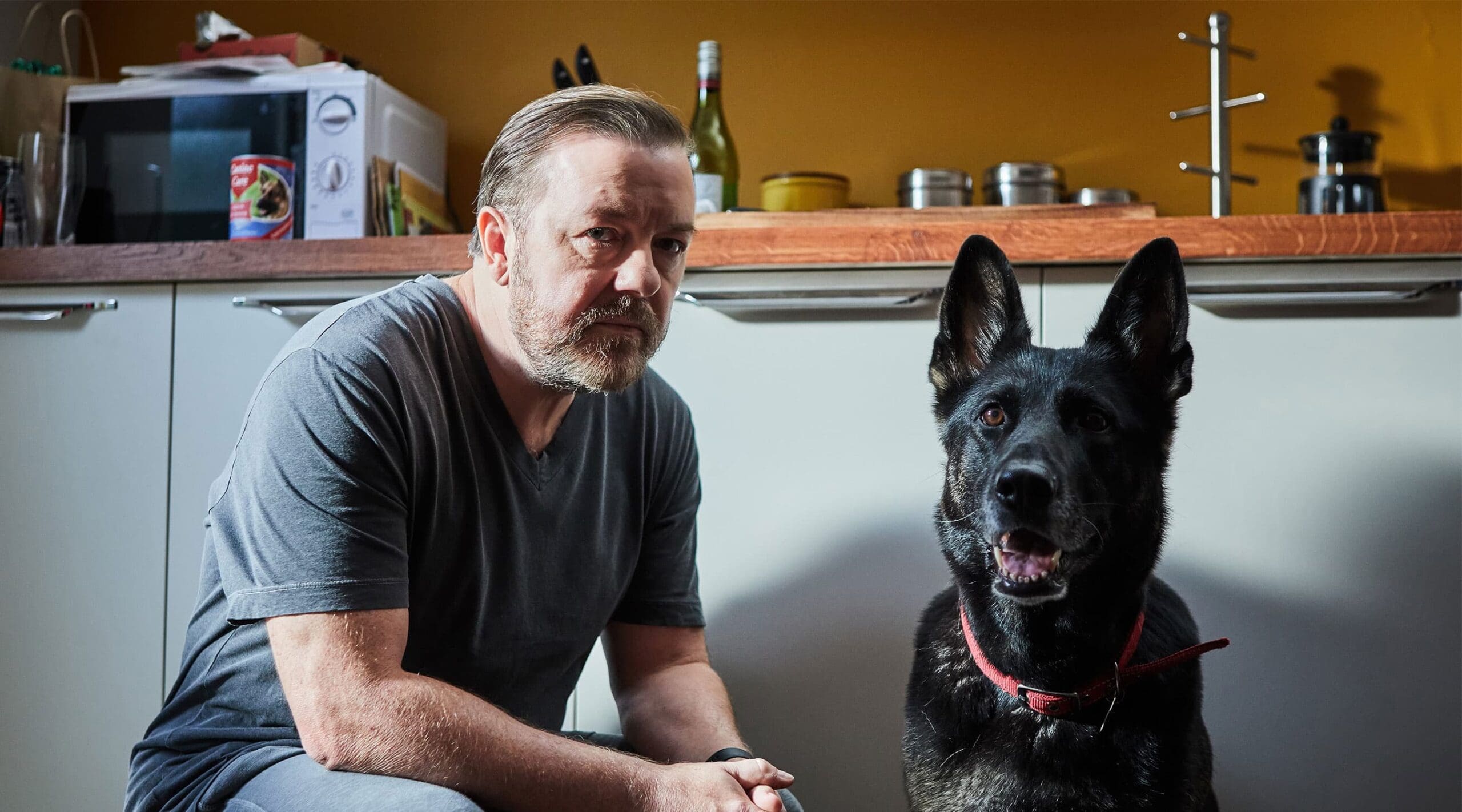
After Life – I shed a Tony tear


Hosted by
KT & Oti
Show Notes
We felt all of the feels this week watching Ricky Gervais’ After Life series on Netflix. Join us as we share our love for dogs, parents getting older and finding healing experiences through everyday interactions.
Referenced

Episode Details
- Duration
- 0:00
- Released
- March 12, 2019
- Category
- Episode
- Hosts


Transcript
Transcript (9,348 words)
Full transcript of After Life – I shed a Tony tear.
KT: Okay. So this is our mini segment that we're doing before the main chunk of the episode called Your Phrase or Mine where because we're such lovers of languages, we go through phrases, meanings, idioms, ancient proverbs, and the other host has to guess either the literal meaning or the modern day interpretation. And the prize is getting to choose next week's episode. So it's my turn. Oti, are you ready?
Oti: Ready as can be.
KT: Okay. So this is a Russian proverb, and it's neither fluff nor feather go to the devil.
Oti: Neither fluff nor feather go to the devil.
KT: You only got one chance.
Oti: Alright. Does it mean that no matter what you need, regardless of whether it's good, bad, or pretty much anything, you can always ask the last person you can think of?
KT: What? I don't know. Okay. Just ignore what I cryptic as well. Ignore what I said three minutes ago when we're a lover of languages because Uh-huh. You obviously forgot what words are. Okay. So so let's just say you lose. Okay?
Oti: What does it mean?
KT: It's it's modern day interpretation is good luck, wishing someone good luck.
Oti: How does that translate to a project? Literal meaning.
KT: What a plant. I'm getting to it. This weird expression, which actually means good luck, came to our speech from hunters. It is based on the superstitious notion that wishing for the desired outcome of the hunt, catching fluff or feather, the hunt can be jinxed. People are afraid of jinxing even today, so it became a wish for good luck.
KT: You can say neither fluff nor feather to the student before an exam or in any other risky situation. Band. Hello. Hope you've been well. Welcome to For Your Reference podcast where we discuss movies, TV shows, documentaries, and miniseries. Today, we'll be talking about Ricky Gervais' recent Netflix series called After Life. So it came out a couple of days ago on the March 8, and as per millennials, we jumped on the streaming sort of culture and gave the six episode series a go. I'm glad we did it. In a nutshell, it essentially centers around
KT: the life of a man that recently lost his wife to cancer. She progressively left sort of video diaries for him as well, and they have a dog. And, essentially, the dog is his saving grace and, essentially, what stops him from trying to commit suicide the first time. Yeah. His reason for living. Yeah. So so quite a beautiful story. We were definitely going to give it a go, and I'm glad that we did. So the cast, it centers around Ricky Gervais' character, Tony, and his lost wife, Lisa, who is played by Kerry Godliman.
KT: I don't know if we've ever seen her before, but she was great in that role. You've also got Tom Basden, who plays Matt. So that's Lisa's brother, Tony's brother-in-law. We've previously seen him as Aurelius, the water boy in Plebs. Yeah. So I think it took us a while to even recognize it was him without his splintered part and his lanky arm showing. So, you know, it's always quite nice to see a crossover and people that we love from other shows.
KT: You also have Tony's dad, who's just credited as Tony's dad. I guess he didn't have a name. David Bradley, Filch, from Harry Potter. Yeah. So that was nice to see him again. We also have the sex worker character named Emma, played by Roisin Conaty. And we've seen her around the BBC sort of show circuits around, and we like her. So it was good to see her in that role as well. You've got quite a lot of other people in this show as well. I guess
KT: just to kick off what your sort of first impressions were given, you know, what we've seen from Ricky Gervais and the types of shows that he had. And without any context aside from, you know, the sound bite that he gave in an interview about the show, how you felt starting to watch it.
Oti: I did not expect what I watched. Yeah. Especially, you know, from Ricky Gervais. Mhmm. It was he gave he showed a a new side to him. He showed how much range he has in his acting chops, definitely. It was such a breathtaking performance for me, especially for him in terms of how he delivered the tonal variations in in in the show, and it was just an amazing piece of well written. Yeah. Exactly.
KT: And, you know, Rick Ricky Gervais has a certain you know, it's an acquired taste, essentially. You know, even with the British Office. And then Extras, I remember I tried getting you on board and you just felt it was too ridiculous.
Oti: Yeah.
KT: Besmirching Warwick Davis' name. So, yeah, I I guess you you get a taste of Ricky Gervais and, obviously, him hosting the Golden Globes. It it was nice to see. And, you know, we we haven't fully seen his body of work, so maybe he has had different dimensions to him in his work as well. But it it was nice to see the the way that he created the show and the way that he brought this to life. Something particularly that I felt was done quite well was the finality of life. You know?
KT: Tony's character lost his wife, and that's not an easy thing to, first of all, find the love of your life and then to sadly lose them in such a painful way. You know? You can just imagine the last few months of Lisa's life probably wasn't great either. And it just felt truer to reality because with a with a lot of shows, you know, when something starts to get heavy, when something starts to get deep, even if it is a fictional show, they always try and leave in it with, you know, some banter or,
KT: you know, that comic sort of relief you have in a show. This show didn't have that. And, again, without expectation that it was going to be a good but ridiculous sort of show, it was in want of some levity for when we were first starting to watch it. But once we started to realize that this is closer to true life, you know, you're not going to get five gut wrenching laughs every day. Right? Yeah. At best in your day to day nine to five, you know, casual
KT: sort of interactions you have with people. You'll be happy to have one chuckle during the day. True. And what I really appreciated about the After Life series was Tony was going through a lot. He was dealing with a lot and he had a lot of pain. And I feel, not maybe not even to the extent of someone, like, dealing with a loss and having someone that you love die, there's a finite amount of time that the loved ones and those around you allow you to be a mess and they allow you to be in pain.
KT: But once that whatever definitively finite time is over, the loved ones around you, with all of the love and all of the effort that they're giving, they kind of expect you to be on the path to be okay. And I guess that's more about the loved ones and what they have to work within, like Matt, for example. But I appreciated that this show you know, Matt was an amazing brother-in-law, and he never gave up on Tony. But with all of the love and all of the investment, emotional investment that he was giving to Tony,
KT: it was hard for him to have Tony just straight up and be honest and say, I'm still not doing great and I'm still in pain. And I think a lot of the time, us pretending that we're okay is for the sake of other people around us. Even though we still feel like shit, we need to put on a mask and pretend that we're okay for other people. So I'm glad that this show sat in close to reality than most other shows would.
Oti: Yeah. So just thinking about Tony's character in this and how the warrant scared of throwing his dark sides in the show, like, when he had he helped what was his name?
KT: The druggie Julian. Julian.
Oti: Help trying to help Julian commit suicide. Like, that's something that kind of rubbed me in the wrong way, and I know Yeah. It was def it was definitely a pause to discuss moment. Yeah. And and it was I felt like it showed a different side of him and rightly so. He was going down a path that would not lead him to find true happiness or to try and regain some sort of normalcy that his life was before he lost his wife.
KT: So so what what was going through your mind when
KT: Tony, Ricky Gervais' character, was giving the money to Julian, knowing pretty well what Julian was gonna do with it?
Oti: Well and then I guess this is part of a bigger discussion of if someone wants to kill themselves, should you allow them or give them the opportunity to do so in a safe sort of safe, loving environment, you know, and doing it in a humane way. My reaction to seeing Tony do this was one of more contempt than anything. Like, I get he's going through stuff and he doesn't care and he wants to kill himself. He's tried to kill himself and the only thing that's holding him
Oti: to life or to reality is his dog. Yep. But Julian doesn't have that. And Julian's only way of seeing that he could kill himself is by overdosing. So Tony provides him the opportunity to do that. And I feel like it just wasn't right. And Julian could have had the opportunities that Tony had. He couldn't go to therapy as we saw Tony go. Yeah. Albeit how incompetent the therapist was, that's another discussion that we should have. But Tony had all these avenues and opportunities to make himself better. His brother-in-law,
Oti: Matt Mhmm. Trying to help him, not giving up on him. So this is these are all aspects of Tony's life that Julian didn't have. Yeah. And to so so give him an opportunity to just kill himself without exploiting any other avenues that Julian could have been helped to reach a point where he would be, hey, I'm unhappy now. But there are other things in life that I can do. There are other things that I can try and explore and hopefully regain my sense of happiness in this world.
KT: Yeah. And I I guess Tony wasn't there to be his social worker to explore other avenues. He saw another man that lost the love of his life and was in pain. Whether he was right or not in giving the money to Julian, Julian was in pain. He didn't really have much else, which you say, you know, could be explored, but he didn't really want anything else. He
KT: any sort of moments of clarity or, I think, consciousness he he referred to in the series, he didn't wanna have because it was too painful to face the fact that his loved one isn't here anymore. True. But And people are just blaming her because she had a drug addiction, and, of course, that's why she's not here anymore.
Oti: Well, he said that it's not the same thing that Tony is facing in terms of he doesn't get any sort of sympathy. Like, they were druggies. They deserved it. Like, you knew what you're doing. And that maybe played a big part in it, but But I I you to take for you to take the opportunity of him getting help away from the table because he
KT: Why why would you if Julian
KT: doesn't want help anymore and you go and get him help, isn't that more about you than about him?
Oti: It's about doing
KT: Isn't the right that more about you feeling guilty that you didn't do anything as opposed to genuinely because you are helping Julian, but you're helping him because you want to feel better. He doesn't wanna feel better. He wants to end it all. So
Oti: And and you know what? One of my major qualms with this show was the portrayal of therapist
Oti: because they gave Tony a quite incompetent and a dickish character. Uh-huh. And I don't think most therapies therapists will be like that. And if he had a half a decent therapist therapist, I feel like Tony would have been a long way into recovery to a point where he he would probably seek the same for Julian.
KT: Yeah. But it it wasn't Tony's role to save Julian.
Oti: Why what it what it was his role then to try and to help him kill himself. How do disassociate the two though?
Oti: If you're if it if it's your role to help someone kill themselves, surely it should some responsibility needs to fall on you to try and seek help for the person because how do you weigh the two? You know?
KT: But I I I don't see it that way. I just see it as,
KT: you know, wanting to help Julian because there's that there's that innate guilt that people feel if they don't help someone. But what if that someone doesn't wanna be helped? So that's why I don't equate them both the same way personally. Just going back to your comment about the therapist, sometimes you come across shitty health professionals, and it just happens. Right? They could have given him a better therapist, but the beauty of this show was in spite of the fact of him having a very shitty, negligent therapist, he had all of these small interactions
KT: with other people that were very meaningful to him that did, in some way, change him and his view and how he felt. You have, I believe, Anne, the old lady at the cemetery, and how he would have meaningful exchanges with her. You also have the sex worker, prostitute lady, and the exchanges, Emma, and the exchanges that they would have together. So, yes, he had a shitty therapist, but I don't think that's something that we need to focus on because, you know, the the health profession is such a broad spectrum,
KT: and you've got all different experiences that you can have. So you would hope that people don't hinge their reluctance to go and see a therapist just because of this show. But you've got this whole litany of people that surround him. Reluctantly, and over time, he starts to not only accept these interactions, but he actually looks forward to these interactions. And this series was very beautiful. And, again, I felt like it was quite true to life because he keeps getting advice from Matt, his brother-in-law, from Anne, the lovely lady at the cemetery.
KT: You know, you you can't keep feeling sorry for yourself. You know, other people feel pain too. It's not just about you. Right? And it's and then in the next episode or in the next scene, he'll go back to being the asshole that's in pain and wants people to suffer. And that's so true in life. It's not like in a movie where someone pulls you up on your bullshit and then you'll change for the rest of your life. We are fallible creatures, and we constantly need to learn and relearn lessons that we've already been taught.
Oti: True. But I feel I feel like they made a commentary of maybe indirectly of how no one would know how to empathize unless they're going through the same thing. And maybe that's all was missing with a therapist because maybe he's not experienced a loss. Uh-huh. Yep. He's not experienced such a loss in his life. But the way they portrayed that relationship, that bit of the interaction between Tony and the therapist was a bit too it's guided for me because it
Oti: the people are having issues in the real world trying to open up to therapy and trying there's to this stigma, you know? I know. And and for you to have a show about navigating the the waters of life and especially after someone you've you love has died. Yeah. And therapy not playing a big part or our part in you getting to a place where you can start accepting and trying to start moving on. Yeah. Was a bit misguided. Feel like they've missed a point to try and and remove that sort of stigma around therapy.
KT: Yeah. But then so if you just write a perfect therapist, is that just to say that the world is perfect? I just wanna bring up two examples here. You know, people that go like, people that are Catholic, right? They entrust their children. They entrust themselves inside of the Catholic church. Not all the time, but systemically, there's a whole slew of examples where, you know, the priests, is that what they call them? Yeah. Like, the clergymen have taken advantage of their position.
KT: And you would go, you would trust in the clergymen that they have your best interests at heart and they are communicating God's word, but they abuse it. Or, you know, even teachers. Right? Not all teachers. I'm not I'm not saying that. I'm just trying to illustrate a point of, you know, you put your kids into school, you entrust them in the care of these teachers, and sometimes some teachers might take advantage of it. So even in the sense of, you know, therapy, as fragile
KT: as this situation was, as fragile as a lot of people's situations are, it's such a vulnerable thing to open up and say what you're going through. Unfortunately, that doesn't always mean that the help that you're seeking is receptive and is actually going to be there with you to work those pieces together, and that's just life. So does it have to be does it have to be a good therapist in this show?
Oti: Yes. Because for characters like Julian who don't have that supporting family that that Tony had Mhmm. Then what do you fall back on? There's pretty much nothing for you. Your only avenue out of this feeling of of despair is seeking suicide, something that Tony actually helps him out to. Yeah. And I feel like that's just a dark character moment for Tony. Like, he just completely changed in my view from what he was, from a struggling man, husband, losing his wife to someone who would
Oti: not care about someone else and what their plights were. Mhmm. Because we've seen Tony caring about other characters throughout the show and feeling some sort of remorse towards characters, especially those who've Yeah. Experienced death. Yeah. This moment in time, Tony completely just went off the cuff, and I couldn't really resonate with his thinking in that.
KT: Yeah. I I guess it's just an agree to disagree Yeah. Sort of scenario. I'm not necessarily saying what he said was right. On paper, it doesn't look great, but remember the scene. We were watching the scene, and it was a very sobering moment, if you'll pardon the pun, with the both of them just talking about and taking stock of their lives. Tony constantly drawing comparisons between him and Julian, and Julian's like, we're nothing alike because you haven't given up yet. Yeah. And I guess that's something that
KT: Tony might have that that might have been an moment for him to realize, not necessarily know what you're holding on for, but just the fact that, yeah, he is waking up every day, and he is continuing to go to the job that he hates. Right? He hasn't just let everything go to shit and completely give up for whatever reason. Right? And in that moment in in that moment, they both have this connection where Julian says, I have nothing else. And you like you said, he could have explored other things.
KT: But he said, I have nothing else. There's nothing else for me. I don't want to feel any moment where I'm too conscious and, you know, facing the fact. All anyone will ever see him and his girlfriend is as drug addicts, and they deserved to die. So whether right or not, he he he wanted to die. And, again, agree to disagree, so we might as well move on. But I just just as a general sort of note, I do believe it is a basic human right for someone that wants to
KT: it's it's a bigger discussion. But if someone does wanna, in their sound mind, want to end their life, they should be able to do that without the law getting in the way or making it illegal for loved ones in order to assist euthanasia, for example. And I'm not saying anyone that just wants to die, die. But, you know, there are certain circumstances whether someone is chronically ill or they're just, you know, too elderly and it's harder to continue. You know, these are I guess these are things that we won't touch today.
KT: But that's what I was thinking when I was seeing Julian suffer when he was talking to Tony was this guy doesn't wanna be here anymore.
Oti: But then this guy is not chronically ill. He's not terminally ill. He's not, but he still wants to end his life. And he is If I experience loss or tragedy, what makes it right for me to want to kill myself? And what parameters are there for the government or the law to say, okay. So this guy has experienced tragedy, and he he wants to kill himself. So fine. You know, you just can't have a blanket policy saying it's fine. There has to be
KT: But that's that's not what I'm saying. There are beautiful ways that people that want to end their lives can do it. They shouldn't have to go all the way to Scandinavia in order to do that because it's not legal.
Oti: And I agree. They're con suddenly situations where euthanasia should
KT: Yeah. And we just don't agree on this particular circumstance.
Oti: Someone like Julian, that's more on the government's fault for not having health care systems where you could actually seek out help.
KT: When someone's in pain, does it make them feel better saying it's the government's fault that you're like this?
Oti: No. No. But that just goes to show the policies that are in place, the policies that are not in place to be there to help people that are experiencing
KT: But that doesn't that doesn't make it better. For someone living in pain, it doesn't make them feel better just to say, oh, the government should have done better. If it's pain from
Oti: losing someone you love
KT: Yeah. So let's let's let's shelve this because this is a bigger conversation, you know, qualifying who deserves to kill themselves. That I don't wanna get into that. I I don't wanna get into that at all. I'm just saying, in general, if if people wanna peacefully pass on from this life, they should be able to be given that without the stigma, and loved ones shouldn't be prosecuted and potentially given jail time because they're trying to help their loved one pass on. That's all I'm saying. Okay. So let's let's talk about Tony's dad's character. K?
KT: So Tony's dad is in a home, and he has Alzheimer's. And he seems to be very far and quite progressed in his Alzheimer's disease to the point where he doesn't recognize Tony.
Oti: Yeah. And and that's a battle that Tony has to deal with in the show where he doesn't see the point in keeping the father alive or the point of him visiting the father in hospital.
KT: Not hospital, but it's more of a carer. It was it was also hurtful for Tony because even though his dad didn't mean it, he was constantly reliving him his father asking about Lisa all the time.
Oti: Yeah. And and we saw how irritated he got and to the point where the nurse was telling Tony, why not just go along with it? Why not just pretend? And Tony, who was so stuck in his ways in being miserable
KT: Well, it wasn't just that. He was grieving. He wasn't persistently an asshole just by nature.
Oti: Well, yeah, but it's your father who's also not doing this out of malice.
KT: I know. But, like, just because this is quite a relatable show. Like, if I were to pass away, wouldn't you feel upset if your dad constantly kept bringing me up?
Oti: I would understand. I'd like to believe, but I'm not in a situation. It's easy for me to say that right now. Yeah. But I I don't know what I'd do in that situation. Yeah.
KT: And it it's okay for you to feel that way. I guess
KT: this show was very relatable. And, you know, we're, you know, we're pretty young. We're pretty cool, but we are getting on in our age. And we've got into an age where we do start to worry about our parents and if they're okay and, you know, how much longer do we have them, how they are in their best health. So that definitely resonated with me seeing Tony go through such a hard time of losing his wife and also trying to maintain the relationship that he has with his father. Tony was also saying to the nurse,
KT: I resent having to come here every day, but I would also hate myself if I didn't come to visit him every day.
Oti: Yeah. And it's just some sort of balancing act for Tony in terms of trying to get his duties Yeah. In as much as the word is technical, it does feel like a duty to just go and see your father and tick a box. Yeah. Exactly. But, yeah, it's just a a situation where a lot of people find themselves in. Mhmm. And you'd want to at least think that regardless of what you're going through, you can be happy for someone else or being happy isn't just
Oti: limited to your own happiness. Mhmm. And one of the lines that I loved from the show was when Anne said that happiness is the great thing about happiness is it doesn't matter if it's yours or not. Yeah. Like, just because I'm going through shit in my life doesn't mean that I want everyone around me to experience the same shit. Yeah. Like happiness, I can I can want you to be happy? Mhmm. And that's what's what's good about human nature. You always want the other person to be happy. Yeah. You know? When you're experiencing
Oti: such a tragedy, you'd want at least someone who's, you know, you love, may it may be a sibling, a friend, a neighbor, or just, you know, you'd want them at least to have some sense semblance of peace and happiness.
KT: Or even even for a complete stranger, which was in this scenario where Tony was debating whether he should go on a date or not, Anne was saying to him, you know, you you might not like her and you you might not wanna be there, but you might make her day. And you might make that moment just a little bit lighter for her. Yeah. Because it's not just always about you. Yeah. And that's that's such a beautiful thing to hear. And, I just really loved it because it was such a beautifully normal approach to inspiring
KT: life changing, you know, interactions that we have with people. You know? It's it's not always going to be some wizard walking you through your past, present, and future. Sometimes it is a beautiful old lady visiting her husband that's passed away in the cemetery. And that is the moment that changes you and continues to change you because, again, we are fallible creatures, and we kind of need to hear the message
KT: way more than once for it for it to resonate or for us to catch up to the lessons that we need to learn again and again. Something that was also very poignant was between Matt, his brother-in-law, and also Tony, where Matt is on this constant mission to make Tony feel better. And, you know, a a part of that, like we've talked about, is maybe guilt for him because he wants to make sure that, first of all, Tony doesn't kill himself,
KT: and second, to make sure that he's done everything that he can. And I'm not saying that's a bad thing because we all do that. I do that as well. If I care about someone, I want them to do something because I know it's for their good, whether they want to do it or not. Right? Yeah. So we have this moment where Matt takes the whole office out for a comedy, open mic night sort of thing. Right? It was really for Tony, but, you know, the whole office went. And the comic made some
KT: off color joke about committing suicide by choking on a tampon, which, you know, I I guess it depends on your barometer of comedy, whether that landed for you or not. But but you knew what was about to happen, you know, within that scene, that Tony would essentially be honest. And that was so refreshing to me because not just in movies, but in real life. You know, how many times have you felt not great,
KT: but you just pretend you are so people don't keep asking you questions? Or the people that are closest to you and the people that really love you aren't worried about what you're going to do because you honestly say how you're feeling inside. It's not a it's not an uncommon or a new feeling to sometimes just have a shit day and wanna hate everything and wanna punch every stranger you see on the street. That's a pretty normal feeling to have. But, you know, we're
KT: we're so conscious of those around us that we kind of have to put on that facade that we are okay just so the other person doesn't feel too onerous in their responsibilities as a loved one. Right? So going back to the scene, you know, after Tony discloses that his wife has died and he's trying to deal with it, Matt is dropping Tony off to his house. And they have this moment in the car
KT: and Matt's saying he didn't he wasn't purposely targeting you. He didn't ask, put your hand up if your wife passed away and then said, I got I have a joke for you. Right? And he was completely right on that, Matt. But then Tony was also completely right in, I didn't ask. Like, I didn't ask for that. I was there. I was trying he probably wasn't trying to have a good time, but he was there. He was going through so much grief. The fact that you're just there and present is a lot. Right?
KT: So you're in a situation where both of them are right. Both of them are not wrong. And you can see that Matt is really trying to dig deep within himself because he even said, I'm tired. I'm tired of constantly having to make sure that you're okay. And, logically, if you put enough work in something, there will be a result, logically. But grieving isn't you know, grieving doesn't work the same way.
KT: So Matt was completely right in trying his best and continually trying his best, but Tony was also right in the pain that he was feeling. And, you know, it there isn't a deadline to when he needs to feel better again. And I just really I really love that moment because it wasn't a simplistic one of them is right, one of them is wrong. We now have a resolution. And sometimes that's just life. Sometimes things are just so hard to navigate. No one is right. No one is wrong.
KT: But this is a shitty situation. How do we get out of it?
Oti: Yeah. But In as much as both of them were right to some extent, Tony's character really went above and beyond in trying to be and what he called it was be using his superpower Yeah. Like not giving a shit. And there's a thin line between not giving a shit and being insufferable. Right? And he kept on going between those two quite often. Mhmm. When others stand up, his the comedic
Oti: job is to try and make people laugh. And in as much as the joke wasn't well, it wasn't funny. That's not my kind of humor. Tony still has a part to play in that. Like, you don't bring the whole club down to by just saying everything out the way he did. But that's that's that's the continuous discussion that we're having in this particular episode
KT: because that's actually how he was feeling. So are you like, I I actually thought that was very refreshing. Yes. It brought down the house, but what what was he gonna do? Just say everything's okay just so everyone in the room felt comfortable?
Oti: Or just say I recently saw lost someone and keep it there. But he went on about other beaters
KT: and that's just the way he deals with it. The the the problem that I saw is when there was collateral damage. Right? When close by shrapnel was hurting people, which he found out later, it was hurting people that he loved because, you know, he felt invincible, but the rest of the people weren't.
Oti: Yeah. And you have Matt's kid,
KT: George?
Oti: Yes. Killed kid. He
Oti: Tony would say he wanted to kill himself in front of George to the point where Matt is like, I'm not gonna tell my kid that you're not gonna kill yourself and then you go and do it. Yeah. Like, no matter how much you're going through your life, you need to be able to think about others, especially kids. When you can be so in this mindset of not giving a shit and saying whatever it is you want, you need to know that it affects other people as well. Yeah. You're not in this in isolation
Oti: Mhmm. Just like Julian was. Like, he he was in this alone, and he he and he wasn't even far off from where Tony was. Like, Tony had all this love and support and help. Mhmm. Julian had nothing. Yeah. He kept us at in decorum. Like, he wasn't there to say shit things to people just because, you know, you're being a dick.
KT: Well, I I I guess that just means that people are different. That's all. Oh, yeah. People are different. People handle things differently. And, you know, Tony's character just felt like he wanted to go on a rampage. Right? So I'm not saying it's right, but, you know, people go through grief. And to a lesser extent, you're an Arsenal fan. And I've seen you grief many times. And there is there is a there is a post there there is a post game period that I know just to leave you alone because
KT: because there's no there's nothing that I can say. Trust me. I've tried. You know? In one of the first early early years of us dating, and I started to realize that there was a pattern with your beloved Arsenal, I made a comment saying, why are you so upset? They seem to lose all the time. I'm pretty sure we didn't speak for a week. Like but but that that's to a lighter extent. Right? So my point my point is sometimes
KT: you can go through shit and feel like shit and want to punch everyone you see. Maybe you even wanted to punch me in that moment. Right? But it's you you can't tell people how to feel. Them affecting other people is its own thing. But, you know, like your Arsenal, sometimes you just need to work through your shit Yeah. To become who you are again and palatable.
Oti: Well, let's talk about the other characters because I think Anne was such a solid character in this. Yeah. She provides comfort to Tony on and on again without getting anything in return, really. Like, it's always about Tony in this. Yeah. Right? And and Tony asking for advice and Tony moaning and Tony ranting.
KT: Maybe he's an Arsenal fan. Yeah. Probably.
Oti: And Anne, in return, is there to just provide this sounding board. And I feel like the I think the one time Tony actually asked Anne how she was was in the last episode. Yeah. And she asked Anne, are you how are feeling? Are you happy? Yeah. You know? And that's one that's the first time he actually asked Anne Anne how she was doing. You know? She was always there. She was always there for him to provide him this
Oti: some sort of she was more like a therapist to Tony than the actual therapist was.
KT: What I'm saying. You can you can be healed
KT: in ways that aren't the conventional therapy.
Oti: Yeah. But Tony was just lucky to have someone like Anne fall into his life. Yeah. Yeah.
KT: And I I guess it's that persistence of people being there and people caring. You know? But we've talked we've hinted on it, and we've talked about it quite a lot in this discussion. I would say that Tony went through a depression after his wife died. Understandably so. Yeah. Yeah. And when people are going through depression, you know, part of a big component of depression is not being able to see outside of yourself. Yeah.
KT: And that's exactly it. So it's easy to say Tony should think about other people. It's all about Tony. Tony doesn't ask about other people. But if he was genuinely going through depression or just grieving, because that's not easy either, then that's understandable. And he's allowed to sit in that. Well, I I felt he was allowed to sit in that because that's a terrible situation. Something I wanna talk about as well before just to make sure we get it within time is the videos.
Oti: Yeah. What did you think about the videos as being used as a tool in this show?
KT: That was a very beautiful
KT: thing for Lisa to do for Tony. Because when you're married to someone or when you've been with someone for a long time, you not only see their strengths and everything that's great about them, but you also see them in their lowest of low moments. And Lisa knew the best way to help Tony get through the very tough time. And I guess to her advantage because she had cancer and because she knew that she was going to pass away in a short amount of time, she was able to prepare for that moment.
KT: And maybe not at first, Tony was realizing that this was healing for him. But as the series progressed, you started to see the change in Tony. Right? Obviously, there's a relapse, and then he changes, and it goes back and forth. But, you know, even Lisa was like, you know, take her out to the beach. Both of you love the beach. And as soon as he heard that, he took her. Without that, he probably wouldn't have done that. But it's just it's such a beautiful thing, your life with someone else and helping them
KT: through such a hard time even though you've passed on from this life. So I really enjoyed those videos.
Oti: Well, they're using the videos as a tool to show at least more of how Tony was with his wife before she passed, and Tony was always playful Mhmm. And always playing pranks on the wife. And you could see the dynamism that they had. The wife was more understanding and, you know, playful, not as much as Tony was, but she, it was their thing. Yeah. And, yeah, it just painted a picture more of how they were together, and it was definitely I think I appreciated the videos more than probably if there were flashbacks.
Oti: Yeah. I think it was quite beautifully done. I didn't find anything wrong with how it was used in this because sometimes you get it gets gimmicky. Mhmm. We've seen other shows where they use video memories, like some sort of tools, I guess. 13 Reasons Why. Yeah. To just
Oti: brush things aside and not to explain things or to use it as a some sort of ex machina just because, oh, the part of the video where I didn't listen to it all of a sudden is solving everything that's been happening to the plot line and you know? So yeah. Definitely. It was quite nice. Nicely done by Gervais in this. Yeah.
KT: What what did you think about the other characters in the office? We had Sandra who was just new and starting there. Uh-huh. She didn't have She played she played more of a role in the series than I thought. Yeah. She had, like, full
Oti: she had little scenes where she actually said anything. And in the moments where she actually just connected with Tony Yeah. You could see that Tony took what she said to her. Mhmm. Like, when she said, I want you to be happy. I want to find someone that loves
KT: Me as much as you love your wife. Yeah.
Oti: And it was so it resonated so much with Tony, and he could feel like, yeah, maybe I've been a dick, and I wasn't going about this the right way. Uh-huh. And he needed to change tact, and I feel like that was one of the major turning point where he realized or where he felt like I need to flip the switch back on and start being more of having more responsibilities to people who are around me.
KT: Mhmm. And even when she offered to take him shopping, that was a quite nice little moment that they had together as well. Yeah. Yeah. And when they went to I can't remember. Simon? The hoarder. Yeah. The one that kept appearing in the office. Yeah. You know, she chose to stay there and see a story. And, you know, even on a a surface sort of level, it's it's beautiful that Sandra's character can see the value in someone else. Yeah. Can see beyond the hoarding
Oti: and beyond the smells. And Tony said as much in a last scene where he was like, I used to be a good journalist. I used to try hard. Yeah. I used to find stories, and it drew parallels to that moment where Tony just didn't care, didn't see anything. In fact, if I if that was me, I'd probably see a story right there. That was quite depressing and quite sad. Uh-huh. And for Tony not to see anything in it was quite interesting. Yeah. Because his mom's dad. Mental state was at the time. Yeah. Yeah.
Oti: And then we have what's a character with a?
KT: A Lenny?
Oti: Lenny.
KT: The one he kept calling Shrek and a pug because of the back of his neck. Yeah. What do you think of him? I think he's great. I think everyone needs a Lenny in their life. You know? A friend that doesn't think too deeply, that kind of just takes things as they are and is always ready for a beer and a laugh. Sometimes well, not sometimes. Everyone needs a friend like Lenny. You know, they they would go to these ridiculous stories of Kenneth Branagh of Kenneth Branagh's likeness on the wall. And, you know,
KT: Tony came out of there talking about how ridiculous it was. And, you know, his wife got hit and mugged, and this is the story that he chooses to use. And Lenny just makes a a comment, just a roll off his shoulders comment of it was all for a laugh. And, you know, sometimes you need that sort of not in a not as an insult, but sometimes you just need that simplicity. Sometimes you don't need to think too deeply about things and just accept things as they are. So I really enjoyed Lenny's
KT: character. I didn't care for the way he ate. It made me it gave me pause.
Oti: I think he thought he thought more than you give him credit for because when Sandra asked him stupid. No. When Sandra asked him, why do you let him treat you like that? And he said, I don't want to be a friend for him because he needs to let it, you know, the stress out or something. And that was a moment where you saw that Lenny actually knew what Tony needed. Like, he he wasn't personal. The jabs weren't personal or anything. It was just Tony releasing his stress.
KT: But I'm not I'm not saying Lenny was stupid.
Oti: Yeah. I'm just saying he clear, sees like, he he knew what he was doing.
KT: No. But I'm just saying he sees life in a more simplistic filter. That's all I'm saying. Yeah. Because you you need that. Sometimes, especially if you're someone that constantly overthinks things, you definitely need to go out and get yourself a Lenny just to you know, if even if for a moment, just forget that the world is contrived and it's full of shit. You just need a Lenny in your life. Yep.
KT: As for the decision to riff on about Kenneth Branagh having no distinguishable features, I I do not approve Ricky Gervais. You will not besmirch Kenneth Branagh in mine own household. I did not care for that. But everything else in this series, a plus.
Oti: Oh, a plus?
KT: Yeah. I don't think we really give ratings on our podcast. I don't I don't know if that's something that we'll introduce.
Oti: But What if you'll give if you're going to give this a a rating out of 10, what would you give the show?
KT: 10.
KT: And I never give things 10.
Oti: What? You'd give it a 10.
KT: I would give it a 10.
Oti: You didn't find any faults or instant playback,
KT: I would give it a 10.
KT: I did not stutter.
Oti: I would give it an eight. Just because
KT: did you're bit of a Lenny then.
Oti: Just because I didn't agree with some of the things that Tony did in this show.
KT: But that's the beautiful thing.
KT: Just because you don't agree with something doesn't mean it's not great. Like,
Oti: it it's something change my mind as to what the rating should be.
KT: Well, good for you. But
KT: if something doesn't align with your worldview, it doesn't necessarily mean that it's bad. And one of our one of the things that I love talking about with you is when there are characters that you really, really hate. You know, when we were talking about Upgrade, there was a character that Logan played, and you didn't like you didn't like his character. Heller. Yeah. From 24. Yeah. Yeah. Maybe that's what he was supposed to be a hateable character. So then he did a good job, and he was part of his story. Right?
KT: But just just going back to After Life, I I really thoroughly enjoyed it. I appreciated that Ricky Gervais understood that without all of this salaciousness, life is quite spectacular. Right? No. It is. Even even the mundane monotony that we go through on our lives is quite magical and is quite profound. And you really you really just strip this series back to what life is actually like. You know? Like I mentioned earlier, you know, you're you're not going to have, you know, just comedians following you around in your day to day work,
KT: you know, life sort of scenarios. And, you know, sometimes you're going to have a shit day. Sometimes you're going to have a day when someone is crunching their chips too loud at the pub, and you're gonna wanna have to do something about it. You're going to have experiences that just irk your inner core, but those are still parts of what makes your life so memorable. And I really appreciated that. There there was comedic moments, but it was done in a way that integrated with a normal life sort of scenario. When Lenny and Tony
KT: were at the ladies' house that was making pudding with breast milk.
Oti: An yeast from vaginal yeast. Oh my god. Yeah.
KT: And you had Tony's character obviously refusing to eat it, and you just knew that Lenny was gonna lap that up,
Oti: literally. And lap he did. Yeah.
KT: And that that fit into the scene, but it was also hilarious.
Oti: Gross.
KT: And even with Tony's dad, someone that's very aggressively, progressively in his Alzheimer's dementia, would say really shitty things. And, you know, like, you can't say China man anymore, dad. Like, you just can't do it. Hit it from the back. Yeah. Exactly. Because she's ugly. Yeah. And, like, those moments were hilarious. And, you know, moments like that are hilarious because who didn't have a grandparent that said inappropriate things or parents that said inappropriate things? Because they were so relatable. Yeah. Right? And and
KT: it was great. I really like the way that this series was laid out. I six episodes was good. You know, the nature of the bingeable sort of culture. I probably would have wanted more episodes, but I cried in every episode, so I don't think I would have been able to survive any more episodes to that. But it all culminated in the human experience and how shitty life can be sometimes. And, you know, grieving and going through depression.
KT: Imagine trying to push on because the world doesn't stop. Work doesn't stop. The bills don't stop. So, you know, when you're at your home, you've got this baggage, so to say. You lay down your baggage and you're just in yourself. And then when you have to leave the house, you need to pick up that baggage of grieving and pick up that baggage of depression and keep pushing on. You know, a lot of the comments that you were making, I get what you're saying,
KT: but through what he's going through or just in general, sometimes you just won't wanna have to deal with the the facade, the shitty facade of everything's normal and everything's fine. So that's why I really appreciate it, and I thought it was quite refreshing. Not to say that I'm going to, you know, be the Joe Swanson in the room every time and bring down the mood. But there's there's something about just laying out how you feel. And, you know, sometimes there isn't an answer.
KT: And sometimes there isn't this person is right and this person is wrong. Sometimes it's just a shitty situation all around, and I really appreciated that about this series.
Oti: They did the video silhouette quite well, and I would I would highly, highly recommend this.
KT: So we've pretty much captured everything off. I just wanna talk about the big moments that really, you know, choked me up with those onion cutting ninjas as the kids call it. You know? So we've talked about Sandra opening up and said, I hope someone loves me as much as you love your wife. There was also the moment with Tony and his dad. And for that you know, for all of the visits that Tony had with his dad, he kind of didn't wanna indulge
KT: his dad at all. He kind of just wanted to keep things very brief and to reality, and that's it. Let's not let's not go too far in in how his dad is feeling or how his dad is thinking. And, you know, in one of the last scenes, Tony allowed his dad to talk as if he's in the wall and just really be in that moment. And I'm not saying because of it, but while they're in that moment, Tony's dad looked at Tony, and I knew
KT: in that moment. Tony's dad recognized Tony for the first time in what I imagine would be years. And that was such a beautiful way to show, you know, everything is still shit, but that brief moment means a lot.
Oti: Were you not expecting it, though? Like, I knew it was coming. I knew from the first episode that this moment was coming.
KT: I didn't. Maybe it was just the way that the story was paved. I wasn't expecting happy little moments at the end of this show.
Oti: I thought that this moment will definitely come probably towards the end of the episode, and it did.
KT: But was that just the optimistic
KT: viewer of storytelling? You just expected a good thing to happen at the end? Because Alzheimer's is a aggressive disease. Like, you can't just off the top of the hat just have someone remember you.
Oti: Yeah. But I don't know. I just had this inkling that it would happen, and it did.
Oti: That's why I I guess that's why it was more of, oh, yeah, at least I'm vindicated in that regard.
KT: Yeah. So that was that was a beautiful moment, and that will continue to stick with me. Because, again, you know, parents are getting older, and you can start to resonate those sorts of feelings. And another moment that choked me up was in the video diaries that we had through this show was when Tony first gave the dog to Lisa. Yeah. Yeah. Because that dude, that changed my life, and you can't even remember. Because everything came full circle at the end of the series. So, hopefully, you guys are okay.
KT: Go and have a cup of tea or something stronger if you feel like you need it. We're just going to wrap up with the segment that we call For Your Reference, which is the namesake of this podcast where we cite our sources or just, you know, recommend things that you should try after watching this. So I'll go first. I will recommend a movie called Still Alice starring Julianne Moore. So this movie is essentially about a brilliant woman that Julianne Moore plays. She's a professor. She's a lecturer in linguistics,
KT: no less. I'm pretty sure this is based on a true story. And it pretty much captures her journey into early onset dementia and having Alzheimer's. So watching the interactions between Tony and his dad and how beautifully done and I would assume was in based in reality, I would recommend watching Still Alice because it was real. And there were still moments of contemplation within that movie as well that will stick with me forever. So I would definitely recommend giving out Still Alice a go.
Oti: Yeah. That's a good reference. And I would just say if you wanna be to have the same tonality of grief, go and watch Arsenal matches.
KT: I would appreciate that. But, yeah, probably don't talk to Oti after after they lose. Good one, babe. Good one. Alright. So we're on all the socials. Follow us on Twitter, Instagram, YouTube. We're also on all of the main podcasting mediums, Apple, Spotify, Stitcher.
Oti: Tune in. And remember to write us at hello@fyrpodcast.com. Have a great day, evening, wherever you are, and see you. Bye, guys.
Related on FYR
Discussion
Loading comments...