A Few Good Men – Snarky Sorkin


Hosted by
KT & Oti
Show Notes
Stash the contraband oregano, cover for your superiors because my jurisdiction is in your face. Court is in session this week with A Few Good Men.
Referenced


Tomato Meter
 KT
"Aaron Sorkin is the puppet master of snarky word vessels.Posted Sep 13, 2023"
 Oti
"Surface level, I can see why this intrigued me. I can see why it was good in terms of building the tension and trying to at least arouse some aspects of suspense. But does that a good movie make? I'm not sure.Posted Sep 13, 2023"
Episode Details
- Duration
- 0:00
- Released
- June 1, 2021
- Category
- Episode
- Hosts
Transcript
Transcript (6,952 words)
Full transcript of A Few Good Men – Snarky Sorkin.
KT: Are you discreet? Sorry, beloved friends and lovers. I'm still riding the high of Fatal Attraction. Thank you so much to everyone that voted on our popular film poll. A Few Good Men was also a close contender, wasn't it, Oti?
Oti: It was.
KT: And I did do a little Insta story saying that we probably wouldn't have covered it, but you know, days have turned by and we've decided that we're going to record it. Order in the For Your Reference court. It's your host, KT.
Oti: And Oti.
KT: Stash the contraband oregano.
KT: Cover for your superiors because my jurisdiction is in your face. Woah. Court is in session this week with A Few Good Men.
KT: I couldn't even hype myself up to the usual. Come on now, he can do it. Let's get into the stats and general information in regards to this film released in 1992, director Rob Reiner, as well as based off of a play from the Aaron Sorkin. Mhmm. And I've now coined the term snarky Sorkin. Wow. Yes. Sorkin obviously was involved in the screenplay as well. In regards to the main cast, we have Tom Cruise, Jack Nicholson, as well as Demi Moore. That is what I think you refer to in football as a hat trick. Right, Oti?
Oti: I'll pass. I'll let I'll let that slide.
KT: I think we've let it slide for too long. It's been over two years, and this is the first time we featured Tom Cruise, Jack Nicholson, and Demi Moore. But we do have diversity and quality.
Oti: We sure do.
KT: Refer to your complaints to our dog executive producer. In regards to the box office, it was made for $41,000,000 and a worldwide gross of $243,200,000.
Oti: Wow.
KT: That is a hit out of a baseball park. Sure is. Because I'm sure that's how Americans speak naturally. Just like Jenna from 30 Rock.
Oti: Are you trying to throw a Moneyball reference in there, you little sneaky?
KT: That's another Sorkin. That's another snarky Sorkin. It is a Sorkin. If you're nasty.
Oti: Well, if you wanna snork around. I said snorking. I'm just combining the words.
KT: Keep up, mate. And you still feel like you're more superior than Shrek. How dare you? Always. First off, we just wanna lay our splooshes at our patrons' altar. Thank you. Thank you. Thank you so much. For all of those that have listened, we did have a Fatal Attraction episode. A Few Good Men was a part of that poll.
KT: So here we are today covering it. So thank you too so much for our patrons out there. Let's get into First Impressions, Oti.
Oti: This is the third time I've watched it.
KT: Third? Why would you do it? Why would you do it a second?
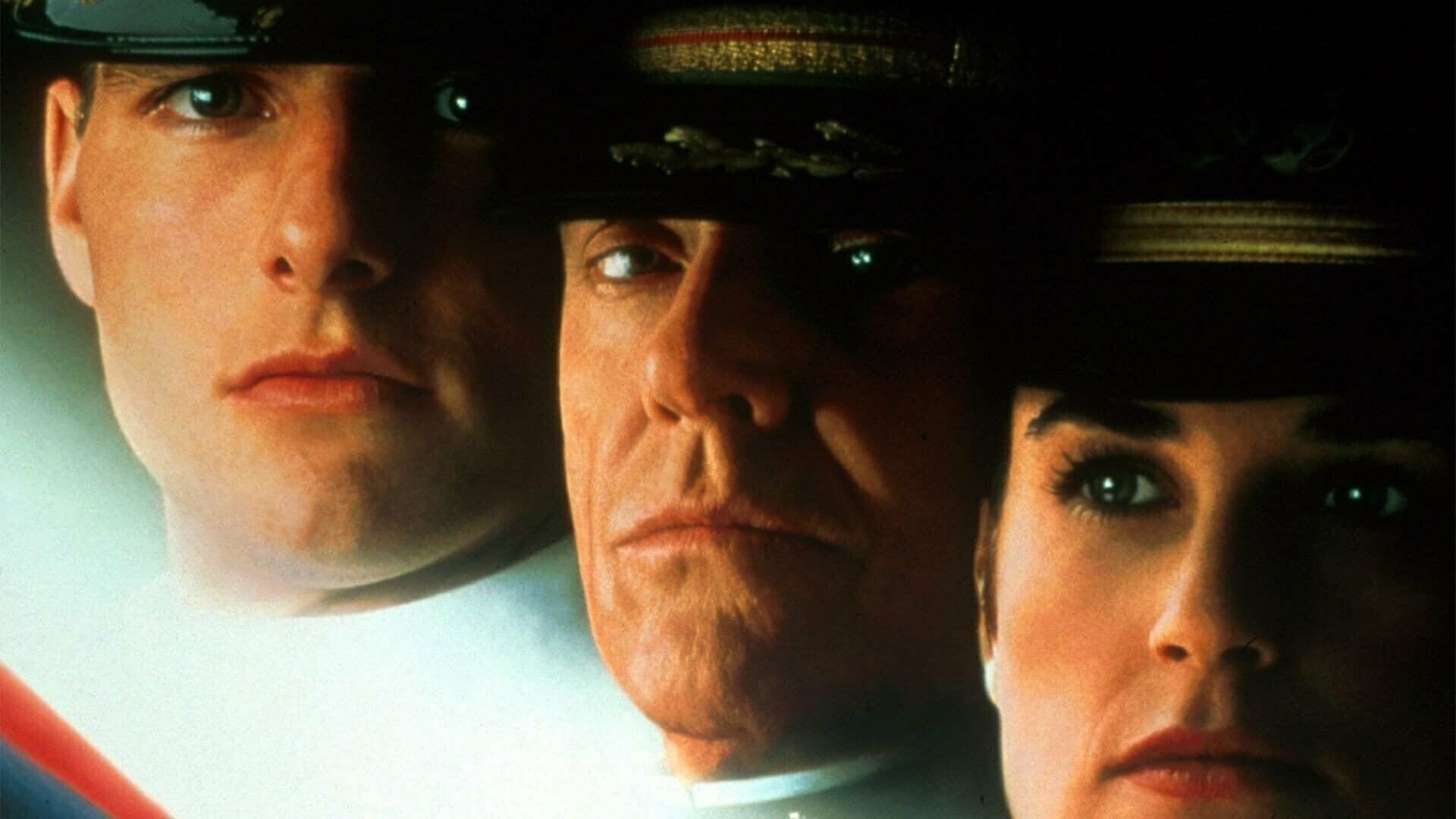
Oti: The first time I watched it, I was quite young. Mhmm. And I remember getting the VHS tape for it. Okay. Seeing, you know, Tom Cruise, Jack Nicholson, and Demi Moore in their military gear. Mhmm. And thanking me, I'm in for some treaty. I'm gonna go action wazoo. And then nothing.
KT: Were you expecting like Top Gun or something?
Oti: Yeah. I was expecting some some some high octane level shit, and I didn't get that. And in in in my mind, I was like, fuck this shit. This movie is trash. But then I got older
Oti: and I give it a go. Mhmm. I was like, you know what? It's alright. I enjoy this quite a bit. And then the third time, I went back to, I could probably do without this in my life, which is weird.
KT: Is it weird? Or are just growing? Is your palate being satiated, sir?
Oti: I guess it is being satiated in times. I'm familiar with a lot of Aaron Sorkin's work, and I'm not the biggest fan. But with this, I think this was his debut as well, wasn't it?
KT: Yeah. It was his debut.
Oti: I don't know. You made a comment while watching the movie that you said that he sounded as if it's just some Ivy League is having fucking fun with the writing. Yeah. Because no one would fucking talk like that. Yeah. Absolutely.
Oti: One talks like that. And if they do, I do not wanna be around them. It it resonated a lot because I couldn't pinpoint exactly what the fuck it was. Mhmm. And then when you said it, it was just like this pa ding hello moment. Yeah. It just hit me. I was like, that's the fucking reason, isn't it? It just felt really and I have nothing. Like, you know,
Oti: you can have all this quack in the writing and all, but it just didn't connect to a level that I thought it did when I watched it the second time. Yeah. And I was just a step further removed from it this time, which is sad because I think that Nicholson does a good job in portraying Jessup. Mhmm. I think he's the star in this. Oh, yeah. He's the and for sure. Yeah. And Tom Cruise, take it or leave it, man. I think
KT: I think people took him for so many decades. That's why he continues to jump on Oprah's couch. Yeah. True.
Oti: I his performance, was just like, yeah, if I I I could do without it. Yeah.
KT: Well, friends and lovers, I'm I'm glad you mentioned like Aaron Sorkin just generally.
KT: What did your dad used to say when you were watching The West Wing?
Oti: Can you turn that thing off? It's making me dizzy. Why do these people always keep on walking and talking? Can't they not just relax? They're always fucking walking. My dad could not handle West Wing at all. And every time we'd put it on, he would just throw a fucking tantrum and it took me like three years to finish the whole West Wing just because of that.
KT: Right. Before
KT: I continue on my first impressions, while we're covering Aaron Sorkin for the first time, I do wanna talk about The Newsroom. Just very quickly, because we do love Sploosh and Stan, a strong Dev Patel summer, and we love Dev Patel. And as much as Oti said in The White Tiger that we need to cover Slumdog Millionaire, it won't be the first film that we cover of his on the podcast. But The Newsroom, I didn't care for. It just felt exactly the way that I felt about A Few Good Men, which obviously succinctly,
KT: I'll give you my feelings in regards to it. I also don't care for The Social Network.
Oti: For The Newsroom, just to go back, I think the only reason I really didn't take to it was because I fucking hated Alison Pill's character. Alright. It was just super annoying.
KT: Okay. Weird time to get on your soapbox, Oti, but okay. Oh, wow. But I'm coming to find that I am not a snarky Sorkin gal. And, you know, in the veil of Patreon, I've talked about it potentially, I'm not a Scorsese gal. Right? I I just feel like there's watching A Few Good Men felt like eating a dry ass plain cracker in the desert. That's what it felt like. I was cheese, No. No cheese at all. No. But I I I was I was looking for some reprieve and my reprieve is emotional investment
KT: in a film, specifically in regards to the main and maybe in some cases periphery characters. And we didn't get any of that.
Oti: Fair enough. I think a lot of the time, yeah, there was no emotional pull for either of the characters. You didn't really care or buy into that whole thing. It was just watching something unfold while you're far removed from it. Maybe. And I guess that's the question because when you're watching a movie, like you said, you want this emotional resonance. You want to be able to connect and to feel and to empathize.
KT: Like, I don't have to like, I know some people say that they need to see themselves in that character. I don't necessarily need to see myself in Tom Cruise. I hope to God I never see myself there.
Oti: Don't worry, I've already connected those dots.
KT: Well, I think Oti is the Tom Cruise in Family Guy. That's the version of Tom. I just need to see themes that resonate on some level, whether it's something that is abhorrent to me or whether it's something that I agree with. It needs to resonate in a negative or positive way. But I just didn't care for it. It felt like Aaron Sorkin just kept talking and then he just put like cliff notes of different characters, but you could just feel that he wrote in the same style for every character.
Oti: Yeah. I I see that. I see that. I think one of the things that really hit home, especially on the third time watching was realizing that I was I was I was a step removed. I I just couldn't gravitate towards any of the characters and Tom Cruise especially fucking annoying even more so than I thought he was in the second first and second times I watched it.
KT: We apologize to all of the presidents of the Tom Cruise fan club.
KT: This probably isn't going to be for you, but we do have a lovely catalog that you can check-in with as well. What a film. It all just felt like words. There was no sort of emotion. I do enjoy dialogue driven stories. I actually prefer those as opposed to, you know, Fast and the Furious, a 100 when Ludacris and Tyrese are doing back flips on Pluto. Like, I I I do prefer dialogue driven films. One Night in Miami, Regina King's One Night in Miami is a perfect example of that.
KT: But if there's no sort of emotion, whether it's to rouse my interests or just to rouse my faculties, then I'm not really I don't care. Yeah.
Oti: I'm with you there. I'm with you there, man.
KT: Alright. Well, let's get into the film generally. How did you feel in regards to the directing of this film? I would say this is eagle soaring 'Murican tourism postcard. We have that obligatory American flag shot at the start of the film as well. I think just generally, it definitely knew the palette it was serving to, and it definitely served it. Yeah.
Oti: Again, we come back to sort of Sorkin's body of work here. And it's one of those things that when you're watching this movie and trying to remove yourself from, or at least trying to put yourself in this situation where you know something's bad has gone on and there's this cold dread thing that no one wants to admit. It's been ongoing and you know, we probably know this shit happens all the time in real life as well. So there's a lot of things walking towards us buying and caring
Oti: or at least enough aspect of, oh, if you tapestry this into fucking real life, then, mate, you should be able to fucking care about some aspects of this. But then the way it was brought about, and when you said it was just fucking words, I felt that. Like, I just felt like someone it was being thrown at me and not being told to me, which is weird.
KT: Sorry. John David Washington wasn't in this film.
Oti: Like, apart from from, like, performances from Nicholson and and I think even Kevin Bacon was fucking good in this. It just all felt it felt flat to me.
KT: It was made to be accoladed by particular higher levels of echelon
Oti: in society. That's what it was made for. And it's not to say that we can't I can't, or at least I can't appreciate things that are not directed to me, or I can't enjoy or try to put myself in this situation where I can enjoy this movie. It's more emotional pull that I want to feel when watching movies that I didn't feel like it it just fell short a bit. And even even the guys who were being defended were dicks, like, they didn't come off as being,
Oti: oh, you know, you trying to haze him because Cordray had been given another by Jessup. You have to order your an order is an order. You have to go by that rule. Then they just he just came off as fucking idiotic and stupid when he didn't say shit. He he wasn't presenting anything in his defense. He'd only speak when being spoken to or asked a question. Like, a lot of the things, and even to realize late in the court, like, the way the story was told, it just had holes. Like
KT: Shia LaBeouf wasn't in this film either. He's in some problematic hole somewhere.
Oti: Like, okay. Surface level, I can see why this intrigued me the second time. And I can see why it it was good in terms of building the tension and trying to at least arouse some aspects of these viewers' suspense. Mhmm. And I get that. I saw that. I I felt a bit of that. But does that a good movie make? I'm not sure.
KT: And I I don't even think it's necessarily applying a 2020, if you'll pardon the pun, I lens to it because, you know, unfortunately, injustices are still happening to this day, but I don't think we're necessarily applying that brush here. Right? But you know, even the title suggests a few good men could also be the same thing as saying a few bad apples embedded within the system. But that pretty much poisons the whole hierarchy really. Because everyone everyone is aware and there's a complicity that goes on. To maintain the perception that the system is working,
KT: it unfortunately by default protects those few bad apples. Oh, yeah. Right? And I I guess in doing so, those few good men, their actions are kind of for naught. And let's talk about it because this particular title for the film, A Few Good Men, your honor? Who, your honor? Who were the few good men? Even if we wanna have some elasticity to the term men as just a general term, so it can even include, you know, Galloway's character. Who were the few good men in this?
Oti: I think it takes Galloway, Kaffee, Weinberg, and Markinson as the few good men. Markinson obeyed, sat back and just let things ride. He did come to his senses and he did feel some sort of remorse and guilt, and he had to do something to break the mold.
KT: Okay. So I have a note here. Markinson didn't do enough, but pretty much proved Jessup's point. Because Jessup was saying, if you're not tough, unfortunately, in a toxic masculinity point of view, you're not gonna make it. And spoiler, spoiler, spoiler, or in other cases, skip, skip, skip.
KT: You know, by him choosing to end his life, he kind of proved the point. Right? He did kind of dabble in the sense that he wanted to make things right, but not really. Self preservation was key. And when it got to a point where the it was made very clear that there was no possibility of self preservation, that was pretty much the end of his arc. Right? I also wrote down, it always unsettles me when there is too much focus on upholding the ideals of a system instead of evaluating whether they help people.
Oti: And the ideal here being what? Code Red?
KT: No. The ideal that that these units, not necessarily that they were righteous, but they weren't dabbling into, you know, actions that would be considered deplorable or shunned upon by the general public if ever there were to be an investigation. Everything was above board, essentially.
Oti: Mhmm. You know, I think because at the end of the day, it's it's it's they view it as them versus the public or, you know, because at the end of the day, when you're there at the front lines, it's not someone sitting at home that's watching your back. It's your unit, it's your buddy, it's someone else. This camaraderie has to be there, and I think they have to protect that in that way. So to me, it makes sense. It makes sense that they're so inclined to protect the system
Oti: because outside of that then when things are on the line it could get murky
KT: Well, let me 60 Minutes sound bite you if you're nasty. Doesn't that just prove the point that all of the bad actors are going to get away with it or not get reprimanded because of that? Yeah. And that's exactly my point. And there's a lot of things that Jessup said that are poignant that I would definitely like to,
KT: you know, come to. And there's definitely a lot of lines. There's a lot of sentiment that is shared throughout this film that I wanna talk about as well. And one of them is the lines from one of the men that are being accused, Unit, Corps, God, Country. That's our code. The ordering of it is interesting. The ordering of it is very interesting. I guess in Passion of the Christ, they're not putting God first unfortunately. No. So the unit comes first. Okay. I get that. And I guess that's kind of the first line of defense
KT: in regards to, you know, individualism and code red trying to bring people back to center. So, okay. The Corps, okay, so that's a general wider sort of system, fine. God, which is also very interesting because we always talk about secular countries, land of the free but entangled in religion. And then also country. There's
KT: a lot wrong with the system
KT: and we get to see it here. Which isn't unique to America, that's what we're talking about now.
Oti: At the end of this movie, I don't even think they came to a solution or resolution that would change anything. No. I don't think there's anything they could have done in the courtroom or in any sort of scenario where this changes the system or it puts this sort of quadratic and I'm making people tougher. It it was still going to be part of it. It's still gonna be part of their culture and their nature to do that shit because it'll always come from high up. Oh, absolutely.
KT: And I guess the mustache-twirling villain ladies and gentlemen is Jessup. And I guess while we're on there, I know Kaffee and Galloway are probably one of the more main characters. But like you said, you know, Nicholson is the one that we're all here to see. His whole speech is pretty much an actor's wet dream. I'm pretty sure there are many budding actors in LA that have actors reels, maybe even Tyrese in Django, you know, whether
Oti: Yes. If you've not watched it, go watch it.
KT: What a lovely piece of popular culture,
KT: Oti. But I'm pretty sure there are many actors reels out there that have Jessup's speech because it was very compelling. All of the perfect words were spoken, but again, it is hard to is hard to sever the tethers of Aaron Sorkin's writing because it is very clearly him speaking. Not to say that it's not capable for a colonel to speak in such a manner, but it felt very performative. It it felt like Jessup was just sitting down writing his little soliloquies getting ready to recite it in a courtroom. Right?
KT: It didn't feel as though this was inherently what a colonel would say in this particular instance. And there's nothing wrong with that because obviously there will be a certain polish when it comes to film, but the actual wording and the dialogue was very performative. And I wouldn't it wouldn't have bothered me. It wouldn't have been such a qualm for me if I had had any sort of emotional investment in any of the characters. But words were spoken and eloquently delivered specifically in regards to Jack Nicholson's
KT: performance. But he does say a few things that I definitely wanna touch on. This film is based in Guantanamo Bay, Cuba.
KT: I guess just keeping it in the fictitious sort of worlds, we are unofficially, but we claim officially to be the La Casa de Papel podcast, otherwise known as Money Heist to English speaking listeners. We have Alicia that is pretty much the subunit unofficially that tortures clientele to get intel that need that that can be leveraged in some sort of way by the government, but they're not specifically acknowledged.
KT: And you see that in Narcos, and you see that in so many other, you know, films and TV shows where you have units that exist that aren't succinctly acknowledged by the government, but the government benefits from them. Right? So I guess in a more official manner, this is what we're seeing with Jessup's character. And, you know, a lot of those sort of resonating quotes that you hear from Jessup is we follow orders or people die. Mhmm. I wanna talk a little bit about that. Yeah. So
Oti: the ethical issues with all this sort of extraction methods, you know, it's been cited in human rights, but it's a thing we know it's a thing it goes on everywhere so he holds a lot of importance on what he does. He says he's the front line, first line of defense, and they have to be strong to protect the country. He holds himself as a demigod. And you could see from the way he carries himself, he has a lot of arrogance and a lot of posturing because of his self importance,
Oti: because of what the role he's doing, especially what the system tells him how important that role is.
KT: You need me on that wall.
Oti: Exactly. It gives him that just air of indulgence and importance that me, I'm the man. Yeah. I'm the fucking man. Where the ends does justify the means. And we come to see that that's his fucking downfall at the end of it. Yeah. Like, Kaffee just plays him. He knows that this guy is just, you know, they had nothing. This case is going to be thrown out because
Oti: we had those two witness those two guys who are being charged that they've done so many things wrong. Yeah. Everything's being revealed in the actual courtroom that the lawyers weren't even bloody aware of. Mhmm. And then they're like, okay, we'll just get this self important man and play him against his own fucking arrogance. And he'll reveal everything afterwards.
KT: And it it definitely was very satisfying to watch, albeit I don't care for the arrogance of Tom Cruise's final form. But, you know, just from a performance point of view, from a writing point of view, it was very satisfying to watch that, you know, cat and mouse sort of trap. Right? And, not to say that this is the origin, but you see this sort of writing device in a lot of films and a lot of TV shows, gotcha, some more nuanced than others. It was very enjoyable to watch that.
KT: Yeah, it very interesting. It was very interesting to see Kaffee and Jessup play off each other. He's been around, he's intelligent.
Oti: He knows how to play his system. That's why he's there. You don't get to lead just because you're not good at playing the game. Yeah. So in as much as I enjoyed that dialogue and I enjoyed the performance, part of me was sitting there in disbelief that this guy who has given his whole life to get there Mhmm. And he's probably even aiming for higher seats Yeah. Would crumble so fucking easily just because of an annoying Kaffee poking and prodding. Yeah. Like you all he had to do was dangle the carrot.
KT: To be fair, yeah. Like, I feel like Jessup was very astute to the fact that he could be caught at any time. He felt like he had covered all of his bases, but, you know, even one of my favorite scenes in this film was when, you know, Kaffee was being a dick about asking for the logs of the flights. And Jessup goes on one of his iconic speeches and he's like, ask me nicely motherfucker. But it is interesting because Jessup definitely felt like he was in control
KT: for a lot of it. And maybe it is just the fact that I never got into it. It took me out of it and I was just realizing I was watching a film that I was like, oh, maybe this is why it was written this way because the, you know, the film is ending and it needs to have that crescendo because that's what it was essentially.
Oti: Yes, it was a crescendo. And I think we did an episode on Belly. And one of the qualms that I had with Belly was that the emotional connection was, or at least in High Priests case, it was so chip choppy. And by the end of it, the emotional pull by the last speech, it holds so much weight and so much gravitas that I felt cheated. Yeah. I felt cheated out of watching the out of the experience of enjoying the whole movie. Mhmm. And then overlaying it with this, I'm thinking,
Oti: cool. I I get the, you know, a brilliant dialogue. It's pop culture stuff. But I'm sitting here thinking, I don't buy that Jessup A or be that fucking dumb just because of where he is and what he does. Yeah. And you just know he was meant for higher offices. And then the second point is, as much as I enjoyed that, I still felt nothing.
KT: Yeah. No, I agree. And, you know, we have gotten to the age where we can't experience genuine joy and we're dead inside, but I do feel like a part of it is does have the onus in the film. I definitely agree with you. I can't disagree in any way because that's exactly how I feel watching this film.
Oti: When you're painting your world,
Oti: it's a movie and Sorkin, try to make it as realistic as possible. But when you're writing, you have your own literary devices. And then one of those is pointing or creating or building your world and creating aspects and elements to make the world as grounded to reality as possible so the users can connect and resonate. But that world also has its own rules. So when you're building this Jessup character from the get go, we know he's badass and he's thought of every single thing to the point where we have one of the good men
Oti: in The fugue. Markinson Uh-huh. Killing himself because he saw no other way that he could help because every other avenue had already been shot. Yeah. But then when I meant to believe, Kaffee didn't have anything. This was just, I'm gonna do this and just throw Hail Mary and hope that it lands. Because those two witnesses he brought didn't know anything, just some randos. And it just felt too perfect for it to happen that way.
KT: So that's what I'm saying. It takes you out of the film and you realize you're watching a film. But I would say you're missing the epilogue or we were missing the epilogue in this film because I agree with you. I don't believe that was pretty much, you know, close the hatch on Jessup's story arc. Right? He would have been reinstated pretty much after the events of the film. If not straight away,
KT: they would have re they would have they would have, you know, recruited someone that couldn't do the job or get the results that Jessup did, and they would've reinstated him. However amount of time would've passed, they would've reinstated Jessup to go back to this film.
Oti: I don't think so. He killed his career then and there. That's why I'm telling you it wasn't believable for me, especially since they've built that character that way. I don't know.
KT: We talked about the system and protecting the system. Trust me, the moment they need insightful intel,
KT: and it can only be done from terrible methods that Jessup employs, they would bring him back. I a 100% agree with myself. Alright. Let's talk about Kaffee's character. It was surprising to me that it took a while to get to his daddy issues, but I wasn't surprised when we finally got to it. I also have a note here saying, oh, that's nice. He likes baseball. So we know he has a passion slash personality.
Oti: Yeah. He did love his baseball. We knew that he sought his father's approval. His dad was a big shot. Yeah. He acted safe. He acted aloof a lot. Yeah. And I think it was a bit too much. Their levels
KT: their levels like, he acted aloof in every single moment at any time, everywhere. Like, he tried too hard to prove that he didn't care about anything. I absolutely agree. I wrote down, Kaffee's need to do a good job gets in the way of his presenting indifference. Because he always tried to shrug things off, but his need to do things properly just got in the way of that. And it's like, it's okay to feel and care about things, gah.
Oti: Yeah. It's okay to express your feelings as well. Oh, absolutely. And I think that's where we had Weinberg to sort of act as a as a as an alkaline to just neutralize that shit for a bit for us. We know that he understood. At least Weinberg played that part where he sort of tried to ground Kaffee's character. Otherwise, I think it would have just been way too annoying to even concentrate. It'll it'll distract from the movie. Yeah. Absolutely. Because then we have Kaffee.
Oti: We know that he's not great at expressing his emotions. He plays aloof. He well, at least I think this was just a gag between him and Weinberg in terms of getting explained to things all the time or what terms or words mean. Like he tried to make a big like when he first got the case, went and played baseball. It's like, okay,
KT: we get it. You're too cool for school. I'm old. Does anyone say too cool for school anymore?
Oti: You do. So must be cool.
KT: Oh, thank you, Oti. Oh, I love some Oti love in my direction. Yeah. Kaffee was an interesting character, but not enough to tempt me. That's a Pride and Prejudice reference. Go and listen to our Pride and Prejudice only recognize the BBC mini series. And I guess while we're on Weinberg, I don't have a lot to say about him, but he did offer a different side. He did offer a different perspective,
KT: albeit projection, but at least he offered another dimension because with Kaffee and Galloway, they had such strong clashing personalities, but Weinberg got in the middle of it after one of the spouts that they had in the courtroom. You know, there was a lot of, I guess, sort of empathy that Galloway had towards the younger soldiers. Right? Weinberg's like, why do you defend them so much? And they had that back and forth, which was actually quite interesting because it comes to their actual motivations of why they chose to enter the field. Yeah.
Oti: Yeah. And I think that was one of the good things about the movie. At least we take away something there aside from sort of surface level things where we see Weinberg really create that sort of element of deeper exposition in terms of understanding and explaining to us the dynamism and the sort of nuances between Kaffee, his feelings emotions relationships or lack thereof that's one of the things that really worked well in this.
KT: You know what I think didn't work well in this film? Galloway.
Oti: Oh, man.
KT: I think by trying to play Kaffee as so aloof, it left no room for dimension in regards to Galloway's character. She was, you know, for lack of a better writing phrase, she was a straight man. Right? Like, Kaffee was this goofy, aloof, not take her seriously sort of character. And Galloway's dynamic was she was really the straight man. She just wanted to get stuff done. She was really uptight about everything like Straight shooter, yeah. Pow pow.
KT: The dynamic between Galloway and Kaffee wasn't new. And I was hoping for layers, but we really didn't get there. And individually, she contributed to a lot of the failures of the team.
Oti: She messed up a lot.
KT: And she was blaming Kaffee. You can blame Kaffee for a lot, but there was a lot that she was blaming that was succinctly, specifically her own mistakes.
Oti: It's alright to come riding in your high horse, but don't make rookie mistakes. Yeah. A, she wanted this case for herself.
KT: Yes. But she's also internal affairs, so I don't even know how that works.
Oti: Well, she wanted this case for herself. When she asked to take the case over and she was told no because she was inexperienced, blah blah blah, I just thought it was them finding a a part of a way of saying, hey. We don't want her to do it. She's either a woman or they're just biased, you know? Like, I thought that was one of the reasons, but by what did that got proved wrong? Yeah. Because she is just incompetent.
KT: Oh, absolutely.
Oti: She single handedly gave the case away. Like she
KT: How do you check how do you check for one soldier and not the other and just copy paste the response? How how do you not fact check that?
Oti: Like, the things that unraveled in that courtroom and I was sitting back and thinking, how is this even possible? Yeah. This is just a fundamental shit. It feels me that I'd probably figure that shit out the first thing I interview them. Hey did this guy tell you to well did he order you did Jessup order you to do a code red? Yes. No. But where were you at the time of the supposed code red? That's fundamental.
KT: And if I may pull my two monocles that equals a spectacle up, I was in something in high school called mock trials. It sounds just as nerdy as you think where you reenact like a courtroom. Right? So even I know that shit. You need to you need to establish your alibi and make sure your witnesses are solid. I I don't know. Like, does she become the plot device? I have no idea. But even earlier, when we go to the tasty moment of asking for the flight logs and ask me nicely,
KT: she kind of fumbled the ball as well there. Yeah. Because she kept talking. Yeah. And at that point, like, even though Kaffee didn't really give us a reason to believe that he knew what he was doing, He got as much information as he needed and he didn't need to reveal his cards. His cards. Yeah. Because you can go and discuss it away from there. Galloway was at a casino. She was giving all her cards away for free. Yeah. I think she is single handedly the most useless character in this show.
Oti: I have no idea why she's even on the bloody poster.
KT: Woah. Fucked, Are you saying she should be ghosted from the poster? Yes.
Oti: Put a picture of Whoopi there. Putting Whoopi in any film just automatically makes it better. Yeah. Put Whoopi there. Put Whoopi there even though she wasn't in the movie. Just put Whoopi.
KT: Are we Whoopi fishing? Yeah. Is that a Whoopi fish? You just put Whoopi on there and make you think that Whoopi's in the film, but she's literally did nothing in this movie. Literally settled. You know, the interesting thing in this film and, you know, if if anyone is into film Twitter, it's a constantly rotating topic that happens every few months where people talk about whether sex scenes are necessary or not, or if they're pointless, which I guess is the other side of the nasty coin. Right? Aaron Sorkin vehemently
KT: stood against studio feedback that there needed to be sex scenes in regards to Kaffee and Galloway. Good man. Good man? But then is this what we get?
Oti: Then adding a sex scene on there won't have worked at all because then what value, like, it just doesn't make sense in this. Maybe that's the cheese to your plain cracker in the desert. Oh, moisten cheese. Yes.
KT: That sounds like you need to see a doctor.
KT: I wow. Like I like Demi, but wow. Yeah. I I don't necessarily think that there needed to be a love story in there. I just thought that was an interesting fact because maybe sex scenes equals emotion.
KT: Maybe that's what that means because I didn't see anything else in this.
Oti: Oh, I think if there was a romantic relationship, then they would have had to give way for Weinberg because I think he plays a a lesser role for what he did because he was the emotional sort of connection to to Kaffee.
KT: That's shame. If if he's the emotional connection, there's not much. Just like in The Passion of the Christ, I was saying that there's no levity and happy moments, and you were talking about Jesus and his mom building a table. It's like, that's the go to and only happy moment in that film. Well, the court rests, Oti, your honor.
Oti: Man.
KT: Oh, but man, this was a dry film. It's interesting because we not recently, but we did watch Jerry Maguire, me for the first time and I did not enjoy it. I did not enjoy it at all. But I feel like if we had done an episode on it, I would have enjoyed the recording more than this one because man, this is sad and painful.
Oti: Because like I said, having watching it three times and all of those times have been in different phases of my life. It just, it's weird that watching it now when I'm older, I thought that maybe I'd appreciate it more. It's one of those movies that I've always had in my on the back of my mind is, oh, I love this movie growing up. I think maybe it's one of the greats. But once again, we've come to find out that a lot of the things that I thought were great back then
Oti: just don't hold a candle anymore.
KT: The Departed?
Oti: I'm not mentioning names, but
KT: did see an Aaron Sorkin cameo in the film. He pretty much sounded like every other character, but he was being that wanker at the bar trying to protrude himself very audibly to everyone else. I said that Aaron Sorkin is the puppet master of snarky word vessels.
Oti: Wow.
KT: Yeah, I said it, maybe I'm a Sorkin character, who knows? We're in a Sorkin simulation, Oti. There was a quote that was made about the victim in regards to the court case. Dead because he had no code, dead because he had no honor, and also God was watching. I guess all in all, there was some potential for some real depth about people like Jessup that do the necessary evil for America to continue their freedoms and also luxuries, but I don't feel like we got there in this film.
Oti: No.
KT: And dialogue, albeit memorable, albeit well performed, was definitely lacking in Avatar tentacle emotion. It also reminds me of why I never enjoyed the TV show JAG.
Oti: Why is that?
KT: Give me M*A*S*H any day, I'll tell you that much. And I also wanna say that I unlocked my reference pussy valley with
Oti: You can't handle the truth.
KT: Oh, Jack Oti Nicholson has entered the chat. Mhmm. Alright. Thank you so much friends and lovers for joining us. Sometimes, well, there you go. We're gonna finish off in a segment we call For Your Reference, Oti.
Oti: Know what? I'd like to reference Primal Fear. Laura Linney, Ed Norton, Richard Gere, one of the best courtroom movies I've seen ever.
KT: Okay. This is a callback. Is this the hat trick you were waiting for, Oti? Just
Oti: just you know what? It just worked on so many levels. And I think that was more enjoyable for me. Alright. I haven't watched this in a while, might change, but For now. For now.
KT: As the court stands today, this is your reference. I am going to reference probably the last time I enjoyed Tom Cruise's performance. It is the 1983 film, The Outsiders. Matt Dillon, Ralph Macchio, Patrick Swayze, Rob Lowe, Emilio Estevez, and a whole slew of cast that we're definitely going to talk about because gold will never stay, Oti. Mhmm. Don't mhmm. You don't understand a reference. If you like to understand our references on Twitter and Instagram, we're at for your ref pod. Write us an email at hello@fyrpodcast.com.
KT: We're also on Ponyboy podcast if you like to leave a rating and review. And we'll see you guys next week.
Oti: See you. Bye.
Related on FYR
Discussion
Loading comments...