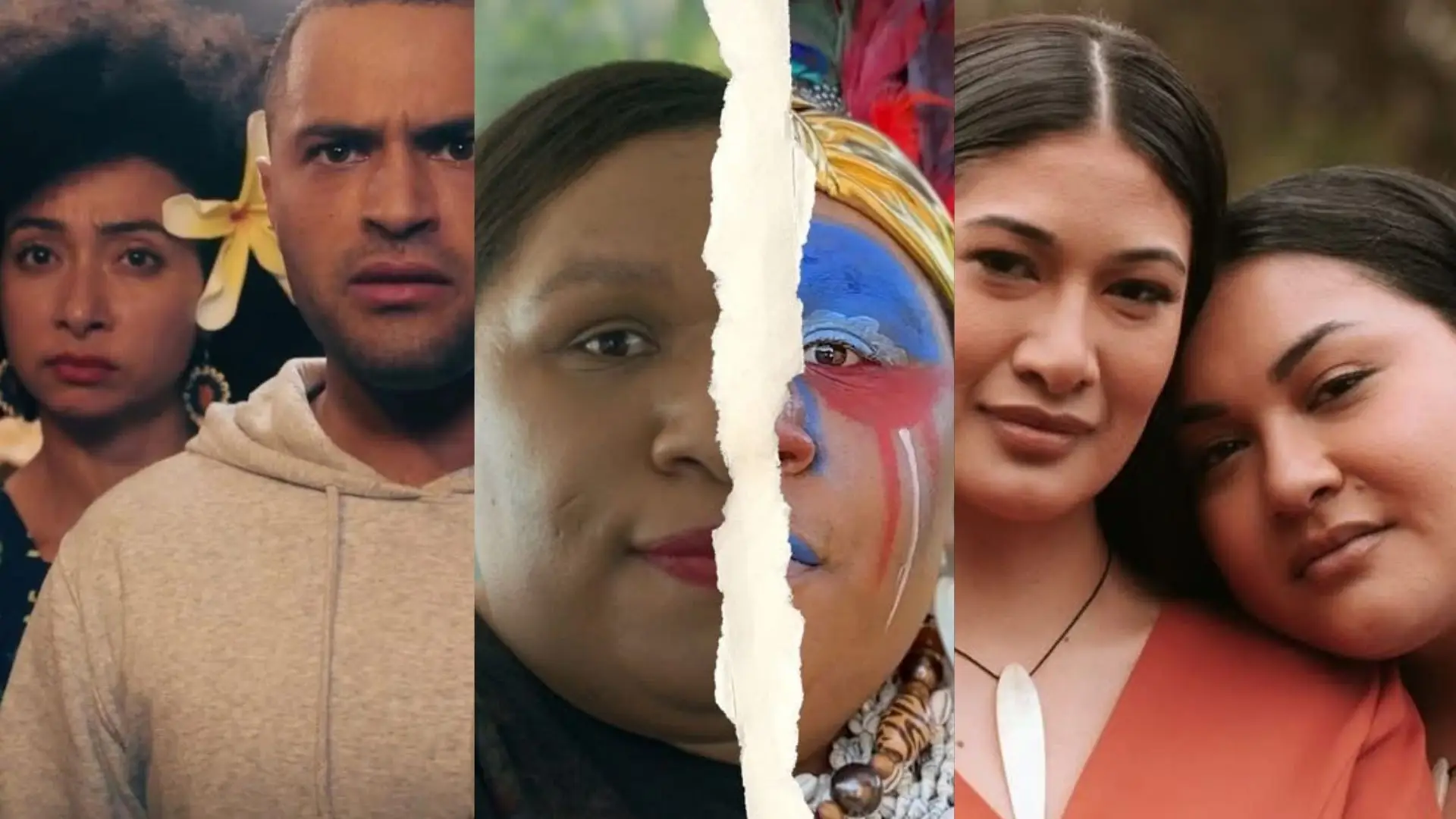
2024 Pasifika Film Festival (PFF)


Hosted by
KT & Oti
Show Notes
We review 16 shorts across Elections in Paradise (Fiji), Oceania Shorts and Pacific Australia Shorts as a part of 2024 Pasifika Film Festival (PFF).
The 2022 General Elections in Fiji, Indigenous Women in Fiji Politics, Hangover at the Takeover, Tradewinds, Armea, Daddy, Butterfly (Bataplai), An Gumupu i Chankleta, Kala, Vakatairaka, Mo’unga Afi, Pasifika Drift, The Whispering Glass, One Tatau, Two Worlds, Hafekasi, A Blacktown Ballad.
Episode Details
- Duration
- 0:00
- Released
- November 12, 2024
- Category
- Episode
- Hosts


Transcript
Transcript (8,197 words)
Full transcript of 2024 Pasifika Film Festival (PFF).
KT: It's another week in the For Your Reference household, and after two years, it's another edition of the Pasifika Film Festival, Oti.
Oti: Woo!
KT: Woo! woo! How, um, on a scale of Pacific, on a scale of Islander, how Lin-Manuel Miranda are ya?
Oti: All the way Moana. Let's get on with the
KT: Let's get on with the show. Mālō e lelei, friends and lovers. Welcome back to the For Your Reference podcast. You've got your Tongan gyal, KT.
Oti: And Oti.
KT: Oh, you didn't want to add a prefix there?
Oti: Nah, they know who I am.
KT: They claim you in these streets. Welcome, welcome, friends and lovers. If you are new, if you found yourself here because of the Pasifika Film Festival, welcome, welcome, welcome. Um, if you, uh, a day one of the For Your Reference podcast, um, or, you know, if, if you just found your way into the The, the nasty splooshy altar, For Your Reference. You're welcome as well. Um, we are covering the Pasifika Film Festival, which was held in Parramatta, Western Sydney. Um, not, not that long ago, actually, where we're covering it before the Sydney Film Festival, Oti.
KT: Um, we didn't get the opportunity to watch any of the feature films. So I believe I've got maybe 18 shorts. Um, so we're going to breeze through them, actually 16 I lied, um, we've got 16 shorts that I went to go and watch on a Friday evening and then two sessions on the Saturday, I guess just to see what this general sort of, uh, tasting platter. And I guess in, in, in reciprocity, the proverbial appetite. Well, I guess before we even get into the film festival, shout outs to, uh, Gabe, Ellie, um, the team at Riverside, as well as ACE that organized, um, the Pasifika Film Festival.
KT: It's always great to have, um, the arts, Oti,
Oti: Mm.
KT: the arts in Pasifika. Western Sydney. Um, you know, we talked about the African Film Festival that just passed, there was the SWANA Film Festival, um, that I went to maybe a year ago. Um, so there's, there's, there's a lot of vibrancy, there's a lot of great opportunities to, um, you know, witness and delight in storytelling, even from the diaspora, maybe not just in so called Australia. But before we even get to Um, I guess the programming and the short films that I watched as a part of the Pasifika Film Festival. I kind of just wanted to take a moment, uh, Oti, and I guess just talk about And I guess this is the inside the, For Your Reference podcast, the studio right now. Um, I kind of want to just get your thoughts on being an audience slash critic and I guess, you know, sometimes having overlaps, um, in proximity with those that are telling the stories and filmmakers
Oti: Oh, I thought you're going to ask me how being a Pasifika feels like
KT: I love how know exactly what I mean before, like, you don't even need me to lube it up for you, my man.
Oti: I know it. I think there's always some considerations you'd have to make, depending on politics, climate, how the story was intended, how did you perceive it. Because every time I remember us watching Rafiki and the conversations we had around the movie and what it meant, you felt there were gaps that they could have gone harder, but I was like, that's the hardest they could kind of go. Give
KT: made it, I've
Oti: grow.
KT: I've made it clear on the many times. That I understood and there's actually a short film that I actually came around on similar to Rafiki where I'm like Oh could have gone harder, but actually in context I get it
Oti: I think that's where it's sort of.
KT: Stop giving me the um oscob villain edit
Oti: No, but I do get to me usually anything I watch I feel like I want to. have my opinion 100% percent Without any sort of weird perceptions, or notions that I feel like I have to hold back. And, like I always say, this sudden level of tax that comes in when I watch stuff. So, that also comes into play.
KT: Okay, so when we're watching black stories, whether it's in America, whether it's in Africa, whether it's in specifically do have tax, right? when you're watching an Islander thing, do you have tax for that?
Oti: Uh, probably not. Right? to me, just black movies that I feel like, oh, there's tax. I think it has to be a certain level. if it's an actualized director that like, if it's a talent.
KT: you were in a room full of white people, you wouldn't speak with the full chest you have, right?
Oti: Oh,
KT: exactly.
Oti: That's different though, like, right?
KT: Well, look at our audience! ha ha ha.
Oti: That's Different. I think there's, there's there's room for cinema, uh, for, especially when it comes to black Pacific or whatever, it's not, we've, we've not, We don't have that yardage of having to be like, We've been doing this for centuries. We might as well go all in. We can't do that. So
KT: I actually disagree with love. Really? And
Oti: There has to be some inside criticism that you you can be like this is what I think and you have to like sort of polish it a bit when it comes to the general public.
KT: Oh, interesting. Interesting. Interesting. You're talking jive sir. With
Oti: sir. I disagree with you. But sir, and
KT: Also friends and lovers, it, I don't think this should not be a surprise to you that we actually have day jobs. Unfortunately, global evening jobs, not nasty. It's just nasty. Um, so unfortunately we don't have a lot of time to talk about it today. Maybe we take it to Patreon or somewhere because I have a lot of thought thinkings, but the reason why I wanted to say this is, you know, Oti and I are forever nasty in this room together. Well, in any room together, um, but wherever we record our podcasts, right, it's always been us. And then we've grown into a film community, a Pasifika community, um, and that sort of thing. But I have always felt Like we are the audience when we need to be wanker and wanker spaces will say critic But I always feel like we're the point of view of the audience and at the end of the day a lot of this is Entertainment, right?
KT: And as we will go to our daddy Denzel in Gladiator II, are we entertained? Yes or no, right and I guess that's where you talk about your textual obligations and that sort of thing. But the reason why I wanted to say that is I don't agree with you. And I will succinctly say, because it's related to the shorts that, um, I want to get into today. I feel like, I guess I'll talk about me specifically how I view Pasifika storytelling, not how it actually is friends and lovers peep game. Um, but I feel like we do leverage the success and sometimes the tropes of black cinema. And what I mean by that is, for me personally, it's not enough just to have a show about Islanders, questionable about who's writing and directing, and maybe composing the music, Lin-Manuel Miranda.
KT: Like, it's not enough for me. to have that. I actually need story. I need resonance. We very briefly, not officially talked about the Young Rock. And I said, you know, there were some very real moments. It was all shiny Dwayne 'The Rock' Johnson. We didn't actually get to know him. Not that we needed to know and embody his struggle, but we didn't really learn anything outside of like that Angle documentary. We obviously learned a lot more about the, the, the veneer off of Kurt Angle, for example. So, um, I guess what I would say is I'm, I think I'm always about story. I'm always about story. I'm always about resonance. Um, and that's kind of where my love lies. Um, I will always speak from my own experiences, but also at the same time, uh, I do feel like I lean towards the resonance as opposed to the representation.
KT: Does that make sense?
KT: Um, Well, let's get into it. We have a lot of short films. We need to get to. I might condense all three of these on Friday night. I went to, um, the Pasifika Film Festival. It was called Elections in Paradise, which I believe might actually be a film that wasn't, uh, curated in time for the film festival, but maybe for next year. Um, but it was three short films. And this is the kicker and, oh, I wish we had the time, but it was displayed as a part of a exhibit in London about, I think it was labeled the Living Democracy, um, exhibition that was in London. So even the layers that you would think about that. Crown jewels and all of that.
KT: So these are three short films. Uh, the formatting was, I think the exhibition was like it was on three panels. So even that. was a bit disorienting, but I guess that's the way it got reformatted. But to have it in a film festival, I feel like it, it still needed to work, if that makes sense. Um, but it was all around the 2022 Fijian elections. Um, you know, friends and lovers for those that aren't aware, Fiji in particular, Go and, go and get your history outside of a podcast world, at least not this entertainment, film and TV podcast. Um, but it's, it's multi ethnic, multi religion, um, and even as being a Pacific Islander, uh, you know, being around other Islanders, including Fijians, Indian Fijians, I actually don't have a lot of context on the complexities of that.
KT: And these short films. because they're not fiction, you would think to hope to want to learn something a bit more, especially if the subject matter was about elections, right? So they did some like, uh, roaming interviews on the street. So they would interview people, And no one passionately, and again, it might be editing or maybe everyone in Fiji is just happy to agree, but everyone was saying that they don't care who gets elected. They just want everyone to be happy. Um, cause Fiji also has a history of coups as well, like having military coups. So to have these interviews where everyone's just all happy for any result, In an election. Um. I guess choices is the word. Um, and there was also another, uh, so that short film was called the General Elections in Fiji.
KT: Then there was one called Indigenous Women in Fiji Politics. Um, like friends and lovers, like I said, it is a multi ethnic. So this is talking about indigenous Fijian women. Women, um, and I think there were about five or six women that they interviewed as a part of this short, um, you know, there was a, there was a woman that talked about how there's probably a lot of misogyny or sexism that's happening, but she just doesn't pay attention to it, but she hears it all the time.
KT: Um, and then there was like an older Fijian woman who, once she realized that this was something that she didn't need to, you know, Um, except she started to get pissed off about it and I'm like, Hmm, that's where the, the, the role of a documentarian of a filmmaker, cause she was there, she was ready to tell that truth, right? There's also another element, which I kind of am hearing about you like on the side of a reviewer, but like, I guess just general sort of community society, um, you kind of keep your shit inside. You keep the mess inside. Right. And, and not wanting to present that your best friend, Trevor Noah, um, I think when Lupita was on his podcast, he talked about that as well.
KT: Right. When he goes to South Africa, they're like, Oh, good on you. Thank you for not letting Americans know about all of the shit that's going on in South Africa.
KT: You know what I mean? So, and this is what we talk about. Like the, the, the, the most. successful documentaries, whether it's capturing human experiences or, or specific people slash subjects are the ones that are willing to go there. Right. This is during like a political time in Fiji, um, talking about women and like domestic violence. We're not going to go into, um, detail, but you know, very real issues that affect, uh, women, indigenous women in Fiji and There was no delving into it in those interviews.
Oti: No delving into the issues as to pertaining to the climate of what's going around, or How did you feel as if it could have gone deeper?
KT: Well, I think even that example of, you know, uh, a woman that's been in parliament the longest, and she's had to deal with so much. And you could see that she was ready to talk about
Oti: Oh, it's just the documentary never presented that opportunity to Well, you
KT: documentary never presented that to you.
Oti: Fact
KT: You see what I'm saying? So, um, the last one in that section, Hangover at the Takeover, I think was my most favorite one out of that selection, because it actually talked about when they were in a government building and a coup was happening in the 2000s. Um, so she was actually giving an account and, uh, While she was talking about it, the way it was presented was, what do we do with the military? Right? Because the military is here for peacekeeping efforts, which is a whole conversation, which again, I don't have the depth and the documentary didn't necessarily provide that.
KT: Um, like, and then it was an interesting, um, comment that she made of like, people need to make an income. They need to make an income by being a part of the coup sort of efforts or the military peacekeeping efforts is the way that she worded it. So, um, I would have liked to have gotten a little bit more detail, um, in regards to that. Uh, you, you might surprise you, Oti, and friends and lovers, but I did ask a question at the Q&A panel.
KT: Cause for me, uh, you know, if I catch flights, it's going to be direct and we're running real routes. So I just want a clarification because I, like I was, I was essentially asking what I am saying now of, you know, I understand even as a Tongan, there are. Like, we do sometimes have a tendency of keeping our mess inside the house. Like that's for us to figure out and considering that this was an exhibition in London, maybe that was too much of a global lens. And I wanted to know how much of that was a consideration into making these films or was it a, whether they were willing to share that because that's a different thing, right?
KT: Just because there is a, um, just because there is a temperature that needs to be, uh, addressed. It doesn't necessarily mean that the subjects are ready to go there, right? Unfortunately, the filmmakers weren't able to make this screening. Um, but we were given insight into the fact that funding was given for these shorts to be commissioned.
Oti: Does that mean that if funding is given then you have to adhere to some set rules of what can be said or cannot be said?
KT: Well, I, I, don't need to do any auditing because that's none of my business. But when it was mentioned that it was funded, Because it was just like, not just, but there was no archival footage, there was no deep diving, actually also that as well. Sometimes they'll have a title card saying that, uh, the leader at the time of the coup was voted out and now there's peace. Kind of like sometimes they do in South Africa, like there was apartheid and now there's not. Um, but there wasn't necessarily context that was given there. Um, But yeah, I think it was cool to have a format of interviews. Um, but I don't think it necessarily lended to, um, the, the depth and the very true sort of life experiences,
Oti: Like just hearing about the elections in paradise And the common thing being coups. It being a thing. I didn't know Fiji had coups that much Um, yeah, interesting. Maybe something we need to delve into.
KT: pad, but maybe we need to Nicki Minaj balls enlarge, do our own research,
Oti: Oh Fucked um, let's
KT: let's move into, these are called Oceania shorts because it's all around the Pacific. Um, The first one, I was trying to do it in the order that I took my, uh, disheveled notes. This is called Tradewinds, uh, and it's about the Chamorro jazz pianist, Patrick Palomo, and I really like this. I really enjoyed, uh, this film. I think it was a well made documentary because if you consider the fact that we had just talked about elections, so it's very historical, very factual. with not a lot of context for the audience, whether Pasifika or otherwise. This is a documentary that specifically focuses on an artist
KT: in the Pacific, but they had so much historical context and anecdotes to be able to help my understanding, um, of Patrick, because you would wonder, you know, what's, what's this fella in the middle of the Pacific doing? you know, playing jazz. It feels so random. Um, but there was so much to, to learn about him, about his love for music, about the love for the island and how it's a mixture of all different genres as well. And we, yeah, I, I really enjoyed it. I think it was a very well made documentary. I think it was a very, uh, Um, it was a very community focused effort.
KT: Um, and a lot of the family as well. This is in Guam by the way, uh, which is really cool. Cause we're getting different types because Tongan and Samoans are always at the front, which is very annoying. So it's nice as a Tongan. Um, it was very, it was very nice to see, um, different. Uh, storytellings from around the world, but I would say one of my most favorite well made shorts. of the film festival.
Oti: Nice. Love to hear it.
KT: Love to hear it. Oh, also, I forgot to mention, it also talked about, uh, Spanish colonial, um, and, uh, influences. Through the music, so. So I was able to learn about the colonial ties through the music, and I didn't get that in the Fijian elections. How wild is that?
Oti: Deepen.
KT: Um, but yeah, so, uh, shout outs to the team that made Tradewinds. Very good. Um, there is Armea and the director Latila was actually at the film festival at the Q&A panel. Um, so this is interesting. So I, in. Well, you've already revealed. I went to a high school in Western Sydney. Um, one of my friends, one of my friends was Fijian and Rotuman, right. And friends and lovers don't take my ignorance as everyone else's ignorance. This was just me. I just thought like, I didn't even think, what does the Rotuman flag look like? You know, like different nations, uh, leaders, et cetera, et cetera, et cetera. If you were to look at the map, Rotuma is an island in Fiji, but it is its own separate group. Does that make sense?
KT: And there are ties to navigators and seafarers from Rarotonga, proximity of the Cook Islands. So this focuses on a family slash dance group that have performed all over the world, but the young ones have actually never been to Rotuma. Um,
Oti: Oh!
KT: So they actually go back there. And again, it wasn't necessarily political or historical, um, but we were able to learn so much about Rotuman heritage. And I love you know, as a gal that used to do like performances, cultural performances and that sort of thing. It was really nice looking at the costuming. There were also like some overlaps of like Tongan costuming that I saw as well. Um, but I really loved it. And you know what? Like, even the way that they did this documentary, It was done so well because they didn't lead with, and it was fine if they wanted to, but they didn't like puff out their chest and be like, we've performed all over the world.
KT: That was like later on in the documentary. It was about reconnecting and coming back to, um, the island and the village. And, uh, she was talking about how, I think it was her grandson that was saying, Oh, I want to, I want to live here forever. I want to pay rent. And the uncle's like, Son, you don't pay rent. This is your land. And he's like, what?
KT: I can just stay here forever. Um, so it was really beautiful. It was really heartfelt. That was also a very well made, um, documentary as well. One of the questions that I asked, um, in the Q&A panel. I'm sorry, it's me with a moustache every time. I just keep asking questions in panels, uh, friends and lovers, but I was asking, you know, they talked about new traditions and, and, and, and, you know, having that sort of living and breathing culture. And I was asking what were the, what were those sorts of traditions? And, uh, she mentioned that, well, first off, you know. If they're coming down the highway, we need to see receipts. Ah, that's Kendrick Um, but you need to check in, right? Wherever you go, you need to check in somewhere. So they actually went to all the chiefs to, um, before they started filming, which kind of becomes a double edged sword in other instances that we'll come to. Um, but yeah, so. The, there was so much love and it gives me hope, Oti. It gives me hope that tradition can exist as a living and breathing part of our culture. That it isn't just a way to restrict and to give, um, obligation. But yes, Armea, if we had more time, I would go through it. Um, Daddy, I don't know why they called it Daddy, to be perfectly honest, but it was about a six year old girl.
KT: Um, it's in the notes. It was from Papua New Guinea. I, I don't even know if they had different, uh, if it was just in English or not, I think it was just in English. Um, but this short film was very much, uh, the standard sort of formatting that you would have in a short film. It was about a six year old girl and I don't even know if it's a spoiler, but it was about a six year old girl. Uh, she would be so excited, which made me feel a way as a non mother. I'm a mother, but I'm not a mother. Um, I felt bad for the mom because she just kept running to her daddy. Every time the daddy would come home. Um, she like, she even said to her that he come make the sandwich I made for you. I'm like, Little girl, your mama made that sandwich.
KT: You didn't make that sandwich yourself. Anyway. Um, but it comes to a climax because at some point her dad doesn't come home. And then the short ends. But had like a close up on the poor girl trying to cry, and I'm like
Oti: Hey, take that kid! Some Tubi moments. You smirk,
KT: Please don't give kids the Django treatment, friends and lovers. Anyway, um, but you know, shout outs, love for everyone. Um, you know, out here doing the damn thing. Speaking about doing the damn thing, shout outs to Vealoo. Shout outs to Jessica McGrove because from the other Pasifika Film Festival, she shared, uh, Vealoo's, uh, Short film called Butterfly. So I've been looking forward to it for a long time. So when it came on this programming, I was very excited. Um, I guess in a nutshell, this is where I was thinking of Rafiki Oti. So this particular short, it's about a Papua New Guinean. Um, and her dad had passed away. She's living with her brother. She's in America and she likes, she likes being able to explore makeup and beauty and what that means
KT: There is a parallel of tapping into, I think they called them billers. I'll need to look it up, but there's a way that Papua New Guinean women have their markings. Yeah, billers, B I L L A, and it's like face makeup. So there was a parallel being drawn there. So there's a modern interpretation. I think even her brother at some point was mad at her and said, you know, what wearing makeup does to women or something like that. Um, so. This is where I started. And you know what? It was also the Q&A as well, because I forget as nasty and as progressive as we are in our sweaty little corner of the world, Oti, I forget that a lot of my people, my Pasifika people, are still very conservative and are still very religious. So when I was watching this short, um, so, so, so I think the brother had found the tape of the dad's sermons and the dad's sermons was literally like, if you put on makeup, you'll go to hell you whore, like, it was pretty much that, like that was cause it's a short, you know, you need to get your point across and that sort of thing.
KT: And I was like, I understood because like, even, even from like my mum and my aunties, I'll be told not to wear makeup. Like, so I understood that level, but also I can also see how people might not understand that that's a big thing. Right. Shout outs. She had a black Jesus as well on her wall.
Oti: Oh, I love it already.
KT: So in the Q&A portion, they all talked about how When she had started to make this, obviously she wanted to get Papua New Guinean actors, right? So she was on Instagram. She was like trying to do a casting call. And obviously by doing that, she got the attention of Papua New Guinean elders in the US.
Oti: Of course.
KT: And they were on their mafia shit. If you're listening, obviously, I mean that facetiously, but they were on their mafia shit being like, who do you think you are telling these stories? Who are you to represent our community? What are your thoughts on that? So that's why I lubricated you earlier. If you're nasty,
Oti: Oh, piss off. right? Yeah, You don't have carte blanche over what fucking thing I can say about my culture and my people. I can piss right off. Yeah.
KT: Especially if there's something to be spoken,
Oti: Yeah.
KT: let it be said.
Oti: And there usually is stuff to be spoken and this just stonewalling doesn't play.
KT: that's exactly what I was mentioning about Rafiki because for me, because I guess you could say we are quite radical from the centrist sort of, uh, make nice, people can be religious and not be dickheads, right? Like, we're a bit further from that. Um, so maybe for me, I didn't necessarily feel the stings that people were stung by. Is what I was saying, but, um, yeah, I really enjoyed the short, like I said, I needed to not necessarily check myself, but hearing her speak about her getting this made, I was like, power to you, my friend. Um, let's, let's continue. We have a short, this is also from Guam as well. It's called, uh, so it's essentially three little kids that are like trying to run away while grandma's doing her prayers.
Oti: Oh,
KT: It was cute. It was very relatable. Um, I kind of had, not the fear of God, but I had the fear of the auntie slap. So I, I didn't run away during prayers. I might open my eyes, um, but that's as far as I would get. But that was very sweet. That was very lovely. Another very well made. Um, documentary as well. Another short, uh, Oceania short. This was in Hawaii. So this was called Kala. It was about two brothers. It was about the dad dying and them reconnecting because they went to go fishing. Um, like the dad wanted to eat a particular fish, mollusk, something that lives in the ocean.
KT: So it was a way for the brothers to reconnect. Um, spoiler alert. One of the brothers calls the cops on the other brother and he goes to jail. So I'm like, there's no reconciling bruv. I'm not making up with you. Um, I think it was okay. Like it was all right. I think maybe. It would have afforded more for like a long format, like a feature film. Um, but it was cool. It was cool to see and hear Hawaiians outside of White Lotus. Um, and then the last one in the Oceania shorts, we had Vakatairaka. And this was a, um, what do you call it? Like, uh, reciting of poems. It was the realist in regards to speaking to subject matter. And
Oti: Oh?
KT: Um, I guess because it's through the vessel of poetry, um, as much as we are wanky and we love film, even like the most, uh, surrealist of film, I find it hard to, uh, I guess submerge myself into poetry. Um, I don't know why that is. It's like, if you get me to go to a museum, I'm just staring at something, wondering what everyone's looking at. You know, I don't think,
Oti: everyone's wondering what everyone else is looking at. okay,
KT: good. I hope that's all of us, or maybe that's why we need voices to speak to us. Like in the home. I know, I know. Um, but yeah, inside of the poems, they actually talked about the blood. of the colonizers, uh, which obviously I, you know, I appealed to that side of truth telling, but again, it was in a poetry format, which is cool, but, um, it was hard for me to latch on to, I guess. Uh, kicking off the Pacific Australia shorts, we have Mo'unga Afi, which means mountain of fire, so volcanoes. So James Cook University, the National Geographic, as well as the Tongan Ministry of Fisheries.
KT: I believe. Um, they made this documentary. It is much better than the Elon Musk documentary. Documentary was a SpaceX or something that we covered on the podcast. Friends and lovers. I really enjoyed it. I thought it was quite beautiful. It obviously makes sense that, uh, the marine life in volcanic areas compared to non volcanic areas are different, but they had such like vibrant footage. So it was really cool to see. Um, shout outs to, uh, that's where dad's from. You know, I heard about all the struggle there. I didn't realize it had like volcanic fishes there as well. Um, but it was really cool. It was really cool to be able to see that. Um, there was also a white fella in the audience. I believe he was on the production team.
KT: Um, he didn't want to go down during the Q&A panel probably. He kept hearing people talk about telling our own stories, but shout outs to him for helping to make the film. What I didn't understand, and the, like, there wasn't time to ask it, and there was no one in the panel to ask it to. So this film, it's informational, and I really appreciated that. It also talked about, um, the volcanic eruption as well. So, it talked about how they wanted to petition for, um, to be listed on the World Heritage Site, right? And it said, I think it's like ten criteria, and to be eligible you only have to meet one, but we met three of the criteria.
Oti: Wait, to be listed as a Heritage Site, you need to meet one of ten criteria.
KT: Yeah. Yeah. Yeah. Yeah. Um, and this is what confused me because if we meet three other criteria What's the problem and that wasn't I think that was the only thing that wasn't answered in the documentary that I just wanted to know Because it seems like we should have that listed already
Oti: Maybe it's like a visa thing. Maybe it just takes time.
KT: Why are you bringing up visas of my people hey My certifications are legal, Oti.
Oti: not the
KT: not the alien here.
Oti: Oh wow, and I am?
KT: I didn't even say that. Sounds guilty though. Um, the next short we have is Pasifika Drift. Uh, this was about a young Papua New Guinean Australian man. Um, he was also the lead in Bad Ancestors, by the way. So shout, shout there. Uh, he essentially hustles. He does what he needs to do out on the streets because he's got a baby. Well, he has a baby on the way waiting for him. So this is, I wouldn't call it slice of life, but it's more to get to the, uh, anecdotes because there's a, like a Papua New Guinean ancestor auntie sort of character. And she kind of gathers him and pulls him into line. Um, it was kind of like, was it Cow and Chicken or was it Ren and Stimpy? I think it was Cow and Chicken where they didn't really show the adults faces.
Oti: Yeah.
KT: They did that in this short, but they did it for the white people. Like whenever there were white people, they weren't showing their faces. It was, it was weird. I don't know if that was, I don't know if that was on purpose.
Oti: Cow and Chicken already made us, um, you know, conditioned us to, to, to not see their faces. So it could have, it should have been home to you.
KT: Well, I don't know, like Kenya Barris said, the, the ones that hide from the sun, they were the ones, they were the ones where their heads were cut off in this short. Um, I thought it was cute. I thought it was cute. Um, I, I do feel like we are in a, we're in the era of let's tell these stories in regards to Pasifika stories. Um, as in like, let's bring an ancestor because even, uh, Butterfly. Also had Let's Bring An Ancestor as well. I'm not saying there's anything wrong with that, but I feel like a lot of the stories are, let's bring an ancestor, um, to the story. Uh, and yeah, just reconnecting with his roots. He didn't feel like he was Papua New Guinean enough.
KT: So reconnecting, um, and that sort Uh, let's go to The Whispering Glass. Fia has also been a part of the other film festival. He was also an Ancestor. Um, As well, um, that we covered. This also fits that, that same thing that I was talking about where, um, it's not necessarily about the ancestors, but this follows a young, uh, Tokelauan woman. And, uh, So the mum passed away, she has two younger sisters and they need to, I guess, settle on the house, right? Again, there's nothing wrong with it, but I feel like this is, if there's, if there's, if there's one Craig David, what's your flavour, that's kind of the flavour we're getting with Pasifika stories, because this was, she cares too much about her hoity toity job, she doesn't care about the family, as if to say if you were to have a high powered job that you can't afford.
KT: be embedded in the family. You know what I mean? Like, I would like some sort of layers in regards to that. Um, and then apparently the mom had called her on the day that she died. Spoiler. The mom had called her on the day that she died and because she didn't pick up, the two sisters like, like never forgave her for the rest of their lives. Which is fine, but I think in the format of a short film, it is hard to latch on to the depth. The depth, like we talked about Lupita in Us, like it's a very strong depth of performance, but the story didn't necessarily get us there.
KT: Um, and I don't know. And then there was some rhetoric about, you know, like mom sacrificed everything from Tokelau to come here. And it's like, I, yeah, I get that. But then parents should enable you to live a life too.
Oti: Oh, no, we only live unless there's guilt attached to it.
KT: But you know what I'm saying?
Oti: yeah. Isn't it like the generational thing that we all go through sort of?
Oti: make sense? Yeah, I hear
KT: Or maybe it's just because I got kicked out at a young age. So I'm like, I've, I don't have those same obligations. Does that make sense?
Oti: No, I hear you
KT: Um, cause it's always, it's always still trying to find love in the community instead of trying to find love within yourself.
Oti: Yeah
KT: Cause sometimes the community, it's not loving you back. You know, um, I'm going to leave this one to last because I know we are getting to time. Um, shout outs to Herbert. He was also at the other, um, Pasifika Film Festival, Neverland.
Oti: Neverland,
KT: I would say very, very good feature film, especially in regards to Western Sydney. Um, story wise, obviously could have had a bit more layers. Oti loved the soundtrack. He was bumping it the whole time,
Oti: Yeah.
KT: But yeah, I, I love the way he shot it. I thought it was really great. This short was called A Blacktown Ballad. Um, it was interesting because he did it with his Persian friends. So he didn't even think to submit it as a part of the Pasifika Film Festival. And he was encouraged to do that, which I think was really cool. Um, and even in the Q&A panel, he talked about how, was it an Iranian director making a French film? Like he was just talking about like how filmmakers will try. Different stories. And he wanted to try that too. And it's like, fuck yeah, man, go on friend.
KT: So I thought that was really cool. It was, that was a bit of a slice of life. Um, if you want to hear people from Western Sydney, call each other, your dog. And they also played these shorts at our opera house as well, which is really cool. Um, shout outs to Annalise Hickey, um, for Hafekasi. This showed at Tribeca, Oti. So it's, we're sharing it with the world. Um, it is about a young Tongan, like Tongan, Tongan Australian, like her mum's white. Uh, I don't even remember what happened to the dad, but the dad's not in her life. Um, and she navigates and you can, Ooh,
KT: Oti, you can tell when people are telling stories from their own experiences and the specific examples that they have. There's a little white witch, little girl, which I would say it's because her mom is a white witch, but like, she, no, no, no. But she, like, they have a moment where they're like washing hands and she's like dirty. Like your hands are like dirty. I'm like, you little,
Oti: Oh dirty because of the melanin.
KT: Yeah. I know. And it's, it's ugly and it's gross, but it's real. Right. And I loved it. Like I said, I loved it. I loved that's how we work through shit. We don't work through shit from saying, Hey, let's thank our parents and not acknowledge any of the pain they gave us. Come on now.
Oti: I hear you. I hear you. And I'm with you.
KT: Which white parent are you hiding, Oti?
Oti: No,
KT: No, I love it because that's, those are the stories that I gravitate to. Let's be fucking real for once. I loved it. I loved it. I would encourage everyone to watch it. Um, if you have it available, if it is at film festivals, whenever I see Annalise like post that it's happening somewhere, I'm always posting it on our socials. So please go and watch it. I'm glad I was able to watch it. Now let's free up our space, Oti, because this is a chonky boy. This is a chonky boy of a documentary.
Oti: Hmm
KT: It's called One Tatau, Two Worlds. Tatau means tattoo. There are different types, like, um, malu? Like, there are different types. So, friends and lovers, for context, I'm Tongan. I'm not Samoan. So, this is a Samoan. Please friends and lovers, meet me in the DMs. I have much more time than we can afford now. Essentially, and this is the wildest thing, even more wild than Tongans claiming that we've never been colonized, even though we are blood soaked flag and also blood soaked Christian in our nation. Yes. If you're uncomfortable, welcome friends and lovers, but even more uncomfortable than that, we don't necessarily claim. having any sort of traditional markings, which makes no sense. Right. But that's a different story for another day. And maybe that's a different documentary to make. Um, growing up, someone's always had tattoos. Like even young girls in high school would have tattoos like on their legs and thighs in particular.
KT: Um, and it was always like, to me, it was like, it was a given, like, just like talking, people would have like their gold teeth, um, maybe green teeth if they don't have real gold. But, you laughed a bit too loud at that, Scorsese. Um, but it was a given, right? It was so entrenched in Samoan culture, observing from the outside, right? So this documentary, uh, the filmmaker is also a researcher as well, and she wanted to talk about the, I guess, the margins and how far It could stretch.
KT: So we weren't talking about the traditional, um, like cis het, uh, men and women that would get it. Cause there's different gendered ones, right? We're talking about non indigenous women. And when I read that description, Oti, I knew it was white women.
KT: One of them was white South African. And a fa'afafine, so a queer person. Um, in the islands, I, I can't speak for Samoan in particular, but in the islands, uh, even fakaleiti, like it's, I wouldn't say it's interchangeable, but it, it cannot be restricted to Western understandings. So it could mean queer, it could mean gay, it could mean trans, depending on the context and those that identify. Right. Yeah. But that's what this documentary was about. I would say it was a choice to make the four, like there were four subjects and three of the subjects they chose to interview were three white women. Uh, I think it was, it was interesting that while there was so much focus on the research and, uh, history, so they called them, um, tufuga. And I, I, I believe them to be those that essentially like tattooists, like the ones that are in charge of doing the tattooing.
KT: Right. I don't, I don't believe that they're the same as the chief of the village. Right.
Oti: Yeah.
KT: The tufugas didn't get interviewed in this documentary. The chiefs, obviously, you know, nobility, like they didn't get interviewed as well. The men, the husbands of these white women didn't get interviewed either. So it was because at the end of the day, and you know what's so annoying, one of these white women said it, one of these white women said it, and I agreed with them because they're like, at the end of the day, don't get mad at them. Because they didn't go to a random tattooist and say, give me the dollars old treatment, right? They went through the cultural pathways and they got it through legitimate means. So ask the tufugas, why?
Oti: Why?
KT: Ask the chief that they seem to be so close to, why? Why queer people can't get it, but these white women can.
Oti: Right.
KT: There were so many, there were so many soundbites in this. There was, there was a white woman saying, Why wouldn't you? Wouldn't you feel honored that I'm wearing your markings on my skin? Fucking Avatar shit, man. You know what's so, it's so, because it's, it's just a white thing, man. I don't get it. Like I actually don't understand in my brown Tongan Pacific Islander brain. Cause, okay, let's, let's, let's, let's make it personal, right? I'm Tongan. I would never get Samoan markings. if you were to have some sort of argument, wouldn't I be closer in proximity to getting it than some random white woman?
Oti: Yeah, I'm with you a hundred percent.
KT: There's something colonial about it. Because whenever they were being interviewed, they kept saying, Oh, they shan't, they shouldn't, they can't, they shouldn't. And you know, at the end of the story, they ended up doing it anyway. One of their husbands didn't even want her to do it. And she convinced everyone else in the family in the village to tell him to get her to do it. But I don't know Because I'm telling you, I definitely felt a way. I still feel a way now. But should I feel a way if these people aren't even gatekeeping? Right? Brett and Country Boy talked about it when we did the Kendrick and Drake beef.
KT: People need to gatekeep, right?
Oti: Yeah. So, is it the juxtaposition between having this people being able to do it and, uh, this fa'afafine not being able to do it themselves?
KT: so if we focus on the fa'afafine that was in the documentary, he is Black and Samoan, and maybe that is the answer right there, Oti. Um, but he went to Samoa and he went to all the tufugas, including the only female tufuga, which he thought he would have, like, some sort of kinship with because she's gone through a lot as the only female tufuga in the community. And there was a fa'afafine at the reception and he thought that they had like some solidarity and that fa'afafine looked, looked him right in the eye, was like, who do you think you are? Why would you even come here and ask that you could do that?
KT: While they're waving off the white women coming out of
Oti: you want to tell me, You want to tell me. A black person cannot get this
KT: Inherit the beef Oti.
Oti: Madness What are we doing man? Nah, F this. Eh, eh, eh, I guess. No. F this! I don't
KT: Where was the peace, love, live, laugh and love Oti at the start of this?
Oti: You had to add that aspect at the end.
KT: didn't add it, it was in the
Oti: it! It was in the documentary bro! Uhhh Yeah,
KT: one way.
Oti: lets, yeah. Its clear as day, isn't it? It's, it's, it's it's. Everyone else can apart from Yeah, I guess. Yeah, fuck this then.
KT: So you think queer was okay, but black is where they drew the
Oti: Ah, brah. Now, what the fuck are you thinking, eh? My white sisters can get it, but, ah, brah, you, ugh.
KT: shame for a thousand lifetimes for you.
Oti: Get out.
KT: And that's all I ever want in life, friends and lovers. I want you all to be as angry as I am.
Oti: Yeah, yeah, nah, nah, that's, that's, that's fucked up.
KT: Hoo, hoo, hoo. Or should I say, yee haw! I feel good now.
Oti: ho.
KT: Thank you, friends and lovers, for joining us another week in the For Your Reference household. I love And I honor the ability to explore the human experience. And I do hope one day, just like through Ousmane Sembène, just through like so many filmmakers in Asia. Um, and even in black America, I hope to have that someday for my
Oti: hmm.
KT: Okay. Well, um, if you want to continue the conversation on Twitter, Instagram, we're on Bluesky and Threads as well. We're @ForYourRefPod.
Oti: Write us an email at hello@fyrpodcast.com, knowing there's a black person at the receiving end
KT: We're also on fuck your bitch and the clicky claim podcast. If you'd like to leave a rating or review and we'll see you guys next week. Uh, week after we have the Wicked interview.
Oti: Oh, Wicked
KT: Oh,
Oti: See ya
Related on FYR
Discussion
Loading comments...