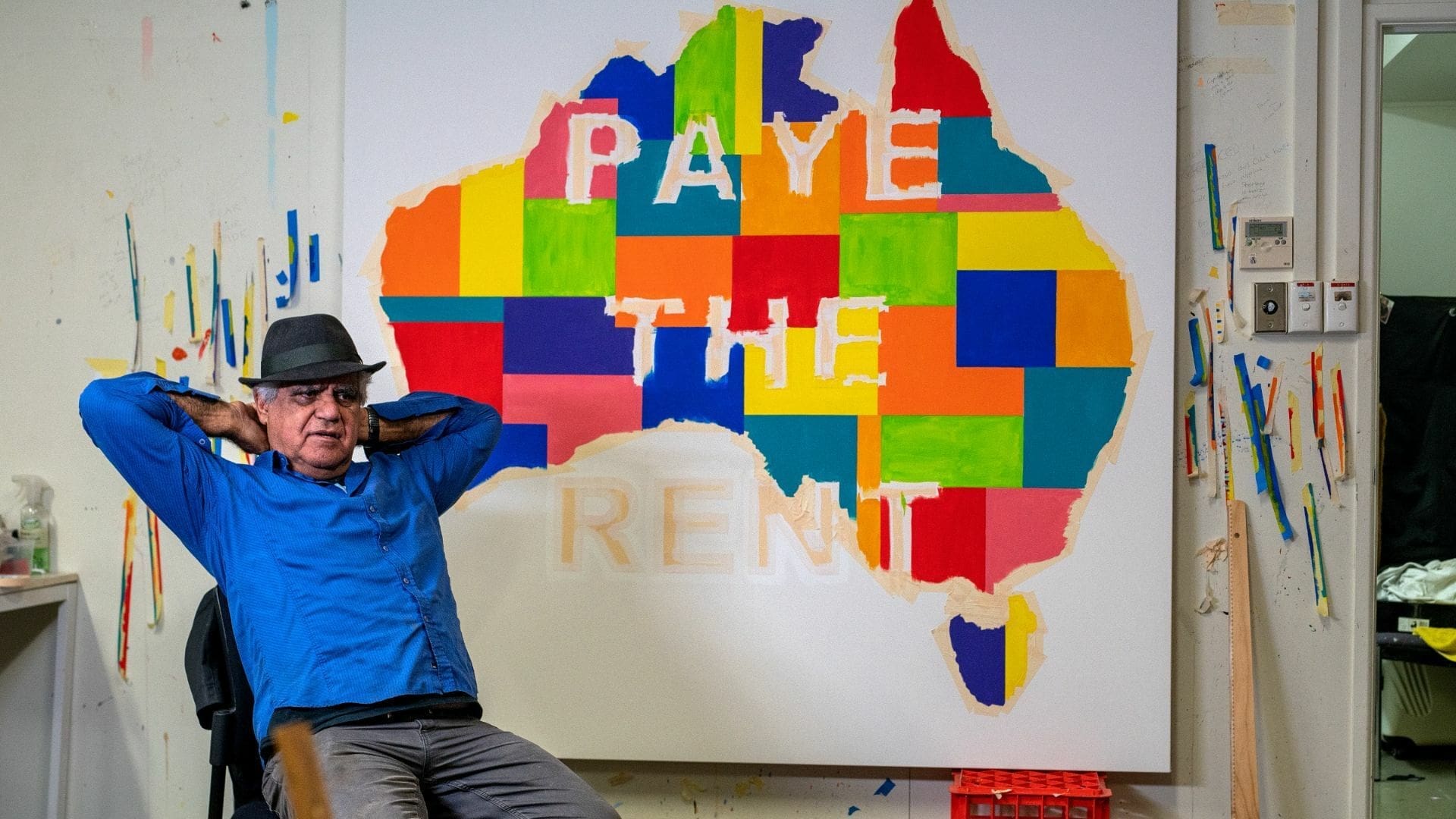
You Can Go Now – Decolonise or Indigenify


Hosted by
KT & Oti
Show Notes
Enter the art installation of provocation, decolonisation and truth. Admission? Beyond the bare minimum. Abolish the date with YOU CAN GO NOW this week.
Non Indigenous Australians need to do the work but also here are resources mentioned to get involved beyond tweeting and signing petitions:
https://paytherent.net.au/
https://www.reconciliation.org.au/
https://supplynation.org.au/
First Nation organisations to donate to:
https://www.mentalhealthformob.org/
https://www.magabala.com/
https://www.commonground.org.au/
https://indigenousx.com.au/
https://ourislandsourhome.com.au/
https://dhadjowa.com.au/
https://awesomeblack.org/
Referenced


Episode Details
- Duration
- 0:00
- Released
- January 26, 2023
- Category
- Episode
- Hosts


Transcript
Transcript (5,662 words)
Full transcript of You Can Go Now – Decolonise or Indigenify.
KT: It's another week in the For Your Reference household. It is another day, just like every other day, where we can stand in solidarity with our First Nations fam friends and lovers. There will be resources, but you definitely should be doing the work. Supply Nation. Make sure your work has a reconciliation action plan and you as an individual can also pay the rent. Mm-hmm.
KT: We're going to play a clip that we have played for the past two years and the week of January 26th, and then we'll get on with the show. I was born in Australia and raised on direct land, but it does not belong to me or my people. Being Australian needs to include understanding the history of indigenous people.
Clip: Stolen land, excluded in the Constitution. The stolen generation, hundreds of deaths in custody and lack of education in schools needs to be acknowledged so we can move forward. January 26th or any date is never a date to celebrate because it ignores the pain and voices of indigenous people. We need to face the atrocities of the past to truly be the amazing country.
KT: Many tend to vocal. For those that are unfamiliar, feel free to do a Google search because it was more of an education that I received in schooling. Warning for our indigenous friends and lovers with the format of podcast actors on screen and discussed may have passed away at the time of your listening. Always was, always will be Aboriginal land. Hey friends and lovers. Welcome back to the For Your Reference Podcast. You got your host, KT,
Oti: and Oti.
KT: Enter the art installation of provocation, decolonisation, and truth. Admission? Beyond the bare fucking minimum. Abolish the date with You Can Go Now this week.
Oti: Woohoo.
KT: Do you want a revolution?
Oti: Woo.
KT: I said, do you want a revolution? Kirk Oti Franklin in. Today
Oti: called a preacher right here,
KT: Woo. We are definitely feeling the absolute energy we need to be feeling, especially on January 26th.
Oti: Say it.
KT: Shout outs, um, to our friends and lovers worldwide. As we've mentioned, our biggest audience is in the US even for these particular episodes that we release as well. And it also fits very nicely with the Rainbow Coalition, with the worldwide, you know, seeking, um, comfort through pain of all indigenous, black, brown, and indigenous people around the world. I'm feeling.
Oti: Same here, man. Same here.
KT: Well, let's get into general stats and information. Also, thank you so much to Madman Films for giving us access to the screener of You Can Go Now.
Oti: Mm-hmm.
KT: a wholly encompassing experience, I tell ya. You Can Go Now. The documentary film was released in cinemas on January 26th, directed by Larissa Behrendt, a Euahlayi Gamilaroi woman, director of Photography, Vincent Lombardi, editor Jane Asher, composer, Antony Partos, executive producer Virginia Whitwell with producers of Nick Batzias and Charlotte Wheaton.
KT: As this is a documentary film, not necessarily cast, but there is a richness of, I try to get proximity into blackfellow Twitter. So it's definitely, um, some names we're familiar with and some new, um, people we've been introduced to through this film. Obviously we're talking about, I believe it was activist masquerading as an.
KT: That was mentioned in the film. Yeah. Yes. Uh, Kamilaroi, Kooma and Gurang Gurang man. Gary Foley. Emory Douglas, the Black Panthers of them all, which will come to Nicole Watson, Chelsea Watego, Linda Burney, Bronwyn Penrith, John Maynard, Keith Munro, Pauline Clague, as well as Daniel Browning. I didn't know what we were going to get. I definitely read the press kit before we watched the documentary, but what a vibrant film this was, Oti.
Oti: It was, it really was.
KT: This is a very exciting time, friends and lovers cuz it's also a first for us. It's the first documentary we've covered on the podcast.
Oti: It is,
KT: um, we are slowly layering our understanding of First Nations TV shows and films. This was a bit different because we were talking about documentaries. There's absolutely some themes that I wanna get into, especially, you know, Richard. Approach to art in particular is going to be very juicy and very . But let's get into your general thoughts on the film. Spoiler, spoiler, spoiler. It's his life. It's his life. It's his life. But if it's a spoiler to you, spoiler.
Oti: so unlike you, I didn't read the press kit. I went into this blind mm-hmm. like I always do,
KT: shooting right off the hip. Pow, pow.
Oti: Mm-hmm. . And I wasn't aware of Richard Bell as an artist. Mm-hmm. . And it was good to see sort of his journey throughout. Yeah. Uh, the struggles he's been through, to reach to a point where he had a platform mm-hmm. , you know, um, him feeling. Not even feeling him, not being recognized in his own, in his own country as opposed to internationally.
KT: Yes. War.
Oti: You know, that was some weird stuff that I couldn't, yeah. Some weird stuff that I couldn't really comprehend as to why. know why. Yeah. I, I'm kidding. I'm kidding. Come on now, I know exactly why.
KT: It's the same reason people having textbooks conversations about hard facts.
Oti: Yeah, true that, um, But it was interesting and it was intriguing, and especially when he's so unapologetically himself.
KT: Yes.
Oti: It's, it's so refreshing to see that about him and another end. I was, I was just floored by someone who was willing to stand up. So hard for himself and for his people. Yeah. In his own way, you know, unorthodox as he may be, it's still a way in which he's, he's putting out a lens on what's going on.
KT: them South Park, Randy Bowls,
Oti: He did
KT: Um, I, I guess before I share my first impressions, I just wanna layer what you are saying, uh, throughout the documentary film, there is the 2002 Bell's Theorem: Aboriginal Art, It's a White Thing, and I do want to talk about that as an actual theme, um, of this review.
KT: But throughout this documentary film, you know, Richard Bell is performing these pieces, you know, in, in interspersed into, you know, his life and his art and the legacy, right? So I just wanna. Part because it's definitely going to, you know, spark some conversation. Aboriginal art is bought, sold, and promoted from within the system that is Western Art. Consigns it to pigeonholing within that system. Why can't an art movement arise and be separate from but equal to Western art within its own aesthetic, its own voices and its own infrastructure.
Oti: Speak.
KT: Ooh, let them have art. Am I right?
Oti: Mm-hmm.
KT: So my first impressions for this film, again, I read the press kit and it was very interesting. But again, I think my biggest, like if I were to have a, like a memoir, a biography, it would be, You know why ? So even reading this press kit and even the way that you are like talking about your experience with the film, you know, the, not necessarily the word radical, but you know, provocation, you know, living in his authentic truth with saying it with his whole chest.
KT: I don't know, maybe I'm all the way radicalized. Cause what he was saying was just straight facts to me. Like, I was ready, I was on board, I was on the train, and I was absolutely ready to go there. Um, there's definitely some themes that I want to talk about, but I did appreciate that, you know, there was so much in regards to history. There was so much in regards to not just culture, but the oldest living culture in this world. I appreciated it so much. There were so many layers into.
KT: And there's definitely a great capturing of that cheeky sort of nature that Richard Bell has.
Oti: Mm-hmm.
KT: Um, we're not necessarily art auteurs, so to say, but I, I did have periphery of at least the visuals of his work.
Oti: Yeah.
KT: Even though even his play on like the white , the pop art, like blonde white girl saying, I'm so glad I'm not Aboriginal, or I'm not Muslim, or a refugee
Oti: Yeah.
KT: Come on man. Come on. Cause we're gonna talk about it. We're gonna talk about it. Right. Oti. So let's get into the first theme that we have here, and this is the format of the documentary.
KT: Even though this is the first time we're covering a documentary on the main podcast, we do watch a lot of documentary films or limited series, and sometimes the choices of the documentary can make and break it. Like, even if it's interesting subject matter, you know, even if it's Michael Jordan making up fake enemies, like the, the choice of, um, creating a documentary is as important as the subject matter is interesting or fascinating to want to dive into.
KT: Right. So I wanted to talk about the documentary in general of using history because it could be said that this film isn't just about Richard.
Oti: It's not. It dives deeper, you know, and I, and I think one of the things that it does really well is how it tapestries history. Over, you know, explaining everything to the point where we as a society or we as people living in Australia, should see the progress of art.
Oti: Yes. Because most of us have seen Aboriginal art plastered and hung everywhere. Mm-hmm. . And the understanding of how that is and how that comes and how that is distributed or seen worldwide. Yeah. You know, and just. Vast it is and how much it's just not really appreciated or seen from, Hey, you know, the people running this. aren't really First Nations people.
KT: Wow. Yes.
Oti: and and he's trying to bring that to the forefront because from his standpoint it should be, Hey, our art is valued very highly. But the people in the business running it. Yeah. I'm really pious people. Yeah. And he is like, why is.
KT: something that I really appreciated about the way that the interviews were done and the way that the archival footage was done for this documentary was really bringing that, um, yes, cheekiness, but Richard is so wholly self-aware at the contradiction of the art world, and there was even one of his like video.
KT: Performative works where, you know, he does feed off of that. They're at a fancy sort of dinner party and he makes the comments that many people make about aboriginal art and reducing it to what they might think, right? Mm-hmm. . Um, again, I am conscious of the Pitbull, 305, worldwide, um, friends and lovers that we have.
KT: So just to give a bit of context, especially if you haven't had the chance to watch the documentary film, We have the Aboriginal Tent Embassy that Richard got a lot of inspiration from. Even inside of the documentary we have Gary, um, Foley, as well as Bronwyn Penrith talking about it, being there, experiencing it as well. Um, and just to give context, the Aboriginal Tent Embassy is a permanent protest occupation site, um, focusing on the political rights of Aboriginal Australians and Torres Strait Islander people. It is the longest sustaining protest site for in. land rights,
Oti: Yeah. I think for me, someone who really didn't know anything about this going in, it was so informative seeing, you know, not only seeing the history bit of it and how it all came about. Yeah. But the sustaining nature of it and how much they've continued pushing on trying to raise awareness, trying to fight for what's right and what's theirs. And I was in awe. It, it's amazing what he's done. Mm-hmm. and what he's still doing,
KT: because he has those embassy installations all around the world.
Oti: Yeah. He goes and talks to people outside of Australia about Hawaii. Yeah, yeah. You know, folks in Italy and all that, and
KT: in Europe talking about trivializing art.
Oti: Yeah. And, and it's, it's refreshing to see that he has a platform, a worldwide platform to, to speak truth to power.
KT: Oh, absolutely. And I guess just to close off this particular theme, you know, for a lot of us that have roots in culture, I guess is the PC way to say it.
KT: Um, we don't exist. On our own. Mm-hmm. , we're not Goku or Superman falling from the sky in some alien sort of planet. Right? We're all tethered, you know, whether through, through Love and triumph or through otherwise, we're all tethered to our people and to our community. And I really loved in this documentary, you know, sometimes we talk about even with the Panthers, um, or even Judas and the Black Messiah, like sometimes we talk about whatever.
KT: Storytelling is sometimes you need to educate people so they can really feel the notes of emotional sort of resonance. So there was that sort of facet to this documentary film, but I also really appreciated it because I don't know about you, Oti, but I fully understood it. Like as soon as they talked about, you know, the history even over the last couple of decades for Aboriginal people. I'm like, I love that they included this because it shapes who Richard is and it further accentuates.
KT: Let's move on to the next theme. And I had a good cackle. I had a good cackle. Just the phrase Aboriginal art, it's a white thing. And I guess we can also give a shout out to Richard's shirt. Was it White Girls Can't Hump or something?
Oti: Yeah,
KT: Well based, based on the scenes with Woody Harrelson and Rosie Perez, I don't think white guys can hump either. Hell
Oti: All I know is I'm thirsty.
KT: They gonna say, you're Wesley Snipes. So I wanna talk a little bit about. The art world and you know, I guess we can talk a little bit of, you know, relating and understanding, navigating very white spaces in the film TV space. But I want to talk about the art world because it is and can be, and maybe decidedly deliberately continues to be a very stuffy and snobby sort of. Yeah. And I don't think we're seeing the trickle-down economics in Australia because again, Richard's art is being recognized globally, but not in this country.
Oti: Yeah. And I think, uh, the moment he started getting international recognition is when it all started turning around for him, at least locally and in Australia that is. And like, come on now, it had to take some folks in Europe for you to start taking him
KT: Well, maybe they're more distanced than
Oti: and that's the thing. Imagine if, so clearly his, his art speaks to people. It invokes emotion. And for you to ignore that solely on the fact of bloody history is just wrong.
KT: Well, we're one of the only countries in the world that don't have a treaty with its indigenous.
Oti: Mm-hmm. speak it.
KT: And now there's conversations about, oh, you know, dabbling and whether we want to vote for indigenous people to have a voice in parliament. Like, what the fuck is that? We're literally . No, but really it's fucking frustrating. Especially because I was born in this country and you see the, the like filibustering and the motherfucker that goes, You know, even in this documentary, they were talking about the referendum where the Aboriginal people get counted as a part of the constitution.
KT: Fuck right off. But also you're feeling the notes of that now. Mm-hmm. You know, even to the plebiscite of same-sex marriage, why the fuck would you even get people? And at the end of the day, if you're about it, pull up and be about it. say last time, stop hiding behind the bigotry of, of I guess the equivalent of middle America in this fucking.
Oti: Yeah, it's wild. You know? Um, I shouldn't be celebrating, oh, the first Indigenous person to be in parliament. I'm like, what the fuck? 2020. It shouldn't be happening. There should have been myriads of people. Right. Or already. Yeah. You know, and this is the thing, you know, and as much as it's a win, it's still indicative of, of society, of where we are because it shouldn't even be a discussion point.
KT: Yeah, I don't know. Like I, again, I, I try to be NAS level conscious of this world, Oti, and I try to do the work, but I am so fucking sorry in 2023, if you wanna have it, fine, but don't fucking loop me into your discussions about whether Australia Day should still be fucking celebrated. You can fuck off with their. How fucking warped is it that what, whatever it is, whether it was your racist grandparents or your racist self, how whatever that day means to you, no other fucking country celebrates its genocide.
Oti: Mm-hmm.
KT: I'm not having that conversation. I, I don't see the point of having a debate like that. And also, at the same time, the spaces for indigenous people, no one should be really having a conversation outside of that. Like personally, I'm just getting sick of people patting themselves on the back for fucking what? Richard's success has nothing to do with the Colonialized lens of this country. If anything, it impeded it.
KT: I joked about it, but maybe it is. Maybe the Britons are far enough away from the mess that they created, that they're able. Accept or at least understand that his voice is important to have on a world sort of lens because you're seeing it and we're talking about the indigenous pain, which again was through a lot of colonized. Goodbye to Queen Elizabeth. Fuck off.
Oti: Yeah, there's a bit of a step removed and all of that. And they mentioned it in the, in the documentary as well. Yeah. You know, maybe that's why it's easier for them to appreciate his art. Um, but this also brings us back to looking at us, looking at ourselves in Australia and being like, why is it that we get an artist we can appreciate, you know? Cause you see it, you see aboriginal art hung everywhere.
KT: Yeah. So where are all of the rich Aboriginal artists of, of all the art? Really? Where are they? Where's, where's all of it? It doesn't make sense. The math is not math or the math is, is not decolonising. At least. But I, I guess when we talk about it's a white thing, it's interesting cuz I'm sure it would be divisive even within the Aboriginal community, but I fucking love it. I thought it was great.
KT: I just, I think it's interesting that like by people not saying it or not acknowledging it, they think that that's enough to do and it's like, no, we know the way this country, you know, the power in this country was gained.
KT: It was violent, it was brutal, and there are many, your name might not be Cumberbatch, but there are many that still benefit from that power that has been sustained even until today. Something that I thought was really cool. Um, in the documentary, it was shared. The, the sentiment was shared from Richard saying he doesn't hope, he just tries to just get up and do
Oti: up. Mm-hmm. . And I think sometimes you just have to do that. Otherwise, the thinking and the, and the tearing it in your brain would cause a lot of inaction. Yeah. Because you'd see w where's the bloody progress . Sometimes you just have to do it
KT: Actually, that, that's also something I want to talk about, and we talked about it in Judas and the Black Messiah change, real change doesn't happen in conservative spaces. Mm. And in my opinion, real art doesn't happen unless it, unless it's an expression of lived experie. Provocative art is a reflection of culture and the resistance of the changing culture.
Oti: Exactly. You've gotta rock the boat. Yes. You know, there's a reason why Rock the Boat was such a popular song. Nice . Oh, for fact, you gotta sh you gotta shake things up. Otherwise, otherwise we just stay constant. We just stay still. You have to push the thought process. You have to challenge. And I'm happy that there's someone like Richard Bell, not letting anyone feel comfortable. Yeah. You know, there points in the documentary, I was like, oh, I would never be able to do that. Mm-hmm. . But I'm glad there's someone who
KT: Yeah, absolutely.
Oti: You know, a lot of the times they say, he say it with your chest and I'm glad he's doing it with his bare chest out there.
KT: in a world where people are ignoring or trying to pussy foot around the situation? I want to be Richard.
Oti: Mm-hmm.
KT: right? Yeah. Art exhibitions all around the world, including Tate as well as in Amsterdam, Netherlands, Moscow, like literally all around the world. And he also won the Telstra Award as well. And you know, I actually, I actually just wanna spend a bit of time talking about this. You know, the. Sort of documentaries or memoirs, if you will, are ones that have had the time to, you know, be calcified through the struggle, but also be able to have, you know, a, a, a frank sort of reflection of one's own life.
KT: And I really feel like Richard opened himself up, not just to his art, but also to his life.
Oti: Yes, we get to London that, you know, he did have his struggles in life and he got to a point where he didn't know where, what the right way was, you know, and it took him a while to get his feet on the ground, you know? Yeah. And, um, by him winning the Telstra National Aboriginal Arts Award, it, it, it set up a platform for him to go on to stronger
KT: to mm-hmm.
Oti: and and I'm glad you know. Sometimes he just needs a break. Yeah. You know, and despite everything, what and when he went to accept the award, he, he wore the t-shirt that he just commented on. Uh, the white
KT: you mean? Woody Harrelson can't hump
Oti: Yeah.
KT: I hope this is the sound bite.
Oti: And it caused a stir. Yeah. You know, it, it caused a stir. But that was his announcement that, Hey, I'm not here to make you feel comfortable to the contr.
KT: but how does that cause a stir and then calling indigenous people less than on the national news isn't, again, you know why?
Oti: We know. We all
KT: For all those playing at home. You know why? Mm-hmm. , there was a very emotional moment that I shed a couple of tears in, um, in this documentary. And he talks about when he lost it all, you know, when his life fell apart. And he also talks about being homeless, um, and. Man, those fucking human moments, man, you just like, you know, and he, he talks about it.
KT: It was very interesting. Um, I'm not going to go into a lot of detail, but just the trigger warning, um, friends and lovers for self-harm and suicide, but again, I'm not gonna talk about it, um, a lot, but in the documentary, you know, he talks, he has a very interesting view on it. Saying that, you know, for, you know, his fellow people that were homeless, that they were brave enough to follow through.
Oti: Yeah.
KT: And he wasn't. And you know, for what, whatever your vices are, whether it's through alcohol or otherwise, you know, it, it was a very touching moment. It was a very sobering moment. And I, I, I guess for people that are quick to paint him as a provocative caricature, um, I would question that just based on that vulnerable moment, because a lot of us can provide a lot of dimension, especially for First Nations people that have gone through un speak. Systemic at the hands of the government. Um, pain.
Oti: Yeah. I think speaking of emotional moments, I think there was also the part where he went back to where they used to live, where the houses all being bulldozed down. Uh, then can
KT: imagine? Yeah. Can you imagine? Just like literally just trying to create your own livelihood and then like, I, I guess, and, and you can talk about it as gentrification, even inside of Redfern Now. Like you are there with your own, you know, you're creating your own home and they're like, low joke, we want this space now.
Oti: Yeah. You know, uh, and that sucks. That sucks. It, it was very emotional to see what they all went through. you know, um, going there, you could still see the rubble in the land. Yeah. I'm like, fucking hell, you know, just on the whims of someone in government. Oh, we want to use this SL for, I don't know, development. Development. Yeah, let's try and dig or some shit. And it was, it was, it was so heartbreaking. It was so heartbreaking. Uprooting people's lives like that. Destroying families and, yeah. Wow.
KT: I understand the creative outlet of the art. I also understand like the installation, the video installation that they had, um, as well. I understand that, but I also feel like I would do that just to invite people and be like, fuck you, fuck you, fuck you, fuck you, . I do want to go back to the Tate because they, even though we are not art sort of people, they made it clear that this is the pinnacle. You know, this is a level and an establishment of prestige.
KT: I don't know if that's, that's also where Killmonger will be at, but Um, there was something really interesting that was shared of curating art from all around the world and in regards to Australia. A good handful of them are First Nations artists.
Oti: you wouldn't know it, but yeah,
KT: you wouldn't know it. But that just tells you where the interest is. That's where all of the, the legacy of this country is. That's where the culture of this country is, and that's where the achievements of this country. Like don't talk about First Nations artists, athletes, talent being Australian because what the fuck did this country do for
Oti: for Facts?
KT: I did preface this. If you wanted to start a revolution,
Oti: speak it,
KT: pass the collection plate around, Oti. Speaking of a revolution, the next theme that I wanted to, um, get into, and it wasn't surprising, but it was really nice to see, you know, a, a global sort of lens of unfortunately, Colonized struggle. Um, we have Emory Douglas, who is the part of the Black Panther party, but also a lot of the iconic artists, um, sort of imagery that you would associate with the Black Panthers.
KT: He's very good friends with Richard Bell. Um, and it was nice to see, um, you know, the, the, the sort of. Correlations and I guess the kinship, um, that was formed as well. Friends and lovers, if you've, um, listened to our Redfern Now, um, episode, we kind of, you know, touch on the history of Redfern. Um, but I, I guess just to, just to mention it now, For those that are unaware.
KT: In the late 1960s and seventies, a black power movement centered around Aboriginal Australian migrants to the city. And they had a whole creation of health clinics, food drives, housing co-ops, and a legal aid center, um, that a lot of the people in this documentary contributed to, if not started including Gary Foley.
KT: Um, and what was really. You know about this and, you know, we talked about the New Zealand chapter in the Panthers, also the Australian chapter of the Black Panther Party. Um, it was really cool to see it and you know, friends will obviously want to, um, go and check out our Panthers episode. I actually read out the 10 point program, um, by Huey Newton, as well as Bobby Seale. Um, but I, I love that there's, there's instances. Um, and direct influences in Redfern as well. You know, even with the breakfast programs too.
Oti: Yeah. It was a rainbow coalition. You know, we needed to get people together to build a world that we want to see for ourselves. You know, fuck the government. We don't care what they want to say or what they want oppress because we can do it ourselves and we can do stuff for our community where we give resources and you know, and it's that sense of community that. Pushed a lot of people absolutely. You know, it gives hope, it gives, um, and it pisses off the government.
Oti: Yeah. Yeah. And what more, what better way to save RQ than to show them that hey, we can look out it for each other. Yeah. Where we can do all this stuff that you feel like you, we don't disolve.
KT: Yeah, I agree. I absolutely agree a hundred percent. Um, this also comes to the next theme that I want to talk about. It was raised inside of the documentary, um, that potentially Richard Bell is Indigenifying. And I, I just wanted to talk a little bit about it.
KT: And it's decolonise or Indigenify. We can talk. The government. We can talk about legal systems, we can talk about TV and film, but I guess in this regard, we're talking about the art scene. When we talk about decolonising, we're talking about breaking the very foundation in which power structures have been created in art. Right. When we talk about Indigenifying, it's talking about keeping the structures in place, but blacking it the fuck up,
Oti: everything gets better with color.
KT: Yeah, absolutely. The darker the berry, right, Oti? Oh, I wanted to talk a little bit about that. You know, you can talk generally if you like, um, ACAB and all of that Um, or we can talk about the art scene. What do you think about it?
Oti: Yeah. You can't have majority of the people in Tate being indigenous and then them not being in a position of power within the art world. It's just fucking insane.
KT: yeah. It becomes tokenism at that point, doesn't it?
Oti: Yeah. Like, oh, we, we'd make all this money off, but you'll get, you won't get a say, you won't get a seat at the table. Yeah. And that's just bloody wild. Yep. And it happens all over here. Even with something as simple as NRL, where you get a lot of Pasifika players. Mm-hmm. And then you never really get to see them anywhere else.
KT: I think the stat is like 40 to 50% is Pacific Islander. So where do they go?
Oti: Where do they go? I don't see them. Do you?
KT: I don't know. I think some women are taking our men's, but anyway, just me being radical and inciting, you know, you know how I do but it doesn't make. But it's exactly that. It, it becomes very deliberate at that point, you know? Yeah. The Oscar nominations recently came out, um, and very famously hashtag Oscars So White still going strong. You're telling me in the 2020s this is the best of the best.
Oti: Yeah, man. R p didn't get a get didn't get a nor day.
KT: No. No, but he, he will in our household. But it's, it's very interesting. But I think that goes back to whether you decolonise or Indigenify personally, I think we need to decolonise every, do. We don't need to be a black capitalist like your friend Jay-Z all you are doing is removing the players, but the game is still set to play.
Oti: Mm-hmm. , the structures built up wrongly, just continue being wrong throughout, so might as well.
KT: it's not wrong. And you know why it's deliberately built that way.
Oti: Yeah. And that's what I said. I didn't say it was built accidentally.
KT: Rome was built accidentally.
Oti: huh? Yeah. No, no, no. Very intentional, very deliberate. And it has to be brought down just in the same way it was built. Yeah. And then we, we, something new will arise.
KT: Well, I'm ready to mount up and pull up bombs. Oti, are you?
Oti: you. I mounted up pages. I've been waiting
KT: Thank you friends and lovers for joining us another week in the For Your Reference podcast. Um, I'm not known to preface shit and uh, we welcome, especially those that chose to listen to this episode. If you had started from the start of our January 26 week episodes, you would've felt a simmering building up to this crescendo. Otherwise, we are here to do the work and we are absolutely. We're gonna finish off in the segment we call For Your Reference, Oti.
Oti: I am gonna reference Redfern Now.
KT: Hey,
Oti: we've already covered it. You could watch it, binge it. It's, it's very good. And then you can come hear us talk and rampage over everything.
KT: whatever. Oh, this is our first one covering without Deborah Mailman.
Oti: International treasure.
KT: In solidarity. I will reference Total Control. Mm-hmm. , do you have an opinion about whether indigenous voices should be in Parliament? It doesn't matter.
Oti: I should have known.
KT: even after all of this, I
Oti: have known. I know I. Fuck it. L
KT: If you also should know better on Twitter and Instagram, we're @ForYourRefPod.
Oti: Write us an email, hello@fyrpodcast.com.
KT: We're also on you know Why Podcast if you like to leave a rating and review and we'll see you guys next week.
Oti: See ya.
KT: you. Bye.
Related on FYR
Discussion
Loading comments...