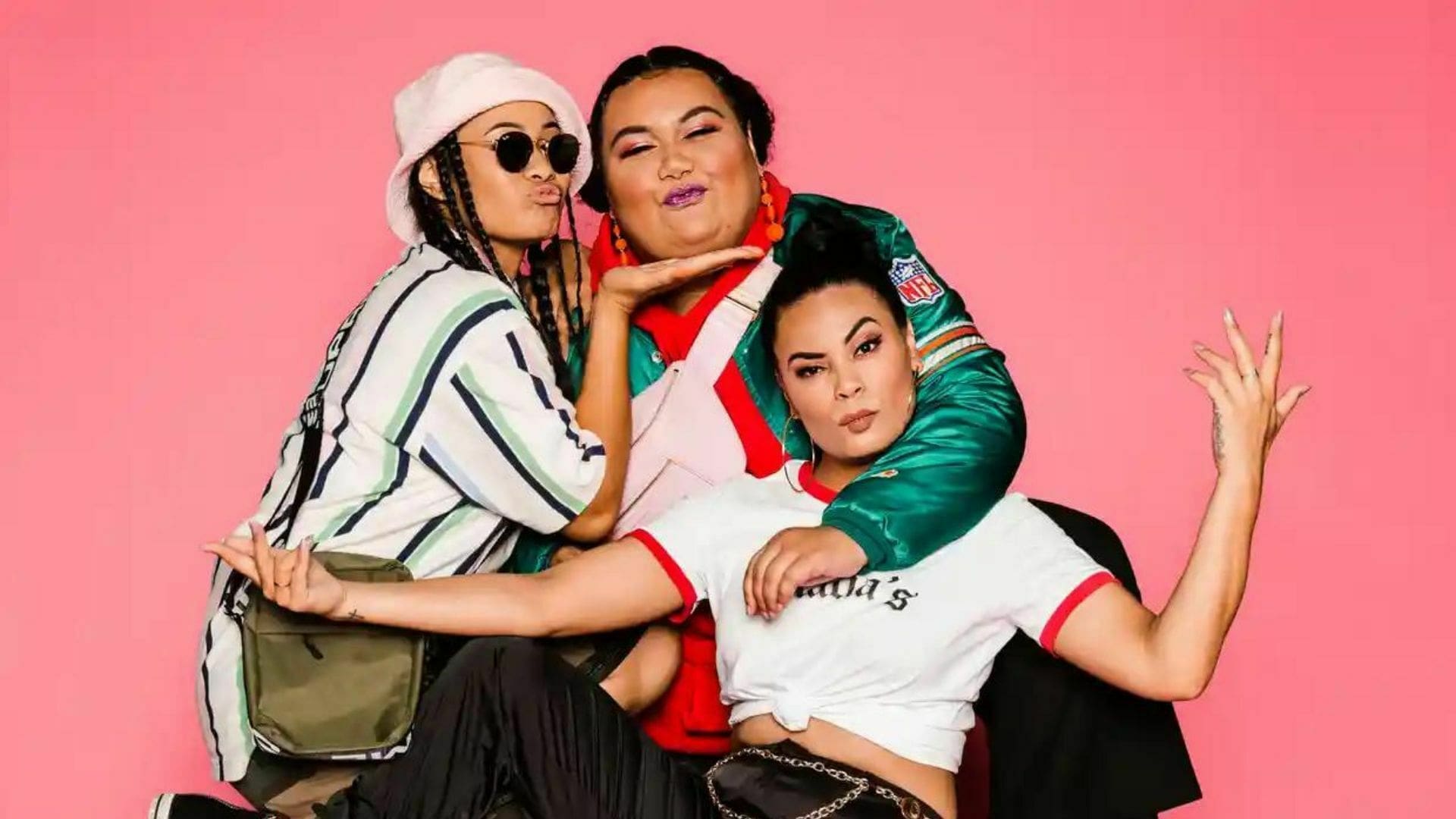
SIS – Who’s your Diversity daddy?


Hosted by
KT & Oti
Show Notes
Plug into the diversity matrix where caucasity ticks all the boxes. Join the roll call of industry babies and diversity daddies with SIS this week.
Watch the full first season of SIS for free:
https://vimeo.com/showcase/9902229
Sign petition:
https://chng.it/BH49fgydvW
Open letter to NZ Film & TV Industry:
https://www.instagram.com/tv/CjzmNu2JcFP/?utm_source=ig_web_copy_link
Referenced

KT's Picks
Referenced in this episode


Oti's Picks
Referenced in this episode

Episode Details
- Duration
- 0:00
- Released
- November 6, 2022
- Category
- Episode
- Hosts
Transcript
Transcript (6,542 words)
Full transcript of SIS – Who’s your Diversity daddy?.
KT: It's another week in the For Your Reference household, and it's not the first time we've called out the industry. Right, Oti?
Oti: Mm-hmm. Hmm.
KT: Love and sploosh to everyone involved in SIS the Show. We will put all the links in the show notes. It is explained more eloquently than I could ever. There is an open letter to the New Zealand film and TV industry calling to account, I guess you know the meta now that it has legs, right?
KT: The metaverse of it or the calling out of the industry of it or go and check out that open letter. Also, there is a petition to go and sign friends and lovers, and we do know, and we do talk about indigenous storytelling all around the world. And when I say indigenous storytelling, Oti, I'm talking about Rutherford Falls, not Yellowstone.
Oti: Oh wow.
KT: Um, and as a treat, and I guess in support and in protest, friends and lovers, the whole first season of SIS is available for everyone to watch on Vimeo right now. Get into it. It's super nasty. Watch it and come back for the episode, friends and lovers
Oti: For sure.
KT: Let's get on with the show. Hey, friends and storytelling lovers. Welcome back to the For Your Reference Podcast. You got your hosts, KT
Oti: and Oti
KT: Plug in to the diversity matrix where caucasity ticks all the boxes. Join the roll call of industry babies and diversity daddies with SIS this week.
Oti: Ooh,
KT: Who? Who are you strapped in, Oti? Holy. , we're gonna strap on and we're gonna keep it nasty.
Oti: Mm-hmm.
KT: uh, friends and lovers, like we've mentioned many, many times, most recently, but also in general, indigenous storytelling is so important because, again, it's important for stories to be told, but it's important on who are telling those stories.
Oti: Fact,
KT: which gives us the key word, the, the Sesame Street OT Gro phrase of story sovereignty. uh, in support. And also because we fucking love SIS, the show season one. We will be covering it today. Again, it is available on Vimeo. Make sure you go and watch it. The format's very. Thing. There's sketches, but there's also through plots throughout, um, all of the episodes as well. There's a lot of characters.
KT: Uh, you know, we've, we've done a handful of Pasifika and Māori, um, film and TV on this podcast, so hopefully friends and lovers, you'll satiated and your palette is most welcome. Um, and we're going to talk a lot because this show really achieved so many notes, um, in, in, in a first season sort of format, right?
Oti: It really did.
KT: Let's get into general stats and information, love and sploosh to Hanelle Harris in regards to writing credits. We also have Maiya T, Joe Daymond, Georgia Ihimaera, Mo Lunga, Victor, Roger Thomas Sainsbury. Destiny Momoisea, as well as Mark O'Toole. In regards to cast, we have Suivai Autagavaia, Hillary Samuela, as well as Gaby Solomona. In regards to producers, we have Hanelle Harris, Jadin Leslie, Maiya T, Karin Williams, Destiny Momoisea, Liz four a. shout out to the Panthers. Hello for, No for now, as well as Gaby Solomona.
Oti: no,
KT: And Robbie Monga. Siva.
Oti: Mr. Jackson
KT: If you're next. I thought I was just imagining him. So it was good to know he was actually there, Oti. Mm-hmm. . . Oh, who? Well, um, Oti, like many of our friends and lovers, you, you. Now become maybe not well, but adequately lubricated in Māori and Pasifika sort of entertainment. Um, let's get your first impressions. How, how did you feel about the TV show? And I guess, uh, if there's any sort of confusion, The full first episode was released and has been available, um, and the rest of the season is available now on Vimeo.
KT: So how has your journey been? My love.
Oti: I remember watching the first, um, episode a while back and it was fun. It was invigorating. I remember us thinking, What the fuck is the next episode dropping? Yeah. And it's one of those things that just really resonated. And I think the fact that it was done by Pacific people, you know, there's just a lot of stories to be told in such a unique way in their own, and I was there.
KT: I just feel like you're trying to get a delicious Kenyan podcaster on season two. Is that what you're trying to do?
Oti: Hopefully, you know, uh, cultures collide. New things are born. You don't know where to end up
KT: the o King. Am I right?
Oti: a hundred man
KT: Uh, I, I absolutely agree with everything you said.
KT: You know, even in Head High, there was bro'Town in there, which was a very early sort of periphery in regards to, uh, Māori and Pasifika sort of entertainment, right? Um, even coming to Head High that obviously, you know, tackles a bit more complex, um, storylines than Jeff da Maori and his guitar in bro'Town. Or Ella going to the B and he may be some dime Um, but I was well satiated. And the reason why this show just fucking works on every level is because it's also coming from the lens of women as well. Um, I, I, I love having. You know, the brown female gaze, so to say in this, because it covers a lot of specific sort of, you know, topics. And I, I think it's even in the first episode where they're all coming together and they're talking about these particular sort of issues.
KT: Right. And what I really, really, really, really. Love about it is maybe even from my own experience, you know, you can't sit around having uni lectures or having textbook conversations because they'll just like poo poo you and boo you out of the room. Hmm. Like when you are in that sort of setting, it's all about mocking.
KT: It's all about laughing, which is cool, super cool, but sometimes we need to get to a level of depth. And I love that. Not only. Exploring themes that are important to talk about, but it's also approached in a way of humor, right? Mm-hmm. even we see, I think it's at the start of episode three when we have Gee Gee and her family meeting, you know, her brother's girlfriend for the first time. Apparently not the first white girlfriend. Can we talk about it? I'd rather not. Oh
KT: man. Maybe, maybe in another time, or if we're feeling a bit spicy near the end of the episode. I guess we can talk about it. Are we not the poster people for interracial dating? Oti should be.
Oti: should be
KT: I think Tom would've applaud us. I think we're Tom's wet dream.
Oti: Oh, wow.
KT: Um, but you know, even, even broaching topics of like respecting your elders and, you know, but it, it was one of those moments, you know, Pitbull, Mr. 305, worldwide uniting all cultures. As soon as that, for lack of better word, white girls said the mom's name and looked her in both eyes. We both knew what time it.
Oti: For sure. Man, I grew up never knowing my parents, first them until I was much older, because why did you need to know them at all?
KT: Yeah, like that's, That's actually none of your
Oti: business. Yeah, but it's even safer for you not knowing Cause then I can't sleep
KT: Yeah. Exactly. But, but you, you see what I'm saying? There's, there's, there's so many mu there's so many tangible sort of themes, um, that are explored in this show, and it's done in a way that hits not just on my levels on Oti as well. Well, let's get into the themes that I have for us. Today, obviously we're going to start off with indigenous storytelling as well as story sovereignty. And I also say this to someone that is watching Alaska Daily willingly.
Oti: Wow, you love coming for me nowadays, eh,
KT: well, you, you chose to watch it and you choose to continue to watch
Oti: continue . It's this wonk of it all
KT: You know, everyone loves a classic who done it. It's, it's just interesting having the themes be so clearly about the industry and to also have the circumstances lay out the way that they do. We don't need a Daniel Craig to solve that mystery. We.
Oti: No, No. Neither did the movie.
KT: Yeah. Kevin Costner can stay away from the native land. Right. for every recommendation I get for Yellowstone, I'm just going to slam it on the podcast. Just know that. Just know that. Um, the next theme that I wanna go into is the industry slash diversity. And I think we can also, we can also relate that to, you know, the things that we're currently watching, but I wanna talk about the way. It was explored in SIS.
Oti: We get, they're trying to pitch a story, you know, in the writer's room they're trying to create this story so they
KT: can, There's funding, there's funding for a Pasifika show, but only one, There's only room for one. Of course the pick me of it all.
Oti: why would you have more than one?
KT: Exactly. So, so I, I guess that's, that's an interesting sort of, um, backdrop to have.
Oti: Yeah, and it's, it's the, it's the sort of age where you have this people that who are a providing funding for this, but more often than not, the funding goes to people who are not indigenous. Mm-hmm. . And who are writing from a perspective that's not on their own.
KT: Oh. So it does matter Mr. Alaska Daily.
Oti: It does, and I can put my chest off for this because I know that it affects a lot of people and we see a lot of shit that gets air and people who get opportunities for this shit.
Oti: Yeah. You know, and, and you wonder when your time would be. So how SIS explored, albeit in a sort of comedic way. It still hit home. Yeah. Because at the end of the day, we get to see how everything transpired up until the end. Mm-hmm. and you know, either be people jumping ship to go to a someone who they knew they would get because they're running from, you know, when, when it's, let's say it's a white person writing a story from a different point of view, uh, people regard it as this guy is super woke.
Oti: He is, he is very in touch with everything else. And he
KT: is, did you just say, Aaron Sorkin,
Oti: Man,
KT: Quote, quote, quoted as saying, You don't need to be from a particular experience to write that. And I guess I present to you The Trial of the Chicago 7, which I think a lot of us are still trying to finish watching.
Oti: It's, it's It's something that's plagued the industry. And I think when we talk about it more and we, uh, expose it more, and we make people aware of it more, because at the end of the day, some people might not even know, you know, like me growing up, I never really paid attention to the directors, the writers, and all. You know, it's something that you capture it more when you grow older and you pay attention to everything other than it just being a concealable piece of
KT: Mm-hmm. .
Oti: So I loved, and I enjoyed how they portrayed it here because it was quite realistic. It made sense. Yep. When they didn't get the funding, I was like, of course they wouldn't, because they never do.
KT: Well, you know, I, I could have stopped you while you were going to say, spoiler, spoiler, spoiler. But like, that's fucking true, isn't it?
Oti: It is. It's the world we're live in. If you think I've spoiled for you, you've not lived.
KT: Yeah. Or you're like, Tom, you're a well meaning
Oti: ally.
KT: Um, a side note, I brought up a qualm, um, in the, like, the acknowledgement of, um, land that we occupy in a work context. Um, and I had a well meaning, uh, white Lady Ally tell me that I should bring it up.
Oti: No one wants to rock that boat with a boss, you know, So it will only make sense
KT: But then I, but I was also like, I constantly have to navigate this white space as a brown woman. And then she was like, Oh, yeah, yeah, I do understand that we should fight together. And I'm like, Fuck off. Like , if you are not on the front line for change while you're picking up your pennies of oppression, I don't wanna hear about a colon.
Oti: Wow, man, you've puffed off your chest for today. Woo. Yes.
KT: that's, That's why your white wash shows. Don't do it for me. Oti
Oti: You got your tit style Lori Stro style, eh,
KT: Show it your tits. Absolutely. Absolutely. But you, you are a hundred percent right. And you know, a conversation that we probably have outside of the podcast, um, but it's definitely relevant to here is when you live in countries where you have majority, You know, white population, you know, and I think for talking about, specifically about Aotearoa, but even here in Australia, um, the voices of Black and Brown, and maybe even First Nations people are the ones that are saying the shit that white people are comfortable with, what they wanna hear and what doesn't challenge them.
KT: Like it's all fun in games, but even to visibly be non-white can be very,
Oti: Yeah. Yeah. And that's a fact of life. You know, It's something that we live with. It's something that we carry through. And whether or not you think it's right or wrong, it's just is.
KT: uh, before we move on to another theme, like for me, diversity isn't enough. Like you see it, you see it in all the induction and marketing materials of corporate culture. Like, you see all these, I get jealous of all the brown people on the, on the materials because where, where, where are they? Where's my kin? Where's.
Oti: Yeah, man, I, I'm a place where I see a lot of black people in the materials and I've been looking I've been looking for more people.
KT: they hiding
Oti: what they, Well,
KT: gonna be the next diversity event, we're gonna see
Oti: bro. Like, I can't, I can't turn a corner without seeing a black person, uh, posted or plastered
KT: way. Yeah.
Oti: And I walk around. And nothing. I thought it was different. I thought I'd see, you know what, there's a lot of black people in here, man, but no, no
KT: coin. I'm gonna coin it. They're diverse lighting you, they're making, you think there's diversity, but it's not really Um, speaking of the next, the next theme that I have is the humor in this show. Mm. It was very funny. Like I, um, I, I guess you would be more of the litmus test for it, but I thought the humor was very, very funny. I would think that a lot of the themes were also universal enough for it to be funny. How about you?
Oti: Oh, found it hilarious. You know, um, like you mentioned, we had that situation where, uh, with a white lady meeting, uh, the parents for the first time and it being super, like we've lived all those as someone who's fucking, uh, native. You know, you've had those weird moments. It was hilarious. And all through those transactions, when we got to see, um, even when the parents were like coming to the guys', Yeah.
Oti: You know, and she, she'd slapped in the guy's room and the parents are coming in like, Man, you know, sometimes you just gotta be aware a bit . Yeah,
KT: Absolutely. Um, and I think it, I think it was also explored that, uh, Gee Gee's brother is bi as well. Which will come to, um, But you know, you, you have, you have a pick of both genders and you choose her Wait, I, I'm sorry. Maybe, maybe. I do have a pick me brown girl in me. Who knows.
Oti: You do Oh, we had the clap back for Rob Kardashian.
KT: Oh, that was so good.
Oti: That was one of the most hilarious things. I think I burst out laughing.
KT: We had to rewind it a couple of
Oti: We did, we
KT: had to run it back. Rob. Run it back Kardashian. It was too, Too, too, too good.
Oti: getting your hair, uh, putting up makeup, and then someone says, Me Uh oh. I think I'd throw down, man, I, I would not stand for that.
KT: Are they gonna catch your Will Smith hands?
Oti: Oh, they would. Oh, they would Man
KT: a Will Smith concussion.
Oti: Yeah. Yeah.
KT: to get a Will Smith Nigerian accent.
Oti: Wow. Yeah. Okay.
KT: representation is important. Even accent, Oti.
Oti: It is.
KT: Oh, another hilarious, hilarious, hilarious. Many of the hilarious moments in season one was when Tom was, uh, trying to look up, He was like, do a DNA test, um, for his ancestry. And he came back a hundred percent English cause, surely, surely, somewhere along the way you need to have some sort of seasoning.
Oti: Nah, man. The people who kept it pure, bro.
KT: like at that point, it's kind of impressive.
Oti: is. It is.
KT: But he should have done known better because if that was his ancestry at both cookouts, he would know
Oti: Oh wow. Wow. When you hand rich for that reason, you should have known man.
KT: What, what are your thoughts on Tom's character in particular?
Oti: I enjoyed him, man. I like, I felt, you know, he is a super ally. You know, he wants to be, He, he don't know. He wants to be for the culture. He wants to be part, he, he sees himself as part of the culture, you know? Yeah. And man, you can't, I'm not gonna be here in gate keep, you know, , okay, Kala. It's only fucking skin deep. Doesn't fucking.
KT: Okay. I think, I think this is a Hansel and Gretel journey or taking on your own. the, keep those, keep those colorblind breadcrumbs to yourself.
Oti: I don't see color, man. I, I walk out there and everyone's beige and that's cool. Uh, but anyway, I, I think he was, he was, um, he was really hilarious and I think him being really blinded, be it naive. That he feels that he is part, and he feels so connected because a, he, he can talk to, uh, Pasifika women and connect and write a show.
KT: I don't like the way you said that, but, okay.
Oti: Well, .
KT: No, just it felt lad It felt loaded.
Oti: Oh, wow. Wow. No, I, I could, I could feel, I could feel his need to connect and,
KT: but why? Can, can Oti, is this a safe space? Always. Can we be real on this
Oti: podcast A hundred
KT: as opposed to every other fucking episode we do. Um, what is it like, Why is it like two extreme swings of the pendulum? It's either super hating our people or it's over fetishizing. Like why, why can't we just get something in the middle?
Oti: middle? , Man, I, I'd need a doctorate for that.
KT: lot It's either they're calling us savages or they're calling us brother and sister in our language. Like, why isn't there an in between? Why can't you keep your identity but also embrace other cultures?
Oti: Yeah, that color savages, but still wanna hit it, you know? So it's, it's one of those things where you're like, bro, you know? Yeah. So I dunno, man, it, it's, it's all of those stupid things. People are stupid, but I liked him as a character in this. He was very funny. I found
KT: He was, he was, he wasn't malicious, I think is the main point.
Oti: Yeah. It, of
KT: of the evil forces, He wasn't one of
Oti: Yeah. It, it, it didn't come with any of the nasty, They didn't come as if it was ill meaning or anything like that. Um it's just one of those things where you get someone who's really trying, um, be it, he's very, very naive. Mm-hmm. , but his giving is all, you know, his intentions are fucking pure, but he is just not ready.
KT: Yeah. We've given the white man character He's, he's had enough airtime, Oti, go and watch a Yellowstone if you want more white man representation in a native story. Wow.
Oti: I think another hilarious moment was when they were doing their twerking class, Uhhuh , and it was a white lady with, um, not the, well, the most endowed backside. Um,
KT: just say she got a flat ass
Oti: man. I'm a lover ass. I'm not gonna discriminate. It's one of those, those things where it was fucking hilarious. You know, seeing people come in and getting the class, paying good money for these classes, and I think this is actually a real thing going on up there.
KT: I'm pretty sure Gwyneth Paltrow is the leader hundred percent. And the the motto is, you don't need a handful, you just need a pinky fool.
Oti: Mm-hmm. with the goer gap, you as well.
KT: So, There are also some funny, teachable moments. Um, you know, and I guess like the underlying sort of theme is, you know, as Pasifika young women, there are things that you just don't talk about. So the sexual health check. I think it was Gee Gee that went over. To the house and you know, the well-meaning White Lady was telling her to, you know, share all of her feelings, which is very important. But, you know, having the suppressive sort of upbringing, I understood why that would be uncomfortable and it just doesn't work.
KT: You know, again, it's, it's hitting levels that aren't necessarily for everyone, but it's definitely got a lot of resonance all around as.
Oti: A hundred percent.
KT: Uh, let's move on to queer representation in this show. Um, you know, specifically in the writer's room, we have Fia and we also have Naki. I shed, I would say a couple of tears in this season.
KT: And I think most of them were for Naki, like I just wanted to see Naki win. Uh, I would say, Developed storyline in the show. Um, I just, I just loved it. I absolutely loved it. You know, Naki was so hard working, so dedicated, realized how ridiculous the circumstances for the funding of the show would be. Um, and also just the general sort of frivolity inside of the writer's room. But Naki was always there to work, you know?
Oti: Mm.
KT: Outfit 10 outta 10 work ethic, 10 outta 10 attitude, all the way up to the
Oti: moon. for real.
KT: And what I really loved about it is, you know, at the end of the season, Tom was like, you know, even though this didn't work out, I want us to work together in the future.
Oti: Yeah, she was super hardworking, you know? Um, she brought everything to the table. She's just a go getter. And you want people like that around.
KT: she belonged in the Miss Independent Ne-Yo video.
Oti: Mm.
KT: I think also I like the way that, um, SIS explored. I wouldn't necessarily say anti-transness, but I would say, you know, there is a general sort of ignorance, which also makes me very sad, friends and lovers because like I say with my Patrice Wood, by and chess, Where the nuance reside with nuance reside. Um, but unfuck, unfortunately, a lot of attitudes in Pasifika are not harkening to our ancestors. It's our parents and maybe our grandparents. And what that means is it's coming from a very colonized Christianity lens. Mm-hmm.
Oti: mm,
KT: All ancient cultures, including Pasifika cultures, had more than two genders, and it's so sad, and also in many levels fucking frustrating to see my fellow brown people come with that sort of ignorance, right?
KT: Instead of leading with curiosity and are wanting to learn it, it, it is in a more mil. Sense and friends and lovers. If you, if you want, let's pull up on Israel Folau. I'm ready. Oh, I'm getting spic or tea But you know, it, it wasn't necessarily as pointed or malicious in this show, but we did have Miki come, you know, with a, a sort of trends of guys dressing up as women and, and that was the whole joke.
KT: And that man that got me, man. Like I got very emotional watching that. And you know, there is a part of like, if you have the grace to extend that to Miki because Miki didn't know, but it's like pull your head in, you know, this is where we are now. Or, or just be open to being teachable.
Oti: Yeah, do the work, man. You know. Um, a lot of the time we expect people to do the work for us, to teach us, to tell us when we've gone where we've gone wrong. But sometimes, you know, it doesn't hurt for you to go the extra yard and to understand that the people are there with feelings that you need to understand how to tves the fucking world, which is in that hard to
KT: The word of the date brought to you by Oti? Uh, Fia. Fia was a very interesting character, or at least the sort of high jinks that Fia's character would foray into. It was very reminiscent of Black Comedy. What's this then, slut?
Oti: It's Budd.
KT: of even handle it. SLU I saw you with my man s. Like Fia's. Character was very much giving me that energy.
Oti: He was Yeah. I think he, he was the tension reliever. He, he, he just made, even in serious moments, we were talking about serious smarters or issues or even sort of trying to cascade through, um, difficult topics. He was there to sort of bring a sense of levity.
KT: Mm
Oti: Know, while still showing, you know, it wasn't just about, it wasn't like Jim Carrey just there, you know, Uhhuh. He, he, he, in as much as he brought levity, he still kept it real.
KT: That's interesting cuz I would say aside from like the skit, Aah Rockley and his ninja pals sort of skit levels in the actual sort of storyline, I would say Fia was quite serious. I, I also liked the way that Fia was portrayed because you know, there is an extravagance. There is a flamboyance, but there's also. Different experience as well. So I, I did like the way he is portrayed, but there was a part of his character that I did have qualms, quarrels, and quandaries with.
Oti: Mm-hmm. laid out, man,
KT: Let's talk about the Chicken George in the room.
Oti: news. Mm-hmm.
KT: it very much had that energy like, you know, it it, cause it doesn't, it doesn't go unnoticed. That Fia was the one with the black beret and he kind of, he very much, he even verbally like vocally, he would vocally talk about how important it. But then he ended up going to, I think it was Invaders Productions. Mm. So what's that
Oti: It's him looking after number one. You know, we've covered a lot of shit that people do and it's always based off self-interest. And at the end of the day he will manage to see that, you know what, because we're not gonna get funding, you might as well jump ship.
KT: Mm. But are you about it?
Oti: Some people are just about themselves and fair enough, man, like
KT: Well, don't say representation is important. Just say, I'm important. Put, put me at the front.
Oti: but that's, a lot of people are there like
KT: that. Oh,
Oti: And that's the sad thing, isn't
KT: That is a sad thing
Oti: sad. Um, because if, if I was to compare it with, uh, let's say politicians getting elected in Kenya, they would all fucking pretend Yeah. That they care.
KT: Throw their shillings out. Yeah, yeah, yeah.
Oti: But once they get to a point where it's, they have an opportunity to make something for themselves, then they forget everything before that, you know? And they become super corrupt. It's all about them. They steal and all that shit. So, to the point where I
KT: you comparing Fia's character
Oti: no, no, no.
KT: politician
Oti: I am not, I'm just saying. The characteristics are there, and
KT: I don't think you've even likened anyone on Succession to a corrupt Kenyan politician.
Oti: right? I ain't gonna come for me for this. Then I'm just saying there's, there's a level where, But black Pasifika, it doesn't matter, you know, when they're faced with a, Do I stick with a, with a situation? I can't see a profit for myself for, uh, a longer time period where I have to maybe struggle a bit more to make an effort to continue pushing. Um, so that we all, we are all raised above. There are people who are like, Fuck that shit. I've done this struggle. I've done whatever. They feel like it's my time.
Oti: And that was Fia. He felt like I'm better than this. I need to be the production.
KT: But if we, if we can be real about it, it adds another icky level because if that was the case, Fia, the character, Fia's character should have just embedded himself in the white sort of productions anyway. If he, if he wasn't gonna be bow his people, he should have just went through that venue. Why go through here and then gain and win the funding? Through a non Pasifika lens. That's, that's double, triple brown jeopardy right there.
Oti: Yeah. Uh, it, it's one of those things where he had to fight with his demons in his head where he is like, Oh, I'm on the right side now, but if I'm offered something else, I'd as well jump ship.
KT: Yikes. man You can call it empathy or you can call it exact experience because the way you were able to relate so quickly.
Oti: I'm bummed bro. I come with my own baggage. I come with our own baggage in this, so,
KT: Well, speaking of baggage, the next thing I thing I want to talk about is offensive portrayals. Um, it was done in a very funny manner, I must say. Um, it didn't leave us feeling deflated like the 1930, uh, King Kong. Um, but it, it was done through Gee Gee's character.
KT: I think she was casted into some sort of Māori production. and I thought that was funny. I, I thought it was done very well. Um, I talked about it in the Nope. Episode specifically. Um, obviously we can talk about different cultures and that sort of thing, but specifically in the Nope, um, review episode, I talked about how Jordan Peele was able to perfectly portray the Hollywood industry. Mm-hmm. . And the way he was able to do it is because, you know, he's had to navigate those spaces or may continue to navigate those.
KT: Right, and I'll also say friends and lovers. If you just thought it was a surface level sci-fi film, then you also don't understand why Jordan Peele said he wouldn't be able to make this film five.
KT: But anyway, keep your PC babies or watch your things on surface level if you choose to, friends and lovers. Um, but what I also felt in SIS as well is there was an understanding and there was also a calcifying perhaps through personal pain from being in the New Zealand industry. Right. And we see that done in a very humorous way, but in a very real way when, you know, Gee Gee was in the makeup chair.
KT: You know, even acknowledging that she's not Māori, but it didn't matter at some point being dressed like Pocahontas because you know, o, Oti, the very wise sage that we have on this podcast and in the For Your Reference household has pointed out to me many times that racism doesn't need to be smart.
Oti: Mm. Never is,
KT: What did you think about that scene?
Oti: Made sense? You know, we, we cast a lot of people out there. I say we very lightly, but people are cued out there and you're like, you know what? Someone who would fit any sort of ambiguous role, they'll put them in as whatever. Yeah. They're starting as whatever, and to the point where we are learning to be better, I think definitely becoming better than what we used to watch. So hopefully we continue to raise awareness and it's continue to be air that know what that shit ain't right.
KT: It ain't right at all. Um, but something that is also right, uh, friends and lovers. You know, we, we cover a lot of film and we cover a lot of television, and this might not mean anything to anyone, but you know, now that we're starting to see, you know, especially in America, we're seeing black executives.
KT: Black network executives, you know, Larry Wilmore doesn't get enough, um, accolades. You know, he, if you, if you read the Cliff notes for Insecure, he helped Issa Rae, um, you know, also Abbott Elementary, Al, Quinta Brunson, um, you know, even, even Tyler Perry as well, you know, um, Kenya Barris, like you, you have people that are embedded, that are at a high enough executive level, Shonda Rhimes. right? Mm-hmm.
KT: I hope one day it will be so easy to rattle it off for like Māori and Pasifika sort of network runners and that sort of thing, because Unfuck unfortunately that's where the change is going to happen, right?
Oti: It is, and I think I just want to see some stability and some backing to Pasifika shows.
KT: Yes.
Oti: creativity you know, Head High was, was canceled because of some nonsense talk that, you know, um, it's one of those things where, Just back the talent to do what they You know, don't fucking interfere in things that you think you know more of or you know better. Sometimes, man, just let the talent be and it's fucking ridiculous because we've had a lot of shows drop off because of some big network interference or just they don't get it.
KT: it, but even Total Control. You know Deborah Mailman, who is an inter galactic, supernational, amazing, beautiful person and also star, she should be enough to be able to back Total Control.
Oti: Griffin.
KT: Yeah, but even then, it went through funding to advance First Nation stories. Even in a country where you have the legends in film and tv, they couldn't even go through the main stream bucket. They had to go through the diversity bucket for a show that, first of all, already tested as master and has, Again, I, I don't know. It's just fucking frustrating.
Oti: It is, It is. For Deborah Mailman to have to bend backwards to this fucking idiots. It's ridiculous.
KT: It's stupid, it's ridiculous. And then it's like you can get other indigenous and First Nation stories through that funding because you've already got guaranteed stars there in Total Control, which makes no sense. Go and check that out, friends and lovers. As well, we're here. Um, something that I wanna finish off in again, it, it might not be important or you might not have even noticed it, but you know, with, with the availability, with the accessibility, with the opening of the closed gates previously, we are saying we are seeing more stories from different voices, right?
KT: Mm-hmm. , however, something that I have. In general is, especially if it's a non-white story, there's a lot of like one dimensional white characters. It's kind of like a mirror, obviously. It, it doesn't have the same staying venom of decades that like, you know, racist sort of caricature were of non-white people, but it's kind of the mirror. We're just going to give them no dimension at all. Right. And I wanted to give some love and praise to SIS because there were multidimensional white people in this shirt, except for maybe the visa intake Officer
KT: but you know what I mean, Like it's. So easy, and maybe even just out of a place of satisfaction of portraying white people as very one dimensional. But unfuck, unfortunately, it's even, it's even the, the old people smiling at you at the il, you know what I mean? Mm-hmm. , like you can get it from anywhere. Unfuck, fortunately, but, but I really like that we flesh out the characters. You know? Even with Tom, you're saying you really like him. He's a cool guy.
Oti: It is,
KT: I just love this show. I just love this show so much and I would encourage everyone to go and watch it. It's on Vimeo and we're very excited to continue to support SIS and the team.
Oti: the, it's definitely a mass to watch. It's fun. Um, you know, in, in as much as you can walk away with a lot of, um, hard thinking sort of pieces out there, it's still very, very hilarious. I think what they've done here is outstanding. Um, and the fact that we watched the pilot like ages ago, It was still in our minds, it reverberated and we still keep, continue thinking about it, wondering when is it going to drop, when is it going to drop?
Oti: And it just shows the level of talent thought, hard work put into I can't give you any much praise in that, man. It's, it's one of the best things we've watched this year. It's, and it's fucking rewatchable and you know how much that means to me. The rewatchability factor in anything is important and this. A bucket load of it.
KT: Yeha.
Oti: Mm-hmm. .
KT: Who, who, who. Thank you friends and lovers for joining us on another episode in the For Your Reference household. We're gonna finish off in a segment we call For Your Reference, Oti.
Oti: Uh, keeping it in the sketch of sort of family. I'm gonna reference. Black Lady Sketch Show, you know, a group of women doing what they do, just like this, you know? And it was finally hilarious. A lot harder. It's on HBO
KT: mouth? One more time. Mo Show. Woohoo
Oti: Black Lady Sketch Show.
KT: Woohoo Well, I'm going to keep it in the sketch family and I will reference. Black Comedy.
Oti: Hey, my bud brother I see your man moon coming, Eh,
KT: If we're not laughing, we're crying or we're burning down the institutions. We ride at dawn, friends and lovers. if you like to join the revolution on Twitter and Instagram we're @ForYourRefPod.
Oti: Write us an email hello@fyrpodcast.com.
KT: We're also on Streamy on Vimeo right now. All day early day podcast if you like to leave a rating and review and we'll see you guys next week Bye.
Related on FYR
Discussion
Loading comments...