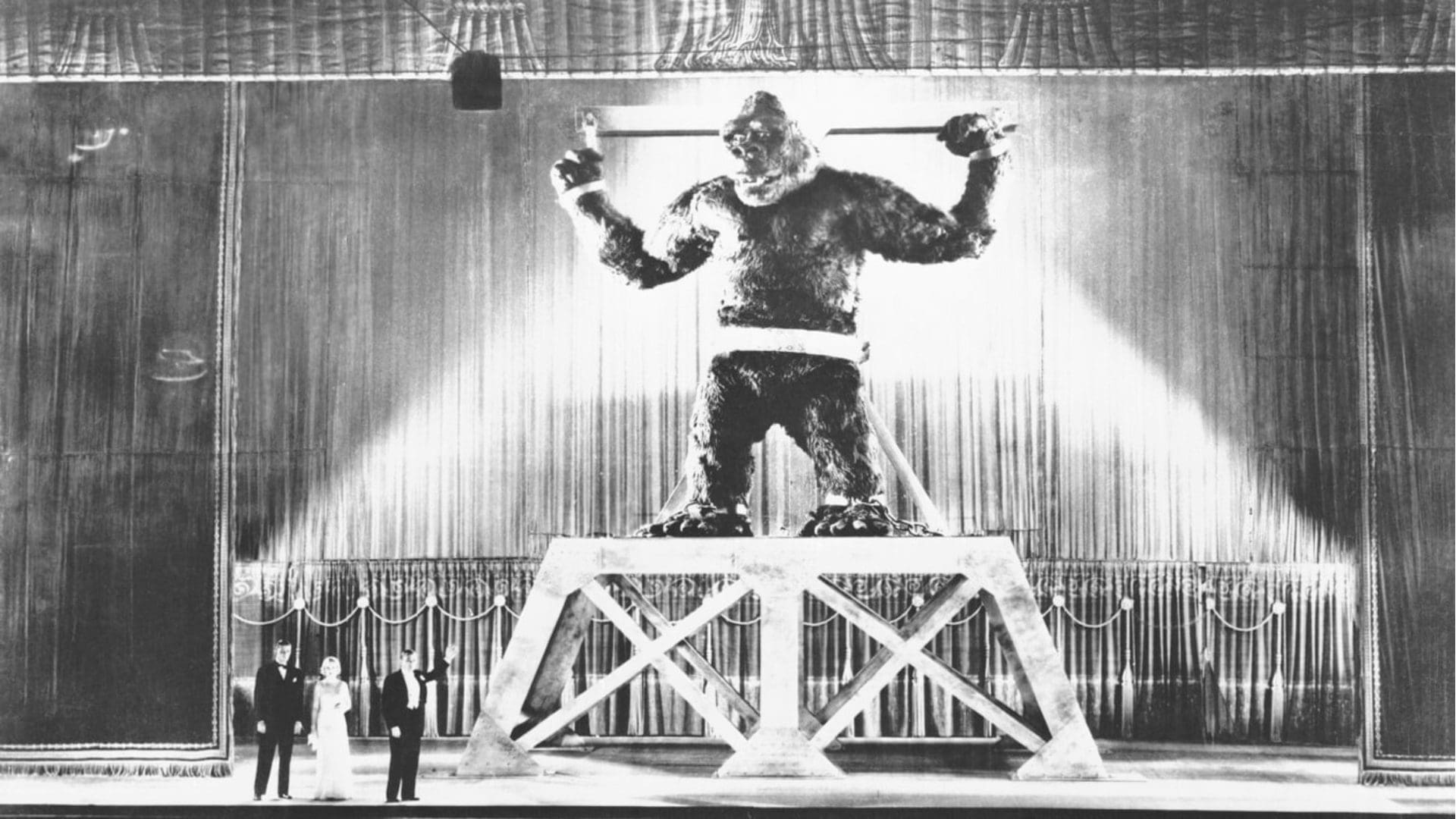
King Kong – Spectacle of racism


Hosted by
KT & Oti
Show Notes
Ring the non-discriminating gong for a bargain of 6 natives for 1 blonde. Native superstition, white man should never see. Enter the spectacle of racism with the 1933 King Kong film this week.
Referenced

KT's Picks
Referenced in this episode

Episode Details
- Duration
- 0:00
- Released
- August 2, 2022
- Category
- Episode
- Hosts

Transcript
Transcript (6,924 words)
Full transcript of King Kong – Spectacle of racism.
KT: It's another week in the For Your Reference household, but very excitingly. It is the first time we've ever had a director interview guest curated double feature for the For Your Reference household.
Oti: Mm-hmm
KT: brown, brown, brown, brown. Maybe I am occupying the dance floor. Oti, maybe
Oti: bitch. Mm-hmm
KT: Maybe I could be so bold friends and lovers. If you were following us in a linear time, you would've already listened to the Jordan Peele episode we had in the lead up to the Nope film. In the interview, we did round it off in our For Your Reference segment and he recommended to double feature. Nope. With King.
Oti: Kong, right?
KT: It's very exciting. We've already recorded our Nope review, which will drop the week after this current episode. And it's very exciting. I think just very quickly the sequence in which we watched it was Nope, the 1933 King Kong. And then we're going to be watching. Nope. Again, when the Nope episode drops it fucking wild Again, love and splooshes to all of our friends and lovers. Thank you for joining us and thank you for continuing to support us. We fucking love yours. Let's get on with the show.
KT: Hey, friends and scratch and sniff nipple play lovers. Welcome back to the For Your Reference podcast. You got your girl, KT.
Oti: and Oti.
KT: Ring the non-discriminating gong for a bargain of six natives for one blonde. Native superstition, white man never see,
Oti: Yeah
KT: or even right at this point. I fucking guess. Mm-hmm . Enter the spectacle of racism with the 1933 King Kong film this week.
Oti: Woohoo.
KT: Woohoo. We can't release much more detail about Nope, but in our Jordan Peele interview that we mentioned, he did actually talk about King Kong and Nope, being a spiritual sort of sequel to it. And he also talks about this King Kong film in particular.
KT: Being a spectacle of racism. There's a lot of talk about spectacle in. Nope. And that's as much as we will say without obviously spoiling. Nope. But here we are today to talk about brown, brown, brown, brown, at least for me, definitely for the podcast, the oldest film that we've covered Oti mm-hmm . Wow. Wow. Wow. I'm so sorry for your wonderful. Uh, King Kong was originally the OG of the mall, not the Denzel
Oti: King Kong.
KT: Didn't got nothing on me. Absolutely. Thank you very much. directed by Merian C. Cooper, who, according to IMDB trivia, he wrote the Arabian proverb him.
Oti: Mm-hmm
KT: Um, also for directing credits, we have Ernest B. Schoedsack, and in way of cast, we have Fay Wray, Robert Armstrong, Bruce Cabot, Frank Reicher, as well as Sam Hardy,
Oti: Woohoo
KT: more like. spoiler, spoiler, spoiler, pervy, Cony, pervy, Cony, pervy, Cony.
Oti: Mm-hmm
KT: uh, welcome, welcome friends and lovers. We're not entirely sure what the traction will look like. We're assuming everyone is super nasty and they've been Sping at our poor beany Alta, in the For Your Reference podcast. If you are new to our podcast.
KT: Welcome, it is. Face, but it's also a place of growth. So you may be challenged and you also, would've got an, a sample tasting platter of that in the description that I wrote for this particular episode, but let's get into first impressions, Oti. there's obviously some, uh, tasty, some very controversial, sort of themes that I want to get into as well.
KT: But you know, we've, we've kind of dabbled in the. Kaiju Kong crossover world of it all. So we're, we, we are privy to the concept of King Kong, and all of the pop culture sort of references as well. but we are new to the 1933 film. So I would love to just hear your general and we've already mentioned spoilers, but just generally, how did you feel before the film throughout the film and even just digesting on the morsels now
Oti: I sort of knew it existed.
KT: Well, not sort of, I knew it exist. , I just didn't really bother watching it. I think it's one of those things that, you know, a lot of the older films where I know there's gotta be some shit and I don't need to expose myself to asterisks racism. You're saying shit, but you mean racism
Oti: And it was just one of those things I'm like, yeah, you know what, I'm better for it.
Oti: Not knowing it's spanned a whole sort of Kong versus Godzilla and, all that shit afterwards that we enjoy now. So that's, as far as I got. it, Uhhuh,
Oti: I think watching it now I could see where Jordan Peele was coming from. and I understand that it was the sign of the times, so I'm not going to sit back and also, you know, be super judgey.
KT: But yeah, I, I love how you are intensely looking at me while you say that. tell me more about how you wanna control my body and my voice Oti.
Oti: Ah, I, I just know you have feelings. I have feelings. but I always try and sort of contextualize shit while watching this, I could see a lot of the undertones or even undertones sub. She was just implicit.
KT: And you mean the dark skin turns
Oti: Yeah. And I, I, I just couldn't be for it, but as a whole, I think a lot of the enjoyment that we got was just from the ridiculousness, the there's a lot of fun to be had with this movie. Um, yeah, I think we can delve deeper into all that. I dunno how much I could more, I could reveal in the first impressions on of you, but, that's how I felt.
KT: Okay. Nice. Nice, nice, nice. You know, if, if, if it wasn't because colonization, if it wasn't because capitalism, the idea of studying film is so appealing to me.
KT: Like, I would love nothing more than to sit and watch films and digest it. And I guess in, in some sort of offering, that's what this podcast is by, by no means, is it learned. But by all means it's super nasty and we absolutely enjoy it. And we, we really get into, you know, a lot of the themes that are presented and, you know, I, I am , I do feel justified in the Nope episode that is coming out, but obviously I won't mention it here.
KT: But I, I do get frustrated with the state of Hollywood and I guess, because machine. because big media, because big thingss and big profits, like I understand it is a business. but also what that means is, is continuing to wear skin that isn't yours, you know? and maybe even literally, because they keep calling them natives. I think we can agree. We're talking about black people, right? Well, they call them natives, but there, there are a couple of roosters in the coop and when you go onto IMDB, they might be native to somewhere else
Oti: Mmm
KT: to the land of milk and honey possibly. but you know, as, as much as I fantasize about being a student of film, I kind of feel like maybe it's a good thing that I had to have independence very young and, you know, obligations and bills and general sort of survival kind of stopped me from the possibility of studying film. Because if these are the tent poles of films that you would study, which I imagine you would be
Oti: mm-hmm mm-hmm
KT: I would be close fist fighting everybody. I would be fucking Russell Crowe with. I'll be doing a world tour of spectacles of racism, punching motherfuckers in the mouth. I just, wow. Like I, I had a physical reaction to watching this film and I felt physically uncomfortable in a lot of the scenes.
KT: I will say generally, if I can get friends and lovers, if there's like a super cut of the OG, 1933 King Kong film minus the native. I would rewatch that daily because there's a, like, there's a lot of love for the art of filmmaking, which is very clear in this film. The dialogue is also very fun as well. even very early on in the film again, before the introduction of the natives, there, there was a lot of, uh, you know, sort.
KT: Storytelling points that were very interesting. And even the dialogue was interesting. And I like, I, I, I really like the way that the, the film was laid out and, you know, perhaps you could talk about limitations of filmmaking at the time, but I also feel like a lot of like, Films in the last couple of decades, kind of get caught up in that, you know, who gave Michael Bay a drone sort of filmmaking?
KT: You know what I mean? Sometimes it's nice to be able to just focus on whatever the story is going to be. And I guess that's kind of where we've come in way of accessibility in way of innovation. James Cameron innovation, Jake Sully with his whole. Looking at the other white people and being like you aliens will never understand. like I understand that it it's great that we have the availability to make films, but I also feel like something, something got lost along the way. Between the OG King Kong and just general filmmaking. Now that gets so caught up. And I thought it was quite interesting. You know, we have our, OG Carl Denham who was kind of holding the bastion.
KT: He, he saw himself as, as, as the true martyr. Of art, even though that, that wasn't backed up, but in, in, at the start of the film, he talked about how he'll do anything to get the perfect shot, right? Yeah. That's what he said. His actions didn't reflect that leader in the film, but you know what I mean? Like there was a lot of love for what was going on.
KT: Um I just hate that it was hampered by the very real wanting to dabble in, you know, portrayal of people and experiences that aren't your own, but we're absolutely going to get to those themes. But it's very interesting. It's very interesting because I really enjoyed. So much of this film, but then there were also moments and it also takes me back to friends and lovers.
KT: We do have an episode on The Godfather trilogy, even though personally, in my For Your Reference curriculum. I only regard the first two films as the trilogy. Like Godfather there's there's no arguing, is a beautiful offering to the tapestry of world cinema, but there were absolutely moments, especially in regards to black people with the dialogue.
KT: It was more so the dialogue, as opposed to the portrayal that like in King Kong, for example, but you know what I mean? And it's like, you kind of have to ignore those moments, but also, you know, it's been a couple of years that we've been in the film review, film podcast, film, criticism space, and it is very white, right?
KT: Yeah. But also at the same time, whether it's white or not, there are so many themes, especially racial sort of themes, or even to do with sexuality or any sort of marginalization that people are just like eating around the clit of truth.
Oti: Wow.
KT: No really like, like friends and lovers. If you listen to other film podcasts, I'm indie or otherwise go and listen to The Godfather and see if they ever mention like the treatment or the, the perception that the Italian family has on black people.
KT: I really don't think unless it's like a, like a black or a POC podcast. I don't know if that will be mention. because it is quite minimal. So you can just shrink into your seat and then wait for it to go away and then surface back up again and enjoy all of the frivol in Godfather. So, so I'm coming from that baseline because we are very much, if we're gonna talk about it, we're gonna fucking talk about
Oti: it.
KT: yeah, I hear you. I hear you. So let's get into the themes that we have. the first theme that I have here is the evolution of storytelling in Hollywood. And, I guess I'll give a bit of a background in what I mean about that, but I kind of wanna have a little bit of discussion in regards to, again, marginalized people.
KT: But if we're just talking about race specifically, In this film in particular, in, in the 1930s or in 1933, specifically, if we're talking about King Kong, we have, you know, really, again, quality in regards to white characters. And then when there's any introduction of non-white and in this case, cause I really feel like it was only the Asian character that said the word black, everyone else kept saying native.
KT: right. So if there was any non, but we're talking about black, but native or however you want to, reference it in this King Kong film, it's a very offensive portrayal of.
Oti: It is
KT: even as a Pacific Islander though, I felt offended by the portrayal of black people, in this film. So, you know, and, and for those that are more privy to this particular time of cinema, surely it's not that hard to pick up other offensive portrayals of I'll just focus on black people, right.
KT: Then we move into, it's not necessarily an offensive portrayal, perhaps, maybe black people are being seen as more human. So now we move into like the white savior sort of complex. Right. I literally just mentioned Jake Sully in Avatar. if you think about The Help, if you think about, uh, Sandra Bullock's.
Oti: Blind Side.
KT: Yes. You, you know, there's, there's so many examples you can think of with the white savior complex. And perhaps that was a way of still being able to write about black characters, but centering it. And I'm so sorry. Viggo Mortensen, why didn't I even just mention Green Book that
Oti: because we'll not speak about our movie in this household.
KT: it's Oti's Voldemort. Absolutely. But you see what I mean? Like, and obviously Passion of the Christ go and check out our Passion of the Christ episode, but you see what I mean? Like it's, it's, it's still including black characters from like white writers and white directors, and it's not done in that offensive way, but it's still centering whiteness.
Oti: Yeah. Uh,
KT: And now we come into, if I can borrow a term from Issa Rae's Rap Sh!t, we're coming into like a black, excellent Renaissance, right? No really. We're seeing like ownership and it's, it's not that the ownership was never there. It was, that was never allowed to, right. There's so much first black, first black to win this, to win that. But it's, it's, it's more the inability for the current establishment to relinquish their superiority in that space.
Oti: Yeah. And to me, I think the, the sort of, and I accept there's this Renaissance, you know, black excellence and whatnot, but also we've been watching recently, Everything's Trash where they sort of covered that aspect of it as well.
KT: Mm-hmm where cool. As a young black person, you don't need to fucking be the first of everyth. To feel like you've accomplished something. Yeah. Or to feel that you have to go above and beyond to feel as if you are portraying that black excellence or that's what you're striving for. Yeah. It can just be you, bro.
KT: Yeah. You know, everything in the fucking world wants you to be some sort of fucking excellent persona for you to be recognized or at least. Seen in a space where otherwise you wouldn't. Yeah. And for me, this movie, when I watched the portrayal of black people in it, it, it, it felt so jarring. Yeah. And, but that was interesting cuz near the start of the film, I was telling you how uncomfortable I was. And I said, you know, it's inevitable. It's going to happen. Whether we like it or not, but I feel uncomfortable by this.
KT: Do you? And you said, no,
Oti: Oh, I, I wasn't uncomfortable. Cause I've seen this shit before. It's more, it's more the comments that they were were made afterwards.
KT: So the portrayal was one thing, you know, that I could probably just lock in a box somewhere behind my fucking head. I also point out that you shouldn't need to?
Oti: I shouldn't need to find, but it was one of those things call, you know what? Fuck it. Let's roll with it. Then it's one of those offhand comments that get me, you know, and soon afterwards, cause I was fine with the portrayal.
KT: Like I was not fine. Like I like you knew it was going to happen. Yeah.
Oti: And I moved past it. And then the first comment that they made was, oh, how about we trade six of all of all black women for your blonde girl. I'm like, what the fuck? Yeah, that just took me outta the movie. Yeah. It took me out of the movie because I could not.
Oti: Stand the fucking gall to write that shit You know, people will be Brightling out here and then you have someone coming up and writing some shit like that. Yeah. I I just, that took me outta runway for a bit and I had to sort of compose myself. To continue watching it because I, you know, I knew that we had to record this podcast podcast afterwards. Ideally Jordan Peele made it a double feature. So of course we've got oblige.
Oti: Yes. I, it
KT: makes a lot of fucking sense for no
Oti: in a normal Oti world. I would've stopped that shit right there. The portrayal be fucking damned. I'm used to seeing that shit. It's not right, but we've seen it before. It's it's just the disrespect.
Oti: Yeah. I wasn't there for, I was like, that took me aback. I was like, okay, cool. Took me another movie. I had to continue sort of watching it from, uh, an outer body experience. Yeah. And then we get into this moments where Kong comes back to the village and his fucking brutal. Yeah.
Oti: he's more brutal than he was like, we've seen a scene where 12 random white guys died.
KT: Yeah. You know, and it was horrific. We saw it like to being shaken off fucking logs. Yeah. And then he comes into the village and takes it up a notch. Well, I think, I think what he did was like, we didn't see the white people die on screen, even though they did say later on that 12 of the crew died. but you know, if we're doing maths, my, my native count might equate for more, but anyway,
Oti: well, we did see them fall Heights.
KT: That of course they're dead. It's not that we didn't. We, we were shown, we were shown it was fine. I saw that it was horrific. but it,
Oti: What I'm going with is the it's it's the, it's the, it's the extent to which Kong app is
KT: it's the Grizzlies. And it's the reminder that the one wielding the pen is not the native people. The one wielding the pen is, and I think that's what what's very, what, what was hard for me to not disassociate was the way that they all sounded. Cause remember, we're talking about the 1930s, they all talk flying they're she?
KT: So they were like literal mustache, twirling villains. And then we're going through all of this. And I guess we also need to keep in mind as much as it is a film, as much as it is a story. This was written by people that weren't being portrayed in such brutalized ways. So when Kong goes hard, For these black people, when he like it's, it reminds me very much.
KT: And I, I would, I would love to know if Quentin Tarantino is a fan of this film of the dynamicism between Inglourious Basterds and Django Unchained because in Inglourious Basterds, we did see, you know, a lot of like, even heads get scalped, for example, but it wasn't, personalized to the characters and then you compare it to the way our guy in Django.
KT: Was not only did he die, but he died through brutalized means. And it's like, what do you get out of this? And I couldn't help. Like even when Kong was like, after he had like a native in his mouth that made me very uncomfortable, that visual made me very uncomfortable in ways that maybe my ancestors can only explain, although
Oti: The back of my mind, I was like, he better fucking do that with a fucking white person
KT: And he did. And he did.
Oti: And that fucking clapped.
KT: So no, but even when he was squashing, another native, you know, with his foot and friends and lovers, I hope me using the word native a lot makes you unfucking uncomfortable, cuz it fucking should. And we need to fucking talk about this. but even when he was squashing a native with his foot, it that's when it reminded me of Django because the, the brutal ways in which, you know, the black people were dying in Django, it's like, what's the point of this.
KT: And if we, if we can just capture off like storytelling in Hollywood, you know, we did finish this. Stint, in our Reference Degustation and Jordan Peele will be our honorary Reference Degustation because we've covered Get Out, Us and also Nope. Coming up as well. So we've covered all of his films, which is very cute and very exciting.
KT: Uh, like I will go back to the sentiments that I shared throughout our Reference Degustation of Quentin Tarantino, as much as it is frustrating for Quentin Tarantino to make the decisions that he. Talk about the fact that, you know, Pulp Fiction, Django Unchained was commercially more successful than Jackie Brown, his earnest attempt at, at, at a humanizing back black characters with Pam Grier.
KT: Right? So, so it is, it is a push and pull. I also feel like as an audience. We do have power and also responsibility, you know, to call to account the custodianship of that martyr of artistry, the we hands of the world. Right?
Oti: Yeah. A and I do, I do agree with that. I think just seeing too, I think it was two black, uh, villages being stomped to the ground and those, you know, the pan in the focus on it, see them struggling into the fucking mud.
KT: Yeah. I'm like bra, It's like every possible situation of black suffering was in that film.
Oti: Yeah. Yeah. And, and to take the offensive portrayal, like the portrayal is one thing that I, in my mind didn't really focus too much on very, we end up in the theater where we get a lot of, because if you thought that weren't talking about black people throughout, oh yeah.
KT: It becomes quite clear that they actually fucking war. Thank you. Because up until then you could make an argument that, you know, what animals it's animals. whatever we don't need to, we can separate it. It's just a film, bro.
Oti: It's just a film, bro. But in that theater, the comments made makes it fucking a hundred percent clear what they fucking meant.
KT: Yeah. We get that lady about the gorilla
Oti: Yeah. Ah, we already have enough gorilla as in new yak York RO the city. I'm like, whoa, wait what?
KT: Yeah. And it's like your, your, okay, so, so this is a theme that I wanna come into, who is the true martyr of art, because I would, I would absolutely say in King Kong, it's black people. And if black people are the martyrs of this art for Carl Denham to get his perfect picture for these people, he's creating art for these stuffy motherfuckers.
Oti: Yeah. Uh because to some degree, like we said, we enjoyed this movie.
KT: You can pick upon what we didn't like about it. And you could see a version of this movie that is fucking great, but why, why do you feel the need to compliment this film?
Oti: I'm not trying to compliment this film. I'm trying to
KT: cause we do love it, but we can also discuss it.
Oti: Yeah. And, and that's what we are doing. Mm-hmm , that's what we are doing. I'm trying to put myself in a situation where I got offended quite quickly. I was, if, like I said, I was about to bow out just based off the comments, you know?
KT: And, and that's the, the most jarring thing for me that people would watch this and still think that it's some sort of ESCAP. Uh, it could be true, but two things can be true as well. Yeah. It could be your fucking escapism and just fucking animals and gorillas, but the comments bring it back to fucking reality, but can we all, can we also point out that, you know, and you also, like, you also bring a really great melding of the two worlds, because this is a great film.
KT: And you know, again, if we're talking about innovation, if we're talking about filmmaking, there's a lot of craft and there's a lot of. Not to the natives, but there was a lot of care that went into this film, which I absolutely agree with, but there's such a stark sort of heavy handedness in its offensive portrayal of black people. And I don't think there's anything wrong with mentioning that as well.
KT: because if you can watch this film and say, it's the greatest fucking film, then power to you, my friend and lover, but some of. Can't watch films like this and not see it. And I, I think that goes back to Nope, like some of us can't watch King Kong and giggle when the Asian character has to listen to stupid and being like, oh, isn't life wonderful. like some of us. Can't think about, oh wow. What an innovation to be able to get Kong's mouth to crunch on that native, like some of us don't have the luxury of taking off all of our identity to be able to applaud, like in that cinema, with that stupid lady talking about gorillas in New York, some of us don't have that luxury.
KT: And what I am saying is maybe we need to, we need to get in the rooster coop
Oti: Mm-hmm
KT: because so. We need to be able to be in the space.
Oti: Yeah. Yeah. I hear you.
KT: And, you know, like just to, just to capture off who is the true martyr of art, when we're talking about, you know, having themes or also characters that are central to the plot that have experiences that are not by those that are creating the stories, there needs to be some sort.
KT: Respect, there needs to be some sort of custodianship in the way that they portray it. Again. I know we're talking about the 1930s, but I talk about the White Lotus a lot, you know, the Green Book, like there's so many examples that are very, very recent, where it's like you, you should be knowing better in, in, in the 2010s.
KT: Absolutely even in the 1990s, but anyway, you should be knowing better in the way that you write experiences for characters that aren't fucking yours. And if you keep writing about experiences that aren't yours get out of the fucking way, because there are many talented screenwriters and creators that are there to write that write about your own shit, or I guess right about where the court.
KT: Seeing with that lady in being incriminated. But I also talked about it in Nope. So I'm not gonna mention it now, but if we talk about the true martyrs of art in King Kong, 1933, like you said, if you wanted to pick it up, you picked it up immediately from the comment that you cringe that and that you felt that visceral sort of offense to right.
KT: Or you wait all the way to the end of the film, premier. But if you don't get it by the end of the film, there's really nothing else to say to be perfectly honest, but there was there, there was so much tension in every facet of my debilitating body. When you have this film crew and you know, it, perhaps it is a microcosm of colonization, perhaps it is just Hollywood as a. You have this film crew that happen upon these natives that are minding their fucking business,
Oti: yeah.
KT: Yeah. I, I was, I was, just, just leave Kong alone. let him be. I wasn't even talking about Kong. I was just talking about the natives specifically, but also
Oti: Kong and the natives
KT: Friends and lovers Harrison Ford, well beloved in this household, but not the 12 year old kid, not the actress, but the actual kid in Air Force One. And I have a lot of time. I have a lot of time to hold white people to account that wanna bring their whole ass stop, treating people like they're animals in a zoo mm-hmm . And to even further use animals in a zoo to portray other people like it's high time we get over that fucking shit, but you're right.
KT: Like Kong was just minding his business and can also, can I also point out as well for a lot of native and indigenous people, there was a symbiotic understanding with all life, everything that breathed life into the land, there was a symbiotic nature between people, animals, and the life around.
Oti: Mm.
KT: So, that's as much as I will say with that, before we move on to other themes, I do have a very quick question for you. Yeah. There's no right answer. But to you, I pose this question. How do we view outdated themes in older films with a 2020 lens? How do you think it should be watched
Oti: should with context? I think with everything, uh, you have to put, context, context around it.
KT: Otherwise it just loses fucking meaning and you could get super angry super quickly. I think with everything well times have changed. So a lot of things have happened. That weren't possible or wasn't possible back then. So I think you just have to contextualize a lot of shit. Otherwise, mate, fucking lose your mind. I, I agree with that. I, I, I guess the way I view it is like, you know, how you have like older relatives, maybe even your grand or your great, you know, parents.
Oti: or your soul food? Pastor
KT: So past, I don't know what perverted angle you are going down, but no, no. Like you have older relatives or like older people like that are your loved ones in your close circles in your life that, you know, there's no point bringing up. Particular issues with whether it be race, whether it be sexuality, it's not to say that they're necessarily a bad person. They might love you.
KT: but you, you don't bring up race. You don't bring up your ethnic friends, like who you're talking to your grandparents. You know what I mean? That's kind of how I see this film, but what's very interesting about. Is, you know, when the film first started, there was obviously a lot of misogynistic comments that were being made. you know, even, you know, even Carl wasn't necessarily a fan about bringing on, you know, uh, a female, sort of cast member, but he also acknowledged that the public need a pretty face.
Oti: Right.
KT: Right So, but there was a lot of misogynistic comments that were made, especially from Driscoll, which maybe this is the OG sort of the guy that is absolutely a misogynistic Dick, but she falls in love with him anyway. Mm-hmm like maybe that's where the formula, came about, which I, I don't understand irony. I don't know irony, but you know, Carl was talking about how there doesn't need to be, or it cheapens, you know, having a love story, but they ended up having one in this film.
Oti: Mm-hmm
KT: Um, perhaps someone smarter than I can articulate that, two words, but yeah, it was, it, it was interesting because the misogynistic stuff, I was like, you know what, I'm more mad now that films still have that similar theme. You know what I mean? Like films made in the last couple of decades still have that theme. So I was absolutely fine. It wasn't until we came to black people in the native. That I started to feel umbrage that I started to want to hold it to account with my 2020s lens.
Oti: And here it's hard not to, it's hard. Not, especially when it's so fucking.
KT: mm-hmm
Oti: Um, I think a lot of the times that I bottled with it was like I said, the comments, which the depiction it's sort of things that you've seen before. It's not new. It's not right. It's not right, but it's not new. So I'll just go back to that man.
KT: Like it's even the comment about saying that the natives weren't used to, or they weren't familiar with gun powder, like the come on the, the colonial tones were there. There was that Roy Wood Jr. Colonial
Oti: Mm-hmm
KT: it's it's just, again, friends and lovers, I guess you could claim ignorance, but absolutely by the time they get to the premier, like, you need to acknowledge it at that. Um, something that I just wanted to capture off before we get into a light theme to finish off this review. friends and lovers is I would urge all of you. if you're not familiar with Emmett Till. to do some research on Emmett Till, the reason why I mentioned that is, again, this was made in the 1930s.
KT: I even, you know, we had a quick sort of debrief after watching the film. And I said to you, you know, there's been so many Kong variations. You know, recently within the last couple of decades, you know, and it's interesting that they still chose for a gorilla to have the eye of affection of a white blonde woman.
KT: Like to me, that felt so outdated. If there was anything that they could change, it should be that because historically again, gone research Emmett Till, but historically there is absolutely a conversation to be had about black men and white.
Oti: Mm-hmm
KT: and that's as much as I'm going to get into that, but I just wanted to have, a note with that. also friends and lovers, you know, a note that I made here is what people don't realize is that black people were demeaned as the OG circus freaks. because there was the, that particular scene where Kong was all chained up at the premiere and they were all flashing and taking photos. That was another scene that gave me physical discomfort.
Oti: symbolism bro
KT: symbolism, but that, that's why, but that's why I wanted to make that note because, you know, you think of like bearded ladies and all that sort of shit. But what people don't realize is just people, but just people because they're black were being used and carted around as the OG sort of circus freaks. So to say, being so demeaned, having their bodies started and that sort of thing. So another. Googling that I will, urge you friends and lovers to check out is Sarah Baartman.
Oti: mm-hmm next time you go to a museum, you see a fucking remains of a dead person think twice, bro.
KT: I didn't care for Killmonger, friends and lovers. Uh, Black Panther was our first episode and, we're excited to watch Wakanda Forever. Well, I don't know if excited is the word, but we're definitely looking forward and we will be front row seats, perhaps crying. but Black Panther was our first episode. The only time I related to Killmonger was when he was in the fucking.
KT: You can't fucking steal shit and then put lines and rules around it. How you can't give it back to people that it actually own like, own it mm-hmm right. but again, friends and lovers, Emmett Till, Sarah Baartman, make sure you go and read that. I wanna finish off in a theme, our favorite theme, Oti, the power hierarchy in this.
Oti: uh, well we had Kong battle, different sort of monsters.
KT: Mm-hmm
Oti: and he had the snake should not even have been a problem for him. Right. He struggled with it for like five minutes. I'm like, no, you've, you've killed a fucking dinosaur.
KT: You've parted its jaws. And they hear you. Oh. Being fucking choked by a bloody snake. Not, not, not having it, not having it at all. that really bothered you. Didn't it is.
Oti: Why? Why struggle that much when we've just seen how capable you are of fighting stronger animals or creatures? Oh, you have to be, it has to make
KT: Maybe he needed more native juice to power up, you know
Oti: maybe so
KT: he was running low.
Oti: yeah, it was wild. It was wild. I just wanted it to be, uh, to make more sense. And I think the saddest part for me with Kong as well in this is, you know, how great it is, you know, how strong it is. Everything you've witnessed in him, in his NA native
KT: in
Oti: in his fucking kingdom.
Oti: You can see that he is, it's just fucking glorious and to take him away and put him in fucking chain and to then he doesn't belong there.
Oti: And then the end, I think that's one of the worst endings of seen in a movie for me personally. Yeah. Uh, not only is it, the Kong dies by the comment of the end, you know, the, the, the, the role, the, just the,
KT: I actually wrote it down.
Oti: the sea of white people.
KT: I actually wrote it down. Would you like to read the closing line?
Oti: It wasn't the airplanes that killed him. It was beauty that killed the beast. Ah, vomit,
KT: literally fuck off
Oti: You know, you know, what, what killed him? You motherfuckers,
KT: Yeah Yeah
Oti: took him up, brought him here and then what he he's fucking in love with, with, with a white woman.
KT: Yeah. And, and he has to fucking fiddle her. Ooh, That,
Oti: Let's talk about that
KT: for a second. well, I, I don't have anything else to say. in regards to power hierarchy, aside from potential having our first Godzilla and Kong fight, but let's, let's end with that actually the scratch and sniff nipple.
Oti: I don't think I've ever been confused in my life.
KT: if I may borrow a phrase from Russ in Silicon Valley, King Kong fucks, he absolutely fucks. don't neglect. The nipple play friends and lovers. This is a King Kong, KT collaboration. Stop eating around the clit of truth and don't neglect the nipple play.
Oti: Mm-hmm
KT: get some, get some sniffing in. You need to get something off for yourself too, but don't neglect the nipples, friends and lovers.
Oti: Yeah. I just, you know, I, I think I, I did not expect that it, it blew my mind.
KT: Wild
Oti: He was hard as fuck
KT: He was, he was absolutely, when he was looking in the window, he had a.
Oti: Wow. The, where is him in this
KT: but I do like that. Whether intentional or not, I do like that there were moments of levity because those really kind of, you know, reset me. I think we had like, well, like halfway through the film and I'm like, I'm having a good time. Do you think the natives are gonna show up one more time? Because if they don't, I think I'll be fine for the rest of the
Oti: Mm-hmm.
KT: Who, who once we get to nipple play friends and lovers, there's really nowhere else to go.
Oti: go. Mm-hmm
KT: uh, usually we would finish off in a segment we call For Your Reference, however, as bestowed by the ever eternal universal well beloved Jordan Peele's, the recommendation and the reference for this week, friends and lovers is to go and watch. Nope.
Oti: Oh,
KT: for sure. For sure. Going droves enjoy. And if you happen to listen to this episode before you watch Nope. Uh, it's gonna be an interesting experience, friends and lovers. if you chose to listen to this episode and you haven't watched King Kong in a while, I would love for you, you know, to maybe not scratch and sniff nipple play. But if you would like to share your thoughts in a, in a, in a timely manner, we would very much appreciate it.
Oti: mm-hmm
KT: Uh, for scratch and sniff Oti, play on Twitter and Instagram. We're at ForYourRefPod,
Oti: right?
KT: That's an email. hello@fyrpodcast.com. We're also on,
Oti: King Kong got nothing on me
KT: podcast. If you like to leave a rating and review and we'll see you guys review.
Oti: Woo. See ya.
KT: Bye.
Related on FYR
Discussion
Loading comments...