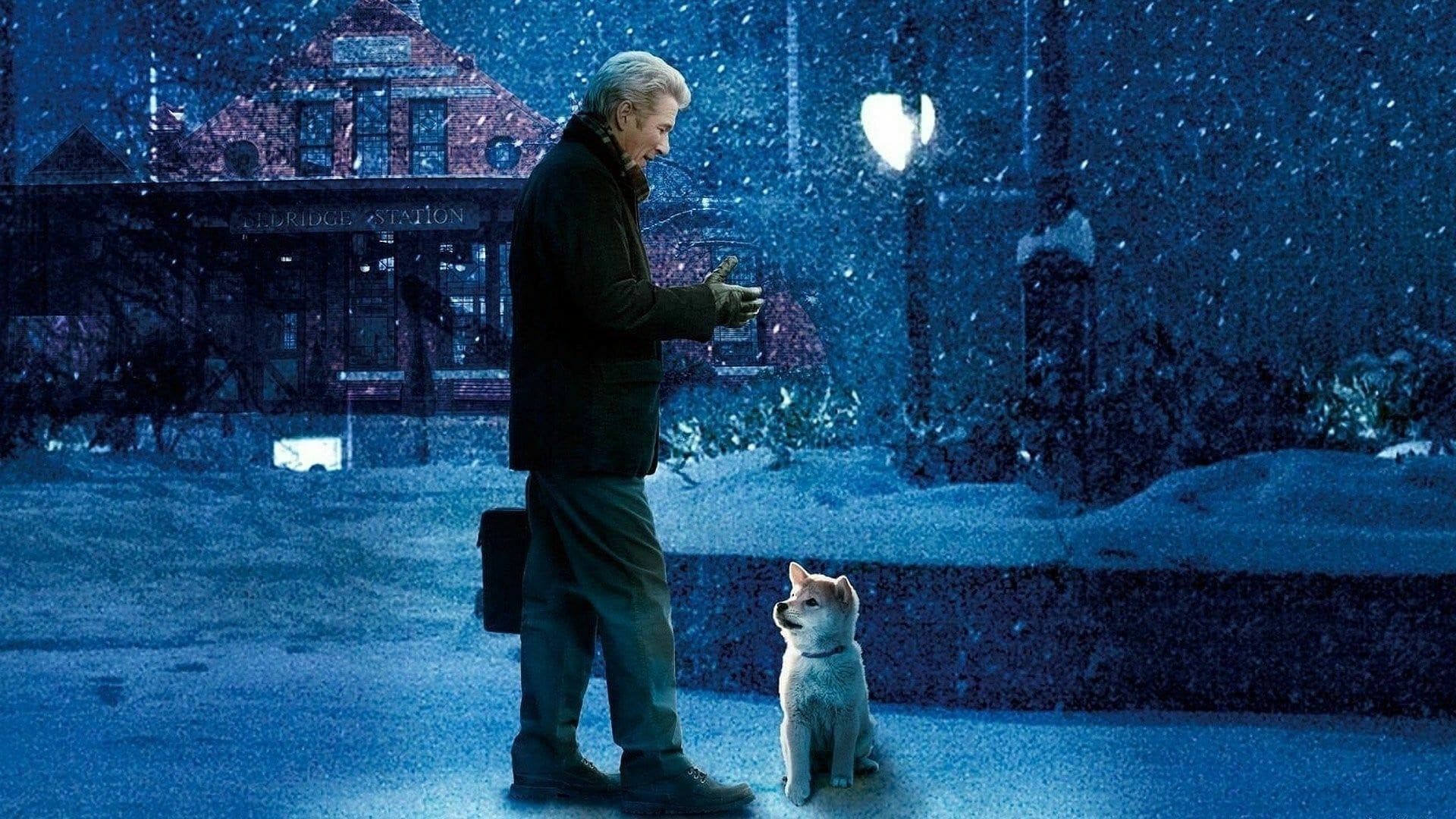
Hachi – Off-leash dog Parker


Hosted by
KT & Oti
Show Notes
Check the train schedule and greet the neighbourhood as we uncover window gazing revelations with Hachi this week.
Referenced


Episode Details
- Duration
- 0:00
- Released
- August 4, 2021
- Category
- Episode
- Hosts


Transcript
Transcript (5,935 words)
Full transcript of Hachi – Off-leash dog Parker.
KT: Welcome back to another week in the For Your Reference household. This episode is in tribute to all of the furry friends and pets that we've had and come to know and love in our lives and dedicated to the humans that love them. Take the show away. Friends and lovers, welcome back to the For Your Reference podcast. You got your host, KT.
Oti: And Oti.
KT: Check the train schedule and greet the neighborhood as we uncover window gazing revelations with Hachi this week. Mhmm. This
KT: is our first Richard Gere film, Oti.
Oti: It is.
KT: I couldn't even put on my professional blazer on, but there we go. General stats and information. This film was released in 2009, a director Lasse Hallström, writer Stephen P. Lindsey. And this was based on pretty much Richard Gere was looking for a film and he based it off of Hachikō Monogatari 1987. And the writer credited is Kaneto Shindo.
Oti: Nice.
KT: In regards to cast again, like I mentioned, I think I just got a bit gerbil blushy. We're very topical friends and lovers.
KT: I think this is the first Richard Gere film we have covered on the podcast. It is absolutely the first Richard Gere film I have watched. So I'm I'm not gen z young, but I'm young enough to have never seen peak Richard Gere. It's not topping my peak Denzel, but I don't think anything can. Just,
KT: you know, Richard Gere didn't penetrate the Mormon circles.
KT: Penetrated inner sanctums indeed. We also have Joan Allen and Cary-Hiroyuki Tagawa. And Tagawa, welcome back to the podcast. Go and check out our mortal reference episode. Wow. I was revving up. Wow. And I think I chalked it on the throttle. Is that a thing? We'll make it a thing if it's not. If you're nasty. Welcome welcome welcome friends and lovers. If this is the first time you are listening to the podcast, maybe you were grieving a childhood pet like myself. Welcome, welcome, welcome.
KT: If you've listened to the podcast before, that's also great. We love and welcome you just the same. This is also gonna say spoiler spoiler spoiler or shit wives, shit wives, shit wives.
Oti: Or just the Scarlett, Scarlett, Scarlett.
KT: How dare you? I told you when we're ready to have a real conversation and when there's healing in the world, I know people are constructively talking about Skyler White, but that is not the topic for today, my love. Let's get into first impressions. How did you feel watching this film? Was it the first time watching it? And how did it feel watching it now?
Oti: This is the second time I've watched it.
Oti: Watched it, I think, probably when it came out. Okay. It's one of those things that it was watched it with the whole family. And I think I got way more emotional than the first time I watched it Mhmm. Than now with a with a sort of lens of the world beating me down, and I'm like, yeah. I I saw a lot of problems with it and well, not a lot, but it didn't
Oti: get me emotional as I thought it would. Yeah. Yeah. All around, I enjoyed it. I enjoyed it.
KT: You know, we we did try watching Marley & Me and I got through the first hour. I feel like eventually I'll get around to it. I'm not gonna spoil anything, but we made it halfway through a two hour movie and it was barely about the dog and the dog's name is in the title. Like,
KT: human movies, sure. Cool. But if you've got a dog's name in there and it's barely like, John Wick is more about the dog than Marley & Me is about Marley. So I don't know. I guess eventually I'll finish it off. But in regards to Hachi, I enjoyed this film. I enjoyed this film. I do feel like the dog was more at the center and I liked how the daughter and her eventual husband were really background noise. The wife was a bit more annoying, but she kind of played second fiddle, if you'll pardon the pun,
KT: in this as well. I really enjoyed how much of a spotlight Hachi has in this film. So generally, all around, I enjoyed it. I I do feel like it would have benefited from being an animated film. And the reason why I say that is not that I needed it to be animated, but usually when a film is animated, there's a lot of not necessarily pretension, but there's a lot of true to life layers that remain on that that become a hindrance in regards to emotional attachment.
KT: I was I was feeling like Miyazaki would have done really well.
Oti: Oh, I was just gonna say.
KT: Because there were nice, like, sort of piano scoring throughout the film that really conveyed emotion where animals aren't talking, but we can confer human emotions. And they try to do that a lot through this film. I just feel like the by having something in live action, there's automatically a barrier to the innate emotional resonance that we have automatically.
Oti: I see what you mean. I see what you mean. I think I don't wanna say that live action remove or creates a barrier because I think there is, if it's done well, I think there's a nuance that can be captured in there. It's more that I think the directing was a bit off where we were sort of it kept on taking me off every time we were taken into the sort of dog POV. And I don't know. Like, something like that in animation,
Oti: I don't think they would do that, maybe because it's already a step removed. So maybe here, they wanted so much to give us this sort of enclosure that yes, Hachi is the one with the main characters and we're going to see from his point of view. And I think it just took me off a bit.
KT: Yeah. But there are some terrible animal centered like movies. And one of the things that annoys me the most, the foundational qualms I have when they're like dogs or even cats is when they have, like, human voiceovers. Like, that pisses me off. I love dogs, but I don't wanna hear a human try and voice over a dog. So at least that wasn't there. So maybe I can forgive it in some senses. I also don't like how they try to push human emotion on the dog. It happened quite a lot where,
KT: first of all, if you motherfuckers have a dog, you're not dog people like me. If you've got a dog and you keep it in the shed somewhere, gross. And we need to have a conversation. I don't understand. I don't understand how you can love dogs and keep them away from the household. But anyway, that's a story for another day.
KT: But there were moments where he was looking out of the shed into the house. Cool. Fair enough. Obviously, he feels like he wants to be part of it. But they were really trying to hone in the fact that he was Hachi was feeling emotionally because Cate was fighting with Parker. I don't believe like, can we settle down? Like, can we settle down? It is very it's very sort of back to basics in regards to the storytelling
KT: in this film because it is, like, apparently show and tell from the kid. Right? So I would imagine that kids wouldn't even understand that that superimposing of human feelings onto a dog. I guess that would be more for the adults. And Oti, this might even be the first G-rated film we've covered. Oh, actually, Babe. Babe is also G-rated. Go and go and listen to Babe as well.
KT: I had a very interesting childhood story about a pig. Oh, I would do pigs. Yeah. And Oti had some very real borderline things to say about my people's culture. So in your regard, when we talk about like the point of view of Hachi, that was okay to me. Like that didn't really bother me as much. Like, I think it's fine. It's just those moments where they tried to add that human sort of layer where it wasn't needed. Even further along in the movie, the daughter Andy
KT: was at the gate because Hachi heard the train noises and she's like, we want you here, But if you have to go, we understand. Fuck off. Like, what's the point of that?
Oti: Yeah. I think it's weird because
KT: How noble. How very noble. How noble to let a dog wander the streets. For ten years. Can we talk about it? Ten years. Yeah. At some point, you just need to look at yourself and be like, what the fuck are you doing? Yeah. Because at that point, I'm looking at Jazz as well. Yeah. I'm looking at everyone
KT: that was in the community that that didn't help at all.
Oti: As noble and as as as it sounds that it kept on going to the same spot for ten years, my god. There's some
KT: At some point.
Oti: There was some negligence going around for for them as owners.
KT: Yeah. Like, at some point, you need to own it and be like, this dog this dog needs a home. Right? It it does remind me of a documentary that I watched recently. It's called Stray. And Turkey has a no kill policy, so there's a lot of stray dogs. So that was interesting because I recently watched it and it really reminded me while I was watching this film because Hachi essentially is the community's dog at that point. Mhmm.
KT: But anyway, that that that's obviously a lot more real and a lot more sad, but a lot more emotional resonance. Mhmm. Absolutely. But this film, is it a film? I don't know. Whatever you wanna call it, a film, a moving picture. Whatever you wanna call it, was enjoyable. It was definitely enjoyable. I was looking for a good cry, but I didn't get it in this movie. And again, we've talked about Babe as an example. Go and check out our very first reference, the gas station where we covered Miyazaki masterpieces. Like, can have films
KT: that are a bit more simplistic in nature, like not necessarily complex in the human experience, and it may be more geared towards children, and you can still get something from it. There's still an archaeological dig in your heart that is worth it. Yeah. Even Taika Waititi. Like, you know, there there are many examples of films where it can be enjoyed by a lot of people, but it still hits you in all the feels.
Oti: Oh, a 100% agree. I think one of the things that also got me off from truly immersing myself in the movie was the fact that at the back of my mind, was thinking there's a kid who's fucking narrating all this.
KT: Okay. Let's talk about it.
KT: And this is this is just a referential wank off apparently. Go and listen to The White Tiger. I've also read the book, but I would recommend watching the movie before you read the book. You probably don't even need to read the book. Read a book, aren't you a reference? But this is the storytelling style that I do not care for. And the reason why I bring up The White Tiger is because the story is being told inside of a story or a letter rather.
KT: And that's what's happening in this film. Not only is it not succinctly the story, but it's also told from a kid's show and tell. I like that in this world, dogs have a higher priority over Columbus. Like, maybe Columbus Short as well.
Oti: There's a line me.
KT: Hey. Shout outs to us. I don't know the last podcast that has referenced him in the twenty twenties. I'm pretty sure there's some scandal on Stomp the Yard podcasts out there. Alright. Go and subscribe friends and lovers, I suppose. Yeah. How did you feel about the storytelling side?
Oti: I think we're kind of already saying it. I didn't care for it.
KT: I didn't care for it either. This kid didn't know the granddad.
Oti: Never met the grandfather. Plus, he never met Hachi. He never met Hachi. Ugh. Felt kinda wrong. And then at the end of it, sorry to skip all the way to the end. As he He has a bloody he he he's he's got a bloody puppy called Hachi. I was like, mate, there was a moment where in your Venn fucking diagram
Oti: that your life at Hachi's were were within the same, you know? You could have gone and looked at like after the dog. Yeah. Same with the parents. They're all crap. Yeah. You don't come off and see pictures of Hachi at the end of trying to make it all romantic. Well, bloody didn't care for it.
KT: Well, Cate was a bitch.
Oti: That that was part the Cate was a bitch. She she didn't deserve that. And it was supposed to be all this an emotional moment we had. Our
Oti: sausage hotdog guy crying. Jasjeet. I'm like, no, mate. It's not emotional. She never really warmed up to Hachi in the first place. Yeah. It's like they barely even knew that that was the wife. They were guessing.
KT: And this is exactly it. You know, coming near the end of the film where Cate reunites, I guess, if that's what you wanna call it. When she happens upon Hachi
KT: in his older age, you know, I said to you while we were watching it, if they had done the work that they were supposed to do, I would be in tears right now. But they didn't do the work. They just relied on the fact that we like dogs and it's sad that a dog is waiting around for nine years. I
Oti: Ten years.
KT: But dude, that's what YouTube is for. Like, if I can watch a four minute video of a dog going back to the hospital because his owner's in hospital,
KT: like, why do I need to watch a film that doesn't even hit that mark? And I you know, what's also very annoying about this, and I guess it's, you know, unfortunately in a post Bong Joon Ho Oscar winning, Best Picture winning, we're still dealing with the nonsense. Even though we love Josh Brolin,
KT: he's got the Oldboy, and I don't know if I can ever. Actually, no. I jokingly said, should we watch it? And you you shut me down hard. No. When we do cover Oldboy, I think we'll we'll do some sort of intersecting
Oti: intersecting review of
KT: I'd be king. Yeah. But but to come back to my point, it bothered me that this film, albeit based on a true story, was just inserted into the veins of Americanism. America had fuck all to do with this story. Like, it would've like, I and you're like, yeah. Of course. The dog's name is Hachi. And I'm like, I know that, but, like, it could've been that this happened. Like, a dog from Japan happened upon, lost the mailing address, and it happened in America. But it didn't. It happened in Japan.
KT: And I guess that's also the palette, if you will, of of the average sort of movie goer. Does it become a foreign film then that people just aren't gonna watch? Is it too artsy? People aren't gonna watch it. So it it kind of bothered me that I contributed to the consumerism of watered down whatever this is. It bothered me. But then again, I probably wouldn't have even known there was a Japanese 1987
KT: film about it. So I guess there's a trade off there without knowing that, yeah, it was cool. There there were problems. Most of it were for me were the characters and trying to drive emotional points when they didn't lay the groundwork or a firm foundation for that. But by by no means was it a terrible movie.
Oti: No. It's definitely not terrible. I think I got
Oti: some sort of laughter and feel to it.
KT: Oh, yeah.
Oti: Do you think that because it's been the story has been pretty much plucked out of Japanese and the culture and the communal aspect of, you know, Japanese people. Maybe how Hachi was going back would have been different from how he goes back to the same spot in a westernized world where we know people are busy and they would barely even look at the dog. Ew. Look at that dog.
Oti: Because a lot of it is not really believable in my eyes when I look at it now, I'm like, people will not care.
KT: I guess it depends and that's actually
KT: a good prompt to IMDb trivia friends and lovers, pull your glasses up. Tagawa says that Akitas are very Japanese and that they're not overly affectionate, not overly expressive, but have a deep focus and intuition that I relate to because I'm Japanese.
Oti: Oh, see. Yeah.
KT: But I think going back to your question culturally, I don't think it makes a difference. I think the point is it has universal themes that any sort of dog lover or pet lover can relate to. Like having a close bond with a dog, neighborhood dogs are a thing. Like my childhood dog would walk with me to the corner shop, like, and everyone, even the chemists and stuff, like everyone knew my dog. In that sense, I think it is very realistic, but also,
KT: you know, in the capitalist world, yeah, you go past the train station, you see so many homeless animals, you see homeless people as well. And maybe, I guess if we wanna be kind to ourselves, it's our way of compartmentalizing so we can function through the day and not continue to focus on the despair of humanity and life as we know it. But I guess even just on a superficial level, we just don't care in that moment. Yeah. I do need to address this as statuesque, albeit clumsy, beautiful as our greyhound is, they're not necessarily
KT: unfortunately the go to sort of dog breed. Right? And there is a hierarchy to dog breeds. And unfortunately, that's why puppy rings exist. That's why, dog pounds get flooded because people buy puppies for their kids or for themselves. And when it turns into a whole dog, they realize they don't want it anymore. Right? Few months after Christmas, few months after New Year's, they're all in the pound. Right? So I guess that's very, very real, but also very sad. But bringing it to a lighter note, Akitas are very expensive dogs, are very, very expensive dogs,
KT: hopefully bred, you know, in a in a suitable way. Even back in the early two thousands or the late two thousands rather, the accessibility to Akitas wouldn't be the way that it is today. So my point is a missing Akita and someone had had it shipped from Japan, they definitely would have noticed.
Oti: Yeah. True. You kept on asking. Surely, they're gonna come for him. Yeah. Surely. Yeah. I thought the same thing. The same thoughts sort of crossed my mind when I was when Parker had taken Hachi to the pound. I was like, oh, this guy would probably just take it and sell it. Awesome. But it's an animal control. Confirm with us friends and lovers. I feel like animal control is different to the pound. Isn't all the same thing? Perhaps.
KT: Maybe it's like where you see the recycling and landfill and it's the same bin.
Oti: Wow.
KT: There's your grassroots environmentalism, motherfuckers. Yeah. I don't know. It it was a little anecdote, but it it is a point to be made because people can spend a lot of money on dogs and Akitas would definitely be up there. Speaking of no one looking for the dog, let's come to this because this is, again, another one of the emotional flaws in this film. Up until every point, Cate made it very clear that she did not want a dog, and it seemed like they had had numerous conversations more like one way
KT: mouth garbage from Cate saying, we're not getting a dog. I don't want a dog. They also the daughter mentioned very early that someone wasn't there anymore. So I don't know if they were talking about a pet or a child, but I feel like if it was a child, it would have been more of a prominent, not a throwaway line. But in any case, Cate was a fucking bitch. And I can understand why Parker would wanna hang around Hachi with a bitch of a wife like that. Wow. You can be lonely,
KT: but not alone, friends and lovers.
Oti: Stubbornness and persistence to just not even be open to the idea of adopting or having hatches to either is quite ridiculous.
KT: Yeah. Like at every opportunity, it's like we get it hard ass, we get it. It's not like she's even allergic to it. No. Imagine if it was like a ugly dog. I guess she wouldn't have given it any credence, but that was one of the first moments where I'm like, okay, it's gonna be this sort of movie. Where someone called because they saw the flyer and Cate answered the phone, right? And somehow from every moment until that point, she had a change of heart because she saw how happy Parker was with Hachi.
Oti: Well, when miss Epiphany comes, man, you don't you don't knock her back.
KT: Welcome to the stage, miss Epiphany. No. But then Andy was outside and they were so happy and they were playing with the dog. And you're like, look at how happy they are. And I'm like, yeah, because she's not in the fucking picture. That's why she's she's the problem, mate. She's the problem in this film. But for that to be, I guess, the anchoring of Hachi into their lives, particularly for Parker,
KT: it made no sense. Because she was not interested in that at all. And at any point, she didn't really seem to be interested in her husband enough to care about his happiness. Okay.
Oti: Well I wouldn't go that far.
KT: I would. I did.
Oti: Because at the end of it, does realize that, hey, he looks quite happy, you know, albeit it being ridiculously done. It was still there in the movie. So we have to accept it as a moment and and just go with the flow that, hey, regardless of epiphany, she accepted it, you know, and she was like, yeah, I'll embrace this and he looks happy and let's go for it. Let's keep Hachi.
KT: Don't agree. Disagree. And then the the higher emotional point was her reuniting with Hachi, which made no sense. Yeah. That did not make any sense because they literally had zero bonding time at all. Yeah. And she had an opportunity to have some sort of bonding moment with Hachi when Parker passed away. So she could have had Hachi in her life and, you know, have that moment, but she didn't. Yes. She chose not even to part or look at Hachi at all. And even if she had no choice, there wasn't any sort of emotional turmoil for her to hand over the rug.
Oti: Yeah. You think that's the sort of natural step to take. You you keep Hachi close because you've already formed a bond and it'll remind you of Parker. And Hachi will be reminded of Parker when he looks at you because you were there since he was a pup. Yeah. But this whole thing, the transitioning of Hachi becoming a street dog or it was just ridiculous.
KT: It felt it felt like there were many more options before he became a street dog. Yeah. Yeah. It definitely felt like he was failed by the the whole community really. He was. Let's talk about Parker. I feel I feel like this film was made because someone liked the idea of Richard Gere giggle gaggling with a little pup. It fit the brief and I was more than welcome to watch it. And in regards to Richard Gere and this being the first film I've watched, I get it.
Oti: Do you get it?
KT: I get it. I understand.
KT: I get it. I think he has a face that looks like it's been molded from the mountains, like our Ridge from Bold and the Beautiful. The original Ridge from Bold and the Beautiful.
Oti: Usually, your taste is usually off, Phil. I thought you'd say like Thorne or something.
KT: How dare you? I might as well go to the inferior Days of Our Lives at that point. Oh, wow. Please subscribe for soap opera content, friends and lovers. Parker,
KT: he was a bit boring as a character because there was nothing he wasn't there to be a villain. He wasn't there to go through any sort of hardship. He was the plot device. He was the emotional vantage point, if you will. Yeah. I will say hats off to this movie for not killing Hachi and killing the human. But then that kind of got in the way of me caring about it.
KT: You know, we can't all be like John Wick. And we're getting to We're post Parabellum friends and lovers. So surely you would know by now I didn't spoil that for you. Yeah.
Oti: I kinda enjoyed Parker. I think he did it quite well. One of the issues that I had was maybe towards about three quarters in, I think we started pivoting away from Parker and Hachi and more Parker and Cate. Yay. That's why I started losing interest the second time. I was like, I don't really care about what you're doing with this concert or whatever.
Oti: I don't wanna know what Cate does or what her role is or I don't really care. And I felt like because in that moment, I was like thinking to myself, so this kid is telling us this story. Yeah? So I I kept on thinking myself out because I was getting bored with Cate and Parker. And I was I just wanted to move away from that and see more interactions between him and him and Hachiko.
KT: Yeah. I not a lot happened to him. It was all about him, Parker.
Oti: Well, the biggest thing that could have happened to him happened.
KT: I suppose. I suppose so. Yeah. The kid I didn't really care for. I don't think he really offered anything.
Oti: Zero.
KT: Like I mentioned when we're watching the film, I think it has more to do with the rating of the film. So like kids can be like, oh, I see a kid. So I'm gonna keep It's seeing a kid movie. Yeah. I guess. But I'm sure that's what parents think when they see South Park and they call the FCC. Let's talk about the surrounding characters that we have in this film. Now I get it, I understand that this is a true story
KT: in Japan and there's a bronze statue outside of Shibuya Station, which I think is very cute. Hopefully in a world where we can travel, we can go and see it. However, I'm not sure how I feel about it translating to his best friend being Japanese and through sheer film serendipity, the dog was Japanese too. I don't know how to explain it, but it just felt like it could have been different.
Oti: Me. Yeah. You know what? I I didn't even want to think about it too much. I was like, yeah, sure. Why not? Why fucking not? I mean, and Ken never took the dog in, like Because he's loyal. You go and stay out there in the cold.
KT: You do you Can we don't talk about that? Because every person in the neighborhood already said that to Hachi. The only difference is he was saying it in Japanese. Meaning it was deeper. No. I'm gonna leave that. It made me feel a way, especially because when they were trying to have anchorage in the film, Ken would pop up to say something wise or something for the culture. Like, that's all he was there for. And if you're listening in the linear timeline, we are currently watching HBO's The White Lotus.
KT: And I am going to bring up a qualm that I have with that show because it underscores this as well. The White Lotus is based on a surrounding cast of a hotel resort that is in Hawaii. So naturally there are some themes of colonialism and how native Hawaiians are trying to reconcile. When you get past all the white characters, that's what's there. Right? But whenever they're trying to make a scene or make a dialogue mean more than what it is,
KT: they underscore it with Hawaiian singing. And I feel icky about it. Friends and lovers, hit up our socials if you're watching The White Lotus and you're also listening in August 2021. But that's how I felt watching this film. Like, this was just the story of a story and when they wanted it to be really deep and then to give some sort of contextual backdrop, Ken would just pop up to say something wise. And I'm like, really? And I'm like, you even a priest?
KT: Yeah. And I'm like, are you even a priest? Why are you why are you reading at the funeral? Like, it just he became the placeholder of the virtuous wisdom, I suppose. Yeah. Alright. Let's talk about Carl. Whenever I think of a train worker that barely does his job, I think of Jason Alexander. Yep. You know, I used to think that maybe I was that, you know, that go get them sort of person or I would grow up to be. Now in my old age, I realized that I am Jason Alexander in the train station.
KT: Bare minimum fan. Webcam for who? It's like, you wanna call me? No. Thanks. I will send you an instruction of emails. Bare minimum is my work aesthetic at the moment, apparently.
Oti: He's your spirit's animal,
KT: Can I get another one? You know who your spirit animal is? Renesmee?
Oti: No,
Oti: man.
KT: Go and listen to our Twilight episode. It is a wonderful wild ride.
Oti: Yeah. He's he does nothing in the movie. And every single time, you'd think Hachi wasn't coming there every day. They would just look out the window and utter the same fucking shit. Hachi. Yeah. And then, meh, you've been doing he's been doing this for ten years. By now you should have gotten used to it.
KT: I thought this was going to turn into
KT: dogs of old lonely men's past. Like I thought he had moved on from the professor and he was going to become Carl's dog now, like his emotional support dog, but that never really happened. It doesn't bother me that he was a bit opportunistic about Hachi and he he tried to get in the newspaper as well. That doesn't bother me. It's not like Danny DeVito level and Matilda exploiting of children or animals. But yeah, he he was there. He was the end credit for this film as well.
Oti: Oh, was he?
KT: Yeah. Wow. Right?
KT: But yeah, he he did a job that was to be done. Do I sound like Jason Statham in Wrath of Man? You paid me to do a job. I did job. But yeah. Side note about Jason Alexander, I remember the first time he I came across him because I never really watched Seinfeld was when he played like an evil mastermind in Criminal Minds. And I'm like, who is this man? Yeah.
Oti: He's always just around, isn't he? Yeah. A staple. Part of the furniture. Yeah.
KT: Yeah. Useless furniture. Serviceable furniture. Or the American made furniture in 30 Rock with Jack Donaghy. It's been a while since I've referenced 30 Rock friends and lovers. Let's talk about Jazzy.
KT: Thoughts? Feelings?
Oti: He's as useless as Carl in this movie.
KT: No.
KT: I think he was more useful. He did feed Hachi, but I feel like he made a meal of his role. Yeah.
Oti: He was almost there. Like, the same thing with Carl. He just did the same reactions over and over again, kept on looking surprisingly at Hachi every single day. I just didn't get it. Like, I just didn't understand fed how Hachi. Everyone fed Hachi.
KT: But it was like snowing and he's like, goodbye. He just left Hachi in the snow. Yeah. Like, me like, minute Hachi dies. So there you go. I try not to look stray dogs in the eye because we would not be able to survive. I will take in all the dogs. And I do believe that, know, Oti and I met in the most serendipitous of ways. And I believe that even if we hadn't met that way, I would have met him because he would have had the most ugliest dog.
KT: Well, you know. Well, I guess the verdict is out and we don't care for the secondary characters. What I do like though is it seemed like their whole lives revolved around Hachi. Yeah. It was kinda like a Truman Show for Hachi. They just sat there and let it reset. Thank you friends and lovers for joining us another week in the For Your Reference household. You know, we try to find a nice film for me to have a good cry over because I recently lost my childhood dog
KT: that has seen me through high school and as much as Oti will flatter me, that was a very long time ago. So a lot of life experiences have happened since then. Marley & Me didn't do it because there were too many human elements. Wow. Like that kind of stopped my tear boners apparently. And watching this was nice. I enjoyed it.
KT: But if I met my most vulnerable in regards to dog movies and this didn't make me cry, that kinda says it all. Maybe I need to watch five now, dog five with Cuba Gooding Junior. Oh, or Snow Dogs with Cuba Gooding Jr. 30 Rock reference. But I just want to send my love to everyone that has unfortunately gone through this. And I guess just in general, hopefully this episode brought some sort of comfort to you. If not, don't worry, the film didn't comfort me either.
KT: We're gonna finish off in a segment we call For Your Reference, Oti.
Oti: I'd like to reference, Babe.
KT: Oh, very nice, Oti. Delightful. We need to come back to Babe, not Pig in the City though. Nah. And I will reference, as I referenced earlier, the 2020 documentary, Stray. Nice. If you believe this is all a simulation and Oti and I are just Sims that sit in a dark corner until the next episode, find out on Twitter and Instagram. We're at foryourrefpod. Write us an email at hello@fyrpodcast.com. We're also on shit wives podcast. Yes. I'm continuing.
KT: If you'd like to leave a rating and review, and we'll see you guys next week. See you.
Related on FYR
Discussion
Loading comments...