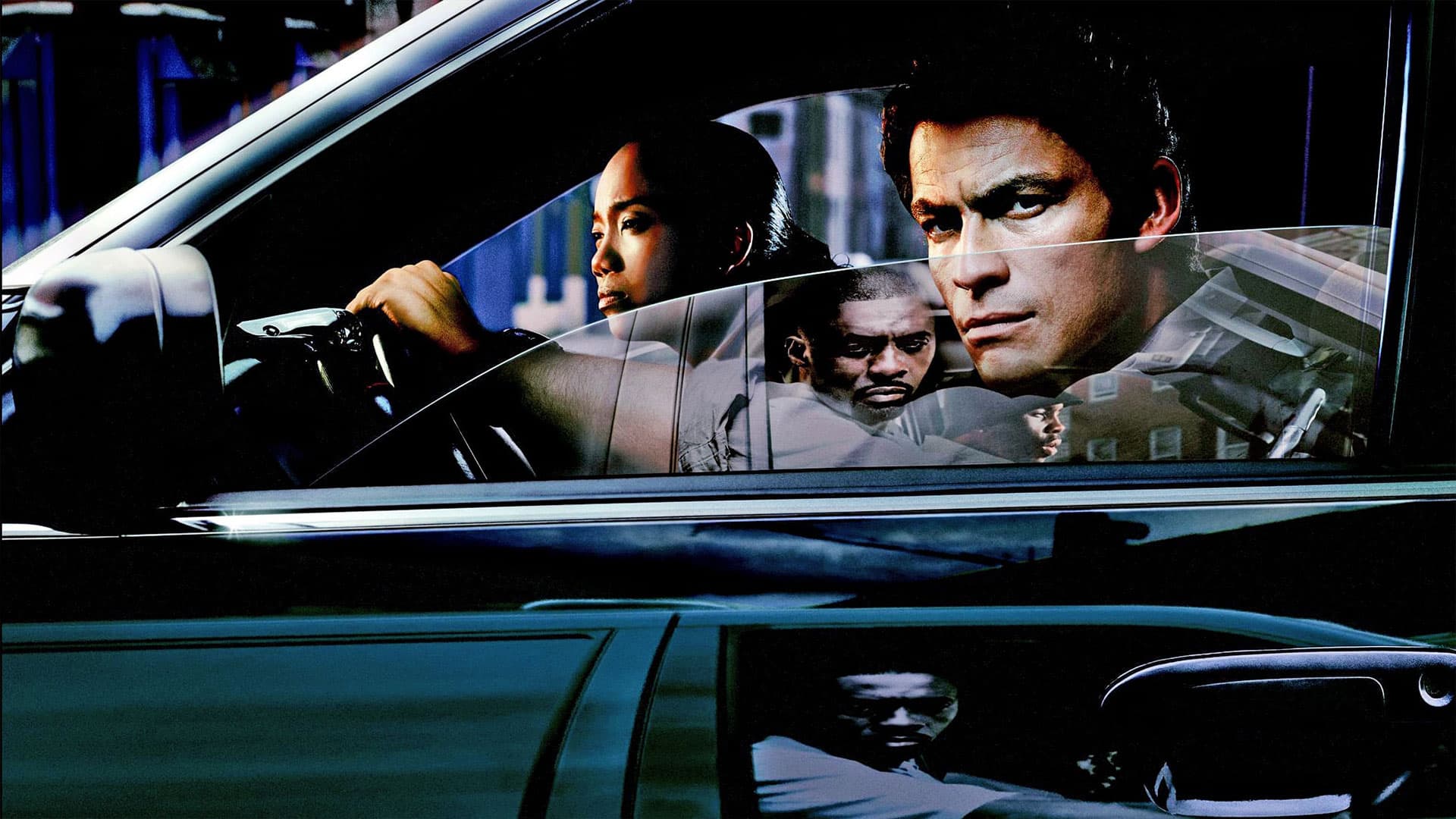
Bonus – The Wire – A Love Letter to Baltimore (with Why I’m Single)


Hosted by
KT & Oti
Show Notes
Take a swig of your Jameson and hold onto your tiny furniture because we have a special bonus episode. Check out our main The Wire episode. Guests are Amy D and Chuck from Why I’m Single Podcast.
Breakdown and Analysis
- Lance Reddick is from Baltimore but doesn’t appear to have the O heavy accent. Amy D mentions that accents can vary based on where in Baltimore people are from.
- We have a delicious tangent on our accents. Aussie, Kenyan and good ol BaltimOOOre!
- Amy D introduces us to the 12 o’clock boys. Which from what I understand, are kids riding go carts in all traffic and police cannot pursue them. Hence they are a prominent fixture of the Baltimore aesthetic.
- Amy D also explained what squeegee boys are. Much to KT’s disappointment, it does not involve titty squishing.
- We talk about gentrification and the real impacts it has on the community. Areas that were gentrified and pushed people out due to a hike in rents and the new people not understaning how this affects everyone else. Example of this in the show is when Nicky Sobotka and his girlfriend went to their aunt’s old place and McNulty’s ex wife talks about the name of the suburb.
- Baltimore music is very distinctive and this is played out in the show where Snoop and Chris are driving out New Yorkers.
- Amy D shared another true life influence into the show. Ed Norris was a real homicide detective, even held title of Police Commissioner. He was found guilty of mortgage loan fraud so this could have been inspiration for the Clay Davis stroyline.
- Amy D reflects on the riots and how it changed the community.
- We talk a bit more about the vacants and Amy D and Chuck confirm that this was real. Families that could afford to move, did. Chuck mentioned it was referred to as white flight. Example of this in the show is during Hamsterdam when Bunny is trying to convince an old lady to move but she declines. She mentions they were able to buy the house when there were white people still in the area.
- We have a fun time talking about community meetings where they suffer no fools and demand the truth from police.
- Amy D mentions how McNulty is similar to the lead guy in Californication. The guy you just wished would get their shit together.
- Bubbles is a solid character and he offers a new portrayal of someone that is suffering from addiction. There was complexity and more facets to him than just being an addict. He didn’t feel as though he deserved anything good to happen to him, and this becomes even more intense when his protege dies by his own hand.
- Bunk is a fan favourite and a highlight to his character is when he burns his clothes in an effort to destroy trace evidence. A noble plan but not much material in what he would wear. This was also the same episode Bunk says to McNulty that he is no good for anyone.
- We dived into police corruption and how blatantly common it was. Amy brought up how a cop could make $200,000 in overtime. But people going into the force shouldn’t get in it for the money. Just doesn’t work that way.
- There appears ot be a strong bond within the homicide department. Whether this works in the public favour or not.
- We talk about Hamsterdam and whether this really happened. Not explicitly but people know it is happening. Amy D shares a story about someone telling her if you go looking for a hooker you will find one.
- Are people like Clay Davis? Are there people that continually do dodgy things and accept bribes and are, by all appearances, untoucable?
- There’s also a lot of talk about the education system, how it has become a strategic play to keep funding as opposed to being able to focus on the children. This is also exemplified through the truancy program to ensure a kid attends just one day a month, not addressing why they kids are skipping. Prez becomes attached to Dukie and is given the sad reality when O’Donnelly says there will always be a Duquan and he needs to let him go. Social promotion.
- We talk beers. Amy D talk about corrs light. Chuck strongly recommends Ressurection and Sweet Baby Jesus (Chocolate Peanut Butter beer). And we share how Tusker is the breastmilk of Kenya.
- In a tangent we discuss indigenous people day. Also how tiki torches has been ruined for everyone.
For Your Reference
Why I’m Single
Amy
Treme Homicide: Life on the Street
Chuck
Episode Details
- Duration
- 0:00
- Released
- October 21, 2019
- Category
- Episode
- Hosts


Transcript
Transcript (24,411 words)
Full transcript of Bonus – The Wire – A Love Letter to Baltimore (with Why I’m Single).
KT: Hey, friends and lovers. Welcome back to For Your Reference. You've got your host, KT.
Oti: And Oti.
KT: And we have some guests with us today. If you've read the title, strap in or strap on because we are going to have a great time. Can you please introduce yourselves?
Amy: Hi. Hello. I'm Amy D. I'm with Why I'm Single. And I have Chuck.
Chuck: And I'm Chuck. I'm also with Why I'm Single.
Amy: He's our audio wizard. He's the saint of audio engineering.
KT: Oh, I love that. We need to plaster that somewhere.
Amy: I think we're gonna have a religious shrine built in his honor.
KT: Well, let's let's definitely pencil that in. So take a swig of your Jameson and hold on to your tiny furniture because we are diving into The Wire this week. Thank you so much for joining us. If this is the first time listening to For Your Reference, you are in for a good time. And please listen to our other episodes along the way. Also, check out Why I'm Single, and I'll put it in the show notes. But let's dive in. You know, The Wire has been around for a delicious
KT: amount of time, and I've watched it quite a lot of time. So I know everyone just wants to dive in. So this is coming out of HBO, pure quality. HBO is amazing. Everyone loves HBO. From 2002 to 2008, creators David Simon and also Ed Burns. So as far as I understand, they are also from Baltimore, David Simon was a journalist or is a journalist, and Ed Burns was a homicide police detective and also a school teacher at some point. Is that correct?
Amy: Yes, that is correct. There's a lot there. David Simon was a Baltimore Sun journalist for quite some time, and he did a lot of ride alongs with Baltimore City Police Department throughout the years as he was writing Homicide: Life on the Street and The Corner. So he did a good deal of research and I have the luxury of actually working with retired Baltimore City Police. So some of these things that you see on The Wire, they're pretty parallel. They run a pretty close line to things that actually happened, which makes it more interesting.
KT: The Wire so much because it is very true. And I I I wankery, if you'll excuse my word. People say a lot like, you know, the music is the character of the film, but I really feel like Baltimore is its own character in The Wire.
Amy: Yeah. The I I think I I have a confession to make. I'll just come straight to it. I did not watch The Wire until 2015, And it was with great hesitation and this resistance of this I'm Baltimore, I'm Salt, I'm from here, I need to watch that shit on TV, I live here. The film outside of my office, I actually worked across the street from the courthouse and it would be so annoying when you're trying to leave and you can't leave this little I had like this resistance naturally to them.
Amy: I did not watch The Wire until 2015 when we were in the middle of we were boarded up in our houses, you know, and here I am binging The Wire and I can't tell the difference between HBO and the news because everything outside is on fire. It's just, it was, but I think that they hooked me in that first episode, just hearing how well it ended and they said, it's all the heroin in the water that it keeps us coming back. It's one of those things that you're like, oh,
Amy: is like an abusive relationship sometimes. This city is so great and it's so beautiful and it's filled with awesome people that are, you know, maybe we have a little bit of abrasive and there are problems just like any place. And of course we sometimes when we make the news, it's not always for the greatest things, but that's the sad part because there's a lot of awesome things that are happening. But one thing that I thought about when I was reflecting on The Wire and
Amy: our city and how I was so hesitant in watching it to begin with is Baltimore is one of those cities where if you don't do it right, you're going to hear shit about it. So they knew they had to come out of the gate and do this right. Otherwise, it wasn't going to be met with any kind of love. Living here is awesome. It's a great sense of community. We were talking before
Amy: you got on or before we started recording about Aaron and how Aaron's like, you better do this right. You know, no pics after dark. Shout out to Aaron. So we were at a happy actually, you know, we were at a happy hour on Thursday where all kinds of people from the community came out and it's you know it's East Baltimore so we're like you know there's magic here. It's great.
Amy: I'm at a community meeting the other night and I get a text message from my boyfriend John and it says just another day in Baltimore just saw two guys in go karts going down Northern Parkway. And it's like one of those things you just have to laugh about because you never know what you're gonna say. Chuck, what do you think?
Chuck: Yeah, I was just thinking about, as you were saying about how you better do it right because that's kind of people we are. It's also, it made me think that, it's because people here value realness, like street realness. Like it's kind of the opposite of how, I mean, I don't live there, but what you hear about LA is the fake people and everybody's putting up a front and there's a certain person there, everybody's trying to be, but this place is the opposite of that. People smell that.
Amy: We call it bullshit real quick. Right.
Chuck: Our bullshit meters are way up,
Amy: finely tuned. It's finely tuned. So something about the way that they come back and forth and you might not see them for a whole season and then they pop back up and that's what life is like here like there's somebody that you might know from a neighborhood that you don't see for a year or two You see him again and you just pick up right like you never left off. So I think that that's a Baltimore is one of those places there's more than murder here.
KT: Think it's in season three, Prop Joe was trying to help someone flee, and he went to the other side of Baltimore. And he's like, why when people say to flee town, they just go to the other side of Baltimore?
Chuck: Well, this reminds me of an anecdote I've heard as, apparently the rats in Baltimore City. Uh-huh. So we have a waterway in the Jones Falls Expressway that goes directly down the center of the city. So I've heard that on an evolutionary biological level, genetically the rats on the West Side are genetically different than the rats on the East Side because of that water that goes down
Amy: because the rats on the East Side are uppity. Right.
Chuck: I just thought it was neat that, like, since they don't cross that, that river to to mate, that, like, they're like, it in spins they've been here so long Yeah. Like, they genetically evolved different. Yeah. A there's a meme that went around not that long ago and it's like a traffic jam on 695 or 95, which is our our beltway and our interstate.
Amy: And it's a it take a it it takes an hour to get from Baltimore to Baltimore. Yeah. So we are a large city in a small town, if So that makes people that live deep in the city, like you'll see, you see in the show, these kids have never left West Baltimore. They've never left that neighborhood. They've never gone
Amy: outside into the county. Like there's people that will treat a trip to the county and I'm one of them people if you tell me that you are on the West Side of 40, I'm not going that way. Like I'm just like, I got a need on this side of town. But I mean, I have the means to get there. I just don't feel like sitting in traffic. So, I mean, will treat a trip to the county or another county like it's a vacation.
KT: And I think Bodie, when he has to go and do a job, he didn't quite comprehend that the radio is different in different cities as well because there were yeah. Because they were crossing the air. So it was quite interesting. And I guess, you know, just to wrap this segment up, in the words of Valchek, fucking rat fuckers.
Amy: I love Valchek. I don't think he gets enough respect because he's such a weaselly guy. I honestly thought he was a local. I had to look him up and I realized he wasn't. He's a He nailed it. So
KT: guy really well. He's so deliciously petty. Like, I loved how petty he was.
Amy: That fucking stained glass window. Yes.
KT: And that, like, that kind of spawned off into that whole, like, next investigation because he wanted that stained glass window, and he was wondering where the ports were getting all that money from. Right? So glancing through all of the seasons that we have, it was perfectly laid out from a story, like, just from a narrative point of view because you start off quite succinctly. Right? So we're talking about Avon and Stringer,
KT: and they're in you know, they're dealing drugs. Right? And then you've also got the police. So it's it's very succinct. It's very straightforward. And then season two branches out into the distro and how they actually get the drugs. Right? And they slowly start to add to the tapestry that is Baltimore. Right? Yep. And then you have quite a lot of development within all the characters that we've already met. And then Prop Joe comes along, and we're in for a good time. And you see Valchek as well, and you see Bunny Colvin.
KT: And I love the way that they ended the series from a journalism point of view because if it were not for the other seasons, if they were to do the journalism first, it wouldn't really hit as hard as for me anyway, because we get the police. We've seen the courts. We've seen the kids. We've seen the schools. So it really wrapped up quite nicely, the series. And for all sexual experiences, this was fucking satisfying. Like, this whole this whole series, like, I can't tell you where my hands were at the end of it. But
KT: wow. Like, this, like, this whole series, it just wrapped up so nicely. They knew the story they wanted to tell, and they did it through the characters of the series. And they really gave us a nice ending. And we'll get to the show, but I just wanna quickly capture off because Bubbles gets a nice ending. Right? Yeah. And, like, it's sad, and we will talk more about Bubbles, but it it makes sense why, you know, his sister kept him at arm's length. Right? But he ends up with a good ending. Right? Unfortunately,
KT: Omar doesn't end up with a good ending, and we can talk more detail about that. But it kind of made sense. Right? Like, you could see where his character was going, and it's unfortunate. Pour some sip on the concrete. I don't know if you do that in Baltimore, but I hear it a lot. I hear it a lot in TV shows and movies. More. Yeah. And then we start to see the new generation rise up, like, in the last episode of this series. Unfortunately, Duquan, he might turn into, like, a Bubbles character,
KT: But I think it's I think it's good that they have some aspects where not everyone has a happy ending. And then you have Michael potentially becoming Omar and taking those like, filling in those shoes. Kenard, that that stupid little kid, he might even turn into a Avon. Like, just just his sort of, like, ambitions as well. And then you've got Namond, and he goes quite through quite a lot as well. But you can see that the shoes that are being left by previous characters are being filled by other characters in the
Chuck: It's a it's a very pointing out the the circle nature of it and how, like, you know, certain people never go away. They just it turns into a different They evolve. Yeah. Circle of life. Like, that's what you're saying, like, there's gonna be another Omar. There's gonna be another Avon.
Amy: I think that, yeah, I mean, I guess I'm lucky in the sense that I get to see the parallels in the knowing, working with law enforcement that was on the original wiretaps that you know back in the 90s and the I don't think the wiretap came in until the late 80s early 90s, but I get to hear all these stories and sometimes there's these lingo that they shoot out on the show that we use in my day to day job. Know, know, KT, you wanted to hear a no known abode. That was
Amy: one of what was that? The no known abode when he's given when the commander's given the morning.
KT: Well, I've got what I wanted. We can end this now. Because I'm entirely satisfied now.
Amy: No known abode. One of the ones that we use all the time is red ball and career case and Fanu Lanu was one that that gets thrown around, which means first name, last name is unknown. Fanu Lanu. Ah.
KT: See, I heard that and you tweeted me that, but I didn't hear that.
Amy: Makes sense. Said. Right? Fanu Lanu. That's because we talk like we have something in our mouth.
KT: Well, no one's blaming you if you are.
Amy: So I know that one of my former mentors was a colonel. He retired as a colonel and he was one of the ones that did the ride alongs with David Simon at the time when doing all the writing. I remember asking him, I was like, Was there anything portrayed that you felt you disagreed with? He was just like, we never got to eat steamed crabs off the back of a cruiser. He's like, we never did that. Nobody does that. Why not?
Chuck: That's on them. I would do that my first day. Here's the keys to the car. Okay. We're going down to where are we going to get bread? We're going or comrades. We're going to comrades. We're gonna get some crabs. We're gonna eat them in this parking lot on the back of this cruiser. Somebody put this on the instant. Right. Right. No. That doesn't happen anymore. But
Amy: there was a there's a lot of little stories that I see in The Wire and then I'll go to work and I'm like, but did this really happen? So I was at work the other day and I said, oh, I got to season four when they did the lie detector test with the or season five, they did the lie detector test with Xerox machine. And without missing a beat, my former homicide detective colleague goes, Oh, so and so did that. He's like, you did that all the time.
Amy: And they in the show, they'll spit out. There's a scene where McNulty is saying, you know, Gary Childs and this one and that one, and he's naming off all these actual Baltimore City detectives. So Gary Childs is the one that worked the case for the nuns, The Keepers. Yeah. So that's another good Netflix show.
KT: But anyway McNulty said Ed Burns, so I picked that up.
Amy: Ed Burns. Yeah. Ed Norris. Mhmm. Ed Norris was a Baltimore City commissioner. Yes. Was a commissioner. And he lost his job for taking about $20,000 from the city fund.
Chuck: But he's the bald guy you see. You see him a lot more in season five. Yeah. He's still in town. He has a like a local radio morning show. Yeah. So, like, didn't hurt him any of that kind of diversity. No. He's fine.
Amy: He's doing fine. Yeah. So, anyway, I'm sorry we took you off track there.
KT: No. That's absolutely fine.
KT: Actually, while we're on that, because, you know, you talk about him landing just fine, do do you find in in Baltimore that there are people that are just skis like, Clay Davis, for example. Like, is that Politicians?
Amy: Yes. So Carcetti. Right? Yes. Carcetti was modeled after Martin O'Malley. O'Malley.
Chuck: He went from being the mayor of was he mayor of Baltimore? Yeah. He was mayor of Baltimore and then he got elected governor and then he tried to get elected president
Amy: but He did not get very far. They changed he was known he was known more as o male y, like o w e. Yeah. Like, we owed a bunch of taxes because of him, but that's who Carcetti was. Carcetti. Carcetti. Yeah. I keep fucking up his name.
Chuck: That's who he was modeled after. Nobody likes him here, but I'm sure he's doing just fine with his bank account. He's fine. Whichever way he managed to Mhmm. Put it together. Yeah. And that was a lot of
Amy: we
Chuck: we recently had our mayor Oh, man. Our mayor went fucking Looney Tunes and went into hiding. Look at the last string of mayors. There was Sheila what's her name? Dixon. Sheila Dixon, and she got tossed out for over gift cards. Stealing gift cards. Like, somebody would donate gift cards and then she would take them and use them for herself. Wow. And then after her was Stephanie Rawlings. Mhmm. Stephanie Rawlings-Blake. Step excuse me. Stephanie Rawlings-Blake, but she was the one who basically pulled Hamsterdam in the middle of the Baltimore riots. Yeah.
KT: Oh, she sorry. So that's kind of grounded in reality, Hamsterdam?
Amy: Oh, no. This happened way after the In 2015, there's a lot of turmoil over a case. His name is Freddie Gray. He's deceased. The case of police brutality. The city was not happy and instead of curtailing it, she kind of took the stance of give people the room they need to express themselves, which resulted in burning down city blocks. And it was a sad time. I mean, had National Guard here too. It wasn't a good look. No. Let's say. So, and then after her was mayor Catherine Pugh
Chuck: And just recently She just didn't look right. Yeah. She was like Like
Amy: shoulder pain. Remember the scene in E.T. when they dress E.T. up as a a little girl to try to hide E.T.? Yeah. That was Catherine. Oh no. So the best thing that we got out of Catherine Pugh was a bunch of really good memes because she went into hiding. So they had like pugitive memes. Basically,
Chuck: she made a book that didn't really get made. She made a children's book Yeah. And then, like, people were buying lots of them in return for favors Mhmm. From the city government. Mhmm.
Amy: That was a scandal. So we don't have a good track record as far as leadership.
Chuck: So far it's pretty good because I can barely remember the guy's name.
KT: That's the barometer. That's the good thing.
Amy: Yeah. Our current mayor is Jack Young and he didn't want the job.
Chuck: He's just like He, and this is air quotes, didn't want the job. Yeah. He
Amy: was adamant that he didn't want the job, now he's gonna run. You know who else was reluctant to take over power?
Chuck: The emperor in Star Wars. He loves democracy.
KT: That that that is a tasty little morsel because I think that's the first time Star Wars has ever been mentioned on our podcast.
Amy: He doesn't watch it. Sorry?
Chuck: I mean, I could see why. Yeah. I guess. Just because, like like, the further alright. Here we go. This is what we call a ramble jam on our podcast. So, the first three Star Wars movies, those were all pretty good, but especially in context of what else was going on, that was pretty groundbreaking. But when you put up these later stories against what else is available, it's just not as cool anymore. So
Amy: to surmise Sorry.
KT: No, that's why it's called For Your Reference, so we have an excuse to go on tangents and talk about
Amy: We can't stay on track for shit around here. We're probably all undiagnosed. So we miss that. We're too old to have been diagnosed with attention deficit disorder. They just caught it being bad when we were kids. So we don't have a great track record with leadership. Really, we have a horrible police scandal going on now with the D Task Force that's resulting in a lot of investigation, a lot of arrests, lot of police officers went to jail. We're a poor city, but we're a lot of great people,
Amy: if that makes any sense. It's a lot of people that are on the struggle bus to try to keep shit good. And I feel like I didn't see a lot of that in The Wire. You didn't see a lot of the outside of the inner city. Yeah. I'm not complaining. Just saying. You don't get a full picture. Like we didn't have a Friday night out in freaking Canton. No. Or a bachelor party in Federal Hill. Yeah. They were at the Sidebar a lot. The bar that they go to,
Amy: the police go to when they do their wakes and everything, that's actually a little place called the Sidebar and it's down around the corner of the courthouse,
Chuck: which is like a really odd place. It's not a huge bar. The Sidebar's been there forever and I guess in my mind it was mostly for punk rock shows. So it was just like a little tiny place, but they would also let your punk band come in there and
Amy: Yeah. Make a racket so long as they could sell alcohol. But they tarted it up like an Irish pub for The Wire. Yeah.
KT: Is there is there anything else that you felt, like, wasn't necessarily accurate or, you know, even just now you're saying you wish or it didn't get covered. Is there anything that you wish was done differently or just wasn't in there that probably should have been in there?
Amy: I don't think that it was that it was wrong, but I noticed that there was never any filming in the winter season. So if you remember the episode where they announced that Carcetti won, Carcetti, They remember that Carcetti won. Him and his wife are walking around the harbor, right? And it's like November or January even, whenever they announce the election November. And he goes, Oh, it's nice out. There's no cold air coming. There's no breath coming out. And she goes, Oh, except for the smell. The harbor doesn't smell in the winter.
Amy: It smells in the heat of the summer. So that's like she said something like it was a little rank. Then I just noticed that there was never any filming in like the snow or never any severe weather, which makes sense because who wants to fucking film out there in that? But that was just something that I picked up on. One thing that there was two things. There was never a mention of the 12 o'clock boys and there was never any squeegee boy references.
Chuck: I was just thinking about the 12 o'clock boys earlier because we went up to York this week and they had 12 o'clock boys up there.
Amy: Yeah. Now, if you don't, for your reference For your reference. If you don't know what 12 o'clock boys are, there's a great documentary you can watch. Essentially, it's no face, no charge. It's dirt bikes, motorcycles, anything with a power motor that these kids will
Amy: I mean, if they had a place to do this like X game style, it would be awesome. But instead, they just ride down the middle of a busy street through red lights, popping wheelies. We're not talking just about like in their neighborhoods. No. We're talking about like down Pratt Street, which is like the the big tourist,
Chuck: like Downtown Baltimore. On the harbor, tourist Yeah,
Amy: wow. And there's a no chase, so they can't do high speed chases. They can't chase these kids. Obviously, wouldn't be great for anybody. But I mean, we're talking hordes, like it looks organized. Then the other thing
Chuck: They're all doing wheelies and what. I've never seen one of those dudes on two wheels. It's always just the one. Just one. Yeah.
Amy: There's a really good documentary that was put out about it, and one of the ladies that one of the moms of one of the 12 o'clock boys, she was at a dog clinic with the charity. The other thing is squeegee boys, and they raise a lot of conflict in the city. There's people that are very uncomfortable by this, and don't those are the people I have a I don't have a huge problem with this. What do you guys think a squeegee boy is? Yeah. What do you think a squeegee boy is?
KT: Oh. Well, this is just my brain, but I I was envisioning people, like, squidging titties. Like, is that a service that is it. Is that a service that's provided in Baltimore? Like do we squidge the titties? No?
Amy: Yeah, we pull up the lights and we squish the titties. One of the last, squeegee boys are young kids anywhere from like seven up to like 20 stand at red lights and they come out with a squeegee and a bottle of Windex and they clean your windshield. Do you guys have squeegees there? Or you probably call something it to clean your window with.
Chuck: Like like if you go to a gas station to fill up your car, is there something you can clean your windows with there?
KT: Yeah. We call it squeegees, but I don't think there's an actual term for the people that do it. Yeah. Okay. We'll see. I don't think there's a term for them anywhere else.
Amy: We have squeegee boys, and here's the thing is a lot of people don't live in Baltimore, but they come to work because this is the fall. So we have people that move to Pennsylvania so that they can pay lower whatever property rates and whatnot, and they still commute to Baltimore. They're very uncomfortable by
Amy: these kids that want to clean their windows asking for money when they do it. These kids are making a couple $100 a day, some of them. There's been articles about it, and for the most part there's a I've talked to a couple of them in particular so many times and I don't know how many times one of them tried to put his phone number in my phone and I said, You know, I'm old enough to be your mom. I was like, Ney, I'm old enough to be your grandma.
Amy: But people are really uncomfortable by it and I just think that it's too much culture all at once coming at them sometimes. I've had squeegee kids make a little heart on my windshield with the squeegee. I'm just like, carrying cash around every time. I don't. So
Amy: that's the conversation. It's a dying business model. I respect the hustle but they need to. I'm always like, sorry, I don't have any cash, you know, and they'll talk to you or whatever. But some people are just like, they're begging for money and we need to have the the we should have panhandlers. I'm like, you could just be a human being and be like, no, I'm good. Thanks.
Chuck: Mhmm.
KT: And I think this show did quite a good job of because, yeah, you you can see that people are homeless or, like, you know, there's the there's a going on as well. But it also it also portrays the fact that there's no other option in some cases. Right? So you have, like, even on a bigger sense, you have Carcetti saying, I want clean stats. I want this done right. And then as soon as he feels the pressure and he doesn't take money from the schools,
KT: he has to squeeze that money out of the police budget, but he's still expecting crime to go down. Right?
Oti: Well, that goes down to Carcetti just being too ambitious.
KT: Hey. Hey. Hey. Hey. Hey. Aidan Gillen is my secret man. Don't you dare.
Oti: If he took the money, everything would have been better for the city. But it was just his pride getting in the way.
KT: Well, it's it was politics because he wanted to move up. And if you if you were to take that money
Oti: Hence, pride.
Oti: You wanna fight?
KT: People say you don't exist, and sometimes I wish that was the case. But you know?
Amy: Because I've heard that I'm responsible for fake Oti.
KT: Yes. Actually, Amy Oh, really? Amy is responsible because I I keep I always tell Oti, hey. You know, this is going on on Twitter, especially when, you know, we're having, like, really good conversations. I wanna keep him, like, on board even though we've established he's not allowed on Twitter. Twitter. But, yes, I did tell him that you invented it because with the YouTube videos, I keep saying we and you're not in it. So that's where so that's where it started. So Amy's going to start
KT: For Your Reference Wire, and we're going to we're going to uncover the truth. And, you know, even in The Wire, they kept saying, oh, you know, this is OT. I want OT. Oti doesn't fucking exist. That's why you can't have any OT in The Wire or in For Your Reference.
Amy: But there was no overtime because our police officers make so much overtime. There was one recently arrested for assault, and he made like $200,000 last year with overtime. Jesus. Really?
Oti: There no caps to overtime.
Amy: Yeah. So they'll work so much overtime that they're making salary of two politicians.
KT: And was he
Chuck: Pretty sure it's not necessarily like finger quotes working but they write down that they worked.
Amy: Well if they have to do a stadium game or something like that, they make so much more money for working a stadium game like to just be at the stadium. So I mean, I'm not talking shit about the cops but there's some mismanagement here.
Chuck: I'm not going to talk shit about cops. I don't complain about not having money and having to work in a city where these people need money when you got I don't know, does that not seem a little bit ridiculous to regular people?
Amy: I think a cop salary is anywhere it starts at like 35, 40,000 and goes up to like 75.
Chuck: Right. 80 something. But they didn't tell you you were gonna make $200,000 a year No. When you started. No. You should have set that level of expectation. If that's what you wanted, this shouldn't have been the job for you. If you wanted to actually help people, you're in the job. But now if you have that job and you don't want to help people and you'd rather just game the system for more money, that's kind of on you and, like, not cool.
KT: Yeah. No. You're you're in the wrong place, essentially. If you wanna be making money, you should be somewhere and I think there are some jobs where, yeah, you can phone it in. Like, you can go there and do a shit job, and it's fine. But there are some jobs where you have to actually care, like police or, you know, nurses.
KT: And, you know, there there are some jobs like, you know, I stare at a spreadsheet for eight hours and listen to podcasts, and that's how I get paid. But, you know, there are some
Amy: You have excellent spreadsheet skills, KT.
KT: Mhmm. Sorry?
Amy: I said you have excellent spreadsheet skills. I'm quite fond of your spreadsheet.
KT: Oh, thank you. And it's skills with a zed at the end because I've got street cred.
Amy: What is that? I
KT: I don't I don't usually have that much detail in regards to our episode
KT: plans, but The Wire is is it it it just means so much to me. And it's I know it sounds so wankery because you guys are from Baltimore. You're like, who the fuck is this person in Australia talking about The Wire so much? But I do. Like, I really I love this show so much, and I'm so glad that we are here and we're talking about it. And you guys are even giving, you know, so much more detail, like, even what's going on now and how that connects to the show as well.
Amy: Yeah. I think that it's a testament to the writing. I mean, it's Mhmm. You know, I keep going back to if it wasn't done right, they would've they would've heard about it. Right.
Chuck: Like, for me, like, I was automatically interested when I'm like, oh, it's a show that's being filmed here that's about here. Which is a different because House of Cards was filmed here. I never watched it. Really? Nope. It was a good show until all that stuff with Kevin Spacey. Yeah. That was filmed here but it was never about from here. But this show, this is like you said, Baltimore is a character. Yeah,
Amy: I'm glad that you feel this way about it. It's because we are passionate people, if anything.
Chuck: I'm just glad everybody else liked it. Right. Yeah, I am too. And I also didn't watch it when it first came out, but when you hear it, but then hearing over and over from people from so far away from here that like, this is the best show, this is their favorite show. I'm like, hear it everywhere. You're like, now I need to watch it. And then I watch it and it is a great show.
Amy: Tommy, I don't know, you've heard Tommy before on our previous episodes but he's got a bit in his stand up. He's great. About his accent where he'll go somewhere and they'll say, oh are you from Baltimore? Have you seen The Wire? Have you ever been stabbed? People have this misconception that we're all thugs, I guess maybe, but you know, it's, there's so many layers, there's so many great characters.
Amy: It's, it's just, it pulls you in, it keeps you there. It's, it is a lot like the city. It like tear, it breaks your heart and then it like puts you back together again and it leaves you with a satisfying feeling.
KT: Yeah. Maybe not to Sorry, Chuck, were you going to say something?
Chuck: I was just gonna kind of relate that it was an interesting show because it's like, this is where I live, this is where I grew up. I didn't grow up in the city in those situations, but it was a lot to think about like, that's not very far away from here. You know what I mean? Like there actually is people that live like this. Like season four with the kids in the school, that's the It's heartbreaker.
Chuck: Yeah, because you realize that like, oh, there really is like people, kids that are dealing with that stuff every day. Living like in a might as well be an abandoned house with no electricity with a, you know, an addict for a mom. It sucks to realize that there's people that live like that and it's not just, it's not just a TV show and it's so close.
Amy: I think that one of the things that I liked that they touched on in season two and they didn't really harp on it but they won me over at that point was when, I can't remember his name. What was Sobotka's Nick. Nephew's Nick. So Nick's looking to buy a house and they go look at a house and they go, Oh, you know, I forget what neighborhood she said it was. I think she said, This is Port Covington. He was like, No, it's not. And it just
Amy: such a strong chord with me because it's like I have kind of like this pet peeve about people just gentrification is rampant. I was trying to explain to somebody recently how she was upset because one of the homes in her neighborhood got graffitied and I said, Oh, was it like a writing? Is it like a good tag? Or is it just like some shit that somebody sprayed with, you know, spray paint? She's like, it's just some shit. And she goes, that's an $850,000 home. And I was just I was like, woah, maybe
Amy: somebody that can't afford to live in their neighborhood anymore threw some shit up on the wall because they're pissed off about it. She's like, it's called grow up and get a job. I was like, oh, you don't get it. You don't get what these people are seeing. These neighborhoods are being leveled and rebuilt and what used to be a project is now a waterfront property. It's
Amy: a love hate thing because it's like as a homeowner, as a person that's got an investment, you're like, okay, yeah, I want to see this, but at the same time I want to see everybody else have financial equity and be a have a safe place to live and be able to prosper.
Chuck: It's also not hard to just not be a dick about it.
Amy: Yeah, well that's true too but you have to go so far back to give people everything they need to be prepared for stuff.
Chuck: You mean not be a dick like Like that lady. Like it would not be hard for her to to not be a dick about it.
Amy: She's a transplant. Yeah. She's from New York.
Chuck: Well, it doesn't matter where she's from. There's a lot of people from everywhere that just have no thoughts like of anything happening outside of their own life and what they're seeing right now.
Amy: I'm always the first one to be like, Well, as a white woman, let me tell you how everything is. I think I try to do a good job of leveling myself and remembering, I might be afforded privileges that other people haven't been given, even though I came from the poor white trash side of the county, it's a struggle for people. I really like that they hit on that in that season because I was like, yeah, I remember one time this guy was like, hey, meet me at
Amy: Blue Note Tavern, and I was like, Blue Note Tavern, where is that at? He's like, Brewers Hill. And I was like, Brewers Hill? Brewers Hill? Because to me this is brand new. And he goes, I said, What are the cross streets? And he goes, O'Donnell and Conkling. And I was like, That's O'Donnell Heights. That's been a project forever. And now it's a brand new neighborhood. It's just one of those things that if you blink, you miss it.
KT: So and it continues to happen. Mhmm. I think it's it it's one of those things. Right? Just like Chuck was saying, it's just, like, for some people, terrible not the best dicks of people, like, it's easy just to blame it on them. Like, those people and even like Amy said, just go and get a job. It's not that hard. You'll get a job, and you'll be fine, and you'll get money, you and won't come and tag our streets without any sort of understanding of the ramifications
KT: of, you know, the gentrifying of that sort of neighborhood. Right? And there's they don't know what it would take to do all that. Yeah. And I think I think it's also you know, as you guys were also noting too as well, not everyone starts at the same point in life. Right? Some people are behind. Some people are in front. Whether you wanna talk about you know, it's people say privilege a lot, but it it is essentially,
KT: you know, there are people that are ahead in life and then there are people that have a few steps back. And it's it's not so easy to just say that, but I think it's easier. You know, when you're sitting in your home just thinking about yourself, you're not really caring for what people are going through.
Amy: Right. And it's that you need to remind yourself to come back to a grounding and and say, you know, what's easy for me might be a struggle for somebody else.
KT: And that's why I love like, it's you can have, like, inspiring speeches of all of the historical figures, but I truly believe, you know, you can even change people in the way they think and the way they feel through music, through TV, and through movies. And you can do it in a way that can really resonate instead of being someone preaching at you. Like, you're supposed to care about this sort of thing. And The Wire does that. At least to me, it it does it quite well because like, let's go back to the schools for a second, and let's focus on that for a bit. Because,
KT: you know, the teachers are struggling themselves, and, you know, they're under their own pressures to try and get them just to do the test. Not to get them to understand why they're doing it, but for the funding of the school so they don't become privatized. You know, the the it just becomes a mechanical thing. Like, you just need to do this. And to have these kids going through so much struggle outside of the classroom just to be like, just go and do the test without
KT: any sort of not to say that they didn't understand because I think The Wire did a good job of showing a lot of, you know, involuntary helplessness. Right? You know, these even Pryzbylewski, you know, he wanted to help. And even the vice principal was like, there's gonna be another Duquan.
KT: You know what I mean? Like, you're giving so much love. You know, do you have kids? No. Go and have kids because he will leave, and there will be more kids that you'll need to look after as well. And it's a numbers thing. Right? If you if there weren't as many kids to look after, then maybe there would be more time. There would be more money to focus on that. But, unfortunately, that's where the funnel is getting squeezed. And I think that's a, KT, your phrase or mine. I don't think
KT: don't think that's a real phrase.
Amy: How much KT, how much did you love Marcia Donnelly, the vice
KT: I loved her so much because she she had so much like, she wielded so much power, but she didn't like, she wasn't forceful with it. Yeah. If that makes sense.
Amy: She I would say that and she is an actress because I had to look her up. It's to is it Tootsie Duvall? That's her name. She's about as authentic as it gets as far as the way that we speak. She sounds like she's from OdontoMites, if that makes sense. But she was right. She was like, know, there's going to be another Duquan, there's going to be another kid that you're going to feel this way about and that's the whole thing that the teachers were dealing with was the no student left behind
Amy: is basically the program where they just have to force them to pass these tests. That way they can get funded and whether they're ready or not, you're age appropriate, it's time to go into the next level. And it's really sad because then what you're doing is turning out You're turning out children into high school from high school into the world that don't have skills. They don't have what they need. Anyway, sorry. Hand that back to you.
Oti: Know that you have really, really sad because, like, I think in our Lion King episode, I said that once I I got exposed to cartoons and all the animation and it resonating with me because it had Swahili in it it opened my eyes to a whole new world out there of oh that's the wrong movie wrong reference. Animation and stuff and I was like okay I could I could do this I wanna do this I wanna learn more about this stuff and take Bunny Colvin taking Namond and the other two kids can't remember their names right now Zenobia
KT: yeah
Oti: that's fine to a fancy restaurant and then realizing there's so much more to this world than just what they know around the corner.
Amy: Yeah. I mean, that was such a culture shock. He took those four kids to Ruth's Chris, which is a high end steak restaurant. I mean, I don't even go there.
Chuck: I don't think I've ever been. Would feel uncomfortable. Yeah, I wouldn't be comfortable. I'm sure the steak's awesome, but I'm gonna not feel like I belong, I'm gonna look like I don't belong.
Amy: Yeah. I definitely and and he was like, when when the waitress or when the hostess walks away and he goes, well, who who is she? Like, they had no
Amy: Up the palette even more. It it's it is sad. And that name is Zenobia. Like, every time I heard it, I just kept thinking of Coming to America. It's funny because when we're talking about education, there's a lady in this neighborhood that I live in and she was at the happy hour the other night and she was talking about she's not necessarily a teacher, what she does is like a program where she gets kids ready for the next level and she took them to tour the Amazon facility the other day and she said,
Chuck: Pay attention or you're going to work here. Is that what she said?
Amy: No,
Amy: she didn't. What she was showing them was the automation, the robotics, this is how this works. Don't worry about it, you won't have a job. No. There's none available to have robots anymore. But she had one kid that said, Who makes all of this? She had one kid that was like, know, was like, Ms. Z, who makes the things that make the conveyor belts do this? I was like,
Amy: You found the smart one. Yeah, I said, Will this actor have a hard time expressing himself and showing emotion? And she's like, yeah, little bit. Was like, he's gonna be an engineer. Yeah. So, yeah, I mean, but I feel good knowing that there are people like her that are out there trying to show these kids the way. Mhmm. I hope there's more of them. I hope they get more money too. Mhmm.
KT: And it's it's it's a interesting thing that you have in season four of The Wire when they focus on the schools. Because just to go back to that dinner scene, they were so so they literally broke some ground with these children characters because these were the kids that were acting up in class, and they there was no hope for them or for the rest of the kids to learn anything. Right? So then they had that separate sort of, you know, research, whatever you wanna call it. And they had actually won, like, activity
KT: where they create their, you know, big band. Or, yeah, whatever it is. And,
KT: you know, to us understand, there's there's a lot that's going on outside of the schools. Right? There are a lot of things that these kids from their frame of reference bring into the school. And, obviously, you know, there there are things that you can't just turn off just because you're in school. Right? So there there are behavioral problems, but there's some real deep shit. There's some real issues that, unfortunately, these kids have to go through at such a young age. Right? So they quite a great sort of achievement is, yes, they were able to complete that and they won that activity and they were rewarded with that dinner. So they're they're riding high. They have good spirits,
KT: and then they get taken to such a different environment where they just felt like they didn't belong. And they they kind of, you know, went backwards in a sense of how they felt about themselves and possibly reflecting on maybe this is my life. Maybe this is where I need to be. And there were quite a few examples of that in The Wire as well. D'Angelo as well, where he took Donette. They
KT: were in a fancy restaurant as well, and they didn't have a reservation, and they were kinda sitting on the side as well. And Deanne's just like, yo, I want that table, like, over there. And it it does it quite nicely and not so much in your face of this isn't our world sort of thing. You know what I mean?
Amy: Can you try to take the cake off the tray,
Amy: like where they bring around the a la carte, what desserts they have, and he takes it off and goes, Oh no, that's just for display, and he didn't get that. I have a funny story kind of along that lines, but by no means am I going to try to assimilate myself with these children from the inner city because I realize that mine was just my own stupidity or whatever. We used to go out a lot after the tattoo shop We went to this place called Brewer's Art, which is kind of snooty.
Amy: It took me a long time to realize that I didn't really like beer. I was just drinking beer because that's what everybody was drinking. So I walk up to the bar. We're in this place, Brewer's Art, it's like an old historical building, it's like very velvet couch kind of place, and I was like, can I have a Coors Light? And I think I heard a record scratch And then I was like, oh, this is
Amy: had never went someplace like that. So I was like, oh, this isn't just a neighborhood dive bar. They're not just serving Natty Bo.
Amy: This is a place where I have to order a Stella Artois or you know. Ma'am, we did not go through all the trouble to brew this thing called Resurrection right here for you to come into our home Right. And ask for Coors Light. Yeah. The hell is wrong with you. It wasn't even like I liked the taste of Coors Light. Right. It's just what I knew. But I just
Chuck: Yeah. That's really funny knowing about Brewer's Art and the Resurrection beer, if you guys ever get ahold of that, Resurrection by Brewer's Art, that's good.
Chuck: That is good stuff. Sorry. They also make something called us, like Sweet Baby Jesus. Yes. It's like a chocolate peanut butter beer. I know it sounds weird. It's good. It's delicious. Chocolate peanut butter beer.
Amy: Yes. Wow. It's gonna be cake with too. Yeah. I know it sounds weird at first and I had the same reaction but it's really, really good. Yeah, but I so when I'm watching that, I'm like, I'm remembering times where I've felt completely out of place or even now, like I'm in a very corporate atmosphere and there's sometimes somebody from another floor will look at me and I'm like, no, I really work here. Like, you don't need to call security. Like,
Amy: so I I I felt it. I felt it in the heart.
KT: Mhmm. In regards to the chocolate peanut butter beer, Chuck, I have one word. Murica.
Amy: Yeah. Murica. Pretty much. Yeah. Yeah.
KT: I'm
KT: surprised it doesn't have bacon in it.
Chuck: Yeah. How that? Gives to us that. We have there's a in Baltimore specifically, there's a seasoning we use on our crabs called Old Bay.
KT: Yeah. I've heard of Old Bay seasoning. Yeah.
Chuck: Yeah. You know that? Yeah. Okay. Well, there's we have beer with that in it now too. Yeah.
Oti: Sorry. What's I'm not I'm
Oti: not in the loop in this. What's the seasoning?
Amy: It's it's like a Cajun seasoning almost.
Chuck: So yeah. I don't know. Like, they'll they'll try and use other shit in different places. A lot of places use something called Jojo's,
Amy: which is more of a rock salt.
Chuck: Yeah. Like, in other places in the country, they, like, they really don't know how to make their crabs. They boil them. Boil them. They You do not boil crabs, you steam them. And then you put Old Bay on them, not whatever other thing you have in North Carolina that you think goes on seafood. It's not the same.
KT: We're calling everyone out. We're calling everyone out in this episode.
Amy: We're coming for you. Don't boil my crabs and try to tell me that it's Cajun. That's bullshit. They say that in Maryland, if a girl says she put a little extra something special in it, it just means she shook Old Bay in it. Beer is gross but Old Bay on a Bloody Mary's good. I don't really do the Bloody Mary's. I
Chuck: mean if it's good, if we're gonna drink that early, that's what Coors Light's for.
Amy: Coors Light, the breakfast beer.
KT: While we're putting beer recommendations, Oti does love his Kenyan national beer. The breast milk of Kenya, I will coin.
Amy: What is that? Like, is it light? Is it dark? Is it
Oti: It's dark. It's called Tusker, and it's amazing. Like, we have tourists come over to Kenya, and you give them Tusker. They never want to leave.
Amy: Is it because you roofied them? Or
KT: That
KT: that's our origin story. Tune in next week. Now we know. Yep. Well, it's it's good to not single. This is the best and the worst crossover ever. But it's it's good to know that because I'm not a beer person either. To me, it just it it just tastes like liquid ice.
Chuck: Guys have Foster's, right? You guys love that stuff.
KT: You know what? That is like, that's not even a beer that Australians drink. I think just one American came and drank it and just told everyone that Australians drink Foster's
KT: because they actually don't.
Chuck: I'm teasing y'all. Wait. What I what I have heard about is Victoria Bitter?
KT: Victoria Bitter. Yes. That that was the breast milk from my father. Okay. But that's a story that's a story for another day.
Chuck: I was in the Navy and they would always talk about stopping me to Australia and having the VB.
Amy: They call you better. Yeah, I never got to go, unfortunately. I would like to make it to Australia. I'm just scared of those fucking spiders. They're big.
Chuck: I'm more worried about the kangaroos. They they will fuck somebody out. I've seen some YouTube videos. I wanna see that. They hashtag shredded. Yeah. The one guy who actually punches the one back, that was like, have you ever seen that? Yeah. Yeah. Yeah. That's like bravery because I would have looked at it thinking like, you can have a dog now, I guess. Well, it's either give him the dog or you fight a kangaroo. Choice is yours.
KT: On nights out, fairer sort of women can hire muscly kangaroos as security guards. And we'll we'll see who will latch onto that or not. But, yeah, I I love where this has taken us. It's taken us all around the world. But it it is it is true because, like, I think a lot of us can relate to being in environments that you're just not comfortable in. Not necessarily to say that you don't belong there, but it's just a a different experience and you just don't know how to act. Right? Right.
KT: And Right. That that was a lot of what was going on. And you get one you know, your choices. You can either, like,
Chuck: be uncomfortable about it Mhmm. Or you can just say, fuck it. I'm gonna be me. Yeah. We'll see what happens. Of That's what I do. I might get kicked out of this place right now. I don't know. I might burn this motherfucker down. We don't know.
KT: Start a whole new series on that. Is there anything else you guys wanted to mention about the schools at all before we move on to, like, a separate section?
Amy: I'm just the the school was just heavy. It I I tell you. It really it really took me
Amy: a lot of heart to get through it. I just felt it. It was heavy. Just like Chuck said, you see these kids and you know that they're still here. There is a Duquan right now getting shit beat up for no good reason. There's kids that are trying not to Wee-Bey's son, I felt so bad for
Chuck: I
Chuck: just had that I think about how Duquan, he was so close to escaping and breaking his cycle and getting away and then, nope, that's not what happened. He just went back to what he knew.
Amy: Yeah. Unfortunately, that's what happens to a lot of people.
Chuck: Of the things- It's like all those people that wanted Daenerys to be queen of seven kingdoms. They got that far and that close. Nope. You don't get that.
KT: I don't know. I love you, Chuck. I feel like you belong on For Your Reference.
KT: We
KT: do have a Game of Thrones episode too.
Chuck: Yeah. There you go. Well, it's one of those shows, like the one thing that, you know, what I liked about that show and also about this one is that like, we get conditioned by like, I don't know if it's Western story writing that like the good guy always wins and at the end of the day everything works out for everybody. So it happens. And I think with the popularity of something like Game of Thrones and also with The Wire and maybe
Chuck: Breaking Bad, you know all these other good shows, they're good because they break that expectation and you realize the good guy doesn't always win. Sometimes he gets his head cut off in the first season.
KT: And, yes, that is very consistent with that actor. Yeah. Yeah. Now Well, let's talk about it because McNulty isn't the best person morally. Right? But I found my I found myself cheering for him every time. Even in season five, I was still cheering for him. And and that's exactly it. You can have, like, anti sort of heroes or, you know, people that aren't necessarily, you know, the best. I fucking I fucking love Dominic West and Jimmy McNulty. You know what I mean? Like, they were a bit questionable in character
KT: a lot of the time. But what I really appreciated about McNulty is he didn't care for bureaucratic political sort of bullshit. I'm here to do police work, and I'm going to do it. I'm good police.
Guests: Did she just say police?
KT: Yeah. Because I said natural police. I'm
Amy: good police. Yeah. They don't say we're the police. They say I'm good police or narcos. Yeah. You know? McNulty is So you know who McNulty reminds me of? Did you watch Californication?
Chuck: Yes.
Amy: He
Amy: had a special heart for David Duchovny all through my life. And McNulty mirrored David DeCalb David Duchovny's character a little bit. Just you always want him to get his shit straight. He just doesn't get his shit straight. And you're just like, come on, man. Get your shit together.
KT: That Californication guy, he was a bit before my time. Again, we're not gonna pinpoint how old I am. I'm of age. That's all you need to know.
Chuck: You talk to X-Files then? Mulder.
Oti: I've I've been trying to get her to watch X-Files for the longest time. So
KT: We will watch X-Files. It's fine.
KT: Carmiel Gillian Anderson.
Chuck: Did anybody else hate
Chuck: the company's wife in Californication? She annoyed me the most. Yeah. She she was the worst. I did not like Sir. I'm sorry. She was not cool. There were some times where she'd be getting mad at him. Wait, they were broken up or something. They were never married for one. Whatever. There was a time when they were broken up so he was seeing somebody else and she got angry about it. How are you gonna do that? That's not the This is for another time. I'm sorry.
KT: I brought this on myself.
Chuck: You've been starving There's another show I watched recently called Designated Survivor.
Chuck: Don't think I liked her in that one either.
Amy: Well, it's not as bad as Rita and Dexter. Which one was Rita? Rita's the one I cheered when they killed her.
Chuck: You cheered when they Rita. Which one was Rita? This gal killed
Amy: Rita in the bathtub.
Chuck: Oh, he was dating Is this the woman he was dating? No. It's been a while since I've seen it. Never mind. I'm sorry. Thought I knew thought
Amy: I knew you.
Chuck: I'm sorry. I'm sorry. This was an intervention. This is what this whole episode was. I think you're bringing this to light, KT. The reason I get angry is it's because of writing. Like,
Chuck: sometimes characters get written that aren't believable. Yeah.
Amy: McNulty is believable because we all fucking know that guy. Yeah. You've you've wanted him to get his shit together for so long and he just his work is his life and everything else is a fucking shambles.
KT: Yeah. Yeah. Well, they've they mentioned it a few times. The only one doing it right.
Guests: I'm sorry. What was that, KT?
KT: No. I was just gonna say they mentioned it in the series a few times, even when Bunk was, like, begging Rawls and even Landsman was begging Rawls to bring him back because that's all he's good for. He's not good at anything else. Yeah. That's all he's good for. Can we talk about Bunk when he cheats on his wife and he tries to burn his clothes? Was sound logic to me.
Amy: It was. It was, like, burning his shit up, and and he's like, Trey Souvenant's.
KT: McNulty's like, what were you planning on wearing after you burnt the clothes?
Amy: That's some that that's that that was some thinking. He he was on it. He was like, she's gonna think like a cop.
KT: And that that takes me to the best fucking scene in this series with McNulty and Bunk where they're investigating Deirdre's shooting where D'Angelo was there, and the whole scene is just them saying, fuck. That's my best fucking scene. And all from HBO.
Amy: That that was good. There was a lot of really good lines. When I started watching this, it was when I was flying out to Portland. I was like on a flight and just watching, you know, one after another. And there was a part where he said something to the effect of, swear to God, you show me the son of a bitch that can fix this police department and I'll give back half my overtime.
KT: But it was it was it was so well done. Like, the writing was so well. And I what I really appreciate about it and, Amy, by the way, you are starving Chuck because it seems like he really wants to start a TV movie Yeah. Podcast. As as long as we're not in competition, I'm fine.
Chuck: I don't know that I would be so good about it because I would just, like, derail into another another show every time we bring something up. It would be six degrees of separation. We'd be like, this guy played in this thing and there. Mhmm.
KT: Like that person that does the one thing and then he died in the other thing.
Amy: The other guy and I kept saying to John, I'm like, what's Littlefinger's name? What's Littlefinger's name? And he's like Petyr Baelish? He's like, he's Carcetti? Carcetti?
Chuck: That's not the that guy? Chuck just realized It's been a while since I watched The Wire all the way through. Yeah.
KT: Well, it it's one of those things. Right? It depends if you watch something before or after. And this is my turn to derail this episode. Daddywood. Deadwood. Yeah. I watched Deadwood recently, so I actually recognized all the people in the series. But Oti had watched it ages ago, so he didn't even realize half of the people. Like, Jim Beaver's in there. We have Molly
KT: Parker in there as well. We have we have quite a there's quite a lot of people in Deadwood, but it's like you don't realize it until you go off and watch other shows and then come back to it. But Wyatt, so I I saw Carcetti straight away.
Amy: I just looked at my notes and I have drunk ass Bunk burning his clothing to destroy trace evidence of his philandering around his Nadine and then quote, you give me that pussy, now you're gonna take my shoes?
KT: They have you know what? Like, we could even just have a whole episode just talking about McNulty and Bunk because they understand each other so much. Get yourself someone like Bunk. Maybe not McNulty because he's a bit problematic. But get yourself someone like Bunk because he really pulled McNulty up on his bullshit a lot. Right? Yeah. Even when he said that really heartbreaking thing, that same episode, that same scene when he was in one of the kids' bunk beds, said to McNulty, you're not good for anyone.
KT: Right? Yeah. Yeah. Which is sad, but it's kinda true. And McNulty kinda knows it's true, so you can't really get angry at Bunk. But they have such a great sort of dynamic together, and it was fucking delicious to watch. And one of my favorite scenes is when they were eating crabs in the one of the interrogation rooms. They just had it all out there, and they were sitting, and they were eating the crabs. And I think Bunk was trying to get some help from McNulty,
KT: and he's like, where's the love for Bunk? And McNulty says, if you want some love, come sit on my lap.
Amy: Yeah, there was quite a few like sly one liners that you have to just like really listen that I caught more when I was listening with my headphones in, watching it on my iPad going on the flight because, you know, I was just zoned in. But there's there's so many good lines. McNulty says, I wouldn't wipe my ass with a Baltimore lawyer.
KT: And that probably hit, like, quite to home for you guys. Right?
Amy: Oh my god. It did. And then there was another thing. I know that you've listened to our show and I've said it numerous times where I'm like, Baltimore men come in very few flavors. And I have a note here. Season two, Frog is one of the few flavors of men available in Baltimore. Frog was like that white boy that had like oversized clothing on and earrings and the hat and everything. Was he was definitely
Amy: he's one of the flavors. He smells like back child support.
KT: Just just dripping in debt.
Amy: Yeah. Yeah. Yeah. Just bad decisions. Mhmm.
KT: One of my if we're talking about, like, really good scenes and one liners and that sort of thing, I think it's even in the first episode where McNulty goes to Judge Phelan, and he pretty much pretty much orchestrates the unit, and he pretty much fuck Rawls. And then Rawls calls him into his office, and he's like, you see these McNulty? These are for you. And he's got his middle fingers, and he's, like, giving in the birds.
Amy: I had a note too about, in season two that, McNulty is drunk driving while listening to Dropkick Murphys. And I said, a little on the nose for a drunken Irish cop. Yes.
KT: It's like, yes, we know the stereotypes are there.
Amy: We got it. He drinks Jameson. He's Irish. He's a cop.
Chuck: He listens to Dropkick Murphys. It makes sense.
Amy: Right. So I mean, it's just so much. We could have an entire episode where we just talk shit about the things that they said because that just goes back to how good the writing was that they got it down, just how we say stuff, how we talk, the interactions, it was there and made it realistic. I think that that's what made the characters so likable. Even though they were shitbags, you like them. Proposition Joe, don't want to like the guy, but he's a mentor to these kids.
Amy: You know what I mean? It's just a weird feeling. You're like, we're a drug dealer. He's a nice guy.
KT: Well, it's it's it's, like, twofold. Right? Like, the writing needs to be super solid, but you also need the actors to bring that, you know, those words to life. And Dominic West does that very well as McNulty because if you had an actor that was less than, he would come off as very fucking unlikable. But Dominic West has this he kind of has this whole running theme of drunken, alcoholic, lovable, good for only one thing, fuck everything he sees sort of guy, and that works very well for him.
KT: And I think that helps drive to the likability of the show as well.
Amy: Yeah. And the other note that I had, and I don't wanna offend anyone by saying this, but I felt like the stuff that they lined up for Prez Pryzbylewski, like he fired, he fires his gun because he left one in the chamber. Like he fires his gun off. Like he does all this dumb shit. And I'm like, did they do that? Did they did they make that character that way because he has a Polish name? Because that is a huge Baltimore stereotype. Polish names and they'll
Amy: attribute doing something stupid to your heritage and him being Valchek's son-in-law and he's always looking out for them and taking care of them. I'm like, oh, is that are they playing into that? I wonder.
KT: Well, that that's the interesting thing because we didn't like, we understand that there are, different sort of community groups, but I didn't realize how big of a divide there was. And I know that there were Polish people as well, but sorry, I just saw white people. Like, I didn't, like, I didn't understand. I didn't understand that there was such a different, like, no, you're not my kind. You're a different you know, I didn't really get that. That.
Amy: No. And so the other thing that tugs at a heartstring when in this show is all the different places to eat that they go to. Mhmm. So there's a scene where before they It was an episode It was in season one before they kill Oh gosh, what was his name? He was one of the corner boys and
KT: Michael B. Jordan?
Amy: Yeah, think so. Wallace's Pits. Wallace's. They take him to Chaps and Chaps is this local pit beef place that's in the corner of a strip club parking lot. So you joke that you're going there for roast beef. There's a nasty joke in there somewhere about the roast beef not being on the pole. There's scenes where they go for lake trout, which is a local thing, which is basically just a trash fish sandwich. There's all of these little places that they got right. They had admins,
Amy: they had Polock Johnny's and he says, haven't eaten pigs since I don't know how many years and I had to explain to a co worker who's not white that it wasn't okay for him to call other people Polacks, but he's like, but Polock Johnny is Polack. Right. And I was like, but Johnny said it's okay to call himself Polock Johnny. That's not cool for you to call other people Polack. Right.
KT: Yeah. And when we were watching The Wire, I was saying to Oti, I'm like because they kept saying Polack. And, again, I didn't know who was who was who was who. So I was like, is that offensive? Like, when when when when they're saying that, like, are they actually is this a derogatory thing? And then I I think it took me a while to realize that was an offensive term. Because it's,
KT: you know, a lot of it is like, if you get it, you get it, right? I'm just like, okay, this is just a word. Like, I didn't understand the context.
Amy: That's
Amy: what I was wondering when I was talking to you in DM and I was like, I wonder how your ear hears a lot of the things that are being said. Like, are you getting a lot of the dialect that like, when they're saying narcos or when they're using different slang, like, how much of it is lost on other cultures?
KT: And that's exactly it. I I only had, as a reference, the show. So if it wasn't explained in the show, that's as much as I know.
Amy: But then again, I wonder if somebody from the Midwest would get everything. You know what I mean? Not even another country. It's just a lot of the stuff is, like, it's it's
Amy: it's weird. Like, we have ways of speaking here that they don't speak like that in DC and it means something totally different and they'd say it a different way. Mhmm.
KT: So And this leads to something that we were also talking about as well with Chris and Snoop when they were trying to drive out the New York people.
Amy: Oh, I got something on that too. Yeah. That was good when he was like, you know, you need to ask him about Baltimore club. That's exactly what was gonna talk about. That was a great Yeah.
Amy: May she rest in peace. So he said that they were gonna drive out the New York people or they were gonna suss them out like trying to figure out who was New York and they were like, just look for anybody in the Yankees cap. And he's like, no, man. Gotta talk to them about music because people know music.
Chuck: Like if you're from Baltimore, you're gonna know who these people are. So when she's talking to the dude and he don't know anything about the music she's talking about, she knows that guy's from New York He don't know our music here. Right.
Amy: It's totally different. Chuck had a little play with, our theme song where it was a little Baltimore club mix.
Chuck: I was trying my mix.
KT: I love your theme song. I think it's great.
Chuck: Like, the old one, the new one, or the old one that got made new again?
KT: Both. Both.
Chuck: Okay. Good good answer.
KT: I I would happily squidge both of them.
Chuck: Squidge.
KT: And
KT: that, my friends, is what you call a callback. We're referencing something we said earlier. So let's let's focus a bit more on the homicide sort of department. I loved how because I'm one of those people where, like, I pick up lots of details and I love a good reference, if you'll pardon the pun. But I don't get it because I'm smart. I get it because I watch things a million times. Times. And when I watched The Wire the first time, I didn't understand or it didn't dawn upon me the the depth of detail
KT: that was there. Like, even from season one, I think even from the first couple of episodes, you actually see those cut ties on the wall, but that doesn't really get, like, mentioned until later on. But, you know, the this is a show that has been lived in and has been, you know, breathed in as well. And all of the details were there. And, you know, we talked a lot about different TV shows and that sort of thing, but I really felt like The Wire there was a reason why it was told,
KT: and it had a purpose. And it was quite clear in what we were going to see and what was going to be unfold going to be unfold. You're welcome. That's that's a reference English. But it's it's one of those things. Right? And I I just really appreciated how much detail was there because it does allow you to watch it again, and there is payoff. And you're like, oh, wow. This was actually you know, the plan the seat was planted
KT: from season one, and we're reaping the benefits of that in season three and also in season four. Right. I think it's a testament to, like, how actually good HBO is to their content creators.
Chuck: Because the guy who wrote the show, who was the detective here, like he knew all those little things. You know what I mean? Like nobody else could have come in here and wrote a story about Baltimore with all these little details, but he did. The reason what makes HBO great is because they don't have, they let people do that. They give them creative freedom. This would have been like another network who has network producers if they didn't understand what he was talking about because they're not from Baltimore. There
Chuck: would have been a lot of stuff that never made it into the show because a network suit didn't understand what it meant. There's something else.
Amy: You mentioned the ties, about the ties being cut whenever they catch somebody sleeping. If you notice outside of the door of Rawls or whoever, there's other department patches hanging up outside the door. Now they never mention this, but it'll be from other police departments.
Amy: And that's something that they would do where they would trade a patch with another police department if you work with them. Mhmm. Like if you worked on something together or you assist in some way.
Chuck: We do that in navy, like aircraft squadrons would definitely do that. We also had coins we would trade.
Guests: Yes. Patch, a sticker. What's it called when you have that coin? It's like a Challenge coin. Challenge coin.
Amy: Yeah. We have them in the fraud investigations. And
Amy: we do that too, or if I work with law enforcement, I'll send them a letter saying, hey, thank you so much for doing this. And sometimes we'll get something in return. You know, it's like Pokemon. Yeah.
KT: I think, like, to tell a story, you don't have to do it. But for people that really appreciate, you know, a show for a reason and not just because it's trying to compete and trying to get your viewership, It is most welcome, and it's so nice to have that, probably more so from your point of view. But I appreciate, like, I appreciate shows that I can watch multiple times and still, you know, get some,
KT: like, satisfaction from.
Chuck: And The Wire is still the things that make that show different than any other show you've ever seen before, and that's why you love it so much.
Amy: I think that, I think that what The Wire does is something that some other,
Amy: shows have actually picked up on and they've done. It's not a soundstage. You're seeing real pieces of city. I mean that courthouse, it smells like urine. You can't smell it from the show. But I go there at least once a year for jury duty and it is a gorgeous building. There's a lot of really great architecture here and I'll notice when I'm watching Shameless, like you're seeing real pieces of Chicago and I appreciate that. I don't want to see something that's just filmed in one room
Amy: and they never go out outside of that. You don't see any of the actual realness of the area.
KT: So, yeah. I think we all appreciate it at the end of the day to know that I don't know. I just don't like manufactured bullshit. I really appreciate when there is a show and it's great and the writing's great and the actors are great and you can just tell that you're not gonna experience anything to that depth again. Right. Oti, do you wanna pick the next character?
Oti: I wanna take a back to season one and talk about Avon and Stringer Bell.
Amy: Actually, yes. We should have focused on that a lot sooner. Why did we not do that yet?
KT: I
KT: think at at least from they had a full character development, both Avon and Stringer, but they were so completely different. Avon was running the streets, and he was he was the king. And he was glad to be the king of where he was. He didn't need to go anywhere else, and he was he was great. He was that there's even a quote where he says, I'm just a gangster, I suppose. Right? When he comes out of jail. And then you also have Stringer and he's great,
KT: but he has ambitions beyond the street and he tries to become legitimate. And unfortunately, the game plays him. Right. Yep. Which we later find out when Clay Davis is talking to Lester Freamon really at the end in season five. Sorry.
Chuck: I have to I just think it's funny when he does that She. She.
KT: No. That's fine.
Amy: What Stringer Stringer tries to go legit and it's so funny that it's not funny. It's sad. It's a sad reality that he here he is this thug. He's like leaving the street. He's taking a fucking macroeconomics class at Baltimore City Community College. He's doing he's doing everything to get his shit legit. And then he tries to get in here and he he's fucking scammed by the politicians. Mhmm. You know, like the the businessmen quote unquote. So it's like, you know, it's it's it's two sides of the same coin. It's
Chuck: Yeah. It's little dirty. He's the other gangster. Yeah. The other gangsters.
KT: And, well, he that's exactly it. He was trying to go legit in a system that wasn't. Right? Mhmm. So going back to Clay Davis and Freamon because Freamon shakes him down, right, in season five. He doesn't have the court backing him, but he pretends as if he does. And it's kind of his last ditch effort to try and get Clay to give him some information. Right? So Clay was actually saying, you know, we actually ran a scam on someone named Bell, like, last year. Right? And we bled that motherfucker dry.
KT: Right? And what Clay was actually explaining was you've got Levy in the center that bleeds bleeds them on both sides. Right? So he bleeds the developers. He brings them these people, and he also takes money from Stringer's point of view as well. So Levy actually orchestrates being able to benefit from there because, yes, the developers I think his name was Krawczyk. He was benefiting from, you know, taking money from Stringer, but, you know, people like Levy were really benefiting everywhere else.
KT: And that was quite an interesting thing to see. And I guess Stringer just he he went from a game that he didn't wanna play anymore. Right? They were playing gangster. You could lose anything because you are playing gangster out on the street. Right? So you can get arrested at any time. And he thought he was diving into a game that had rules and rules that were going to be followed. Yeah. And that just didn't happen for him.
Amy: Levy, has there ever been anybody that you just wanted to punch in the face more
KT: than me? Levy.
Amy: He's just such a scoundrel. Like he's just
Chuck: And not like the cool kind like Han Solo.
Amy: You're gonna force a Star Wars reference in, aren't you?
Chuck: It's the first thing I thought of when you say scoundrel. Like, he's worse than a scoundrel. Like, a scoundrel has, like, redeeming qualities.
KT: Yeah. There was no saving his character, actor or otherwise.
Amy: Yeah. To the very end, he's a piece of shit. But he's pretty good at being a piece of shit. Yeah. No. He's got that down as well. Mhmm.
KT: Speaking of pieces of shit, I actually love Herc. Like, I really love Herc as a character, but fucking hell, man. Like, so many times that I was watching The Wire, I really thought, you know, when he took the Marlo's phone number from Levy's office and he gave it to Carver, so many times I thought he was he was a little attaboy. You know? He was giving it to Carver. But then, you know, just watching this season series recently,
KT: he did it for himself. Like, he gave the number to Carver knowing full well that Lester was going to use it for the wire, but he was going to reap the benefits after that and tell Levy anyway. And he's one of the characters where it's just like, just get your shit straight, but I still, like, I still love you. Like, was still so lovable. He's flavor number two.
Amy: He's he's one of the he's one of the four flavors. The white guys all look alike. Yeah. Think that I just want him to get his shit straight too. He's another yeah. Just a lot of people that need help.
KT: There wasn't necessarily anything wrong with Herc's character. I think he just he just didn't he wanted to do things the way that he knew how to do things.
Amy: Mhmm. Like brute force kind of way. Like, he's he's not gonna be dollic about anything. He's just gonna go full force.
KT: And it's a lot to say that he wasn't even the worst. Like, him making up his own informant and stuff, that kind of really wasn't the worst that we saw in this series either.
Amy: Could Fuzzy Dunlop be they could be?
KT: But he he just he just he just did what he needed to do, and, you know, he had to pay for it. But I think he learned it quite well for him, ending up in the private sector, buying drinks for the police that were still there. And he's going to continue to gather intel as well.
Amy: Mhmm. Yeah. I mean, I think he comes out leaning on his feet. It's I think there's a lot of people. So when you were talking about the When they're trying to get shit on Clay and they talk They dig up a mortgage application. Remember? And I think that they took that from Norris because Norris lied about money that he received for a mortgage.
Amy: Remember he got a loan, claimed it was a gift, but it really it was a loan and it was such a petty fucking thing to hang somebody up on. But it was what they needed. You know what I mean? Like, it's like putting as many charges as you can on somebody to see the little stick.
Amy: So that was sorry. That was just something that popped into my brain that I remembered that ties into real life. There's so many things that tie back into real life that they've layered in there. Like there's one scene in the very first season when they're doing the wiretap and you see the printout and the name Peanut is is listed, I don't know, maybe a 100 times on this sheet. That's the name of the person that was supposedly the Barksdale in real life. Oh.
Chuck: That
Chuck: guy is also if you remember the deacon that Yep. Like, he gives advice and shit,
Amy: that is Peanut. That is Peanut? No way.
Chuck: Really? That's the guy that they
Amy: the real life guy that Oh my god. based Barksdale on. Oh, the one that tells him about how he's not gonna hand him the church way, like he's gonna have to come and work. Yeah.
KT: Wow. See? And there's only so much IMDb trivia that I can read. And I didn't even bother this episode because I knew it was gonna be half true or it just it be worth it. So that is amazing. So he's kind of like he was kind of like the real life Barksdale, and he plays the deacon. Oh, that is so interesting.
Amy: Yeah. And I know that there was a lot of, like they were the people were here during this time because I remember a girlfriend of mine would be like, Kima worked out gym as well. And it's like one of those things where it's just like, I guess it just became commonplace to intermix with some of these people. Snoop was a local. She's one when she served time for murder. At one point, she had a murder charge. Yeah, I mean, I don't know what else to say. Yeah. I'm sorry about everything.
KT: We so Lance Reddick, the fellow that plays Daniels, he's actually in John Wick, and he does a very terrible generalized African accent, which we which we mentioned on our podcast episode. But when I looked him up because I was trying to figure out, like, where's he from? Because that is not a generalized even a generalized African accent, not even, like, a specific one. And, apparently, he's from Baltimore as well. Oh. Yeah. He didn't have like the cadence, like the o's as well.
Amy: Well,
Amy: so I think that most of the people that talk like I do come from outside of the city. Like, I grew up in the county in a lower class area. Chuck's Chuck's dying. I think that it really depends on where you're from. Like we said before, it's a big city for a small town. So Baltimore really stretches out pretty far. The people that talk the way that I do, like I can kind of
Amy: if I try, I cannot do it. Like if I try and I think about it, then I can sound a little bit more professional, but when I'm relaxed and I'm talking fast or I'm giving directions or I'm really excited, then it comes out more. Something I was talking about, John was on the way out the door and Chuck got here and I said, Oh, I just saw something in season five when
Amy: Marlo gives Levy his phone number. He does this thing that we all do and we don't even think about it. Our area code, which is the first three digits in your phone number is 410. And we say, oh, even though it's a 0. And then when we give the rest of the phone number, like the last four of my phone number 9106, We don't say 0 when we're giving a 0 in any other part of the phone number, but for some reason in the 410, we say 410,
Amy: and that's become a thing. We have a,
Amy: thing with the O.
Chuck: How do you pronounce o? Because you can can put that accent on real thick on on o. Yeah. It's truncated o. Yeah. To the point where Oh, I will. If you yeah. If you ever go to, like, Orioles baseball game or a Ravens football game. An O's game, if you will. An O's game, right. When they sing our national anthem, there's a part in the middle.
Amy: O's, yeah.
Chuck: Well,
Chuck: there's that part at the beginning, but then in the middle, we just add this huge oh. So the entire state stadium shouts, oh.
Amy: And it was started by this one guy that had season tickets, Wild Bill Wild Bill Hagy. Hagy, yeah. And he's since passed, But people still carry that on. And there's it's funny when you see the O's play somewhere else, not in Baltimore. There's still people in the stadium that do it. Yeah. Like, if you have, like
Chuck: I know when they play the Super Bowl, they usually will show the anthem. Yeah. And it's like Super Bowl, there's gonna be an o. Wasn't it like the too? They did something They might have. Yeah. It's just There was something. Or any big game whether it's in another state, even in another stadium, like, you'll hear now. It's very heartwarming
Amy: for me. Like I said, I left here, I was gone here for like eight years, and I lived in Texas on the border of Mexico and Texas for four years. And I was working in a dining room, and I was in the back and I heard these ladies talking in the gift shop and I could hear them talking and I was like, oh man, that is mother's tongue there. And I just, I went up to the front and I was like, I'm sorry. I was like, I don't want to interrupt you, are you from Baltimore?
Amy: And the lady was like, Oh my God. And I was like, Are you from Essex? And she goes, No shit, hon. I let down my panties. And it was like, I just want to hug this woman. Like I just because I missed home so much. Yeah. And she she sounded like an angel singing to me. But
KT: And because because my like, hearing the Baltimore sort of accent, it is very rudimentary, my understanding of it. So the only time I thought that people had a real Baltimore accent is when I heard the o. And I'm like, oh, they must be from Baltimore because the o. But it's like, even as you were saying, Amy, like, Oti, because I feel like I have a very neutral Australian accent. And Oti says all the time that when I'm really angry or excited, which are kind of the only moods I have in his direction,
KT: that's where my Australian, like we call it bogan. Like
Guests: Oh, I've heard bogan.
KT: Yeah. Yeah. Like, that's where my bogan accent, like, really comes out when I'm really happy or when I'm really angry.
Amy: Well, give it a some. Let's hear it.
Amy: You wanna do you wanna sample your Australian accent? Go for it.
KT: Oh, mate. How are you going? I'm so excited for this podcast episode. We got Why I'm Single over here. We're gonna have a ripper of a time. No shit. Hold up and watch it Wentworth.
Guests: I understand everything you said. I think all of the pussy is dried and all of the dicks retracted.
Amy: There's everywhere. If you were to pull the dashcam off of my car, it would just be it would probably be hilarity. John makes fun of me nonstop because I'm like, come just today, we're running errands and this woman's waiting to turn right. And I'm like, come on, grow some balls. You gotta move out there. They're not gonna write an invitation.
KT: But, like, the English language is just so fun. Like, why would you why would you speak so plainly?
Amy: I don't get it. I don't know. I have no idea. I mean, if if I'm trying to convey what I really feel, it's gonna come out thick and heavy. Mhmm. Story to me. It's, you know, it's everything. I love this city. I hate this city. Yeah. And
KT: there's there's so much there's so much in it that we we haven't even gone into. But in lieu of that, we have really bolstered up the conversation in reality and, you know, how Baltimore is. Because it's quite a small population, isn't it?
KT: In reference to the rest of America. Right?
Amy: Yeah. We're not exactly a huge city. That's why our murder rate looks so high is because it's per capita. You know, we're not as big as other cities. We're not as big as New York. No. Not nearly. Like, we are maybe the twentieth, like, in generally about the twentieth largest city in the in America. Yeah. Yeah.
KT: But it's it's so
KT: it's so distinctively Baltimore. Right? And, you know, for you know, Amy, you mentioned this earlier in the episode where, you know, there's so much bad shit going on, but everyone just comes together, and there's, like, a sense of community.
KT: And that's such a strong foundation because no matter which crooked cop or corrupt politician is going to come along, at the end of the day, you guys have
Amy: Yeah. And we have we have a strong history. Like, you can drive down a lot of the unfortunately, a lot of the homes that you see in the show were once these beautiful marble step row homes and the women would go out and scrub them literally on their hands and knees. They would have a scrub day where everybody was out scrubbing the steps. There's painted screens.
Amy: Big chunks of the city that are still trying to hold on to that and then there's areas that unfortunately have been forgotten by the wayside. I mean we have parts of the city that weren't rebuilt after the Martin Luther King riots in 'sixty eight that are still destroyed. So that's why it's heartbreaking when we have things like 2015 where we're on the national news. My co workers were actually in Paris and
Amy: at the time that they're watching the news in this cafe in Paris, they see a trash can be thrown through a front window of our office building. Oh wow. And that's the time that I turned on the news, like I was literally watching The Wire and I was house sitting for friends down the street and they were in Pennsylvania, which is just north of us and they said, how are things? And I was like, fine. And they're like, no, turn on the news and we can't get on 95, we can't come home. Oh. And,
Amy: so I turn on the news and as soon as I turn on the news, I see somebody throwing a trash can through the front window of our office building. So I was like, Okay, cool. The community is there, though. We were still here after all that, and we'll still be here well well past all of this, I'm sure. Mhmm. And
KT: that's one of the things I wanted to just know a bit more about. Because in the series, they talk a lot about the vacants. I don't know if that's derogatory, but they say it in the You. They refer to it as the vacants. And then you also have Wallace's character, you know, with all of those kids living in those vacants as well. It become a big plot device later on in the series with Chris and Snoop and Marlo's crew utilizing the vacants. So is that something that's grounded in reality
KT: as well?
Amy: Oh, yeah. Just my route. Like, live seven miles from my office. So I drive through some parts of the city that maybe my coworkers won't drive through. And I'm okay with it because I'm like, whatever. There's large sections where you'll see a demolition sign on the front, which is actually a good sign. I think in my opinion that they're actually demolishing some of these because they need to they're beyond repair. They're buildings that are beyond being lived in.
Amy: You're going to have to destroy it to build it back up. And there are whole streets, there's whole neighborhoods where nobody or maybe one person is living in squalor. We just did a clinic a couple weeks ago in a neighborhood called Park Heights and I live in a community where people are like, these people don't put out their recycling and these people don't do this. And I'm like, tell my friend, I'm like, I want to show them pictures of Park Heights and be like, at this neighborhood which is known for Preakness,
Amy: which is where our racetrack is. And the problem is all the money goes into the racetrack, but it doesn't go into the community. You have people, there will be like four boarded up houses and then one person living in a house in the middle. And they're not getting everything that they need or that they're struggling just to live there. It's sad and it's a thing. And when people have the attitude, like I talked about earlier, it's called grow up and get a job and get a life. And it's not that easy for everybody.
Amy: It's not always accessible.
KT: So just to go back, how did they become vacant and why were there so many of them? Sorry. This is just for my understanding.
Amy: So there was a mass exodus of the city at one point, not, I mean not literally, but a lot of people left Baltimore and moved further north. There were just people leaving in general. If somebody dies, okay so for instance, if you have a property in Baltimore City and you don't pay your taxes, don't pay your water bill, or you accrue fines for not cutting your grass or anything along those lines, fines build up and that lien is placed against the property. So
Amy: grandma didn't cut her grass for two years, a bunch of liens, she dies. The family now inherits this property that's not really worth anything and it has a bunch of liens on it. So in order to do anything with it, all of those liens would need to be cleared. So that's why you see these properties in such disrepair that sit still for so long because it has to take a long time before it's declared a nuisance property and before the city can step in and do anything about it. But I think in reality
Amy: we're talking about people can't afford to keep lights on and heat in a brick row home that's three stories tall. You know what I mean? Reality of it is everything gets more expensive as time goes on and people are already struggling to put food in their mouths. How are they gonna take care of a home too?
Oti: Don't know, Chuck, do you have any thoughts on that?
Chuck: I was just saying the way part of the way it becomes like that is like is when I guess it was called it's called white flight which is where all the white people up and move out of a town. Oh yeah. And that happened in like, you know, starting in the sixties, like as soon as people could afford the money to live anywhere but in the city, they move out to the county.
Amy: There was a thing at one point in time where Baltimore City Cops had to live in Baltimore City and then they declared that that was unconstitutional to make city employees live anywhere, make them live anywhere in particular. A lot of the guys that I work with, they did live in this neighborhood at one point in time, which I'm in the city. I like to describe it as I live in the city, but it looks like the county, but I get to pay city taxes. So yay me.
Amy: So they declared it was unconstitutional to do that. A lot of them picked up and left and went north. There's a lot of people that moved to Pennsylvania.
Chuck: Oh yeah. They're like half the people that at my job, I work in Northern Baltimore County which is where I live and like there's a lot of people that they buy their house in PA and they have a little longer of a commute, but they like it better that way. They get a lot more house for the same amount of money. I don't want any more commutes. And that would something you just mentioned
Chuck: that because you were saying your taxes are higher here, that's another reason people will move out of a city. It's like once the city government starts upping those taxes and fees, eventually somebody's gonna be like, I'm gonna move into the next county over and just commute and have lower taxes. Yeah. It's the economics.
Amy: But some of us like to be in the thriving area. It's worth it for you to pay more. Yeah. It's worth it for me to pay more to be a couple of minutes away from everything that I wanna do. Right. And now I don't wanna do anything. Yeah.
KT: We need to we need to find a way to get money off our podcasts.
Amy: How do we monetize this? I think that we can make some money off of our voices, KT, but I don't think it's with podcasts. And I think that ship sailed already. Well, even even saying
Chuck: something about animation? Yeah. Yeah. Do you does he animation?
Oti: Well, it's been a while, but
Chuck: Well, you have two good voice actors. So that's, like, half of animation.
KT: Yeah. Pretty much. And I think because the like, Oti bringing that up is just it was around the time we were talking about the school kids. Right? Because there's a unfortunately, sometimes, you know, based on where you're born and the sort of culture you're born in, people expect this is it for you. Right? Right. So even, like, for your dad to comprehend that that's what something you wanted to do, you know, it it probably wasn't something that went very well in conversation. Right, Oti?
Oti: No. Not really. If it's not being a doctor or a lawyer or all of those careers that are put on a pedestal, then not me.
KT: But then again, if you were an animator in Japan, I never would have met you. So it's kind of great.
KT: But I I guess that's just one of those things. Right? But even with Oti and, you know, credit to you, Chuck, but also credit to Oti because this podcast, it was literally me not being able to sleep at, like, 2AM and writing this really, like, scrambled email to him being like, we need to start a podcast. Right? And as soon as I told Oti that, he was onto it. Like, he loves this whole sort of world. He buys all of this equipment.
KT: You know? We we have this nice little soundboard now, which I still don't understand what it does.
KT: But, you know,
Chuck: that's got one of those RodeCaster Pros? Or what's the Yeah. Is this the new Rode? Yeah. Oh, god. I'm so jealous. Like
Chuck: Amy, we can take a break. So bad.
Amy: The table just lifted six inches. But,
KT: you know, like, that's what I I didn't mean for this to be a love letter to Oti, but that's what I love about Oti. Like, he just got in, and it's one of those things. And I've I was talking to you, Amy, before we recorded. Like, I tried Oti was really sick once, and I tried to edit something, and I had three breakdowns in twenty minutes. Like, I just sometimes you have a gift for something, and sometimes you don't. You know what I mean? And despite all of the, you know, stereotypes or expectations
KT: that yourself or, you know, people had for you, you rise above that and you transcend above that and you do what you love doing.
Amy: Yeah. Yeah. I think that that's something that you need to give yourself a lot of props on that, Oti. I mean, that's I can understand that like I came from, hey, she didn't get pregnant in high school. So we did our job. That's an achievement here as well.
KT: Yeah.
Amy: And it's like, so everything above and beyond that is just like, I had this conversation with somebody that I went to elementary school with and grade school and she's like, she has two kids and she's like, and she was taken from her mother. So she was raised by somebody else. Like every year that my kids aren't taken away from me, I'm just like, wow, I'm doing good. I still have my kids and I've
Amy: got a job and a husband and everything and it's all in place. I was like, I think about that too. I'm like, oh, I own a home and I have a salary and career and I guess I'm doing good and when's it all going to fall apart? It's like these there was no expectations set. There was no guidance and see these kids learning these things. And I say it all the time, like, I wish somebody would have sat me down and said, hey, you could be a forensic
Amy: scientist. You can do these things. There's all these things that you could do. Didn't get any of that. It was basically like, just don't just don't get knocked up. Mhmm. And anything else is a bonus. Right? Right. Right. Mhmm. Everything over that, that's good.
KT: Yeah. I I I I'm a brown girl from Australia. So I and I was also raised Mormon. So just lock me up and never let me out of the house, pretty much. Yeah.
Amy: They're actually taking away I mean, is you say brown girl from Australia, and I know that there's a the indigenous the the outlook against indigenous people and we're actually taking on this day here. They ruled that that this is the last year for it. So Monday would be Columbus Day, but I think from now on it's gonna be indigenous people day.
KT: That'd be good. Nice. We're still working on Australia Day. I think there are some people that were really like, these are my rights to celebrate Australia Day. So even though they buy flags from Australian flags from China, they're like, this is Australia. I'm so proud. We get our flags from.
Amy: Okay. The
Chuck: greatest flags ever. Yeah. I just wanna go to the flag manufacturing plant in China that makes the rebel flags. The confederate flags, because that's
Chuck: just irony.
KT: And as a Polynesian, I do not care for their tiki torches.
Chuck: We don't care for torches now either because they were ruined by a white supremacist. Yeah. They were actually pretty sweet before then to have in your backyard when you're having like, you know, a barbecue. Have a little tropical oasis.
Amy: Yes. Yeah, and then those dickheads went and ruined it for everybody. Yeah, oh God, there's some I just want you to know that I'm sitting here in a t shirt that says Trump versus Baltimore.
KT: Oh my god. Well, Trump had his own little
KT: side story with Baltimore as well, Right?
Amy: Yeah. He doesn't like us very much. But the funny thing about that is, is he goes and says that he doesn't like Cummings and he Elijah Cummings, he wanted to personally attack him. And he says, you know, that we live in rat and rodent infestation, but his son-in-law has two slums that I know of with lots of code violations. One's right down the street. I'm like, I guess you would know about rat and rodent infestation when it's in your family.
Chuck: He did inspire a lot of people to come volunteer at the time to help clean up some neighborhoods. Yeah. So I
Amy: guess that's a win. Yeah. We're having a mayoral cleanup on the twenty sixth, twenty seventh. And those days, end of the month. Again, the community, they come together and they do so, you know, I say all the time that I'm driven by spite and hate and I will do a lot of things just to be spiteful. Mhmm. And if that means coming together with other people, I'll do it. Mhmm.
KT: And that's what I love about you, Why I'm Single and also no pics after midnight because there's so much community. It's not just we're here doing our own thing. It's like, no. We're part of a community and we wanna help. We wanna, you know this is ours.
Amy: Yeah. We don't know any strangers, I think, is the funny thing. Mhmm. We're like, hey, shit. Come here. Talk to me. I'll talk to you.
KT: Yeah. There's you you just are. Like, there's no way that you can be. You just are. Thank you. Thank you. You're welcome. My my mixtape is dropping next summer.
Amy: My my SoundCloud name is Hot Paced Amy. I saw that. Thanks to Chuck. Right? Me and little half and half are going do an album together. Oh,
KT: that's going to be a good time, definitely. What
Amy: else do we need to cover? This has just been a big old love letter to each other.
KT: I know, right? It's disgusting. People are like gross.
Amy: There's like a lot of pressure on social media. People are like, you better put some respect on The Wire. And I'm like, why would you think I wouldn't? Like, I didn't even know what Power Is
Chuck: there any other position other than the the The Wire is awesome? Like, is there anybody who doesn't think that? I wish somebody would say that. I could.
KT: I would yeah. Actually, please let us know. If you wanna do it secretly, it's hello@fyrpodcast.com. But, you know, put your big boy pants on and tweet us @ForYourRefPod.
Amy: For the act. If you come for the king, you best not miss.
KT: Right? And one of the funny thing is because recently on Twitter, people were talking about how the Power Power is as good as The Wire, and Amy's like, I don't know what the fuck Power is. I don't wanna know what Power is. Like, The Wire is the best.
Chuck: I was gonna say the only difference between them is that, like, I know what The Wire is.
Chuck: Because I don't know what the Power never heard of it before, like, today.
KT: It was it was a show created by 50 Cent, and it's a good show. Remember, guys, we're gonna have an episode coming out in a few weeks. But it's just not The Wire, Oti, personally. Would you even allow another show in the same conversation as The Wire? If we're gonna talk about
Amy: comparing a show to The Wire. Let's do it. I will say that Treme was short lived, but I thoroughly enjoyed every episode.
KT: With Bunk, right?
Amy: Yeah. Bunk, Lester was in it.
KT: Cool Lester Smooth.
Amy: There's an Easter egg in The Wire versus Treme where they tell the same joke but they change it. Do you know what it did you watch Treme? No.
KT: No.
Amy: Okay. There's
Amy: there's a joke that Bunk or McNulty says. He goes, do you know what the hardest part about being a police is in Baltimore? And he goes, no. Whatever. He goes, trying to convince your wife that she needs to take antibiotics for your urinary tract infection. Yeah. And then they say it again in Treme, but Bunk says, you know, hardest part about being a jazz musician in New Orleans. So,
Amy: yeah, that that that show was really good too. And it's the same writer. It's the same. It's it's a lot. You know, the HBO really likes to recycle people.
Chuck: I think there's another show with McNulty called was it forbidden? Or I mean, why pay people all this money just to fuck it up when they knew they have somebody that can do it right the first time?
Oti: But are they indentured servants? Like, are they
Chuck: No. They get paid. They could go somewhere else if they wanted, but HBO is good to work with because they don't fuck with their writers. Yeah.
KT: Think HBO, like, if I had to choose, like, a network streaming service is something different. Right? But if I had to choose a network, I would probably and I could only watch that network, it would be HBO,
KT: hands down.
Chuck: Yeah. Yeah, probably. I have a subscription to the HBO Go, but I don't have any of the other shows. If it's good enough to get out of that network, I'll find it. But I
Amy: don't know. That's what I was saying earlier about Power is like, I don't have cable. I don't have network TV. So you have to tell me about a show before I know to Right. Watch Like, which is why I didn't know about it. Right. Nobody told me about it. Yeah. Because they're like, don't come to me They don't have all that HBO has proven track record of consistency.
KT: Yeah. And I'm gonna continue this love letter to you, Amy, because I know you listen to episodes even though you haven't watched something just to hear us talk about it. Yeah. And yeah. So, you know, sometimes we'll be talking about, like, foreign shows or, you know, shows that sometimes people don't watch. But, you know, other times we'll be talking about Titanic and how titties, real ass titties, just don't sit right.
Amy: Real ass titties don't do that. Yes.
KT: You never It's
Amy: a mixed bag at four. Are we playing with the same Titanic? Yeah. Because Rose, like he's drawing Rose like- Like the French his French Drawing like a French woman. Yeah. And like real titties move.
KT: Like, Leo's Leo's real ones. Yeah. Leo's hand and the sketch pad and the pencil was strategically where her right titties should have been because it would have been a sludge mountain, like, just, like, falling onto the couch. But I appreciated that because KT Winslet is honor to all, and Oti DiCaprio is an honor to all as well. But, yeah, that's exactly
Amy: Sorry? Do what? Yeah. He bangs with headphones in. Is he listening to music or trying not to hear what else is going on? I think he just wants to drown out the other person. No. He's pretending she's somebody else. I don't know what's going on there. I think fame has gotten to him.
Chuck: Who knows? Sorry. If that's what he does, like, what does Jim Carrey do in bed? Because he's like this whole other level of, like, might be crazy now. Oh, man. Yeah. He
KT: seems like he's always on the verge of like in the next few sentences. What's
Amy: that fucking show that with the puppets?
Chuck: I don't know, but I love puppets, especially now that I've been doing a lot of TikTok. It's really dark. It's good. Which puppets?
Amy: He has like a children's show with these puppets and I think that we left off with We're waiting for the next season to come up.
Chuck: No. I'm trying to think of there was a show that I watched on Netflix that has the guy from Law and Order in it. And it's like this like, it's his daughter's imaginary friend who's kinda like a flying unicorn.
KT: Stabler. What's his name? Meloni. His name's something Meloni. Chris Meloni. Yeah. He was also in
Chuck: Oz, which is like one of the original HBO awesome Like before there was King Meloni.
Amy: Michael was in that from Lost.
Chuck: Oh, yeah. Yeah. There's a lot of people doing Oh, god. I'm glad you said that when we came around to this because the one kid from The Wire was also a kid in Oz. It's Oh, I can't remember his name.
Amy: This is why we get one star reviews.
Chuck: Yeah. Well, this one's on their podcast, so we won't
Amy: I'm sorry, but the Jim Carrey show about the puppets is called Kidding and it's really dark. It's really good.
KT: Also, Carver is in Oz as well.
Amy: Oh.
KT: Who? Yeah. Carver.
Chuck: Ellis Carver. Oh, yeah. Yeah. The detective one. Find out who he is. I remember in Oz, his name was Kenny. Oh, Bodie. Bodie.
KT: Yes. Thank you, Chuck. Bodie. Yeah. Yeah. Yeah. That's it. That's it.
KT: And I think Norman is in there as well.
Amy: Yeah. I'll listen to your show even though I haven't watched something. And I I try to be really supportive of like the other shows and they'll be talking about games and I'm like, I literally know nothing about what you're talking about but I feel like an old lady over here like crocheting doilies because I have no idea what's going on.
KT: What they're talking about.
Amy: Layer in, like, language differences, and I'm like, yeah. Okay.
KT: Well, let's let's let's capture it off before we go to For Your Reference. I guess we'll just go around the room. Is there anything that you guys just definitely wanna make sure we talk about or even a character that we haven't talked about at all?
Amy: I okay. If I was gonna talk about anybody, it would be Bubbles. I think that that's like one of the most heartbreaking people that when Bubbles reacts to finding out that Kima was shot in that undercover buy. Yeah. I just he he's a phenomenal actor and knowing having known people that struggle with addiction issues, it's really easy from a bird's eye view to, you know, paint it with a broad brush and say they're a junkie. There's so much more to it. There's it's
Amy: really I mean, it's not just our city, it's the entire country is being, you know, affected by the opioid epidemic. And it's a really sad thing to see. But to watch his character come full term, full cycle and flourish. He just I think he did an amazing job. I love Bubbles. I love the scam that they pull where he falls in front of the truck and they steal the copper off the back of the truck because And the colostomy bag. No thanks. Oh,
KT: With his friend. Yeah. But, yeah, Bubbles had one of the most satisfying sort of story arcs as a character. But one of the most heartbreaking things, just aside from, like, Bubbles as a person, but, like, one of the most heartbreaking things for Bubbles' story was he just didn't feel like he deserved any sort of redemption, and he wasn't allowed good things. You know? Even when he took the test and he was negative,
KT: he just couldn't believe it because he he's done so much shit and he's been through so much shit. So surely the universe should punish him and, you know, he's not allowed to have that. Right? And a lot of the times, even with The Baltimore Sun, with the reporter, he didn't like the story because I I think he I'm paraphrasing. But he was saying that I don't mind people knowing the bad. I just don't want the good. Like, there isn't any good to me. I've done so much bad shit. You know what I mean? So
KT: that was He quite
Amy: was different than the way that most addicts are portrayed where a lot of times, you know, and and and it's in real life too. I've and I've had people tell me this. They're like, I know that the bad thing that I'm about to do is going to have a lasting long term effect, but that momentary high it's worth it for me right then and there. And
Amy: he didn't do the thing that they normally do where they portray addicts as like using people and doing everything they can to weasel their way in. Like he was he was a self made man. He was gonna sell white t shirts. He was gonna he was gonna do what he needed to do. He ran scams and stuff, but he wasn't he wasn't the way that we normally see somebody with an addiction issue. And I think that that,
Amy: I don't know if that was missed on a lot of people, but I really, I felt it, like I saw it.
KT: And even when we we see him in the first sort of instances where he's an informant and he does the hat thing, that was really sweet because he had such a sweet nature about him. And I think, like, he's, you know, more facets to yes. He's he's going through addiction, but that's not all he is.
Amy: Right. There is a person there. That hat thing is true. I need to find out about that because that's that's fucking genius.
KT: Well, let let me know and I can add it to the show notes. But there there was a cold open in one of the later seasons where they were at the the Narcotics Anonymous meeting, and there was a lady talking. And she was just saying, you know, when she first started to get high, you know, she would compromise. Maybe this is something I would do. And she said, when you start to make a list of all the things that you wouldn't do, those are the things that you will do. And
Amy: I would say that one of the things that I said to John and I was like, my people aren't really reputable. I was like, I would say the closest to my people is that lady as far as like the rest of the demographic of Baltimore. And I know we've talked about it before on our show but I live across the street from a recovery house and unfortunately these ladies they go through a rough time and
Amy: you know when I tell other people about it, they're like, Oh, God, I can't believe you have to deal with that and etcetera and etcetera. I'm like, they're they're women like they're women that are trying to find their way back into
Amy: a real life. And, you know, who the fuck am I? Like, I could have been there too. Yeah, they're also people. Yeah, they're people. Yeah, once again, you don't have to be a dick about it. Yeah, don't be a dick, like it's not you, it's not your choice. Yeah, it's I think that we, again,
Guests: it's really easy to paint a different brush. Be It's a human and have some empathy.
Amy: It's missing a lot of people. I think convenience is people. They find a way to not care. Yeah. So And I think I think it was later
KT: on in the series, there was like a town hall, like, community meeting. And people were talking about, I don't want this near my doorstep. And I I think it was Bunny. He's like, where are they supposed to go?
Amy: I can I tell you, like, I gave when yeah? That that was a very good point in that meeting. There was a there was a neighborhood meeting that Bunny took Carcetti to. Mhmm. And the lady's standing up and she's asking questions and I can't remember what she's asking questions about, but he tries to like talk over and she's, Oh, I'm so sorry, baby, but I wasn't done. And I was like, I love this woman because that is a true Baltimore citizen right there. I
Amy: don't think she was an actor or an actress. I think they just pulled her off the street and said, Do want come into this neighborhood meeting?
Oti: Chuck, is there anything else you want to go through?
Chuck: No. Not really. I'll just I'll just wait and listen for another point in the podcast to interject and take us off the rails.
KT: It's like murder on the reference single express. You're welcome. It's straight off the dome. We don't practice this, guys. And we sadly don't get paid either. But you can make that change. It's a dollar a day to save a KT.
Amy: For 50¢ a day, you could feed a fake Oti. Right? So
Oti: just your personal thoughts on how Bunny introduced Hamsterdam. Yeah. What do you think about that?
KT: So he essentially,
KT: he saw a problem, many problems in the city. And whether he was right or wrong, he wanted to try something different. Being from Baltimore and, you know, experiencing some of that that came out of the show, how did how did you guys feel about it? Was it too because even trying to look it up, I was trying to see if Hamsterdam actually happened.
KT: And then people were just saying about, oh, this was so ridiculous and, you know, it made The Wire so stupid and all this sort of stuff. Maybe they weren't from Baltimore. Maybe they were just watching it and saying this is ridiculous. But just knowing the problems that that exist within Baltimore, whether it should happen in reality or not, what did you guys think about the idea? Because they talk about, you know,
KT: one day a guy put a bottle of beer in a paper bag, and that solved the problem. And this was kind of a metaphorical
KT: sense of a paper bag as Hamsterdam. What did you guys think about that?
Amy: I so I had the same conversation. I said to John, was like, do you think that Hamsterdam really happened? And he's like, oh, I'm sure we would have heard about it, but I think, and I'll probably catch some shit for this. I think that it happens daily. I think that it's it's an ongoing thing that there's kind of a blind eye. So I I
Amy: have a colleague. He told me about one time he was undercover. He's got, you know, these out of state plates on the car and he picks up a prostitute sex worker and he goes around the block. He does the you know, propositions him. He accepts. Now he's charging her. And he goes to court and the judge goes, know, what's the charge? And he's like, well, we picked her up for prostitution. He goes, well, you went out looking for a hooker, you found the hooker and set And her I think that that's
Amy: And I think that in general, I can drive through the city every day and see stuff happening. And I think that it's just kind of like, meh, you know, it's gotta be egregious.
Chuck: It's gotta be, you know Like, I'm not bothered until somebody's hurting somebody Yeah.
Amy: Yeah. It's you know, the stuff's happening. You see the same people out on the same corner all the time. And when you sit in these neighborhood meetings like that lady stood up and the police are like okay well we want you to keep a log and tell us the times because we don't have the manpower to just sit somebody on the corner and look for it. So we need to know the times, the color of the vehicle, the tag numbers, know if you have any video and and that's literally what you're told,
Amy: you know, if you're suspecting that there's drug activity. And to me that's kind of just like here you do the work. If it falls in our lap, we'll do something about it. And I say that with the utmost respect for all parties involved. I think that it's no secret that the shit's happening.
Amy: It's just we can only control so much of it. It's like we got I don't know if you have them, but we have red light cameras and speed cameras. So in certain areas, we have a red light camera that'll catch you running the red light. You got a speed camera that'll catch you speeding in a school zone. Since the implementation of that, I never see anybody getting pulled over for speeding. Not because they're not speeding
Amy: but because it's like, we have something in place now to take care of that. Mhmm. You know I mean? Oh, yeah. I see what you're saying. Yeah. It's just one of those things I'm not complaining because I'm not getting pulled over for speed, then I know where the cameras are, so I slow down before I hit one. But it's just that kinda we all know what's happening. It's there. Mhmm. But they only make an hourly wage. You know? Yeah.
KT: And I think Lester I think I'm pretty sure it's Lester or it's either McNulty when they get frustrated because it just turns into the stats game again. He's like, if you're eating around the edges, you're not gonna get the meal. Right? Yep.
Chuck: That whole stats game approach, it's like, that never works. This never works in anything that they tried to do it that way, No, I feel
Amy: and mean unfortunately, what did he say when he was like, you you put a politician, they don't take monies from the schools, but all of sudden they take them from the police and now all of a sudden they know how to be police. Right. You know, they have no it's that classic case of everybody's had a manager who doesn't know what the fuck you do. Exactly. But they're trying to tell you how much time it should take to do it. Right. It's
Amy: people in charge that don't have any idea how the sausage is made. Right. We don't like we don't want to
Guests: don't want to show arrests going, you know what I mean? We don't want our crime stats to increase. Yeah, we hear a lot about our murder rate. It is constantly out there
Amy: and it's like, you have to stop and remember this is a per capita thing. They said it a couple of times, no more white people dying at the army national guard won't be dropping in. It's because they're looking at it and they're saying, Well, these are people that are playing the game. They're collateral. They're part of what happens. My mentor that's with the retired colonel, he would say, you play stupid games, you win stupid prizes.
Amy: And that always stuck with me. Know, like my mom always said, you're known for the company you keep. And that's the same mentality. Mhmm. You know? If you're doing stupid shit, stupid shit's gonna happen, and that's kinda kinda what you expect. So
KT: I just love it. It's like you guys have a phrase for every emotion, and you also have a phrase for every person as well. And it's it's not to say that, like, other places in America don't, but I think it's like, you know, even Oti and I, we watch a lot of stuff that's, like, based in, like, LA and, like, New York and stuff. But it's nice even just naturally just having this conversation to hear that, to hear
KT: everything that's there. And it's not it's not just Baltimore that experiences it. If you have an environment that's rife for corruption and that's pretty much everywhere, it's like it's hard to find the higher you go up people that are clean and free from, you know, any sort of political ties or, you know, someone that is bought and speaks on behalf of someone else. And I I I like that The Wire has it it shows it shows the high points. It shows that camaraderie between the police, but it also shows that there are some scumbag
KT: officers as well.
Amy: Oh god. That guy Tony in season five when he tries to pull that teacher out of the car. That's his name. Yes. Because we couldn't figure out what his name is, but he was terrible. Yeah. He's an asshole. He's he's he's another flavor. He's that fucking guy. But, yeah, he's the one that you hate. He's the one that's gonna give you a ticket for jaywalking or some dumb shit. To be a dick. Yeah, just to be a dick. He's the reason why people subscribe to ACAB, All Cops Are Bad.
KT: So And but but it would have been easy, especially with Ed Burns on there, to not do that. Right? And to just sanitize it. Because there's, like Yeah. There's two different news. Right? And especially with your family. There's there's the way your family presents itself to the world, which is very sanitized, and then there's how shitty your family is behind closed doors.
Amy: Right.
KT: Yeah. And those are the shows that I appreciate, like, that show all facets of it and be like, actually, no. We do have that uncle that we never wanna talk to again. Oh. And it's it's just one of those things because it gives you more of a rounded picture, whether it's fiction or whether it's reality, it's always good to get all aspects. And I really felt like that's what The Wire gave us and continues to give us.
Amy: Yeah. I think you really hit the nail on the head there. It was like, there was a whole bunch of bad guys on all sides and there was good guys in the least expected places. I think that it really turns you on your head and that's reality. I think that that's really what we're in. You know? Mhmm.
KT: I think that's a good way to capture it off. We had some very sobering sort of conversations in regards to The Wire and also how it directly correlates to even Baltimore today. But let's not forget this is For Your Reference, and we talked about Squidgy titties and all of the boners, but I think that was just me talking about all of that. But, you know, this is the content you subscribed for. So let's finish it off in a segment we call For Your Reference.
KT: And you can literally just keep watching The Wire till the end of time, and I will be more than happy with that. Oti won't let me, unfortunately. But, yes, this segment is for everyone because everyone loves The Wire and recommending TV shows and movies that you also might enjoy. So Why I'm Single, Amy and Chuck.
Amy: Well, I think I touched on it earlier. I've got a triple play here. If you're into The Wire, you should really check out Treme just because it's a quick watch in, so many ways. Then there's Homicide: Life on the Street, which was also David Simon and The Corner. Homicide: Life on the Street is from 'ninety three and The Corner is from 2000, so they both precede The Wire.
Chuck: And fun fact about the Homicide, the Law and Order franchise is a spin off of Homicide.
Amy: Dun dun dun. Yeah.
KT: Yeah, because we see Munch, don't we?
Chuck: Yeah.
Amy: Nice. So I think, yeah, those are those are good watches. And I think I'm actually going to go back and watch them to be honest because I've seen some of it, but I don't remember it the way I do The Wire.
Chuck: Nice. HBO shows. I think Oz was probably the first show that I got into and was able to watch just every single episode of it and looking forward to the next season
Chuck: to come out.
Amy: So what we learned is Chuck likes prison sex.
Chuck: It's about more than just the prison sex.
KT: Nothing.
Chuck: I thought that was a great show and that was like I don't know. I feel like there's a lot of shows that, oh, like at least something to Oz and HBO because that's why we have The Wire and The Breaking Bad and The Sopranos. Like to me, it seems like Oz was that first show, so check that out. And I just finished watching a show called Designated Survivor on Netflix with Kiefer Sutherland, is it? He plays the man who
Chuck: Who, gets to has to be present now. He starts off as the the secretary of you know, somebody in the president's cabinet. Mhmm. But when they're having, like, a state of the union address, there's always one person from the Cabinet who's not there. Mhmm. Because if the Capitol gets blown up, who's gonna be in charge of the country now? And now we'd have designated survivor.
KT: Wouldn't you be the number one suspect, though? Like, if everyone
KT: mysteriously died and you're like, oh, I guess I'm president now.
Chuck: Right. Well, no. Like, he's you know, they pick somebody,
Chuck: you know, the president or whoever picks somebody out of his cabinet. Alright. You're in a lie. Like, it's a It's a to be sure, he gets picked out on purpose. There's one person set aside so it's not like he's Yeah, we got it. He's a dead man. I'm trying to explain your question but not very well.
Amy: Yeah, if you wanna better understand American politics,
Amy: check out Idiocracy. That's where we're going. Another great show.
KT: Nice. Let's
Chuck: Oh, get into
Chuck: this is one. I'm like looking at all my recent searches on the IMDb app, but this, if you haven't seen Unbreakable Kimmy Schmidt Oh, it's good. Do a favor and watch that.
KT: Pinot noir.
Amy: It's good. It's good.
KT: Great references. Thanks, guys.
Amy: And I hope that everyone, I hope that everyone feels like I did justice and that Chuck did justice for The Wire. If anybody wants to me.
Chuck: Wire don't need nobody. The Wire stand on its own. Why a strong pendant?
Amy: I will say that all this binging The Wire, I've been responding to stuff on my community page like Omar. So there's this thing where people put up these rogue signs and I keep a box cutter in my car. Was like, I keeps the box cutter in my car? Don't bother me. None. Mhmm.
KT: Actually, before we close off, there were some phrases that I kept hearing, and I just wanna know if it is genuine Baltimore vernacular. I ain't never going know how.
KT: Is that something?
Amy: Negative or or a trademark. Oh, yeah. I do that all the I ain't got to no way. Yeah. Yeah. It just sounds better when you say it like that. So I okay. This is a quick story, but this is funny. We had this guy.
Amy: It it doesn't never not sound good. Yeah. Don't never not sound good. This kid lives at the end of my street, Joshy. I called him a kid, but he was like 18 at the time. And his mom, missus Joshy's mom, because we never learned the poor woman's name. If you called the house and you said is Joshy home? She'd go, no, uh-uh, hon. I ain't seen him. So it was like three you got three no's. Yeah. No, uh-uh, I ain't seen him. But it's definitely something that we do.
KT: Just everything. And if you guys enjoyed this, then you're most welcome. And maybe if we do this again, we'll need to put it behind a paywall because that sexy Baltimore O, we need to pay for that. We pay? The O.
Amy: Oh, was my favorite guy was the, when, oh God, season two when McNulty's on the boat. Yep. And he got that that guy was a retired Baltimore City cop, he goes, oh, this ain't bad. Wait till Spring's gonna be here in a few months. I
KT: love how they, like, try to bring the real life people into the show. That's great.
Amy: Yeah.
KT: Well, thank you so much, guys. We really appreciate all of the depth, and we even had fun along the way, which is always nice.
Amy: Yes. Thank you for thank you for asking us to do it. I had fun rewatching it. It was it was definitely was definitely a good time.
KT: And Aaron, if we haven't enraged you enough, thank you for continuing to listen to forty four hours. And Aaron's, man, you know where I live. Okay. So let's capture it off. Where can everyone find you? In a good way. In a pleasant way.
Amy: We're at
Amy: underscore y underscore I'm underscore single. We're on Twitter at single podcast. We're on every place that you can find a podcast, Podchaser, Apple, fucking Spotify, all that stuff. And we just talk about love relationships, lack thereof love, lack thereof relationships, and all the crazy shit that happens in life.
Chuck: Just about any fucking thing. I
KT: know that's great. That's And they they also have very good guests. I really enjoy the conversations
KT: that you guys have on your show.
Amy: Well, we're gonna have you two on because we need to hear how he refeeds you into coming home with them.
KT: With with the with the Kenyans breast milk. Yes. Yeah. Well, on Twitter and Instagram, we are @ForYourRefPod, and you can send us an email. At hello@fyrpodcast.com. And, you know, if you're feeling kindly enough, if you learned something today, which isn't rare, but it's always most welcome at For Your Reference, please feel free to leave us an Apple review. Five stars would be nice. And if you are finishing this off and you've already listened to a few For Your Reference episodes,
KT: then head on over to Why I'm Single because they are great. And if you've listened to them before, listen to them again.
Amy: And we like those Rise Ride reviews too. If y'all got any more of them, we take some. Yeah. Exactly.
KT: And thank you so much, and we will see you guys next week. Bye.
Chuck: Bye.
Related on FYR
Discussion
Loading comments...