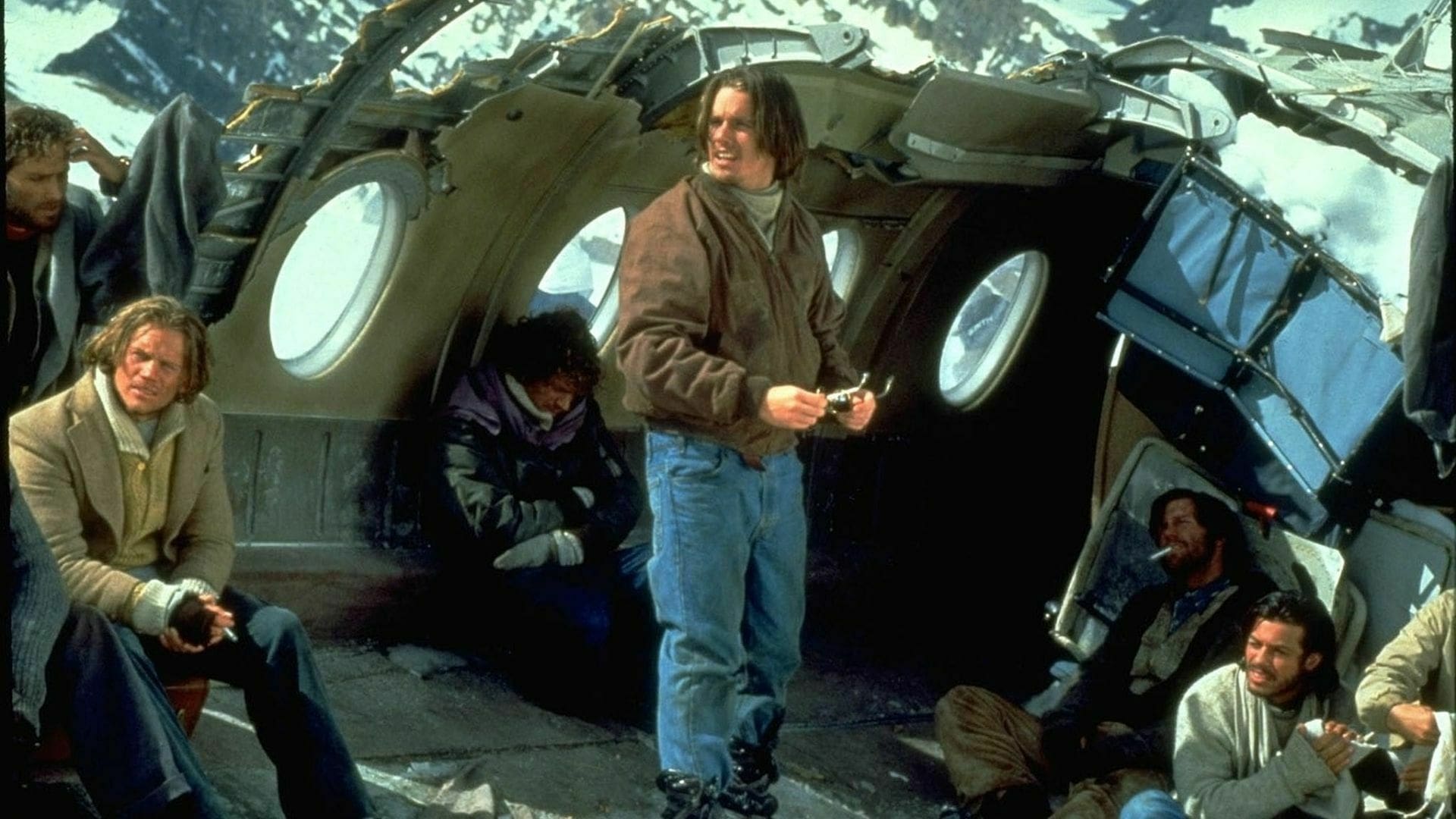
Alive – Snow no bounds


Hosted by
KT & Oti
Show Notes
Join us on an expedition of love, survival and acceptance with the 1993 film, Alive.
Released: January 1993
Director: Frank Marshall
Writers: John Patrick Shanley (screenplay), Piers Paul Read (book)
Budget: $32,000,000
Worldwide Gross: $36,733,909
Actors: Ethan Hawke, Vincent Spano, Josh Hamilton
Referenced


Oti's Picks
Referenced in this episode

Episode Details
- Duration
- 0:00
- Released
- June 8, 2021
- Category
- Episode
- Hosts

Transcript
Transcript (8,282 words)
Full transcript of Alive – Snow no bounds.
KT: It's another week in the For Your Reference household and another edition of For Your Reference moral quandary.
Oti: Mhmm.
KT: Potential trigger warning, friends and lovers. If you aren't familiar with the Uruguay plane crash in the Andes in the nineteen seventies, if you haven't watched the film, just a heads up that obviously there are some real themes in this film. So be sure, be ready, and join us along the way, friends and lovers. Warmest greetings, friends and lovers. Welcome back to the For Your Reference podcast. You got your host, KT.
Oti: And Oti.
KT: Await the red shoe and join us on an expedition of love, survival, and acceptance with the 1993 film Alive. Mhmm.
KT: Woo hoo hoo. Let's get into the stats and general information, Oti. It was released in January 1993. Director Frank Marshall. His most recent credit was the Bee Gees documentary.
Oti: Okay.
KT: Writers, we have based on the book, Piers Paul Read, he interviewed a lot of the survivors as well as the relatives of the survivors. Written for screen by John Patrick Shanley in regards to the budget, $32,000,000, and a worldwide gross of $36,700,000 in way of cast, the ever eternal Ethan Hawke, Vincent Spano, Josh Hamilton, and a whole slew of actors and cast and crew in regards to this film. Mhmm. Alright. There is a lot of source material, and we will go into first impressions, but I do wanna cite our sources.
KT: So obviously we will be specifically covering the 1993 film Alive. There was a Mexican film that was made a few years after the actual incident. But from reviews, I could say that it probably wasn't done as well. There are many books that have been published in regards to this particular incident. I've read the most recent in regards to the survivors. It was from Eduardo in 2019 called Out of the Silence After the Crash. I do have some excerpts from his book that I'll be going through as well. But I guess just retro retroactively,
KT: I would like to go back and read Roberto Canessa's as well as Nando's, you know, accounts of the event as well. And also leading up into this episode, I did happen across the 1993 documentary, which happened twenty years after the same way that this film was set. And it was narrated by Martin Sheen, but to those that are learned, Ramon Antonio Gerardo Estevez. Oh. Alright Oti. So let's get into first impressions.
Oti: Wow. Wow. I think you brought this story to my attention. I didn't know anything about it. Think the first time I heard about it was you mentioning it a couple of years ago. Many years ago. Yeah. It was completely new to me. And I think the fact that it had gone, I just wasn't aware that such a thing happened was beyond my sort of frame of reference
Oti: and I started reading articles about it. So I'm very interested to talk about this movie today because I felt that, you know, story wise, there was a lot and I'm really glad that they got to so many people got to survive.
KT: Oh, absolutely. And I I guess just to, you know, frame the discussion that we're going to have today, the events take place from Friday, October 13 in 1972, and they were pretty much fighting for their own survival until 12/23/1972. So that's seventy two days after the crash. 45 people on the plane, unfortunately,
KT: only 16 survived.
Oti: Yeah. It's tragic. It really is. But, you know, it's the sort of resourcefulness of and the spirit and the leadership qualities of people that you're aware that just shown through, you know, and to see it come alive on screen was something special.
KT: Oh, absolutely. And I think also at the same time,
KT: even though this is based off of true events and even the real Nando was actually there as a consultant of the film as well. So that was quite nice to have. We will be talking about the film. I will be bringing up excerpts from the 2019 novel by Eduardo. But I think a lot of our discussion will be about the fictionalized story. And I guess also the themes that come out of this film as well. In regards to my first impressions, if you are a purveyor of the For Your Reference podcast,
KT: you would have heard me pepper this wherever I can throughout our podcast promising and maybe in some cases threatening that we were going to cover this. So I came across this film in high school. So we have what's called electives, which I think is what's called around the world. And I took two very similar electives and I don't remember which one it was that I studied this film, but there was something called society and culture, which pretty much denotes to what that whole subject and elective was about studying society and culture.
KT: And there was also community and family. And I think I might've studied it then. And it talks about the family unit, the growing family unit, and I guess also the acceptance and then the shunning of a community as well. And I guess that's where a lot of the strong themes came from when I studied it in high school. Other than that, I probably it probably never would have been across my radar. Wow. Aside from my endeavor to always be learned on Ethan Hawke. But yeah. So I I I studied this in high school.
KT: I I have a tendency to like to gravitate. You know, people are at the party dancing on the table like Julia Stiles, and I'm in the corner trying to have a real depth of conversation over some beers. Like, I think Oti is the Julia Stiles. Is that what we're saying?
Oti: Oh, yeah. Oh, I'll be Julia Stiles all day every day.
KT: Nice. Good to know. Thank you, sir. Except your archetype. Yep.
KT: Yeah. So I I've always wanted to come back to this film and I haven't watched it since high school. And thank you for flattering me for saying a couple of years ago, it was a long time ago. And, you know, recently the phenomenon we have is rewatching things we really liked and sometimes it just didn't stand up. We will talk generally how we feel about the film, but I will say I'm glad that we could revisit it. The films I gravitate towards, even if they're not perfect, bring some sort of inevitable
KT: moral quandary and to inhibit that inevitability is where my qualms lie. Who said I couldn't write a soliloquy? Hamlet Oti. Wow. So yes, I was very excited to get into this. Listen to El Hoyo, The Platform, listen to The White Tiger and Oti's ball tea. That probably still won't make sense even if you've listened to it. But yeah, I like like, I'm not necessarily someone that gravitates towards true crime. I think it's also why I like Criminal Minds because it focuses on like the psychology. I like bringing the humanity
KT: to tragic sort of events. I don't like getting into the gory details. I like seeing how human nature thrives and how people are able to get out of impossible situations. And that's exactly what this film is. I do have some themes that I wanna touch on and obviously there are some real key characters that I wanna talk about. But just generally,
KT: how did you feel watching this film?
Oti: My emotions were bouncing off the place. And I think a lot of that was geared towards my limited knowledge on what was going on. I wasn't aware of the sort of interesting details, but I had a rough idea. So my rough idea while watching this and trying to sort of piece piece the puzzle before I get to consume everything and trying to understand why and how they got to that decision.
Oti: Sort of my anger with the pilots, you know, flying above the clouds and then they're like, oh, let's stay above the weather. Then Deep down. Next minute they dip in and they can't see shit. I'm like, what the hell? Was this for the movie? Is this what happened? I don't know.
KT: According to real life accounts, they had turned earlier than they thought they did.
Oti: Oh. Yeah. Man, Jesus. Anyway, so I
Oti: was sitting there thinking far out, far out. Like, a lot of the times when it comes to this sort of tragic events and then you later find out that, you know, it's sort of human error. It's quite sad. So it leads to that sort of weird situation where people crash in the Andes where no one can find them. And this this then I get angry about, oh, what the fuck is technology?
Oti: Yeah. Man, we can we can do a lot of crazy shit, but we can't find anything around the world, can we?
KT: Well, I I guess this goes to what didn't make a main episode, but we recently discussed on our Patreon,
KT: Daniel Daddy Kim's Stowaway. Alternative title, Ever Eternal, Toni Collette Stowaway. That's all who matters in that film. But that that was something that actually not just that, even in El Hoyo as well, you like to focus on what got them there. Right? But for me, it doesn't fucking matter because they're in this situation now and there are some hard truths and realities that they need to face. So even though it was, as you say, human error and potentially it could have been avoided, they are where they are. And even to give you some periphery
KT: sort of context, not that it really matters, but that particular plane had mechanical issues. They had even delayed the flight. But the team, the family, the crowd, they were rowdy to get to where they needed to go to Chile. So there's a lot there's a lot that can be investigated about how it could have been prevented. But for me, what's interesting to me and what I find reprieve and humanity from is is is is getting through the inevitable.
Oti: True. And I get that point of view because to me, I I like looking at things from, okay, we're in this situation, but moving forward, how can we not get to this situation again?
KT: Okay, Eduardo.
Oti: There's always that lens. Sorry. I'm not Eduardo in this. I would would have been I just thought I was gonna like let that slip through.
Oti: I would have been the most effective person in that situation.
KT: No. Because you're trying to stop the future crash, but you're already in the crash, mate.
Oti: Anyway, so it's interesting because you get a lot of different characters and how they everyone handles pressure differently. You know? If it's Eduardo who's just out of his mind and and completely disconnected from the group to to someone like the captain who was like, you know, I feel the responsibility or the burden on my shoulders. And he himself was struggling to sort of stay afloat and keep everything abreast.
KT: And I guess aside from the, you know, broad optics that I mentioned to you, you probably didn't know much about the story. Right?
Oti: No.
KT: I thought it was interesting the tone of this film because the subject matter is very, very heavy. And I think if they were to remake, even though I'm not necessarily in the camps of remake and rebooting stuff, but if they were to make it now with, like, you know, Wayward Pines, Castle Rock, Big Little Lies, Little Fires Everywhere. Like, I think as an audience, we're primed
KT: to not lose focus when things get uncomfortable. And I feel like this film, it kind of teetered on the precipice of some real life harsh realities, and then it just pulled us out. And I know there was comedic sort of dialogue, but what I thought was really effective in balancing the tone in this film was the actual score of it. And the heavy subject matter and the score was very reminiscent to me.
KT: And I know you've talked about Heston films of the Bible. I don't necessarily know if it was that, but usually on a Sunday, if you turn on the TV, there's some sort of Bible story where it's like really harsh and really heavy, but you've got that like a rhythm music that kinda carries you through the whole Bible story. And I kind of felt a similar way watching this film. I don't know if it's necessarily tonally
KT: that was trying to be matched or if that was just the styling of the time. But I did feel like not necessarily that it pulled its punches, but when there was time to just be and to simmer and and and to stay in that uncomfortability, it lifted us out of that. Whereas I would have liked to have stayed in that because that's where we get into some real quandary. I think the first question I asked you after the movie started was, why are they taking it so well?
KT: That yes. Let's talk no. But let's talk about that because they they literally just crashed. And maybe maybe it's that overheightened sense, you know, the Lindelof of it all, the Lost element of it all, where everyone just fucking loses their shit. Right? Maybe this is what it's like in a real life situation that you you haven't even registered
KT: that this is happening to you yet.
Oti: I felt like I kept on I needed to tell myself myself that that shit, this happened, this happened over and over in my head so that I can completely feel or be as empathic that as much as I can be. Because I felt like I was kept on being taken on surface level, like, oh, this is just a movie. Any other movie, it's as if I'm watching Lost, but it's not. Uh-huh. These are real people. It happened.
Oti: Yep. It's part of history. So I'm trying to pinch myself or push myself mentally or like, oh, wait. This this really happened. Focus. Focus. Focus. Mhmm. But it felt so it felt too surface level. It felt like they're taking, hey. We know we're going to deal with some heavy stuff, so we're just gonna tailor on the precipice. We're not really gonna do we're not gonna dive too much. We're not gonna go into the emotional turmoil. We're not gonna go into you know, we're not gonna make you feel raw and vulnerable
Oti: because I felt like there was a missed opportunity where these guys crash and it's like, hey, you know, it felt like it was nothing. People are losing their lust, but you have people walking around just joking and, you know, oh, yeah, cool. You know, this other person was dead. Let's move on to the next body. Oh, they're dead. Let's move on to the next. And then after that, it's all just I I wanted maybe it's wrong. Like, the only person that cried in this movie was Nando.
Oti: Yeah. And it was for a second. And I'm like, what am I missing?
KT: Well,
KT: because it's one of those things. Yeah. Like until you're in a life threatening situation, you'd never really know how you're going to react. I kind of I don't necessarily think it's deeper than that. I would just say that they were just running off adrenaline and they hadn't gone into shock yet. That's what I would say personally, but I do agree with the overall tone of it. I don't think that they could have succinctly been able to capture the experience because they were out there for seventy two days. And I had to sit there and
KT: not spoil you in the splooshiest of ways because we got to what? Day eight? And you're like, what the fuck are what are the what the fuck is happening? You know, even when they they heard potentially that there was going to be hope. Right? And I just had to sit on it and on you, sir. But I I had to leave that to the side because there's so much that's going to happen in the film, and I would prefer that you experience it as the film goes. Right? But I I I don't necessarily
KT: agree with you. I I do think that what they did was sufficient enough to to at least be able to rouse empathy in people if they had heard of the story and they were completely judgmental of the circumstances around these survivors. But I don't like, unless it was going to be like a miniseries,
KT: but then the more realistic you make it, the more fucking sad it is. Right?
Oti: And what's wrong with being sad? You know, we we we we're trying to convey or at least portray the harshest realities of this guy's life. The writer and the director had this onus to sort of portray the quandary with the sort of same intensity that they would have felt.
Oti: And granted, maybe Nando was like, you know, my family or whoever would have watched this, and they don't really wanna relieve a lot of that. I don't know. I just felt like I didn't think what moved me was the story and what I what I'd read prior. Watching it, I didn't get the same emotion. I didn't get the same feel. I was like, okay, cool. This is just more of a, oh, explain the details of how they got from point a to b.
KT: Yeah. But I think also at the same time,
KT: like there are things between you, between myself that are very personal to me that I wouldn't necessarily want to, or am ready to share that on the podcast. You see what I'm saying? Like these are actual accounts of things that they've gone through. And I guess this is also a note that I have for Eduardo's book, not necessarily remembering the film that I watched in high school, reading the book because it came out recently. There was a lot that I was wanting to know
KT: in regards to reading the book. There was a lot of focus on introspection, which was actually quite interesting because we didn't get that in this film. But also at the same time, it did feel like there were parts that were being glossed over. Right? But then who am I to be intrusive, to want to know those details? You see what I'm saying? So it's like, I agree with you, but then I also give graces for I am a generous omniscient, my love. Woah. But I don't know. I guess I give credences
KT: where I give credences. I just wanna read an excerpt from Eduardo's book. The film didn't leave us all satisfied because much of what it depicts isn't really accurate. Nevertheless, I remember that when we saw it for the first time in an exclusive premiere for the 16 survivors, we were all moved to tears. We also went to the premiere in New York and were even invited to tea at the house of the famous director, Martin Scorsese,
KT: who at the time was in a relationship with Illeana Douglas, who played the part of Liliana.
Oti: I I I get that and I can I can see the point where they get they can be moved to tears because they lived it? Yeah. I think for me, it just missed the mark and I feel like that's a disservice. But far be it for me to say that because in as much as we didn't get to see a lot of Eduardo in the movie, he still had qualms over it. So it'll be interesting to sort of see
Oti: maybe in a few years later, we'd probably get a new version. Oh, absolutely. Maybe.
KT: Maybe leave it alone. Who knows? In regards to themes, I wanna talk about survival. I don't think we've outrightly said, but there is consuming of human meat in this particular film, also in the actual account. And I just wanted to talk a little bit about survival, I guess bringing a little bit of levity. We've talked quite a lot about the History Channel's TV show Alone. Obviously it's in more controlled environments, but I would say it is roughing it up more than Bear Grylls. That's my bed to fight another day. But we're
KT: fascinated by the show because of the two components. There's physical survival, which is hard enough depending on the terrain that they choose in that particular show. You have to find shelter. You have to decide whether you want to be close to running water. You have to decide where you're going to cook your food and gut the fish and all that sort of stuff. So there's the physical survival. But what I found more interesting was the emotional survival Because you only need so much time if you're learned to be able to set up shelter.
KT: And then for however many long time, you need to be able to survive within yourself.
Oti: Yep. Not a lot of people are good with
Oti: being alone with just their mind and their thoughts.
KT: No. And in that particular TV show, people just dropped out because they just couldn't handle it. Yeah. They had built palaces and canoes, guitars.
Oti: Yeah. And after that he'd like, yeah, I can't do this anymore. Yeah, absolutely.
KT: In regards to Eduardo's book, wrote, by the tenth day, everyone was eating. Even those who had the hardest time deciding. Everyone had a motive for doing it that had helped them in the deep recesses of his soul, such as returning to see his parents or children, to not fail his loved ones, to fulfill his established destiny, to carry out this dream or that project or simply to live. So this is one of the most pivotal points in the film where I guess there's only so much hope you can run off. Also,
KT: to the book, not in the film, on the tenth day, we heard the news that the search had been called off. I believe in the film, they mentioned it was on the ninth day. But I wanted to talk a bit about survival and you kind of pinpointed characters earlier. And I wanna focus a little bit on that. Yeah. Let's go for it. Let's talk about Antonio. Interestingly enough, understandably enough, a lot of those that didn't survive, their names were changed. So it was a bit confusing after reading the book and watching the film.
KT: Although Antonio was integral to the survival, especially in the first leg of their journey. Right? So I wanna talk about Antonio a little bit. Immediately
Oti: after they crash, he took it upon himself to lead because he was a team captain. He felt it was his responsibility to make sure everyone had this sort of figure to look up to. Mhmm. You know, he'd have have their answer their questions, he'll motivate, and he'll find a solution to get them out of there or at least to make them survive.
Oti: Mhmm. All of this while still, I think, at the start, he was just ignoring how he felt until it got too far into the into the stay there, and he just started crumbling because he I think part of it was he wasn't looking after himself. I think a lot of it was external. He was like, oh, they need me for ABC.
Oti: I just need to get to here and I'll be fine. Yes. I just need to get the helicopters and the rescue to come and then I'll be fine. Yeah. It was just kicking the sort of can down the road, you know, and until it all caught up to him and he just lost it and rightfully so. It was too much for him to sort of manage that situation or feel like he needed to do everything. Yeah. Because it's not feasible. Yeah. It wasn't feasible. And until we saw other characters step up because we have we have like Nando who was
Oti: really sick and unwell when they crashed. Yeah. He wasn't available up until what? Day five, six? You know? So it it was like, oh, he felt that there was no one really stepping up any as well. Yeah. A lot of people were just in themselves doing nothing.
KT: Well, Canessa was doing a lot,
KT: but he also had his reservations as well. Yeah. Like he would do what needed to be done within his skill set, but dreaming and being more ambitious than what they could physically see that they could vision, he wasn't for it, which I thought was really interesting. But going back to Antonio, you do have natural born leaders, you have those that step up when everyone else is just waiting for their Messiah, hallelujah or otherwise. But he was there at a time that people needed him. And it's interesting watching the documentary with Ramon Estevez
KT: narrating, one of the survivors said, you know, there would be people that would be writing letters back home and it might've helped them get through it, but I never wrote a letter home because I knew I was getting home. Writing a letter home meant you were never going to go home. And that's interesting because it really is that fine line between surviving and survival.
Oti: It is. That's weird because I think I wouldn't say that writing would make you feel like you needed to give up or you're not going to get back home. I think it's a lot of people are different and it's a coping mechanism. Know? Yeah. It's how you'd handle with that sort of stress or pressure because we saw we sort of saw a lot of the differences between I think this is highlighted more in Nando where he was like, he he he looks to the positive all the time. He looks the black If
KT: if we've if you guys have listened to Parasite, if you've listened to The Platform, if you've listened to The White Tiger, and for our beloved patrons, if you've listened to Stowaway, I am Nando. I believe I am Nando.
Oti: Okay, Nando.
KT: Thank you, Eduardo. Oh, wow.
Oti: Yeah. And like I said, like a lot of that was just highlighted through Nando because we saw how he looked to the brighter side. He looked at, know, when he got to the top of the mountain, he was like, oh, yeah. Well, you know, it's beautiful. Just take it in. He was pragmatically
KT: hopeful. He wasn't baselessly hopeful.
Oti: Yeah. He wasn't blue sky stuff.
KT: I get that. I understand the sentiment
KT: about the letter writing though, because symbolically or even physically, when you need to get up and keep pushing, you're writing a letter. You see what I'm saying? So it's kind of like untethering yourself from what the reality that you have is. If you have time to write a letter, you have time to try and fix the radio. You have time to help cut the flesh or
KT: dry it out or to melt some of the snow. You need to keep yourself busy. And the fact that there were so many of them, everyone was relying on each other, sometimes too much so.
Oti: Fully agreed.
KT: Speaking about survival, I do believe this is creative license in regards to the film, but also at the same time, it was an intimate discussion between husband and wife. And I'm talking about Javier and Liliana. Her sentiment of wanting to have a baby.
Oti: Yeah. I don't know what in that situation would make you feel, oh man, I need a baby right now. Unless it's a hope thing. Maybe that was her letter. Maybe it was. Maybe that was her letter because it's sad that she didn't make it the next day. Yeah. Yeah.
KT: That's actually while we're on the topic of survival, that's something I said watching this film and I didn't necessarily feel it so in the book because I guess I knew Eduardo would survive. But something about visually watching the movie after they had crashed, after they had starved, after their second avalanche, it's
KT: like, at what point do you just feel like the fight is over, you know?
Oti: Yeah. It's very easy. Like, no one would blame any of them if they gave up. Like, it's there's only so much the human body and the human psyche can take. Yeah. But they were tested endlessly. Oh, absolutely. Endlessly.
KT: Absolutely. Even by others. Yeah. Federico was one of my favorites. It was noted in the book and I still am learned friends and lovers. I also still read IMDb trivia. Don't worry. Just because I read books doesn't mean I stopped reading the trivia. But verified by those, Nando was the one that realized Federico had died.
Oti: Oh, wow. Yeah. I saw that like How many fucking people were on but then again,
Oti: I don't wanna shame because there was probably a lot of trauma and shock. But still, how many people were there? They didn't realize he died. Yeah. They're just chilling next to each other and it's weird. Because Nando was what? He was trekking back from trying to go up to find the the tail of the plane. Yeah. Coming back carrying Roy. Only to see man. Oh, At some point, people need to step up a bit, man. Yeah. Oh, absolutely.
KT: No. No. No. Absolutely. I absolutely agree with you. 100% on the mark, my love. Yeah. Wow.
Oti: There's 16 people there. But watching this movie, it'd feel like only four people were Yeah. Only four people are doing anything about it. It's
KT: a tough one. Right? And even you made a comment about Javier.
Oti: Oh, yeah. Javier. Javier was the oldest guy there. Yeah. And he did shit all in that movie. Yeah. I was like, I thought he was just taking time, you know, with the wife grieving. Even when the wife was there, I thought, oh, they're just trying to, you know, let the kids be. Yeah. But at what point do you need to say, hey, I need to show some leadership. Need to take some responsibility. I need to alleviate some of the pressure these kids have. Yeah. You know? And sort of lead
Oti: anything. Show some leadership at least. But it's not even leadership. Just be part of the team. He was quite removed from it all. Yeah. It's weird. It's just wild,
KT: man. It's wild. Well, I guess he just thought that other people were going to take care of it. Okay. So here's the trade off. Here's the trade off. If in a life threatening situation, you choose to do nothing, then you cannot have any say in how the leader chooses to save and help you survive. Agree. Right? Yeah. Because even when and I guess we'll we'll come to it. I didn't like the way they introduced cannibalism
KT: in this film, but I think, like you said, they were trying to prime us and make it a bit like a side comment and make it a bit comedic. I just felt like there was a lot of thought that went behind it, even though he might have introduced it in a offhand sort of way. There was obviously a lot of thought that went into it because there's a lot of anguish. There's a lot of agony. Nando wasn't even one of the first that that that consumed it. Right? So there was obviously
KT: conflict that he had even within himself. Even when he said to Canessa, please,
KT: did you go near my sister? And he said, no. Right? And he started to cry. That was one of the heartfelt moments. One of the only heartfelt moments that we felt in this film because he knew what needed to be done, but it doesn't mean it was an easy decision. You see what I'm saying, bruv?
Oti: Yeah. I hear you. And I think and that's what I'm telling you. Like, a lot of the emotional stuff that they had to you know, it's literally
Oti: read it's it happened. It's there. It's written for you. Like Yeah. For them to just skip over it and to introduce you like, oh, hey, guy. I'm just gonna, you know, we should eat the pilot just because, you know, he caused all this and then laugh it off and then move away. Yeah. I'm like, dude. That's one of the biggest plot, know, that's one of the main story points of this movie.
Oti: And to just gloss over it like that, was like, Jesus. What's wrong with these people? Yeah. It's as if no one it was like just an afterthought. Like, hey, let's just eat this guys, you know? Because
KT: Yeah. Yeah. I do take qualm with
KT: the way they introduce it into the film, especially because the book I read was very introspective, you know? It coming to a loggerheads of your morals and your basic instinct to survive. Right? And that's not the nuance we were getting in the film. And again, I wouldn't expect the two hour film to be able to deliver that. Right? Maybe if it was like a Passion of the Christ and the two hours was just their last few hours.
Oti: Maybe I hate you to give it to Mel Gibson.
KT: No. Thank you. No. Thank you. The survivors have been through enough. Thank you.
KT: But you see what I'm saying? Like, I I give credence to the sense that I don't ever see how this could ever have been achieved in two hours, even if the tone was unrelenting. Right? So I give credence to that. But yeah, the the fact that this became such a subject matter, you know, even the director, Frank Marshall, he was on the phone pitching the film and someone overheard him and was like, oh, is that where the people ate each other? Like, it becomes the punchline. It becomes the headline.
KT: Right? So so to have this film twenty years later, hopefully try to challenge those ignorant dismissive sort of views that the general public have sitting in their ivory towers with their warm tea and fuzzy socks, it didn't necessarily do that. And I I think that was, you know, a missed opportunity in the way that they chose to introduce cannibalism because it was never going to be something that was easy. And I did appreciate the dialogue that they had when it was properly introduced to everyone. There was a lot of sentiment
KT: and there were even characters that were spouting a lot of the rhetoric that they would hear when they got home. On one side, people would say, we need to make it back to our families. And then others would be like, why? Because why why would they even accept us if they knew that we ate flesh? You know what I mean? Like, there was this push and pull and that's exactly where I wanted to be in this film.
Oti: Agreed. I think a lot of that back and forth where they said, you know, some said like, I'd rather die than eat flesh. Yeah. Challenging that sort of thinking and that sort of mentality where you put yourself at, okay. What do you have to do to survive? Yeah. Are you willing to do anything? And and and how that conflicts with your religion, personal views, your ethos, whatever it is, you know? And it didn't come through well enough because a second later, they were doing a one for all, all for one. Yeah. That, oh, yeah.
Oti: I die, you're gonna eat me. You know, it just felt undeserved
KT: at that point in time. No, I agree with you. And I guess while we're on the topic or the theme of morality in the documentary, they did interview Father Roxas and he actually speaks on this and he says it wasn't a sin and the church doesn't consider it to be so. Interesting, interesting, especially because from what I remember in my high school studies, there was a lot of backlash and Father Roxas continues to say,
KT: transfusion of one's blood to save another. So that kind of follows the sentiments that we heard in the film. It's kind of like a communion, right? To give you, I guess, life, but in this sense, physical life as well. In Eduardo's book, I've got a passage here. The delicate matters of our ordeal, we left to Pancho Delgado, the most eloquent among us to explain. He revealed everything that had happened with simple and straightforward words, including the way we had sustained ourselves. He put it in a religious light,
KT: referencing the holy communion where Christ gave his body and his blood as spiritual nourishment. And it was that intimate communion between all of us that allowed us to survive, said Pancho before loud applause interrupted his speech. So this is something interesting, Houtique. And they didn't necessarily touch on it in the film and it also wasn't necessarily addressed in Eduardo's book as well. When they came back, there wasn't necessarily any sort of backlash. Nando also mentions no one in their neighborhood asked them about eating the bodies even twenty years later. No one in their community
KT: actually asked about it. It wasn't until a Chilean newspaper published two legs at the site that was being recovered. And it got international attention everywhere except for Uruguay. This is where I feel gross. But I also guess in the instance of the digital age in which we live, it also is inevitable to a certain point because technology advances to those particular points. But it felt as though the survivors were receiving love and insulation from their own community
KT: and it was the rest of the world that chose to continue to judge them. So the excerpt that I read from Eduardo's book was actually based on a press conference that they held on the December 28. Imagine, Oti, imagine you December 23, you've had a whole ordeal in the Andes surviving for seventy two days and three days later having to run a press conference to make people feel comfortable that can't even imagine, begin to imagine the conditions
KT: that they had just survived and they have to justify to themselves the way that they were able to survive. How the fuck? Yeah. Just don't listen to them. Like, it's fucking shit. It's bloody ridiculous.
Oti: And it's surprising to me that the church actually thought it was good because man, I can't put anything past the fucking Catholic church.
KT: Yeah. Interesting. Because the priest mentioned there's nothing specifically
KT: in regards to their circumstances in the Bible that condemns it. So guess from that point of view, they were able to get some sort of reprieve. And like you said, I guess we get our credences wherever we can. Oh, but it's just one of those things where obviously it's so clear to me in this instance that no one will ever know what it's like or what it was like to go through that. Because think about it, the the decision to survive and realize that there wasn't going to be an external power
KT: coming to help you, where we have Nando's character saying, this is good news because this means we save ourselves. We're not going to have some sort of false hope. We are our own hope. And this is what bothered me in the film as well. I believe it was Carlitos. He was like, oh, look at look at look at God. Look at what what God is doing. And it succinctly pans at Nando and Canessa. And it's like, these are the guys you should be thanking.
Oti: Yeah. Yeah. Yeah. It's it's crazy. It's ridiculous.
KT: But it's like and I I guess if you are believing, surely you believe that like God works through vessels and and through people. Yeah. And if you don't do shit, nothing happens. So it'll be like, oh, man. Thank you, Nando. Thank you for doing everything. It's it's just absolutely it's absolutely wild. And I guess I just wanted to touch on this because who am I, if not someone to question religion?
KT: I wanna talk about I do think it was quite effective, the theme of religion that they had in this film. Like even from the start, were talking about praying. I'm pretty sure it was Carlitos that was praying on the plane and he was crediting himself that they didn't get in as big as a crash because he prayed. He prayed, yep. Right? And there was lots of moments in this film where
KT: I don't think it was hitting you over the head. I do think it was very effective, especially without knowing anything going into this film, you could see that they were very in touch with their religion. Right? And I think that also helps to outlay that it wasn't an easy decision for them to consume people that they knew and love. So I really thought that was very effective, but it came to points in the film where there was someone that kept saying they were agnostic.
KT: Right? And when the avalanche was coming, he started praying. I was like, don't fucking do that. And it would be very immature for Carlitos or otherwise to blame an avalanche on him just because he wasn't praying. Like, you think your prayers are that powerful? Fuck off. Yeah. That's ridiculous. I think
Oti: maybe that was just I hope that was just creative writing rather than anything else because you stay true to your faith or whatever or whatever gets you through that moment, know, people are different. So whatever you clutch onto, you do you, but don't blame anyone else just because they're not about your religious
Oti: or religion.
KT: Oh, absolutely agree. Yeah. Because it like bare instincts,
Oti: it's survival, man. If it wasn't for Nando or Roberto, then these guys don't survive at all. I I I'm a 100% sure or at least they don't get out of the mountain that quickly.
KT: Oh, I agree. I absolutely agree.
Oti: But it's also weird that the two the two doctors are the ones that the two of the medical training Yeah. Are the ones that had to go out to venture to find help.
KT: Yeah. Did they not watch Designated Survivor with Kiefer Sutherland? Nah. But like, no one else wanted to help really. Yeah. Except for Tintin.
Oti: Yeah. Tintin did well. I think he also put himself out there, you know. And sometimes you just have to go out there like sitting in that plane and just waiting it out. I get that. I get people are different. But in such a situations, you have to pull yourself up and and you have to put yourself out there because you can't put your all your hope in one person. Personally,
KT: I I would have to be involved. Like, I would have to be involved in my own survival. Yeah. I'm not the most athletic, but you'll see me struggling up the mountain before you see me staying, you know, down in the plane doing nothing. But then again, no one to judge anyone. But then again, this is a fictional film. Yep. So this is where we are. Yeah. Nando was absolutely solid. I think he, you know, he was definitely the one to get everyone out Because as much as Roberto was very helpful, he did
KT: have this trepidation on going too far Yeah. To the point of no return. The high risk, high reward, babe. I also wanna give a little bit of spotlight to Gustavo because I thought he was also Even though he wasn't always going to be the first to volunteer, he had a lot of sentiment. Even in Eduardo's book, he talks about him gathering the cargo to be able to give it back to the families for those that didn't survive. That's a nice sentiment. And I think that's exactly it. And even while we were watching the film,
KT: I think it was one of the moments where Antonio took too long to decide that he was going to be on board with the expeditions. Everyone is valuable. While they're still alive, everyone is valuable. As much as they piss you off, they still have skills and they still have hopefully, the able-bodiedness to be able to help. Unless
Oti: you're Roy. Sorry.
KT: Oh, man. He was the worst. Well, he was kinda useful until Antonio died. I think that's kind of where he was like, I give up now. Yeah. Yeah. Well and we saw how how he couldn't handle any sort of bad news. Like, the minute he found out that
Oti: But at what point do you realize this is everything? This is your morning,
Oti: afternoon, and night? He he was just clinging on to hope. Yeah. Who? Like, he he he he's he's one of those guys where he'd rather live in ignorance than me tell the truth. Because he was like, what did you tell me? You know, don't don't tell don't tell tell me something else. Tell me they're coming. Tell me. And Antonio is like, nah, I've just heard it on the radio. It's true that no one's coming. They've given up. He's like Noah from Archer.
KT: Well,
KT: Heart of Archness or when they go to the Pirate Island. Yep. I just wanted to focus on the fact again that, you know, Nando and Roberto were the MVPs because they were not in optimal sort of situations, but they were still trying to treat and help everyone. Because what are you gonna do? Like, Federico has gangrene in his leg. Literally, there's nothing you can do for him, but Roberto kept trying to help him. Yeah. This I guess I guess, you know, people are just built differently. I guess that's what it comes to because
KT: even though there was no end in sight, you had Nando, you had Roberto. They were continuing
Oti: to help and keep pushing. I think that's all you have to do. Like, you just don't cower and give up because it's hard. Otherwise, you'll never get out of there. You'll never go anywhere. So I think a lot of this just fell on Nando and Roberto's ability to to see the bigger picture and to sort of try and push themselves. And I'm pretty sure it was hard on them. I'm pretty sure they were feeling like, you know, there's no hope, but they didn't put it out on the they kept on just going.
Oti: Let them die while walking, but at least they are doing something. And I think that's one of the best mentalities you have. To get rich or die trying? Yeah. Do you think 50 Cent would have been okay here? Nine bullets couldn't put him down me. What's no.
KT: Wow. You're really proud of that, aren't you? Yeah. Okay. But yeah. I don't know. Like, from a story point of view, it was lacking. But from a human point of view, this is a feat for history. I think I'd go and and and and read
Oti: one of the books, probably not Eduardo's.
KT: We're glad we're glad he survived. But according to the film And
Oti: get, I think, one of the most and get what I wanted from this movie. And that's the Nando has a book and so does Roberto. Yeah. I I I was I was in there for the emotion and I think they missed the trick there. So I'll
KT: read a book, I think. Yeah. It was it was interesting because Eduardo's book came out most recently. So furthest away from the events, yet he still isn't ready to talk about it. Yeah. It's hard, guess, you know, some traumatic shit. Well, those that have read the book remind me because I didn't highlight it in my Goodreads that he had a red shoe. I don't remember the red shoe at all to be perfectly honest. Friends and lovers, thank you for joining us another week in the For Your Reference podcast.
KT: Mark it off on your bingo cards, and lovers. We've done Training Day, Predestination and now Alive. It's Ethan Hawke extravaganza. We're gonna finish off in a segment we call For Your Reference,
KT: Oti.
Oti: I'd like reference Alone and that's a callback. Just because it's it shows a lot of the psyche that goes through being stranded somewhere. You know? Albeit in a controlled environment, it's still the closest you can get without it being a tragedy. Steps?
KT: Yep. Or otherwise. I will reference the Alive: 20 Years Later documentary.
Oti: Nice.
KT: If you'd like to see our documentary in bite sized pieces on Twitter and Instagram, we're at For Your Ref Pod. Write us an email at hello@fyrpodcast.com. We're also on Eduardo Oti Redshoes podcast if you'd like to leave a rating and review. And we'll see you guys next week. See you. Bye.
Related on FYR
Discussion
Loading comments...