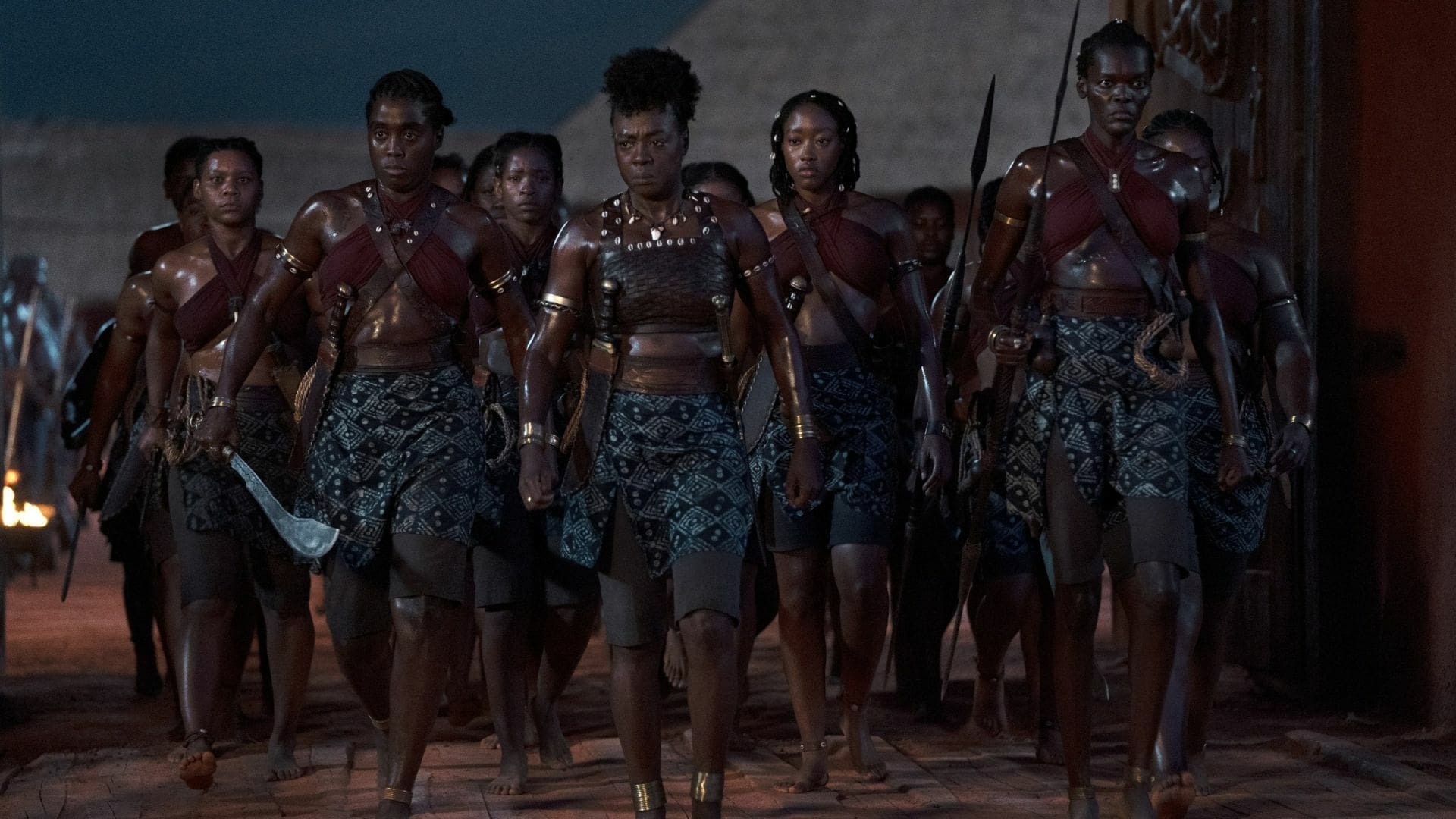
The Woman King – Da house is not Dahomey


Hosted by
KT & Oti
Show Notes
Clear your chanting throat, stretch your dancing muscles and oil up for a grand battle with… a formidable phantom enemy? Whisper sweet nothings through the barrier of forbidden love with The Woman King.
Referenced


Episode Details
- Duration
- 0:00
- Released
- November 1, 2022
- Category
- Episode
- Hosts


Transcript
Transcript (8,264 words)
Full transcript of The Woman King – Da house is not Dahomey.
KT: It's another week in the For Your Reference household, but it is a first for many of the cast, Oti. Mhmm. We would have done Viola Davis a long time ago if you weren't such a Widows hater. Wow. Before we dive in friends and lovers, I will say with my full Patrice Woodbine chest, where the nuance was sad, where the nuance was sad, we are going to get into some tasty tasty, maybe not historically accurate action Oti. Mhmm. Are you ready?
Oti: Ready.
KT: Are you ready for the war cry?
KT: Eunuchs only. Am I right? Mhmm. Let's get on with the show. Hey, friends and oh, oh, oh, lovers. Welcome back to the For Your Reference podcast. You got your host, KT.
Oti: And Oti.
KT: Clear your chanting throat, stretch your dancing muscles, and oil up for a grand battle of a phantom enemy? Whisper sweet nothings through the barrier of forbidden love with The Woman King this week.
Oti: Who
Oti: was that for?
KT: Bro, I've not even got into first impressions yet. Man,
KT: I haven't felt this double white woman scandal since the college admissions. Am I right? Nudge nudge. Wow. Let me get into oh, I hope you've done your homework friends and lovers and I hope you're feeling nasty. Spoiler spoiler spoiler representation representation representation. We're going to get into detail. We're going to break the matrix friends and lovers. We have director of first on the podcast on the For Your Reference, you nest it, Gina Prince-Bythewood and most notably, Love & Basketball. Mhmm.
KT: I don't I I think it was just a podcast interview that she did with Jemele Hill. I don't know if it was leading up to Woman King, but I do recall a clip of her talking about, you know, taking Sanaa Lathan through the tough yards for Love & Basketball. Yeah. I felt a way about that. Yeah. To the point where when Sanaa got it, she was like, okay. Don't even want it anymore. Comparing if that's a harder experience than her role in Succession, you know she went through the fire. Writers,
KT: Dana Stevens writing the screenplay as well as Maria Bello. Don't worry, friends and lovers. We have a separate theme to talk about that. The Woman King was released in October 2022. Shout outs to Sony for inviting us to the preview screening. Mhmm. A budget of $50,000,000, decent, and a worldwide gross so far of $83,300,000. Checking. Wow. Are you at the Holiday Inn?
Oti: Yep.
KT: Are you for the culture?
Oti: Always.
KT: A cast of Viola Davis, Thuso Mbedu, Lashana Lynch, as well as Sheila Atim. How could I? How could I? How could I? John Boyega.
KT: First of John Boyega, would you believe? Oh, really? Yeah. He comes to my man moon every month, but there you go. Let's get into first impressions. It was a fiery watch and we've had a couple of days to simmer down. Unfortunately, we haven't had a chance to watch it a second time. I think I've had enough, but anyway, let's get into first impressions. Oti, our residential Black man. You said it. Thank you, Burna Boy.
Oti: Well, I'm of two minds with this. You know, if I'm going to go in watching this expecting Hollywood to tell an African story
Oti: as if it was a bloody documentary, then it's Beast? No. Then that's folly on me, you know. It's it's Hollywood is never gonna do that. So with my expectations of what this would be, be it historically accurate or not, I knew what I was going to get. And coming out of the cinema, I was I enjoyed it as a piece of entertainment.
KT: Okay. So you're essentially saying if you didn't like it, shut the fuck up and get off your ass.
Oti: Not really.
KT: Okay.
Oti: Not really.
Oti: I think it's just one of those things where I know where the discussion points would be and if you expect Hollywood to be different from what they've shown us this past decades, then you're gonna be waiting a whole lot more. So I went in knowing exactly what this was gonna be. I enjoyed, it was entertaining. Viola Davis is fucking brilliant and magnificent in this. Like, carried this, man. She is something. And it just brings some levity to this.
KT: We love Kumail Nanjiani.
KT: Like, we love this is a forward palate Kumail Nanjiani podcast. But when we did see Eternals, we're like, for that? Yeah. Yeah. Got buff for that? So at least this made sense. All of the hours, all of the work Viola Davis put into this role, she put a whole foot into this role. Mhmm.
Oti: Thousand percent agree with you, man.
KT: Okay. I I want to bookmark what you just said, and we'll come to an actual discussion about Hollywood.
KT: But you said you were in two minds, Oti Naz. What was the other mind?
Oti: If you're going to dive in to tell African stories.
KT: Yeah? Hey. You know, we've we've kind of been steeped in Africa from your fuck you and your silly husband, Young, Famous & African. We also did Beast as well. We've been settled into Africa this year.
Oti: Yeah, Like, if you're going to tell the story, you know, and pay homage to to the people of the Dahomey Kingdom, you know, then just I don't know. It feels weird everything is in South Africa. Okay. I don't know. Yeah. Shoot it in South Africa.
KT: What's up? Oh, you're talking about the filming locations.
Oti: No.
KT: Oh, okay.
Oti: It doesn't even need to be, like, there.
KT: So you sort of you're like, it should've been close to Nigeria or West Africa?
Oti: Not even. Just have a have a piece of, you know, Easter egg that, oh, actually, this is, you know, this is where the thing happened or something, anything really.
KT: Tell us you've bought plots of land in Kenya for filming without some. I got a top purse, do you?
KT: Get in on the Ground Room Floor, I right?
Oti: A 100%.
KT: Are you mister chocolate from Atlanta? Yeah.
Oti: Nah. It's just one of those things, man. You know, you're putting them on a map, might as well go in a bit harder, show the appreciation for, you know, for the country and all that. I think I sort of picked up Xhosa chants in the background. I'm like, bruh, even if you're in South Africa, doesn't make sense in this
KT: So just just for our friends and lovers that are Pitbull, mister worldwide,
KT: we're currently talking about the Dahomey tribe, which is currently within modern day Benin, right next to Nigeria, which is West Africa. So you're saying there was a mishmash
KT: of possible chants and languages and maybe even accents that will come to. Yeah. Okay. Alright. It's interesting because when you say you're of two minds, they are literally opposing each other.
Oti: They're not.
KT: They're literally in a dance battle chant together.
Oti: I can isolate those two and look at it.
KT: But what you're saying is shame on you or it's on you if you think Hollywood can do better but then you're also telling them to do better. So they are opposing.
Oti: I'm just picking up the sort of sort of the lowest hanging fruit they can do, you know.
KT: Yeah. But I guess that would also point out to
KT: the importance of you mentioning it because unless people are African, they probably wouldn't see, I didn't even notice.
Oti: It's one of those things I was like, bruh.
Oti: Cool. You're filming in South Africa. You don't need the chants in there as well. Okay. Just just saying.
KT: So you're still conflicted?
Oti: I'm not. I'm it's just that it's it was an afterthought and it it all remain as an afterthought. It wasn't anything significant.
KT: I will say, you know, for Beast and even this, I feel like they could have been more focus on the expanse and the beauty of the land. Like, even if we think of, like, you know, coming back to the country that we're in, you know, season one and season two of Redfern Now, and it was, like, in what people would consider, like, the Outback, like the Kimberley's in Western Australia, you could feel the beauty of the nature.
KT: And I feel like that could have been done a bit better in this film and also in Beast.
Oti: Yeah. I can't argue with that.
KT: Something that you can argue with, and we're going to start off very light in our themes today because there's obviously going to be a lot of heavy heavy nuance that we're going to get to. I wanna talk about the accents. A friend, I might even say, my childhood best friend, is Nigerian and they haven't seen the movie. However, their people are saying that John Boyega let them down.
KT: And I guess contextualize, John Boyega is Nigerian, and we have Thuso who is South African. And then you have Viola Davis. And I think a lot of everyone else is kind of using the generic sort of vernacular that we're used to hearing for what people would expect to be like an African sort of accent. So, you know, let's start off. This is like the palate cleanser, if you'll pardon the pun. How did you feel about the the native tongue, the mother tongue?
Oti: I didn't think it was great. It wasn't as distracting as Black Panther was. Black Panther was very distracting. T'Challa. Shout outs to Forest Whitaker. But then, you know, I have a couple of Western African friends and
KT: You oh, so you're one of those people that say you have one West African friend. Right? Yeah. Yeah.
Oti: But I don't know. It sounded a bit off. It just sounded generic sometimes.
KT: But they also sounded different. Yeah. Like even I could tell.
Oti: But then again, you're casting you're casting Americans,
Oti: Brits in here. I don't know what you expect. I didn't I didn't have a qualm with that.
KT: You're really fighting yourself.
Oti: Oh, I'm not.
KT: Because you say you you you acknowledge it, but then you're like, what do you expect?
Oti: It's can just point out something without feeling as if it weighed down the moon. It's just beating you down, man. No. I can just point out, oh, I noticed this. It's not that, oh, I noticed this and it's bad. And it weighs everything else down. It didn't for me. I saw it, but moved on.
KT: Okay. Yeah. Alright.
KT: It's not necessarily a theme, but I do wanna put it here so we can really, you know, ethically non Martin Freeman, whatever his name is in Black Panther, excavate, archaeologically dig this film where the nuance is odd, where the nuance is odd. And you know, this is looping back into your first impressions. We friends and lovers, your For Your Reference, nasty custodians of film criticism and otherwise. We are not the place where you come to debate whether races occur. We are not the place where you come and try and understand sexuality.
KT: Like, we speak from a place of nuance. You know? We have said very generally that we didn't like Eternals, but unfortunately, that means we're on the side of the sweaty film bros, but the nuance exists. Mhmm. Like, there are specific reasons why we might not like something even though we are on the pendulum of those sweaty film bros. Right? And that's non gendered. Right? So the reason why I wanna say that is because it kind of leaked out at the start of the episode. I didn't necessarily
KT: care for this film. However, I would say that you should go and watch this film. And I would say that this film is it should absolutely be experienced in the Nicole Kidman cinema. The reason why I say that is, you know, even to be fair, Black Panther was our first episode of this podcast and I even said that I didn't like Black Panther and I stand Dravesty.
KT: I stand to that to this day. However, I do understand the cultural significance of that film. Mhmm. I don't I don't think this film will have the same cultural shift. I don't know if it's just a matter of, you know, the accessibility of Black Panther and maybe but even this is rated like PG as well. I'm not necessarily sure. I don't necessarily think it's going to have the same sort of cultural shift, but I do think it is worth watching even for the fact that, albeit perhaps hollow,
KT: albeit, you know, Oti's favorite talks of placards, it is important and it is crucial to support Viola Davis, an older black woman in the industry that is talented, has done the yards, and absolutely is able to helm an action film. People talk a lot about why Wonder Woman should be watched. I don't necessarily care for it, but the there are moments in cinema that should be supported and The Woman King should be supported. But I irregardless of how I feel, and we're obviously going to get into detail, I just wanted to mention that.
KT: If I can be mister KT Mackie, I would say slavery is bad. We're obviously going to talk about nuances in regards to that. Is there anything else you wanna say before we get into the actual themes?
Oti: No. Let's dive in, man.
KT: Alright. I've I've named this and this will mean no one to anything unless you're Tongan, but this is inspired by Lil Nas X Industry Baby. So this is talking about Hollywood. I had a little giggle gaggle and I hope you joined me earlier. I just wanna point out representation
KT: isn't enough. Mhmm. Even if we're talking about in front and behind the screen because in front of the screen, absolutely representation. Mhmm. We have Gina as the director, so you could say representation. Mhmm. But for me, I want it's not just representation. It needs to be, you know, I talk about it a lot. Indigenous storytelling and story sovereignty. I need it with your full chest. Right? Going back to where the nuance reside, Insecure, Issa Rae, forever in my heart chambers. Even Issa Rae creating
KT: a a a show about female rappers in Miami, even Issa Rae as a black woman knew that she didn't have the experiences and and, you know, having the come up in Miami that she actually made sure her writer's room and even the cast reflected that. So if you want the nuance and nuance and nuance, it's absolutely there. How then do we have an OG back in the 1800 story in Africa
KT: with complicit to the slave trade, and you've got two white female writers there. Speaking and you you wanna know how white? Oti, is that what I heard you ask? How white? Yeah. Dana adapted a Nicholas Sparks novel. Maria Coyote Ugly. How white, that white. Right? There's nothing wrong with, you know, networking side of the industry, but we're in the twenty twenties now. And I know a lot of people will helm this. And I guess you could also say the same thing about Black Panther, but you also had Ryan Coogler,
KT: Kendrick Lamar. And also while we're here friends and lovers, we've avoided all trailers of Wakanda Forever, but we have listened to Rihanna's song and Oti has all the feels. All. All the Fenty feels if you're nasty. So I think it's important to note that. And I also will say even while I was watching the film, I was like, these storylines don't feel very specific to the setting and I was like, I don't think we have the nuance, I don't think we have the context and I felt fucking vindicated when I was reading and researching
KT: for this episode. It dilutes films like The Harder They Fall Oti. Why why is it so jubilant and so exciting to talk about The Harder They Fall and you have the same jubilance talking about this film? You see what I'm saying? Yeah. And you thought slavery was the nugget to fall over, didn't you? Wow. I think.
Oti: You told me when when you told me that it was white women that wrote this, you know, cool. I I don't have qualms, man. You know? Maybe they're the ones that decided to do it in South Africa.
KT: Your qualm.
Oti: Yeah. But then again, I I I read that this had a little was super under budget during giving them a lot of money to do. I think Viola Davis' production house had to take over to finish it off.
KT: What does that have to do with hiring white writers?
Oti: I'm just saying, you know, maybe maybe an extra bit of budget and support from, you know, could have been like, oh, yeah, let's shoot some scenes in in
Oti: the Dahomey Kingdom for a bit, you know. I don't know. I can't judge based on that. What I can say is, did I expect a documentary from this movie to teach me about the Dahomey people? No. Is it is it wise for you to expect to be taught history from this movie? Run it straight. Fuck no. Just run it straight at me because you're obviously coming from me. I'm just saying,
Oti: whatever it is you took off from the end of the movie.
KT: No, I'm pretty much have my qualms quarrels and quandaries at the start of the movie.
Oti: I can guarantee, you know, I agree with some of the qualms that you've had. And I've said it before in the podcast, like, you know, nothing better than people telling their own stories you know. So I'm not gonna backtrack now. I still think that's important. Yeah. But did this affect this movie to the point where I thought it was a disaster? No. Could I have been better? Yes. Could I have done like little minor details to just put a bit of culture in it? Of course, a 100%. Could the actors have benefited
Oti: from going to to to Western Africa to assimilate the culture a bit. You mean be 100%. You know, sometimes that shit helps, you know? You don't have to be fucking from West Africa to to experience the people. Uh-oh. Go and avoid.
KT: What is wrong with that? You're setting a dangerous precedent. So are we I'm I'm just saying this Are we are we Michael Myers? Are we Candy Manning? Are we Spider Manning saying anyone can play a West African? Cause that's kind of what you're saying.
Oti: I'm saying. I'm just saying
KT: All this to defend these white ladies, Jesus.
Oti: Because it's easy to see TMB like, I'm not gonna do that. You know, I I'm trying to look above the line and above the fold and coming out of it content
Oti: with issues and with with qualms of it.
KT: That I love that. That is the motto of 2022, coming out content but with issues. That really says it all. That really, really says it all. The next theme that I'm going to go into is history is history is history. I will link on our socials another podcast. They had two young South African women. It's called the Vogue Unlearning Podcast, and they they did an episode covering Dahomey.
KT: And, you know, not for nothing. There is a history of Africa podcast, and it is a white man doing it. So, you know, if you've got twenty minutes, you can listen to that. But I would strongly recommend that you listen to Rogue Unlearning because not only were they talking about the history, they were also talking about their experiences as well, which I thought was very interesting. So, you know, to bolster this conversation so it's not as Oti would say,
KT: I did do research, but I I don't necessarily feel like it's we need to get into the nitty gritty of research in this film. I think there are definitely some touch points we can talk about because that's all that was covered in the film. I don't do sports, but I think that's what they call an alley oop. Oh, wow. That's a lot. That's a Love & Basketball callback, Oti. Come through. I have a son. Jesus Christ.
KT: The the only thing I would say because we're obviously going to talk about the slave trade after this. The only thing I would say in regards to history is history is history is historically, you know, there was trading inside of Africa of humans,
KT: right? And
KT: the Dahomey tribe in particular gained a lot of their wealth through cutting off slaves to the Europeans. Mhmm. Right? That's not something that we're denying, know? You know, sometimes when we watch historical documentaries and an an fucking fortunately, all around the world, black, brown, and indigenous people were used to patrol and also kill their own, which is another story for another day. And I can with my full chest say that. However, to visually see it on screen is definitely a different experience. Right? Mhmm. But I also feel like we need to exist
KT: in history and in fact. Otherwise, you live in worlds that are very conservative in The US that don't even like the word slavery. So they're trying to rename it to involuntary relocation. Right? But you see what I'm saying. It's an ugly truth, but it needs to be acknowledged. Otherwise, you're living in a world where not everyone is comfortable, but those that are already comfortable continue to fluff the cushions behind them. So it's not that other people aren't struggling.
KT: It's just those that are already in power and those that don't wanna get their feelings hurt. And and then on the opposite side, the the ones that know the real shit. Right? So for me, it's unflinching, but it's important to acknowledge the history because it's not hugging Care Bears. That's not where we are we're talking we're literally talking about slavery and we're talking about a peoples
KT: that became wealthy out of that right and we also need to acknowledge because you keep saying what do I expect Hollywood to do what do I expect But they chose to make a film in this setting. They chose to ground this film in Dahomey. Now let's move on to the to the non light, just this heavy theme complicit to the slave trade. I have a couple of,
KT: quotes from the film that I wanna mention. But before I do that, what was your thoughts on how the Dahomey people being complicit to the slave trade? How did you feel that was portrayed on film? And don't give me a cop out answer again. They
Oti: I think with Dahomey, if I remember my history correctly, it was formed from people who are running away from different sort of kingdoms and they all amalgamated and Dahomey was formed. Mhmm. So there were people who are running away from different conflicts from be it from the Oyo, from different tribes or whatever. So that's how it got formed. Yep. And with that, for them to grow to the point where they could survive fending off different
Oti: kingdoms. Mhmm. They engaged in, you know, slave trade. And a lot of the people across the slave trade belt or whatever it used to be called Mhmm. Did that. Yeah. You know? So one of the things where we need to understand is the nuanced balance that, hey, these guys are coming through saying, hey, give us slaves, we'll give you guns, we'll give you whatever and all that shit. Yep. To fight your enemy. Mhmm. Uh-huh. So
Oti: in as much as that happens, I'm not gonna sit here and judge Dahomey for doing that because it was it was forced unto them. Because if they didn't do it, the Europeans will just go to their competitor.
Oti: Yeah. And they will do something similar or they'll pretty much just come on full on. But I agree with you. You know? It it wasn't up until the what was it? The Berlin Conference where everyone fucking divided Africa apart and and all those sort of agreements they had with the European countries sort of ended. Don't you love came in
KT: full force. But don't you love that? Just drawing lines on a map and taking pieces for yourself? Fuck off. Yeah. So
Oti: a lot of people foresaw that, so I'm not gonna sit here and judge. Shit was hard back then. Yeah. And yeah, it is what it is, man. But at least we got a king that wanted to end that and had the vision and the foresight to be like
Oti: us as Africans, us as black people should not be doing shit like that.
KT: I absolutely agree with you. Would you believe? Wow. Right? We have the same stance on slavery. Wow. What a world.
Oti: And you would agree sometimes.
KT: Well, because even what we're talking about, it has a lot of complexity because you can say slavery is bad, but it is different because, you know, colonization was very effective, but also at the same time, it was a sustained long battle for many and in some cases, hundreds of years. Right? There was absolutely a resistance, but there was a sustained presence of violence from Europeans in colonization, specifically in Africa.
KT: So, you know, to sit here and judge the slave trade isn't necessarily something that we in the twenty twenties should be doing. And I absolutely agree with you. We both agree with each other. And that's why, sir, we have mobilized qualms, quarrels, and quandaries with the direction of this film because they absolutely didn't wanna demonize white people. That was very clean. With the Portuguese, they didn't necessarily want to demonize them, which fine, cool, that's your Bobby Brown prerogative.
KT: Even though we're doing a film that's set in the eighteen hundreds, so you know the views of the Europeans at the time isn't what would be today. And they definitely didn't wanna demonize the Dahomey. Not to say that they should, but it's also even just from a basic storytelling point of view, who's the protagonist and who's the antagonist? Obviously, we have Nanisca who's the protagonist, but who's she fighting against? Because no one no one is evil in these camps on any opposition. You see what I'm saying? Yeah.
Oti: I hear you. I hear you. And I think the sort of method or the sort of talk of, oh, the Dahomey people were savages, they sacrificed their own people and shit like that is is sort of out of context as well because a lot of fucking Africans were thrown overboard, killed in the name of war. Their god, Komas. Yeah. Oh, so fuck that noise and
Oti: shit had to be done and people's culture is a people culture. So I'm not gonna sit in hate on the Dahomey for for people thinking that, oh, oh, they should have shown
Oti: the Dahomey people being more brutal and shit like that. But you know what? That's all nonsense, man.
KT: No, but I get that. But from a film point of view, who we fighting? Because you're here to like fight someone, but you know, that's what I'm talking about. The direction of the film didn't make sense. I'm not saying you needed to demonize any of them, but then what's the point of being so
KT: muscley and strong if you're gonna be fighting a phantom enemy? That's what I'm saying. I don't know who's been doing who who was doing bench presses back then.
Oti: Those people were fucking swole.
KT: Jesus. You know, just a couple of the quotes that came out of the film because that's what I'm saying. Like, we agree on all parts in real life history. But if this film wants to be told, what's the point is what I'm saying. If we're not if we're not here overthrowing the Portuguese slash Europeans, if we're not here,
KT: you know, there there was a bit about the oil, but even then, I don't think they wanted to make like a clear stance. So who we fighting is what I'm saying. So a couple of the quotes from the film, you know, even if they're not Dahomey, they are still our people. But then so I feel like that was more of a feel good 2020 quote because they were slave trading other people. Do you see what I'm saying? So it's like, it's not a problem because we understand the complexities
KT: of the eighteen hundreds, but then don't Disneyfy this shit. There was also another quote. It was either Nanisca or Ghezo saying, see us only as a commodity. And it's like, bruh, why you sit on your iron thrones? Like, come on. Fuck off with that shit. And then there was also they're arrogant and slow like their guns, but it's like, bro, you got guns too.
Oti: Yeah. I hear you. I hear you.
KT: You hear me, but you're letting me say it. Alright. I take that as you agreeing with me. We've pretty much weaved it in because
KT: we are natural podcast weavers if you're nasty. I wanna talk about applying a modern lens. You know, if anyone wants to agree that incest is okay in Game of Thrones, then you know they should be flagged by the authorities. But usually, when we talk about themes in olden day times, applying a modern lens is problematic. Yeah.
Oti: There's a lot of that in this movie. You know, you could tell that you could tell the time period this movie was made in just based on everything that they've sort of put in in the movie. We get Ghezo's wife being all blatantly shouting at Ghezo, demeaning him in front of everyone. I'm like, bro. What
Oti: the fuck? Not even a not even a child. Not even a child that doesn't have manners will be able to speak to He's a fucking king, man. Yeah. People didn't even speak to the king directly, Bakhtan. In his face. Yeah. Mhmm. He would talk to his right hand man and he would say to the king whatever the fuck you wanna say. So for for her to be like, hey, calling Ghezo out every single time Yeah. Was the chance he had, I was like, I don't know where this I don't know where this is coming from.
Oti: Far out. And I I I don't She's too ballsy. Yeah, man. I I I was like, yeah. This is this is not fucking logical. This is this isn't gonna happen. We know it's it's one thing to portray what it's the eighteen hundreds, man. People understand what shit how shit was back then. Yeah. It's not that if you show it how it was,
Oti: that we would be like, oh, man, that's that's that's not nice. We're not gonna watch this movie. Yeah. No. It's just, you know You know what it is. It is what it is, you know? Making it as if I don't know. It just was like, this is this is this is not gonna fly.
KT: I absolutely agree. And I I I felt a lot of that with Nawi's character.
KT: You know, her acting up I don't know. I I personally have a problem with, like, precocious, raucous children. Like, they really bother me. It's like, at some point, you need to fall in line. She was always fighting. She was always rebelling. And again, it was like that Disney sort of formula. And it is disgusting
KT: that I think if said in the film, she was like 14, 15 years old, And then they brought this old man there and people were like laughing in the cinema. And it's like, but that was the reality for a lot of young girls. It's fucking wrong, but it's the eighteen hundreds.
Oti: Remember how Ghezo, there was this trial.
Oti: Nawi and the rest are going through and Ghezo's like, I should have taken you as my wife. I think that's how you should have that's how it could have ended back then. Yeah. That sounds like, you'll be my wife. That's it.
KT: But according to my Nicki Minaj do your own swollen balls research,
KT: the the whole vow of celibacy was a thing. And they were considered the wives of the king anyway. So I'm sure if he wanted to slide up in them, he would have. Probs. And and based on the reactions of the cinema crowd, they wanted Ghezo to slide up in them. Wow. People could not control themselves, Oti. Everyone's man moon was coming into effect. True.
Oti: Man, as soon as boy said only black women, hey.
KT: Panties.
Oti: Yeah. Panties, bro. 1,800
KT: appropriate panties. I just like because for me, if if we're if that's what we're talking about, that's what we're talking about. So it's unfucking fortunate but young girls being married off was absolutely of the time, you know? And I think she was talking to Izogie where she was saying, you know, she was talking about her life story and she said it's enough to make you cry. And it's like, okay,
KT: but also at the same time, unfucking fortunately, this is the story for a lot of people. Mhmm. Right? And, you know, friends and lovers, we did cover King Kong as recommended by Jordan Peele. And that was in the nineteen thirties. Right? My qualms weren't necessarily all of the disgusting offensive portrayals in the film in so much as you see the permeated sort of lasting effects in Hollywood, which maybe allowed the writers to sleep on in.
KT: But you see what I'm saying, like, we know what time it is. We know what year it is. So let's just operate from there. But again, it was that softening of the blow. It was the Disneyfying of this story to make us comfortable. But that doesn't make any sense because,
Oti: yeah, people were living very differently back then. Yeah. And what was what was up with King Ghezo's right hand man? What the fuck was that? I didn't understand what was going on there. I was like, bruh bruh's in the background. What's his what's his title? What's his role there? If you're a right hand man, he was like outside, man. I don't know. He he could have played a bigger part. He felt very isolated to the point where it didn't make any sense to me, but it is what it is, man.
KT: You mentioned something
KT: very interesting saying that you're not expecting a documentary or a history lesson from this film. However, I will harken back to The Panthers. Go and check out our episode if you haven't already, friends and lovers. About the Polynesian Panther Party in the seventies in New Zealand. We mentioned how, you know, it's not the role to educate. However, for us to fully understand and contextualize and have some sort of resonance, we kind of need to be taken along with the journey. And I would say that this film failed to do that. Okay.
KT: I would also say that these storylines could have existed in a modern day setting because as we pointed out, a lot of the sort of topics or sort of exploring of particular themes were done in a very hold your hand PC baby's lens to make people feel comfortable. Mhmm. Right? Not for nothing, but it was kind of a storyline from Dirty Dancing. And I what I didn't like is, you know, Nanisca is, you know, yes, she's multidimensional, but she's also this strong warrior. I didn't even say female. She's a strong fucking warrior. Right? However,
KT: she was reduced to a jilted broken woman in this film. All of her pain and all of her dimension was channeled through that. Even if we're also talking about the eighteen hundreds, what did they think people did? Skip through the fields and pick daisies? What did they think happened during these slave raids? No. No. No. But let's be serious. Let's be serious. Or are we talking about on a bigger scale, we can only see barbarism in like a Vikings type thing?
Oti: Maybe. Maybe so. It's eighteen hundreds. You know?
KT: No. But the the circumstances
KT: that Nanisca went through with Oba is obviously disgusting.
KT: Right? Mhmm. However, we're talking about the eighteen hundreds during slave raids.
Oti: Yeah. Like, I don't know. I just thought she needed they needed an angle to sort of why she would sort of leave against the king's wishes.
KT: And how did you
Oti: We needed that sort of push for her.
KT: But how did you feel about the Bold and the Beautiful soap opera
KT: of Nawi being the daughter? That was too convenient, don't you think? Are we that dumb? Are we that dumb of movie viewers that they have to do that for us to care?
Oti: It's better than a love story. It's I am here for it.
KT: But they did have a love story, and we haven't even talked about Malik yet, if you noticed.
Oti: Oh, man. I think
KT: We haven't talked about it, but it was too convenient
KT: if if they had tried to dive a little bit deeper into the complexities of the Dahomey people at the time, we could have got some really interesting sort of storylines. We kinda saw bits of it with Amenza and the way she was being treated. And, you know, there was a there was some commentary about we're all the same here. You think just because I was an orphan, you think you're better than me? Like, that was so interesting. That was so compelling.
KT: Let's talk about the complexities there. Nah. We just need to show poor Viola Davis not bubbling like in Fences.
Oti: But you see what I'm saying. I see what you're saying, but I'm not gonna put my cross and die on it. Like
KT: Yeah. That's what the Christians did
KT: when they came to your lands.
Oti: Bloody hell, man.
KT: But I don't like that they reduced her to a jilted broken woman. You know? Obviously, there are themes to explore with her storyline. However, because this story has never been told and there is so much interesting sort of complexity in regards to the overall history, again, like that that example of the commentary, we really could have got into a real place in this film. But again, we're dumb baby watchers. We just we literally need the baby to be linked.
Oti: I'm not gonna sit here and say I hated that. I I found it intriguing. I liked the Nawi was the kid. It made the connection with Nanisca even more interesting and made
Oti: her going after Nawi make sense. Otherwise, it does make sense her going against the king. You see what I'm saying? Like, why would you
KT: See, you're still plugged into the matrix that this works.
Oti: I don't wanna dis saying this doesn't work. I'm judging it based on what I'm watching and based on what they've given us, not based off what it would have been in eighteen hundreds or what I want the intricacies of this movie to cover because then it'll just be a rabbit hole. We'll be going down a rabbit hole that we would never get out of because it'll always be something that we can cling on to and say, hey, you could have done this instead.
KT: God forbid there wasn't Kenyans
KT: predominantly having their hands in this film or being filmed in Kenya. Otherwise, you wouldn't concede to anything. Never yield, my friend. Right?
KT: This film, if we're also talking about because, you know, we're talking about slavery and stuff, but even from a storytelling point of view, it reminded me of House of Gucci. And this isn't a spoiler for House of Gucci, but, like, there was no point to the film in the sense that it wasn't talking about the rise of Gucci because Gucci already existed. Right? It wasn't even talking about like a new era of Gucci. It was just the in between taint of it all. The stealing of Gucci more like it. I suppose, But you see what I'm saying, like, they talk about the legend of the woman king. It would have been cool to like because they just the only time you saw flashbacks was when Nanisca was having traumatic moments. Could we not see her rise to become the woman king? You see what I'm saying? Look at that. I'm I'm not black, but I'm definitely not the white ladies writing this. I could have written something.
KT: I could have pieced together something, Oti. But it would have been because if we're really about it, this could have been like a 300, like the Dahomey warrior style, Agojie style. You see what I'm saying? But no. It turned into her crying.
KT: It turned into Nawi crying because she wanted to burn Malik, which I think she did as well. Like, you know what I mean? Like, these are just like arbitrary sort of stories that could have happened outside of this film. If this is a film that is very new and being introduced to the world, why do we have such arbitrary stories that could have fit anywhere else? That's what I'm saying. But anyway, let's move on to the love story with Nawi and Malik. The presence of Malik made me very uncomfortable, let me just say.
Oti: Why is that?
KT: You know why.
KT: But can can we also say I I don't know if it was clear and you don't need to answer this, but did he just grow up in Portugal or are we applying a modern lens again? Because when he hit the shores, he was so shocked to see black people enslaved.
Oti: No. I think it's one of those things. You don't know how bad it is until you get to the ground. Okay. You know? I I I could I could assume how bad it was
Oti: during genocide or whatever, but once I go there, then it's fucking something different.
KT: Okay. Because he was walking around like he was in some slum tourism bit. He was like, oh, no.
Oti: It's understandable because he sees that he's probably just seen black people being brought in into in cargos and be like, yeah.
KT: Alright. What? Did he think they were doing it willingly?
Oti: It's it's something different. I'm not gonna judge him for being shocked at the savagery and how they were treated.
KT: I'm not judging him as an entity in the eighteen hundreds, but I am judging the decisions of the film to portray him that way.
Oti: I think it's it's only normal because he's not known anything other than that. And the fact that his mother
Oti: is also Dahomey makes it that more it makes it that more personal to him. Mhmm. So I don't know why you're coming for him for being, you know, he is trying to reconnect
Oti: with
KT: It's the decisions of the film that I don't jive with because I speak jive. I know.
Oti: Alright. I think from history, there was actually someone like Malik.
KT: There were many like Malik. Yeah. A whole class of Malik.
Oti: I think his Tamil could have been done more because he didn't really he wasn't really shown that much or he didn't expose or express his disgust or anything like that. He was always in the background even when they were chasing Izogie and Nawi through the Oyo compound. It was like, bruh, he just came up. No. Don't do that. Don't shoot. I'll buy this one. Like, other than that,
KT: it was just
Oti: I wanted the rage factor. Where was that? Yeah. He came to connect with these people, you know, to see where her mother his mother grew up and nothing. Like, he was just there to fucking look cute and to fuck Nawi. Other than that, he nothing. I'm just ignoring
KT: the black anger you have is for the light skinned one.
Oti: Bruh.
KT: Where in your reverse vittle go are you, Oti?
Oti: Uncle Oti Ruckus? Oh, bloody hell, man.
KT: And that's a reward for staying this far, friends and love. I'm just saying you didn't have the same bass in your chest when we're talking about any other black character.
Oti: No. I'm not even bother him like that.
Oti: No. Because they introduced us as story plot a storyline for him, and they never followed through really. And it felt very, oh, Humpty Dumpty. I'm gonna walk over these eggshells or whatever. I'm like, if you're gonna commit, commit with that.
KT: That's interesting because I've said it for all characters, but you're only saying it for Malik.
Oti: Because to be honest, I think they did well with with Nanisca's character. I enjoyed
Oti: I enjoyed Viola Davis's performance. I don't think I could have expected any more from her. But she will always make a meal out of a role. I
Oti: just feel like we could have gotten the whole combo side piece as well.
KT: Okay. Man, wow. Tell us you're cyber bullying Malik without telling us. You cyber bully Malik. Wow. And I he did make me uncomfortable, but man, I will I will leave that to you. The floor the the dance hall does not belong to Malik. It belongs to Oti.
Oti: Ridiculous.
Oti: Because I don't disagree with you. I just I'm just making my own observation.
KT: Oh, wow. Who knew? Who knew it would be the light skinned fella to get you going? Oh, I should have brought him up a lot earlier then, that was the case. Okay, I wanna finish off in this theme. It's not as heavy as the other ones and I don't think it's going to take a lot of time. But I wanna talk about the use of language in this film. The fact that it was predominantly in English.
KT: I you know, we we haven't covered it on the podcast because again, we are a place of nuance, but also at the same time, I would support, Prey and Amber Midthunder. So go and watch Prey, friends and lovers. But we didn't get the full Comanche dub. Right?
KT: And the qualms that I had with that are the same qualms that I have in The Woman King. Well, talking about a fucking story in the fucking eighteen hundreds in Africa and they're all speaking English being like, oh, I can't understand you because you're speaking Portuguese in English. And it's like, bro, like, that was really frustrating to me. And then they would pick and choose or I guess whenever Google translate would work, they would put in particular phrases
KT: as well. But to me, it kind of diluted it. And there was also like a like a god bless you in there as well. See, you know, whether you decide to keep it in the edit, the Malik nonsense,
KT: black Jesus and white Jesus will know. Mhmm.
Oti: I didn't hate the loss speaking English. Think sometimes it's just easier, you know, for custom for people to digest.
KT: Okay. So don't talk, like, as a general platitude. You specifically.
Oti: Yeah. It would have been cool to see it in the native tongue. I I would have loved that. I would have enjoyed that. It could have added a whole or or more dimension into it. Yeah. It it would have been something nice to have. How nice is it to be honest, hey? Mhmm.
KT: Wow. There was a lot to take away from this episode. Mhmm. And both Jesuses will be watching you, Oti. We're gonna finish off in a segment we call For Your Reference,
KT: Oti.
Oti: I watched this when I was super super young. It was called Cobra Verde. It had to do with this bloke going this Cobra bloke being punished and is being sent to
Oti: the kingdom of Dahomey to negotiate with the king. Mhmm. And when he gets there, it's just some ridiculous nonsense goes on. I think it was quite fun back then. I'll give it a go. It sort of shows how the Dahomey people operated and all that and the power of the king.
KT: If I may be so bold, were they played by African slash black people?
Oti: Yeah. Yeah.
KT: That was a trepidatious. Yeah. So you're okay with white people playing black people just not light skinned black fellas? Come on now. Speaking about the color jokes. Right? Speaking about the colorism in the room, I want to reference a successfully executed story about black figures in history in the eighteen hundreds successfully executed, I say once again, The Harder They Fall. The colorism was pointing to Stagecoach Mary. Wow.
Oti: Yeah. Heart.
KT: If you'd like to talk about the complexities of colorism, contact me. If you just wanna fight Oti on Malik on Twitter and Instagram, we're @ForYourRefPod. Write us an email at hello@fyrpodcast.com. We're also on slavery is bad, but writing badly is even more bad podcast if you like to leave a rating and review. And we'll see you guys next week. See you. Bye.
Related on FYR
Discussion
Loading comments...