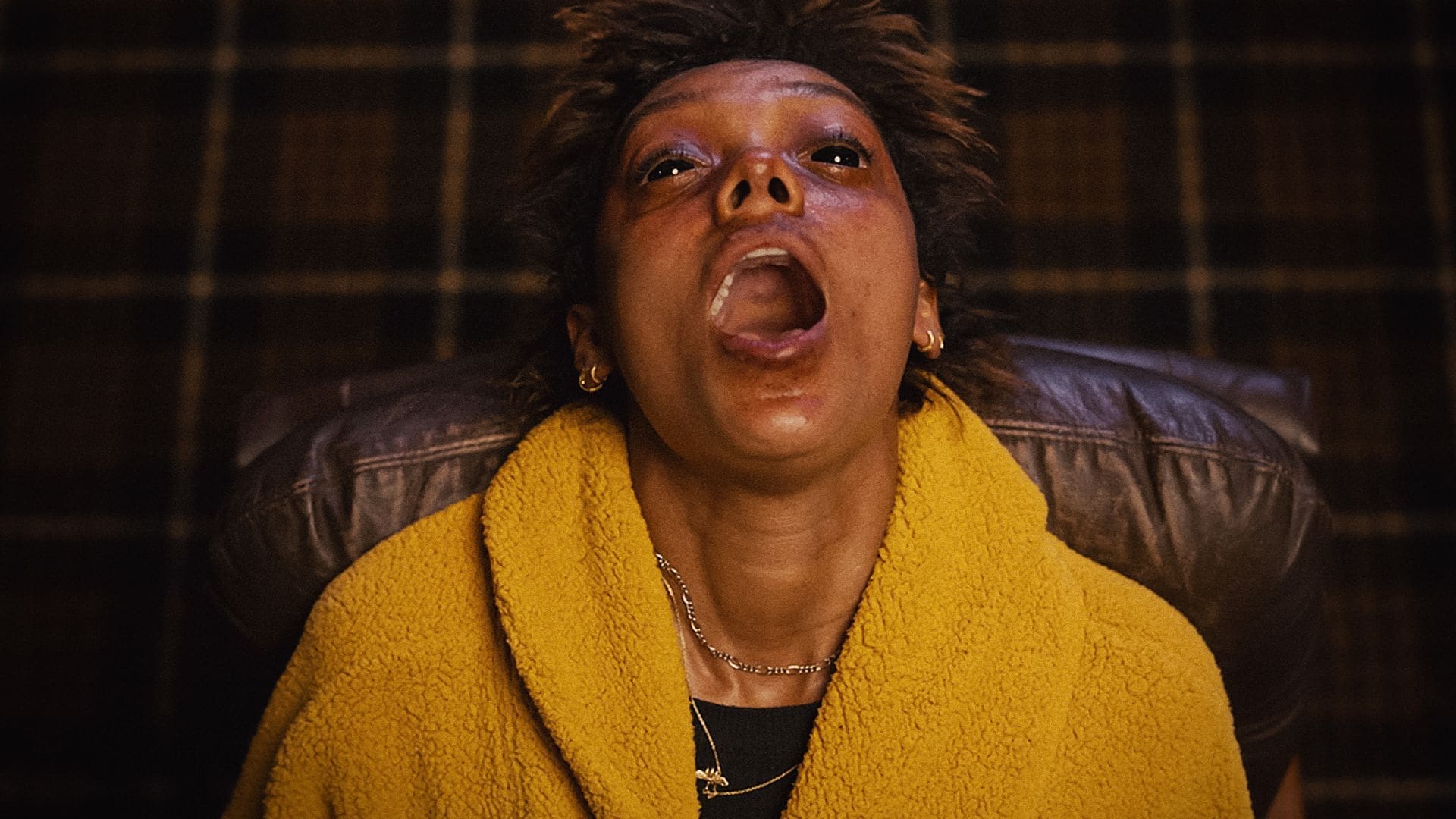
Talk to Me – Catch these hands


Hosted by
KT & Oti
Show Notes
Strap in, tilt your head back and take a spirit hit until it feels good. Catch these haunted hands with Talk to Me this week.
Referenced


Tomato Meter
 KT
"Sophie Wilde delivers range reminiscent of Lupita Nyong'o in US and this film excels in iconic imagery bolstered with enthralling sound design. The best were cast but some characters leaned into traditional tropes that didn't fit into this modern take.Posted Jul 27, 2023"
 Oti
"Talk to Me fascinates with its brilliantly executed, intriguing concept. The standout portrayal by Sophie Wilde brings delightful depth, making it an absolute must-watch!Posted Jul 27, 2023"
Episode Details
- Duration
- 0:00
- Released
- July 27, 2023
- Category
- Episode
- Hosts
Transcript
Transcript (7,080 words)
Full transcript of Talk to Me – Catch these hands.
KT: It's another week in the For Your Reference household, and it is not another, but the first official, I don't usually do this edition, Oti. Um, I think this might've been the first time getting access to screeners where I watched it for a second time to gain further understanding.
KT: I think Will Smith visited me and I caught those hands Oti,
Oti: Don't
KT: don't worry, Oti, I do have a theme in tribute to The Blackening
KT: now that I've got your attention, your urban attention,
Oti: That's just attention! Thank you very much.
KT: let's get on with the show. Hey friends and doggy humping lovers. Welcome back to the For Your Reference podcast. You got your host, KT.
Oti: And Oti.
KT: Strap in, tilt your head back, and take a spirit hit until it feels good.
KT: Catch these haunted hands with Talk to Me this week. Hoo, hoo, hoo, hoo, yee.
Oti: Oh really?
KT: We're combinating and consolidating. Or is this not a hood classic? Um, while we're here, friends and lovers, I had the beautiful, gorgeous opportunity, um, to meet yeah, the boys shout out to Danny and Michael Philippou. Um, you can check out the interview on our podcast feed as well as our YouTube. Um, but we're very excited to talk about this film. Um, there's definitely some tangible sort of. Themes, um, that we're going to get into as well. But before we get there, my love, let's get into general information. Directors, Danny and Michael Philippou in regards to writers. So this is very interesting because it's an amalgamation of short stories and bringing together concepts and ideas. Um, specifically there's a short film by Daley Pearson, who is most notable for his work on Bluey.
KT: So I'm waiting for the Bluey spinoff, essentially. Um, and you know, Danny, as well as Bill Hinzman, um, accredited for co writing the film. This was released in the Adelaide Film Festival, would you believe, Oti?
Oti: Oh, really?
KT: Made its way over to Sundance, got gorgeous, brilliant, well deserved attention from the darlings at A24. And now we're seeing a massive, massive release in so called Australia, um, on July 27th. And the next day in the U.S., again, A24 distributed across cinemas, um, for July 28th. In the holy year of Regina King, 2023. In way of cast, we have Sophie Wilde. Wow. Wow. Wow. Joe Bird, again, gorgeous, brilliant, amazing performance from Joe Bird. Uh, Miranda Otto, fan, friend and lover, Zoe Terakes. And of course I got to name my brother, Chris Alosio.
Oti: Mm hmm.
KT: Oh, how are you feeling in your hot little hands, Oti?
Oti: Good. Wow. Yeah.
KT: You want to dive into some first impressions?
Oti: So, Talk to Me fascinates with its brilliantly executed, intriguing concept. The standout portrayal by Sophie brings delightful depth, making it an absolute must watch. I enjoy this movie.
Oti: I enjoyed this movie and I remember leaving the cinema after, and I was a bit conflicted because there were things while I was watching the movie thinking, it doesn't feel right. There were things that felt a bit awful watching the movie by the end of it. After, not immediately after, but sitting with it a bit more. Yeah. I think I've sort of softened my stance on what that was. I think it'll be interesting to sort of peel that a bit more into the, uh, while we go on with the episode, but, um, yeah, what about you?
KT: Okay. Um, Talk to Me embodies the moody atmospheric experience that dives into trauma of recent horror offerings. Sophie Wilde delivers range that is reminiscent of Lupita Nyong'o in Us. And this film excels in iconic imagery, bolstered with enthralling sound design. The best were cast, but some characters leaned more into traditional tropes. That didn't necessarily fit into this modern take.
Oti: Oh, ho, ho, quite the wanker, eh?
KT: Hey, don't go sipping bolstered juice in the hood, Oti.
Oti: Not interesting, um, about, um, the Lupita and, um, or Sophie.
KT: You didn't see it?
Oti: Now that you mention it.
KT: Okay. Well, we do have some things that we need to get into. And I do love that we both, um, gave our love and splooshes to Sophie right off at the top. But the reason why I compare both of them is, you know, very famously, non famously, if you have listened, then if you've been with our podcast for a while, we both didn't care for Us. So, you know, I do love Talk to Me, but there were things that didn't work in Talk to Me that I would also say Us didn't work to not the same sort of parallels, but as a general sort of overall experience for both films, I felt kind of a disconnect, but it doesn't take away from the fact that they were both bringing their foot into their acting roles.
Oti: Oh, a hundred percent.
KT: So, you know, I do love a thick thighs, Winston Duke. Um, maybe it's not enough to save the film for me in regards to Us. Um, but Lupita really brought her A game in Us and Sophie really brought her A game in Talk to Me.
Oti: That is true.
KT: Um, I love how you're like teasing out what your thoughts might be, what your conflicts and your qualms, your Delroy Lindo quarrels are.
KT: Um, but let's, let's get into, I guess, the themes that we have. I know we're going to get into, um, media sort of discussion. So I am going to start, I guess, with a softball, a lighter sort of theme before we get there, friends and lovers, I will say. Spoiler, spoiler, spoiler, white people, shit, white people, shit, white people, shit. Um, and I'll also put, we're not going to go into a lot of detail, but I do just want to put a little, um, trigger warning for mental illness.
KT: Okay. Well, um, let's. So let's start off with that very light sort of theme and I kind of, so this is a tribute to The Blackening, um, and the gorgeous, lovely moment that The Blackening is having. Um, and I kind of want to incorporate this for all of the horror sort of reviews that we do moving forward. So this theme is called The Blackening. When would you have tapped out of this movie if you were in this movie?
Oti: Ha. Oh, Sophie had a lot of moments that she could tap out, but I think the one where she got went to the party and saw what the whole experience of the hand was, and she still sat there and went to do it. But the party. No, you could all, you could all think that's a trick. You could play, you could, you could, you could come up with stories in your mind of how it's all. Fucking made up, but being damned experiencing and seeing it and still wanting to do it. That would have been my tap out moment. I'll be like, nah, I'm out.
Oti: Okay. I'm moving towns.
KT: Okay. All right. Um, Dr. Oti, Uma, am I allowed to play the Blackening theme or not?
Oti: Make it quick.
KT: Um, I'm not a snow bunny, friends and lovers, but I'm close. Um, the tap out moment for me in this film, and we'll get to it in proper detail. But when I would have tapped out in this film was when Mia was being very emotionally manipulative to Jade being like, it's my mom's second memorial. Fuck off. Again, we're going to get to, like, I just, I found Mia's character so fucking manipulative. Um, there's a little bit about storytelling. We can talk about like character arcs and that sort of thing. But if we're talking about when I would have tapped out of the movie, then.
Oti: Wow. Okay. I think that's, uh, that's not a Blackening thing. That's a you thing.
KT: Well you looking at me like the horny dog is a you thing, Oti.
KT: There's only one top bitch in this house.
Oti: Uh,
KT: I'll let you in Oti, if you're nasty. Okay. So these are essentially three separate sort of themes, but the way that they, I guess my personal sort of qualms might interlay or my potential sort of praises as well might interlay with each other. So I'm going to say the three, we can split them out or we can, um, talk about them together. Um, I've got pacing, storytelling and dialogue.
KT: Actually, let's start off with pacing.
Oti: me, the pacing worked up until the final third, where I think they switched it up a bit and made the movie something different than what I thought it was going to be. Yeah. The experiences for me had changed,
Oti: and it became more of a Babadook feel than what I thought it was going to be.
KT: like, I think it's shifted momentum,
Oti: Right.
KT: Like we were riding, we were having a good time and you're shifting momentum. And we're like, hang on.
Oti: And then you slap me with, with, okay, so is this mental illness? Is this, are we tackling something bigger than just a hand? Yeah. Are we, you know,
KT: still riding momentum and crying or you you've stopped?
Oti: No, but at that point I was like, okay, maybe I need to slow down a bit and jump out, you know?
KT: Pull your thumb out and you'll be fine.
Oti: So I wasn't, I wasn't sure what I need to feel towards Mia because so far she was carrying herself quite differently, navigating the world in a way that didn't really connect with me as a black person. And seeing that she's a black woman as well. I felt she navigated completely different from what I expected.
KT: I just want to touch on the pacing that you were mentioning. Um, the opening scene in this film is fucking money. It's fucking ace, right? It really draws the crowd in. You know, if you're, if you're settling your ass into that seat and you're munching on your little popcorns, it's going to make you stop for a second. Right. When you have that whole introductory sort of scene of not understanding the hand at that time, but you get that brutal sort of, um, shot. Right. And then we just, I think part of the problem that I had was. We didn't really get to know Mia, which comes into storytelling, but I'll, I'll leave that for a second.
KT: But when I talk about the pacing in this film, because even though we err on the side of nothing needs to be two hours, unless it's some sort of Epic, right, this film does fit within that sort of 90 minute timeframe. It's not necessarily what the runtime is. It's how, again, it's how you choose to use that, how you ride that motion, right? Um, the demonic scene was. Fucking money, but it happened so soon in the film. Like, like for me, once we get that, that's literally what we were working towards. Give me some foreplay, my guy. I needed something like to lead up to that moment. And the reason why I say that is it goes back and forth. It like, once we get the first demonic scene, I'm fucking in, like I am ready to go.
KT: But then we're going back to school and talking about high school problems. Why, my guy?
Oti: It's very Pan's Labyrinth and it's taken though. You know?
KT: It's taken. Hmm. Guillermo Oti del Toro. Yes.
Oti: Once I see fucking bad, I'm out and then we don't see him again. Like I was, I was like, okay, what is going on?
KT: Yeah. Well, that Pan hasn't had as much screen time as your black woman in Air Force One.
Oti: what do you mean? Postmaster general held it down. And I'll continue singing it to the
KT: will use you for black dialogue in black film scripts.
Oti: No, but, um, I'm with you on that. It felt, it felt disconnecting once we get to see the high.
KT: Yeah. And it's like, why are we going back to school? Why are we talking about things of no consequence? Because for me, like it kind of felt too early in the film, which where you would get like two thirds maybe in the film so we can build to, you know, emotional sort of resonance with the characters specifically in regards. to Mia, because that's the foundational qualm that I had. Again, it doesn't negate from Sophie Wilde's performance and her fucking ace acting, it has nothing to do with that. But it's like, we had no choice to be like, Oh, I guess we feel sorry for her. Which is a really shitty thing to say as an audience person, but she was really manipulative.
KT: She was like, Oh, you know, my mom died two years ago. You better come to this ratty fucking party with me. Really?
Oti: I
KT: don't know. I would cash that in for more, um, you know, sentimental meaning, I guess, but I guess that's what I wanted to say about the pacing. I think the fact that they had such a, um, enthralling pull you in opening scene, I don't think we needed to have another scene to grab you in again. So soon, because we know even without knowing anything about this film, you know, it's about demon possession. Um, not necessarily the themes of like grief or potentially schizophrenia or mental illness, but you know that we're going to be working towards that moment. So again, let's get a little, a little bit of a little flicky action going on, you know, friends and lovers, I am working on my FYR curriculum of screenwriting.
KT: Um, in regards to the storytelling, I think I've kind of already touched on it, but I, I would have liked to have understood Mia a bit more. I think as we talk about, um, As we talk through other sort of themes, I guess what I was finding it hard to latch onto was how compelling she needed to do this.
KT: It just felt like she was being reckless for the sake of being reckless, which is absolutely fine, but it was introduced to us as the, you know, her being so, um, isolated and her needing to reconnect.
Oti: Yeah, and it's, it's one of the things that this movie brings up quite, um, heavily and it's in, in its grief and how we handle grief. Um, Mia suddenly struggles with it. There seems to be no help inside. Um,
KT: the daddy was there,
Oti: Mia, the daddy was there, but he wasn't navigating it as a black daddy out there.
KT: did we have to pay full price to see his whole face
Oti: It surprised me to see it was a black man
KT: I
Oti: halfway through the movie. I fully expected after seeing the mom, cause you get to see the mom first. I was like, okay, black mom. Okay. I expected to see a white daddy.
KT: I was expecting to see a white mama.
Oti: Why
KT: White mama's house.
Oti: because Mia's been navigating the streets weirdly.
KT: Yeah, maybe it's Adelaide. Maybe there's something in the Adelaide
Oti: Because at that point I was confused and when I saw the dad, I was like, wait, hold up. What's happening here? Yeah. What is this, what's this dialogue between Mia and the dad? Yeah. You know, the, the bond seemingly broken or fractured or
KT: They didn't even have a chance to have a bond to fracture.
Oti: Because, no, because you can see Mia sort of blames the dad for the mom's death to some degree and fair enough you can see that you can have that resentment towards your dad and that will affect your relationship but it just it didn't feel fully believable
KT: There wasn't, yeah, it wasn't multi dimensional. She didn't exist outside of her character in, in the, in the context of her being black as well.
Oti: So, and in that aspect, then we get Mia fully getting or fully looking for this emotional support in, in Jade and her family quite heavily to the point where it was uncomfortable.
KT: This theme. You did this with Tár as well.
Oti: What did I do with
KT: You brought the blackness to the forefront. I had it a bit down in the list of themes, but let's talk about it now. Horror tropes explored through non white characters that wouldn't move like that.
Oti: Oh, so like Mia navigates this world in, in an aura that doesn't feel real for a black character. She, the seeming relationship between mom and dad feels.
KT: To a black mom and a black dad.
Oti: Yeah. I was shocked. Yeah. I expected one half to be white to, to make maybe the dad wasn't around growing up. I started coming up with backstories or how she ended up like that because I fully expected a sort of. Oh, for those who've not watched. I don't even take this as a spoiler for The Little Mermaid. I fully expected the Eric storyline.
KT: I thought you were going to say that Ariel was black. That's a spoiler. Well, if you're in China and the poster was blue.
Oti: you, you'd walk into the cinema and feel like, wait, what? Oh, wow. But yeah, like it just felt I wanted to have all these gaps explained to me because it felt weird. It felt unreal, unrealized on the screen and how regardless of how her performance was, which was really good. Though these holes and gaps that kept on gnawing at me in every way that she navigated between Jade's family, her dad, and even some aspects, her mom as well.
KT: Yeah. Well, that's the thing and that's why in the Rotten Tomatoes quote, I didn't write things about race. about black and also brown characters will come to Joss as well, because for me, it wasn't necessarily an angry watch. Um, I think as like, as I got to know the guys and, you know, just how chill they are, it's just them having different friends. Um, so it didn't necessarily denote to a maliciousness that I would assign to, um, I guess The White Lotus. Or to Tár or even to Barbie coming up friends and lovers, you know what I mean? So it wasn't necessarily a malicious thing, but I think something to keep in mind is yes, you're hiring the best talent and you probably didn't even intend to, but once you have, like, because you have a black lead, whether you want to call it a black movie or not, right?
KT: So it's giving the layers that is, that should be afforded to the black experience.
Oti: Yeah, uh, maybe, maybe Idris came in and said, Hey,
Oti: You're just an actor. You're just an actor. Leave that black shit outside.
KT: Well, I guess while we're talking about, um, you know, this sort of theme, that's something that I wanted to talk about Miranda Otto, love, love, love, love, love. Of course. However, the optics fucking change. The optics fucking change in this film. When you have a black lead and you have this white mother berating her talking like she's some fucking junkie. That was disgusting to me.
Oti: You know what, like, in my mind I was like, what did Mia expect from that
KT: She should have known better. She should have done known better. She shouldn't even turn up to the hospital,
Oti: I wouldn't be in that town at that point.
KT: yeah, we know Mr. Blackening, you would have tapped out already. We get it, my guy. But, but that's what I'm saying. Like, I think the great thing about cinema is it's on a world stage. However, we do enter and watch it. The way that we watch any other film, whether it's American or French or from the UK or from Aotearoa, you know what I mean? So to have, I just didn't like it. And again, if it was a white lead and you know, you had Sue, the mom berating her, talking about smoking weed and all of that sort of stuff, it wouldn't have had the same sting.
KT: Yeah. so I wouldn't say that there wasn't any care, but it was just like, you are always watching while Black. I am always watching while Brown, but HOTEP Orca Brown.
Oti: I hear that. But I think in that situation where you, we have Sue, Riley is badly injured. You don't even know if he's going to survive. I don't know if I could expect Sue to act in every different way.
KT: Leading up to, like leading up to there were lines where I think Jade had mentioned to Sue that, um, you know, Mia had smoked weed or whatever. So that's what I mean. Like leading up to the optics of that didn't feel nice to me. Um, especially when we live in a country that is. Well, not now it's not majority white, but especially on the presence of screen and the presence of positions of power is very white, you know, to have that visually, it felt very stark, especially when we're in the pre screening, like leading up to the interview, obviously in the cinema, it kind of, um, softened those edges, but I still felt those notes of that.
KT: So, um, but I a hundred percent agree with you, but look at you at the individual, like yeah, Mia shouldn't have turned up there.
Oti: Yeah, and I, and even in that hospital scene, I could not blame Sue for that reaction. Cause any, any, any mother would have that visceral reaction towards anyone that put their kid in such a situation. Yeah, and who's to, like, Mia took some balls, man. She took some liberty with her family.
KT: Yeah. We didn't get to that. We can get to it. was too much,
Oti: bro, you get Jade saying here, I'm not even going to do this hand shit. She taps out. Riley, you're not touching that shit. That's it. That's done. Mia has no,
KT: please, please. Jade's like, no, I put my foot down. No, but she left the room.
Oti: And Mia comes up here with a
KT: Hey, hey, hey, hey, hey, hey, hey, hey, hey. You don't know her lineage.
Oti: I said spiritual.
KT: and
Oti: It tells, it tells Riley her ego. And you know, the minute she said that I knew the mom would pop up. I knew it would be
KT: course, of course, absolutely, absolutely.
Oti: Uh, bruh. I was like, I just couldn't. And I think this is one of them. And the way the film that shot, I've not jumped from my seat in ages. But when Riley started going wild, it took me back a bit. Yeah, it took me back. I was like, oh, whew. Jesus.
KT: Shout out to Joe Bird, his acting fucking wild.
Oti: Oh man. There's scenes in this movie that I'll remember for eternity.
KT: Just say you want a Tarantino role play, my love,
Oti: Oh,
KT: keep it spicy.
Oti: I'm getting kinky as I, as I age
KT: Wriggle that big toe, Oti. Um, but yeah, there was a lot about Mia's character that was frustrating. Um, just in the way she was moving mad fan, she was just moving mad. While we're in the theme of horror tropes explored through non white characters, um, you know, since you've made yourself the president of black people, I guess I'll be the president of brown people. Um, there were some things about Joss's character that I definitely want to talk about, but I think the most egregious thing to me personally was Not only was he dabbling with this hand, but he's the one that fucking introduced it to this friend group.
Oti: Yeah.
KT: In what world does that even make sense? Miss
Oti: Well, having had your interview, apparently their friends would do that shit.
KT: Miss me, my brother, because, because again, and then this is the, this is the frustrating part because he's explaining the hand, how it came to be and like, let's put a little footnote here. He also knew the damaging consequences of the hand, but we'll leave that for a second. And then even in that whole sort of spiel, he laughs it off and says, ha, ha, ha, white people, shit, bruh, you're the white people, brown shit. That brought this into the group and again that's where it gets confusing because it doesn't work when you write characters without the cultural context saying white people shit but they're acting like white characters.
Oti: Yeah, that white people shit doesn't really apply because he, Joss was riding out here fully.
KT: He was out in these streets
Oti: knew the consequences. In fact, he's the only one that knew the consequences of this.
KT: Seems like maybe Hayley. Hayley might've known they were very close, but I'm speculated
Oti: Because, he was like, oh yeah, after a while the shit, the guy killed himself. I'm like, okay. What?
KT: Rest in peace. Pookie
Oti: Nah, like, the consequences were so dire, especially when you know that we exceeded what was it, 50 seconds? Yeah. Then, bro, like, just, there just has to be so much care put into that by Joss. Even his effort in trying to get Riley past that. Yeah. He was like, oh yeah, alright, time's up. No! Yeah. He couldn't do that shit either!
KT: But like, when I tell you, Oti, when I tell you with every fiber of my pasty, light skinned, brown ass, couldn't be me. Like,
Oti: Get that?
KT: I would never be at your parties. I would never like your viral videos about Getting high off your demon possession supply. When I tell you, bruv, I couldn't be me. It could not be me. Call me a fucking nerd. Call me a fucking wanker. I don't play with that shit.
Oti: Yeah, yeah, maybe that's the Mormon talking in you.
KT: Yeah. I've transferred it to the hand.
Oti: I see. Uh, yeah, like, Joss, Joss had so much information that he didn't divulge to anyone.
KT: Well, let's get to it. Do you, like, does it make sense to you that the only Brown character did that? And he looked like he got two Brown parents as well.
Oti: Like, I could let it slide if he didn't say white people shit. But when you say white people shit, then you act, you act like that, then come on now.
KT: You're mixing it.
Oti: Yeah. It doesn't apply. It doesn't apply. So, so he, he decided to move differently. Yeah. You know, yes, these people are playing this game with a hand or whatever, but to some degree he knew the consequences. He knew what was happening. Yeah. And he just, you know, leaned back saying nothing, say nothing.
KT: Not that I'm one to like, you know, say this is how it should have been, but I'm just saying if he was in this group, just watching people get fucked up by this hand, I would get that. But the fact that he was all up in this shit, I was like, nah, nah, my guy.
Oti: Oh, fact.
KT: Um, well, let's, let's focus a bit more into the horror, um, sort of things, cause we've talked a bit about the drama, um, and we'll continue to talk about that in a second, but let's talk about Demonic Possession, you know, our resident Catholic boy, Oti, um, what did you think about how it was portrayed in this film?
Oti: I think they did it quite well. Um, I think when he got to see the demonic possession of the start, it was quite intriguing. I didn't know how far it would go into it. Um,
KT: you like white people? Shit.
Oti: I think the most interesting bit was even when we go to hell, they, while watching an interview, they said that they cut it back as well. So I could just imagine what that was like.
KT: You know what I imagined that hell seemed to be? The whole film of Infinity Pool.
Oti: wild. Right. It, it, it would be that, it would be that exactly. Uh, but yeah, I think it was plus some really, really nice shots as well in there.
KT: Gorgeous. And the sound was really good too. Hmm. Didn't need all that sound when he was making out with the dog. But
Oti: Yeah, that's something that I don't, I don't wanna hear.
KT: At least, you know, there are some, um, sub searches that you don't need to search.
Oti: Yeah.
KT: I, yeah, I really think the demon possession, if we're talking about it in its own sort of. Entity. I think it really worked well. I think there was a bit of muddying when it came to Mia and the mom, but we'll come to that in a second. But if we're talking about the actual sort of aspect throughout the film, um, the imagery of demonic possession, I think that worked really well.
KT: Um, a film that comes to mind is Evil Dead Rise that came out recently.
Oti: Oh, nice.
KT: What? Shoutouts to my doggo, Jaden Daniels. Um, it's not a spoiler because it functions like a horror. So of course the brown guy gets killed first. Wow.
KT: But the reason why I bring Evil Dead Rise up is because I'm that fucking nerd. Right. Um, we're watching horror films. We watched Evil Dead, um, one and two recently. Um, so it was very, it was very fresh in my memory and also controversial, apparently, opinion, I actually preferred the first Evil Dead over the second one.
Oti: Oh?
KT: Yeah, but the reason why I bring up Evil Dead Rise is it was, it was a great film. It did what it needed to do, but I was like, I want some more of the lore. Like, obviously, you know what it is like, you know, who Superman is, but it's always nice to like, um, you know, see a new sort of take or an expanding of, and I think that's kind of what I was hoping to get in Talk to Me, like a little bit of the lore. You don't care.
Oti: Like a little bit of the lore stuff. You wanted the lore in portion of the Christ. So I'm not so sure I can hear you on that. Yes.
KT: Black Jesus, white Jesus, brown Jesus. It doesn't matter. You can't just, you can't automatically baptize me into the cult, my guy. Yeah.
Oti: Wow. Yeah. But. I think for me the lore isn't important in the first movie. I think that's something we get as we get more from the movie in some subsequent seasons. Yeah, like the sequel we'll get to know more about the Hand for sure, but for now let's just have fun with it.
KT: Do you need or want a sequel? do. Even if it's frustrating black characters.
Oti: I think this movie has the legs to pivot and do better in the, in the sequel.
KT: Metaverse or otherwise?
Oti: think Mia, the character is dead as well, so.
KT: Well, the way you were talking, the way we were saying she was moving mad, there was only one way for her to go, really.
Oti: Ah, true.
KT: It was a really great way that they wrapped it up and the shot that they did was really cool as well, even though you could perhaps like predict what the ending was like. I think that was done. Again, the visual sort of language was really, really nice, um, in this film. But yeah, I would like to know more about the lore, but again, friends and lovers, I'm not Indiana Jones. I'm not Tomb Raider because I am an ethical archeologist. They call me KT Killmonger, get in losers. We're going museum shopping. Oh, oh, oh,
Oti: Hot tip, KT.
KT: oh, don't forget the awkward tea. Um, let's go to, I guess the social commentary, um, in this film, we talk about mental illness and we talk about schizophrenia and I want to talk about this because we kind of, um, denoted to it in regards to the storytelling for me. And this is me, Oti. And I've said this, I think a lot recently, um, on the podcast, I'm a very logical person, you know, even watching Infinity Pool, when we had the chance to interview Brandon Cronenberg, I'm a very literal person. So usually I struggle in the sort of alternate reality or the suspending of, um, not necessarily grounding, not necessarily all the way fantastical, right? Usually I always. Find ways to ground things. Even if it's like a Dracarys dragon flying in the sky, I always find a way to ground it to power structures and social and blah, blah, blah, all that.
KT: Wankers shit. Right.
Oti: Yeah, did you speak for yourself, Fury?
KT: sure did. Thank you very much. Ice cancel cube.
Oti: Ah!
KT: But the reason why I say that is even I didn't feel the need to ground this film because I feel like when you were talking about the switching of the tempo in this film, I feel like that's what they were working towards. It was no longer about demonic possession. It was It was about her learning about her schizophrenia and it's like, okay, cool. But then we didn't need all of the rest of the gorgeous first two thirds of the film
Oti: And this is where I felt cheated, right? Like I've had fun with the demonic possession side of it all. Yeah. That I enjoyed and I was fully engrossed in that. Then for it to suddenly scrib blip on you. Yeah. To the point where you're like, Oh, so this is all mental illness.
KT: Yeah, then we didn't need to go where we needed to go.
Oti: Cause we, we, we delved into, cause at that point, a lot of things that I was thinking about Mia, it had to change. Yeah. Everything had to change up until that point because everything that we've seen now has to have a lens over it. Yeah. And I get, it didn't need to be grounded into reality like that.
KT: Yeah, it didn't.
Oti: Because they already had something great there. Yeah. You know, the concept of the hand and, and the.
KT: It works.
Oti: yeah, because then you have so much set up in the lore of it all.
KT: If I can reference a Silicon Valley, it fucks. This film fucks.
Oti: It does. It doesn't need to, you know, go casually missionary so that it tethers itself into realistic mundaneness of the reality of, you know, like.
KT: you needed soup.
Oti: Yes, it did.
KT: Missionary soup is still soup.
Oti: Kama Sutra is what he needed.
KT: That's a History of the World, Part II reference, um, friends and lovers. But I absolutely, absolutely, absolutely agree with you. And I think what we're also saying is it isn't as if you can. It isn't as if you can't have a film that tackles mental illness with elements of the supernatural, because we see that in Hereditary. We see that in Babadook. We even see that, maybe not that mental illness part, but you know, if we're talking about A24 and Ari Aster, um, Midsommar, right. So we've seen it, but I think the scope of this film didn't afford for the considered care that would be required for mental illness.
Oti: The I think maybe, because I've only watched it once. So your second take on it, did it change any way you viewed the movie? Knowing that the journey Mia is going through isn't necessarily just all about, Ooh, demonic possession. Did it change anything for you the second time watching it?
KT: The thing is, I, cause initially when we first watched the film, Like my, my first note was all of the characters should have been white. like my first note. That was the first thing I said to you, uh, when we got out of the screening. And I still pretty much agree with that. Um, because we're not getting the sort of dimension that you would get from non white. Characters culturally context and that sort of thing. Um, so I've, I've definitely softened and I think just given the nature of how we watch and discuss and analyze films, we do have that critical sort of lens when we watch things.
KT: So I definitely softened on it, but the sentiments that I felt, I still felt. So in regards to this, and cause then I don't really understand it. Cause we just talked about grounded mental illness. Um, with supernatural sort of flavorings and it works, right? This doesn't make sense to me, because again, we didn't get the backstory of Mia, because Mia would have gotten some sort of indication that her mum had a mental illness. You see what I'm saying? But it was only through here that she started to grow and understand. And then she inherited, for lack of a better term, she inherited the schizophrenia or the traits of throughout the film. And I'm like, hmmm. Is that really the way, like, cause no one's even asking you to go that angle either.
Oti: Yeah, I would have hoped that the second viewing would have just made it a bit more tighter in, in terms of viewing and,
KT: the second viewing would make it looser if you're not stretching.
Oti: Like, I just hoped that at least knowing the angle they're going through, watching it a second time, a lot of this, Stuff that I probably oversaw in the first half would have made more sense.
KT: The timeline of Mia starts at the film. You see what I'm saying? There isn't any sort of, um, fabric that exists before the film. She just becomes that person. And I think it's hard to breathe life into her as a character when all we're seeing is that. So from that point of view, I don't necessarily think so. Maybe, maybe there will be a third rewatch of this film, but you know, there are parts of this film that really, really, really work and the parts that don't work in this film, I don't even think needed to be at least, um, have a closed sort of loop or even be addressed in anything more than, you know, a way to drive her sort of character, you know,
Oti: Yeah, that makes sense. Um, I think for me, I love movies that regardless of how, whether or not they think it's ridiculous, they dive in 10 toes down. I just felt, uh, tethering it into fucking reality. Held it back. Yeah,
Oti: I think supposed to Exactly. We're like, bro, oh, need to start thinking about my, my grandparents and all that shit. Like, nah, nah.
KT: Wow, you're calling through the ancestors, Zerky. Yeah, you definitely shouldn't, you shouldn't play with that hand because you're going to get some sad, sad moments.
Oti: uh,
KT: What I will say, something that I will say before we wrap up that I didn't get to say earlier. You were talking about Mia leaning too much on that family? Like I had like, obviously not black parents, but I had two brown parents and I was raised when you go to someone else's house, especially like not family, especially white people. You are not thirsty. You are not hungry. You don't even breathe.
Oti: Bro, I was beaten for eating dinner somewhere else.
KT: This is not Django, Oti. Yeah, because it shows that you're hungry and you're not getting fed.
Oti: Do you not have food in this house?
KT: Maybe, maybe you
Oti: I was to be changing, maybe, maybe now people are like, Hey, you know,
KT: use the hand to escape, you know, before you get beaten,
Oti: True.
KT: you're like, catch these hands, mom.
Oti: Now I can get behind that sequel.
KT: Michael and Danny Philippou, if you are in any way, listening to this, especially at the end of the episode, please hire us as your cultural, as well as intimacy coaches.
Oti: We'll do a better job than Lord of the Rings or Rings of Power.
KT: Yeah. The toe rings of power, if you're
Oti: so bloody disappointing.
KT: Oh, man. And you know what's really interesting? Um, it's so cool discussing the film, but I think it is clear that we did enjoy the film, but it's always more interesting to be able to discuss the layers throughout.
Oti: 2023. Um, and I think it's one of those movies that even talking about it, you get to enjoy moments with your buddies and all that. It's a really well made movie, uh, scenes there that will probably be part of pop culture for years to come. If you're listening to this and you have not watched it, go do yourself a favor. It's definitely one of the highlights of, um, 2023.
KT: Kinship Interfaith. You know, we are ridiculous people, but we do take our film watching and critiquing very seriously. So, you know, I went into the screening with my notebook and I was struggling to write in the dark because I didn't want to forget this key Australian dialogue. Where's your fat mom? She's probably somewhere eating some dick. Is this the Bumda of Australian film?
Oti: It is the Bumb da.
KT: Oh, thank you, friends and lovers for joining us another week in the For Your Reference household. Stay away from the canines. If you're attracted,
KT: we're going to finish off in a segment we call For Your Reference. Oti. Babadook.
Oti: Oh, I'm going to reference Babadook because you want to be tethered to reality and Babadook will do that for you.
KT: Oh, how interesting. I'm going the opposite way of not being grounded or tethered at all.
Oti: Oh,
KT: I'm going to be referencing Infinity Pool.
Oti: Noice. Noice.
KT: Nice.
Oti: Ben must be loving this because this is your third Mia Goth reference.
KT: If you'd like a reach around special on Twitter, Instagram, and spill, we're at fyrpod.
Oti: Write us an email at hello@fyrpodcast.com.
KT: We're also on, we're available for cultural as well as intimacy coaches, positions, podcasts. If you're nasty, if you'd like to leave a rating and review and we'll see you guys next week.
Oti: See
KT: Bye.
Related on FYR
Discussion
Loading comments...