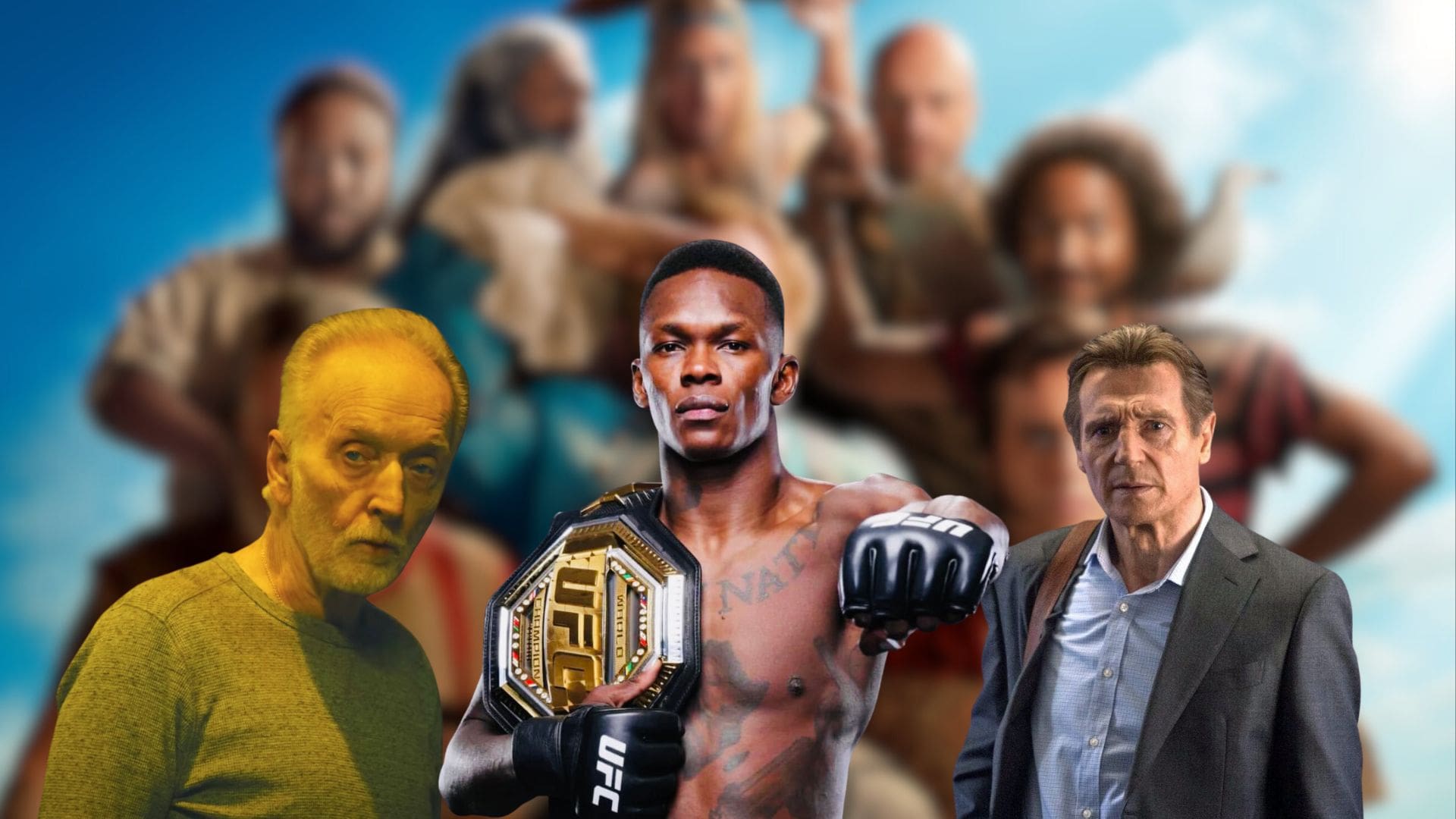
Retribution, Saw X & Stylebender


Hosted by
KT & Oti
Show Notes
In this week’s Reference Max we review new entry into old man action: Retribution, fusing morality with justice in Saw X, sea waves and fanfare in Our Flag Means Death & what healing can look like in Stylebender.
Tomato Meter
 KT
"Izzy has a disarming confidence that brings an interesting energy to hyper masculine spaces like MMA. Through a five year journey, we explore the triumphs, healing and vulnerability of a carefully built public persona.Posted Oct 10, 2023"
 Oti
"Going beyond the octagon, the documentary on Israel Adesanya paints a vivid, intimate portrait of 'The Last Stylebender.' It's a moving exploration of the champion's journey, touching on vulnerability, inner demons, and personal growth. A must watch.Posted Oct 10, 2023"
KT"Retribution has an interesting premise that is supported by believable performances but takes it's foot of the brake towards satisfying resolution.Posted Oct 10, 2023"
Oti"Liam Neeson's classic high-stakes action meets a ticking bomb, echoing shades of 'Speed.' While the tension is palpable, deeper character connection is amiss. A thrilling, yet familiar, race against time.Posted Oct 10, 2023"
KT"The core premise of Saw X is at direct conflict with the underlying foundation of the franchise.Posted Oct 10, 2023"
Oti"John Kramer reminds us why we fell in love with Saw in the first place. Saw X allows us to live in the world of the icon a little bit longer.Posted Oct 10, 2023"
Episode Details
- Duration
- 0:00
- Released
- October 10, 2023
- Category
- Episode
- Hosts
Transcript
Transcript (6,660 words)
Full transcript of Retribution, Saw X & Stylebender.
KT: It's another week in the For Your Reference household and it is the very first quarter reference. Um, thank you friends and lovers for those that are subscribed and those that have left comments on our Spotify podcast. Very exciting.
Oti: Hmm.
KT: Of course, it's about Barbenheimer and the Black Saviour Equalizer Routine.
Oti: Equalizer,
KT: So if you aren't already subscribed on your podcast feed, friends and lovers, we would really love and appreciate it. Let's get on with the show. Oookie reckon spooky friends and lovers. Welcome back to the For Your Reference podcast. You got your host, KT.
Oti: And Oti.
KT: And today we have a delicious, delectable selection of reviews, screening slash screeners. We have been given access to friends and lovers, Liam Neeson's contributing to the old man action sub genre, the chicken wing, the De Niro Irishman, the Denzel Equalizer, best protect your neck. Very exciting. We've got Retribution. Um, we've got the Jigsaw Saw X. X ain't gonna give it to you. Maybe give me Jason X. We got Saw X on the docket. Um, Our Flag Means Death. Taika. Taika, maybe a different Taika, perhaps. Um, and we'll also be rounding it off with Stylebender.
Oti: The disrespect.
KT: Are you a wanker bender?
Oti: Yeah.
KT: Oh, friends and lovers. The great news is everything that we are covering because we had a backlog is currently out either in cinemas, um, or on television right now. So let's get straight into it. Thanks to Haas and the team at StudioCanal. Um, we are covering Retribution. Yeah. Um, are we doing spoilers, non spoilers? How are you
Oti: Non spoilers?
KT: Okay. Give us your first thoughts, sir.
Oti: Liam Neeson's classic high-stakes action meets a ticking bomb, echoing shades of Speed. While the tension is palpable, deeper character connection is amiss. A thrilling, yet familiar, race against time.
KT: Retribution for you, boo!
Oti: Nah.
KT: Oh, head on over to our Rotten Tomatoes profile, friends and lovers. Okay. Retribution has an interesting premise that is supported by believable performances, but takes its foot off the brake towards satisfying resolution.
Oti: So the resolution is, I felt like by the time we got to the resolution, it didn't even matter because I wasn't bought into the
KT: He looked the same age as the guy trying to play a teenager in Tokyo Drift, Fast and the Furious. I will defend Retribution. I had a great time.
Oti: Wow. Okay, um, So, there's aspects of the movie that got me, you know, like, yeah, it was enthralling trying to see how they're going to get out of that situation, but I just didn't care. I didn't know too much about them to care. Be it the conflict with the wife or even having the kids there. Yeah, you can sense from a human perspective, that'll be shitty,
KT: perspective that I'll be shitting.
Oti: I'm just bringing the Issa Rae energy. Yeah, but like, I didn't know about them even trying to get on or trying to understand Matt's perspective or, or even why he's doing what he's doing and what he did before, or is he a shitty person or not? It just didn't connect with me. Okay.
KT: See, I see what you're doing and I have a lot of positives to say, but I will continue off what you're saying. Um, so Matt's character, he is not the Liam Neeson default. He's not the tooken taken Liam Neeson's right. He's some sort of financial bro. I believe, and he handles lots of money from very rich people and, you know, all of the rest that comes along with that, I don't believe that he isn't capable of kicking people's asses,
Oti: Especially because we
KT: because we haven't seen very much at the start to reinforce that he's still can beat your ass, but it was interesting because he's spoken up. I don't, I don't really know if this is a, a trait of Liam Neeson or if this was part of the finance bro, sort of persona that he had, but he was whispering the whole and he was very delicate in the way he was talking and I was like, where, where, where are the threats, sir?
Oti: Cause he's doing shitty work and the kids are on the back seat. He can't really say with his chest, can he?
KT: No, even before that, I think, but I think his, like, the setup for his character wasn't believable, but that's not necessarily a lack of performance. That's just because we know Liam Neeson to have a certain archetype.
Oti: Even, like, with the relationship with the wife, we get to see that it paints a whole picture of who Matt is in this relationship or is in this world. And from that get go, you kind of have your perceptions on who he is. So...
KT: was the trope of the whining wife. One day, just one day, man.
Oti: I didn't take it as a whining one. If I take it as man better step up. No, just one way. If, if you cannot take your kid, kids, or take a responsibility for one bloody day and you have to fucking moan about it, then this is not a spoiler. You just have to, just get on with it.
KT: Are you saying this is more feminist than Barbie?
Oti: Yeah.
KT: Well, I see you're saying things I agree with, but it doesn't, it doesn't discount the fact that I had a really good time watching this. It was, it was kind of the concept in like television where you have like a bottle episode. It had a very singular sort of focus. Um, and you know, I don't think it's too much of a spoiler, but essentially they're stuck where they are. Otherwise they're going to be dire consequences. And while we're here, shout outs to Arian Moayed. I would say you didn't use him well enough. You didn't, because the answer is you need him in every second of the film for me to sploosh
Oti: Me to smoosh Arian
KT: Wow. Okay. Well, maybe that means Ari and Kim have like a green room situation.
Oti: Oh, we could hope.
KT: What Green Room giveth, American Dad taketh. Um, I enjoyed the singular sort of focus. Um, I think it was very interesting in the way that we got to the, I guess you could say predictable resolution. Thank you. Was, um, but I do feel like there was enough tension to pull the movie through.
Oti: Mm. Yeah. Cause they introduced a lot of different things at certain points within the movie that I felt like it didn't really matter to
KT: like, the stakes weren't high enough.
Oti: Yeah, And even like from the detective or the police side, it just felt forced. Everything just felt forced.
KT: Yeah. Like the lead
Oti: felt that we are here because we're here because the movie dictates to be here. Not because we've done our work to be here.
KT: Also you can say for this film, but not Passion of the Christ,
Oti: Everyone knows Jesus. Come on now. Yeah,
KT: but you need a backstory,
Oti: But you need to be told
KT: when and how to care.
Oti: There's a whole book dedicated to that.
KT: I just, I thought it was enough to like, it was enough to hold attention or you don't agree with that.
Oti: No, like I agree with that. In my review, I said the same thing. It was palpable. I got some feels, like Neeson's is, is an action star,
KT: Uh huh. You don't need to subgenre him, just action star?
Oti: Nah, cause I feel like he got there when he's already at that age. So it's all good, man.
Oti: Nah, seriously though, like the sequences in this that are really good. That I enjoyed the shooting, uh, some, some things I was like, Oh man, that's badass. But at the end of the day, that doesn't really make a movie for me. Or at least swayed to a direction where I felt like I was satisfied at the end of
KT: Except if you were, if you were taking it from a grounded point of view, but I've also known you to not take things from a grounded point of view. So where does it tip over for you?
Oti: But the difference is, Fast and Furious has a huge catalogue of overlaying character development. I know everything about Dom.
KT: Oh, come on! Overlaying character development? That is not what you watch Fast and the Furious for.
KT: Are you kidding me? Is, if that is your defense, sir?
Oti: I know a lot more about Dom and his family than I do about Matt Turner and his.
KT: Yeah, but that doesn't equal layered character development and arcs.
Oti: This, you got shocked at how detailed or how structured the whole Fast and the Furious was from a overlaying perspective, you know, from the first movie being released
KT: No, we're not doing this. Don't make me KT Scorsese.
Oti: By the time we get to the seventh, the calling back things that we saw in the first movie, blending storylines that you thought were just there randomly.
KT: We're not doing
Oti: Joining things that you would just feel like, Oh, this is what we need in this moment.
KT: Okay, Ombre.
Oti: It was, it has, it has some, you know, it has some ridiculous moments granted.
KT: Okay, so let me 60 minute you. So what was the tipping point for you where you couldn't suspend belief in Retribution?
Oti: I couldn't suspend. Like it's not about me suspending belief to feel like as if I enjoyed this. It was more to do with me buying into the characters or even caring about the characters.
KT: But I didn't care. I said, fuck them kids too. So I didn't care about them, but I still had a good time.
Oti: I don't know. Like it was hard for me, even like.
KT: Even when you have the predictable ending, I didn't care about that either. Like it didn't make or break it for me.
Oti: I guess I'm very character driven in this case because I wanted to care about someone or at least hold, give me someone to hold on to. And I didn't feel like I had that. It felt like I really didn't know anything about Matt.
Oti: We're all going to imagine that I just wanted something, man. Give me someone to, to care for, you know, wife was a non-starter because we didn't even know anything about her. Matt Turner, we just don't know much, too much about him. And the kids are just, ugh. Apart from that, there's like nothing else. I just did the song.
KT: I just needed something.
Oti: I guess.
KT: Um, speaking of an evening at the cinema, speaking of a character that you potentially want to care for, um, again, thank you to Haas and the team at StudioCanal. We are talking about Saw X, and I guess just to give a context, friends and lovers, a couple of years ago, maybe right in the middle of Pamela Panini's, um, We did try to watch the Saw franchise, you've watched it before, and this was a first time sort of venture for me. Um, I think we got to two, two and a half, maybe one and a half. And I'm like, yeah, I'm not doing this. I was like, I definitely have seen parts of two. So yeah, I'm not sure where we were there. Um, friends and lovers. On a side note, we are starting to watch Wrong Turn, so we'll see if that becomes our Halloween special.
KT: Um, but I guess that's just to contextualize how much of the Saw franchise, um, I've watched. Did you watch anything when you were watching it back in the day? How far did you get, Oti?
Oti: I think I got pretty much up until fourth one.
KT: And Spiral.
Oti: Yeah.
KT: Chris Rock.
Oti: Mmm.
KT: So I guess, you know, I, I guess an apology for, or to contextualize. Let's get into our first impressions, Oti.
Oti: John Kramer reminds us why we fell in love with Saw in the first place. Saw X allows us to live in the world of the icon a little bit longer and I felt that we were taken on an emotional journey in this that
KT: Emotional journey. I don't mean to heckle every quote of yours, but Jesus.
Oti: It was an emotional journey! You know, um, aside from the qualms that I did have with this movie, I think fundamentally, a lot of it worked for me. And I got to enjoy what John Kramer was all about. Some of it still felt a bit, it felt a bit more grandiose, or at least different from what I expected him to be as a person, or at least what I remember from him in the
KT: we can, we put a baby spoiler, spoiler, spoiler, spoiler. Cause the events take place between one and two, I
Oti: Yeah.
KT: So if that's a spoiler, then I guess, um, skip to the next review friends.
Oti: I'll skip to I didn't imagine him to be so self reflective that much. What is to care, to care so much about... Okay,
KT: we'll come to that,
Oti: to, The
KT: we'll come to that in a second. Um, I didn't like it, but let, let me, let me get into my summary thoughts. The core premise of Saw X is at direct conflict with the underlying foundation of the franchise.
Oti: Say more.
KT: Am I wrong?
Oti: I want to hear where this is going.
KT: Okay, so I guess we don't want to spoil too much about Saw X, so I am going to talk very broadly. As far as I understand the torture porny Saw friends and lovers fans to be, um, it's all about that sort of, um, hedonistic sort of nature. Um, you know, being forced to play a game that you don't want to play, and maybe at some point it's... Uh, some sort of comeuppance in, in some particular way in regards to the plot. That's, I guess if in some sort of way, if you want to call that the fun, the salaciousness, the frivolity of what I understand the Saw franchise to be. What I didn't understand and what I didn't care for, what I didn't feel the need for is to make, um, Jigsaw go woke.
KT: Like, it didn't make sense that suddenly he had some sort of righteous streak in him. And I do understand that there's some level of, You're a naughty boy. Or, you're a naughty friend and lover, so I'm going to make you play these nasty games. Like, I get that, but it was never to the level of, You know, I'm going to save all of these young Mexican children. Unless he, unless he's in that South Park episode, um, with the Mexican joker. I don't know.
Oti: Wow.
KT: It didn't need to be that. No one asked for that. Well, I didn't ask for that.
Oti: I hear you. I think some parts of the movie felt a bit too woke in that regard and something that I wouldn't really associate with John. So, I understand that and I saw that, but I think just seeing him traverse the Saw world again and I think that was what got me all teed up.
KT: Trotsimas,
Oti: Up. Not literally.
KT: Just tell us you're working on the Kenyan spin off when John Kramer comes to Kenya.
Oti: Yeah. The so
KT: The Sokolizer
Oti: Ah, battling climate change. Yeah.
KT: Buzzley 518, yeah. What the benefit is in giving John Kramer a morality tip. I don't understand that. Um, Art the Clown. If we talk about Terrifier for a second. Obviously not spoiling. Um, you know, from a narrative point of view, I love understanding the motivation of characters and how they came to be. However, Terrifier 1, two, and I guess three to come out very soon. Right. And Art is a very great example of not needing to have, um, a moralistic backstory for the fucked up chaotic shit that he does.
Oti: Um,
KT: He just does it. And that's enough.
Oti: But, but that's the difference with John in this regard, right? Because John does this shit to try and teach people a lesson. And if they do torture themselves or at least push themselves to the limit of trying to, you know, get themselves out of those contraptions, then they're free to go. It's not a matter of, oh, because I am a bad person and Jigsaw got me, then I'm dead automatically. No, he gives you an option.
KT: if I'm a Leigh Whannell baby?
Oti: Then you're dead.
KT: But the franchise overfloweth, friends and lovers. Um. No, I just, I don't, I don't buy it. I don't understand it. I actually don't understand, um, why people love it so much. Um, from what I understand, it's a lot of people that are attached to the franchise. So maybe come and find me friends and lovers. Maybe there's a bit of fan service there. Um, but we can have fucked up people for the sake of being fucked up people, right?
Oti: Which John never was. He wasn't fucked up just because he's fucked up.
KT: No, he was fucked up before he needed
Oti: a morality to it of what he thought was the righteous path and what people needed to do. We
KT: Of and what He had a distorted sense of justice. That's not the same as righteousness. You can call it self righteousness
Oti: It's righteousness to him.
KT: Yeah. A distorted sense of justice and righteousness.
Oti: Yeah, a distorted sense of justice doesn't always prevail. I'm not saying what John does in this world is right, but I'm not gonna condone him. There's some people that I was like, bruh, this guy has done nothing. But at the end of it, I think what Saw X brings to the table is juicing up the morality aspect of what Jigsaw stands for. And I felt like it teetered towards the woke too much in this movie, which they could have definitely pulled back on because I'd never really pictured John to be that.
Oti: No, there's a line like This,
KT: Okay. So this is just the perfect example and it's, it's inconsequential to the overall plot of Saw X. However, we see John Kramer in a hospital and he sees a custodian and the custodian is potentially about to steal some valuables from a dying patient. Right? If we're talking about the fighting class, if we're talking about the Robin Hood of it all, fucking turn your eyes. That's none of your business. He needs to feed his family, or maybe he just wants a nice watch, who knows?
Oti: Bruh.
KT: But what
Oti: That is not the take
KT: how does that impart your sense of self righteousness? You really want to go after the enemy? Go after Big Pharma, you motherfucker. Coward. John Coward Kramer. Fuck off.
Oti: Tell me how you feel. I'm just going to
KT: Do you think John Kramer would let you slide? Exactly the court rests and I'm not even spoiling anything, but look at the victims and the sequence in which they die in Saw X.
KT: you definitely, you definitely aren't surviving.
Oti: I
KT: I don't have a chance, but you definitely,
Oti: do.
KT: is not The Blackening X. This is Saw X.
Oti: Well, say it with your chest, man, bloody hell. I...
KT: Yeah, but I'm not making you do puzzles for your freedom, am I? Or friends and lovers, I guess that's what you can call relationships. Ayo.
Oti: Ayo. I think part of what Saw X did struggle with, I think that has to do more with Saw X being creating this sort of climate rather than it being, but
KT: this is a like prequel, prequel, prequel.
Oti: But they, they're still doing a prequel, prequel, prequel in this climate. Yes, they can take us back, but we're
KT: was a prequel, why did it take six to eight cut shots for him to walk across the room?
Oti: My God.
KT: Why was there a budget to removing his heavy breathing walking across the room?
Oti: I don't, like, take that out. And I feel like there was a solid foundation of what really brought us to the heart of what we loved about Saw. At least Jigsaw, what he's done, what he stood for. You was wide so much. Am I wrong
KT: his time. He won his football. Pandora only exists
Oti: Some aspects of it, yes.
KT: I just, no, but it's like, if, if, if this is your world, baby, baby, we're living in your world for the next couple of hours. You know what I mean? Like take us to this world. Let us live in it. Um, no one's coming. No one's coming to watch the Saw franchise for social commentary. Right.
Oti: Yeah.
KT: Just like, we're not looking for stable relationships when we watch Patrick Wilson in a Blumhouse film. That's Insidious and Conjuring. L.
Oti: Oh,
KT: Oh man, I don't know, I guess if you're going to sweaty friends and lovers come and fucking fight me, I just didn't get it. And, you know, I guess just shining a light on all of the franchises podcast. The Fast Franchise, Chucky, Child's Play, Halloween, um, you know, I, I say it all the time, just because it's a franchise, it still needs to do the work to build that emotional resonance. So, so even if I haven't watched the other Saw films, this film should do enough to build that emotional sort of resonance. And I feel like it didn't. And if we're going to rate the X's of the world, this is at the bottom. Jason X, astronomically to the moon, is at the top. Then we have Tyrese and Ludacris to the moon, Fast X.
KT: And then somewhere in the nether realm, we have Saw X.
Oti: Wow, I'm not even gonna touch that man. What a ridiculous person.
KT: At least I know I won't survive.
Oti: I might have in this instance.
KT: Heh heh heh heh. Well, let's move on to, I guess, the proverbial walking of the plank, if you're nasty. Um, thank you to the team at Binge for the screeners to Our Flag Means Death. Ooh,
Oti: Oh, yeah. Yeah. I didn't really think I would enjoy it as much as I do. Um, but it takes quirky to a different level and I'm here for it.
KT: I think if I were to rank the Taika-isms of the, Taika-isms of the world, um, I would rank Our Flag Means Death above sacrilege, sacrilege, sacrilege, What We Do in the Shadows.
Oti: I think that's blasphemy.
KT: Well, famously, infamously on our podcast, we actually scrapped What We Do in the Shadows movie and did Jojo Rabbit instead.
Oti: We did?
KT: So that should pretty much tell you all of that.
Oti: About it. But then again, you should remember how I felt about Jojo Rabbit.
KT: But then again, you should remember how I talked about over What We Do in the Shadows.
KT: I guess while we're here, because the stakes are low over here, friends and lovers, um, we did see Taika Waititi. He was at the Sydney Film Festival premiere of Red, White & Brass,
Oti: and
KT: go and check out our interview and podcast. How dare I, how nasty, um, to plug another, um, podcast while we're on here. But I, I really enjoyed it for the show that it was. Um, I think if you love Our Flag Means Death, um, season one, you'll really enjoy season two. It has the same fanfare. It has the same frivolity and it has the same sugar coated heart. Also, while we're here, shout outs to our bestie, Tim, um, who makes an appearance. I don't know if he wants everyone to know, I'm not going to blow up his spot, um, on what episode he's in.
KT: But, um, if, if this is the wanker corner, I just want to say. Um, it, it does something to the spirit to know that we get the screeners that we get access to, and we can see our friends and lovers on the come up doing the damn thing.
Oti: Yeah, really great man. Um, I think it sort of makes it even more worthwhile.
KT: really Um, and also it's endorsed by our Greyhound Theo as well. Oh, how are you feeling, Oti? Yeah?
Oti: Bumped up.
KT: No more roquandri? Are you in need of some therapy?
Oti: Might be.
KT: Some healing?
Oti: After you... After What We Do in the Shadows take, yeah, I would.
KT: I thought you enjoyed the role play, Oti.
Oti: Mm hmm.
KT: Well, let's finish off. Shout outs to the team at Nixco, as well as Ahi Films, as well as Fluro Black. Um, I had the opportunity to interview the director, Zoe McIntosh. We are talking about the film, Stylebender, which again, just like everything else that we've covered is still in cinemas, Australia and Aotearoa out now, whew, this is about the MMA champion, Israel Adesanya. Oti, kick us off with your thoughts.
Oti: The octagon, the documentary on Israel Adesanya paints a vivid, intimate portrait of The Last Stylebender. It's a moving exploration of the champion's journey, touching on vulnerability, inner demons, and personal growth. A must watch.
KT: Adesanya the other imagined dragons, Oti.
Oti: Yeah, you'd never know
KT: Okay. All right. Well, let me get into my first impressions because it seems like we have a lot of muy caliente delicious layers to get to friends and lovers. Israel Adesanya has a disarming confidence that brings an interesting energy to hypermasculine spaces like MMA. Through a five year journey, we explore the triumphs, healing, and vulnerability of a carefully built public persona.
Oti: Oh ho ho! Fancy one you are!
KT: Fancy one you are indeed. There's so much that I want to talk about. Um, I don't, I don't think anything that we would say would be in spoilers, but I do want to get a little bit deeper tea.
Oti: Ah, all right, hit me with it.
KT: Well, as our residential.
Oti: Black man? What am I supposed to do
KT: You said it, um, where do you want to start my love?
Oti: to start?
KT: Well, I guess just generally you're an MMA, UFC purveyor, are you not?
Oti: I dabble, yeah.
KT: Okay.
Oti: I was very keen when I heard that we were Stylebender because I am an Israel fan. And getting to know how he thinks about the world and how he sees everything and how he got where he is. And everything he's been through, I think opened up a different door
Oti: that I knew that the back of my mind that he had to have been through. But the way he carried himself made it seem as if he bloody walks on water and trying to see, oh, and of course no one does that, you know, they're still all human and there's always something deep. And I think what this documentary does so well is trying to peel all that back and trying to get to see Israel, the man
Oti: and champion as well. And the intersection between those two. I think what they did so well is trying to put, bring that to life. I think, um, because we, we get to delve deeper into who he is as a person and how he had to fight a lot of, um, shit,
KT: I was
Oti: off putting that up,
KT: Literal, proverbial, symbolic, everything shit, yeah.
Oti: There's just so much things that you would imagine a Nigerian boy.
KT: In Aotearoa, being
Oti: Uh, being the only black person would go through and no one wants to really hear about that shit. So you don't really listen. It's not really out there. I think this documentary gives you the, you know, smack at the back of the head and be like, bruh. This guy has fought tremendously hard to be that kind of person, to be that person he is, and to be able to compartmentalize a lot of that shit. Uh, because we know that shit is not going away, and we see that in therapy, we see that in his, uh, you know, intimate sessions. It's one of those things that just makes you appreciate him even more. Because... He's gone way above what's expected of him to be where he is at the moment. And I just loved everything about this. I think the aspects of the documentary, I felt like they could have gone deeper for sure. And maybe that was a more
Oti: artistic approach on what they wanted this to be as well. And the audience as well, maybe catering to different all aspects, but I felt like they could have gone deep on other aspects that I knew they could have dragged a bit more emotional punch into it. And maybe that would have turned it into a completely different thing altogether. But overall I enjoyed it. It was brilliant, at least trying to understand him as a man. Um, and wow, what a, what a force.
KT: Um, so Israel and his brother, they migrated to Aotearoa, like when they were young and you came to Australia, you know, in your twenties, right. But was there a part of you that felt like, you know, coming to so called Australia, there were parts of you that feel like you could resonate with the struggles that he was talking about, what he was going through?
Oti: Oh, for sure. Like I went, when I knew I was coming here, I googled a lot of shit, watched a lot of videos and I was like, bruh, where the fuck am I going? It's nothing like that. I think it always get there. When you're googling for that shit, you always get that stories. You'll always get a heap of those stories anyway. And it's, it's, it's one of those things where when I was reading Boyah's book,
KT: NAACP nominated Boyah J. Farah.
Oti: Oh, excuse me?
KT: Yeah. Nominated for his memoir. America Made Me a Black Man.
Oti: Yeah.
KT: Somalian American.
Oti: I think I never really put words into what I experienced until I read that book.
KT: Like you become
Oti: Yeah. Like you don't, you don't really understand, you know, what's happening, but I think I never just really sat down and thought about it that way.
Oti: And that book really helped me understand, or at least express a lot of shit that, yeah. I was like, oh yes. I was resonating with a lot of it. you
KT: who you are, but then in some cadences you are who they say you are.
Oti: Exactly. Exactly. And with that, you could, while with that lens and watching the documentary, you could, you could see it clear as day. You could see clear as day. And then all the issues or societal issues that are there. Um, they don't go into that right, rightly so, because I think that would have just taken away from his achievement.
KT: Well, I kind of, I kind of want to talk about that because in the documentary, there was a quote from Izzy and he did say, this is the character that I built, you know,
KT: and you know, we also had the opportunity to ask Zoe that as well. And I agree with what you're saying. I do feel like there were layers, like as much as we got to see a vulnerable side of Izzy. I still feel like it was still at a level that he was comfortable with,
KT: like, I'm not saying we needed to 60 minute the man, but there was definitely moments where, because I think, I think at the end of the day. Um, personally for me, um, being a child of migrants, you know, Tongan parents that came into this country, um, there is a level of feeling less than there is a level of being othered, right. And to feel that and to know that on some minuscule sort of level, there was a part of me that just wanted Izzy to be happy, to be soft. To be loved, to be held, um, and I think that's one of the most beautiful things to have in life. But there's also a moment in Stylebender where he says, If I were to be that, I wouldn't have the fire to fight.
KT: And I'm like, you don't need to fight, my friend. Like, let's just come and love on each other. You don't need to, like, whether you want to call it a front, a character, a persona or whatever it is, I'm just like, we, this is the time for healing and this is the time for love. But if you need to go and bash some other man, then that's okay. I guess.
Oti: Yeah, and I think it's a, it's a really good way to channel a lot of the things that he went through as well, you know, because I think with that.
KT: you think there was still that vulnerable part of him that didn't want to be picked on, feeling the need to prove everyone wrong, as opposed to that's who he was inherently?
Oti: A hundred percent. A hundred percent.
KT: Like he wasn't renegade out here.
Oti: journey, isn't it? It's part of the journey and, uh, even while sitting through some of the, sitting through some of his therapy sessions, which felt weird.
KT: Let's get to the therapy. No, no, no, no, no. Let's, let's get to the therapy. Um, friends and lovers. I feel like it was the Mickey Hardaway. Um, review that we did recently shout outs to Marcellus Cox, um, which succinctly focused on the premise of therapy for black men. Um, I mentioned it in there where I, I was like, everyone else is getting therapy. Let's all get therapy, but it's important to have. Um, and at least an overlap of an experience. I'm not saying you understand the experience. I'm saying people that have gone through similar shit that you've gone through. Right. Um, and the reason why I say that is if you can't be your whole self, if you can't share your whole self.
KT: Then how much healing can you really do? And the reason why I say that is, you know, I, I guess you can speak more to African sort of households, but what I would say, um, at least, at least for in my sort of upbringing. The, the notion of, I guess, physical discipline, which you could call abuse, which you call cord beatings or whatever you want to call it, that physical discipline, you can't have the love without that. Unfortunately, I'm fucking fortunately in a lot of circumstances, you can't have it without that. And, you know, you, you could also discount everything I'm saying. However, I would also embolden myself by the moment that the white therapist physically, she gasped of this young Nigerian boy being like hit by his parents. I'm like Cause I want, like, that's not even a level playing field. I'm not saying it's okay to beat your children. You know, I'm not saying that. And also I would not speak to any other sort of cultures, but to have a therapist that is already sitting there ready to call child services, how are you going to get a level of healing if it's already, um, unimaginable, like it's not even imaginable to be able to utter those words in that experience.
Oti: I hear you. I think it's very interesting. You brought up Mickey Hardaway because we had a very different sort of polar reaction to that because we felt, well, the black therapist, he imposed his experiences or projected his experiences on what he went through.
Oti: And I was like, okay, cool. You went through that and you can explain it that way, but doesn't invalidate exactly what Mickey went through. So with this, it was like the other end where you get like gasps and no, but where is the understanding of, why'd that
KT: like the background culture
Oti: Like the background of, of, you know, the culture as well. You know, it's there. It's not great. It's not good, but it's there. You know, it's the classic Astronomy Club, which we reference a lot.
Oti: We've got our trauma and we say it as if it's a bloody fucking joke, but anyway, it's, it's, it's, I think there's, there's a middle ground to all that because we, at the end of the day, we don't want someone who's bringing all the experiences and saying like, brah, I went through that.
KT: No, but I'm telling you as a black man, seeing that white therapist audibly gasp at just the, just the idea that he got hit as a kid,
Oti: Yeah, that, um, maybe that was dramatization for TV. Maybe that's,
KT: But maybe that's why Saw works on everyone else because they're like the cord, the belt, the metal spoon.
Oti: Yeah. Well, it's, yeah. Yeah. I, I see that. I see that. But I think we don't also want to go the other way with the Mickey Hardaway very projecting of my experiences of this or your experiences of that. And that's just a fact and man up, you know, it felt very man upy, even though it wasn't the case, now we're getting out of the way, but bringing it back to Stylebender,
Oti: Yeah, that was like a weird moment where I was like, okay, cool. A weird reaction to something that I think maybe there should be some awareness of what's going on and perceived culture, or at least, you know, like, I don't know if
KT: Pay me a couple of hundred bucks and I'll gasp every time you talked about
Oti: Tomathon
KT: Tomathan was given a timeout?
Oti: out. Tomathon.
KT: Tomathon. Tomathon Cumberbatch.
Oti: Yeah. But like his therapy sessions were quite intriguing in that. Seeing the vulnerability. At least the connection that I
KT: do you say therapy sessions in a documentary? Yeah.
Oti: Like even the trust that he had with her, you know, he laid himself bare, he allowed himself to be vulnerable in a moment. And for all of us to see it couldn't have been easy. Um.
KT: Like, a retrospective. Well, you know, he's going to have a long career, but it would be great to see, you know, like I said in the interview with Zoe, like, an Izzy cinematic universe.
Oti: Oh.
KT: Because for, for what the offering of the film was, I think it was great to get to know Izzy, but I also feel like there's so much more to learn about. Do you have qualms, quarrels, quandaries with the lack of anime representation, sir?
Oti: I could always use more anime. Um. No, I don't think in this, not really. Uh,
KT: You're the contrarian tonight, aren't
Oti: No, just, just because I was so taken aback at how learning about more about him and his life and how he's coping mechanism and how he got himself to be the Stylebender, that everything else, regardless of me wanting some more anime in it, just fell off the wayside. I was like, we don't need that, I could use some more Izzy.
KT: I'll charge you at the end of this,
Oti: I know
KT: for other services as well. Thank you, friends and lovers for joining us another week in the For Your Reference household. Um, we appreciate ya, we love ya, we hold ya, and if you're lucky, Oti will slap you in If you would like to continue the debrief on Twitter, Instagram, Spill, and Bluesky, we're at
Oti: We're @ForYourRefPod. Write us an email at hello@fyrpodcast.com.
KT: We're also on the Soquelizer sequel spin off with Oti in Kenya podcast. If you'd like to leave a rating and review, and we'll see you guys next week.
Related on FYR
Discussion
Loading comments...