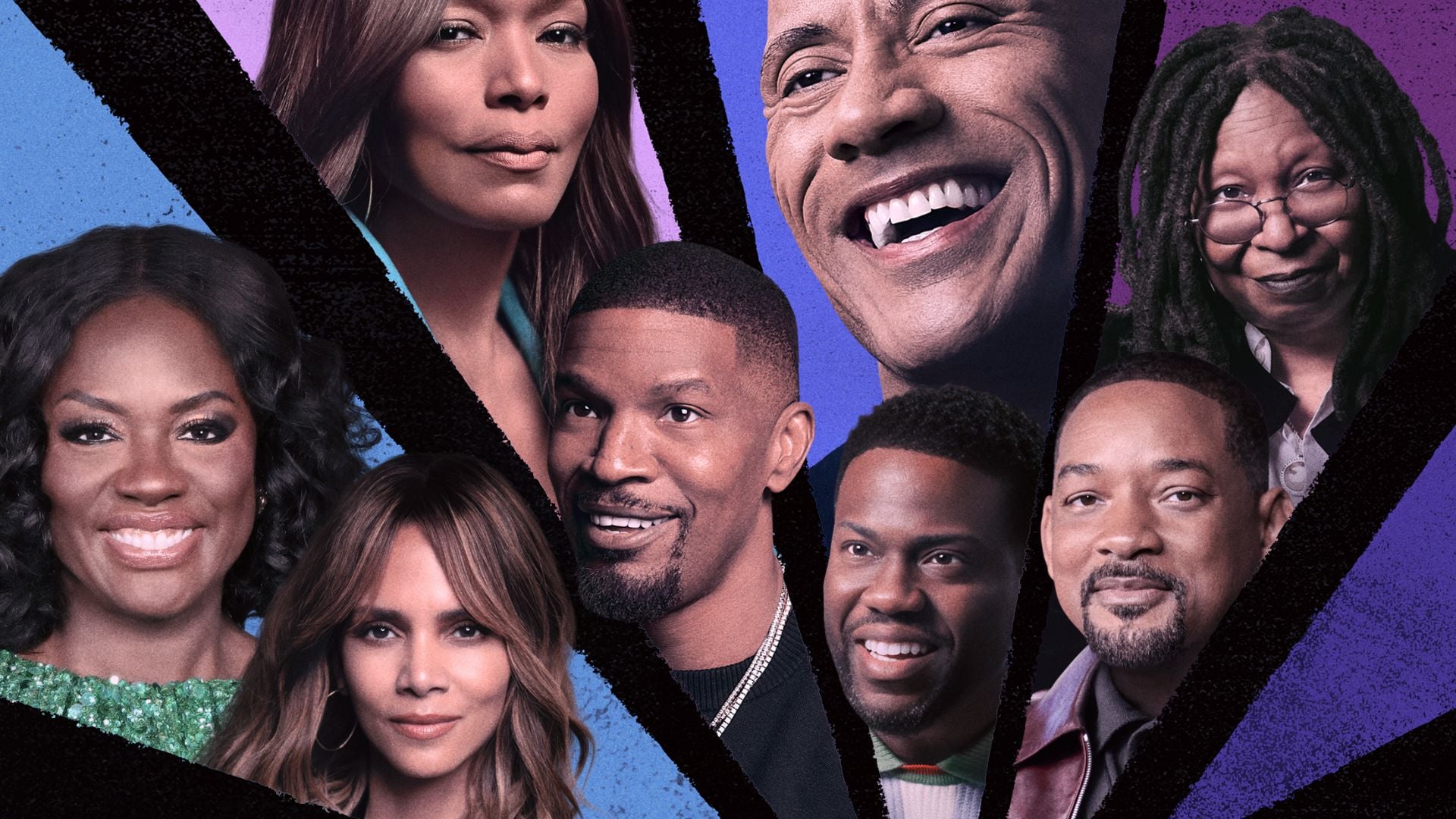
Number One on the Call Sheet – Black & Beautiful


Hosted by
KT & Oti
Show Notes
Grab a snack and a lover as we give splooshes and flowers to the Leading Black Women and Men in Hollywood with the Number One on the Call Sheet films.
—
Summary
Introduction
In another spirited week at the For Your Reference household, hosts KT and Oti dive into a remarkable exploration of black excellence in Hollywood through their review of the two-part documentary, “Number One on the Call Sheet.” This compelling series focuses on black leading men and women in Hollywood, offering both an insightful tribute and a critical examination of the industry’s past and present dynamics.
Review Setup and Acknowledgements
KT and Oti kick off the episode with immense enthusiasm, expressing gratitude to the creators and acknowledging the significance of reviewing both films. The two documentaries, part of a first-time Apple screener experience, showcase not just talent but the rich history and struggles of black artists.
Discussing ‘Number One on the Call Sheet’
The first film, helmed by Reginald Hudlin, chronicles the journey of black leading men in Hollywood, celebrating icons like Denzel Washington, Will Smith, and many more. KT and Oti share their admiration, noting how these men have built an unshakable foundation of resilience and progress against an industry backdrop that hasn’t always embraced their potential.
Black Leading Men in Hollywood
The hosts dive deeper into the iconic presence of these leading men, describing how the documentary lays out a vivid historical context. From Eddie Murphy’s comedic reign in the 80s to the powerful presence of Denzel Washington and John Boyega, each story reflects a tenacity and vibrant representation. The conversation touches on key aspects such as typecasting, autonomy, and the importance of creative control.
Challenges and Triumphs in Film
The documentary celebrates the unity and mutual appreciation among black male actors while highlighting personal anecdotes from the industry. KT and Oti discuss how names like Spike Lee and Reginald Hudlin have paved the way for more nuanced and authentic storytelling, pushing black filmmakers to the forefront of Hollywood.
Sobering Reality of Black Leading Women in Hollywood
Transitioning into the second documentary, directed by Shola Lynch, the conversation takes a more sobering tone. The film delves into the systemic roadblocks faced by black women throughout Hollywood’s history, giving voice to legends like Angela Bassett, Viola Davis, and Whoopi Goldberg. It paints a stark picture with statistics like less than 4% of Hollywood films featuring black women as leads.
The Struggles and Triumphs of Black Actresses
KT and Oti highlight riveting discussions on colorism, beauty standards, and the roles often limited to black actresses. The film exposes the continuous struggle for representation and recognition in an industry that is frequently slow to change. Yet, despite adversity, the narrative celebrates moments of triumph, with each actress sharing her unique journey.
Halle Berry’s Impact and Reflection
Through Halle Berry’s iconic Oscar win, the documentary poses poignant questions about true progress. While Berry’s heartfelt acceptance speech signaled hope for change, KT and Oti reflect on the persistence of barriers that remain, demonstrating the need for sustained action and advocacy within the industry.
The Importance of Representation and Recognition
Throughout, KT and Oti emphasize the importance of representation and listening to the voices of those who have fought for visibility in Hollywood. They explore how both documentaries invigorate a sense of pride and resilience, urging audiences to support more black-led projects and talent.
Final Thoughts and Recommendations
Closing with reflections on their “Mount Rushmore” of black actors and actresses, KT and Oti pay homage to their influences, underscoring the rich tapestry of talent that continues to shape Hollywood. They recommend films and actors that embody these histories and legacies, inviting listeners to delve into classics like “Waiting to Exhale” and “The Last Holiday” to see these amazing artists shine.
In a world where visibility leads to inspiration, “Number One on the Call Sheet” encourages a deeper appreciation for the voices that forever alter the narrative. KT and Oti leave audiences with a powerful reminder to stay engaged with stories that elevate black excellence within the film industry.
Tomato Meter
 KT
"The history and permanence of Black leading men and gives flowers to the undeniable force, layered being and emotional range of Black Leading Women.Posted Mar 28, 2025"
 Oti
"A compelling look at Black men in Hollywood and spotlighting the legacy of trailblazing Black women.Posted Mar 28, 2025"
KT"Reginald Hudlin brings his distinct lens through the history and permanence of Black leading men in Hollywood. Living legends and current talent appreciating each other’s artistry speaks to cultural significance.Posted Mar 28, 2025"
Oti"A compelling look at Black men in Hollywood, this doc is beautifully directed and thoughtfully framed—a heartfelt salute to resilience and progress.Posted Mar 28, 2025"
KT"Shola Lynch beautifully pays tribute and gives flowers to Black Leading Women in Hollywood. The undeniable force, layered being and emotional range of these actresses is in spite of the industry not in credit to it.Posted Mar 28, 2025"
Oti"Goes deeper and hits harder, spotlighting the legacy of trailblazing Black women. It’s a powerful celebration of progress and a call for more.Posted Mar 28, 2025"
Episode Details
- Duration
- 0:00
- Released
- March 28, 2025
- Category
- Episode
- Hosts
Transcript
Transcript (6,730 words)
Full transcript of Number One on the Call Sheet – Black & Beautiful.
KT: It's another week in the For Your Reference household, and we are here for a very exciting review. Before we even get to that, I want to give my flowers to the black leading man in my life and in all of our hearts, friends and lovers.
Oti: Mm-hmm. And if you don't know she means me,
KT: let's get on to the show. Hey, friends and black Hollywood lovers. Welcome back to the For Your Reference podcast. You got your host, KT
Oti: and Oti.
KT: We have cleared the schedule, Oti.
Oti: Mm.
KT: Not only is this review Number One on the Call Sheet, it's the only one on the call sheet, and it'll be number one on the charts. Absolutely thank you to Morgan and the team at R&CPMK, as well as Apple TV. We are here to discuss both films of Number One on the Call Sheet. It is very exciting. It's Black Leading Men in Hollywood, and the second film is Black Leading Women in Hollywood. Before we even get into it. Before we lay our love and splooshes at pretty much everyone's altar, Oti, how are you feeling? Because I'm tripping out a little bit. You know, we come with a very specific frame of reference. We come with a very specific lens, and this is also our first Apple screener, which is really cool. And for it to be this, I don't know, can you even articulate, it was a wash,
Oti: the weight.
KT: Well, there you go. Um, before we get into where we need to get into, Number One on the Call Sheet: Black Leading Men in Hollywood was directed by Reginald Hudlin. There's so many, uh, great leading men, and I'm going to read the more once we get to the review. Number One on the Call Sheet: Black Leading Women in Hollywood was Shola Lynch. We're gonna do our pull quotes. We might discuss them separately and then come back together. But grab a snack. Grab your lover, friends and lovers, watch both films and come and chop it up with your nasty friends and lovers.
KT: Oti, give us your pull quote,
Oti: A compelling look at Black men in Hollywood, this doc is beautifully directed and thoughtfully framed—a heartfelt salute to resilience and progress.
KT: Wow. Okay. We're crooker.
Oti: Yeah.
KT: Reginald Hudlin brings his distinct lens through the history and permanence of Black leading men in Hollywood. Living legends and current talent appreciating each other's artistry speaks to cultural significance.
Oti: Mm-hmm. A hundred percent.
KT: You might as well add this into our Spike Lee run as well, friends and lovers. Um, we might as well do the pull quote for the Black Leading Women, um, even if we're gonna, uh, discuss them separately. But we might as well do the quotes now. My love.
Oti: Goes deeper and hits harder, spotlighting the legacy of trailblazing Black women. It's a powerful celebration of progress and a call for more.
KT: Wow.
Oti: It left it. Yeah. Give us yours. There's a lot. No, I love, there's a lot.
KT: Yeah. You, you could have got double the character limit for that pull quote, don't you? Mm-hmm. Shola Lynch beautifully pays tribute and gives flowers to Black Leading Women in Hollywood. The undeniable force, layered being and emotional range of these actresses is in spite of the industry not in credit to it. Mm, fight the power. Okay, well, because these are two separate films, I think we should discuss them separately, but obviously, um, we're going to have a general discussion as well. I just wanna read the list of featuring in this. So friends and lovers. Let me get my shit off. Let's give the flowers and splooshes everywhere that they're due.
KT: John Boyega, Don Cheadle, Ice Cube, Idris Elba. Jamie Foxx, Kevin Hart. Dwayne The Rock Johnson. Hello, brother. Michael B. Jordan. Martin Lawrence, Robi Reed. Will Smith. Denzel Washington. Reuben Cannon. Morris Chestnut. Taye Diggs. Laurence, Larry Fishburne. It's not credited. I, I'm just. Nodding to it. Morgan Freeman, Reginald Hudlin, Matthew Johnson, Daniel Kaluuya, Eddie Murphy, Nina Shaw, Quentin Jerome Tarantino. Mm-hmm. I love that he explained the racism to us. Mm-hmm. And Marlon Wayans. Who? Who? Oh. What are your general thoughts and feelings on this Black Leading Men film?
Oti: Uh, it was good to see because they did a lot of groundwork to show how far. They've come. Yeah. And how unapologetic they are because they've been doing this shit the right way.
KT: Oh, absolutely.
Oti: You know, and there's nothing like,
KT: Ooh,
Oti: I'm too modest for this. Nah, fuck that. Yeah. I own, I, of course, I'm number one on the call sheet. Fuck that. Yeah. So, uh, I really enjoyed it. Uh, I appreciated it. I thought. And I will speak to the, to the leading women in Hollywood later, but it was, so, I, I, in my head I thought, oh, okay, maybe we'll just get the same version of this. Mm. And I was so glad that we got something else because they're issues are so distinct, but it was so good to celebrate our black men's man. It was good to see them celebrate each other, appreciate each other, know that each other, they set themselves up and they give themselves advice, even bad advice, but because they didn't know better.
KT: Yeah.
Oti: You know? Why hide your money in there? You know, hide your money. Bury your money, you know, because Uhhuh generational wealth has never been a thing. Yeah. So it's so beautiful to see. It was amazing.
KT: And it, it was really cool to be able to frame it 'cause that's what Reginald was doing throughout the documentary. It was a nice laying of the history, like you were saying. Um, you know, from the seventies there was self-expression. Shaft, Foxy Brown, Super Fly. I feel like we need to have a blaxploitation run on the For Your Reference podcast, Oti.
Oti: Mm-hmm.
KT: So I can be well educated and well lubricated. If you're nasty friends and lovers. Then coming into the eighties, you have Eddie Murphy, you have Prince, there's Boomerang there. Um, you know, there was also a moment in the documentary where Reginald said, sometimes the most revolutionary story you can tell is showing black people in real life.
Oti: Yeah. Does it need to be deep?
KT: No, but that's exactly it, right? Yeah. You don't need to have, unfortunately, the performances that do get acknowledged by the academy are usually that
Oti: you don't need emancipation to, to, to, to show,
KT: Hey, we're still good with Big Willie. We are just saying you don't wanna step into the Wild Wild West, Oti. Um, and then talking about in the nineties, that was the come up of filmmakers, whether we're talking about Spike Lee, John Singleton, as well as, uh, Reginald too. I know they refer to him as Reggie, but it's kind of like, I don't know, Martin Scorsese, so I'm not gonna call him Marty. Mm-hmm. Um, and you know, so you had black filmmakers, so not only were films being made, but they were being made from a personal point of view. It wasn't just genre.
Oti: Yeah.
KT: And then we get into the two thousands where you have more just mainstream, um, as opposed to specific stories, whether it's your Denzels, whether it's your Will Smiths.
Oti: Mm-hmm.
KT: Right. Um, also, you know, Eddie Murphy to the test of time as well. Uh, actually Wow. What are your thoughts on Eddie Murphy and Dreamgirls? 'cause I think for me that was one of his more serious, um, sort of roles.
Oti: Yeah, I loved it. I thought he was great in it. You didn't?
KT: No, I think it was easier. 'cause sometimes you have like,
Oti: or were you just picturing Donkey there?
KT: No
Oti: rasa es
KT: no. You are really proud of yourself, aren't you? I'm, wow. Um, but just there was so much to love about this and I think. Even just having these men tell their stories would've already been top tier watching, consuming, digesting, nourishing for all of us. But the way in which this documentary was made was done in such a, it's Hollywood baby. This thing is bigger than Nino Brown. It would've been nice to see Wesley Snipes, though.
Oti: Yeah, it, it would've been good. And I think they also covered sort of the typecasting where it was like, Eddie, oh, you've gotta do serious roles because you know, you've gotta show range and all that. But man's good at comedy, you know? Yeah. That's who he is. And he is like, I'm not going to try and be something else just for you. I know this is my star and I'm going to carry it, man. Yeah. Good to see.
KT: I also thought it was quite refreshing. Um, and shout outs to Apple. Uh, I, I guess maybe they're on their time of truth telling because we just watched the first two episodes of The Studio. Which it must be very frustrating for people actually in the industry. It's still frustrating for us as an audience to watch as well. Um, but you know, we had Matthew Johnson in the documentary who's an entertainment lawyer, and he said, when you drill into who's making the decisions on who gets what, green lit, it hasn't really changed that much at all in Hollywood.
Oti: Yeah. Uh, and that's the next step. You know, Tyler Perry had a vision. Okay. His, his, his, his implemented something. Okay? People need to run with it as well.
KT: I,
Oti: you don't agree?
KT: Uh, is there space for other discourse?
Oti: Yeah.
KT: Um, but you know, even in regards to Cord in his speech when he talked about, you know, financing smaller films, you don't need to make a hundred million dollar film make 10, $10 million. Yeah. Films, right? Um, and it's, it's one of those things where. It's so great visually, but if it's not happening in the background, and this is also, um, it was also interesting because obviously there are similar topics and there are similar themes that get covered in both films, but the way in which they're explored, in the way in which they're expressed by the actors and the actresses.
KT: Very different and you get different experiences. But what I'm talking about specifically, I think it was Michael B. Jordan, uh, that, you know, in the package for this particular topic, um, they were talking about how they're making their own, uh, production companies, which is, you know, it's, it's on ambition, but at the end of the day, it's outta necessity as well.
Oti: Yeah. You can't just be. Satisfied with being the man in front of the camera. You've gotta know, you know, peek behind the curtain.
KT: But it's also autonomy. It's also creative control as well. Yeah, because even like Michael B. Jordan, John Boyega, Daniel Kaluuya, like there's so many current actors now that have production companies, and you would hope it's because they want to, but a lot of the time when you hear them talk about it, it's because they have to.
Oti: Yeah.
KT: Speaking of because they have to, um, one of the, one of the more, most cutest fun moments in this documentary is Reggie or Reginald asking Daniel Kaluuya about the Mount Rushmore
Oti: man's Red. Eh,
KT: that's how I feel when I understand a cultural reference. But while we are here, Oti, who's on your Mount Rushmore of. I guess you can just say actors, black actors, wherever you want to go. Or do we need time? Because if you would ask me now, I would need time.
Oti: Oh, that's such a deep question. I would need some time.
KT: Okay. Maybe before we get to, and it's
Oti: probably ever changing as well.
KT: Okay.
Oti: Mm.
KT: All right. Well, that's fine as well. Um, Denzel, Denzel. Denzel. We need to talk about Denzel, my love.
Oti: He's inspired so many people and he's so, so good. Um, and it was, it's sort of a breath of fresh air To see an actor at his height who is not a movie buff, who doesn't feel like he needs to conform some sort of way in which, oh, I watch movies only like this, or like, how it's shot like that. It is just, I'm a theater guy. That's who I was. That's what interested me. I was like. Go, I can, you know, mm. Go and act and, but he always goes back to theater, so I loved his take on, or it's at, at least it feels different from the area of the person who feels like, Ooh, they need to stand on a certain movie just because, you know, culture dictates or something like that.
Oti: Yeah. You feel as if they're tapped into the zeitgeist or something. I just love this man. He can do no wrong.
KT: He can absolutely do no wrong. And there's so many instances throughout his career where, and I mean this in a good way, he doesn't have a preciousness about acting, but also he is a very good actor as well. So I, I guess you can also talk to his theater roots, but I guess you can have talent come from all different. Sort of, uh, personalities because you can have people that are fully entrenched in the art and be just as great as well. But there's, I don't know, there's charm, there's charisma, there's so much that Denzel brings.
Oti: Mm-hmm. Yeah. And even when he was facing like roles in which he felt like he shouldn't be doing mm-hmm. Like, um, uh, the n word that couldn't die or wouldn't die. Yeah. And speaking to people like Sidney Poitier and understanding that, oh, this will determine, this will determine my future state. You know, it's not just about the, now money might be good, but what are you going towards?
KT: As long as I'm hoofing and getting my loot right? Mm-hmm. That's a Bamboozled reference. Friends and lovers. Oh, but man, there's so much to love. In this film, there are so many moments in this film as well. Um, there, there was a conversation that they were having about how black films don't travel. Black films aren't international. They don't bring the box office. They're not the draw.
Oti: Mm,
KT: right. There was even a moment where Ice Cube was offering to do music concerts, and I have her name here, Nina Shaw, another entertainment lawyer. Um, she was saying that they were, they were essentially told people that go to concerts aren't people that go to the movies.
Oti: Oh, such a left brain, right brain way of thinking.
KT: Western
Oti: White. It, it's wild. And I, and I'm glad that it proves the executives wrong that yes, give them a chance. Shit translates wherever. Funny is funny. Good is good regardless of who, regardless of the skin color, you know? And that's just still an uphill battle, even just a few. Months ago with Disney, there was a whole kerfuffle about Halle, you know, like be, be, be, be. This shit's still happening, so it's not, it's not. Completely outside of the realms of imagination, as in, ooh, how could they take that?
KT: And we're sending all the love to Paapa because once he, once man's Snape, give him a Katt Williams perm while you're at it.
Oti: Oh man. Like, yeah, as if black people need a right to exist in fucking fantasy. It's wild.
KT: Yeah. Because that's where it's confusing.
Oti: Yeah.
KT: Corlys and all of that. House of the Dragon, um, friends and lovers and, uh, Laurence Fishburne was talking about the Pee-wee's Playhouse, but I just, it, it's these stories that are moments. That are archived and they're, they're given a life through documentaries like this because, you know, most people know that John Singleton graduated from film school, obviously, but he also interned as well. And he was like, I'm not getting your coffee, like to do like that. He had a script, he was ready to go, and that's how Laurence met him. They had Boyz n the Hood and it's, it's, and those are the things, right? Because I think when it comes to you, Oti, you, you don't necessarily seek out. Behind the scenes stories. You are cool just to live in what the movie is offering to you. But I think it's hearing these sorts of stories and understanding how interconnected the triumphs and the successes are, that also makes it so powerful as well.
KT: Right?
Oti: Oh, a hundred percent.
KT: Marlon Wayans also had a quote, um, you know, saying that. There's only really five guys that get the best directors, best producers, best writers. That was also in response to having to, why do you write direct? Create everything that you do.
Oti: Yeah, because you wanna be, you wanna be Matt Damon in that poster. Mm-hmm. You know? Why wouldn't you? Why shouldn't you?
KT: Well, Matt Damon can also be the Asian Matt Damon as well when he wants to.
Oti: Mm-hmm.
KT: Hashtag never forget friends and lovers.
Oti: Yeah. But now we can't, people can't bloody enjoy Assassin's Creed because there's a fucking black Yasuke or whatever. Like it's shit on, shit on shit. But we get to see these men celebrate. Their achievements in a way that, you know, goes against a lot of the different odds, people who broke doors down for them. Mm-hmm. And they continued pushing and pushing and pushing farther. And there's still your up and comings, your Daniel Kaluuya continue with the trend. So it's, it's looking good.
KT: Oh, absolutely. And uh, it's always fun hearing John Boyega talk because. It's like he exists just to make non-black people mad. Like I think it's just the energy in which he talks. 'cause he said, you know, we're all about ownership. We are coming in numbers.
Oti: They Cloned
KT: Tyrone and they're cloning John Boyega as well. Um, before we move on to our leading women, is there anything you want to wrap up with?
Oti: Uh, I would just say that. Support black films, support black actors, actresses, whatever. Just do it.
KT: Yeah.
Oti: All over the globe. Doesn't matter. Absolutely.
KT: And if we can request, I would love to see black directors in Hollywood
Oti: more, more black directors. Please writer directors. Let's conquer them all then.
KT: Writer directors. Absolutely. We'll leave the Mount Rushmore for the end so we have some time to think about it. Um, so let's get into Black Leading Women in Hollywood. Angela Bassett, Halle Berry, Viola Davis, Whoopi Goldberg, Cynthia Erivo, Vivica A. Fox, Meagan Good. Tiffany Haddish. Taraji P. Henson. Nia Long. Ruth Negga. Gabourey Sidibe. Jurnee Smollett. Octavia Spencer, Tessa Thompson, Gabrielle Union and Alfre Woodard. Because black women can do sci-fi too. Friends and lovers.
Oti: Yeah. And action. Especially with the um, Viola Davis. Viola.
KT: Yeah. And she's got that new film as well.
Oti: Yeah.
KT: What a way to open the film. Mot less than 4% of Hollywood films have black actresses. The lead. This is a tonal shift.
Oti: It is. It is a tonal shift
KT: because they're two different conversations.
Oti: Mm. Because it's one thing to be black, it's another thing to be a black woman in Hollywood. Mm. And in the world really. I.
KT: Hmm.
Oti: And we get to see the picture painted quite well by Shola. And the questions asked are very thoughtful and they navigate quite well. 'cause in my head I thought it was re Reginald that was going to do both. But when we came to Black leading Women and we saw it with Shola, I was like, makes sense? Mm-hmm. And then the questions that were being asked, I was like. Okay, we are going somewhere else here. Yeah. And listening to, you know, when you're covering things like colorism, which is a thing, uh, beauty standards, um, you know how people are perceived.
Oti: You know, the only roles a certain sort of person might get is you just being a maid, being a best friend, and that's all you ever be. Yeah. And that's where they see your limit as. And these women show how they push against that against all odds, with everything stacked against them, they still continue doing quite well. And one of the one I think while watching this, not even while watching this. I had not watched Wicked. And I think when we were watching the Oscars come out, I was like, oh, it's gonna be, uh uh, what's the name of the lady that did The Substance?
KT: Oh, Demi Moore.
Oti: Yeah. I thought, oh, Demi Moore for sure. 'cause The Substance was great.
KT: It was okay.
Oti: And then I watched Wicked and oh my fucking God, Cynthia Erivo was amazing in that. Yeah. I did not, I'm not sure I even comprehended how good she could be.
KT: Yeah. Because
Oti: I know she can sing. I know She can act. I've seen her stuff.
KT: You just don't like Widows. That's your problem, sir.
Oti: But Oh my word.
KT: Yeah.
Oti: Mm. That thing was Cynthia's man. Hands down.
KT: Absolutely. And you know what it, it's, it's not to say that. Black men in Hollywood. Didn't encounter any sort of resistance or struggle. But you know, the first film, deservedly so, it felt like a party baby. Like it just felt like, it felt like a celebration. It was a victory. A victory lap. Yeah. It was a home run. It was a Dodger Blue getting grown and sexy. Like it was a lot of fun and it was a celebration and you know, it was definitely not, uh, Spike Lee's montage of, of, of, um, depictions of black people, but it very much was, we are celebrating on the shoulders of how far we've come.
Oti: Mm-hmm.
KT: Right. While in this film in Black Leading Women in Hollywood, we have a bit more of a sobering conversation.
Oti: Mm-hmm.
KT: About that. And there's a lot that I wanna talk about. But I think the main thing that I wanna focus on now is the montage, because there's only been one black woman that has won lead actress, however.
Oti: Yeah, which is wild. Considering, considering, you know, that montage was quite, you can't, it's weird because you know the start, it's there every day, but watching it roll over and seeing the performances of women, of black women. Put aside for things that I'm like, statistically it doesn't make sense. No even bro, you, because you
KT: can say here or there, but are you telling me every single year
Oti: we can't roll a fucking snake out
KT: every year? It doesn't make sense. And ooh, there's a whole conversation, Oti. About the depth and the fucking emotional trauma that is not compatible because respectfully, whether they won or not, even the nominees. The roles that white actresses get. Some of them are really cute and really light and don't have any sort of grounding to the world. Meanwhile, you have black actresses that literally have to go through hell and back just to get nominated in regards to the roles that they're playing to get nominated. Do you understand what I'm saying?
Oti: Mm-hmm.
Oti: Yeah. And, and it's the, it's the fallacy of. Giving them best supporting. Best supporting. Best supporting. Best supporting.
KT: It feels like a thumb, doesn't it?
Oti: It feels like that. Know your level.
KT: Yeah.
Oti: You know.
KT: Yeah.
Oti: It's, it's the, it's the always be the bridesmaid shit. It's the Mm. That's all you ever be
KT: Yeah.
Oti: It for, at this point, it feels quite intentional. Really.
KT: It's insulting. Mm. And that's why in my pull quote, I said, it's in spite of the fucking industry. If we're in the 2020s and you're still saying first this, first, that that just shows how fucking old and white and dinosaur media you are.
Oti: Mm-hmm.
KT: That has nothing to do with the talent. 'cause the talent's always been there.
Oti: Yeah.
KT: Yeah.
Oti: You know, and then we got to see Halle Berry's speech. Yeah. When she won the Oscar and it was. Beautifully put, well thought out, saying what it meant and what it, it's going to hopefully change in future. Mm-hmm. For to her peers, the Angela Bassett. The Tarajis. The Vivica, yeah. Mm-hmm. But in the end, it wasn't really,
KT: but she also won it for Monster's Ball. Not for her Dorothy Dandridge?
Oti: No. For Monster's Ball. Yeah,
KT: but that's what I mean, like even the performances, because I, I feel like, not that we need to split hairs, but I feel like when it comes to black leading men or black actors, they're allowed to be black men when it comes to, like even Halle Berry winning that, or even when we think about Lupita like. It has to be some sort of separation in order for it to be an Academy Award-winning performance.
Oti: Yeah.
KT: There's so much graciousness. Uh oh. I just remember Eric Benet was in the crowd madman. We always need a laugh break, um, it was heartbreaking, you know, and we had so many, so many of the other women talking about this, but, you know, it gets to a point where Halle is like. Reflecting on a win and feeling like it maybe didn't mean anything because what the fuck?
Oti: Yeah, that was what? 2001, I think.
KT: Yeah.
Oti: Nothing's changed. It's like,
KT: here's your cookie.
Oti: Yeah. Yeah, and, and that's enough.
KT: You know what I also appreciated about. This film? Well, first off, it was made with a lot of care and it was made with a lot of love. And you could tell, you could absolutely tell. Um, but I also really love that it didn't, it didn't like, it didn't bar you all like white woman, like cry itself out and over. Important. It was like, here you go. Look at all of these years with all of these great performances, whether it's from Viola Davis, um, Octavia Spencer, like look around. It's everywhere with Ruth, with Tessa. We've look at all of these great performances.
Oti: Angela Bassett in Waiting to Exhale,
KT: oh,
Oti: I do not know what you need to do to sing, to perform, to act, to get an Oscar. I don't know, Waiting to Exhale. I watched it when I was a kid and it sent shivers. Everyone that I know loves that movie. It's a cultural reference.
KT: Mm-hmm.
Oti: Ah, it just doesn't make sense.
KT: It doesn't make sense, but it makes sense because it doesn't make sense.
Oti: Yeah. Right. Yeah, exactly.
KT: Um, I, I don't know. I, I don't think it was. I don't think it was given the platform. I don't think there was a space to talk about it in the, in the men's film. But they did speak on colorism and you know, they also referenced the film Passing as well. Um, I wanna talk a little bit about that. Um, I know we're talking a lot about Halle Berry, but it also was focused in this as well. I also wanna talk about Whoopi Goldberg in a second. Um. But Halle was saying that being light skin worked for her, but not being beautiful.
Oti: Mm-hmm.
KT: I don't know. I would say choices because that was after Gabby spoke about her experience and you know, she also said very, something very powerful as well, because she said, we're trained to hate ourselves and the world around us reinforce that.
Oti: Yep.
KT: Right. She talked about a previous job that she had a a, a sex operating line. She was pretending to be white and pretty much en enforcing that because no one was calling the other hotline.
Oti: Mm-hmm.
KT: Right. And she talked about it's not an accident, like if a black woman loves herself, it's not an accident. She learned how to do that. And then they cut to Halle Berry saying that, and I'm like, come on man.
Oti: Yeah. Um, what Halle was saying made sense, but it was just cut weirdly. 'cause she came in and said, you know, all these movies have been in, or whatever. The only one, the only saw me is this pretty little girl who will be the trophy wife, will play these sort of, um, uh, shallow roles or whatever. And she wanted more, you know, even when she linked up with Spike Lee, she was like. Give me the crack, give whatever. Yeah, I can do it. I will do the, you will never see a best actor than this, so I get it. It just was cut weirdly.
KT: No, no, no. I, I absolutely agree with that, but it, I, I don't know. There's, there's definitely instances where, and here we go, we'll come to Whoopi Goldberg because, you know, I wouldn't necessarily. Say that it was a hindrance, but if she felt like it was the way, but by her being pretty and her being beautiful and you know, like her beauty crossed barriers. So like any demographic would find her beautiful. Right? That definitely worked in her favor, but I'm not, I'm not saying that she's invalid in how she's feeling. Does that make sense?
Oti: Yeah.
KT: The footage. The footage, and again, this is the very matter of fact, but caring way that Shola directed this film in regards to Whoopi Goldberg in particular because she didn't have a problem with herself. People told her that she had a problem with herself.
Oti: Yeah, I do. Not the press, Jesus, I hearing some things on, on tv, I do not have as tough a skin as Whoopi does, but far out. Some shit is just uncalled for. And the things that she had to go through, she had to learn to fucking love herself. Mm-hmm. Because the industry, the media was telling her otherwise, yeah. She would get roles because of, she would instinctively target roles that people drop out of because, but
KT: that's something that she had to do herself.
Oti: Yeah. Because she was never gonna be put there. Yeah. She was only in, um, Ghost because Swayze wanted her specifically.
KT: Yeah.
Oti: She won
KT: and she had to do her own show her one woman show. Yeah. To get the attention. Yeah.
Oti: She won an Oscar. Yeah, she's an Oscar winner, Uhhuh. And she couldn't get a fucking role. You know, sometimes,
KT: and she also broke the 52 year, um, since Hattie McDaniel of winning the Oscar. Yes, yes, yes, yes, yes.
Oti: And, and just this tells you everything wrong with the industry right there.
KT: Yeah.
Oti: You know, and, and it's
KT: because if she has any success, it's not for you motherfuckers.
Oti: Facts.
KT: And also a Alfre Woodard.
Oti: Mm-hmm.
KT: There was a journalist asking or or she was talking about how in casting calls, she'll get told that she can't play an African American because she looks African.
Oti: I heard it all, man. Because
KT: it's like, you know what they're saying? Mm-hmm. But you don't wanna know what they mean by that.
Oti: You know what they mean as well. You just don't wanna fucking accept it because it's fucking ridiculous and stupid and idiotic. Ah, this,
KT: drop your euphoria on the industry. Oti,
Oti: a party will die, man.
KT: Uh, um, but just quickly, Sheryl Lee Ralph, um, not in this documentary, but, um, there was a recent interview clip where she talked about, um, you know, a, a very big casting director, you know, pretty much squashing all of her dreams, telling her that no one wants to see her kiss. Brad Pitt. Like no one wants to see her kiss. Like the leading whoever. The one out of five flavors of the
Oti: Of the mans.
KT: Exactly.
Oti: Yeah.
KT: But there was also a lot of love in this film as well. There was a lot of loving on each other. Um, that it was, it was so beautiful and, you know, we didn't even talk about rest in peace, Chadwick Boseman, but there was a tribute around Black Panther in the first film. Um, this one, it felt like the love was everywhere. You could find it.
Oti: Mm-hmm.
KT: Everyone, you know, it would've been nice to see Regina King. It would've been nice to see Queen Latifah.
Oti: Yeah.
KT: As well. Um, but you know, I'm so glad that we also got Gabrielle Union in here. I'm glad we got Meagan Good in here. Mm-hmm. The same way we got Taye Diggs and Morris Chestnut. Because if you are actually talking about black leading men and women in Hollywood, they should absolutely be there.
Oti: A hundred percent.
KT: And that's why it's so important that you have the right people making these films as well.
Oti: Mm-hmm. Yeah.
KT: I must say though, it took me a little bit too long. I think I was too focused in on all of the stories, but when I realized, 'cause every so often I, I saw the flowers there. But to actually understand that we are witnessing and being nourished by black leading women being given flowers right now. In this moment, that was such a beautiful thing to see.
Oti: Oh, a hundred percent. A hundred percent.
KT: Do you wanna talk about the hair and makeup before we No.
Oti: You all know, we don't even need to say anything about that.
KT: Um, I just gonna get into my notes for a second. Nia Long, every woman that has ever made it has been labeled as difficult, um, Jurnee talked about different auditions, and you know, it, the audition isn't open yet, but what they mean by that is they only want white girls. Auditioning for those particular roles. Octavia Spencer. There was, like you said, a whole theme of playing maids or I guess The Help, um, as well. And that was also mentioned, the Black best friend, the sassy black woman, that it was also heartbreaking because, you know, growing up Gabrielle Union was that gal right.
KT: Mm. Throughout, throughout all of the, um, rom-coms and, you know, I, I guess like millennial, like flavored films, but she talked about she was pretty, but she wasn't pretty enough to distract from the white female lead. She was left of center, she was the bitchy best friend. Mm-hmm. Um, Ruth talked about how personal is political. How did you feel about her talking about her last name?
Oti: Good. Own your name. It doesn't fucking matter what people think. No one should tell you to change your name regardless.
KT: Let's get some little bit of love with Taraji P. Henson while we are here.
Oti: Mm-hmm. Still way under appreciated. Uh, she is, she has been doing some amazing acting and for whatever reason. Not getting the flowers at the stage the way she deserves. I'm not getting the same money that she should be getting with her peers, which is fucking wild.
KT: It took Acrimony. Yeah.
Oti: Fucking Acrimony.
KT: Um, she mentioned, I don't think the industry sees us as leads. I don't know what to do with that. What are you trying to say to me? You know, there was a love for female led films, Set It Off, Soul Food. Um, but there, there's so much there. There was so much in this film. There was so much in both of these films. Um, how does it feel for you, Oti? You know, having this podcast, watching this film, and I guess seeing and loving and also being very real about, you know, how people succeed and how they don't succeed, or how they're blocked from success.
Oti: No, it's needed. Um, we've got young artists out there thinking about becoming actors, being part of the film industry, directors, writers, whatever. Mm-hmm. It needs to be seen. It needs to see these people who went through the same thing who are still going through some of this shit, you know? And just do it.
KT: Yeah,
Oti: do it. We can't have enough.
KT: It's not enough.
Oti: Mm-hmm.
KT: Mount Rushmore,
Oti: uh, far out. Mm.
KT: Denzel's gonna be on there for sure. We're, we're doing men and women, so at least we can have a bit more. So Denzel's definitely on both of ours. Yeah.
Oti: Yeah.
KT: Okay.
Oti: I reckon, uh, yeah, this is, this is ridiculous.
KT: And this is just your preference, right? Or you trying to go based on most successful?
Oti: No, just my preference.
KT: Okay.
Oti: I'd say Eddie Murphy's there.
KT: Eddie Murphy's gotta be there.
Oti: Mm-hmm.
KT: Okay.
Oti: So for you too.
KT: Yes.
Oti: Okay. Uh mm
KT: I do Wesley Snipes. I'll do Wesley Snipes as well.
Oti: Oh, fucking hell.
KT: I'll do Daniel Kaluuya.
Oti: Oh, you would?
KT: He has to be on my Mount Rushmore. For me specifically, he needs to be. On mine. So who? Who's your fourth?
Oti: Oh, I go with Morgan Freeman. He gave us some thrillers growing up. You know, Se7en, Along Came a bloody Spider. I dunno. I loved him. So yeah, Morgan Freeman. Why not?
KT: I also loved how he was like, you know, when he gets on set, he'll make sure to introduce himself, but make it clear that you stay over there. He also had an interesting, uh, when he was talking about some actors put on personas or put on costumes, and I thought that was quite interesting. Um, okay. Alright. That, that's an OG of a Mount Rushmore there. Um, how about for women? I'm putting Regina King first.
Oti: Me too.
KT: Okay.
Oti: Angela Bassett.
KT: Angela Bassett? Yes. Okay. We're agreeing.
Oti: Mm
KT: mm-hmm.
Oti: Cynthia Erivo. Just because fuck you. She blew my bloody mind.
KT: Can I say, can I say please hold for me? Mm-hmm. 'cause Taraji needs to be there.
Oti: Mm-hmm.
KT: So Regina King.
Oti: Yeah. So you've got Regina, I've got Angela Bassett and Regina.
KT: Okay. I got no, no, no. I got Regina, I got Angela Bassett. I got Taraji P. Henson, I got Queen Latifah. There's no way Queen Latifah's not on Mount Mount Rushmore. Yeah, I'd have
Oti: Queen Latifah there as well,
KT: because I guess we didn't even, I don't, I don't know. Queen hit me up like she's going to hear this, but I don't understand why she wasn't in it personally
Oti: scheduling.
KT: No. But there was a run of films where it was Queen Latifah that was the leading lady. And where do you get actresses that do the level of genre? The different types of films that Queen Latifah does, as well as have like romcoms as well. You don't have many actresses that do the range and the breadth that Queen Latifah does. That's all I'm saying.
Oti: Yeah, but Just Wright. Fuck sakes, man.
KT: That was on Common. That was on Common. That was not on Queen. That was not on Paula. That was not on Pam Grier. Thank you very much. One time. Sure. Two times.
Oti: Come on now. Now we just playing.
KT: Here we go. Coria rolling there. We don't usually do documentaries, so this was fun. It was also nice to do a full review. Um, again, my love. Yeah. Um, we're gonna finish off in a segment we call For Your Reference. This could be very easy and you can just choose any of the films everyone is in. Um, or you could just choose another documentary that people would love. But what would you recommend?
Oti: I would recommend Waiting to Exhale. Okay. Because then you get to see Angela Bassett in a full glory.
KT: Okay. If we're talking about full glory, you wanna see Queen Latifah in her full glory? Check out the, if you say
Oti: Just Wright, mm.
KT: Do you, do you see what gets in the way of progress? Friends and lovers, black men saying ridiculous things? Because I was not gonna say that.
Oti: Alright.
KT: See, that's why. That's why. Anyway, I'm going, I'm sending my love to Queen Latifah and LL Cool J. I'm referencing the Last Holiday. Nice on Twitter. Instagram, Bluesky and Threads. We're @ForYourRefPod.
Oti: Write us an email. hello@fyrpodcast.com.
KT: We're also on Give all of the flowers and many more black lead actresses winning Oscars podcast. If you'd like to leave a rating and review and we'll see you guys on the next one.
Oti: See ya. Ah, stay black.
Related on FYR
Discussion
Loading comments...