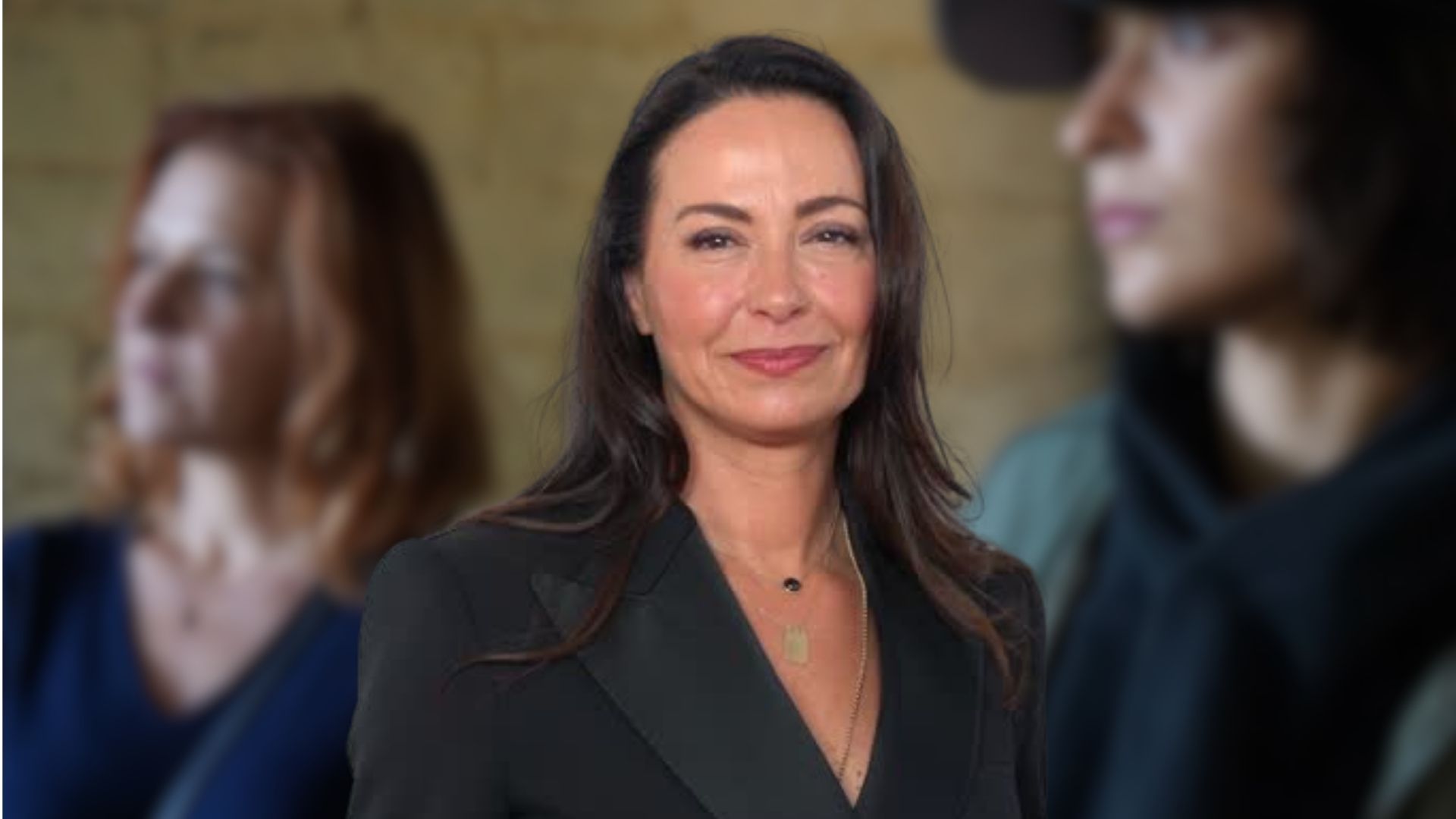
Interview with “The Cranes Call” Director, Laura Warner


Hosted by
KT & Oti
Show Notes
The Cranes Call, a heart pounding documentary about the mission to secure accountability for war crimes in Ukraine, will have its Australian premiere on SBS On Demand on 24 July.
This week we chat to Director Laura Warner about the importance of standing up to injustice, safety on set and updates on ongoing trials.
As suggested by Laura, double feature watching of The Cranes Call & Porcelain War.
Note: this interview is audio only. For other video interviews check out our YouTube playlist.
AUS
1800 RESPECT
https://www.healthdirect.gov.au/sexual-assault-and-abuse-helplines
UK
https://www.thehavens.org.uk/ https://www.thesurvivorstrust.org/
US
National Sexual Assault Hotline: (800) 656-HOPE WWW.RAINN.ORG
—
Summary
The Crane’s Call is not just a documentary; it’s a powerful narrative that delves into the heart of justice and accountability for the war crimes committed during Russia’s invasion of Ukraine. Directed by Laura Warner, this compelling film has made its Australian premiere on SBS On Demand on July 24th, captivating audiences with its bravery and relevance. We had the privilege of speaking with Laura Warner on the Foyer Reference Podcast, exploring the film’s core themes and the message she hopes to convey.
Meeting the Director
Laura Warner, a seasoned journalist drawn to stories that demand accountability, guides us through her documentary journey. Her commitment to justice is mirrored in her focus on Ukraine, where war crimes continue to rise, affecting hundreds of thousands. Engaging with Anya, a human rights lawyer documented in the film, Warner shows us the unsettling reality of war-torn communities, each haunted by unimaginable crimes.
A Global Conversation
The Crane’s Call poignantly highlights the global responsibility to address these atrocities. Conversations with Anya reveal the systematic methods used during invasions, transcending borders and affecting countless lives. By drawing attention to the war crimes in Ukraine, the documentary urges international action and collaboration.
Legal Battles and Courage
A central theme of the documentary is the fight for justice through international legal frameworks. Anya’s efforts to bring high-profile war criminals to account demonstrate the power of legal principles established after World War II, offering insights into how these cases, if successful, could curtail the freedom of such offenders globally.
Hope and Resilience
Warner sheds light on the resilience and bravery of survivors who, despite experiencing trauma, choose to stand against oppression. Highlighting personal stories, the film underscores the potential for individuals to wield power and instigate change, motivating viewers to find their own way of contributing to a better world.
Conclusion
The Crane’s Call leaves audiences with a sense of duty and hope as survivors rise against formidable odds. It’s a call to action for everyone to harness their abilities in their communities, emphasizing that every effort, however small, contributes to a broader fight for justice.
Recommendations for Further Viewing
For those inspired by The Crane’s Call, Laura Warner recommends watching the documentary “20 Days of Mariupol” and the upcoming “2000 Meters to Cherkasy” to gain a deeper understanding of the ongoing conflict and its impact.
Final Thoughts
The conversation with Laura Warner reminds us that amidst chaos, there is power in storytelling, advocacy, and unified effort. The Crane’s Call captures this essence, urging us to care more, act more, and never turn a blind eye to the suffering caused by war.
Episode Details
- Duration
- 0:00
- Released
- July 22, 2025
- Category
- Interview
- Hosts


Transcript
Transcript (3,497 words)
Full transcript of Interview with “The Cranes Call” Director, Laura Warner.
KT: Hey, friends and lovers. Hope you're all keeping well. Um, given the nature of The Cranes Call, um, we did. Mention, not necessarily go into detail, but just wanted to put a quick trigger warning, um, as there are discussions around torture, execution as well as rape. Um, we'll put some relevant resources, in the show notes, friends and lovers listen with care. But this was such a great chat and we're looking forward to, sharing this out on the podcast. So thank you again so much for your time. and check out The Cranes Call when it comes out on SBS On Demand.
KT: The Cranes Call is a heart pounding documentary about the mission to secure accountability for war crimes in Ukraine. Which will have its Australian premiere on SBS On Demand on the 24th of July. Today we have the opportunity to speak to the director Laura Warner. Laura, thank you so much for your time and welcome to the For Your Reference podcast.
Laura: Oh, thanks KT. Lovely to meet you.
KT: It, it's so lovely to meet you. I'm, I am, excited isn't the word, but timely is absolutely the word and I'm so ready to go as far deep as you like to. I know in this climate it can get very difficult to know how to navigate, but, um, myself and Oti on our outlet, um, we are very much about, uh, you know, power to the people and really. Having these conversations that are very, maybe people might wanna have but don't know how to have and, you know, it's hard to navigate. So, um, yes, I am happy to go and be led by you and, um, wherever we want to go. Um, but it's been nice to, I guess, get to know you through researching and through interviews. And I know you've answered this, uh, question already, but I guess just to frame. The conversation that we're having today, um, you know, The Cranes Call was filmed in real time, which, uh, is, is a whole conversation in and of itself.
KT: But it talks about, um, Russia's invasion into the Ukraine. So we're talking about February of 2022. Um, there's some very useful information in the. Title cards near the start of the film, um, about 122,000 war crimes. And, you know, we are very much conscious of that, even from the opening scene of this film. Um, I, I know you have a, a background in journalism as well, so that might also be a part of the answer, but, you know, while everyone, uh, you know, have having a good time covering things that maybe are a bit more of a sort of escapism, what is it that compels you? To take on these stories, and I guess, do you feel a responsibility in how these stories are told?
Laura: Yeah, I mean, obviously, you know, as, as a journalist, I, I'm, I'm drawn to, to these stories, but, but I think this story in particular, I think what really attracted, well, attracted us to it was the fact that, um, it, it was about, as you said, it was about accountability. It was about trying to get justice to people who had been dehumanized to such a degree during the invasion. So, y you know, we were speaking to people. As you said in the title card there, you know, we mentioned over a hundred and and 30 odd war crimes, but of course that number just goes up every single day exponentially. Um, we were filming over the course of two years, but, but you know, the war has continued since then.
Laura: Yeah. Um, you know, the bombs still keep dropping. The war crimes still keep on happening and these are just the war crimes that have been. Documented. So when we went into Ukraine, um, we were obviously following Anya. We are documenting her work as a, as a human rights lawyer. And we would go into these areas that had just been newly, um, liberated from Russian forces and. Everywhere you go, everybody that you talk to, uh, they had either been tortured or they had been raped, or they knew of friends or family that had been killed, or you know, children that had been taken. So everybody had been affected in one way or another. And all of these villages, and it's, you know, our, it's like village after village after village.
Laura: We're talking. Literally hundreds of thousands of people and it's like, well, where do you start? It's quite incredible. But, but I think what we really wanted to do with the film was just take a few examples, follow Anya's cases so that we can show that this is exemplary of what's happening across all of these areas to hundreds of thousands of people, as we said. And, and the, it's, it's quite facting, it's unacceptable. Yeah. You, you cannot have forces that come into a country. Invade and And commit war crimes. It's actually illegal. Yeah. But it's holding these people accountable and that was one of the things that I found particularly scary speaking to Anya, is that she had been investigating, not just.
Laura: Putin's war crimes over the last 20, 25 years in Chechnya and Georgia. And Syria. Syria, yeah. She had been investigating these very same generals. She had names because she knew that this general, this general and this general had committed these war crimes and this war, and then they had moved onto to. Next war, and then they've moved on to this war. So they've been acting with impunity. Yeah. The number of lives that they have taken and the number of lives that they've affected. And who is it that's going to hold them to account?
KT: Yeah.
Laura: You know?
KT: It's, and I think that's where it becomes like a, a global conversation and like, fortunately, unfortunately, when you talk about, uh, invasion and occupying of spaces, unfortunately there's a shorthand, like it's a formula. So even, even when, you know, Anya was talking it, it's the same sort of methods that get used, even though we're talking about different countries and different territories. And it literally is like, you see this, right? You know? We need to do, we as in globally, like we need to do something about this. Right. And that's kind of the crux of this film and Anya and the work, you know, with Sami as well, that's being done. Right.
Laura: But I mean, but that's exactly it. So these people have, they've honed their skills in terms of, of the war crimes that they're committing. They know how to do it en masse. We've been here before. History is repeating itself, you know, on, on a number of levels. So what can we do to stop that? And obviously from our perspective in terms of filming Anya, that's, you know, it was, it was really gratifying that we were filming with somebody who not only had the wherewithal, but the capabilities to be able to come up with a system to actually hold people to account and to actually get justice.
Laura: Yeah. I think what was fascinating is that Anya had taken these legal principles that had been put into place after the Second World War in order to, um, bring war criminals to account. So after the second World War, a lot of the victims and a lot of the war criminals dispersed around the world and so
KT: funny that.
Laura: Funny that Exactly. Interesting.
KT: Curious. Yeah,
Laura: they ran away, but over 126 countries signed up to this principle called universal jurisdiction, which means that they can try, you can try a war crime outside of the jurisdiction in which it was committed. Yeah. Um. So, you know, obviously Germany has signed up to all of these. So Anya went in as the Ukraine war was, was, was, and is still raging. In order to find these cases, put together these legal cases and start trying individual generals who are responsible for, you know, doling out the orders and committing these crimes. So then that means that while they're still in a field of war.
Laura: They, they understand that they can be held accountable. They can be held accountable. So no, they're not going to drag them off the, the battlefield, as it were. But if these cases come to fruition, then they will, they, all of their travel will be curtailed. So whenever they try to like leave Russia and go into any country that, mm-hmm. You know that that has an an ICC arrest, uh, an ICC, sorry, an Interpol arrest warrant, um, system going up. They could be arrested at the, at the borders. Um, if they've got like, I don't know, holiday homes or stashes of money in any international bank, all of those assets could be seized. So suddenly it becomes very real to them.
Laura: Oh, maybe I shouldn't be committing more crimes because. I could get arrested right now. I could have my assets seized and it's something that hasn't really happened before. But you know, we all subscribe to this being a really great principle as opposed to, I, I love what the ICC does. I think it's amazing. But, you know, the International Criminal Court can take years and decades for these cases to, to actually be tried and for, um, perpetrators to be held accountable, whereas this could happen now. Yeah. And it is happening now. Anya has lawsuits in, uh, in Germany. She's got three, she's got one in Austria.
Laura: She's looking to, um, to set up more in, in Argentina. Mm-hmm. Um, Australia. So, you know, it, this is great. It kind of is the international community coming together and, um, providing a deterrent for these generals.
KT: Yeah. And I think sometimes it can feel. Um, I don't know if suffocating the word, but it's like, what can be done? Right? And then you have Anya, who's very practical and from a ju judicial point of view, she knows the rules of the game and what needs to get done. And it was so, it was so interesting to watch her work because we are talking about people in their real stories and she knows exactly. She obviously understands the emotion of it, but she's like, this is important. Like this is, I think for even one of the stories for the women, she was like, this, this is how these cases happen. By accounts and by you coming forward and by being so brave and sharing that. And how was it, I guess balancing because I, I'm always find me out in the streets raising my fist at the sky.
KT: I'm everywhere. Um, but how was it, I guess, balancing the emotion as well as the fact and, and what actually will get, you know, people held to account legally?
Laura: I mean, I think one of the most powerful things that I witnessed that, you know, myself and the team witnessed is that, you know, the survivors have been through unimaginable trauma and terror. Yeah. Um, people have, you know, lost lives and, you know, it is awful. And you, you know, they have been, you know, the whole principle is dehumanized. Um, you know, populations so that they feel that they are powerless and that they, they cannot stand up and fight. But what IY you know, was constantly blown away about is that these people have come back from this, these.
Laura: Horrific situations, and now they feel that they do have power and that they do want to stand up against not just the, the soldiers and the generals, but essentially they're standing up against Putin and they're saying, no, I want justice and I will get justice against you. I mean, the level of bravery that that requires is astounding, but also what it does is, you know, you can see that. Every man and woman. Ultimately, if we do stand up, we do have power. Yeah, it is there. It takes a lot of bravery to be able to do it. Or in the case of Anya, it takes an awful lot of, you know, intelligence and wherewithal. Um. But actually individually, we, we do all have agency. It is there if we can grab it and if we can support each other and, and in the face of what may seem like, uh, you know, unimaginable odds.
Laura: Mm-hmm. You know, we can stand up to what is wrong in the world and we can actually, we can do something about it. And, and I think that, that, for me, there was so much hope in that. And
KT: there was definitely some, um, sentiments in The Cranes Call. About that too. And I think 'cause there's guilt and there's rage, I think sometimes there's guilt that we might feel that might cause us to inaction or we feel like rage isn't justified and it's like the world's fucking burning bro. Like, if you are not mad, like, so maybe that's not okay. You know what I mean? And I think like even in The Cranes Call, there was, you know, a a, a sort of grappling of, you know, history, heritage, and it's a, it's actually, what do you do with that? Like who you are and what you do are two different things.
KT: And you're not defined by, you know, potentially, you know, Putin or otherwise, like your actions are your own. And Anya even like talks about how having her family is important and that's what helps balance the work that she does as well. Right.
Laura: But do you know what? I think that if you look at. If you look at just the, just the sort of the ecosystem of that one little film, our film, The Cranes Call, you know, you have Anya who is Russian born, and you know, even when she's in Paris or anywhere in the world, she knows that there is a, a threat to her. Life. It's not just an existential life, but you know, she is standing up against Putin. You look at Solem who is, you know, when we started filming with Solair, she was just 24. She was a kid, and you know, she is going off to go and, and investigate these mass graves. That's not what a kid should be doing at the age of 24.
Laura: But she stood up and done her thing. Mother is also a human rights lawyer. Sole's mother has been investigating, um, human rights atrocities that have been committed by Russian forces in Ukraine for decades. Mm-hmm. You know, even. You know, we are just a tiny cog, but, but we make a film and we put it out in the world and just like, if everybody can just play, just do your own little thing, whatever it is that your skills may be, however big or small, everything counts. Mm-hmm. And I think that said, you know, the world is burning. Yeah. Any little thing that you can do counts because it does add to the whole, you know? Yeah. And so we need to get films out there. People need to watch films. People need to stand up and use their skills, whether that's as lawyers or as advocates or whatever it may be.
Laura: We all have all survivors standing up and saying, do you know what I, I'm going to move through. This experience and I'm going to do something for the better. Good. You know, there were survivors that we spoke to who were just too traumatized to either take part in the lawsuits or to be on camera. Yeah. But that doesn't mean that they're not doing their bit in their own way. They're supporting their communities, they're supporting other people. Um, it's. Everybody is contributing. And I think that's how you fight, you know, the worst of humanity.
KT: Yeah. And I think that's the truest power when you can look it in the face and you mobilize and there's power in that, in facing what the truth is. And people just need to care more. I think. Like, I think people just need to care more, even if it doesn't affect them.
Laura: I mean, I think that, I mean, I like to think that people do care, and I really believe that, but I think that it's a matter of just going, what can I do? And then you just don't feel hopeless anymore. And I think that if there's one takeaway that you get from, you know, just this film you look at, you look at the survivors and you go the level of bravery that's required for them to stand up and say, I can do something about this. You know, if they can do it. We can all do our own little bit in our own communities in our own way as well.
KT: I think so. I agree. Um, and like you said, this film was made over two years, but even after, I guess quote unquote the ending of the film, so much has happened as well in regards to ongoing trials and new evidence as well. I guess, is there anything you wanted to speak to in regards to that?
Laura: I mean, as you said, it's like Anya is a force of nature, so, you know, we, we have to finish the film at some point. Mm. Um, and these, these lawsuits take a really long time. But, but you know, the German authorities have taken three of the cases on board and they are investigating them as we, as we speak, which is amazing. And those trials are moving forward. Mm-hmm. Um. Victoria, who was the rape victim in the film. Her case has been taken forward by the Australian authorities and that is moving forward. Um, Austrian, sorry. Um, Anya has other cases that she's hoping to, um, uh, that the Australian authorities have, have taken on, as have the Argentinian. So, you know, her cases are mushrooming. It's not just. One case, the ones that we saw in the film, it's like multiple cases that are, that are developing and, and she, you know, she is, she's moving forward to make sure that as many of these cases and the whole principle of trying, you know.
Laura: Uh, uh, generals, while they are still in an active war zone, becomes a proper deterrent. So that actually may be people who are fighting this war will realize that, oh God, do you know what? Normally I would've gone in and I would've committed this crime, but actually maybe not so much today.
KT: Not today, not a war crime today.
Laura: Not today, exactly what? Because. You know they have been acting with impunity Yeah. For decades. Yeah. So what stops them? Something has to stop them.
KT: And, and, and that's where the fight is with Anya, with Somia, with yourself. Laura, I want to thank you so much for your time. I feel energized. I know this can be very heavy and overwhelming, but like I'm ready to keep going. Um, but I wanna thank you so much, uh, for your time and also for your openness and, you know, being able to really. Get into it with me today, but I'm gonna wrap up with our final question. We finish off our reviews with a recommendation, so it can be a documentary, it can be a film, whatever you like, even a documentary series.
KT: What would you pair with The Cranes Call as a double feature?
Laura: Um, well, people have been speaking a lot about how, um, our film sort of ties in a lot with another film about Ukraine called, um, uh, the Porcelain War, which is a really beautiful film, but there are, there are a number of other documentaries that I would really recommend watching as well. Um, 20 Days of Mariupol, for example, is an amazing film and the same filmmaker is gonna be releasing another film this year called 2000 Me, um, meters to um, car, um, which I don't think I've pronounced properly, but, um, again, I think these are all films.
Laura: If you wanna find out a bit more about the Ukrainian War, it's really worthwhile watching because, you know, as the news cycle goes on, we sort of forget that the war in Ukraine is continuing and. I just think, you know, if we can just keep a light shining on it because there are people suffering every day, the bombs keep falling.
KT: Exactly. And I, I want to thank you so much for your time again, I wish we could speak for many more revolutions and many more lifetimes, but thank you so much.
Laura: It's been such a pleasure, KT. Thank you.
Related on FYR
Discussion
Loading comments...