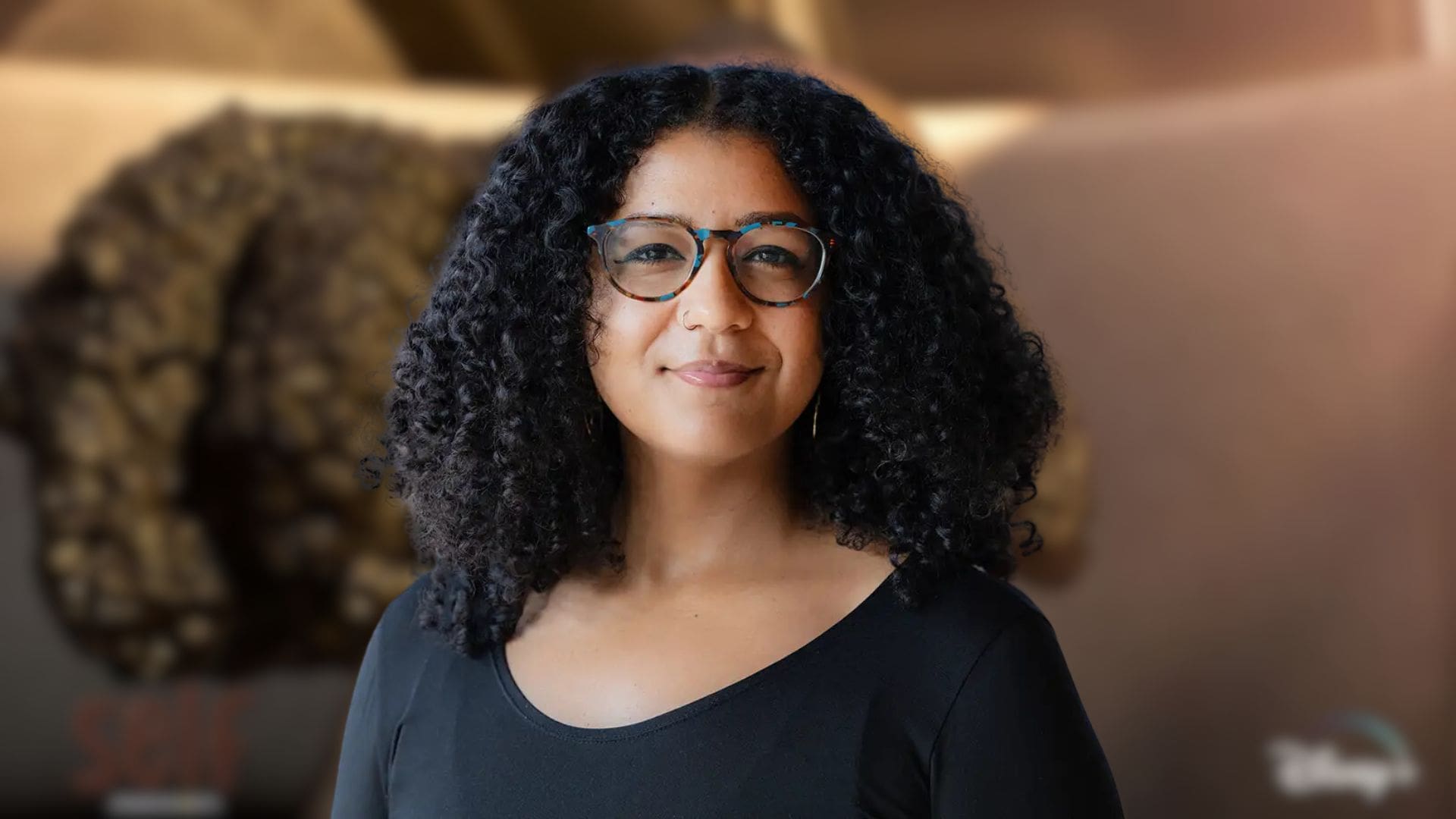
Interview with “Self” Writer/Director, Searit Huluf


Hosted by
KT & Oti
Show Notes
From film school, to interning and directing the first stop-motion short film through Pixar’s Sparkshorts and most recently named in 2024 Variety’s Top 10 Animators to Watch List, Searit Huluf brings lived experience and visual texture to the screen.
Africa Film Festival will be running from 19 – 21 July and Searit’s Self will be screening as a part of AFROFUTURES ANIMATION on Saturday followed by a Q&A.
Self is also streaming on Disney+
—
Summary
From the hallways of film school to being named one of Variety’s Top 10 Animators to Watch in 2024, Searit Huluf’s journey in animation is nothing short of remarkable. With a background that beautifully intertwines her East African roots and American upbringing, Huluf has carved out a unique space in the world of stop motion animation. Recently, she shared her experiences on the For Your Reference Podcast, offering insights into her creative process, cultural identity, and the importance of representation in animation.
Early Beginnings
Huluf’s story starts with her family fleeing civil war in Ethiopia and resettling in America. Growing up in government housing, she nurtured her curiosity and passion for learning, despite the hardships. Reflecting on her childhood, Huluf emphasized the resilience and survival instincts that drove her parents’ migration. This backdrop formed the foundation of her journey into the world of film.
“I was always very curious and very eager,” Huluf remembers. A lightbulb moment occurred when a high school competition introduced her to filmmaking, setting her on a path that would lead to UCLA film school and internships at major studios like Cartoon Network, DreamWorks, and Pixar.
Embracing Heritage
For Huluf, tapping into her Ethiopian heritage has been both a personal and creative endeavor. Discussing her animated film “Self,” she delves into how her work reflects her journey of self-discovery and cultural heritage.
“I wanted to show that… she also animated differently for me,” Huluf explained, highlighting how stop motion was used to express her protagonist’s unique sense of belonging. Her dedication to authenticity also led her to involve cultural consultants in her projects, ensuring that every element resonates deeply with audiences of similar backgrounds.
Film Festival Circuit
Traversing the global film festival circuit, Huluf’s work has garnered acclaim and sparked important conversations. She shared an endearing moment from the SF Film Festival where a young student’s heartfelt note affirmed the impactful message of “Self.” Such interactions, Huluf notes, are invaluable as they provide a glimpse into how her work resonates with the audience.
Challenges and Triumphs
One challenge Huluf candidly discussed was presenting her work to her immigrant mother, who initially struggled to grasp the significance of her achievements. This cultural disconnect, however, turned into a hidden advantage, freeing Huluf from many conventional pressures and allowing her creativity to flourish unimpeded.
When asked about the nuanced interpretations of “Self,” Huluf remarked on the beauty of filmmaking—how once a film is released, it belongs to the audience and their personal interpretations. This emphasizes the collaborative nature of art and the rich tapestry of human experience it reflects.
Love for Anime
A self-professed anime enthusiast, Huluf’s tastes range from “Attack on Titan” to classic series like “Inuyasha” and “Bleach.” Her passion for storytelling transcends mediums, influencing her work in stop motion and serving as a testament to the universal appeal of animated narratives.
Conclusion
Searit Huluf’s journey from a curious child in government housing to an acclaimed animator is a powerful testament to the resilience, creativity, and spirit of the immigrant experience. Her work not only entertains but also educates and inspires, creating a space where stories of belonging and identity can flourish.
As she continues to showcase her work at film festivals around the world, including the upcoming African Film Festival in Sydney, Huluf’s message remains clear: Stories of diverse experiences matter, and they deserve to be told with authenticity and respect. If you haven’t seen “Self” yet, it’s available on Disney Plus, and it promises to be a thought-provoking experience.
Recommended Viewing
For those inspired by Huluf’s journey and work, she recommends pairing “Self” with Barry Jenkins’ “Moonlight,” a film thatalso delves deeply into themes of identity and belonging. Both pieces offer rich, reflective narratives that explore the intricacies of self-awareness and acceptance.
Huluf’s story is an enriching reminder of the power of storytelling and the importance of representation. Whether through her films, her presence at film festivals, or her candid discussions on platforms like the For Your Reference Podcast, she continues to pave the way for future generations of animators and storytellers.
Episode Details
- Duration
- 0:00
- Released
- July 18, 2024
- Category
- Interview
- Hosts


Transcript
Transcript (4,282 words)
Full transcript of Interview with “Self” Writer/Director, Searit Huluf.
KT: From film school to interning and directing the first stop motion short film through Pixar's SparkShorts and most recently named 2024 Variety's Top 10 Animators to Watch, Searit Huluf brings lived experience and visual texture to the screen. The African Film Festival will be running from the 19th to the 21st of July, and Searit's Self will be screening as a part of the Afrofutures Animation on Saturday, followed by a Q&A. Searit, thank you so much, and welcome to the For Your Reference Podcast. I thought you were going to drop a beat on us, you gotta start freestyling.
Searit: Yeah, that's me right now.
KT: Well first off, thank you so much for taking the time. I'm very excited to chat to you today. And also congratulations, hot off the press, top 10 animators to watch.
Searit: I know like literally the event was the day before my flight to Sydney.
KT: Yeah, yeah,
Searit: I was like going to LA now going to Sydney. Bye. So
KT: grid is popping. She's a traveler. She does it all.
Searit: She's international now. Yes.
KT: There's so much, uh, that I want to get to today, obviously Self will be at the center of that. Um, but I guess just first of all, the East African connection, my partner Oti is Kenyan. Um, and many years ago we had the opportunity to go to Ethiopia and we actually saw Lucy as well. And I've heard you talk about, I know. And also
Searit: she great? She's just like chilling there, laying down. She's like, Hi everyone! Like, she's amazing.
KT: She's like, you come to me. And like the OG Bible is like an Ethiopian, like it's like, it's so interesting the way you can like tap into lineage and being, you know, how a lot of us, a lot of our ancient cultures, we are the OG sort of storytellers. Right. Um, I want to hear a little bit about, I guess, connecting back and Lucy, obviously, of course, but I guess just in general, that part of your journey.
Searit: yeah. Let's just start from Lucy. So that's fine. Um, yeah, I am, um, as you said, East African Ethiopian, I'm Ethiopian American. So both of my parents are Ethiopian, but I was born in America. There was a civil war in Ethiopia and long story short, they kind of like became refugees and had to leave the country.
Searit: So I always like telling that to people because I think that like, you know, we need to go hear about immigrant stories immigrants coming to America. I think it's like for the American dream for like prosperity, but like for them is for like survival. I'm like, oh, they legitimately just couldn't stay in Ethiopia was just not safe.
Searit: Um, and I'm specifically from the Tigray region so my family's in Mekelle. Um, and I, um, yeah I grew up kind of like, uh, really poor, uh, Section 8 housing, which is like government housing in America. And like, um, kind of just like really, I was just a really curious kid. And I knew very early on that I wouldn't be able to get things in my life unless I Myself put myself forward to get it just because of like, uh, let me teach this with my mom I know how to speak English and also just like money and also like You know just like being a black woman or a black kid.
Searit: I should say Um, so I was always very curious and very eager and I think like when I was in high school, I spent a lot of time doing like community college classes and like really into STEM and I remember one day like I was like doing website coding competitions and there was one competition within that competition to make a film and I was like, there's like a light bulb that went into me like I just I didn't know I was Oh, I became very curious and I just made a film with my senior classmates.
Searit: It was terrible. Um, It didn't win any awards It wasn't like oh my god, and I won first place and I was like, I knew it like no nothing happened But the curiosity was still there And I kind of just like I want to go to film school. I want to do this So I went to UCLA's film school study stop motion and um, Screenwriting that was my concentrations, but I spent a lot of time interning too So I was interning at Cartoon Network at DreamWorks and then eventually at Pixar. So
KT: That's, I guess that's part of what, um, I guess connects a lot. I'm a child of, uh, migrants, so, um, it's interesting cause it's also the pressure to succeed as well. And the way that you were able to do that through a creative field, I think is something that's also beautiful too.
Searit: thank you yeah, and I think it's I think it depends on like, um, What that relationship with your parents for I was very lucky because I was very naive in high school. I, I did not know how hard it was to get into film industry. And I think that like my mom, again, I lived in a single parent household. When I told my mom I want to go to film school, there wasn't really, I didn't have the typical, Oh, you can't do that.
Searit: There's no job. Like for her, she just couldn't understand what that meant. Like, yeah, for her, she couldn't really compute it. She's like, what she was just like, what is that even? Like, I I tell this story to people and I. I say this in the sense of like, I love my mom. And this is like, this is what I mean when you have an immigrant parent.
Searit: When I got the internship at Pixar, I was like, mom, I'm going to be working at Pixar, which is like, it's Pixar. You know? Um, she didn't know what that was. My mom doesn't watch movies. And I was like, Pixar. She's like. Is that good? And I'm like, yes, you know, toy
KT: she's like, is it bringing money? Like
Searit: yeah, she's like, what is that? I don't know what this is. So like, and like, I think about that a lot just because I think like, when I talked to like my American friends who have like, you know, white parents and they will say like, oh yeah, sorry, I got it. It just said Pixar. They're like, Oh my God. Wow. Like, this is amazing.
Searit: Like your parents must be so proud and like there's this kind of like weird thing of like, actually she has no idea what this really means but I think there was something like a blessing in disguise because because I wanted to go to film school I didn't really have like a don't do this it's not good for you. She like didn't know what it was and I also didn't know what I was walking into so I'm very grateful for that naivety.
KT: Well, and it's also really beautiful hearing you in interviews, talk about Self and how some of it is weaving your mother's story as well as your own. And I guess all of the different interpolations of what that self, what that self could be. Um, and you know, you, you mentioned being like a cultural consultant, whether it was on Soul and how important it was to have, whether it's an accessibility thing or whether it's a cultural.
KT: you know, sort of component to have those sort of consultants in Self, because, you know, the real tea is most people would be like, I don't need cultural consultants without even being tapped into the culture. Even you, you're like, no, there are some things that, you know, would have another eye on it sort of thing. Right.
Searit: Yeah, it's kind of just like you don't know what you don't know and like, I feel like everyone has a blind spot. And like, for me, like, I'm very kind of welcoming of like notes and criticism, especially like when I think Pixar taught me that too, because, you know, I started in production management at Pixar, and I was primarily in like the story script edit departments and like, Story and edit like those departments get a lot of kind of like every department get notes But they get a lot of like those were like big changes in the story and the film happens and I'm always in those rooms Listening and watching the directors Get feedback from like all these executives and all these other directors so for me There's like a sense of like no this is a good thing like I need to get this kind of like feedback and I think Pixar especially like I think Soul was a big staple of that, but like when Soul was like in development and production, that was when we really started to add into like the cultural aspect and like for me to kind of go in and be like, what is my black experience like is different from like other black experiences
KT: outs to your, uh, short series exploring blackness. Is that it?
Searit: yes. Oh my God. You did your research. Look at you.
KT: a little, just a little.
Searit: Yeah, and that that documentary to actually, um, was, uh, so I spearheaded the first ever Black History Month celebration at Pixar, and I also started a group to which was like a black light, and
KT: you're going to do it, you're going to do it right. You're going to do it all the way. Love it.
Searit: Yeah. So I was like, I'm going to do it, like two events every week, food, culture, movies, and then I'm going to end it with like this documentary of like all these black Pixarians, which is like our coworkers talk about what it means to be black. And like, I think for me, like it was such an impactful experience because one, I think a lot of people like were like shocked after that.
Searit: They watched it. They were just like, Oh my God, I didn't know. That my friend went through this, you know, and like it started discussions within the studio, which I was really happy about. I really wanted to push. So
KT: I think that's part of it. Just, I think having that space where people are safe enough. To speak on it and to explore it. Um, and so it was so interesting watching Self and I don't want to spoil it friends and lovers, cause hopefully, well, if you've got Disney+, um, you'll be able to watch it, but it was so interesting cause I don't want to necessarily say what it is.
KT: Maybe after this interview, I'll say what it is, what it is, but you talked about how people had particular sort of interpretations and Oti had the exact same one about the shiny people.
Searit: yes, there was a lot of thoughts and feelings about we call them internally the goldies. But like, a lot of people are like, so they're white people, she's turning white. And I was like, Oh, uh, uh, I did not see
KT: Weeks of storyboarding, yeah,
Searit: Yeah, I know. Like, oh, interesting. Um, but like not going to spoilers. I think like, that's kind of like the beauty of filmmaking and like something I'm realizing more and more as I'm directing more films is that like, you know, for the longest time, this is like my baby and I'm like creating this baby.
Searit: But the moment I like set it out to the world, it's just like, it's not my film anymore. It's the audience's film. And it's kind of like their interpretation, how they feel for it. So it's kind of like a nice, beautiful. Like, it's weird because, like, it's like, uh, it reminds me of film school because I remember, like, in my film literature classes where I had to, like, write essay pieces about films and what they mean.
Searit: It kind of feels like that, and I, there's something I'm like, oh, like, wow, like, it's really insightful to hear other people's opinions about it, so.
KT: I loved how you were able to convey it because I think for a lot of people they, they kind of take for granted the format of different films and short films in particular.
KT: There is an art to making short films and I don't know how far you want me to go down your Vimeo short films that you have available. I forgot what it was called, the first one that you had there. Um, but that was very good as well. But I guess I would love to hear your experience in I watch Gamers as well, by the way.
KT: But like the format, like the format of short film, like we think of like Hair Love, shout out to Matthew A. Cherry. How was it being able to convey, I guess, not just your life, but lives of experience into, I guess, a succinct sort of format?
Searit: a question. Wow. Yeah, I think like it was, um, you know, I talked about how like this story's very like, personal and like specific to me, but in weird ways also very universal. Um, cause the story is about belonging and like, How someone, like, will self sabotage themselves to belong and, like, what that means and looks like. Um, and I think, like, when I was pitching this story, because, again, like, Self represents, like, an African immigrant. And like, when I pitched the story, a lot of people were just like, Oh, I know how it feels like it doesn't belong. And I think that like, um, hearing people say that kind of like made it feel like this is something that could be possible and like people will want to see. Um, and the biggest thing for me was just like, I love stop motion.
Searit: I think stop motion is like, like, it's like the oldest form of animation and my favorite type of like media, um, like. Medium to be honest, but it's rarely used just because of like the complexities of it But I when I told them I want to do a stop motion film I really told myself like I don't want this to just like me Fucking around being like I'm gonna do stop motion for stop motion Like I really want to incorporate it in the story because that's the thing about Pixar Pixar taught me that story is king and you really want to make sure that the things you're doing the mediums and the characters or the assets or whatever really are all there to support the story you want to tell so You Because the story is about belonging, I wanted to show like, oh, like, not only can she not talk like them or like, look like them, but like, she's also animated differently for me.
Searit: And that was the thing that like made everyone really click into the story, being like, oh, this is gonna be really cool. Um, and using that kind of format. And that kind of pitch to kind of sell the story and kind of like get people on a crew was kind of like the key to kind of, you know, make the magic and make the story, even though it was kind of a very like, again, like very specific, like no one in my crew is immigrant African, like I'm the closest with and I'm Ethiopian American, you know, so, yeah.
KT: What's it like having your work across film festivals? Um, and I guess, you know, succinctly, there are so many different film festivals, um, that it's been in the Pan African Film Festival, and also you're on Gadigal Country, you're in Sydney, um, for the African Film Festival coming up this weekend. How does it feel, yeah I know, are you going to be at the premiere? Yeah?
Searit: tomorrow night. Yeah, I'm like, really, like, the only regret that I have is I did bring my Ethiopian dress and I was like, Oh, biggest regret, but I will be there and I will be wearing a dress. So,
Searit: you know, it's really great because Self is a streaming short film which very grateful to have the opportunity to make a short film and to have like distribution and have opportunity for people to see it but there is kind of like this weird feeling of like it's up in the cloud and Disney+ and I kind of like lose that like interaction with audiences and not knowing how people feel about it really um so being able to go to film festivals have been like a blessing for that because i think like as a director There's something in me that wants to feel what the audience feels.
Searit: So like, for example, like there's moments in the film where like, um, it's fun to hear people's reactions. I'm like, Oh, and this is people reacted to that, but didn't react to this. And like, also what's great too, it's just like, there's always like Q&As for film festivals. So like, It's nice to like answer questions if people have it about the film uh, but it's really heartwarming and sweet when they come up to me and like talk to me about the film and how they Felt about it and like that felt really good.
Searit: Um, SF Film Festival is the one that really like Sticks to my heart a lot because we did a like a school screening So we went to like a bunch of elementary schools and had kids watch it at the end of the um This one girl gave me a note You And like wrote it right like she was like she was like scribbling really hard on it And then she gave it to me and she was like Self like, uh, love herself.
Searit: I'm I'm I'm a Paraphrasing what she wrote. She's like, oh Self. She'll learn to love herself like Uh, like self love and I was just like yes the kids get it. Like this is It makes sense. They understand, you know, elementary school kids, if the elementary school kid gets it, then it's, it's working. So it's really nice to have that like audience interaction
KT: You don't, you don't want that Letterboxd like from this particular angle, that's generational trauma.
Searit: Letterboxd makes me laugh a lot because like my friend went through it. I didn't cause I'm just like, I don't need to have that. Uh, I don't need that, but my friend went
KT: us you have a burner accounts, Searit. Just tell.
Searit: Do people do that? That's so, I mean, it's like a, is it like a Finsta, like a, a Letterboxd Finsta account?
KT: Well, I think, I think Ayo had one. I don't know if it was secret, but then like people found it. Yeah.
Searit: Yeah, yeah, yeah, yeah. I think hers was public and like, but her, her comments on it were like really funny. I mean, she's a stand-up comedian. Um, also Emmy nominated,
KT: Yeah. It's an exciting time
Searit: it is, but yeah, I'm really excited about African Film Festival this weekend and having seen people watch it, um, just because like, it's in Sydney and like, it's a different, I think, like, I should say to the like, All the screens I've been to have been in America. So this is my first time watching in non American settings.
Searit: I'm like very curious of like what that's going to feel like. And also too, like, um, I think you mentioned this, like Self played at Pan African Film Festival, which is like a black film festival. And the audience is primarily black. Uh, but there were like, you know, African Americans and here, like, I feel like for this festival, there's going to be like a wide variety of like African and like Sydney African people. So I'm like very curious to like. See what that's like.
KT: It's, it'll be exciting. I, I heard there's going to be like food stores and stuff at the premiere. Maybe we'll see you there, hopefully.
Searit: Yeah, of course. Yeah. Love to see you.
KT: Um, well, before, before we finish off our final question, I read your bio, anime girly. So no pressure, um, would love some, some of what you're watching at the moment. Some of your OGs, just for the weebs in the For Your Reference household. So feel free for all of the deep cuts, whatever you want to recommend.
Searit: Oh, man. I'm like, I'm like, my head is spinning. I mean, like, it's also just funny, too, because there's a lot of like, brown and black anime lovers that keep popping like Michael B. Jordan, Megan Thee Stallion, like Megan Thee Stallion,
KT: I just say, I love looking at Michael B. Jordan, but he said No. 2. And ever since then, I was like, Sir, excuse me. Megan Thee Stallion, yes.
Searit: He did the Coach collection with all the Naruto swag on it. So I was just like, That's cool. But yeah, Megan Thee Stallion literally having her lyrics, Naruto, Sasuke, Itachi, like she literally like has it all. Um, right now I'm like watching Attack on Titan and that one is like blowing my mind but I'm also just like, like I'm very sensitive in the sense of like I don't want to finish it because it's so good.
Searit: And like when you find like a really good anime, it's kind of hard to kind of like, uh, like find or like, Another good one. So I'm like really taking my time watching it, but it's so good Um, I grew up watching a lot of also like the girly things, too I'm I'm I love anime, but I'm more into reading the manga.
KT: Okay.
Searit: Uh so like Fruits Basket, Kare Kano I was into Bleach too and Inuyasha. Uh, even though Inuyasha's ending pissed me off. Um, they just kept on
KT: The Bleach trailer just came
Searit: no end. I was
KT: coming out soon, isn't it? October, November for Bleach. Yeah.
Searit: oh, I'm a, I'm a be on the lookout for that. That's great to know.
KT: I love how this turned into an anime podcast.
Searit: I love it. I'm like, I'm, I like, there's an anime expo happening this weekend, I was just told
KT: Oh,
Searit: here in Sydney.
KT: See, that's, see, if you leave the house, if I left the house, I would have known that, but I, wherever possible, I'm inside. Um, we've been watching Solo Leveling, uh, Kaiju No. 8.
Searit: Woo. How's that?
KT: week to week. Very good. Demon Slayer is very good. Um, there's like a, that's like an anime about idols that I really like as well, but we don't have the time. I wish we had the time. There's so
Searit: I'm only looking,
KT: I feel like the defining, but the defining question is subs or dubs. Okay.
Searit: kidding me? Ew. I can't do that.
KT: Well, you did say manga, so I was like, okay.
Searit: Yeah. But I, I, I think that like, there's some, I don't know. The only dub I allow myself to watch is Howl's Moving Castle?
KT: it. Stop it. Christian Bale with his creamy,
Searit: I definitely, yeah.
KT: me. Excuse
Searit: that's exactly exactly that literally he was. It's like, Ooh, this is great. I might watch a dub. But like, that's the only dub I will allow.
KT: Okay. But I, I secretly think we're besties now, so you can block me, Searit. Just sending you like thirst like reels of Christian Bale.
Searit: Yes, yes. An anime character at all was going to be.
KT: Jada Pinkett Smith was in the Princess Mononoke English dub. Like we did like a, um, a Miyazaki run the first year of our podcast, we do like directors every year. Um, and we had watched it just for that, but, oh, I feel better
Searit: Dev Patel was in Only Yesterday.
KT: Sorry?
Searit: The Studio Ghibli film Only Yesterday. He did the dub version. He did. He was the male lead in it. So
KT: Oh, some more.
Searit: I guess he's an anime. Hope like, you know,
KT: someone on the way, maybe. I want to thank you so much for your time. Um, I hope you enjoy the rest of the time in Sydney slash Gadigal Country. Um, I'd like to finish off with our final question. So we usually finish off our reviews with a, um, recommendation. So what would you pair with Self, either a short film or a feature film or even a manga? What would you pair with Self as a double feature?
Searit: I don't know why, but Moonlight was the first thing that came out, came in my head just because of like, that film also has like the sense of like self and who are you? And like, I think that one would be a really good one. So I'm gonna say Moonlight.
KT: okay. I love that. There's a lot of moments of like reflection and what it means with the world around.
Searit: Yeah.
KT: Yeah. Well, thank you so much. I really appreciated the time. Hopefully you have a great rest of your time. Um, at the African Film Festival.
Searit: Yeah. Thank you.
KT: Thanks. Bye.
Related on FYR
Discussion
Loading comments...