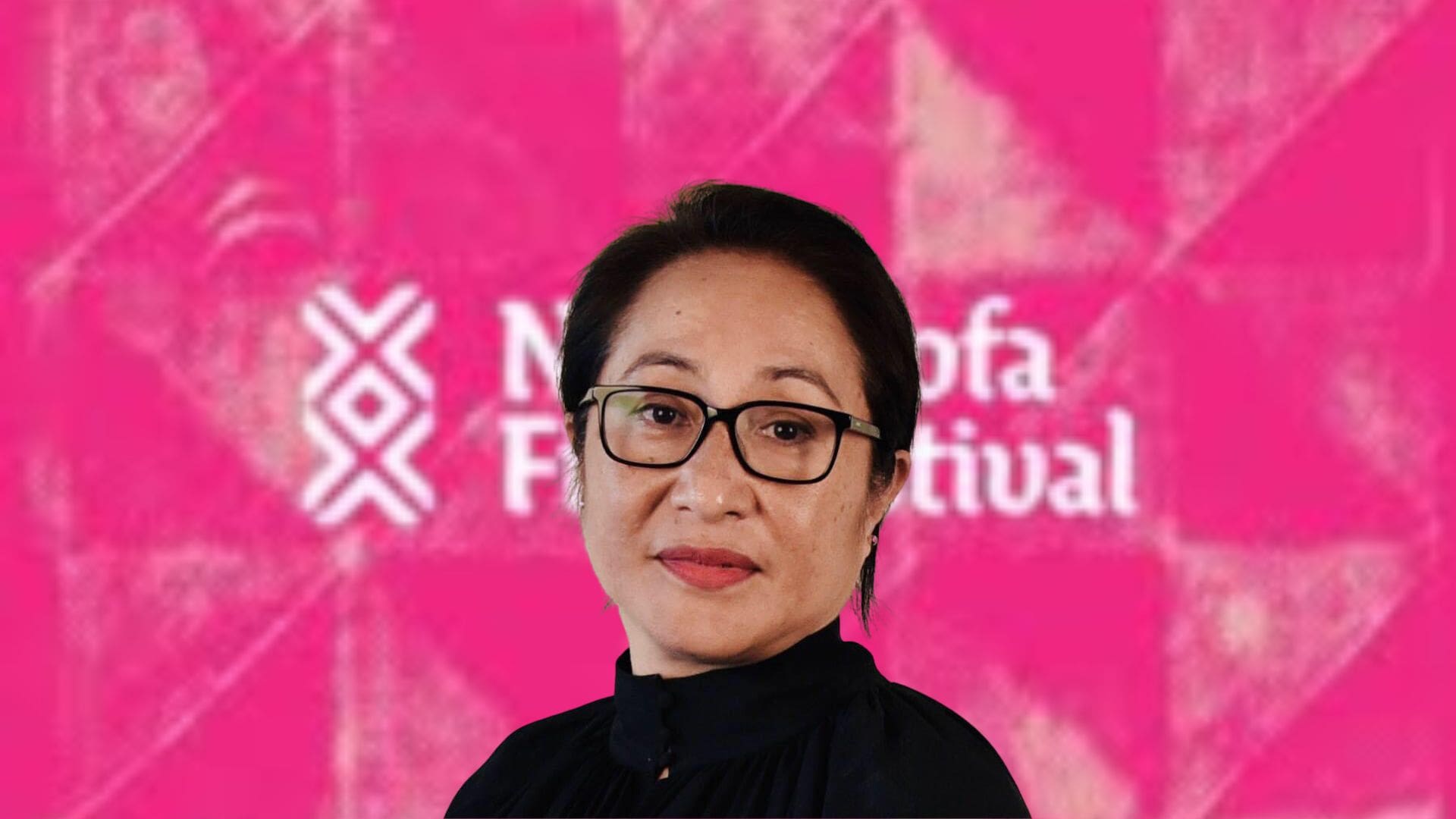
Interview with “Nuku’alofa Film Festival” Director, Sisi’uno Helu


Hosted by
KT & Oti
Show Notes
Sisi’uno Helu is a Tongan academic, film producer, and performing artist that co-founded the Nuku’alofa Film Festival.
The Nuku’alofa Film Festival (NFF) is on the 21st to 26th of October. Submissions will open June 1st on Film Freeway.
Further information (including fundraising campaign) and updates will be on NFF Facebook , NFF Instagram and website.
Episode Details
- Duration
- 0:00
- Released
- May 28, 2024
- Category
- Interview
- Hosts


Transcript
Transcript (3,554 words)
Full transcript of Interview with “Nuku’alofa Film Festival” Director, Sisi’uno Helu.
KT: Sisi'uno Helu is a Tongan academic, film producer, and performing artist that co-founded the Nuku'alofa Film Festival. Launched in 2015, the festival remains committed to fostering local filmmaking and storytelling.
KT: Embracing a diverse range of genres, themes, and production processes, the festival celebrates creativity and storytelling as its cornerstone. Sisi'uno Helu, thank you so much and welcome to the For Your Reference Podcast. Well, I'm going to send the love right back. Mālō 'aupito, 'aupito to hear from you and the team was very exciting. Me and my partner, he's Kenyan. we love to champion telling our own stories and being able to put that to the world with us being the lens. so I just want to say thank you so much for reaching out and taking the time with us today.
Sisiuno: No worries. Thank you.
KT: Before we even get to the film festival, you have been an iconic fixture in Tonga and even, you know, in Australia as well. I want to hear a little bit about the legacy that you're paving out and, you know, your journey, your decades long journey through the arts as well.
Sisiuno: thank you. I think everything now at this, age, old age, everything, connects back to my upbringing. I was, brought up, my father, my late father, founded an independent institute in Tonga, one that wasn't, under any church or any connection with the government, but he wanted to introduce, a lot of new ideas to the Tonga.
Sisiuno: Uh, things like, teaching Latin, teaching, classical Greek philosophy, classical music. and on the other hand, he was very, very, visionary in trying to preserve, the Tongan history, especially the Tongan performing arts. As a kid, growing up, there was a lot of, classical music in my upbringing.
Sisiuno: There was a lot of also looking at paintings, but also, listening to old Tongan songs and old dances, especially that part, the missionaries, tried, to eradicate or remove from our, from our history. And, I went through, my studies. I studied classical piano here in Australia and went back and worked at my dad's school and did a lot of touring and teaching the dancers and the music and opera and all of that.
Sisiuno: And then at a later stage in my life, I, after teaching and everything, I, I, came across filmmaking and I saw that as an opportunity to not only, put out a platform for our people to tell our own story and preserve our stories, but, it is also a, a platform, to share and to continue the documentation of our stories and art, et cetera. So, yeah, and that's where I'm at, at the moment.
Sisiuno: Um, For Nuku'alofa Film Festival, before you ask me, I had, friends that came from New Zealand, 2015 and they said, oh, do you want to work with me, with us, sorry, on, on filming short films about two Tongan myths and one Samoan myth. One Samoan myth, sorry.
Sisiuno: And then after that they said, oh, we need to share with the community because everyone came out to volunteer and participate. Making these stories, and even they brought their koloas and their mats, all of that, etc. So they said, oh, we want to share this with the people that we worked with. Because we had people from Kolonga, from Fua'amotu, from Maini, from, you know, all over Tongatapu. And I said, hey, hang on, what, what if we should start our own film festival
KT: like we're doing it, we're doing it!
Sisiuno: And, but, um, yeah, so. 2012, we launched my dad's documentary International, internationally at the New Zealand Film Festival in 2012. And although I was contributing to it, I wasn't, the director of someone else was directing it and then 2012 and I thought, Hmm, 2015, okay, let's do something. And that's where it started. So it basically started with nothing got there, like
KT: But that's how it should be, right?
Sisiuno: always
KT: Yeah. It's like, we're gonna put on, we're gonna put on for the people and it's so important. Mmhmm. Um, you know, there was something that I really loved hearing you speak about and it's the, I guess you could call it magic, but I guess you could also call it the release and the freedom of storytelling that you get in film as well. what, what is your sort of hope or vision for Tongan youth, especially whether in the diaspora or in Tonga to be able to express themselves through film? Yeah.
Sisiuno: and our performing arts, are two significant elements of our culture that are dying really fast. I would see them tell the stories in our native language. the other thing is there's, there's not much avenue for young people in Tonga to express themselves. And I see filmmaking as a, as a platform or, an outlet for them where they can go and release all of us. Um, we're not, Big on listening to children, where our culture has always been the eldest passing and talking and directing or leading.
KT: Sisi, oh, the stories I could tell you of like, in the Tongan way, don't do that. It's like, why? It's like, just, just don't do it because I told you not to do it.
Sisiuno: But I feel like, um, also filmmaking could be a way for younger people to maybe, release or say their views as well, towards, important issues such as. Drugs, such as sex, such as mental health, all of that is, is, is something, we, storytellers and, and, and, and filmmakers could openly discuss in a little short film. And I think if we encourage our young people to do so, I don't, I think it'll be very, it'll be very, become very important in their. In their life and in their, in, in their growing and in their journey, et cetera. Yeah,
KT: Do you, do you feel like there's a little bit of resistance for people to express themselves? Like, say for example, like I'm Tongan and we have a film podcast, but I'm also conscious of how Tongans might come across the podcast and be like, Oh, she's a bit radical.
Sisiuno: know, of, of course, it being a very rigid culture, we, we, we are very careful when we are out in the public. When I, when I was younger, I, I wasn't careful at all, but in an older age, you learn, you learn how to, to walk that fine line. with films and what we see on social media coming from Tonga, it's the other way around.
Sisiuno: There's, there's so much, expression there. There's so much, sexual, um, content, released from Tonga. But, you know, that, that this. There's no regulation on social media, but we can somehow teach them how to tell and express themselves, better, I think. So, having, us filmmakers from New Zealand to go back to Tonga and run workshops is a, is a something that we want to do. Again, it still is a, still a very, difficult, and, and, tricky, tricky line to walk, and, and, and to encourage, artists. We can, of course, go into Tonga and try and discuss this with, at high schools and schools, could be tricky, but I, I feel like there's, there's a way, there's a way of doing it, yeah.
KT: There's a way to do it and you and the team are absolutely the ones to do it. That's for sure. and we absolutely need that. You, you spoke about the youth in the high schools as well. As far as I understand, there is a component about involving high school students and filmmaking.
Sisiuno: I think me and the team think that there's not enough awareness around, the climate, change arise and all that complicated, issue in Tonga. Something that we feel like, we should, provide more information and And also open up the discussion and how young people know about these, climate change issues. And so we want to run a film competition with high school students on, climate change or anything related to climate change. uh, especially if they could remember, anything from the eruption.
KT: Yeah. Yeah.
Sisiuno: we feel like, the continuation of the dialogue is very important, especially by young people, because they are our future and not only that they need to know all these information and because there's not enough, information, out there in Tonga. They need to know and, and where to go and get information and know what resources they have, et cetera. So that's one part of the campaign for this year is the film competition with high school students. Yeah.
KT: The eruption was interesting because I think there's only so many moments on a global news scale that people remember Tonga and that's the eruption was one of it.
Sisiuno: Yeah. And then they stopped talking about it. But honestly, the, the, the, the volcanoes are still active
KT: And it'll take years to recover. That's for sure.
Sisiuno: Yeah, yeah. And, I, I remember talking the other day to, someone from Radio New Zealand and she mentioned, that could be a healing for these young people to, like, open up and make short films and talk about the eruption. I said, yeah, that, that is very true, yeah.
KT: yeah, and it's so important to talk about that even for our Pacific family, like Tuvalu, for example, you know, it, depending on where you look, our voices, especially our youth is so loud and no one's listening. And maybe that's where we start to listen to each other and we lift up the youth to be able to just scream it to the world.
Sisiuno: Yes, true. I see this, group of students here, Pacific Island students here that went to, Canberra a couple of weeks ago and yeah, I also feel like, that sometime they probably need a leader to travel with them and, someone, man, maybe an elder. I don't, I don't know. just an idea, but, The conversation has to continue and, I don't know.
Sisiuno: I, I feel like Tonga doesn't have enough, information and enough, awareness campaign for the community and the young people. Yeah. So maybe a short film competition, film competition would be one of the things that will stir up the conversation again. Yeah.
KT: But I think that's something that I love because it's community building. We're talking about a film festival, but we're also talking about climate change and we're also talking about a way to enact change, how to empower youth. Because if you're doing it right, it should be all of us. It should be every part of our experience, right? It's not just sit behind a screen and be like, Ooh, look at these actors.
Sisiuno: I know yeah. They just come and laugh and, and, yeah. But, yeah, the first time we had it, it was, it was so heartwarming to get everyone to come and watch themselves on the big screen. And one year we took it to Vava'u as well. Me and Ulu went over to Vava'u and showed, yeah, two venues in Neiafu. And I think, I think I'm always, I'm always, big on taking things to the community. for having me. Yeah,
KT: So I believe there's some sort of fundraising campaign that's going to be launched soon. Do you mind taking us through the details a little bit?
Sisiuno: launch a Boosted campaign, so that we can afford to take people back to Tonga and also, prizes for our film competitions and yeah, and alongside the film festival, we want to take, two choreographers as well to, To offer, dance workshops as well. Yeah. To go along with the film showing and the film, workshop.
Sisiuno: I've already, I've already expressed to the team my, my, My dream is to have a arts festival for Dover one day. So hopefully soon we can have the visual arts as well. We've done that in the past, we've shown local painters works. But we have to bring our Tongan writers to Tonga as well. And some poets, and yeah.
KT: love that. It's like, I think. Creativity and the arts and being storytellers is very much who we are. It's very Western to be like, this is my title. And it's like, no, it's everything. The way to explore and the way to express is, is through any sort of title you want to call it. You know what I mean?
Sisiuno: Hmm. Yes. Yes, that's very true.
KT: if, if there is anyone that is interested, can they enter, or is it more about focusing on the high school students in Tonga? What's that process like?
Sisiuno: the competition is for the local high school students, but, our international, international submissions I think is going to open early next month.
KT: Mm hmm.
Sisiuno: We get all the international films, to be showing in Tonga. So.
KT: Okay.
Sisiuno: encourage also filmmakers from of Tongan descent from New Zealand and Australia or wherever to bring as well because we will have a night of international films and then the night of Pacific Islands content and then and then we have the the high school films as well. So yeah, we want to run it for one week and see how we go. Next, 10th anniversary. Mm hmm.
KT: That's exciting. That's so exciting. So the film festival is dated for October. Is that correct?
Sisiuno: 21st, to the 26th.
KT: Yeah. Okay. All right. So there's, so there's an international component to submit entries. So there's a high school competition that's going on as well. The fundraiser will be kicking off. End of May or very soon. and then the actual film festival happened in Tonga in October. Right.
Sisiuno: Yeah. 21st,
KT: is there any website or any place people can go for information?
Sisiuno: We have Facebook, Ola Festival and we also have Instagram. We just started it last night. Ola Festival as well.
KT: Okay, great. so we'll put that in the show notes, as well as our website and when we put it on the socials as well.
Sisiuno: Yeah,
KT: Sorry.
Sisiuno: we'll update the, the two pages with the dates for all the submissions and competitions and all of that. Yeah.
KT: Uh huh. there were a couple of projects that you talked about that you've worked on specifically Leitis in Waiting. I'm trying to find a way, to watch it as well. but I just, is there any way that people can watch your work or the works that you've referenced in the interview or also in the film festival?
Sisiuno: I think Leitis in Waiting is Vimeo, I think. I think it's on. The other one is Aho E Ito, and that was directed by Te Taumiti, and I was one of the actors. there's also a couple of films in the Facebook page for the film festival. Eight locally, yeah, in Tonga. Yeah, this one is Felehohuni and the other one is Kauhaua. The homeless guys in Nuku'alofa. They're not run away from their homes and just live in town and drink alcohol all the time. Yeah. And one, one interesting one is, Gangsters of Paradise. And I was, part
KT: the deported one?
Sisiuno: The
KT: Okay. And there was a Vice. Yeah. I remember seeing that.
Sisiuno: That one is really, really, really good one. Yeah.
KT: So I don't think I'm alone because I do try and look for, as well. And I'm sure a lot of people have an appetite and, you know, want to be able to consume it a lot more. So, it is very exciting to, you know, be able to talanoa with you today. Is there anything interesting? in regards to, you know, being involved in the arts over the decades and perhaps seeing the changing sort of shifting attitudes inside and outside of the community. Mm
Sisiuno: I, I, I think one interesting be because I still continue to teach and choreograph, I, I, I see the change happening all the time from when I was little, even when I was a teenager into my years of touring with dancers. And even now, things change rapidly. at a very, fast pace and a very dangerous, way, dangerous way as well.
Sisiuno: People are not doing enough research. people are learning from YouTube and, it is very slack on our behalf because as, as Tongans, we should be, at the forefront of preserving and also looking for, for, for the, for the Accurate information so that when we share, we share, well informed and well researched information.
Sisiuno: that's one thing. I think, I think the big thing, the big one is the, faiva, the dancing and the music. People, you know, record their version of and version of blah, blah, blah, you know, changing all the diction and all of that. And they don't realize how much damage it has done to our language and to the authenticity of our music. So things like that, I noticed that are very, very careless on our behalf and I feel like sometimes that it is my responsibility. I don't know, but, to, to put out my, my knowledge, I, I don't want to say, Hey, you shouldn't do that or you shouldn't do that. But I think also, I need to share as well, so that people have a choice of looking, for information that was researched through years of practice
KT: Yeah.
Sisiuno: research done, two weeks on YouTube.
KT: Well that, that's a talanoa for another day of like the preserving of and how to do that in a culturally accurate way, right? Yeah,
Sisiuno: well taught as well, but he's, he is not, he doesn't like the public, Confrontation, but I like to step out and, and call out when people, are disrespecting all these, significant elements, that are the essence of our, of our culture and our language. That's one thing I do. And I started up a little group here in Sydney. So yeah, but maybe another discussion, another topic for different podcasts.
KT: I love it, but it's like, we could literally go all around, you know, in the culture as well. And I thank you so much for your time and also your grace as well, in being able to navigate these topics because, you know, I, I am the youngest, of four, and Children and, you know, I've got a bit of a fire to me, and to be a young Brown woman, that isn't necessarily like, I, I don't expect to have these open conversations with Tongans.
KT: You know what I mean? Because of how our culture is. I remember getting in trouble. Cause I asked my mom about just like, how does sex work? She's like, go and learn it at school. You know what I mean? So it's very. It's very liberating to be able to know that we do have, you know, leaders in the community that are there to have those conversations because we can not talk about it, but it's still happening. You know what I mean?
Sisiuno: that's very true. Yeah. Yep, yep, yep, yep. It's, it's, one that we need to talk about, especially sex. It should start at home, the discussion. yeah. Instead of, yeah, leaving these things for school. I, I, to be honest, I, I grew up. my, my father was very liberal in so many ways in his thinking, in his parenting.
KT: Mm hmm.
Sisiuno: He came from a very Christian background.
KT: Mm hmm. Mm
Sisiuno: they, that, those two, conflicting, ways, ended up with, us. Very, confused in some things. Sometimes we go to our, talk to our cousins and we are too open. And, and yeah, and that's not faka-Tonga.
KT: hmm.
Sisiuno: things like that we should have had a closer relationship with our mother with, we didn't have. So.
KT: hmm.
Sisiuno: So, yeah, and, and you never know until you're older and you read and hear about it from psychologists that all these child, issues will back in your adult, adult life and you have to find a way not only to heal, but to understand those issues and you can't turn around and blame your parents.
KT: Mm hmm.
Sisiuno: Best they've done, but we are in a, in a world with so much information presented to us that we should be able to solve those issues and navigate ourselves and get help and support. Yeah, so I, I don't, I don't listen to people when they say, Oh, well, my upbringing was this and that.
KT: now, babes. The healing starts here.
Sisiuno: adults, you have to go and look for things, get support and deal with it.
KT: Yeah, absolutely. Um, is there anything, that we didn't touch on today that you wanted to, share?
Sisiuno: Um, follow us on Instagram and Facebook and, Nuku'alofa Film Festival and all the updates will be there.
KT: Great. Well, again, thank you so much. And to like, for you guys to reach out and for us to have this talanoa like, it means more than you will ever know. I will go back to my little. side of the internet. It was nice being able to talk about this. And, um, we're very excited to follow along the journey of the Nuku'alofa Film Festival.
Sisiuno: 'Io, 'ofa atu. Mālō 'aupito, KT. 'Ofa atu.
KT: 'Ofa atu, thank you so much.
Related on FYR
Discussion
Loading comments...