Interview with “MURU” Director/Writer, Tearepa Kahi & Artist/Leader Tame Iti


Hosted by
KT & Oti
Show Notes
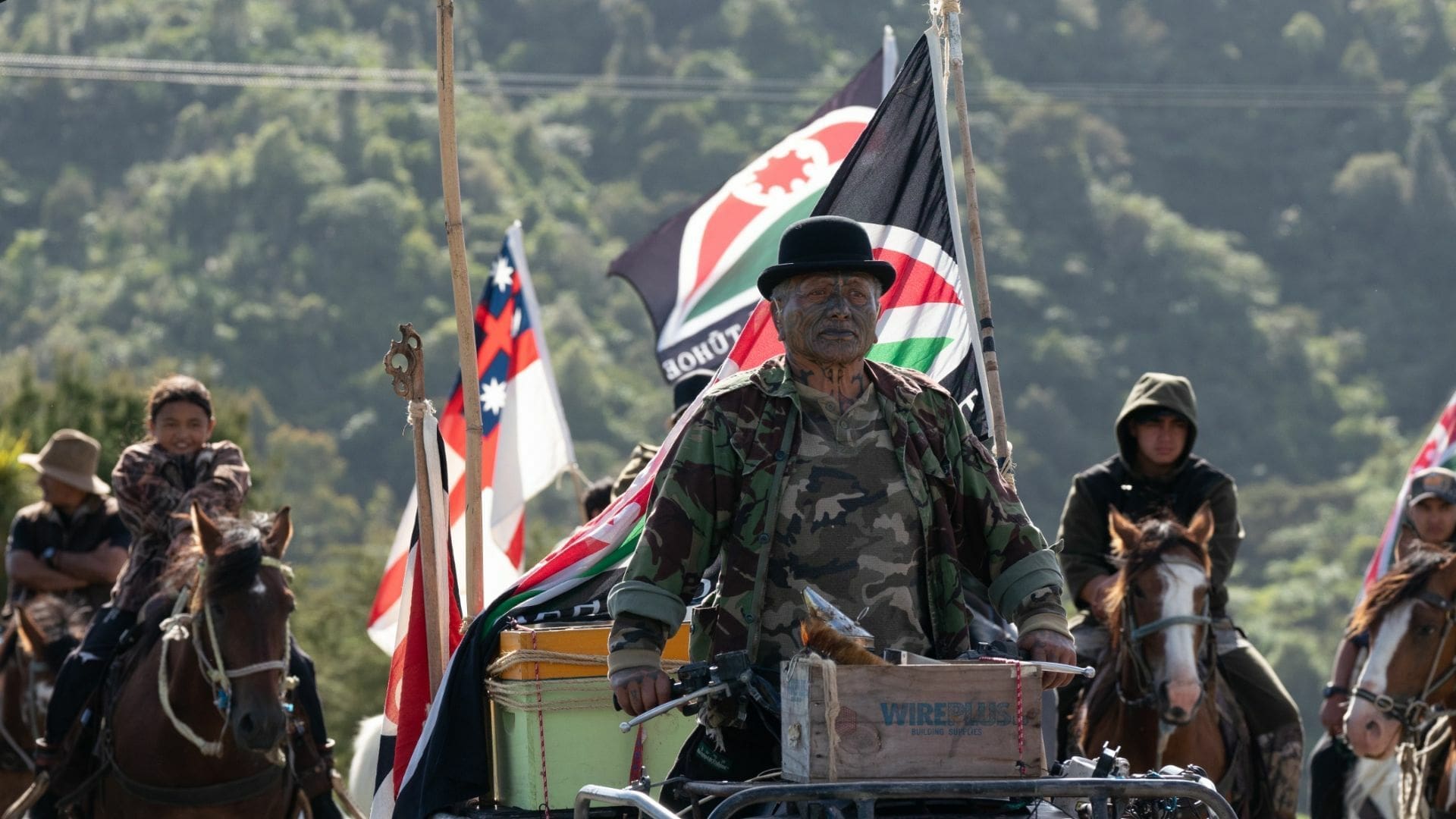
Inspired by actual events, MURU is the story of a local Police Sergeant ‘Taffy’ Tāwharau (Cliff Curtis), who must choose between duty to his badge or his people, when the Government invoke antiterrorism powers to launch an armed raid on Taffy’s remote Urewera community, on a school day. MURU is now showing in Australian Cinemas
Episode Details
- Duration
- 0:00
- Released
- October 17, 2022
- Category
- Interview
- Hosts


Transcript
Transcript (2,885 words)
Full transcript of Interview with “MURU” Director/Writer, Tearepa Kahi & Artist/Leader Tame Iti.
KT: It's another week in the For Your Reference household, and it's another addition in our interview series, Oti. Woo. Uh, I had the opportunity to interview director Tearepa Kahi, as well as activist, leader, artist Tame Iti on the film MURU. It is currently in Austral. Cinemas right now. It got a lot of love and lauding and accolades at the Toronto International Film Festival.
KT: Um, it also has been submitted for the New Zealand entry for best international film at the 2023 Academy Awards, and it also was recently announced of winning the Asia Pacific Cultural Diversity Award. Nice. Oh, how, how did you feel about, uh, the film? In the interview, Oti,
Oti: loved, loved, loved the film. I think the interview just shed some much-needed light on, on the general sort of conversation.
KT: It was just really good hearing you discuss it with them, and I think it just was such a really smooth, flowing interview, and well done on that. Thank you so much. Uh, there was definitely a lot to dissect and we're absolutely, um, a small but albeit robust team in the For Your Reference household. Um, strongly encourage you guys to check out the film if you haven't already. Um, we also have the video interview on YouTube and please enjoy the audio interview. Love yours.
KT: First off, I wanna say Tearepa as well as Tame and all of the crew that are involved in the MURU film. Congratulations. Welcome to the For Your Reference podcast, and thank you so much for your time.
Tearepa: Thank you so much for
Tame: having us. Yeah, thank you
KT: Kra. Uh, and also just the tag for all of our Australian friends and lovers MURU is now showing in Australian cinemas. I'm very excited to talk about the film. Obviously there are scenes that I'm not going to take away from the experience, but there's definitely some themes and some, some burning sort of questions, um, that I have, but I guess. Before getting started, I would love to acknowledge the land that you come from.
KT: We talk about film and it's more than the characters. It's about real human and especially for you, Tame, experiences. So I would love to know where you were raised and where you were nurtured.
Tame: Yes. Oh, well, thank you. Thank you. Thank you. Thank you for that. I mean, it was, it was a, was a big decision really to, to, to share the story and really, um, I mean, the good thing about it, I would have a relationship with art.
Tame: Uh, through his, his dad and, um, and also his father-in-law, Toku and, uh, and, and make it hell a lot easier for me to be able to, uh, to have this conversation and to share the story. And the experiences and, um, I mean, I, I totally believe that, that there need to be, um, there need to be something. We need to make it, We didn't have to wait for a hundred years, so to have it made.
Tame: And, uh, and, and so part of the film is still fresh in the minds or the people working with the people in the village mm-hmm. and in, in the, who are talking. And mean way. And um, yeah, and they said, and, and I think it's really good for all of us too, really good for the village too, to be able to be part and pass all of it in it a healing process.
Tame: Some people were still going through it and in some, you know, there was some really concern we, we did have discussing about that. And how would that, uh, Uh, making this film and, uh, how would that affect our community, you know, and, and, and making it in the village where, where, where it happens. And it didn't just happen 2007, it actually happened along, you know.
Tame: 1916, in fact, it happened 1860s. The invasion, the invasion of the, of the nation or to the during that period of time. And, um, and continued through there 1916 and, and right up two, not very long ago. Mm-hmm. , you know, and, um, yeah. So. It's a big, it is a big, uh, it's a big move. And, and I'm really happy that, um, at that, uh, I was able to, to have this quarter and conversation with me and with us and, uh, let's do it.
Tearepa: you know? Where was Tame brought up? When you watched the film, bets his, not just his backyard, but that's the blanket of his ancestors and of his grandparents where he was brought up. So we're not shooting a film on some, uh, West Auckland warehouse set where we are in the backyard. We're in the heart of Ruātoki and the heart of Tūhoe.
KT: And, um, It was a beautiful thing, something that I love a lot. And when we talk about world cinema, it's all about indigenous storytelling. It's not just, let's talk about it. It's let's get the people that know what they're talking about. Talk about. Yeah. Yeah. Can we talk about it? And I, um, something that I love so much about MURU is there's a lot of.
KT: Hard to talk about content. There's, there's also a lot of themes, um, especially Māori, Māori as well. Um, and it could only be done with the care and with the love of native people. And that's what I absolutely love about it. And you know, you talk about MURU potentially being interpreted as forgive. And I love the care and you know, just being able to contribute to indigenous storytelling and being like, Hey, we are here. This is for everyone, but it's gonna hit differently for us. Yona.
Tearepa: Yeah, no, that's, that's always, no, that is the most important aspect of this is how do we take control of our own narratives and how do we bring them to our own communities. Um, you know, we were in Toronto four weeks ago. I didn't, you know, with a degree of trepidation, didn't know how the valley would connect to this, you know, this distant foreign territory.
Tearepa: But our valley, Papa Tame's valley, spoke to their valley and it did so in Busan, again a day and a half ago. Mm-hmm. . So, and, um, being able to bring it across the ditch, our valley to over here in Australia is, It's very much the most important cup of tea that we can have. It's that next cup of tea after the film ends as Can we talk about it? Yeah. You know, we've gone, I'm, I'm ready to talk to the Valley. Let's talk cause uh, we're ready too. . Yeah.
Tame: Yeah.
KT: Something that was, um, something that I really appreciated with, uh, maybe stories that people aren't familiar with because it is, does have a global appeal and I'm very excited to see the global sort of reaction is deciding how much to tell in order to educate so people can feel what they need to feel, but not overloading it with information. Was that a hard sort of balance to be able to, Cause I think 10 outta 10, like I really think it was done very.
Tearepa: You know, you have a lot of aspirations and there's a lot of algorithms that go into. But really you have to put that aside and make a much bigger decision. That is how do we, uh, authentically represent the community here?
Tearepa: How do we come into the valley in a way that allows the valley to impose itself and guide, actually recalibrate the film? So we're, it is less about what's in our, my head and more about what's in the valley and how do we bring it to full life. Um, we knew that we didn't wanna spend too much time in Wellington.
Tearepa: Wanna spend time with generations inside the valley and, uh, whether it's children on the bus going to getting ready to go to school, whether it's, uh, Tame hanging a painting on his best friend's wall because he wants to get better and look at art for the day, not just stare out the window, um, or. You know, whether it's about, um, the local cop driving all the tribal outers over to the house clinic, , these are, you know, this is the, the, the pulse and the, um, the sinew and the relationships inside the valley.
Tearepa: And to experience that side of the valley is, um, is something that was, uh, really exciting to bring to screen. Yeah.
Tame: And you know, those particular character of, um, Taffy and actually is real for our village. And we, we do have police, uh, based in and uh, and uh, and even now we do, we still have people that come from the, from the village and being it been a, a police for many years and they could shifted out there because of.
Tame: Too close relationship with their rellies down the road. And so they, they all have those within the system myself. They have those experiences of, uh, being marginalized and put in a little wee corner and that kind of experience, the situation that, so that, that company is quite, quite really in their village, in every village in the Māori community. Mm.
KT: Essential theme in MURU is. Serve or protect. Right. And you know, there's a lot of talk about the protagonist, Cliff Curtis. Kisses all around. By the way, everyone gets , so with Taffy's character. But a lot of the, a lot of the characters are experiencing, what do I do? Especially if we talk about the STG, for example. Yes. Yeah. Um, and it's about are you, for your own people, when it's time to show up, when it's time to pull up, do that.
Tearepa: That's right. That's exactly,
KT: We're here today. We you today and always, I tell you, um, but personally, uh, I, I was born in Australia and I'm Tongan, uh, even though I'm not Māori there's something about seeing the way that you portrayed it on film, being of the people, but sometimes against the people. It hit me. It hit me on levels that maybe my ancestors can express to me. . Oh
Tearepa: no, Yo, no, there was. You know, you, you're trying to create the biggest mountain for yourself to climb, you know? And, um, there were so many cheap shots and, uh, e easy streets and easy roads and easy decisions that we avoided. We wanted the biggest challenge every time.
Tearepa: And, and that was a, a really important undertaking. And because of our relationships with each other, that's the way that we decided to take this, to bring those things to life realities for us, you know, in terms. The way, um, communities are constituted, but also that level of power and authority that assumes that they know best.
Tearepa: Yeah. And they want to disempower you. This was very much a way to, um, to de mask. For everyone to reach a point of clarity where they can see each other for the first time. Uh, and especially for t at all, we can see and understand Papa Tame for the first time beyond the headlines. Mm. Um, and, and see the, you know, what's really going on in the relationships that are real and bring them to screen life as well. Um, it was exciting. It's exciting having the opportunity to share it to
Tame: you. And there's, it is also too really good too that the response from the people right across the ball that actually view the, um, MURU and, and uh, and, and they respond to it and, and not, I hear it on the streets every time when I'm on the street, everywhere.
Tame: and New Zealand, from Inca to Dad, Eden to Christchurch. And um, you know, even here today, somebody yell out, you know, and um, you know, so, so, so the people are talking about the, the movie, you know, You know, I, I, uh, I met some D Park lady walking across the street and and they spotted me and then, and they, and they spotted me.
Tame: They look at me, I knew they were looking, then I was looking at him and they said, Yeah, we see the film. And as they talking, they walking to Woo see me, And they started having, having a tummy. Mm-hmm. , you know, So I had to go and, Somebody strange person and give them a hug about it. Mm. Yeah. You know, all of that.
Tame: So I, I experienced that in, in the last, ever since the, the movie had been shown here in, uh, shown over in Aotearoa since, since September. The first, and I'm still getting there. and, and you know, on Instagram, on Facebook, and, um, yeah, so there's a big call out from, uh, from our found and people from here in Australia.
Tame: Bring it over to us, bring it to out, to the, um, out west, and then know so, uh, so at the moment we, we here in, uh, in Brisbane, Melbourne, and, and then on, uh, Sydney. Sydney on Saturday. Well, I hope you continue to get the love time here. Like you deserve all of the love. Um, and even while you're talking, you are, you're mentioning thy like, even.
KT: In the film, there were words that were very similar in the Tongan language. So it, it just hit me in ways that I wasn't expecting. Like even I even heard as well. And I think even around the Pacifica talking about the MO and you know, even just the point on that, the central sort of theme of the MO as a healing coming to the water, I.
KT: I just, it was, it was very beautiful and I really loved the way it was centralized, but it was done so naturally, and again, everyone can feel it, but if it's gonna hit you, it's going to hit you differently. . Yeah. Yeah. And, and something that I also appreciated as well was, again, it was very effortless. It was without even.
KT: Trying, but the youth were at the crossfire in this film. Um, if you talk about the kids on the bus as well as the young character Rusty, that we see as well. Um, and I love that you are centralizing so much that's important that we need to talk about. Yes.
Tame: Kda
Tearepa: K. Thank you for that. You know, I, I've been there, I've been there, Rusty, uh, papa, you've been there, Rusty.
Tearepa: We could still be Rusty so easily. Yeah. And, and that's one of the essential parts of the film is no, um, is that line of. Everyone needs help and support. Yeah. Yeah. You know, you put the handcuffs away, take, you know, let the valley embrace our children and let them, let us sort that out because we don't need people in blue who think they know better to just start kicking down doors and Yeah.
Tearepa: And teach us. You know, that's not it. So, um, allowing these spaces, these important spaces inside the community for these new generations to, to be revealed and to be seen and to be understood is, um, was a big commitment that we made to each other as well.
Tame: Yeah, I, and I think that the, the attitude of the police have been, have changed quite dramatically.
Tame: And then in fact, during the, the, in the, uh, at the beginning of the covid, the lockdown in , in, uh, in fact the, the, the police college in Porirua call me, we end up having a con conversation and they rang me. They voted and they say, Oh, we would like to talk to you. Come. Me, you, blah, blah, blah, blah. And they say, Oh yeah, okay.
Tame: Oh, I'm keen to have a conversation. How not to be an asshole, , you know, And, um, you know, and talk about that. They were open about it. Yeah. And in fact, I, I, I have, in the last two years, I already been down to the police and on, on Zoom with them. But I also be down to the college twice. And, uh, now I then I, I received a call from the deputy, um, police commissioner, um, uh, who, who call me personally and after say he watched the film Yeah.
Tame: After watch the film. Yeah. Yeah. We watched the film. He, he called me, He'd say, I love to. You know, and, uh,
Tearepa: he, he identified himself as being Tūhoe
Tame: Tūhoe. He's, I see. He felt like, police commissioner. Yeah.
KT: Yeah. Oh, I love that. Yeah. Uh, I personally would love to have a kōrero or a with you till the sun goes down. Um, but thank you so much. Uh, Mālō 'aupito, my partner's Kenyan, so, a. Thank you so much for your time and I'm glad that we're having a dialogue about Aotearoa and it's as great as it is. There's still a lot of work to be done, and MURU is definitely a great way to continue that.
Related on FYR
Discussion
Loading comments...