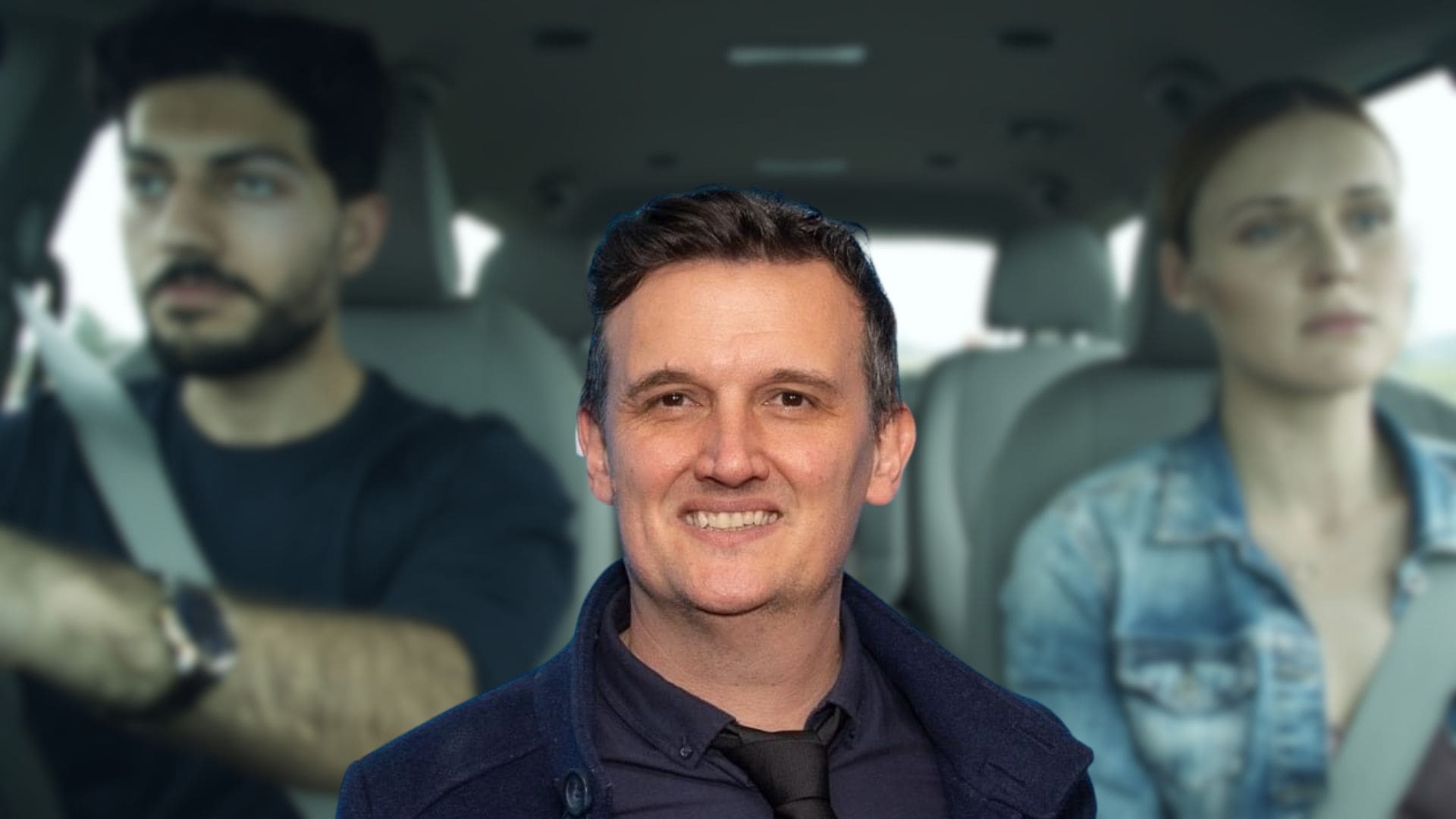
Interview with “Love Road” Writer/Director, Ulysses Oliver


Hosted by
KT & Oti
Show Notes
From a multi award winning short film to an honourable mention at the Oscars and over 20 years of experience in the industry, Ulysses Oliver makes his feature directorial debut with Love Road that screened as a part of 2023 Sydney Film Festival.
Episode Details
- Duration
- 0:00
- Released
- June 25, 2023
- Category
- Interview
- Hosts


Transcript
Transcript (3,004 words)
Full transcript of Interview with “Love Road” Writer/Director, Ulysses Oliver.
KT: From a multi award winning short film, to an honourable mention at the Oscars, and over 20 years of experience in the industry, Ulysses Oliver makes his feature directorial debut with Love Road, that will be screening as part of the 2023 Sydney Film Festival. An intense relationship drama, jumping across three time periods, detailing the highs and lows of a tempestuous relationship. Thank you so much and welcome to the For Your Reference podcast. Thank you. It's a pleasure. Well, first of all, congratulations on your directorial debut. Um, you do have experience in the industry. Um, so I would love to know, You know, hear a bit about the process leading up to and finalizing this glorious film.
Oliver: Yeah, I, um, well, I suppose I come from a producing background, primarily, um, went to film school, yeah, about, oh God, 23 years ago now, um, and Um, came at Love Road with a desire to make a feature film, um, I suppose coming from a perspective of, you know, for me as a filmmaker, I'm not just a writer, a creative person, I'm also interested in the process and what it takes to get a feature film made, and so this felt like it was a marriage of a bunch of ideas that, uh, Uh, had been going around in my head around relationships, maybe some things I was processing around, you know, uh, parents coming to the end of their life and, uh, and dealing with that, but also, uh, a vehicle that was possible to keep quite contained, um, within a, uh, primarily it was a, a two week time span that we shot the film in, and this, this felt like it was achievable, so, um, Um, and yeah, that's kind of been my journey a bit as a, as a filmmaker, as a producer, as a director is trying to work out how to make, um, well initially long form and music videos and, and, you know, uh, working in the corporate world, but, but also.
Oliver: Long form content now that's, uh, achievable at, uh, on a shoestring, a fraction of the price of what the, what the conventional route is, I suppose, and it's, um, yeah, so this is a bit of a, an experiment in a way to see what was achievable, uh, for, for very little, uh, and it's kind of, it has springboarded some, a bunch of other productions that we're, we're rolling out at the moment, uh, consecutively.
KT: Yeah, and I'd love to talk a little bit about Breathless Films maybe a little bit later. Um, but you did touch on the fact that it was filmed in two weeks and, you know, even to my amateur film sort of view, I know that's not a lot of time. Um, and I think it was also shot around the time of the bushfires as well.
Oliver: That's correct. Yeah, yeah, two weeks. Um, we, we went on, um, well, it's a non linear film, so there's kind of three different time spans that we, that we cover, uh, and so we had, I think, four days for each, uh, time span, we kind of literally did a loop that went up through the, The kind of northern part of the Blue Mountains, the Windsor and the kind of northwest parts of Sydney. Um, and yeah, did a crazy all in, uh, there was a crew of only like two vehicles, so whoever could fit in two vehicles. Cast and crew included. Um, and kind of did these road trips. Um, yeah, so it was, you know, it was kind of inspired by. Maybe some films of the, of the, the seventies, like, like the Inventors or, uh, these kind of road trip will shoot what we can find along the way kind of, while having a kind of a, obviously a script to, to, to work off at the same time.
KT: Yeah, absolutely. Um, the tone had a wistful sort of melancholy to it. Um, even while watching it, I was wondering, was that intentional or did it start to morph and shape as you started writing?
Oliver: Yeah, well, I think we're dealing with, um, you know, some fairly complex issues, themes, um, um, I think, yeah, the choice pretty early on for me was to have, uh, our main character kind of looking back on, I guess, uh, a tumultuous, tempestuous, uh, relationship, uh, uh, and, and that it was kind of like the way we processed Memories. Um, and so
KT: does that mean you're choosing sides between Jazz and Daniel potentially?
Oliver: I don't know. Uh, yeah, it was meant to be 50 50, but I think maybe the film leans. I'll let the audience choose which way they lean. Um, but yeah, I, I suppose I do lean towards her perspective in the end and that's kind of. That was more maybe an editing choice of where, the direction it went in rather than an intention when I was writing it. Um, yeah, I, I think, um, tried to weave in, you know, the, the, the more, um, you know, the younger, younger, more playful sides of love, but then, but then obviously there's, you know, she's looking back on some fairly.
Oliver: Heavy going very dysfunctional parts of the relationship and some heavy stuff that happens to them. Yeah So which probably trumps? You know the good stuff and so does maybe ends up being more melancholy, but Yeah, uh, uh, and maybe she's in a melancholy place when we kind of find her in that third time period as well that she, uh, she has to find a way out of, so it probably leans towards that as well.
KT: Well, I guess that's one of the themes that I wanted to talk about, um, with you was the relationship. Dynamics, you know, in that balance of wanting to give it more fire because they were very fiery together, um, or when to draw back and be a bit more somber. How was that sort of balance?
Oliver: Yeah, I, I think the first edit I, I found was, it was too, um, yeah, there was too much of them just fighting all the time. And yes, I wanted them to be kind of stuck in a loop of, because I do think this is what happens in. Relationships. Yeah, yeah, yeah. You kind of just stuck. I'm yelling. You're yelling. Dysfunctional cycle time. That which you dunno how to get outta, you know, and you can't help yourself and Yeah. Uh. But, you know, also wanted the audience to, you know, root for them to it, uh, at the same time and yeah, the first edit was, oh, you know, we've given up on this couple right from the get go.
Oliver: There's no way, you know, why are you guys wasting your time? Um, so I did, you know, but fortunately it was, I mean, it was always a nonlinear, um, story by design and scripted that way. But we did have, I guess, the luxury almost, uh. Uh, for better or for worse. Trying to shift a few things around to such that the trajectory was a little bit more gradual at parts and leaning in on the, you know, some of the more whimsical, light hearted playfulness and much as it always kind of ends. Yeah, yeah, yeah. Things go in the wrong direction for them. Uh, yeah, and the heavier stuff kind of pushed later into the, into the film. Or maybe we tease at some of the heavier stuff at the beginning rather than giving too much away. But hopefully that was...
KT: It's, it's a total sort of dance that's always very interesting. Um, you know, because there's, you know, the dynamics of a couple, which I guess you could agree or disagree that it works or it doesn't work, and then it's just like personalities because Daniel would very much be someone that would say something, whether he means it or not, but he knows it's going to hurt. And I'm like, Oh, you know what you're doing, you know? And I think. That's the beauty of Love Road because that's life, you know, that's the interconnectedness or the disconnect, um, I guess that we have in life as well and I guess that's also a great way to draw to the sprawling sort of landscape and the shots and, you know, the time and attention that was taken.
KT: Um, you know, we talked about yelling couples and that sort of thing. There's probably nothing better than being isolated, um, you know, away from the city. So you can literally just have like a mental checkout.
Oliver: Yeah. I think that was the idea, right? It's like, I mean, why, why, why are we just looking at them and they're over this same terrain that they take, you know, uh, obviously there's the rest of their life in between that happens, but it was interesting to kind of cut out the rest of that life and. We're really focusing on, like you say, when you're alone in the car and you don't have the distractions of everyday life, you know, it might be a road trip or you go traveling together or whatever it might be that forces you to look at your relationship and also, you know, maybe something about revisiting these.
Oliver: Same places, obviously, which was, was triggering other memories that they had and forcing them to revisit those parts of their relationship, uh, such that they could look at themselves in terms of how they, how their relationships change, how they've, how they've grown, uh, over, you know, uh, I don't really label it, but, uh, I imagine it's kind of like a two year gap between a different one, one, one and a half, two year gap between a different Timelines. Um, yeah, so that was that. And then I mean, just talking to them, maybe the why do it in a nonlinear fashion as well as, um, that I wanted that kind of, you know, it's a fragmented relationship. Uh, so I wanted to tell it in a kind of a fragmented way to, um, put the audience, uh, maybe a bit like Guy Pearce's character in Memento where you're, you know, you're playing catch up and so you get into the mindset of somebody with amnesia.
Oliver: Here you're, you know, you're going in on these fragmented memories and that puts you into the mindset of these two characters that are trying to get their head around what's gone, what's gone wrong.
KT: Yeah, I understand that because you're in the moment, but even then you can be drawn back to memories and moments or, you know, maybe you haven't healed from or you haven't addressed moments as a couple. So you're always going to go back to the past and flip forward and flip back and another one of the relationship dynamics that I wanted to quickly touch on was grief. Which is what you talked about, um, a little bit early. I am, I do love an insular story that surrounds grief. I love being able to explore the human experience. And I think there's nothing more real than loving and letting go. And, you know, it is unfortunate and it is sad, but I love the way that, you know, Love Road explored that through Jazz's Mum.
Oliver: Yeah, yeah, um, yeah, unfortunately. If that's not a spoiler, sorry. Uh, uh, oh, well, you know, no, it's fine. I think it's. Hopefully, uh, uh, uh, happens in the first act there that you, you get that the mother's passed away. Um, and yeah, I think I would personally, uh, that that's, uh, something I was going through was, was, um, having, uh, yeah, well, both my parents passed away in a fairly short period of time. Um, Sorry to hear that. Thank you. Um, and yeah, uh, I suppose, uh, I do lean towards Jazz's perspective maybe because of, uh, Jazz, I think I made Jazz probably a female to give myself a degree of separation there and, okay, it's not, not me, you know, but, uh, yeah, I wanted, uh, you know, I guess ultimately it's, uh, she finds, um, I do feel this way about both my parents that, uh, in a way I appreciate them more now than when, um, particularly later in life as you become an adult and have a family or whatever, uh, your, your parents become just a bit of an annoyance.
Oliver: And, uh, yeah, I would constantly fight with both of my parents and, uh, and after they passed, it was. Yeah, I was just, well, you know, why couldn't we get it together to have a more healthy relationship? Uh, and, and, and, and then maybe that I appreciate and love them more now than when they were here, which is, you know, a sad irony and obviously a Yeah, with a bit of a spoiler, maybe, but, uh, theme of the story.
KT: Yeah, I, I think that's absolutely, even if it is through fighting, even if there isn't an understanding, any sort of time with family, understanding the sort of dynamics is also something that's really special. So, um, I personally believe art is a way to channel emotion. And channel change. So I'm glad that you had this outlet and we also have the outlet to express through Love Road. I do have a final question, but is there anything before that final question that you want to say about Breathless Films? So it was really great researching on the website, talking about the vision and the goal.
KT: So I'd like to hear a little bit about that if that's okay.
Oliver: Yeah, of course. Um, yeah, well, it's really exciting. We've got Love Road. We also have Birdeater, by Jack Clark and Jim Weir, and we have Tennessine by Amin Palangi coming up at Sydney Film Festival.
KT: Yeah, I'll be chatting to him later today.
Oliver: Fantastic. So go and check those films out as well. And, you know, we had a Craig Boreham film, Lonesome, and Molly Haddon film, The Longest Weekend. released last year. So yeah, we've made five films in, in a few years. Um, and it has been, um, you know, mammoth effort by a lot of people, but trying to make films, I guess, outside of the conventional system, um, which has meant, um, a lot of challenges, you know, a lot of limitations. But, um, yeah, we're, um, we think that's. really healthy for filmmakers to be thinking about, uh, how you can do films that, you know, particularly if you're, maybe your first feature or, you know, uh, or even if you've just, you know, I, I don't believe in waiting around and making a film once every five years as a filmmaker.
Oliver: It's just, I think that's madness in terms of what happens in Australia. So, um, yeah, I think that thinking, rather than thinking of like the blue sky vision of what you want to make, Um, putting your producer's hat on and, uh, and thinking about what's achievable. Yeah. The resources that you have at your disposal and developing, uh, you know, creative teams around you that, that shares that same vision. So that, I guess that's what we've been trying to do, um, and, and encourage that type of filmmaking and having some, you know, maybe some good festival success with trying to work out how to make that a, how to make it financially viable as well to, to create a kind of cycle of an ecosystem that you like of.
Oliver: Independent film in Australia. Um, so yeah, yeah. That's the short of it.
KT: Yeah. We're getting into the Breathless pantry. We're grabbing the ingredients and we're seeing what we can make. I love it. It's great
Oliver: But you know, and it's not but it's not just Breathless like all of these productions, uh have met have you know the filmmakers brought their own creatives and crew and actors and and uh, funds in some cases into each of the films as well and and so it wouldn't happen with Without all of that, so it's been a kind of a marriage of. Convenience and inspiration and creativity on all the productions, which I think is what you have to do to get it done.
KT: A communal pantry, even better.
Oliver: That's it, that's it.
KT: So we, we usually finish our reviews with a recommendation. So what would you, uh, add with Love Road as a double feature?
Oliver: Oh, jeez, um, uh, I'm, well, I'm going to be biased and say, go, go and see, um, Tennessine. Um, yeah, um, for lack of a, I need to see all the other films in the festival first, but, uh, but yes. Love Road and Tennessine, both stories of, um, I suppose love, uh, love. I don't wanna give away too many spoilers, but, it's all love. But those spoils of love challenges. Love challenges, let's put it that way. Yeah. Um, you know, you, you'll talk to Amin, but um, yeah, very, very different. Very different story. Different, very different perspective, very different characters. But, um, it's interesting maybe that. Love Road is more told from a perspective of, um, yeah, I guess Jazz and, um, and, um, Daniel are more characters maybe that we've, we've grown up with in, in Australia anyway.
Oliver: Uh, and then in Tennessine, the story of immigrants coming to Australia and the struggles with But the relationship phases with that, um,
KT: Well, as it so happened, I happen to double feature Love Road and Tennessine, so I've already done my homework, catch up friends and lovers. Thank you so much, Ulysses. I really appreciated the time. Thank you so much.
Oliver: Pleasure. Absolute pleasure. Thank you so much.
Related on FYR
Discussion
Loading comments...