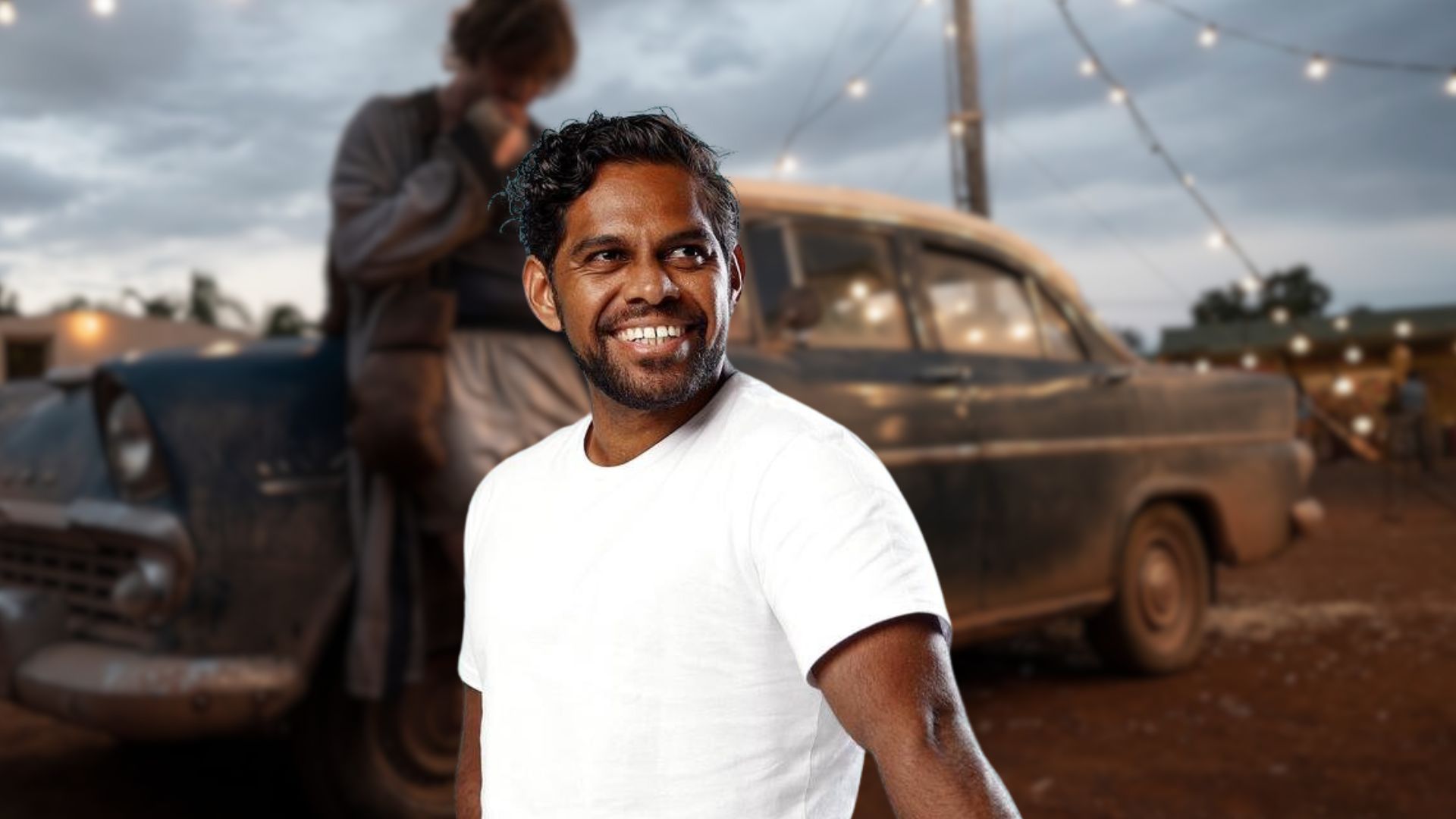
Interview with “Kid Snow” Actor, Shaka Cook


Hosted by
KT & Oti
Show Notes
Shaka Cook brings interesting performances across stage and screen, including Hamilton Australia, Black Comedy, lead role in The Flood and playing Armless in the upcoming Kid Snow.
Kid Snow, a washed-up Irish fighter in a raucous travelling tent-boxing show, is offered a rematch against the man he fought ten years ago.
Kid Snow is in select Australian cinemas SEPTEMBER 12
This interview is audio only. For other video interviews check out our youtube playlist.
—
Summary
Shaka Cooke, a dynamic performer gracing both stage and screen, has taken on fascinating roles throughout his career. Known for his work in Hamilton Australia, Black Comedy, and leading The Flood, Shaka’s prowess is soon to be showcased in the upcoming film “Kid Snow.” This blog post delves into Shaka’s journey and his insights into his latest project.
Shaka Cooke: Breaking New Grounds in “Kid Snow”
In “Kid Snow,” Shaka tackles the role of Armless, a unique character in a vibrant traveling tent boxing show. Set to hit select Australian cinemas on September 12th, “Kid Snow” chronicles the story of a washed-up Irish fighter, Kid Snow, who faces the man he fought a decade ago.
During an engaging conversation on the For Your Reference podcast, Shaka shared his experience preparing for the role and his journey in the world of acting.
Embracing the Arts and Hamilton Journey
Shaka recounted how he transitioned from formal training to significant roles in productions like Hamilton. Despite initial hesitations, especially about singing, Shaka embraced every opportunity. He spoke fondly of his time in New York, training and performing alongside exceptionally talented individuals, which profoundly shaped his career.
Reflecting on “Kid Snow” and Its Cultural Ties
The role of Armless not only challenged Shaka physically but also helped him connect with his boxing heritage. He shared intriguing insights about his grandfather’s involvement in traveling boxing tents, a traditional cultural activity in Western Australia. Shaka’s portrayal aims to reflect this rich legacy while bringing an authentic touch to the character.
On-Set Camaraderie and Shared Passions
Shaka’s enthusiasm for anime found a surprising intersection with his work on Kid Snow. Bonding with co-star Hunter Page over their shared love for anime, Shaka infused elements of this passion into his character. This unique blend of influences added depth to Armless, making the role even more intriguing.
Honoring Indigenous Representation in Media
Shaka emphasized the importance of authentic Indigenous representation on screen. He praised “Kid Snow” for not dwelling excessively on historical injustices but rather highlighting the camaraderie and solidarity among characters.
Episode Details
- Duration
- 0:00
- Released
- September 13, 2024
- Category
- Interview
- Hosts


Transcript
Transcript (3,747 words)
Full transcript of Interview with “Kid Snow” Actor, Shaka Cook.
KT: Shaka Cook brings interesting performances across stage and screen, including Hamilton Australia, Black Comedy and the lead role in The Flood. He'll be playing Armless in the upcoming Kid Snow. Kid Snow is about a washed up Irish fighter in a raucous travelling tent boxing show, um, where he would have a rematch against the man he fought, Kid Snow, 10 years ago. Kid Snow is in select Australian cinemas, September 12th. Shaka, we got through the formalities. Thank you so much. And welcome to the For Your Reference podcast.
Shaka: Thank you. Thank you.
KT: Oh, it's an exciting time. Obviously we're going to talk about Kid Snow, but before we even get there, Melting of the world. You're actually the second person that we've interviewed on the podcast that has been on Hamilton. Krystal Joy Brown played Eliza.
Shaka: No way. Yeah.
KT: So we, uh, we had a lovely chat with her. Um, so congratulations. Not the first Hamilton would you believe on a TV film podcast, but, um, yeah, like I want to hear a little bit about Hamilton, um, NIDA, if you like. Um, yeah, just hear, hear a little bit about your journey and how you got here.
Shaka: Oh man, it's all, it was a long journey, but it was all like, kind of like by opportunity, you know, like whenever opportunities came, I'd take it even if I was afraid to, I didn't know what I was getting into, you know, it's that daunting feeling of the unknown, but I did it because someone's going to do it.
Shaka: And yeah, it kind of like took me to places and built up my confidence, took me out of my comfort zone. I ended up studying at NIDA and that's where I met Uli, you know, another Tongan legend. Um, and yeah, it Graduated, started working and, you know, like focused mainly on acting. And then I somehow, you know, my agent kind of wanted to get me out of my comfort zone and challenge me.
Shaka: And so she got me an audition for Hamilton and I was like, yo, what's that? And she's like, it's a musical. I'm like, ah, mags, you know, I don't like singing. She's like, I just want to challenge you. I was like, okay. Went, gave it my best, thought I did a bad job, but apparently I got a call back and then everything just kept going and going.
Shaka: And I kept growing and adapting and, you know, learning a new skill set, like how to sing, read a bit of music. And, you know, luckily I was surrounded by insanely talented people and, you know, their generosity of helping me learn this craft, you know, in the musical theater world. And yeah, it just kept going from there and then just got off the international tour now. So it's, uh, It's been a journey. It's been a lot of hard work, you know, and he said, well traveled.
KT: He said on stage.
Shaka: Yeah, it was awesome. And I got to go to rehearse in New York. Like, bro, I'm from the country. Like I never expected I would have been to America, let alone New York. You know what I'm saying? So
KT: this world was made for us, man.
Shaka: Oh, man. Yeah. I'm only just like, you know, kind of warming up to that. I'm like, okay, this is, this is what I can do. This is where I can be. So yeah.
KT: It's my partner. Oti is Kenyan and I'm Tongan. So we're culturally tapped in, in the foyer. You need to pop your chest out a bit more.
Shaka: You guys are internationals. Yeah. No, I like the Philippines fell in love with the Philippines, man. That place is beautiful. Yo, it was one of these ones. Nah, they're deadly people. They were awesome, man. And the country is amazing. So like, yeah, I think that's the best part about doing this kind of work. You get to travel and meet new people and, you know, expand your horizon. I guess it's pretty cheesy to say, but yeah.
KT: Nah, it's like, it's like that meme, this shit means something to me, man. Straight up, man. All the memes, boy. One, one tear.
Shaka: Yeah, yeah. And you try to act all tough, but it's like, nah, that one tear coming is like, it means something to me. But,
KT: you know, and friends and lovers, there are, there are clips on the internet that account to your amazing performances and your singing and your talent. I want to talk about Kid Snow. Uh, obviously would love to hear everything that you're working on, uh, but let's focus on Kid Snow for a bit. Armless is interesting because when we got the email about, um, the interviews for this, I was like, I'm pretty sure that's Shaka, like, and this character's name is Armless. I was like, I was like, ten toes down with your Armless.
Shaka: Yeah, no, he's such a fun character. He's so cool in the script. Like originally he was meant to just have one arm, but, uh, then, you know, like, like, no, listen, you know, instead of that, we're going to use it as like a gimmick. So whenever he's fighting anyone, you just, they, they, they kind of strap his arm behind his back. It's that
KT: anime shit, you know, anime
Shaka: bro. I was channeling that shit. I was like, yo, bring it. It was cool. It was cool. I felt like Takashi at one point, cause I was just fighting someone, you know, I was like, What do you
KT: know about Shuriken?
Shaka: Yo, yo. What do you know about the Koryu
KT: Jutsu?
Shaka: Yeah, no, just me and Hunter were like vibing. We first connected because we were like, bro, anime? Yeah.
KT: Yeah.
Shaka: Yeah. Big fans. But yeah, like it's. Nah, it was cool, man, like, to, to play this character, you know, and then to get in a boxing ring and have one arm behind my back, I was like, yo, this reminds me when I used to spar with my cousins and stuff, you know, I'd be like, oh yeah, I'm faster and stronger and older, so I'll do one arm behind the back, you know, it's like, let's go.
KT: Yeah. Yeah. Yeah. Yeah. In
Shaka: this, it was that sort of same energy because Armless is like a, you know, superb fighter, you know, he's really great at analyzing people and figuring them out. So you can look at someone and be like, all right, I already know.
KT: Analyzing the stats of 9,000.
Shaka: Yeah. He knows it. He's like reading them. Yeah. Yeah.
KT: You came to the right place, Shaka.
Shaka: Yo, I did, I did. Saved the best for last. Nah, they were um, yeah, it was that. That's what I kind of, the first things I gathered about that character. And he's like this cool, calm, collected dude who really looks out for his own. And I think that's, you know, I hope it really comes through in the film and I hope people get that feeling from him. But yeah, it was a lot of fun to play.
KT: Yeah, and something that I, I guess I wasn't really aware of until watching Kid Snow was about, I guess the traveling sort of boxing that there is, and I believe, was it your grandfather that was one of those sort of boxers like in real life?
Shaka: Yeah, in real life he, uh, so like all these boxing tents would travel around to different towns, and like they did a lot of rounds around here in WA, and my grandfather would just be in the right town at the right time and jump in the tent for a fight, win some money.
Shaka: And then go down to the pub or something, you know, so it was like, uh, it was that it was that, that culture of just boxing, you know, everyone just grew up boxing and that's how you tested yourself, you know, to see how strong you are. If you were a great fighter, some people actually seek you out just to fight you, you know, so, um, yeah, yeah, he, you know, he, he would go to different towns and then, you know, the boxing tent would just happen to be there.
Shaka: And so he'd just walk in and get into a fight and make some money. Yeah, I don't, I don't think he won a, uh, lost a single fight. So, yeah, he did tell a story where like he almost lost to this one dude from like, Geraldton area,
Shaka: but he just beat him with one lucky punch, eh?
KT: That's all it takes.
Shaka: That's all it takes. That's all
KT: it takes. That's Saitama, it's that One Punch Man. Let's see how many anime references. Yo, One Punch Man, bruh. You coming at me with this anime? Don't do it. I'm about this. I'm about this. I live and breathe this.
Shaka: Yo, One Punch Man is next level, though.
KT: Oh, absolutely.
Shaka: Maybe that's what they're going to do with Armless in the sequel, you know?
KT: Oh, yeah. So you get
Shaka: these other arm back now.
KT: Get that licensing, you gotta get that. Kid Snow was filmed in Kalgoorlie. Yeah. You're from the Pilbara region?
Shaka: Yeah, yeah. So basically neighbors, you know, like Kalgoorlie, Coolgardie area. That's where like all the Wongi mob are. So Wongatha is there. Um, and so that's like the, the Goldfields, you know, um, that's where they have all the gold mining over here in my country is all the iron ore.
Shaka: So, um, the Pilbara, Pilbara area. Um, but yeah, my, my older brother, his partner is from Kalgoorlie, Coolgardie. So, you know, I was like, all right, I've got in laws here somewhere. Yeah, but, um, yeah, it was good because, you know, it's actually my first film in Western Australia in my home state. So, oh,
KT: wow.
Shaka: Yeah. I was like, this, this is, this is good. This feels great. It's awesome to, you know, be close to home and, and actually filming and representing WA. I think, you know, for me, that was like a exciting moment. And then to be doing a boxing film, you know, that I grew up hearing stories about the boxing tents with my grandfathers and stuff. So to be able to do it, I was like, yo, this is madness.
Shaka: I get to, I get to be back home shooting a film, you know, that a lot of people back home can actually really relate to. So it's a win win.
KT: And I think that's where we come to, it's an exciting time. Uh, in on Australian screens, if you know where to look,
Shaka: you gotta know where to look, you know.
KT: You know. Um, but if you know where to look, it's an exciting time, especially for Indigenous, Indigenous screen, Indigenous cinema. Um, and there was a nice little, like, I wouldn't even say comic relief, but it was a nice reprieve. Having, you know, the main story, but also having you guys really just living and breathing and just existing in a way that just felt good compared to, I don't know if we want to do like a film historical landscape of this country, but it was, it was really nice hearing Hunter as well, talk about, um, you know, the way that you guys bonded on set and I guess being on country in a way that feels different to like Metro. Sort of areas.
Shaka: Yeah, no, we definitely bonded really quickly. And, uh, I think, I think, yeah, what, what we managed to bring to the film, I think is that spirit, you know, like that spirit of Blackfellas spirit of Australia and that authenticity of like, just being larrikins, you know, and having a good laugh and not taking things too serious.
Shaka: until you really have to take it serious. And I think, you know, having us there allowed for that to happen where you always see these cheeky smiles, you hear that cheeky laugh in the background, you know, and I think, you know, Paul Goldman did a great job in making sure that, you know, we were there and, you know, part of it, even when, you know, the two brothers are doing an important scene, you'll see one of us over there doing something like pitching up the tent or like cooking something at the fire or anything like just random stuff.
Shaka: And I think that's what brings it to life where you get this sense of like, you know, it's like having a like a full house, you know, you grew up with all your cousins and everyone in the house. It was exactly that. And I think there's always going to be chaos and madness and laughter and everything all happening at the same time.
Shaka: Uh, yeah, it's uh, I think, I think, you know, Paul did a great job in, in, in creating that and then casting, you know, us three mad bastards in there, like Mark, Mark Coles Smith and Hunter Page and myself, my first time working with them. And I've been dying to work with them for years, ever since I started acting. So I was even more excited to get in it, you know, and then meeting them and vibing with them. I was like, OK, this is this is wild fun.
KT: Yeah. Too much
Shaka: fun sometimes, but not enough.
KT: Just like tapping into that, right?
Shaka: Mm. Yeah, it made it easy to like, you know, get into the scenes and just, just be these characters and, you know, kind of, you know, have fun and try and bring that, that, that Blackfella spirit to it.
KT: How is it going from your journey of who you are, who your experience is, is that mana that you channel, and I guess the stories that translate to screen?
Shaka: I've had a pretty, pretty good journey with it all. Like it's not something I ever planned on happening and it happened, but everything just sort of fell into place, you know, like, uh, growing up with these boxing tent stories and then being able to do a boxing tent film growing up sparring, you know, with every kid in the town and just street fighting and stuff.
Shaka: So then naturally we knew how to throw a punch. So then coming in and playing a boxer was pretty effortless. Um, and you know, getting into these acting schools and stuff like that was crazy. Never thought like, didn't even know there was a school you can go to train to be an actor. Like all of these things, new world, going into this big smoke in the city, learning how the city lives work.
Shaka: And then getting into this industry, but already knowing exactly what I wanted when I first started. And I think the biggest thing, even before I got into NIDA, I remember telling one of the acting teachers to treat me as an actor and not an Indigenous one. Um, because yes, I can play Indigenous characters and, you know, I'm proud to do that and I'm happy.
Shaka: And I think it's important to tell these stories, but, you know, as a trained actor, like, yes, I can do everything else as well, you know? So like, and what's great is like, yes, it's changing. We are getting more Indigenous works out there, but then we're also at the same time getting works that it's not just Indigenous, but we have actors who happen to be Indigenous.
Shaka: playing these characters, you know, and that's where Hamilton was like a big step for me. Cause I was like, yo, I'm playing the, this like dead president, bro. I'm like from America. It's like, he's not Indigenous Australian at all. But I get to play these characters. I get to do my research. I get to create, I get to, you know, bring something to life and, and find an essence of something.
Shaka: Um, and you know, that role wasn't written for an Indigenous Australian. So to be jump into that and play that, you know, be selected and given that opportunity. Because they definitely took a massive chance on me and I'm glad they did because it changed my life. Um, and I'm grateful for it. I've learned so much, but in doing that, it actually, you know, kind of fulfilled something for me that I've always wanted, which was just to be treated as an actor.
Shaka: Um, and yeah, so I think for me personally, it's definitely going really great because I've done roles like that now where I've done roles where it's like, yes, we need someone Indigenous done that. Okay. Can you learn this language? Yes. I can practice that. Learn this language. Um, like Black Comedy, I spoke a different language in Black Comedy, did a show called Operation Buffalo, spoke a different language in that.
Shaka: Um, and then in, in Kid Snow, I just threw in some of my own languages in there, you know, like the language that I grew up speaking. Um, so I just slipped that in there, you know? So, um, and then that way people back home when they see it, they're like, Hey, did he just say that?
KT: Like he did the thing.
Shaka: Yeah, it's, it's fun and it's exciting when you get to hear your language in something. And I mean, yeah, cause there's so many different languages here and you know, you don't hear much of it. So when, when you get to hear your particular language, you're like, yo, bring it bro. But yeah, I hope that answers your question.
KT: Oh, it absolutely does. And, um, you know, even Hunter talked about it as well. It's, if that's all you see me as, you're never going to get more from me. Sort of thing, right?
Shaka: Yes.
KT: And we can afford it. We're not babies. We can handle layers. We can handle dimension. as an audience. And I love it. Like give us every layer of performance. And it isn't, it isn't a preface. It isn't like they're good because they're Indigenous. They're Indigenous and they're great. And it's our world, you know,
Shaka: I'm trying not to swear. You're getting me too excited here.
KT: I think that's one of those things of like, um, you know, Because the setting is in the 1970s in this country,
Shaka: right?
KT: Um, and, you know, there's mention of, like, the Vietnam War. There was, like, one line, very, very, very light, but there was an implication of, like, you're not allowed in the pub.
Shaka: Yeah. Um,
KT: and it's one of those things that I grapple with because, you know, I was born and raised in Western Sydney, shout outs to the area, but it's, it's one of those things of like, we know how things are, but it's also not the responsibility of a film, but also you want it to feel real and you want the layers as well. So it's a big puzzle, right?
Shaka: Yeah. It's a big puzzle piece. And, you know, like a. Because yeah, if they dwell too much on that, it'll be a different film and it'd be a different story. I think they did a great job in like, you know, not focusing or dwelling too much on it and just focusing on the actual story itself.
Shaka: Um, where, yes. You know, if you know your history, you know what happened in the 70s and you get hints of what happened in the 70s. I don't think we need to spoon feed people what happened in the 70s. Um, and what's great is like, you actually see the relationship between these characters during that time. You know, like when, when these lads get kicked out of the pub, it's old mate, Kid that decides, yeah, well, if they're, if they're going, I'm going with them. It's that, I think that is more important. It's that
KT: Irish solidarity. Yeah, bro.
Shaka: It's that, he's like, I'm drinking with them and drink each other under the table. But straight up, like, It's him doing that, I think, is more important than what actually happened in the 70s, you know, because we already know what happened in the 70s. Yeah. But for someone like him to stand up and be like, well, I'm out too. I think that like, you know, cements the story and the relationship between the characters. I think that's, you know, right. It's right where that focus is, I think.
KT: And the focus needs to stay on you, Shaka. That is a great way.
KT: I'm bringing the cheese now.
Shaka: Yo, bro, give me my close up.
KT: I'm so sorry. We need to wrap up. I would like to say on behalf of, I want to get to my final question, but on behalf of myself, mālō ʻaupito, ʻaupito, you probably speak more Tongan than I do. On behalf of my partner, asante sana. But we're going to finish off with our final question. What would you pair with Kid Snow as a double feature?
Shaka: Oh, I reckon Lionel Rose. Have you ever heard of Lionel Rose?
KT: I've heard of it, yes.
Shaka: Yeah, Lionel Rose, that legend. I mean, I think, I think they did a like a mini, uh, TV series about him. I think, I'm not sure if they did actually. If they haven't, they should. And I reckon that and Kid Snow together, brah, brah. Yeah, Lionel Rose. I reckon that's a great story that they should definitely make next, right?
KT: Yeah, I think so. Let's, let's keep telling and watching and consuming. Yeah, that's a really tough question. It's a time of storytelling and truth telling. Yeah, I know. Yeah,
Shaka: because I've got a lot of different films in my head coming through and I'm like, ah.
KT: That was some anime you're in for a good time. Shaka, thank you so much for your time.
Shaka: You saw what Ome did. Michael B. Jordan with uh, Creed, putting in some narrative stuff in there. I wish we had the time. Next time. Next time. Oh yeah,
KT: yeah, absolutely.
Shaka: Thank you so much though, this has been fun.
KT: Yeah, thank you so much.
Related on FYR
Discussion
Loading comments...