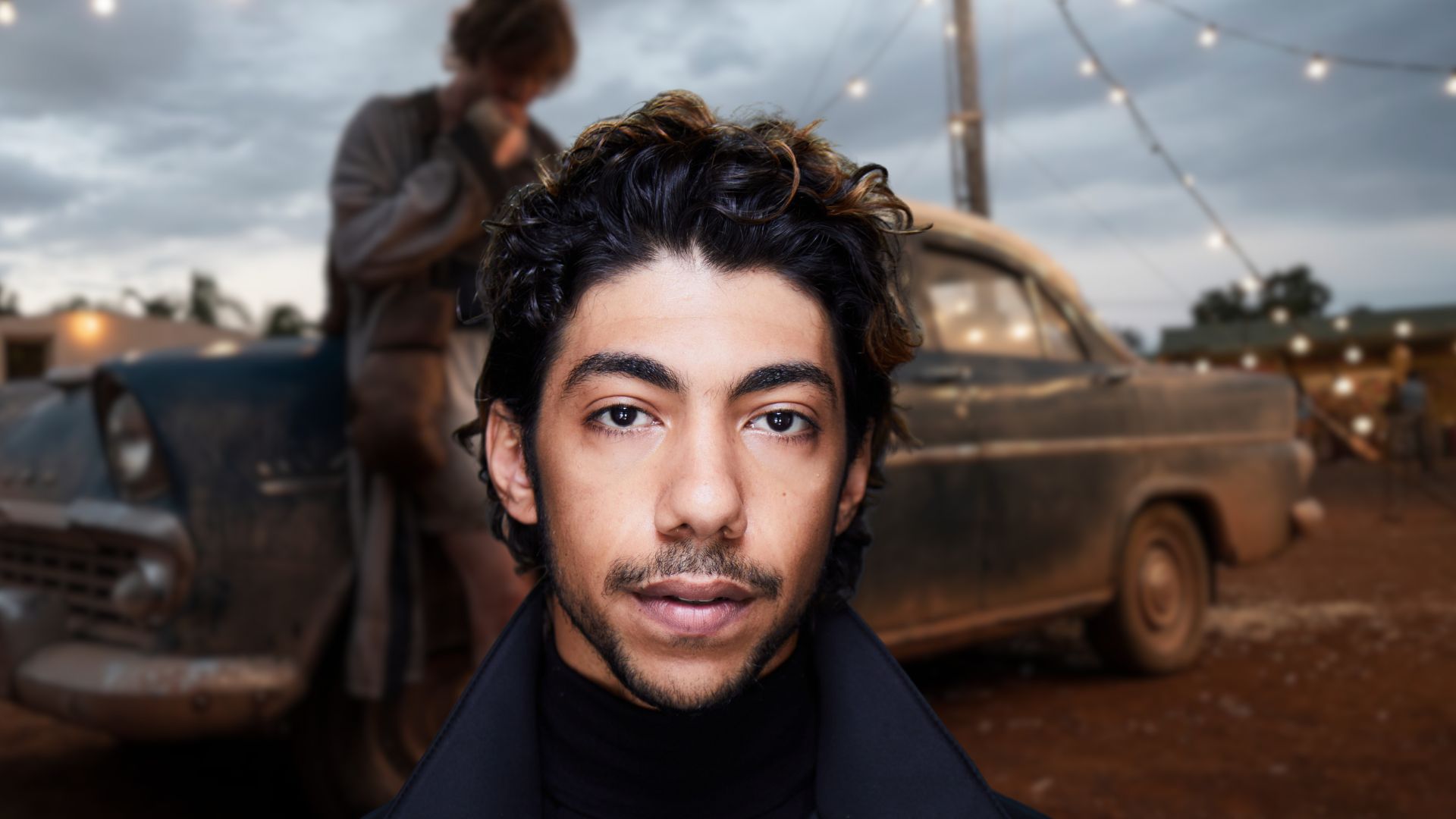
Interview with “Kid Snow” Actor, Hunter Page-Lochard


Hosted by
KT & Oti
Show Notes
AACTA Award Winning actor/writer/director Hunter Page-Lochard brings 25 years of experience including feature film debut Brand Nue Dae, lead role in Cleverman and Lizard in the upcoming Kid Snow. Kid Snow, a washed-up Irish fighter in a raucous travelling tent-boxing show, is offered a rematch against the man he fought ten years ago.
Kid Snow is in select Australian cinemas SEPTEMBER 12
This interview is audio only. For other video interviews check out our youtube playlist.
—
Summary
Could there be a more exciting time for Australian cinema? With its newest film “Kid Snow,” audiences are in for a rich and visually stunning treat. Actor Hunter Page-Lochard, celebrated for his countless contributions to the industry, recently sat down with the For Your Reference Podcast to discuss his latest project and more.
In our discussion, Hunter Page-Lochard opens up about his career and shares his thoughts on the importance of storytelling, representation, and the journey of self-discovery. Below is a detailed look into our conversation with this multi-talented artist.
An Impressive Career
Hunter Page-Lochard boasts 25 years of experience in the acting industry, making his debut in the feature film “Brand New Day” and starring in the critically acclaimed series “Cleverman.” His portrayal of Lizard in the upcoming “Kid Snow” serves as another testament to his versatility and dedication.
“Also, I can’t believe I’m actually talking to you right now,” KT, the host, gushes at the beginning of the interview. Set to hit select Australian cinemas on September 12, “Kid Snow” tells the story of a washed-up Irish fighter who is handed a rematch with a man he fought a decade ago. The film’s intriguing premise already has fans eagerly awaiting its release.
Recognizing Achievements
It’s impossible to overlook Hunter’s recent accolade: the Best Supporting Actor award for his role in “The Newsreader.” KT congratulates him warmly, to which Hunter responds with gratitude, saying, “Thank you very much. Thank you. Yeah. That was, you know, brother getting these flowers. So I definitely accepted that.”
KT and Hunter exchange light-hearted banter, with Hunter acknowledging the support he’s received. Their camaraderie sets a warm tone for the deeper discussion that follows.
Filming in Kalgoorlie
Hunter and the production team for “Kid Snow” had the unique opportunity to film in the visually rich landscapes of Western Australia, particularly Kalgoorlie. The importance of location became a significant point of discussion.
“I’ve actually never been to Kalgoorlie as well,” Hunter admits. “So kind of experiencing that, you know, you hear all the stories. You’ve spent time with mob who are from there and stuff like that. So, like, you understand it really
Episode Details
- Duration
- 0:00
- Released
- September 10, 2024
- Category
- Interview
- Hosts


Transcript
Transcript (3,260 words)
Full transcript of Interview with “Kid Snow” Actor, Hunter Page-Lochard.
KT: AACTA award winning, actor, writer, director, Hunter Page-Lochard brings 25 years of an experience Including his feature film debut in Bran Nue Dae, lead role in Cleverman. Also, I can't believe I'm actually talking to you right now. And also, um, Lizard in the upcoming Kid Snow. Kid Snow is about a washed up Irish fighter in a raucous traveling tent show. And he's being, uh, being given a rematch of a man that he fought 10 years ago. Kid Snow will be in select Australian cinemas, September 12.
KT: Hunter, we made it. Thank you so much. And welcome to the For Your Reference Podcast.
Hunter: Thank you for having me.
KT: I am so excited to chop it up with you today. Um, there is so much to talk about. Just you as an enigma in and of itself. Um, and we obviously will talk about Kid Snow, but before that, Very ooh la la, very congratulations, very, as the kids are saying, demure, congratulations on the actor, best supporting actor for The Newsreader.
Hunter: Thank you very much. Thank you. Yeah. That was, you know, brother getting these flowers. So I definitely accepted that. Yeah. No, it was great.
KT: Take the whole, take the whole garden.
Hunter: That's it. That's it. That's what my colleague said. She's like, yeah, my boy got his flowers.
KT: Speaking of flowers and I guess a visual sort of delight in Kid Snow, you know, there's so many different sort of shows that we have on Australian screens. It's a very exciting time. But, uh, being able to film outside of the city and in Western Australia, like Kalgoorlie, for example, it's such a gorgeous, rich visual language in and of itself. What was it like being able to film Kid Snow there?
Hunter: Ah, loved it. I've actually never been to Kalgoorlie as well. So kind of experiencing that, you know, you hear You hear all the stories, you've spent, you've spent time with mob who are from there and stuff like that. So like you understand it really, but you, but you don't really understand it until you go. And so,
KT: yeah.
Hunter: Going, going was great. And like, kind of, you know, the, the whole gold country and like mining mentality of that country is really interesting and, and, and the way the country actually feels scarred in a way.
Hunter: And, and, and, and, you know, getting all spiritual with it, but you know, there's, there's a definitely. a sense of, of, of strong spirit there, which was really quite profound, but like, you know, doing, doing kind of like those running scenes, you know, and, and, and even though they were grueling as, as hell, kind of, you know, being on that hill and just looking out to, Just the different colors of sands and, and greens and stuff like that.
Hunter: It's like, you really, you really take for granted how beautiful and ancient and majestic this country is. And so, yeah, it, it's always a treat to be able to shoot on country for sure.
KT: Well, this is like, I'm going to use a Tongan word, Tokoni, like to come together. Um, we are ancestrally tapped in, in the For Your Reference household. So don't worry about that. It's like a like and a comment won't help. Like grounding myself to the actual earth will help. Oh, okay. That's the key guys. That's yeah. We're keyed in. We're keyed in.
Hunter: That's it. That's it. Yeah. That's good. That's great. Good to see you.
KT: Um, even just like talking to you, it's so lovely to hear, like, how thoughtful the process is in regards to, you know, the characters that you play and the way that you approach the characters.
KT: There was a recent interview where you talked about, you know, playing an antagonist for the first time in Critical Incident. Um, shout out to, I was born and raised in Western Sydney, so seeing like, Seeing the Blacktown station in the trailer. So I'm very excited, um, you know, to give my cultural, my cultural consultant, no one asked for critique, um, but I would love to hear how, like, was there any sort of whether method or otherwise in regards to Lizard in Kid Snow, was there any sort of process and approach to his character?
Hunter: Yeah, um, you know, we all, we all kind of spent together before we shot, um, doing a bit of a rehearsal, especially the boys, um, and, um, and Billy. We all, we all kind of really, Tried to, cause, cause Paul, cause Paul wanted to create, because we all knew that the, that the boys didn't have, you know, any main scenes, you know, we weren't, we weren't the main.
KT: You said it. Hey. I'll say it too. You know, a little bit more couldn't have hurt.
Hunter: Um, but, but, you know, because of that, we all, we all knew we had a little bit more to do in creating an atmosphere. Um, and so, and so in doing that we kind of just really leaned into what, what makes a blackfella a blackfella.
KT: Yeah.
Hunter: And so you know that that whole like sitting around a campfire and stuff like that and that and like Paul and Paul knew that like he knows, he knows that. The director,
KT: Paul Goldman, yeah,
Hunter: the director, Paul Goldman knows, you know, he knows how blackfellas go when, when we sit around campfires and like talking up yarns about people walking past and stuff like that. And, you know, good old crack up and stuff and playing games and stuff. So like, he knows that mentality. So it was about, It was about finding that, making that authentic and, and, and, and really kind of pushing that for him to create that atmosphere. And you know, when you've got someone like Mark Coles Smith to play against, it's, yeah.
Hunter: It's a bit easy to create blackfella jargon, you know?
KT: Well, I definitely had a lot to look at, can I just say. Yeah, like,
Hunter: like, like him and his underpants. Like that, like, that wasn't a Paul idea. That was a Mark idea.
KT: Anime, anime blood. Like in those bleeds right now. With the robe, with the
Hunter: robe and everything. Who do you think you are?
KT: Hunter, I I am so happy that we've connected because truth be told I do have two sets of questions whenever I ask interviews. Um, usually it's like the questions that you probably will anticipate and then they're the really real in the trenches sort of questions that I want to ask, but you're more than welcome to, we can skibbly that to the other side if that's what you want.
Hunter: You will love a TV show I'm developing anyways, but we'll save that for the future.
KT: I thought I was casted already.
Hunter: Anyway, let's go on, let's do this.
KT: Uh, you know, it is a very exciting time, uh, on, on Australian screens, whether it's television, um, or films, like even Mystery Road, for example, the visuals that we had, um, in Western Australia as well, um, was a very beautiful thing.
KT: And you and, you in and of itself, as well as, uh, Rachel Perkins, Wayne Blair, Deborah Mailman, like the, the list goes on and it's such a gorgeous time for the richness of indigenous blackfella storytelling in this country. Kid Snow was interesting because it was set in the 1970s. Um, and there was even mentions of the Vietnam war as well.
KT: So it's, it's giving a bit of a setting of where we are, where, where some of the people were in the 1970s, maybe, maybe we were, depending on who we are. Um, and there was also a line about, You're not allowed to be in the pub.
Hunter: Yeah.
KT: I think of the book Grog War, there's Tywin Lannister, uh, Charles Dance, there was a film called Black and White. Yeah, yeah. Um, where they kind of more explicitly speak to what that means, and I guess the sort of, like, the disunity that we have. in this country. Um, and I want to hear a little bit about as much as you want to, um, the approach to that sort of scene and I guess how it landed on your desk and how it played out on screen.
Hunter: Yeah. Look, well, that was always kind of in the script that, that, moment especially, um, was, was always in the script. And, and I think I, you know, I think we all came to a conclusion in the rehearsal as well, is that we, we didn't want to create a, um, uh, a film where that's all we will used for, if that makes sense.
Hunter: Um, especially me. I, like, I don't like accepting, um, especially Indigenous character roles. Um, if you noticed, I've been trying very hard for the last, like, five years to not play Indigenous characters. Um, like, like Fires. Um, even though he's indigenous, it's not explicitly said that he's an indigenous character.
Hunter: Um, so yeah, so like, I, I try very hard to, if I am going to play that role to make sure that there, it is grounded in, in a sense of truth. Yeah. But it isn't just being used, um, for that, um, that there's story behind it, that there's a little bit of, um, You know, a little bit of something to hold on to rather than just racist, traumatic representation of, of a lifestyle, um, and a society.
Hunter: Um, and so that's where kind of that camaraderie and kind of creating that bubble and atmosphere of that tent group where nothing can touch us there. And you kind of saw that in the scene, um, when, um, when that box, when that biker comes to box them and, and, and, and, and, or, or when, um, when Hammer comes and, and, and they're all standing up behind Billy.
Hunter: It's all like, you know, he's like, if you want to step in that ring, then you're going to fucking fight all of us. Like, like it is a family, it is a family unit and they're not treated differently in there. And then, so I think, I think that was very important to make sure that there wasn't any racism within that world to be, to be a little bit more.
Hunter: Of, of the characters and that, you know, that laughter and that, that jovialness of blackfellaness and that bringing it back down to groundedness of like, nah, brother, like fuck your brother, go and walk about and clear your head. And then, and then we'll get back to business and fucking eat some kangaroo and do this shit properly. You know, like, come on.
KT: Yeah. Yeah. Yeah.
Hunter: Yeah. So we, we, we really, in the rehearsals, wanted to all drive in that more and show representation of blackfellas, that like, that camaraderie, that family essence of, of, we understand what you're going through because we're all going through it. Um, and so you're not alone.
Hunter: And so that was more important. And so I think when that scene came along, it. It wasn't so much for us to show a snapshot of the time and the people, it was to show a snapshot of, um, the older brother of Tom's character and how, and how he's not understanding what we're trying to create in that, in that tent world. And so, and so, and then, and then, and then, so it was more of us, it was more of us looking into the idea of, of, of white allies, I guess, you know, like.
KT: I think it's like, it's, it's the lens, right? It's yeah. It should be afforded the layers. If you're making it for people that get it, if you know, you know, you don't need to have that one dimensional lens. I absolutely snap, snap, snaps. This should be like, I should have bought a monocle. We should have had a whole conversation, but we're actually near the end of our chat, which is Oh no. I know. Can you, can we solve a racism?
Hunter: No, no, no. Screw it. I'll give you three more minutes. Come on. I'll ask, ask, ask three more questions. You're fine. You're fine. It's all right. It's all right. It's all right. It's all right. It's all right. It's all right. I'm good. I'm good. One more question or two more. Okay. Go for it.
KT: Um, how was it being able to I guess navigate, because you, you also have a lot of experience in the industry of having, and it even seems like you do have that confidence to be able to be like, this is how we're going to be on set. How does that feel compared to, I guess, when you first started your sort of acting journey, where perhaps you didn't feel as though you could speak out about that sort of thing?
Hunter: Wow. Great question. I'm glad I made you do this. Um, great question. I think, you know, I think, you know, age and experience plays a lot into it. I think, You know, I, I started acting when I was so little and so I've been, I've just been around all these people my entire life, you know, and so fortunate to be around them. And so I think when I got to the age where I thought I had a voice, so like a teenager and stuff like that, I felt like I knew it all.
Hunter: And, and knew, and knew, and knew how to do it, um, which I didn't, um, and it wasn't until I worked with Leah Purcell on Brothers Wreck, and I'll tell this story to the, till the day I die, but, um, you know, and, and, and, you know, it was a culmination of things. I think, you know, obviously working with, with my father in theater.
Hunter: more than once and getting that discipline and, and, and, and that understanding of, of performance and the importance of performance. And then having that, because it was around that time where I did Blak, which was the last Bangarra production that I did. And it was sort of my initiation because that was my third Bangarra production.
Hunter: And so, and I was like 18 or 19 or something like that. And so it was sort of like, now I'm a man and I'm doing this show. And so. It was a great kind of turning point. And then that's when I went off and did Brothers Wreck. And then it was, and a lot of suicide was happening in my family. And I felt like I know it all.
Hunter: And I was angry that I wasn't in the place where I want it to be. Um, you know, it, it, it, it was, it was such a, it was such a weird time. And then, so I think Leah really kind of, push me in a direction where I let all of that go and, and kind of a light bulb moment where. I just went, Oh, I think I know how to do this now properly and, and, and how to take my time.
Hunter: And my father's always told me to hunt quietly. Um, and so I think from that moment on, it was always just, okay, plan, hunt quietly, and then. Take your time. Let's, let's, let's, let's go through the motions. Let's talk to the right people. It starts with your agent. So let's talk to your agent. Let's see what you want.
Hunter: Let's, let's, let's work on this. Let's work on this. Let's work on this. Let's work on this. And I think ever since that moment, it's just built and built and built to the point now where I'm running my own company and I can Charlie
KT: has production shout out. We love a shout out,
Hunter: shout out, shout out. And so, you know, I think Yeah. I think the more, the more you, you think you are perfect, the less you're going to learn. And so it's gonna be humbling.
KT: Yeah, yeah,
Hunter: yeah. You gotta get
KT: humbled real quick.
Hunter: You gotta be, and I, you gotta get humbled. Yeah. Go on.
KT: And I, but I, I think that's the beauty of life and I think. For a lot of us, it's like, whether kids should learn this. And it's like, some of us don't get the luxury, you know, Shari Sebbens said it, Moogai as well as screening a Sydney Film Festival. Like some kids don't have the luxury of not learning things. I think there's a lot of angst. There's a lot of anger, whether it's culturally, people are dying, whether it's suicide and like, you just need to live and love through it.
KT: And that's how you get through that. Otherwise you just get to a point in life where you're just. Avoiding that. And that's the beauty of life, right? Exactly.
Hunter: And then, and then what you put out is going to inspire someone to do the same. Do you know what I mean?
KT: Exactly. Ooh.
Hunter: Yeah.
KT: What a chat. This was a whole meal. Well, um, I'm going to wrap up with our final question, um, on my behalf, I would say mālō 'aupito, 'aupito, which is thank you in Tongan, on behalf of my beautiful, delicious Kenyan man. Um, I will say Asante sana. Um, I love it. Gorgeous. It's a beautiful time. It's a spicy time. Um, I'd like to finish off with our final question. Um, what would you pair with Kid Snow as a double feature?
Hunter: Ooh, that's a good question. I would pair, and it could be an old film, right? Yeah, absolutely. I would pair Kid Snow, let's go with another Paul Goldman, I would pair Kid Snow with Aussie Rules.
KT: There you go.
Hunter: And, and I actually would, like I'm not just being biased there, like they kind of, it's funny because it's the same director, they kind of go hand in hand. Actually, no, I take that back. Kid Snow, and shout out to the movie Kick, which has mysteriously disappeared.
Hunter: Lead character, lead role was Russell Page with Radha Mitchell. Um, and, and it was about a dancer that, um, no, it was about a footballer, a really good Aboriginal footballer at some college that wanted to be a dancer with Radha Mitchell. And so like, it was, it was, it was sort of like the Aboriginal Billy Elliot. In a way. I see.
KT: I see.
Hunter: And no one knows about it. And it's such a great Australian fucking film. It's shot in Sydney. Like it's, it's like a proper feature film. Yeah. Like, and it's like, it's, it's, it's like, I'm, I'm desperate to find it and it's obviously got my uncle in it. So it's like, I really, yeah. So that, if any, like, um, see, I'm being, if anyone can find it, you double bill that with Kid Snow.
KT: It's not a Criterion Closet. You can have a For Your Reference closet. That is a great recommendation. Get a punter if you guys find it, friends and lovers, but, um, thank you so much. And oh, the, the, the lifetimes we could have spent together.
Hunter: I'm sure we're going to have more chats in the future, but thank you very much.
KT: Thank you so much.
Related on FYR
Discussion
Loading comments...