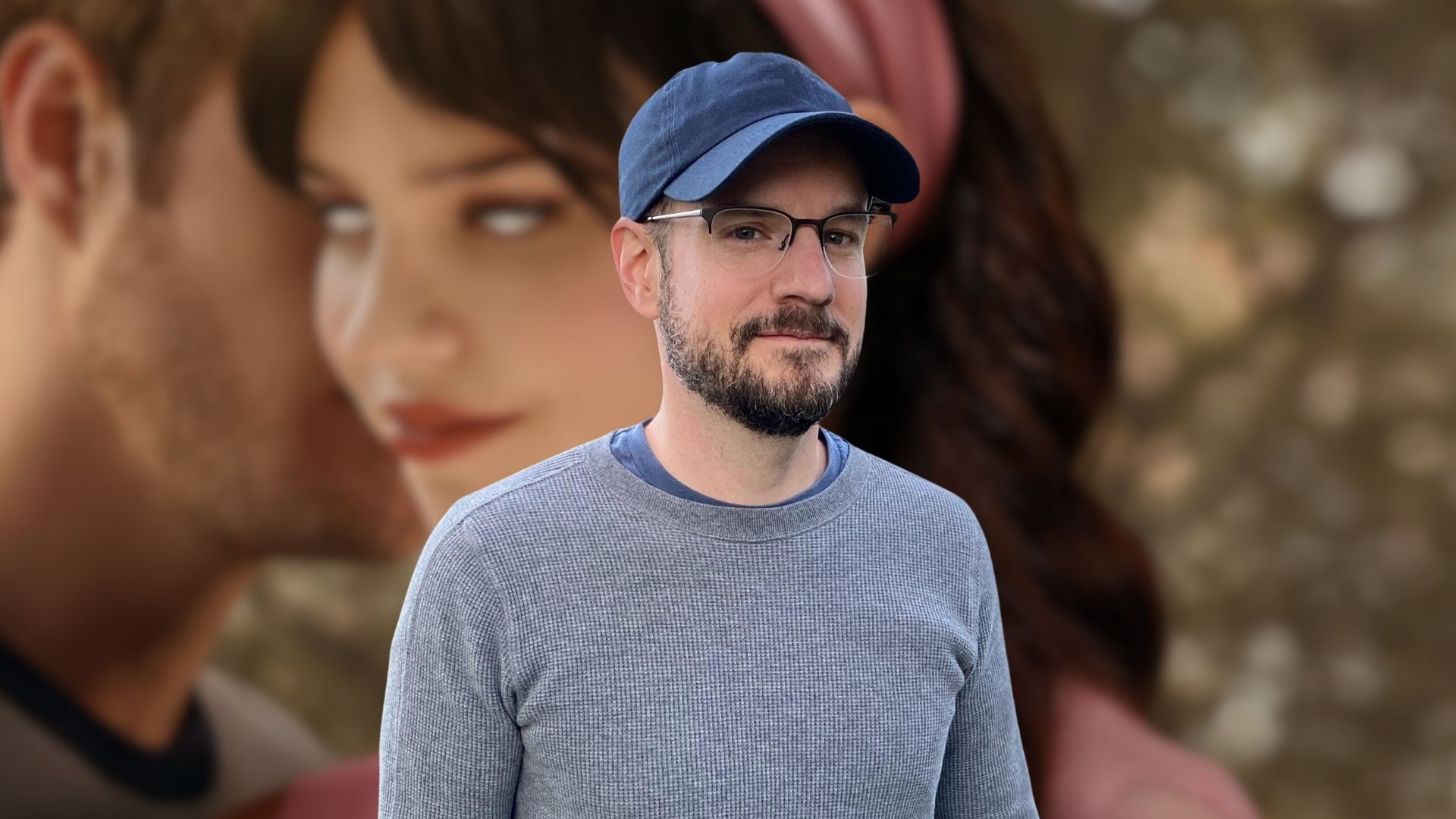
Interview with “Companion” Writer/Director, Drew Hancock


Hosted by
KT & Oti
Show Notes
This week, we sit down with Drew Hancock to discuss his film ‘Companion’. Hancock elaborates on the challenges of balancing visually striking sci-fi elements with grounded, relatable themes of relationships. He emphasizes the importance of shooting the movie more like a relationship drama rather than a typical sci-fi film, comparing it to works like ‘Marriage Story’ instead of ‘Minority Report’. The film centers around Iris, a woman escaping a toxic relationship and discovering self-empowerment, portrayed metaphorically through her interactions with AI. Hancock also shares insights into key moments in the film, particularly a pivotal breakup scene that highlights character transformations. The episode wraps up with Hancock’s recommendations for a double feature, including ‘Lars and the Real Girl’.
—
Summary
In a recent episode of the For Your Reference Podcast, director Drew Hancock dove deep into the nuances of his film “Companion.” From exploring complex themes of human relationships to navigating the duality of technology and emotion, Hancock offers an exclusive look into the making of this compelling narrative.
The Visual and Thematic Balance
The conversation began with Drew discussing the challenge of balancing striking visual shots with grounded themes of relationships. While many sci-fi films tend toward ethereal aesthetics, “Companion” took a different route. It was crucial, Drew explained, to maintain focus on the core story—a woman named Iris discovering empowerment amidst a toxic relationship. The film was shot with a perspective akin to a relationship drama rather than a sci-fi spectacle, claiming inspiration from movies like “Marriage Story” over “Minority Report.”
Relatable Narratives Through Sci-Fi Lenses
“Even though our story embraces grand ideas involving AI and technology,” Drew mentioned, “it’s ultimately about a woman realizing she’s caught in a toxic relationship and her journey of self-discovery.” This intention shapes the film’s visual approach, grounding it in reality and making the audience empathize more with Iris, a robot, rather than the human characters. It’s a testament to the universality of feeling trapped in relationships not meant to be.
Standout Moments and the Turning Point
Hancock recounts pivotal moments in the film, notably a climactic breakup scene in a car where the character Josh unveils his darker side. This marks a critical transition where the audience decisively aligns with Iris, highlighting both the film’s duality in character dynamics and the powerful performance by the actor portraying Josh.
Recommendations for a Double Feature
When asked about what would pair well as a double feature with “Companion,” Hancock’s suggestions were refreshingly unexpected. While “Ex Machina” might be an obvious choice, he opts for the offbeat “Lars and the Real Girl” for its unique take on similar themes. Another option he mentions is Lee Whannell’s “Upgrade,” nodding to its compatibility in exploring technological themes.
Final Thoughts
Wrapping up the interview, Drew expressed anticipation for audience reactions to “Companion.” The film, grounded in relatable human experiences while set against a backdrop of futuristic elements, promises a thought-provoking journey for viewers.
Concluding with appreciation, Drew Hancock’s insights during the For Your Reference Podcast offer a rich understanding of the intricate workings behind “Companion.” As viewers, we can only look forward to experiencing this innovative storytelling that masterfully intertwines the human condition with the essence of sci-fi.
Episode Details
- Duration
- 0:00
- Released
- January 28, 2025
- Category
- Interview
- Hosts


Transcript
Transcript (937 words)
Full transcript of Interview with “Companion” Writer/Director, Drew Hancock.
KT: Drew Hancock. Thank you so much for your time. And welcome to the For Your Reference podcast.
Drew: Thank you for having me.
KT: Companion was a wild ride.
Drew: Thank you.
KT: Um, I would love to hear from a directing point of, how is it balancing visual shots that everyone's going to talk about with the very grounded themes of relationships?
Drew: Yeah. No, I mean, that's a, that's an excellent way of putting it. Like, like that's, that's the, that was the approach is we wanted to even though you're telling this story, that's like this, this big ideas with technology and AI. And I think the instinct would be to lean into the sci-fi elements and make it look like Ex Machina or Minority Report, you know, with those like desaturated kind of like glow ethereal look to it.
Drew: But for us, it was, you know, like Iris's story is. at the end of the day, it's a very relatable story. It's a story of a woman realizing that she's, you know, in a toxic relationship and the story is about her kind of escaping that and finding empowerment through like discovery of self. And so, you know, it was important to me that you all decisions kind of be filtered around that, like the relationship drama so we shoot it, we don't shoot it like a sci-fi movie. We shoot it like it's a relationship. This should look like Marriage Story, not Minority Report, you. And that's the directive that you give all the department let's just Truth is grounded, even though it's not a grounded story, but like, you know, approach it as much, you know, like, like, like a sense of, of, um, you know, uh, to a place coming from a this very relatable, like every man's story.
KT: Yeah. Yeah. And there's like a core, if you'll pardon the pun, a processing core that we're going to be feeling and we're going to be. You know, obviously there's some salaciousness, there's some great visual shots, but you know, even as a woman watching this, you know, I'm in a great relationship, but I was like, I felt this before,
Drew: Yeah.
KT: like feeling that trapped in a sort of that obligation or how I should conduct myself in the
Drew: Yeah. I mean, that's the point really of the movie is just to make this feel like it's the breakup, you know, like you want, I mean, that's like the, hardest thing about this movie is to get, get, you know, like get your audience to relate to to the robot and not the humans. And to do that, you need to put her in a situation that's very relatable. And I think the most, I don't think there's a single person on this planet that can't relate to being in a relationship that's, you know, like. Not meant to be. Maybe you're with a bad person. It doesn't have to be like, you know, like Josh level bad, but it's this relationship where after it's over, you look back
Drew: and you go, wait a minute, like, why did I ever love this person? You know, I feel like I was a little bit programmed, a little bit brainwashed and, Iris's, she's literally being programmed, but, you know, for us, it's more of a metaphor.
KT: Oh, absolutely. And, you know, were there any fun moments? Uh, in regards to the directing of I guess that sort of duality that we talk about. Yes, that's, there's that sort of technology sort of element, but there is a duality, especially with Iris's character. Was there any sort of moment where like, this is the turning point, this is where we feel, feel full metal?
Drew: Um, yeah, I think it's, uh, honestly, I think it's the moment in the breakup in the car. It's when it's like the full switch where Josh, like, presents himself as being like, well, he, you know, there's a moment where he turns into full villain mode, and it's the moment that, you know, his robot breaks up with him, and you can see in his eyes. You know, like you can feel just like this is a guy who has probably been broken up with many times over and now his robot is breaking up with him and he's had enough and he's fed up and he's turned fully into the dark side. And that's the moment where it's like, okay, we are fully on Iris's side and Josh there's no question about it, that likable aw-shucks smile, that boyish like, that boyish like charismatic guy is completely gone and credit to Jack for being able play that transition beautifully.
KT: Oh, absolutely. I want to thank you so much for your time. There's obviously so much more to talk about. Um, we, I'm going to wrap up with our final our time. Um, we finished off our with a recommendation. So what would you pair with double feature?
Drew: Oh my gosh. What would I compare with Companion? I mean, the obvious answer is like Ex Machina, but that's kind of boring, right? Maybe like Lars and the Real Girl, you know, something like a little off. and Yeah.
KT: Yeah.
Drew: I was also thinking of Leigh Whannell's Upgrade as well. Upgrade would be great too. Yeah. Or if you want like a Quaid double watching, we have Dennis Quaid in, um, in Oh yeah.
KT: Yeah. That's, that's really funny. Yeah. Well, I can't wait to hear all about, um, the reactions to Companion. Drew, thank you so much for your time.
Drew: Yeah, appreciate it.
Related on FYR
Discussion
Loading comments...