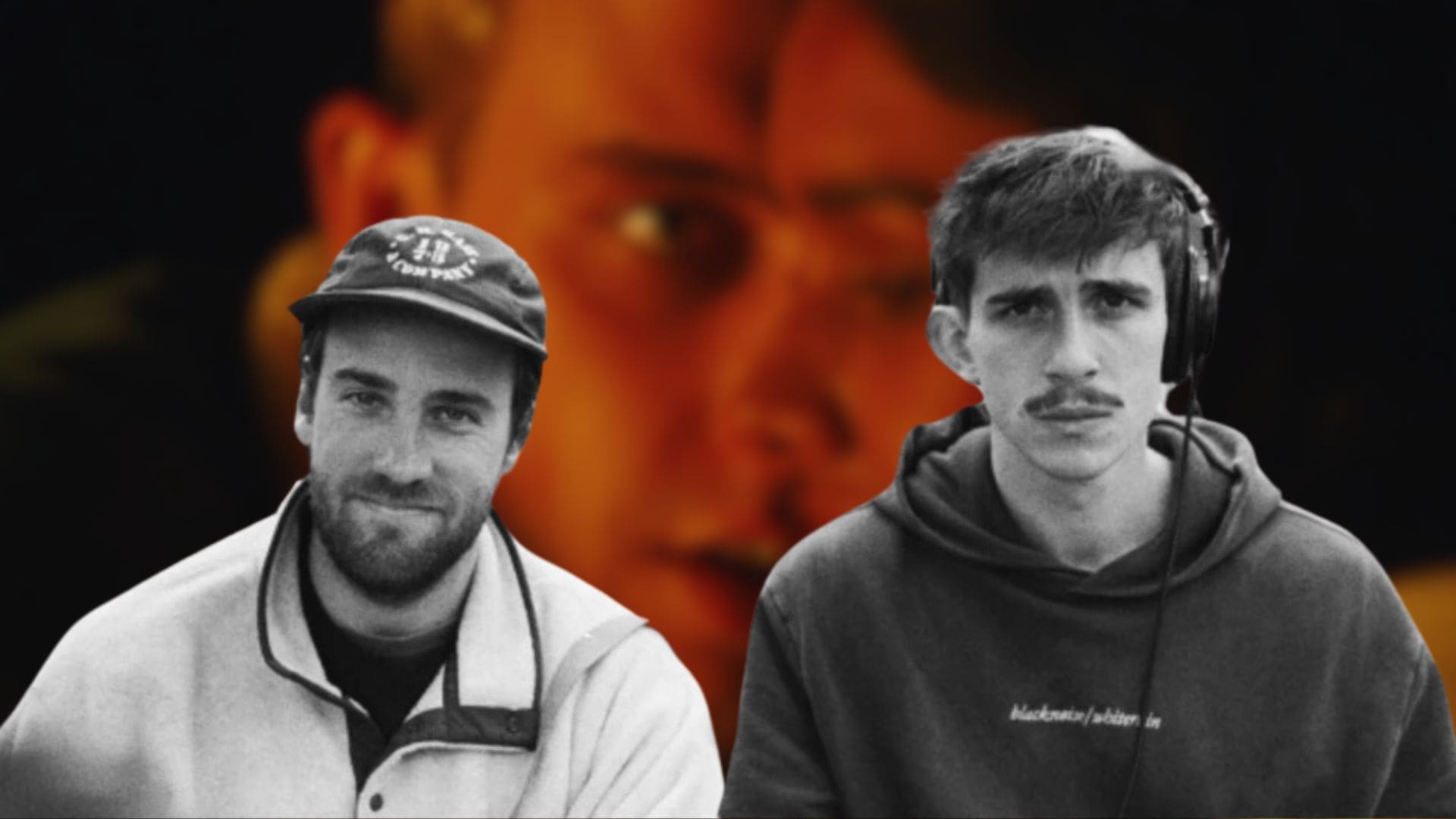
Interview with “Birdeater” Co-Writers/Co-Directors, Jim Weir and Jack Clark


Hosted by
KT & Oti
Show Notes
Jack Clark and Jim Weir make their feature directorial debut with Birdeater.
A nervous bride-to-be is invited to her own fiancé’s bucks party, but when uncomfortable details about their relationship are exposed, the night takes a feral turn.
Birdeater is in select Australian cinemas on July 18.
This interview is audio only. For other video interviews check out our youtube playlist.
—
Summary
In the ever-evolving world of cinema, certain films stand out not just for their narrative, but for the passion and creativity that fuel their creation. One such film is “Birdeater,” and its journey from conception to the big screen is nothing short of inspiring. Directed by Jack Clark and Jim Weir, “Bird Eater” is a thrilling exploration of relationships, societal norms, and the raw underbelly of Australian life. Recently, we had the pleasure of discussing this cinematic masterpiece with the directors themselves on the For Your Reference Podcast.
A Glimpse into ‘Birdeater’
“Birdeater” isn’t just any debut feature—it’s an intense narrative that takes the audience on a wild ride. The film revolves around a nervous bride-to-be invited to her fiancé’s box party, only to have the night turn feral as uncomfortable truths about their relationship come to the surface. This thought-provoking storyline is set against the vibrant backdrop of Australian culture, with the film hitting cinemas on July 18.
The Filmmakers’ Journey
During the podcast, both directors reflected on their unique paths to filmmaking. For Jack Clark, the love for cinema began as a passive interest that grew into a passionate pursuit during high school. He reminisced about his initial endeavors in filmmaking, noting how school assignments quickly evolved into a series of short films.
Jim Weir, on the other hand, shared a similar yet distinct journey. From a young age, he was captivated by the magic of movies, often hosting film nights for family and friends and ensuring they remained engrossed in the film’s narrative. This early fascination with storytelling has evidently translated into his career today.
Collaboration with Breathless Films
“Bird Eater” is part of a unique initiative by Breathless Films, a production company aiming to revolutionize independent movie-making in Australia. Jim Weir explained how Breathless Films’ model of producing five micro-budgetfeatures allowed them to bypass the traditional hurdles faced by indie filmmakers. The directors were able to focus on creating the film they envisioned without the paralyzing scrutiny of seeking state funding approvals.
The Festival Circuit
The film’s journey from festival screenings to broader theatrical release has been rapid and exhilarating. Jack shared insights about their experiences at various film festivals, including the Sydney Film Festival and international screens. Despite initial anxieties about the film’s reception, especially its unique brand of humor, the directors were heartened to see audiences, both local and international, resonate with “Bird Eater.”
Exploring Themes and Tones
“Bird Eater” delves deep into themes of masculinity and relationships. The directors elaborated on their intent to portray the complexities of these themes through a blend of tension and humor. Comparing their work to the Danish film “Festen,” they highlighted their aspiration to balance farcical elements with intense, uncomfortable moments.
In an intriguing editing process, Jack and Jim, along with their editor Ben Anderson, worked on separate acts of the film initially. This approach led to an episodic feel, ensuring the tone remained dynamic and engaging throughout the movie.
Final Thoughts and Recommendations
For those intrigued by the themes and storytelling of “Birdeater,” Jack and Jim have a few cinematic recommendations. They suggest a double feature alongside Thomas Vinterberg’s “Another Round,” Ruben Ostlund’s “Force Majeure,” and Robert Altman’s “Nashville.” Each of these films offers a unique narrative style and thematic resonance that complements the experience of “Bird Eater.”
Conclusion
The journey of “Birdeater” from a creative concept to a criticallyacclaimed film is a testament to Jack Clark and Jim Weir’s dedication and vision. Their insights into the filmmaking process, the challenges faced, and the unique collaborative efforts with Breathless Films provide a fascinating behind-the-scenes look. As we anticipate the film’s release, their stories remind us of the power of passion and masculinity.
Episode Details
- Duration
- 0:00
- Released
- July 16, 2024
- Category
- Interview
- Hosts


Transcript
Transcript (2,604 words)
Full transcript of Interview with “Birdeater” Co-Writers/Co-Directors, Jim Weir and Jack Clark.
KT: Jack Clark, Jim Weir make their feature directorial debut with Birdeater. A nervous bride to be is invited to her fiancé's bucks party, but when uncomfortable details about their relationship are exposed, the night takes a feral turn. It's very Australian to have feral in there, but yes. Birdeater is in Australian cinemas on July 18. Jack and Jim, thank you so much, and welcome to the For Your Reference Podcast. so much.
Jack: Yeah. Thanks for having us. Yeah. Great to be here.
KT: Well, thank you so much for, um, taking the time. I know you're busy boys traveling the world and all that sort of thing. Um, but congratulations on the award winning Birdeater, best Australian narrative feature at last year's Sydney Film Festival. It must be a really exciting time for you guys.
Jack: It is. I mean, that was it. Yeah. The year's gone fast. I mean, it can take a while sometimes for an indie film to go from the festival to wider theatrical release, but, um, no, we're thankful to, to have one at all. I mean, it's a, yeah, it's a privilege.
KT: well, it's an exciting time for Australian cinema and also for independent Australian cinema. We most recently interviewed the Cairnes brothers for Late Night with the Devil, which was also at last year's Sydney Film Festival, as well as the Philippou brothers for Talk to Me. And I guess to Breathless Films, I had the opportunity to chat to Ulysses Oliver for Love Road, which was also about relationships.
KT: Um, and also Tennyson with Amin Palangi. Um, yeah. How was it working with Breathless Films? And I guess, you know, talking about like hinting on, you know, trying to get a film made and that sort of thing.
Jim: Yeah, well, for those who don't know, Breathless Film, uh, Breathless, yeah, they were this new production company that wanted to start a new model of making independent features here in Australia.
Jim: Um, and they started off with a slate of five micro budget features that they wanted to produce over the course of a year. So we were one of those five films. And the music meant that. Um, you know, we had this idea for a feature and we were just kind of immediately given the go ahead to make it, which is really rare as a young filmmaker in Australia.
Jim: So we feel very lucky that we were part of their slate. Um, but yeah, no, it was cool. I mean, it meant we didn't really have. idea paralysis, um, when trying to think of like what kind of movie, you know, the state funding bodies would like approve for financing. It meant that we got to make the movie that we wanted to make and we got to, we got to make it relatively quickly as well.
KT: Nice. And I guess in regards to, you know, being filmmakers and actually being in the screenings, whether it's Sydney Film Festival or MIFF last year, and also shout outs to Alexi because most recently you guys had the screening at the Opera House. That's very ooh la la.
Jim: Yeah, it was very ooh la la.
KT: How was it? How was it being in these screenings and feeling the reactions?
Jack: It's been good. I mean, it was, um, we made this film for a local audience. So it's nice to see, you know, Sydneysiders coming to support the film, but we, we screened overseas in America and we were expecting a different response. We were expecting the comedy not to work as well.
Jack: We were expecting it to, uh, maybe fall on deaf ears, but it was nice to see. similar responses, but also they kind of took it onto themselves to interpret their own things from the film, like Q&A. A lot of people had a lot to say about their own, um, history and troubled relationships. It felt like it really struck a chord. So it was nice to see the way that it sort of went beyond us as well. And that. You know, international audiences can find things in it as well.
KT: I can only imagine what it would be like to like, it must be very nerve wracking be sitting there and be like, this is supposed to be funny. You're supposed to be laughing.
Jack: Yeah. Yeah. No, it is nerve wracking, but, but it's, we've learned to kind of let it do its own thing. Every audience is slightly different. So you can't hold. Hold them to account too much.
KT: Yeah, absolutely. Um, and it's been so cool getting to know you guys. So like researching and you know, watching interviews and reading interviews.
KT: But I would like to get to know the both of you a little bit more. You know, um, you've talked about going to film school and also like getting this film made. But I guess, where did the love for film come from? come from, um, and how do you find yourself in like trying to tell these sort of stories and no pressure, but there was an interview where you said you were working on a film for like this current year, but like, how does the, where does the love for film come?
KT: Is it like, uh, video stores? Is it going to the cinema? Like how was it in your sort of film loving journeys?
Jim: As a young kid, I had a fairly passive interest in film. It wasn't until year seven, first semester of year seven, that we had an assignment to make a short film. And I wrote, directed, starred and edited a short film, um, this detective crime story. Um, and I really fell in love with the like filmmaking process then. And then any kind of project I was given at school, if you could make it into a short film, um, I would do a short film. So I ended up making, you know, a dozen short films in high school, um, and really fell in love with the process and then kind of came to, um, be, you know, an avid film watcher as a result of that.
Jim: Um, but yeah, really the process I got super into.
KT: You're like honing your voice. You don't want to be influenced.
Jim: Yeah.
Jack: Yeah. I used to, I've always been into films and I think. It was sort of the first job I wanted to do when I realized you, you could do it as a legitimate job that I remember the day I kind of learned that people actually do this as a career.
Jack: Yeah. And I hadn't really considered that before, but, um, I do, I would always host, um, like the wings in my house when I was younger, make my family and friends watch movies that I'd like. And I would, I would make sure they didn't talk. I was very, very strict and I would.
KT: No talking, no snacks, just, just,
Jack: just focus on the thing. You can't get up. And this is at like quite a young age. And I was very, very pedantic about, you know, making sure they, they took in the moments that I really liked. Um, and I think that was just me wanting to kind of enforce a feeling onto them through a movie. And I think that that's essentially the job that I'm in now. Yeah,
KT: that's okay. Currently at the moment. I just want to talk about Denzel and Gladiator. Like that's all I want to focus on.
Jack: Actually, that's really exciting. I didn't know you was in it. Now I want to say it actually. I wasn't that excited before, but now I'm excited.
KT: It's, it's the thrill. It's the thrill of cinema. Um, but coming back to Birdeater, um, in regards to the tone, because obviously we're not going to spoil anything about the film, but it really goes balls to the wall. It really allows, like, it's just all hanging out there. By the end of the film, if you'll pardon the pun, but the tone was really interesting watching it, you know, at some sort of point simmering, just going like just straight full metal, um, at the end.
KT: I want to know from like a filmmaking point of view, how was it, or even on the cutting room floor, like how was it making sure that the tone was matching where you wanted it to be and where the audience, where you wanted them to be?
Jim: What started from probably a character place in that you wanted to make? We wanted to make something tense. Um, but we know that Australian men can't talk about serious issues without making jokes. When you comedy was kind of inbuilt into the film from the very beginning. Um, and we don't really think they're opposite ends of the spectrum. We think scenes can be really funny and also really intense and uncomfortable at the same time.
Jim: Uh, and we were really excited about the potential of. splitting an audience, um, with moments of humor that maybe half the audience is laughing at, and maybe the other half is like deeply uncomfortable that the people they're in the audience with are laughing. Um, yeah, we're largely inspired by this, um, Danish movie called Festen, which was like the first Dogme movie in the nineties. And they, um, kind of pivot between, um, farce and tension constantly. And it makes for like the most amazing watch.
Jack: Well, we also did something in the edit as well, which is that when we were first cutting the film, we, because we couldn't cut it on the same computer yet. And we had, we had an editor, Ben Anderson as well, but to, or in order to get things moving, we did the assembly cut, which is like the first cut of the film separately.
Jack: So we each took an act of the film. And we edited it at home ourselves. And then we made one big sort of combined Frankenstein of the movie, which meant that the tone had really interesting, um, it would go through interesting transformations as the other editors sort of took over, but we tried to preserve that as well, once we moved the whole thing out so that it had this kind of episodic feel and that the tone was constantly keeping us on our toes. Yeah. It meant, yeah, it was an interesting way to work.
KT: Yeah, I can only imagine how like, how interesting, because like, are we going to get like a Jack cut, like a Jim cut, like a Snyder cut? We're just going to get like different variations of like the Birdeater and that sort of thing. Yeah. It's such a great cast.
KT: Um, like I think, and also as a woman, because I was reading, um, reviews, I don't know if you're, uh, privy to Letterboxd, but I was reading reviews and I was like, Oh, I guess there are things like as a Like, understand in a way that hit for men as well. And I don't think I have enough men in my life, or at least that they won't invite me to bucks nights. Cause I was like, Oh, okay. It's nice to know that this is what's happening.
Jack: Yeah. Yeah. You mean in terms of you didn't know that this is sort of what went, went, went out and went. Like what people talked about or what do you mean?
KT: I think it was more just like the nuances of like the exploration of masculinity in, in ways of like, even the way that like sort of behaviors would like not be addressed or it would come off differently, like to the woman characters as well. I'm like, Oh, this is cool.
Jim: Yeah. Yeah. We, yeah, we had this idea that if, um, you can put a group of men together, they, they have this certain way of behaving and we're very interested in what happens if there's. just a woman there to witness it? Like, does their behavior change? Um, or does it stay the same and just like getting those different reactions to, um, you know, the same behavior?
KT: Um, and I guess it was interesting to see like the approach and the exploration of themes. was there a decision on like how deep that you wanted to go or how, how you wanted to keep it sort of nuanced? Or was it just, that's just how it played out?
Jack: It's a constant decision. I mean, you never know how obvious things are going to be to an audience. Cause you know, you have conversations about theme yourselves before the film is made, and then you shoot the film and people will ask what a certain scene.
Jack: Means, but you think the subtext is really obvious and then it's sort of a matter of like cutting lines, introducing lines or making sure that people know just enough to make up their own minds or be able to sense that there's subtext without necessarily telling them what the subtext is. So, because you never be always telling an audience exactly what they're supposed to be taking from a scene, as long as they sense that there's something underneath it, then if it's close enough to the surface, they'll kind of dig for it themselves.
Jack: But if it's super far away, then we'll just assume that there's nothing really going on. And it's, um, materialistic, but, but yeah, it's a constant balance of, of how, how close to the surface you want that sort of thematic layer.
KT: I think it was really cool. Like it doesn't need to pronounce like, we're man doing man things. Like it was like, it was just going through and exploring the characters through the story. But I want to thank you guys so much for your time and wrap up with our final question. We finished our reviews with a recommendation. So what would you pair with Birdeater As a double feature.
Jack: Mm. Ooh. Ooh.
KT: If I can throw one in there.
Jack: Oh yeah, yeah.
KT: Um, I was thinking of Mads Mikkelsen's Another Round.
Jack: Yeah. Yeah,
Jim: that's a great one. Yeah. Have you seen, uh, also, well, that's, that's the same director Thomas Vinterberg as Oh, there you go. A Danish movie. We were talking about Festen, The Celebration. Um,
KT: we did a thing. We did a connection. We did a reference. Yeah.
Jim: That's probably a good recommendation. Anything else?
Jack: I was gonna say Force Majeure, if anybody hasn't seen that yet, it's a movie that came out five years ago or something. Have you heard of this? It's the same, Ruben Ostlund, the director who did Triangle of Sadness, he made two movies before that, he made a movie called Force Majeure, which is about a, um, Man sort of coming under scrutiny, but from his wife and his family about an act that he does.
Jack: And the way he kind of spirals out by just having like a new set of eyes on him. Um, so that'd be a fun double feature, I think.
Jim: Yeah. And then if you're wanting a movie to scratch more of like the ensemble itch, uh, Nashville is kind of our favorite ensemble movie. Robert Altman has three or four wonderful ensemble films, but Nashville's probably his greatest.
KT: What a scrumptious selection. Thank you so much for your time, guys.
Jim: Nice to meet you, KT. It's been great.
KT: Nice to meet you.
Related on FYR
Discussion
Loading comments...