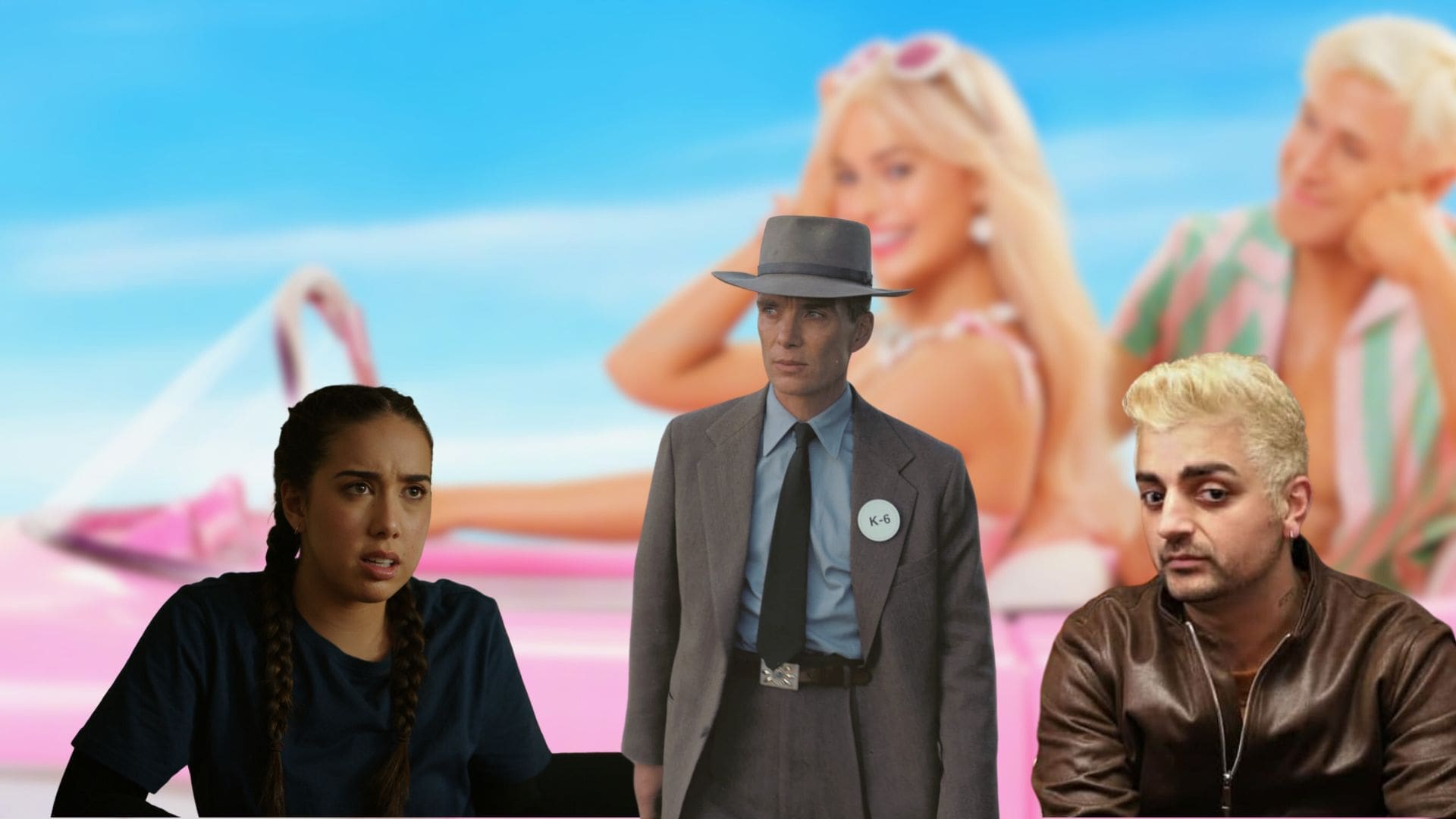
Barbenheimer, Streets of Colour, After She Died & Insidious: The Red Door


Hosted by
KT & Oti
Show Notes
In this week’s Reference Max we review Barbie Oppenheimer, Streets of Colour, After She Died & Insidious: The Red Door.
Check out:
Ronnie Riskalla’s Streets of Colour
Jack Dignan’s After She Died
Tomato Meter
 KT
"Race, culture, sexuality and other parts of identity were left in its original packaging lowering the overall impact and highlighting the heavy handed focus on the gender binary.Posted Aug 01, 2023"
KT"Oppenheimer is on the cusp of changing the world, mostly for the worst, but barely focuses on the moral quandary of this. All the Nolan beats but were missing the snarky Sorkin dialogue of A Few Good Men and smooth Tarantino style of Inglourious Basterds.Posted Aug 01, 2023"
KT"Ronnie has a distinct voice and Streets of Colour is a complicated love letter to his experiences. This film centres on racism and is able to explore many layers however, in some instances, the portrayal of some characters succumbed to that very theme.Posted Aug 01, 2023"
 Oti
"Streets of Colour shifts from typical Australian cinema, presenting Ronnie's unique take on racism. Yet, it occasionally stumbles into familiar tropes.Posted Aug 01, 2023"
KT"Jack Dignan enters the mortal realm with this exciting, fresh horror film After She Died. Love the innovative shots and use of connection between the core characters that a lot of us can resonate with.Posted Aug 01, 2023"
Oti"After She Died captivates with its compelling concept, exploring grief's depths and the lengths one might traverse to maintain a lost bond, regardless of fallout.Posted Aug 01, 2023"
KT"Patrick Wilson lands some cool shots and Hiam Abass is a welcome reprieve to predictable storylines and tropes. There is a tangible gap in what might have been achieved if the red door opened through expectations.Posted Aug 01, 2023"
Oti"Akin to Child's Play 3, Insidious: The Red Door sees grown-up protagonists facing old fears. Despite some flat moments, it's an interesting final chapter.Posted Aug 01, 2023"
Episode Details
- Duration
- 0:00
- Released
- August 1, 2023
- Category
- Episode
- Hosts
Transcript
Transcript (6,140 words)
Full transcript of Barbenheimer, Streets of Colour, After She Died & Insidious: The Red Door.
KT: It's another week in the For Your Reference household and hopefully not many others. but this will be the first time we are doing a combined review, full review sort of format, with the combined WGA SAG-AFTRA strike. The For Your Reference household stands in full solidarity. Our black, brown indigenous creatives have been and will continue to be at the brunt of shady studio cuts. Um, so friends and lovers join us in the journey. Join us in the solidarity. Film critics are not a part of the strike, even though we are in solidarity. So we will still be reviewing. It's going to get nasty. Are you sitting on your barben, ty? It's about to go off. Let's get on with the show.
KT: Hi, ho, welcome back to the For Your Reference podcast. You got your host, KT.
Oti: And Oti.
KT: It's a very exciting time, friends and lovers. we have some big names. We also have some gorgeous Indies that we're going to get to, and I know it's been some time and I know everyone's ready to hear the muy caliente takes and we are about to Barbenheim, my friends and lovers.
Oti: Oh, you did some BBC clips up in this, eh?
KT: I think you could say. I did. I did. I really did. Love and Splooshies to Maria Lewis, to Ellie Duncan and the team at BBC, as well as Laquesa, the host. If you will be so nasty and so splooshy, Oti, may you insert a clip?
Oti: Wow, that was amazing.
KT: Yeah, you think so?
Oti: Yeah, you killed it. You killed it.
KT: I, I think it's interesting because obviously we'll get into the discussion about Barbenheimer. and I guess on surface it could feel disingenuous, but to me there are two separate things. You know, the event watching, the, the spectacle, the sort of discourse around film is one thing. And then evaluating the thing. Film and reviewing and discussing meaningfully the film. They're two different things. So friends and lovers, if you don't understand what that means, go and listen to our Halloween episodes, even our Mortal Kombat episodes as well. Right. Like it's fun to get into the love of watching films.
KT: Right. so I absolutely still stand by my sentiments of, you know. Barbie and Oppenheimer being the best parts of cinema or what makes cinema so great. I, I guess, yes, potentially it can be a marketing ploy as well. however, there is a lot of fun in being able to experience something with other people. Um, I will say the, the preview premiere sort of screenings happened at around the time that we were trying to get clarity for film critics. So we actually, Didn't attend the premieres for Barbie and Oppenheimer. but to lead up to that BBC segment, I went and Barbenheimend myself.
Oti: You did.
KT: And I think if you look at Oti's renamed finance folder, he Barbenheimend himself while I was out.
Oti: Wow.
KT: Those incognito searches won't save you Oti.
Oti: huh.
KT: Um, so I've had the opportunity to watch both films. I will evaluate both separately. there has technically been time. Do you have, do you have a potential statement on why you haven't watched it or if you're excited to watch it eventually?
Oti: I don't think, I understand the interest around how Oppenheimer was shot and what people are going to watch it in its full glory. But I'm fine just watching it on telly. I'm a simple man.
Oti: Yeah. As for Barbie, it is what it is. I think I'll, yeah. Watch it on a Sunday afternoon.
KT: Okay. All right. Well, feel free to have a repartee with me, my nasty friend and lover.
Oti: Well,
KT: Um, so let's talk about Barbie. Let's focus on Barbie. I think what I will say before officially speaking about Barbie, I did share earlier today before the release of this episode, I shared our Minx episode. because that was a great example of challenging white feminism.
Oti: Mmm.
KT: So, you know what I'm going to get into, but let's get into my general sort of overview, friends and lovers, because you know, Barbenheimer in particular are so paramount to the discourse of now, I am going to spoil them. I guess we'll decide whether we spoil the other films that are on the docket today. but spoiler, spoiler, spoiler, feminism, feminism. feminism.
Oti: Wow.
KT: off. so yeah, so friends and lovers, I guess that's an indication of whether you stay or not. Race, culture, sexuality, and other parts of identity were left in its original packaging, lowering the overall impact and highlighting the heavy handed focus on the gender binary.
Oti: Wow. Wow. That's deep. I was left in its packaging just so that it could retain their value. NRFB. Never remove from box.
KT: You fucking nerd. You, I, I think, honestly, if we can be honest and if we can be real, as we always are, our Oti. I feel like you'll, you'll slightly pleased that I didn't like Barbie.
Oti: No!
KT: Because now you feel like you never have to watch it.
Oti: Or maybe. No, but I think I'm intrigued. I was intrigued to watch it before I had the, the reviews. I don't think that would sway me either way. I'm interested to see how Issa Rae performs in this. Yeah, this
KT: to Issa's film.
Oti: It is President Barbie's film. And that's my gateway.
KT: I guess the initial, if I'm going a softball, if we're going to Soft insertion, if you're nasty, it reminded me of M3GAN, you know, it was really anticipated, especially for us in particular to go and watch M3GAN. and it was hindered by its rating. I feel like that's what we also get with Barbie as well. it tries to dive into waters that it cannot tread. And I feel like it's very convenient because of the rating that perhaps that's why it wasn't explored. I don't care for white feminism stretching into every experience.
Oti: Some might argue that saying white feminism is sort of, uh, redundant.
KT: when you say feminism, you imagine, Prigger in Minx. Exactly. But that's exactly it. And I think I wouldn't say there's a complicitness, but it's like, if we know when people say feminism, they mean white women, then we're all doing a disservice to ourselves. Because if we're not talking about black trans women, if we're not talking about cis brown women, then what are we really doing? And you know, I also mentioned sexuality in there because there was a gorgeous trans actor in the film as well, but they didn't necessarily mention like sexuality. It was like everyone was straight Everyone was a man or a lady and they were straight. What's the point, what's the point of this film?
KT: Why are we, why are we reducing ourselves to the gender binary that never made sense anyway? So, so I guess if we get into the film, the qualms that I had was they wanted to be on this soapbox and I'll talk about America Ferrera in a second. I love her. Personally, however, she was, she was really becoming like top two final level boss, white woman in this film. And she's not white. And that's the fucking problem you see. And we even talked about this in Talk to Me as well. Right. I wouldn't say Issa navigated in, in, in, in white ways. However, it definitely became that tick box. Oh, you're, you're writing a film. You've got to make the president black. So you're progressive.
KT: Ayo, 24.
KT: I was just making sure you were still
Oti: You, you, uh, you about to be kicked out of this podcast. David Palmer is an institution. He opened the gateway for Barack Obama. Come on now. Put some respect on 24.
KT: I was just making sure you were listening to the women talking about the women film. That's all . but it's like, so you wanna, you wanna talk about gender? Cool. You want to restrict gender to the binary gross, but cool. Right? So you're like men are bad, men are bad, men are bad without acknowledging race, without acknowledging culture, without acknowledging, without acknowledging like ability, just nothing. Just like men are bad. Okay, cool. Greta Gerwig Mackie. Fine. Let's get rid of the men. Oh, we still have fucking problems. Oh, there's a hierarchy within women and you're at the fucking top of it. Fuck off. Fuck off. And you're speaking on behalf of everyone.
Oti: Wow.
KT: Like I'll fuck me and I'll fuck you too. Fuck off. It was so fucking frustrating because like the premise of it is so surface level, this bubblegum sparkly aesthetic feminism. Or white feminism that you want to call it is really a way to dodge that plastic, perfect sort of Hollywood, right? Because what we thought Barbie was going to be was a satire, right? It was going to be a bitey sort of satire, maybe not to the level of like Promising Young Woman in regards to, you know, the themes that were explored there, but I guess in the sort of revenge war path that Promising Young Woman had.
KT: Right. I thought we were going to get some sort of commentary, some sort of satire. you know, one of my first sort of thoughts while we were, uh, like while I was watching this film was, is this really going to do, uh, Ariana DeBose the thing, or is it just the thing, you know, cause by being the thing, you're not doing anything, fuck off. This is Triangle of Sadness for dolly babies.
Oti: Wow, you have such high expectations of what this movie
KT: Don't, no, no, no, no, no, no, no. Don't crowd white women ideals in all of your seemingly diverse dolls that all say the same fucking thing. There was a whole, like, there was so many lines of dialogue about Margot Robbie having cellulite because God forbid someone that looks so gorgeous and perfect, like her can have cellulite. And then she's like, what defiled for the rest of her life. Fuck off. I'm sick of this. And you know what the problem is? The film set up the premise to be that way. So bleeding heart. So on this soapbox, no one asked bro, put on a pretty dress and fuck off.
Oti: Jeez. All right.
KT: No, but I'm saying if it just played to the aesthetic, if it just had a lot of fun, like these Ken man babies are just a lot of fun, cool. But it turned into Ryan Gosling's Ken character going to the real world and realizing, Oh, men are actually more powerful. And then he tries to inject that toxic masculinity into the Barbie world.
Oti: Wow.
KT: I don't get it. And it's the state of film criticism as well. I'm calling everyone out. You said 24, fuck, fuck your institution. Fuck your film criticism. Fuck your long film marketing ploy as an ad. Fuck off.
Oti: I feel like you're
KT: like we're in Deadwood. I'm reaching my fuck count, Oti.
Oti: Wow. Wow. Man. Tupac had nothing on you. Hit him up. Over, over Barbie, eh? all right. So
KT: I make you speechless?
Oti: I'm just trying to see how I can. So let, let, let's talk about how was, how was the, how was the dialogue? How was the show? How are the shots? Anything, anything that was intriguing that you thought, Hey, that's.
KT: Oh, you know how bad the dialogue and how surface plasticky level it was when Barbie left Barbie Land and she went into the real world, she saw construction men and she was like, Oh, we need some like feminine pep. Of course we would go to the construction workers. Okay. We fucking get it. Get lost.
Oti: Okay. I think it's time for Oppenheimer.
KT: don't know. It's like, why have so many different Barbies and Kens but make them all one dimensional. Ken is a man. Yeah, cool. Men are all the problem. You know, that's what I also don't understand as well. Why do you keep talking about gender and you don't even talk about race? How does that even make sense? Because I'm pretty sure there are some Karens in Barbie Land.
Oti: But you had a black president. Racism is solved.
KT: The Black President? Ken. Exactly. But no, honestly, like I'm just sitting here minding my business, right? You're the one that brought this premise here and failed to deliver. And you can blame it on rating. You can blame it on whatever you want, but there's such a disingenuous, no one asks you to do this. And also there was a very Disgusting line in here. And this is also something that I'll say, we talked in, Talk to Me, about you watching while black me watching while Brown, or even, I guess if we're all about sweeping generalizations, watching while non white, there was a line in this.
KT: Film, and I'm also conscious of the fact that America Ferrera is the character that said it, that we're talking about how Barbie Land and the Kens were at war, right? War is a strong word, but it's the biggest conflict that they have in the film. And then you have America Ferrera citing and drawing parallels between the indigenous people in smallpox in the 1500s of Barbie Land and the Kens. Saying that the indigenous people didn't have defenses. Are you for fucking real? Why do we even talk about Gone with the Wind and having to put introductory warning things when you're just going to fucking do it in a 2023 Barbie film about feminism. Yay. But not the indigenous women back then. Right.
KT: Right. Yeah. Wow. No, but really, for what reason would that line need to be there? And that just shows how fucking, how fucking white it was, that they felt they needed to draw. This is how severe the situation is. It was indulgent. It was preachy. And America Ferrera also had a whole speech saying, Oh, you want to be thin, but you can't say you're thin. You have to say you're healthy, but you can't, you can't want to be thin and blah, blah, blah. And it's like, fuck off. All of you fucking skinny anyway, shut up. But you know what I'm saying,
Oti: I hear what you, I hear what you say. I hear what you're saying.
KT: how this is so edgy. And this is a critique on the, on the plastic perfection of Hollywood, but you're literally that Helen Mirren had a narration within the film because, you know, Margot Robbie's stereotypical Barbie was having a complex. And then Helen Mirren narrated. And obviously it was very funny to the audience being like, Oh, they probably shouldn't have hired Margot Robbie. If they wanted to highlight how. Unperfect. She looked really get lost! Miss me with that mess. Are you for real?
Oti: Well, I don't know what to add to that.
KT: Yeah, well, there you go. I don't think I have, no, I think if you, if you try to introduce something that is trying to say a lot and you don't deliver it and you just want to talk about gender and you don't want to address race or anything like that, then royally you can fuck off and film criticism will not be dead as long as I'm
Oti: Oppenheimer now.
KT: Yeah, thank you, Segue King.
Oti: Mm.
KT: this was interesting because how I felt about the film was me respecting the film and realizing that there were themes that just weren't for me, as opposed to the film not delivering on what it was promising to deliver, if that makes sense. So, Oppenheimer is on the cusp of changing the world, mostly for the worst, but barely focuses on the moral quandary of this. It had all the Nolan beats people have come to love, but were missing the snarky Sorkin dialogue of A Few Good Men and smooth Tarantino style of Inglourious Basterds.
Oti: Woo! Yeah. Did they even get some Sorkin
KT: The dialogue wasn't great, which will come to, and I was chatting to one of the guys at work. I wouldn't necessarily call him a film bro, but he does lean to a lot of film bro y sort of films. but I was talking to him about Oppenheimer and this was before I had realized I was actually going to Barbenheimer myself. and he was talking about how excited he was to watch Oppenheimer. And I'm like, Oh yeah, yeah. just don't expect any good dialogue. And he's like, what are you talking about? And I'm like, Nolan's not learned known for like great dialogue. And I think he didn't even realize that that was like, it was a given. And then he was like, how about Batman? And I was like, first off, I rise from the dark shadows. not great.
Oti: But
KT: even then, no, but even then that's part of an IP. That's not necessarily like Nolan beats as, as I would classify it anyway. the dialogue wasn't great in the film. And I think also what I, what I would also, I guess. Offer is I'm not necessarily one for war films. So I acknowledge that that's something that's, that's a barrier for me in general, if there's anything about war films, and I also need dialogue. Like I always, I always hold on to really great sort of dialogue. So this film didn't necessarily have that it did have, sex scenes, which I believe was the first sort of introduction of sex scenes in a Nolan film.
Oti: Not really! Tell me more!
KT: No, you don't need to know more.
KT: I don't know. I just like, you know, we're beautiful, sensual, nasty people, but usually the sex scene should relate to the narrative at some point.
Oti: So was it, did it just feel gratuitous?
KT: It wasn't even gratuitous. You can't even blame it for that. It was, I don't know. It was, it was just there. It was a Vanilla Swirl on a Wednesday. I don't know.
KT: Vanilla Swirl flavour. So, yeah, three hours not feeling it, fam. but if we ignore the long run time... It's a gorgeous film, albeit about a terrible, terrible device, a life changing device for the worst. but even if we just focus on like the storytelling of Oppenheimer, which it's interesting because for some people, if it's shot really well, that's the end of the story, but not for me, if you'll pardon the pun, the story is everything for me. I wish there was more of a focus on the moral quandary, right? Like I don't know like it wasn't as if it was just a normal film It was about the turning of a corner of something that we can never come back it
Oti: was no sort of reflection at all?
KT: No, there was a character that tentatively had a bit of a quandary about it But I don't know for something that is like, it just, it just didn't, it didn't balance the heaviness in which it ushers into the world, I guess is what I'm trying to say. again, the dialogue wasn't really great. he was, he was, you know, he was slipping and sliding. philanderer. But I don't think anyone really cares about that respectfully, unless you're like the wife or anything. No one talks about the great inventors of the world and be like, Oh, they were slipping out of their marriage.
KT: Like no one, you know what I mean? Like that's, so it was interesting that that was something that. Was focused on in the film, but also for a film about like creating a bomb and explosions, there wasn't a lot of that, which maybe was an artistic sort of choice. There was a way of visualizing that Oppenheimer, like the way that he, his mind would work. I think the way they described him was he wasn't necessarily like, he was really good at theorizing and bringing people together, and ideas and that sort of thing. So the way they visualize that was very interesting. but if we're talking about like bing, bang, boom sort of moments, there wasn't a lot of that, which is fine because that's not necessarily what I come to watch the film for anyway, but if a lot of it is dialogue driven, which it is, it's weird that there wasn't a lot about the moral quandary because then what are we talking about, my guy?
Oti: Wow, so how was the sort of pacing with the three hours?
KT: It did that Nolan thing where it had like multiple timelines and they were all explaining things. I think it was supposed to be like a deposition type thing and they kept cutting back and forth in time.
Oti: Right.
KT: Yeah, and then there was like this whole moment with him and Einstein and I'm like, well, I don't know. I just, it was already hard for me to engage, I think is what I'm saying. and the, the things that I would usually cling onto, like the moral quandary, storytelling, dialogue. it wasn't necessarily there, but it wasn't, it wasn't trying to over preach or any, if anything, it under preach. But, I definitely appreciated that aspect of There was a really gross line of old white men be old white men ing, when they were talking about where they should, attack in Japan. And, one of the old white men said, he's taking Kyoto off the list because of cultural significance, because that's where him and his wife holiday. Fuck off.
KT: sometimes I feel like they put those lines in for non white people to sit there and feel uncomfortable because for what reason, or is it, or is it, is it for white people to be like, yeah, we're still on top. Like what, for what reason do you need to put these weird lines in? the women were needy and annoying in this film, but that's neither here nor there. I guess we can, we can finish Oppenheimer with something light. do you remember that Key and Peele sketch where Jordan Peele was playing Neil deGrasse Tyson? Yeah, Oppenheimer
KT: was essentially doing that in the film. He was like, Oh, nothing matters. It's all space. Oh man, if it were not for the brilliant Key and Peele sketch beforehand, I was like, that's a great way to get out of your cheating
Oti: You are getting your comedy from something else.
KT: And I just wrote, so being a player is enlightenment.
Oti: Hmm
KT: Well, let's move on. do you want to hop on the mic Oti?
Oti: Oh,
KT: You want to tussle and rumble in my ring?
Oti: Well,
KT: Well, let's get into Streets of Colour. thank you so much to Ronnie as well as Yolandi, for giving us access to the screening. It has been very busy, but hopefully the premiere night. For Streets of Colour, went well as well, but let's get into our thoughts on Streets of Colour. What I will say, friends and lovers, Ronnie is a local filmmaker and this film is set in Mount Druitt. And if you're from Western Sydney, if you're from the proverbial area, you know what that means. I was a Jason in the two, one, four, right. but take it away. Streets of Colour, take
Oti: Streets of Colour shifts from typical Australian cinema, presenting Ronnie's unique take on racism. Yet, it occasionally stumbles into familiar tropes.
KT: Ooh, okay.
Oti: So, a lot of context and a lot of background was gotten from you, because I didn't know much about Mount Druitt.
KT: And you avoid Western Sydney as much as possible. Ah! You're the one that crosses the street,
Oti: eh? Oh, wow.
KT: eh?
Oti: but I think the biggest intrigue for me was seeing sort of the different shades of people. We don't really get that, especially for Australian cinema.
Oti: the storyline, I think it started off quite strong. it, it, I bought into the characters, I'm into the relationships, but that sort of changed halfway through where it felt okay. So I thought we'll, you know, with the Streets of Colour and getting this sort of perspective, I was expecting something that wasn't as tropey for black people. Yeah. And.
KT: It was interesting because I, I feel like the black characters were treated the worst in this film. And was about racism.
Oti: Like, yeah, that was sort of through my lens. So it felt a bit weird, but overall an interesting take.
KT: Well, I'm picking up what you're putting down. Ronnie has a distinct voice and Streets of Colour is a complicated love letter to his experiences. This film centres on racism and is able to explore many layers. However, in some instances, the portrayal of some characters succumbed to that very theme. Which is pretty much what you were saying as well. something that I would also say as well, there weren't many brown people in this film. And when I say brown, I mean Pasifika. You, even without trying, I'm not even talking about characters, even without trying, you will see Islanders everywhere in Mount Druitt.
KT: So I, I'm not sure, maybe there was a mean Kai somewhere else and that's where all my Islanders were. cause it was like really racist white people, very nice white people, Habibis and some black people. And I'm like, where's my people? I'm like,
KT: I think, I think the best parts of Streets of Colour, uh, the ones that. Note to the area, and speak to personal experiences, but personally for me, it was hard to, I guess, connect and resonate when I feel like mine and a lot of other people's experiences didn't necessarily overlap with that. I definitely don't want to spoil the film because if you do have a chance to watch it, strongly recommend, but like, I think of films like Boyz n the Hood, for example, and I feel like there were moments that, you know, like as a filmmaker, I imagine that there are things that you want to say, this sort of messaging that you want to be able to instill into the film.
KT: Right. And there are ways to explore that, whether it's through, cinematography, whether it's through dialogue, whether it's through character interactions and that sort of thing, there were definitely some sort of, messaging, in Streets of Colour, however, the way in which it was. Delivered in the film, again, it's not to say that it's not, accurate, but in my experiences, it didn't make sense. And what I mean by that is, you know, there's a moment where you have the three friends, the three characters, and I believe they're just out of high school. They're potentially smoking in a car in a parking lot, late at night, right? And they start talking about their futures or their lack of prospects for a future, which, you know, that that's absolutely fine.
KT: But the way that the, the way that the dialogue was actually explored was the main character was saying something to the effect of, because we live in a lower socioeconomic sort of area. And the only thing I would say to that is at 17, 18, 19, I was the nerdiest fucking Tongan Pacific Islander ever. Right. But even I didn't talk like that.
Oti: Bruh. Education has changed.
KT: It was like Coach Carter or some shit. I was waiting for Faith Evans and Twista to tell me to be hopeful.
Oti: Wow. yeah, uh, definitely interesting to just transfer sort of the lives of the characters. I found myself wanting more from it and expecting sort of more just because it's been, it's from a different sort of lens, uh, and one of the best song as well. What a banger.
KT: Mm hmm. What a way to end the film. So good. Such a great vibe, such a great energy. moving on from one, uh, local independent filmmaker to another, we have After She Died. Jack Dignan enters the mortal realm with this exciting, fresh horror film, After She Died. Love the innovative shots and use of connection between the core characters that a lot of us can resonate with.
Oti: Oh, 100%. For me, After She Died captivates with its compelling concept, exploring grief's depths and the lengths one might traverse to maintain a lost bond, regardless of fallout. Early on in the movie, I thought that I'd sort of figured it out, but I hadn't, on what the movie might give us, but it was sort of interesting to be taken on that journey. And, It felt just
KT: fresh. You
Oti: it felt like a palate cleanser and it could tell a lot of love and effort has been put in.
KT: Yeah, I think this is what I really love. There's something really great about independent horror. and even while watching this, it reminded me of the first Evil Dead, you know, how you can get so creative, how you can get so innovative. It's not about massive budgets. It's what you have available, the skills that you sharpen and how you're able to, I guess, outlay a sort of narrative. So with really creative, innovative filmmaking, as well as a really interesting sort of premise, I'm not entirely sure how much is in the trailer, so I won't spoil a lot of it.
KT: but I did love the aspects of a bilingual sort of, entity. I just thought it was really interesting. I think it's so cool to see what people can create without any sort of, restriction of storytelling of, you know, being able to craft a narrative.
Oti: Oh yeah, a hundred percent. And I think if there's ever a sequel, I'd expect, I'd expect him to incorporate a Vine to follow in
KT: I thought you wanted him to have a base in Kenya or
Oti: keeping true to the Evil Dead franchise, you know, Yeah.
KT: But you know what, what else can we say? that. This film hasn't already gotten, in way of love and also accolades, but it's been so fun to, you know, be able to dabble into local, independent horror also shout outs to Talk to Me as well.
Oti: Oh, yeah.
KT: Well, let's finish off, Oti, with another horror, Insidious: The Red Door.
Oti: Oof.
KT: Woof. They should have called this Patrick Naushka Wilson, the Upskirt of the Wind.
Oti: Upskirt
KT: Mm hmm.
Oti: Akin to Child's Play 3, Insidious: The Red Door sees grown-up protagonists facing old fears. Despite some flat moments, it's an interesting final chapter.
KT: I love the Child's Play reference you film wanker,
Oti: Mm hmm. Because
KT: because no one cared about Andy when he got older.
Oti: Hundred percent. When,
KT: when, when Andy's a little kid, you're like protect at all costs. And once he turns into a pimply teenager, you're like, you're on your own, bro. Grab some pepper spray. You'll be fine. But Oh, as soon as you said that, I'm like, yeah, that makes sense.
Oti: Mm-hmm.
KT: unlike Chucky, I don't know if Insidious can, can find a new life in different tonalities. but yeah, that, that Child's Play, though, I'm definitely picking up on that. Patrick Wilson lands some cool shots, and Hiam Abbass is a welcome reprieve to predictable storylines and tropes. There is a tangible gap in what might have been achieved if the Red Door opened through expectations.
Oti: Oh,
KT: that, that's stupid. Oh well.
Oti: Mm-hmm. Wow. so here, here, here's a thing though, right? Insidious. This hasn't been my biggest sort of franchise. No.
Oti: You know, I've watched it. I thought, you know what? Cool. All right.
Oti: of them. Why not? We're very
Oti: feel like, oh, am I watching The Conjuring? What is this? No, like I felt going into this film that I had so, I had zero expectations going in because I was super intrigued to see how they do it, you know? And I'm like. And unlike Halloween, the final chapter, where a lot of people had issues with how it was, how it was done, I could find reasons around, you know what? It made sense to me.
KT: it your tits!
Oti: Exactly. But with this, it just felt why I asked myself, why? Yeah. A lot. Even the dynamic between Chris and Dalton, I was like, I didn't, I didn't get that at all. Yeah. You know? But
KT: I knew it was going to happen.
Oti: I knew it was going to happen and I remember when we were watching, I think, I think it was the second Insidious. I was like, oh, how ever could I get a black character? And then
KT: yeah, no, actually, actually, actually, I need to call you out
KT: very passionate, but I actually forgot. So I'm glad you brought it up. Cause we had started, we'd run out of time, but we had started watching the Insidious films. I think we got up to two before the actual preview screening. Right. And in the first one, you just felt a little bit spicy and you're like, Oh, I wish I had black people in here. I'm like, no, you don't. No, you don't. Because if you, if they put in black characters, they're going to be acting in these waffly Dalton ways.
Oti: yeah, I, yeah, that answered my question pretty profoundly. But I don't know, like, I love Patrick Wilson. I love how he carries movies.
KT: Uh, he just seems like another variation of Will Arnett.
Oti: It just seems more edgy to me. He feels
KT: Can he voice Sweet Tooth in Twisted Metal?
KT: Talk about that. I hope in some format we can talk about Twisted Metal, but we'll come to that another
Oti: of the movie, it didn't deliver. And I expected them while sitting watching it and thinking, Oh, maybe they'll do it this way. And they didn't.
KT: Shout out Triz because we were able to sit, all of us were sitting together watching the screening together from Smoke and Mirrors. all three of you were very disappointed. I think I had the most, like I had the most fun watching the film, but I think it's also because I didn't have nostalgia attacks. I didn't necessarily plug into the franchise. Cause all of you were very disappointed with the movie.
Oti: Yeah, I, I think rightly so. I think once you have a final chapter of sorts, you expect, if not balls to the wall sort of moments. Mm-hmm, you'd expect the pacing at least to be something of, oh, we actually trying to do a lot with the movie. Mm-hmm. and it just didn't feel like that. It felt like barely had a script and it just dragged Yeah. And the moments in the movie, I was like, Oh man, I was thinking about something else. So when that happens to me, I'm like, okay, this is definitely not working.
Oti: We need to fasten it up. We need to switch it up some way. Just make it a bit more interesting because a lot of these things I felt were covered in the Fast and Serious movie.
KT: Yeah, we're getting like weaker offerings of the
Oti: we did it. But now we're just doing it teabag.
KT: Yeah, we're just reusing the same teabag.
Oti: Oh man, I miss T-Bag from Prison Break.
KT: Well, hold on to this pocket then.
Oti: I will. Yeah.
KT: Well, we started off with, raging white feminism, so I guess ending on a so so white mediocre actor is okay.
Oti: Ah ha, get in the bin.
KT: Thank you, friends and lovers for joining us another week in the For Your Reference household, to satiate the FYR babies. Are you going to watch Barbie and give your thoughts or you think we're done on it in this podcast? I
Oti: Nah, I'm good. I think I've gotten everything I needed from the movie. I can watch the highlight reels when we get to see it. Oh, we might get a composition on YouTube of all the Issa scenes, you know?
KT: The most shocking thing to me wasn't anything that I was saying about Barbie. It was you saying that David Palmer was the reason why we got Barack Obama into presidency.
Oti: It showed people it's possible.
KT: With you, any blackness is possible.
Oti: Fucked.
KT: I love you.
Oti: Love you more.
KT: If you would like to default to factory settings on Twitter and Instagram and Spill, we're on
Oti: @ForYourRefPod. Write us an email at hello@fyrpodcast.com.
KT: We're also on Race Wars, but the Fast and Furious one, podcast. If you'd like to leave a rating and review and we'll see you guys next week.
Oti: See ya! Bye!
Related on FYR
Discussion
Loading comments...