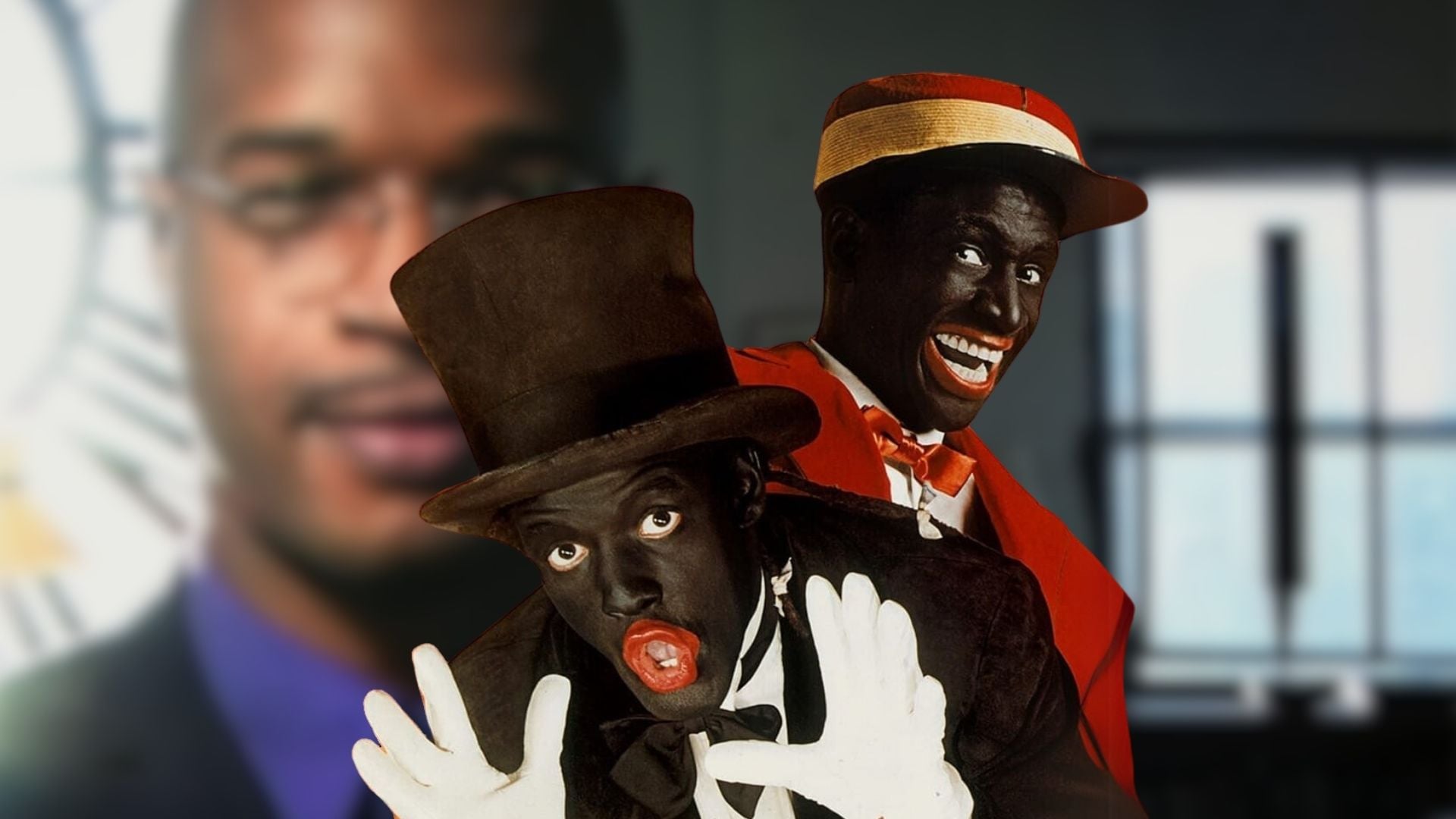
Bamboozled – Turn his TV off


Hosted by
KT & Oti
Show Notes
Welcome to our Reference Degustation where we take you through a month long double dolly celebration of Spike Lee Joints.
Tap dance centre stage into the awards ceremony and get your freak on while hoofin and getting the loot. Turn his TV off with Bamboozled this week.
If you’d like to watch along, we will be covering the below…
Do The Right Thing (1989)
Malcolm X (1992)
Bamboozled (2000)
BlacKkKlansman (2018)
Thanks to patrons and guests for contributing to common and recurring themes we will be incorporating as we review. Check out Dan Mecca’s piece on Spike Lee.
Check out more tasty Reference Degustations…
We also posted coverage for exclusive early access to Sinners Trailer 2 and had our submitted question answered by Ryan Coogler.
—
Summary
Welcome friends and satire lovers to another insightful exploration hosted by the For Your Reference Podcast! With our hosts KT and Oti, we embark on an intense cinematic journey through the prolific world of Spike Lee, spending a month indulging in a double dolly celebration of his films. Today, we delve into one of his most polarizing works, “Bamboozled”. Settle in as we unpack this culturally significant film filled with sharp satire and social commentary.
Spike Lee Month Celebration: A Tribute to Masterful Filmmaking
Spike Lee is a master at weaving art with political history, delivering cultural narratives with precision and impact. His work in “Bamboozled,” shot in digital video for an almost guerrilla feel, offers a gritty and raw portrayal that invites audiences to confront racial issues head-on. From the outset, Spike Lee makes his stylistic intentions clear, captivating viewers with the unmistakable double dolly shot, a signature technique that floats characters into the scene, setting the stage for a narrative steeped in satire.
A Polarizing Exploration of Race and Media
“Bamboozled” plunges deep into the fabric of race and media, evoking reflection through satire. It’s a bold portrayal that challenges viewers to recognize the persistent minstrelsy in modern forms, where black talent is often used as a means to entertain without authentic representation. This theme is visually and thematically reinforced throughout the film, questioning who truly benefits from such art forms and at what cost.
Delacroix’s Complex Characterization
Central to the narrative is Pierre Delacroix, portrayed by Damon Wayans, whose character embodies the tension between personal ambition and cultural integrity. The nuanced portrayal examines the impact of self-hate and societal pressures on identity. Delacroix’s ego-driven transformation unfolds as he navigates his creation—a controversial minstrel show—resulting in a conflicted journey that entangles his desires with moral dilemmas.
Challenging Modern Minstrelsy and Representation
“Bamboozled” remains shockingly relevant, resonating with contemporary conversations about representation. The film’s depiction of minstrelsy echoes today’s predicaments, where diverse representation is often commodified rather than genuinely captured. This exploration is crucial in understanding the subtleties of how media still perpetuates stereotypes, challenging audiences to confront uncomfortable realities.
Provocative Cinematic Techniques
The film’s deliberate use of visual style through stark contrasts in film quality—between impromptu digital captures and refined show productions—speaks volumes. It mirrors the stark reality of how black art is valued differently depending on its compliance with mainstream (white) preferences. This dichotomy encourages reflection on the systemic biases entrenched in entertainment industries.
Concluding Thoughts
Our exploration into “Bamboozled” is a reminder of the power of cinema to provoke dialogue and highlight societal truths. Spike Lee’s film forces a confrontation with historical and ongoing racial dynamics, challenging viewers to engage critically with media portrayals. As KT and Oti share their reactions and insights, they invite us into a broader dialogue on race, identity, and representation—essential themes that remain as pertinent today as ever.
Join us later this week as we continue our Spike Lee journey with a deep dive into “Black Klansman,” and keep an eye out for our upcoming Splooshies Awards! Get nasty friends and lovers. See you soon!
Tomato Meter
 KT
"Bamboozled exists to serve as a reminder that the message will always be raw with Spike Lee and he is the King of Satire.Posted Feb 18, 2025"
 Oti
"Bamboozled starts bold & fearless, delivering a sharp satirical punch. Spike Lee crafts a rightfully polarising, vital commentary on race & media.Posted Feb 18, 2025"
Episode Details
- Duration
- 0:00
- Released
- February 18, 2025
- Category
- Episode
- Hosts
Transcript
Transcript (7,581 words)
Full transcript of Bamboozled – Turn his TV off.
KT: It's another week in the For Your Reference household. It is another delectable 2025 Reference Degustation. And we are at the third course, Oti. We started off with the sumptuous flagship, uh, dish that everyone's talking about, Do the Right Thing. And then we, um, found our all the ways into Denzel Washington's Malcolm X. If you are late to the dinner reservation, how nasty friends and lovers, but this is also the film you deserve. It's Bamboozled, baby. Let's get into the show. Hey, friends and satire lovers. Welcome back to the For Your Reference podcast. You got your host KT and big black Africa's.
KT: Well, you said it from Do the Right Thing. If these are going to be the intros you get, let's do Spike Lee every month. Welcome to our Reference Degustation where we take you through a month long double dolly celebration of Spike Lee joints. Tap dance center stage into the award ceremony and get your freak on while hoofing and getting the loot. Turn his TV off with Bamboozled this week.
Oti: Jeez.
KT: Was that enough mouth morsel for you, Oti?
Oti: It was, it was.
KT: Oh, man, there is so much to cover today, friends and lovers. I'm surprised that this was in the Criterion Collection. And in 2023, the film was selected for preservation in the United States National Film Registry by the Library of Congress as quote. Culturally, historically, and aesthetically significant.
Oti: Mmmmm.
KT: Oooh, hot doggy! How you feelin Oti? Good. Good. Which shuckin' jiver are you? Ha ha ha ha ha ha ha ha ha ha ha ha ha ha ha ha ha ha! Oh, friends and lovers, let's quickly get into the credits so we can get to where we need to go. Shout out to our patrons and guests that have also contributed to common and recurring themes written, directed, produced, very much filmed Spike Lee. Um, we also have Damon Wayans who welcome, podcast, I think is our first Damon Wayans. Of the podcast
Oti: is
KT: since 2019 friends and lovers, but we've definitely referenced him and his gorgeous family throughout Savion Glover, Jada Pinkett Smith, who I think also has a more notable role on our podcast as well. We're still feeling how we're feeling about Set It Off and we need to cover that eventually. Tommy Davidson and Michael Rapaport. Rest in peace, John Singleton. I think the last time we saw Michael Rapaport, aside from his very public sort of meltdowns, um, uh, was Higher Learning. Yeah, where it was a choice to have Jewish actors play Nazis. And it's interesting if you, if you don't know what Michael Rapaport was doing out there first off, fuck him.
KT: Um, but this is very him. This is a very, this is very interesting sort of film, but let's get into it. Welcome friends and lovers, I will say that I can understand that this is a very polarizing film, so if you're getting a bee in your bonnet or, you know, a peen in your petticoat, as Oti might say, um, just know that we have very differing views on this and you'll probably be aligning with either one of our palettes, but Oti, no pressure, non spoiler thoughts, we will get into spoilers. I think the biggest spoiler is there is a lot of black faces in it, and Drake isn't even in it. That's the best way to segway it in, there you go, Oti.
Oti: Starts bold and fearless, delivering a sharp satirical punch. Spike Lee crafts a rightfully polarising, vital commentary on race and media.
KT: Okay! Maybe it was nice to let it Sim Sim Simmer. He had a couple of days since we've watched this, don't he? Okay, I'm excited. Bamboozled exists to serve as a reminder that the message will always be raw with Spike Lee and he is the King of Satire.
Oti: He is the king.
KT: Now talk to me, sir. I do not have a black wife and biracial kids.
Oti: But
KT: it has been.
Oti: Are you not going to say you're more black than I am?
KT: No. No. Because even I know, even, even I know my place, um, I guess on the scale of non Black people, I'm not Michael Rapaport and I'm not that annoying white girl in Malcolm X. I might be someone else. Um, but I guess let me share in this journey with you, Oti, because it seems like you're in a long life battle with yourself, or maybe you had some Mau Mau attacks. You were feeling very strongly about the way you felt and the way that you felt is different to what your pull quote says. So I guess take me on that journey, please. And also, I think it's clear that we, this is the first time both of us have watched it. Right.
Oti: Correct.
KT: Okay.
Oti: So it started off super strong. I was in it. And my initial reaction immediately after watching it was I needed to breathe a bit because I felt that there were parts of the movie that just pushed me outside of me loving it completely.
KT: Um,
Oti: and as time went on, I came to sort of appreciate it more and let, because the runtime felt a bit too long. And this is the first time where I felt it did not need this much And you know, we, we get to focus so much on the minstrel shows. I felt like. We pretty much I think had like six, seven, eight or in there where three at most would have done it Just to get off the message. It was very clear But we were beating a dead horse at that point
KT: So this is, this is the interesting part. And I guess as much as we can to fill in the gaps of a review, but we do try and live inside of the review. I couldn't help, but think of, cause we knew we're going to do this film and I couldn't help, but think of this film when we had Denzel speech as Malcolm X, you've been hoodwinked, bamboozled. And I couldn't help, but feel. Ah, because you know, Do the Right Thing, I believe was Universal. Um, Malcolm X was Warner Bros. In any case, both of those films were major studio films, which interesting to me, because knowing. Spike Lee and how important his voice is. I was surprised once I saw the scale of Malcolm X, it made sense that a studio was involved in it, but I was surprised that he had studios in the first place when we were, when we started off on this journey.
KT: Right. Um, this is absolutely. What I guess I thought we were getting in regards to Spike Lee films people want a refinement people want the Elevated grounded theatrics that we talked about and Do the Right Thing This is still art, but it's gritty and it's raw and it's exactly how you need to serve to you, baby
Oti: I hear that. I get it.
KT: What was it? There was, um, we had Yasiin Bey, shout out to Yasiin Bey, Mos Def, uh, at the time, but they, after they did their performance, Delacroix was like, Ooh, I need to not do anything black for a week now.
Oti: Oh, it had so many good funny moments in this,
KT: but I will, I will stay where you are. Um, I love that you needed time for it to breathe. Um, and yeah, I'm excited to get into the general conversation, but to pick up on what you're saying in regards to the runtime. I think the runtime was too long. If the runtime was used for the extra minstrel scenes, then yes, I don't think, because there are times where the time isn't the problem. It's a pacing, et cetera, et cetera, et cetera. But I feel like to reinforce a point that I feel like a lot of people got, and I guess this is a question that I want to pose to you. Was it, did they continue to do the minstrel scenes from your point of view? Right. Because we're not Spike Lee. Um, but. Do you think the repetition of the minstrel scenes was to, for those that maybe didn't get it the third, fourth, fifth time, or do you think it was more just, this is, this is the time that Spike Lee was on?
Oti: I think it was to show us that the studios would continue beating that horse until it was unpalatable and until they could get every inch of it. An ounce out of it.
KT: Oh, absolutely.
Oti: So it was that messaging of, Oh, this works. Let's run it dry. Oh, they don't want to do it. Of course you're replaceable. Who the hell do you think you are? We'll just put another black person into the mix.
KT: Exactly.
Oti: It was to show us that sort of effect, but I've still felt every single time I watched that it just, I could not in myself, I could not contain myself into accepting it as art and seeing it as art, you know, because you're the One-Sixteenth.
KT: Apparently that was based on a real incident. I think it was a shooting in California where two of the white gang members didn't get shot. So again, there are parallels with don't look at me like that. The 16th, you're the 16th, 16th. Um, Um, but that's exactly the point because you know, that whole minstrelsy and I, I guess we can, I'm so excited just to talk in general about it. Obviously we have the themes we're going to get to, but there's some things that presently I want to speak about, but cause at some point it's like, Oh, are we not exhausted by this? And I guess by we, I mean, not just black people, just like. Other people that understand how demeaning this is and who's it for at the end of the day, right?
Oti: Yeah.
KT: It's for those that didn't understand Kendrick Lamar's, uh, halftime show, right? That just, it got too urban, you know, it got too ghetto, um, compared to just like a pop act like Rihanna or Usher, for example, it was like, Nope, I'm Kendrick. I want to fucking rap to you for the whole time. Right. And it's unrelenting in that sort of nature as well. But, um, you know, I guess we'll go through the themes. If it doesn't come up, we can talk about it afterwards. But there's definitely a lot of imagery that Comes along with, you know, Michael Rapaport. He, um, not long before this film had did a film with Quentin Jerome Tarantino. So even the reference of Quentin, Jerome Tarantino and the use of the N word, and it's also culturally relevant and also culturally calcifying as well.
KT: Um, and that's even watching in the 2020s. Now you can only imagine. And you know, that Cuba Gooding Jr, like the speeches in the award shows, but even the imagery as well that we have, like with Michael Rapaport's character compared to Delacroix. Um, and how it's, it's not fun. It's not just having fun. Black celebrities, when it's you, when it's Delacroix, it's you with your
Oti: minstrelsy.
KT: And that's why you need to turn his TV off, turn his idiot box off. Um, but let's go into the themes that we have, I guess. Also, I just want to frame as well. Did it help you that we got the double dolly shot at the start, which tick, tick, tick, but did it help you that the satire was at the start? Because to me it was like, this is for motherfuckers that are gonna say that this is too outlandish. This is too polarizing. For me, it was quite clear what we were getting in regards to this film. The use of humor, irony, exaggeration, or ridicule to expose and criticize people's stupidity or vices, particularly in the context of contemporary politics and other topical issues. I think this film did it.
KT: Ding, ding, ding,
Oti: yeah.
KT: Exactly. Okay, so let's go into the first is a general question is from Andre, all of his films being considered a Spike Lee joint. This is absolutely a Spike Lee joint. It
Oti: is.
KT: Direction stylistic choices. We have Dan from the B side. Spike Lee is a master at his work and one of the most vital things he does in his openings is to make them essential to the story he's telling. Whether it's a credit sequence or a cold open, what's on screen is both part of the narrative and a glimpse behind the story's edges. It is. When Lee starts a film, he provides a larger context beyond character and plot. The images aren't just part of a story being told. They're a part of a larger American story. The resulting films then can be political history, cultural analysis or both.
Oti: Yeah, I think it gets met completely in this movie.
KT: Yeah.
Oti: And its minstrel shows' portrayal, even just past documentaries of how it was all laid out back then.
KT: Yeah.
Oti: We get to see it all.
KT: And I think even just like starting with that satire, like making it very clear, one of the funniest things, and I'm pretty sure it was supposed to be intentional. Um, shout outs, love and splooshes to Damon Wayans. He done, he did such a great job in his role, but his voice was so precocious. It was so persnickety and I'm pretty sure him, what was it? There was one of the auditions. No, it was not the auditions. It was the writers. When they brought in all of the writers and they had the Well, first off, there was a whole murmurings and whisperings of, Oh, maybe there weren't enough qualified black people and all of that yucky sort of stuff.
KT: Right. But then Pierre or Dela, not De La Soul in the building security guard. There's so many cultural references, right? But, um, When he asks him about OJ, how did you feel? And you know, one of them was like really lively and animated talking about the case. And then you just hear a voiceover of Delacroix being like, I got it. That's exactly, that's exactly what I wanted. It was so beautifully done. Um, but yeah, I think. By opening this film and we've got it, like we've got all of the openings done so beautifully from Do the Right Thing to Malcolm X now to Bamboozled.
KT: It all fits in very well to this theme of the opening really framing a world. And just while we're here, I want to ask you about Pierre Delacroix.
Oti: Go for it.
KT: Cause there was a moment while we were watching the film and I think it was while they were pitching to Michael Rapaport's character where I, I turned to you and I was like, do you think, do you think that Delacroix cares about the way black people are going to be seen and perceived and portrayed in this film, especially when you have Mantan or Manray. They had a scene prior where he's like, do you care? As long as you're getting money, do you care? You're going to get paid. Do you care? It wasn't until we got into that boardroom and I saw the way that Dela was acting, I was like, Hmm, I think there's a level of his, um, his perceived superiority over with his education and et cetera, that he actually doesn't care about the way.
KT: That black people are going to be exploited. So I just want to hear your thoughts because it kind of permeates from the opening scene and his narration because it was all about him and his achievements. Right?
Oti: I took it differently. I took it as Delacroix wanting out of the job, wanting out of his contract and finding the most outlandish way of doing it. And portraying this minstrel show, knowing that, Ooh, I wouldn't go too far, but I'll make it so that it's bad enough to get me fired and to let me go. But when it's presented and all go for it and they're all in love with it and they put it up in, you know, production and, oh, this is his first piece of work actually being aired. Now it feeds into his ego.
KT: So you're saying it mutated. It wasn't always present.
Oti: It wasn't always present. It mutated into him being, Oh, now I'm, I'm,
KT: It's not, because we see his relationship with his dad. So I would say maybe if, even if it did mutate, it mutated earlier than what you're saying.
Oti: It mutated when, as soon as it got aired and the reception it got, and The sort of fame he got, or I'd say infamy got from it, from the community. It was like, Oh,
KT: shout out to Reverend Al Sharpton again. We just saw him in the SNL 50th anniversary too.
Oti: But it's, it mutated into something else. And then we get to see Delacroix battling with his own demons of, Hey, this is something that I've always wanted to do. This is something that I've always Worked so hard to achieve and I'm deserved, I'm deserved a spot. I'm deserved of all the awards I'm getting and I'm not letting go. And you could see the moment he felt that he lost control of actually controlling the narrative or controlling the minstrel not to be too far out. To be too damaging was when Dunwitty and brought in this weird writer to come and make changes.
Oti: But
KT: her parents marched in so much.
Oti: It doesn't matter.
KT: She wanted the good ones.
Oti: It doesn't matter.
KT: She doesn't even ask. She just, her parents just went and marched.
Oti: Yeah.
KT: Gold star.
Oti: And that goes to show you, like, the mom was like, I'm disappointed in you. But that didn't mean anything to him. He was looking for validation for the father who he knew that was, Oh, he's successful. He's brilliant, but he wouldn't bend to, to, to the accolades. He'd do his own thing. If I have to run and do my sets in small clubs all over the country.
KT: Too much dignity, integrity. I can't do that Hollywood shit.
Oti: Exactly. And that's what we get to see.
KT: And he was ashamed of his dad. And I was like, you're a fucking idiot. Your dad's a G man.
Oti: Yeah. And that's,
KT: He could never be that. And that, no, but even the dad was like, I am fucking funny. Like you saw the people out there. Yeah. He knows what he knows. Yeah.
Oti: He could have done whatever Delacroix did. He could have done minstrel shows. He could have done whatever.
KT: But that's what I'm saying. This is like, I was like his education because of the way he like positions himself, like above people that aren't quote unquote educated. That had a lot to do with the way he was moving. Even the dad was like, where the fuck did you get that voice from?
Oti: Yeah. This whole thing,
KT: Take it off.
Oti: Yeah. It's a miseducation of, you know, the
KT: One-Sixteenth from our male edition.
Oti: Oh, wow.
KT: But he, Hey, I don't know. Like there's definitely a bit of hatred or resentment that he had either for his father or for himself.
Oti: A lot of it is for himself.
KT: And colorism plays a part because I was telling you when they were, um, recruiting Mantan or Manray and shout outs to Womack. Cause I think if we're really going to talk about people that really wasn't sure what was going on and they were kind of there just trying to make a work that was Womack or Sleep'n Eat. Oh my God. I will never forget. The brilliant acting of his face dropping when everyone found out he's Sleep'n Eat. No! Stella, no! Put the shakin and jivin pen down! Um, but
Oti: Sleep'n Eat, Mantan, Gage.
KT: No, but if it's to be said. I feel like if there's any sort of grace and and feelings I have for any of the main people that were pardoned and, and, and I guess also complicit in this minstrelsy, um, it would be Womack. But he made a comment when they were in the room when they were talking about blackface and Womack was saying to Manray, like, do you not see a problem with this? And he made a comment of him being light. Mm.
Oti: Yeah. Colorism has always been part of, uh. of society and culture and see how people handle it. You know, black-ish try to cover it. Albeit. I think
KT: they always cover it with their light skin wife.
Oti: I think Kenya Barris has some weird things for him to cover it. But anyway, it speaks a lot to this. And I think when you, when you're Delacroix and you touched on him hating himself, because I think he, he knows what it takes to be successful.
KT: Yeah.
Oti: He's, he just felt he was in the wrong skin tone
KT: or
Oti: color.
KT: Okay.
Oti: The intentions of starting the minstrel in as much as it was to just shake himself loose, it became something bigger and grew with his ego and fed his ego. And this is where we get into the Bill Nye sort of territory.
KT: Yeah. I guess so. Um, I guess just while we're on here, um, your young actress, Amandla Stenberg, uh, she was in The Acolyte, right? I'm pretty sure she was also the same actress that made it clear that she didn't want to take the role, the role of Shuri in Black Panther, and it went to Letitia, right? Well, she's in the, she's in controversy right now because she's been cast in, um, a book adaptation called Blood and Bone. And apparently this is set in Nigeria. And she's saying, actually, by me being light skin, it actually proves a point to the character in the story. And it's like, fuck off and shut up.
Oti: Proves a point to the character in the story of. Uh, being a light skinned woman in what Nigeria.
KT: Yeah. If you can make it make sense.
Oti: Yeah. I don't know. I don't
KT: know. Yeah.
Oti: Yeah,
KT: it's Bamboozled, it's Bamboozled in front of your eyes, Oti. Um, but again, I, I guess it just shows how timely it is. Um, and you know, like even when we were watching Malcolm X, I was just saying like, there are so many conversations that not only snuff out potential for real change, but they just get in the fucking way. Right. When we try and have these conversations about. Um, realistic representation or what it really means beyond the platitudes of representation. There are so many others that will be like, Oh, but you know, like these white productions are trying their best trying and it's like, no, we're in the 2020s now.
Oti: It's weird because when, when they're putting, they're putting the blackface on and I was just thinking, Oh my word. Like, is this what they did to Zoe Saldana when she was supposed to be?
KT: Oh, you One-Sixteenth, Mal, Malbam.
Oti: Because the thought of darkening yourself to play a character is wild. It's got to do something to you. It's got to play in your psyche. I don't think I've ever seen, you gotta draw a line somewhere.
KT: Correct me if I'm Zeldana, there is a Afro Latinian actress that she doesn't like being referred to as black. So I think that's her as well. But that also doesn't, doesn't that equal the equation? It's just sounding it out, baby. Yeah.
Oti: Spike Lee was there before.
KT: Here's a new film. Um, Denzel's reuniting. It has Ice Spice in it. So I'm not really sure. I trust, I trust the Ice Spice box. Yeah, the Ice Spice. Um, but man, you know, you did make it a fucking joke, but I do want to come to that because I said, I was, I'm pretty sure that's the point. I was so uncomfortable with those scenes of At that point, it makes sense to reinforce the repetition. Like you're continuing to put this mask on for non black audiences, essentially for white people, essentially. And you're willingly choosing to do this every time. Right.
Oti: Yeah.
KT: And I don't know why I didn't even, who thinks to even Google or to wonder how they make the blackface paint. Right. Right. Yeah. And I think it was Jada's voiceover, like as a producer, like explaining, this is how you're doing it. Right. And there is such a loss of humanity of, of, of decency that happens in those scenes and it's so uncomfortable. And I guess that's the point. Right. And like I was saying, when we're watching this, like, you know, one of my, I don't know, favorites the word, but I think one of the. Greatest sort of South Park episodes is the Britney Spears one.
KT: And there's nothing funny about it. It's actually gross and pervasive and, and, and, and, and disgusting. But that's kind of the point, which is kind of what, like, I guess we also feel here as well, but, um, I just like, yeah, if you look at the cast of Blood and Bone, and then you see, you know, That young actress, it's fucking wild, but let's continue on friends and lovers with all of our themes. We have Cameron, even though the movies you're watching aren't the most vibrant visually, there's a use of color and film stock to evoke feeling. Bamboozled was shot on digital video as a note.
Oti: Yeah. That's why it looks like it was something. Under someone's bed,
KT: because we're like, this was after Malcolm X, right?
Oti: Yeah, Malcolm X was crispy. I was like, are you sure? This is 2000.
KT: And,
Oti: and
KT: you know, I don't usually notice these things, like the visual sort of stuff. I'm more of a feelings gal. Um. But I noticed the minstrel shows were very clear. And I was like, I was like, you see this too, right? Um, dodgy IMDb trivia mentioned that there was so many camcorders that were going around making sure that they could film all of this. Um, but proper cameras were used. Uh, for the actual minstrel show, which I think is also very poetic as well. Right. If you want the realness, if you want to tell black stories, sometimes you need to scrap it together, but if you're willing to shuck and jive the way that they want you to full production,
Oti: yeah.
KT: All the bells and whistles, friends and lovers. Moving on, we have, well here we go, we pretty much started off the, um, series with this. Spike Lee double dolly shot in brackets, when it looks like the character is just floating towards the camera, that's Ben. Ben, favorite white boy, tell us what you think about Ben Boozled, I'm very excited to hear what Ben has to Boozled. Brent, double dolly shot, pretty sure every one of his movies has at least one. Ben. Double dolly shot people speaking straight to the camera saying manifestos or their direct thoughts.
Oti: We start off with art, straight out of the gate,
KT: I think it's very effective as well. If you can't have Rosie Perez dancing at the start, you know, a Delacroix dolly shot, double dolly shot will do it, friends and lovers, uh, in regards to the music, we have Brent music in general, namely jazz and hip hop. Andre Spike Lee was known for his love of jazz music and innovative use of modern music during his career. Um, Cameron military marches in the music score to signify determination rather than destruction. Maybe black is black. I think maybe not necessarily military marches, but there was a different sort of score that was being used, um, for the Mau Mau crew.
KT: Um, Country Boy also notes the use of music as well. Any other music stand out to you at all?
Oti: Not in this. I think those too many things going on for me to zone into the music.
KT: There were some good ones there. You didn't want to get your freak on with the bomb. Barefoot and pregnant. I'd be smacking my hose.
Oti: Come on, Oti. That was wild.
KT: This is the greatest hits edition. Um, they also had someone performing on a didgeridoo, which is a musical instrument, uh, for Aboriginals. So indigenous people in so called Australia. I don't think he was Aboriginal, but I don't think that we're even realizing that they might've been doing something by this because these colonizers don't fucking care where in the world black you are.
Oti: Mm hmm. Black, black.
KT: So, you know, Oti, you just said you weren't aware of the music, but now, you know. Uh, Ben documentary footage cut into remind motherfuckers that real life and filmmaking are one in the same
Oti: Plenty.
KT: Yeah,
Oti: Oh man, Disney, everyone did it. Everyone fucking did it back then.
KT: They were all at the scene of the crime and you know, friends and lovers. I would love to hear your thoughts. I'm going to ask Oti's thoughts. I felt like that montage at the end was a hopeful memoriam.
Oti: Me too. And what makes me even angrier is we were watching the Warner Bros. 100 documentary and we had actors from, you know, past and present trying to justify some shit that was made. Oh, you're such a sign of the times. I'm like, fam, it does not fucking matter. What are you talking about?
KT: But why are you eschewing it? It was, it was literally how people thought and felt.
Oti: And it was only the black folks coming in to say that shit. I'm like, step back.
KT: Well, they got the little coin bank as well.
Oti: A lot of Delacroix's in this industry. That's for sure.
KT: I was wondering, I was wondering to myself, Who Delacroix could be because I was trying to figure out at that point in time in Hollywood, who the big hitter, uh, directors were, I was thinking of, uh, Tyler Perry, but I think that was a bit too early for Tyler Perry. Um, dodgy IMDb trivia was saying that it was a caricature, um, based Poitier. Ooh. Yeah. So it's interesting. Friends and lovers.
Oti: Makes sense though.
KT: It makes sense. I haven't watched a lot of Sidney Poitier and stuff, but I have heard the very layered conversations of, I'm just going to say the good one. Yeah.
Oti: The good black.
KT: Yes.
Oti: Hmm. Say it with your chest.
KT: Yes. Are you a Mantan or are you Womack? I'm Sleep'n Eat.
Oti: My handle's changing on social.
KT: Um, but yeah, I, I guess it's just one of those things where it's just fucking wild. Right?
Oti: Yeah. Yeah. Um, Poitier has done,
KT: have you watched a lot of his stuff growing up?
Oti: Yeah. He's,
KT: because he always has to be the composed one.
Oti: Yeah. Gravitas, you know, and, and he carried himself well and, you know, growing up.
KT: But who is he doing it for? Right?
Oti: Yeah. You know, I didn't get to understand this layers and nuances up until much later. When you hear people talking sideways about Poitier, when I grew up, he was pretty much the epitome of, Ooh, you know, Then you realize where he's
KT: situated as well.
Oti: Me saying growing up as if I was growing up when he was doing his stuff anyway, but still. He was the
KT: curious case of Oti Button, the Mau Mau Chronicles,
Oti: grew up in bloody three channels. So it was either you watch TCM old shit, you know, anyway,
KT: but actually let's take a second there and refer to the idiot box. I think it was the last auntie, right? Um, referring to it as an idiot box. This is so, there are so many layers. And this film is so interesting to me. I know when we first watched it, you were like, and I was like, no, I felt it. Like I can understand why people are pissed off with it, why they're annoyed with it, why it didn't resonate with them, why they might think it's heavy handed, but I fucking loved it. I love that it was bold, but in regards to the layers of the television, there was a love, hate.
KT: Sort of relationship that Dela had because he kept referring to it as an idiot box. These people are idiots. How dare you go away from TV? TV has always been here for you, etc, etc, etc. And it's like TV will never love you. Well, TV will never see you that way. You want to be seen.
Oti: He said it was oversaturated with bullshit because he can't control something that had 500 channels.
KT: But look at what he produced. Exactly.
Oti: Imagine out of 500 channels and he couldn't get his show up.
KT: No, but at the end of the day,
KT: Are you, are you, are you Oti Candace Owens or what? Girls on the Bus, such a great show. I'm so sad that it got canceled.
Oti: Yeah. It had really good writing.
KT: It had really good writing, but going back to the TV, I thought it was interesting because again, like Dela was in like a lifelong battle with himself. And I don't know, it did get a bit crazy at the end. We already said, spoiler, spoiler, spoiler, having Jada's character come. I think that was a bit much like, like when, after, after Yasiin Bey got shot. Oh, it's too meta friends of ours. I'm just going to refer to them as their real names, but she's like, you're the reason why my brother got shot. Fair, but it felt a bit, a bit de la novella, you know?
Oti: But you, you, you've lost your love on your brother in one night.
KT: Fuck Mantan, fuck Manray. Fuck every man iteration because he was all fine when he was skippity dippity Corbin Bleu. We love you Corbin Bleu. But sorry, when I think of a light boy with beautiful hair, I think of Corbin Bleu. Uh, no, but he was getting it while the get was good and he didn't have any considerations. He pushed away Womack. Womack was like, come on man. I was with you since the start. What do you do for me? But he was talking to those children. They ain't got the ah graphy! Fuck off Did you have sympathy for Mantan slash Manray?
Oti: No, weirdly not.
KT: Right?
Oti: Yeah He he he got the same thing. I don't think it was weirdly that
KT: he didn't feel bad for him, but
Oti: okay. No like They both had the same trajectory. Delacroix, you know, he came and he was there just to get paid for his craft.
KT: But keep that energy. You're not making art then.
Oti: But then it became ego. into it, you know, Oh, shouting at kids being, Oh, I'm the guy.
KT: Yeah.
Oti: You're the minstrel guy, fam. They don't even know how you look like I can replace you with anyone. Are you sure you weren't in the background of the Mau Mau group? There's a reason why they call them Mau Mau, you know, it's, it's a
KT: Well, I guess friends and lovers, do you mind giving us a little bit of a context if that's okay, Oti?
Oti: Yeah, it's the rebellion group, uh, formed to fight the colonizers in Kenya. So, you know, I'm bringing my, my Mau Mau energy in here as well.
KT: Yeah, absolutely.
Oti: But I did not feel sorry for him.
KT: No, because you, you, you, you got what you wanted as long as I'm hoofing and getting the loot.
Oti: Like I was more surprised. They actually shot him.
KT: Yeah.
Oti: Right. Yeah. Cause I thought it was just for show up until the point where they had to actually do it.
KT: Yeah.
Oti: And they'll. Panic or they'll just not do it.
KT: It was interesting to see how far the film would go. Right.
Oti: There was no restraint here. There was no restraint. And like you said, Mos Def was just
KT: pop, pop, pop. Yeah. He meant it though.
Oti: Yeah,
KT: he meant it. And he did exactly what, um, he said, but you know, Dela was referred to as a non threatening African American male. Yeah. And yeah, I think it was, it was, uh, the visual was visualing because every time Dela was descending into his own sort of self importance. Those minstrel sort of figurines around him. I'm like, that's you That's exactly who you are However, you want to wrap this up into an avant-garde sort of boat This is fucking you and did they they was he from Norway or Sweden? Some sort of Scandinavian country. They brought him in to help rewrite the show. Come on, man. Cause at some point, and I know friends and lovers, we talk about the entertainment industry, understand it's very hard to get films made, but at some point you, you got to be froggy and jump, man. You can't be.
Oti: I'm with you a hundred percent.
KT: Okay. Country Boy, racism and the black American experience. This is Cameron and Country Boy. I think we've pretty much covered that, right?
Oti: Yeah.
KT: Ben scenes where multiple characters are ranting, usually racist, sexist, uh, xenophobic shit, angrily in chorus of one another. Country Boy also said same thing.
Oti: I'd say yeah. Dunwitty and his exploits and him just every scene he was in, he'd say something just super random.
KT: Well, let's talk about his character for a second. Hmm. Yeah. Uh,
Oti: I love that. We had this wall, uh, the follow through of, um, black, black, um, athletes and sport people in our personalities on the wall.
KT: Yeah. From Do the Right Thing
Oti: From Do the Right Thing. Cause I think you even
KT: refer to it as this hall of fame.
Oti: Yeah.
KT: Yeah.
Oti: And, uh, Because I'm married to a black woman.
KT: Biracial kids, don't forget.
Oti: Biracial kids. I, I am 10 toes more black than you, Delacroix. Because you can't even name who number 23 was on the wall.
KT: And what does that do to you, our resident, uh, black correspondent? When, when, cause you've, you've talked about hearing white bitches talk about freckles.
Oti: That's why you smack someone.
KT: Yeah, fair.
Oti: But if, if this was Do the Right Thing, Mookie would be like, don't say that shit and then walk away.
KT: Don't act like Mookie was a pacifist. He was not.
Oti: Up until the end he was.
KT: Okay. Cause I'm saying Mookie was always about it. And I'm saying Dela was always a self hating elitist.
Oti: Yeah. I agree with you.
KT: All right. Well, you can agree with me. I'm still right. Either way. Um, Spike cameo appearance or outright full blown member of the core cast. That's Ben.
Oti: Uh, I don't think Spike was in this.
KT: No, I don't think he would have had the time. Right.
Oti: Between all the minstrels.
KT: I don't think he, no, no, no, no, no. Maybe, maybe that's on purpose. He, he doesn't participate in the minstrelsy. So no, actually, let's let's quickly talk about this. I would say that minstrelsy still exists in maybe not in the most intense sort of forms. But if we're talking about black people being casted into things for the purposes of white entertainment, white comfortability and not wholly reflective of the black experience, I feel like that still exists. I want to hear your thoughts on that.
Oti: Yeah. It's like neo colonialism just because they're not on your fucking land, whipping you or Tim Morpheus doesn't mean that it hasn't taken a different shape and form.
KT: Yeah.
Oti: Just like, you know, minstrel then there's some definite aspect of what minstrel shows are today.
KT: Absolutely. And I think Whenever I try and cause we've been saying it for years on the podcast, right? That representation doesn't really mean anything. It's more of a cookie of the people that have been guarding the gates for all this time anyway. Right. And I think this. Paints it so beautifully. I think if anyone tries to tell me, Oh, but you know, we, at least we have one of the P of the PIs in the AAPI, I'll fucking throw Bamboozled at you. But to be fair, friends and lovers, a lot of my Brown Islander family act like Michael Rapaport.
Oti: Oh, wow.
KT: I'm down. I'm bomb diggity. I think he even said bomb diggity. Enough, man. Um, Ben, nice guy white to show the true colors.
Oti: Nope.
KT: Well, you know, what's interesting. I think sometimes white people don't realize how white they are or how white they come off. So sometimes they'll complain like in Atlanta or whatever it is. And there'll be like, Oh, this is over exaggerated. It's like you fucking guys over exaggerate yourself. So I don't know about the revealing true colors.
Oti: I don't think there was any nice white person in this. I think.
KT: You don't think white people would find Michael Rapaport's character funny? I think they would. They'll be like, Oh yeah, he's one of the guys. Yes. I think he comes off non threatening to white people. I promise you.
Oti: Nah.
KT: Yeah.
Oti: Like, Oh,
KT: he's got a black wife. I got a brown wife close enough.
Oti: I refuse to,
KT: Are you, are you the middle aged white man in a black man's body? What do you mean you refuse? You're not a white man. You don't know.
Oti: Straight from the get go. That guy was not, you know, it wasn't Sal. Sal, you could see, Oh, he's sort of moving in a way. This guy, he bet his ass on the star.
KT: To you with your lens.
Oti: My lens must be tinted dark then. Bam.
KT: Okay. I'm going to start hiring white people to come and watch movies.
Oti: Oh, and there are more white people just because my lens were tinted. I thought they were brown. Some light skins.
KT: Shout out to RDCworld and his blade, uh, skit friends and lovers. Uh, Brent Denzel Washington and Public Enemy. No, no, not so much. The Roots were there.
Oti: Roots were there.
KT: They got in on the blackface too. Oh my God.
Oti: Some things are just shocking to see.
KT: Some things are just shocking to see, but yeah, I don't know, man, like every country, but we're specifically talking about America and you know, Dan was absolutely right in his point where he talked about the opening scene of a broader sort of American story. But. This fucking happened, like, and it's still happening, but like the whole minstrelsy and even the point where They felt like, like white people feel like they weren't doing it enough. So they got black actors to put on the blackface.
Oti: Mm hmm,
KT: right? This actually happened. All of these DEI scarys that, all the the LGBT books or cakes that you don't want to make and all of that sort of shit. That isn't what this is. This is real and it's a part of history and that's where you can start. And like you said, the, the, the whites of today are the Pinos and they all come from an uncle Sal.
Oti: Wow.
KT: What you do with that is up to you, uncle Sam or uncle Tom, depending.
Oti: Yeah.
KT: You've said way more threatening things in this podcast than I have, but it's okay. Go on, baby. Ooh. How are you feeling? Oti?
Oti: Huh? I'm feeling, I'm feeling good.
KT: I feel like you need to drop trowel and air it out.
Oti: Ah, yeah. I don't think field N words were allowed back in the day. So
KT: no, um, I forgot about the Tommy Hilfiger. I'm just, I'm just using the real name. Um, 125 percent official, but it was even there. It was like, cause you know, Boondocks and the satire of it all like spend your money on corporations. It's ghetto fabulous.
Oti: Wild.
KT: Also, Clinton was saying he likes it as well. What didn't he like back then though?
Oti: Very few things.
KT: Oh man. Wow. We've come to the end, Oti. What a dish.
Oti: It was definitely a rollercoaster of a ride of emotions for me watching this and coming to a place now in my sort of. After calming down a bit and reassessing my thoughts, emotions, watching it. Um, yeah. I, I love this movie.
KT: Yes!
Oti: Yeah.
KT: Okay, so you've been demoted from a Manray to a Dela Pierre Oti Delacroix. Thank you friends and lovers for joining us another week in the For Your Reference podcast again if you Um, if you are looking for other stuff to listen to, we've done Do the Right Thing. Malcolm X we've just, uh, nobbled on Bamboozled. And, uh, later this week we will be dropping BlacKkKlansman. Get into it, friends and lovers. We also have our Splooshies Awards on the way. So get nasty and get some shiz and we'll see you soon. See ya.
Related on FYR
Discussion
Loading comments...