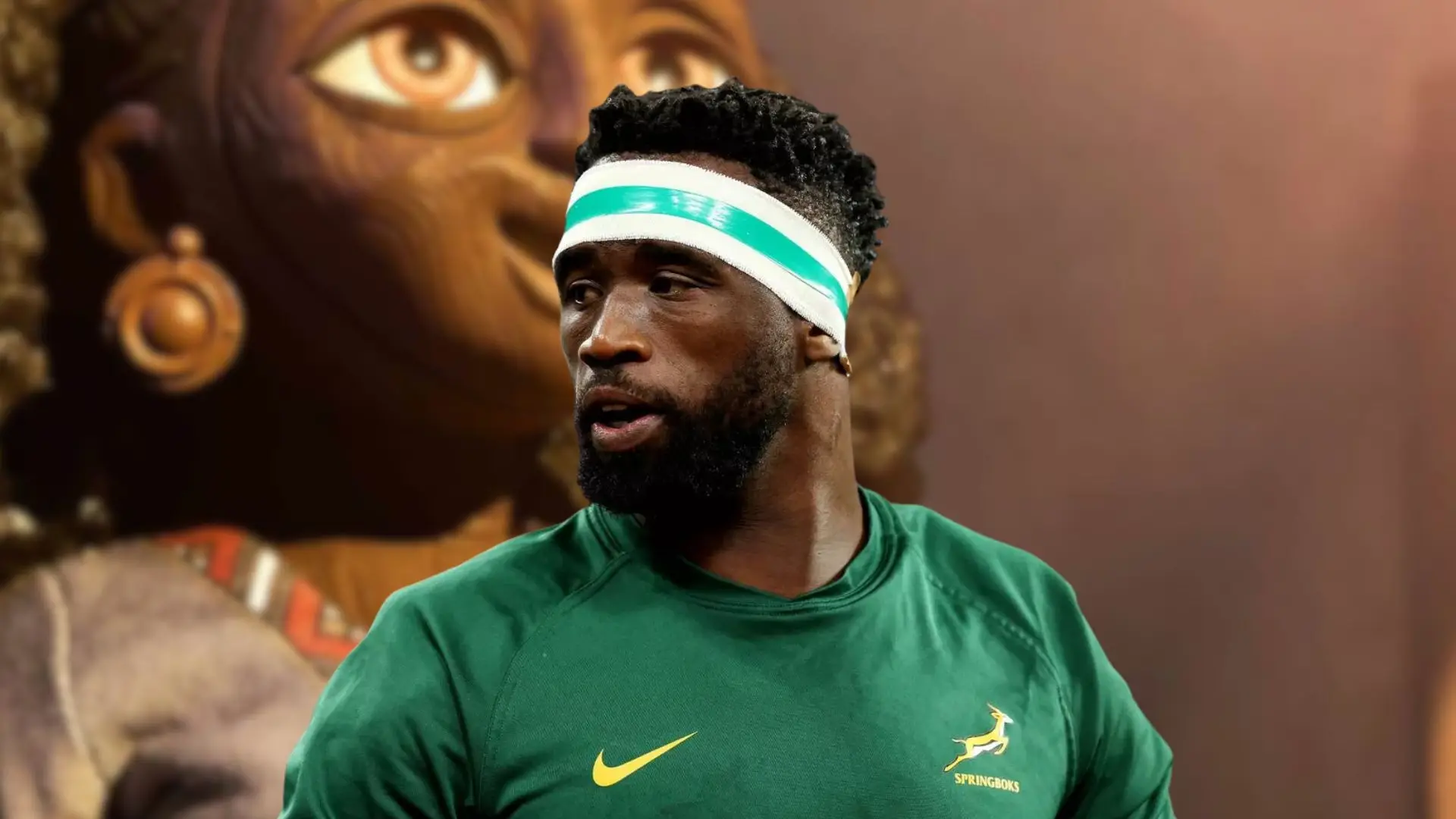
African Film Festival – Self & Rise: The Siya Kolisi Story


Hosted by
KT & Oti
Show Notes
This week we bring coverage from Africa Film Festival including the Pixar short, Self and feature film Rise: The Siya Kolisi Story.
Thanks to Original Spin, the team at Africa Film Festival.
—
Summary
Welcome back to the For Your Reference podcast! This week we delve into the African Film Festival and specifically focus on ‘Rise: The Siya Kolisi Story,’ a powerful documentary that looks at the journey of Siya Kolisi, the first Black rugby captain of South Africa.
Introduction and Greetings
KT and Oti kicked off another engaging week with their usual vibrant introduction. They exchanged thoughts about living in an African household and the unique perspectives they bring to the table. With a playful dynamic, they set the tone for a thoughtful discussion ahead.
Excitement for the African Film Festival
KT and Oti shared their excitement for the African Film Festival. They mentioned their interview with Saadi, who directed the short film ‘Self,’ available on Disney Plus. They praised the film’s animation and its meaningful themes of identity and immigration. Oti expressed some initial conflict with the film’s ending but appreciated its strong concept and animation.
Review of ‘Rise: The Siya Kolisi Story’
Diving into ‘Rise: The Siya Kolisi Story,’ KT and Oti offered a detailed critique of the film. They acknowledged its inspirational narrative, capturing Kolisi’s rise from hardship to rugby stardom. However, they noted the film’s storytelling choices often skimmed over deeper moments that could have added significant depth.
KT articulated the two components of the biopic: Kolisi’s inspiring personal story and the broader socio-political context of South Africa. They navigated these themes thoughtfully, questioning the filmmakers’ decisions and the documentary’s impact.
Documentary Filmmaking Choices
KT and Oti pondered on the decisions made in the film. They highlighted how the documentary painted Kolisi’s life in a golden light, often avoiding the uncomfortable realities of his struggles, including substance abuse and infidelity. KT pointed out that such choices might have been intended to make the audience feel good but ultimately cheapened Kolisi’s true story.
Broader Commentary on South Africa
The discussion extended to the broader commentary on South Africa, touching on the country’s socio-political issues. KT emphasized that while Kolisi’s success is remarkable, it should not overshadow the struggles of many children who never had the same opportunities. They called for a more honest portrayal of these realities in documentaries to provide a fuller understanding of the lived experiences in South Africa.
Living the Rockstar Life
KT and Oti discussed the dual portrayal of Kolisi’s life. They noted the contrast betweenthe jovial moments and the serious challenges he faced. Oti appreciated the documentary but felt it failed to dive deeply into Kolisi’s struggles and their broader implications.
Kendrick’s Vulnerability and Expectations
Drawing a parallel with Kendrick Lamar’s album ‘Mr. Morale and the Big Steppers,’ they reflected on the importance of vulnerability in storytelling. Oti expressed a desire for the documentary to be more like Kendrick’s work, in terms of showing a raw and honest narrative.
Documentary Realizations
KT and Oti acknowledged that documentaries are crafted narratives, not unfiltered truths. They discussed how ‘Rise’ sometimes glossed over significant events, making it hard to reconcile the documentary’s lighthearted moments with the somber realities of Kolisi’s life.
The Golden Boy Narrative
The duo critiqued the film’s portrayal of Kolisi as a golden boy while separating his achievements from his struggles. They argued this approach lacked the authenticity needed for a truly compelling narrative.
Sia Kolisi’s Journey
KT and Oti appreciated Kolisi’s efforts to uplift others through grassroots initiatives. However, they cautioned against idolizing Kolisi’s journey as a simple rags-to-riches story, emphasizing the need to address systemic issues in South Africa.
Reflections on the Documentary
Both hosts concluded the review by acknowledging their mixed feelings about the documentary. They appreciated the positives but remained critical of the aspects that felt underdeveloped.
Closing Thoughts and Recommendations
KT wrapped up with a call to consider the broader implications of Kolisi’s story and a reflection on systemic issues. They encouraged viewers to appreciate the documentary’s efforts while remaining critical of its shortcomings.
In closing, the podcast celebrated the significant steps Kolisi has taken to inspire and uplift others, even as they called for more comprehensive storytelling in future documentaries.
Thank you for joining the For Your Reference podcast. Feel free to share your thoughts on ‘Rise: The Siya Kolisi Story’ and let us know your experiences with the African Film Festival. Until next time, stay curious and keep exploring!
Episode Details
- Duration
- 0:00
- Released
- September 17, 2024
- Category
- Episode
- Hosts


Transcript
Transcript (5,599 words)
Full transcript of African Film Festival – Self & Rise: The Siya Kolisi Story.
KT: It's another week in the For Your Reference household and it is another African correspondence, Oti.
Oti: that was my African version of that, so.
KT: any, any thoughts, any love, any splooshes you want to send out to Tyler?
Oti: We love a good uppity African.
KT: Yeah, we sure do in this household.
Oti: How else is there to be?
KT: Let's get on with the show. Hey, Hey, Hey.
Oti: What was that?
KT: party's ending. I'm just, I'm just punctuating it. Uh, welcome back to another episode of the For Your Reference podcast. You got your host
Oti: And Oti.
KT: I am very excited, Oti. It is not the first African Film Festival that we've covered, because we've covered the South African Film Festival. but we are, we are stocking all the stocks. This is the African Film Festival. Thanks to Timothy, the team at Original Spin, as well as Riverside, as well as the actual team that worked on the African Film Festival. Today is very exciting. we do have an interview with Searit.
KT: We will be briefly talking about her short film, which is available on Disney Plus, friends and lovers. Feel free to go and check it out. but most of our time will be. On a feature film. So before we get to the feature, Oh,
KT: the uppity African is
Oti: I was just gonna say it's run by incredible people in Mumbi. Who's Kenyan? You know, gotta put that exclamation in there. And Safir. Nice.
KT: Okay, well, uh, let's get into Self.
KT: It's a short film. It is for all ages, but there's definitely a lot of layers. and I'm not sure how much, uh, time we have, but I would love to hear your general thoughts. Sort of thoughts on this short film. Obviously it touches on, themes of identity, uh, immigration, conforming, I think is the better way to say, as opposed to assimilation. But yeah, I would love to hear your thoughts on Self.
Oti: I think I felt conflicted watching this. Because I thought,
Oti: well, it's a short, so by the time we got to the end, what I thought was happening or transpiring throughout the whole movie, I felt could have had a sort of different ending, a more impactful ending. I wasn't until I had an interview with Searit that I realized, oh, so I did not get what she was trying to put there. I just felt like, she's moving a bit different and
KT: We talked about it in the interview, so you're not spoiling anything if you want to say it.
Oti: Yeah because discarding your black skin and putting on something new so that people could you know you can feel accepted and i felt okay cool so when we get to the end i felt that we'd get a stronger ending and being like oh
KT: ooh,
Oti: you don't need this yeah But it just didn't get there, or at least how I felt it should have been.
Oti: But overall, great concept, animation is quite strong, and I
Oti: blacks people. Yeah,
KT: I think it was really cool seeing the format of stop motion. it's the first stop motion short for Pixar, which is really cool as well.
Oti: First black.
KT: Well, isn't it always? Doesn't that go without saying?
Oti: I just have
KT: Like Black Messiah. I know.
Oti: We love a good redundancy in this house.
KT: yeah, I think there's, I appreciate the story that was there. Sometimes the juxtaposition was a bit too stark. Like it was like a wooden protagonist against shiny metal-y sort of characters. So it was very obvious that she was not.
Oti: Oh, I, I just took it as if the allure of it, you know, rather than it being skin deep. It was more, Ooh, with my rusty old self here, everything else
KT: me.
Oti: OG whiz. It was like oil down my spine or some shit. Yeah,
KT: ha! Mmm. you know, we, we talk about animation all the time, about how it's able to stretch, I guess, the bounds of believability that you would have in a live action. and being able to see that in stop motion was really cool. And also like the sound effects, I thought was really cool as well.
Oti: Yeah
KT: Speaking of the sound effects of the motherland. the African Film Festival working with the South African Film Festival for the opening night of the African Film Festival. Also friends and lovers, I'm not saying I'm the bouncer at the door meme because it depends on who you are, but Western Sydney is having really great film festivals at the moment.
Oti: It is.
KT: Opening night of the African Film Festival, we had Rise: The Siya Kolisi Story. I keep saying it like he's Tongan, but that's
Oti: yeah, when I asked you what the name of the movie was, I felt, Oh brah, it's good to see some Pasifika movies for once.
KT: Well, let me get your general sort of thoughts. if you, if, if you felt all the good feelings and all of the speeches on Mandela and you didn't realize what else is happening in South Africa, maybe it's a spoiler to you, but let's get into your general thoughts on the film, my love.
Oti: An inspiring look at Kolisi's journey from hardship to rugby stardom. While powerful, some storytelling choices skim key moments that could have added depth.
Oti: I, yeah, maybe let's hear yours first before we delve deeper.
KT: have read mine first because yours, yours has the round edges. Works as a photo album to look back on the life of a legend, but hesitates to grapple with the tangible divide as a broader commentary.
KT: Mm hmm. Okay, so there's kind of two components that we have. and I don't know if you want to meld them into your mouth as a tasty morsel together, or if you want to examine them separately, but I guess I just want to present what those two, sort of components are. and I'm happy to go wherever you want to go, my love, but the first is essentially that this is a biopic in some sort of sense, right?
KT: It's a documentary. it's that inspiring feel good story of the first black, uh, rugby captain, right? Fucking wild that it took that long, but anyway, and then the second component probably maybe explains that is the broader context of South Africa and I guess the decisions of filmmaking and documentarianism of what they chose to show and how they chose to show it.
KT: do you want to do you want to evaluate them as one one piece. Do you want to separate them.
Oti: Where do you want to go, my love? I think I want to go a step back before even that.
KT: Okay.
Oti: And talk about the above the table fast stuff. that brought us to the gathering and made us feel welcomed and made us feel the love and made us feel okay we are rooting for this guy as a kid which i thought is something that they achieved quite well when we get to see him interact or tell a narrative of ever since he was a kid and every experience he's been through his relationship with his father, which is sort of talked up back then.
Oti: And then we came later during the documentary where they tried to layer it a bit more, even though I wanted a bit, you know, like, get that maybe, maybe that moment wasn't ready to be captured on screen and that's fine.
KT: it's still processing. It's
Oti: process, right? And nothing's linear. So, I appreciate it. I appreciate it from that perspective where I was like, okay, cool, man. I feel for Kolisi. I feel for him as a kid and everything he had to go through. He fought a lot of challenges and they showed that quite well. They made fun with it as well. It wasn't so serious. Yeah. because it's, because they had lighthearted moments in midst of, you know, traumatic stuff
Oti: I felt, Oh yeah, if you can't, it's the old adage, you know, Laugh at My Pain. And this is from Kevin Hart. It is
KT: ha. In his ancient, small ass body.
Oti: is. It is. When did that come out? Ages ago. It is.
KT: Well, Delirious is a biblical text, so
Oti: is, it is. We shouldn't be quoting those things in scriptures at this point. but I enjoyed that. I was, I was bought in. It wasn't until the second half of the documentary where I felt as we're seeing Kolisi navigate life as an adult within the rugby team and all the vices that come along with that
KT: Yeah.
Oti: that I felt, oh, are we just gonna skip over that? Like, are Hold up. Was that your first? Why are we in this timeline? You know, I started
KT: giving a rival.
Oti: Yeah. I was starting to ask those questions. I was like, okay, something's throwing me off here. Are we going to narrow in? Are we going to stay here? But before that I felt I'm bought in and I was fully bought in and I enjoyed this. You know, I was, I love a good underdog story and especially seeing the impact he has in the game and all in South Africa because Kolisi is bloody well known. So it's, it's understanding the, the, the originality of it and everything. And up to that point, man, I was on board.
KT: and I guess I will chalk it up to filmmaking decisions.
KT: No, because I get exactly what you're saying because they wanted that jovial like rags to riches, like no matter what he's been through, he made it. And it's like, he's been through a lot of shit. And I We're not babies, right? Like we're cuties, we're cutie babies, but we're not babies in the sense of not being able to understand depth and understand emotion. I think that kind of became a hindrance in the later sort of, uh, Navigating of heavier subject matter because they set us up for the, some feel good sort of story, right?
KT: Like an unimaginable, and sadly for many people, it is imaginable and it is a lived experience. you know, when he talks about the township and what he went through, his upbringing. And it's like, we're supposed to be like, Oh man, he made it like, it doesn't matter, you know, like whether you have your faith with you or whether you have your ancestors with you, he made it.
KT: And it's like, I feel like that cheapens his story. Because as you said, as much as you loved it, the second half lost you. But then doesn't that undo it for you, but friends and lovers, you know, if you are new to the For Your Reference household, welcome, welcome. if you've been around, you know, Oti has black tax.
KT: Now we know that he has a double, triple tax of African tax. Right. And it's a beautiful thing. Right. But what I, I guess what I'm trying to, uh, what I'm trying to demonstrate is we live. Wholly dimensional, sometimes heartbreaking lives. And sometimes there's, there's triumph in it, but sometimes for a lot of it, we're struggling the fuck out of it.
KT: And that's okay. Like we, like they lifted us up in the air and they completely plummeted us. And I think that became, for me, it was hard to, It was hard to reconcile. The very, the very different tones that we got of it. Right. Because like you said, whether it's about his vices, like you can't, you can't submit your Mr.
KT: Morale the next day, because it was very much, you know, he was, he was, I think it was even from high school, right? Like his schooling, him, him moving into a leadership role in rugby happened at the same time. Of, you know, whether we're not going to go into detail, friends and lovers, but trigger warning for like substance abuse or for infidelity, right? But they put that later after they had him riding high in the sky. And that was a very interesting choice. I think it comes back to us talking about documentaries and like no one's saying you need to go all the way there. But if you're going to document. Like if you're going to actually document this on film, then that's what's owed of the audience, vulnerability.
KT: And it's hard to know. I actually tried not to do research, whether it was, uh, for, you know, the family or whether it was a choice from the filmmakers, but I really felt like it got in its own way of its inability choice, not to, uh, turn.
Oti: Wow.
KT: Wait, before you go into your learned thoughts, do you disagree with me?
Oti: I don't disagree. I don't disagree. Apart from the fact of if the second half of the documentary sours everything. I don't think it does. I think I can take the wins where I can get them. And,
KT: Okay. J rock.
Oti: no lack with experience. Well, we've covered some documentaries in the podcast, uh, coming to memory was Stylebender and Angle. And I remember, especially with Stylebender, we were thinking of, Ooh, we needed a bit more vulnerability because you can't be any more vulnerable than documenting your therapy sessions, you know, but there was still a layer of that couldn't be reached. Right. And you felt it come through. With this, they mention things that they don't delve in. Or, we know things that are happening within the country that they just don't consider or even mention.
KT: Okay, so I want to continue your parallel references because that's actually That's actually a perfect sort of, double feature, if you will, or even just a study sort of piece to have, because that example that you gave with, uh, Israel Adesanya and talking to his therapist, we talk about intersectionality, friends and lovers, we're always talking about layers, intersectionality, and frame of reference, and the therapist that he had, whether it was the fact that she was a white woman or not, him talking about, unfortunate but very common sort of instances of like physical violence in the household that completely made that therapist like uncomfortable to the point where she couldn't even properly be present for Israel Adesanya when he was speaking and I think that's a very good parallel of this film.
KT: Whether it was a decision from a filmmaking point of view because that's how they wanted to tell the story or whether it was a filmmaking decision because of the audience, they didn't want the audience to feel uncomfortable by this rags to riches story, like give us all of the glory at the start so we can feel good about it. Just like they had archival footage to obviously give context. We're in South Africa where they talk about apartheid and then it's like, we're all good now.
Oti: Yeah, it wouldn't it couldn't have been easy
Oti: Kolisi to, to grow up and to do what he did.
Oti: And from him getting a little bit of, you know, stardom and getting into the team and being one of the youngest ever, you know, the vices now comes in and they mention all
KT: vices are a symptom.
Oti: They're a symptom.
KT: But that's, I think that's also, you know, and you also touched on the broader sort of commentary. and we can go into more detail. I just want to quickly say there are many kids that didn't make it out of the township. Siya did, but there are many kids that didn't. So to parade his story as a trophy is to neglect the stories and the very real lives that, you know, aren't being picked up.
Oti: Oh, a hundred percent.
Oti: This is not a low key coliseum thinking, Oh, if he did it, everyone else can do it. Everyone else can make it out.
KT: Uh huh.
Oti: It's, it's, I didn't even think sitting here and watching that, that's what was sort of being presented. I didn't get that vibe from it. I,
KT: you get the vibe from the audience?
Oti: that's a different thing, right?
KT: All right, I think that answers it
Oti: Watching this, I felt,
KT: needed
Oti: vulnerability from a man who's achieved great things, whose vulnerability could have opened gates and learning experiences from not only the younger audience, but to the world as a whole, to gain perspective into not only how hard, tough, but the humanness of it. Him, him struggling with everything else being symptoms of. The situation he's been put in as well, and what's going on with the country. So to come up here and be like, Oh, cause he got married young.
KT: I don't
Oti: like, fam, cause I think it was high school. The girl like was went to meet the father. I think the father was in jail at the time. I was like the father. Oh yeah. Hey, now you guys are together. Married fam,
Oti: you know? And that wasn't the most stable of relationships based off what we see there.
KT: But you could see she was really hurting.
Oti: She was hurting!
KT: they never really delve into
Oti: They didn't want to know!
KT: but you know what I mean? And it's like, see, so there you go. It's like everything's all good, but it's not and it's okay that it's not because that's life.
Oti: Right? It's living in your uncomfortability and understanding and accepting that A, You're human, you're no one's saviour, and it's fine, it's okay,
KT: Yeah.
Oti: it's okay to go through those stuff.
KT: Because they'll have his like, like his teammates chuckling about their wild parties and then cut to the wife and it's like,
Oti: on
KT: man. Ah, yeah. We live that
Oti: living that rockstar life and,
KT: of course,
Oti: you know, cause those talks of even, you know, alcoholism and all that. You know, so when you're struggling with all that and you're dealing with all that and
Oti: we still get to, you know, let's still paint this picture at the end of it.
KT: Oh,
Oti: yeah, you know, that shit. Yeah, really isn't part of this, but oh, look at how he can make a try. He's a great man. No one's gonna falter him for any of this because he's still achieved that shit. Yeah. In spite of.
KT: In spite of. Heavy of the in spite
Oti: Right, this, like, this year, we had, you know, what was it, last year?
Oti: With the Kendrick drop, with his, with Mr. Morale and the Big Steppers. He shed his vulnerability there. All the vices and everything else. With Kolisi, I, maybe that was folly of me to expect a level of that from this. But they painted a picture as if they were going there.
Oti: potential
KT: there. Yeah, because with
Oti: I'd reference, I'd say Angle when we're watching it, there were things we learned after the documentary, because they simply didn't mention it. They didn't hint at shit like that. So when we were doing our reading afterwards or whatever, we're like, Oh, what? This happened between what and when we didn't know that.
KT: Yeah.
Oti: So we watching it, I was like, Oh, we really get to see Angle go through everything he did from the time he was a kid.
KT: But then that's when you realize as much as it's a documentary, it is a produced story. Hmm.
Oti: Mm. Yeah. There's, there's a Rachel in the background.
KT: Yeah, shout outs to UnREAL.
Oti: Yeah. For anyone who's not watching UnREAL, it is crazy. Shiri Appleby is amazing. Yeah. Far out.
KT: I just, it's hard to reckon with, because again, it was a decision for, for whatever it was, maybe it was good intentions, but the decision to paint him as a golden boy, which he is very talented
KT: but there was that substance abuse. There was stuff that was going on at the same time, but they told them the two stories very separately.
KT: and that's why it was hard to traverse those waters. It's, you know, like a fictional story, like the Life of Pi becomes more impactful because it doesn't, it doesn't hide away from, you know, those sort of difficult sort of moments, right? It just becomes part of. And maybe this could have been like some sort of allegory, but I think it's hard to know what the intention was, but I guess all we can evaluate is what we received. And it felt like a reluctance to really reckon with and grapple with the reality that some people in South Africa might have. And that pulls into Siya Kolisi because Near the end of the film, and this isn't necessarily a spoiler, friends and lovers, but this, this was one of those moments where I was, I had to, I had to audibly sigh inside of my heart and my soul and let it break into pieces.
Oti: hmm.
KT: They, well, first off, like Siya being the captain and then not being the captain anymore was a very interesting way that they showed it in the film. but there's a moment where they try to have a hopeful sort of ending. And personally, I didn't care for how they portrayed that of like all different homes.
KT: You know, from the township to the more affluent, like there was a literal divide, like when they, when they panned the camera, there was a literal divide from a township to, I guess, a more white predominantly lived in sort of area. And it's like, Oh, we're all listening to the same message. We're all good. Don't check on our country. Bye.
Oti: Oh, yeah, In as much as, I think also overstating the impact. Mmm. Ha ha ha. Fam.
KT: Sports is amazing.
Oti: It brings people together, we know that.
KT: Yeah, but
Oti: But, end of the day, it solves very little.
KT: Whoa.
Oti: I'm just gonna say it.
KT: that that be, but that means a lot from you.
Oti: We know the impact, especially for rugby in South Africa and the way it had, you know, from segregation and seeing black players come in and
Oti: bridging that gap. And they did that through sport. So for South Africa, it's really, really big and the impact it had.
Oti: But the overstating ness of it to me came when
Oti: Like you said, at the end, there's this sort of vignette, you feel as if, Oh, we've fixed our problems fam. Yeah. But, no you've not.
KT: It's okay. Wasn't it this
KT: Miss South Africa? Brother.
Oti: I don't, I don't want to even go into
KT: No I'm just, I just wanted to put there for friends and lovers that want to do their P's and Q's and they want to Google.
Oti: Uh, yeah, like I get it, good touching story, but end of the day,
Oti: I don't know. I don't, maybe I'm being harsh or maybe um, probably it resonates differently with South Africans who feel as if, yes, this. This ticks all the boxes of what I would expect from a documentary and rugby is part of my life and it's part of the fabric of the community and this is how we operate and in the big games we do not care whether you're white, black, you're from an affluent neighborhood, you're not so, you're from a not so well to do place. It does not matter.
KT: But, games end. Seasons
Oti: seasons end. There's always
KT: The racism ends!
Oti: There's always life in between the games. Right.
KT: And, elation,
Oti: the ecstasy you feel towards all this stuff all die down. Yeah. When the referee blows his whistle, you go out, talk a few, but then you have to go back to your real life and you have to deal with your shit
KT: And
Oti: the in-between of that, I wanted to see more of.
Oti: Where there was no referee inside and there was no whistle around. How is Siya navigating that
Oti: has status now. He has status, but this is his documentary. I would, it would be folly for me to expect him to paint a picture of the everyday person when He is not an everyday person.
KT: But I love how you try and separate it, but in your very learned musings, you put them together because they are together. Because that's what we're talking about. And, you know, friends and lovers, it took all back. That's that African tax, which isn't a bad thing. It's a very beautiful thing. Oti has a lot of grace and I will extend this grace to our South African friends and lovers. even just to give us like your experiences, or even if you've watched the film, please feel free. you know, to share that as well. But.
KT: It's one of those things where, you know, I don't know who the flavor of the month is. Okay. As far as I'm concerned, it's been Paul Dano from 2012 since he was drinking the purple drinks that Hugh Jackman gave him in Prisoners. There's always some new flavor of the month and I don't necessarily keep up with that.
KT: And friends and lovers, we do have a reference and we do have, Films that we would watch that potentially not everyone is focusing on, right? But when we do watch these films, there are moments where we might have qualms with it. And I would say that that's okay.
Oti: Qualms are okay. Qualms are good, I might say.
KT: Right. And it was like, cause they had footage of like Mandela and I hope, you know, they reached out to the Mandela family as well, but like him coming to the football game, like you said, like the high spirits of the sports. I talked about Miss South Africa and you know, there's a, there's a very real tangible feeling of how. So they might be feeling, right, Orania, for example, not going into detail, but it's the same country, you know? It is.
Oti: it is, and like I said, maybe the, the brush effect of, oh, I'm trying to paint everything in this light. Maybe that's just what I took from it. Again, I'm being I'm being just from my perspective alone on what I felt watching the documentary
KT: You never say that when you review Scorsese, by the way.
Oti: It felt
KT: You can go there. You can go there.
Oti: Like, you know, you know when you know when
Oti: You know when the, like, I don't know how many people they showed, was it two girlfriends, an ex girlfriend we saw?
KT: Talking
Oti: the heart, you can clearly tell there's heart happening, and I wish they, you know, when they're watching this, they, I hope they were listened to during the process of that.
KT: whether it made it to screen,
Oti: Whether it made it or not. Right. Because you can tell there's, there's some feels
KT: like, Oh, this doesn't fit the narrative. Like this is our golden boy. Like this can't be part of the film.
Oti: Yeah. And you can only hope that Siya is working to bridge that. So it's,
KT: us out. So it's, it's
Oti: it's how he moves
KT: you know,
Oti: how he, you know, cause we can see he, he has his kids. He loves his kids. He plays with the kids. But that's just a lot that I wanted to know more of. more of. it was cute to see the relationship with the dad, especially when him trying to be vulnerable, him being vulnerable and saying that's one of the things that he wished he had with the father, because he saw how other people interacted with their dads and like, fam, is this even possible?
KT: I think maybe a few more years and a bit more healing would have helped this documentary. Yeah. Because he wasn't quite there with his dad yet, which is absolutely fine, but that's kind of a progress bar. You know what I mean?
Oti: Yeah, but, but at least you can tell that there's, there's something there. The dad isn't fully not receptive to it. Oh yeah,
KT: not saying either, but even then he's like, do we need to have the camera on while we're having And it's not the same thing. But we watched the documentary, uh, the documentary series on Netflix and we saw Noah Lyles and his mama. Like we saw that relationship or even like Simone Biles, for example, she went through and continues to go through shit because of her mother, for example.
Oti: But they
KT: they didn't shy away from it. And we didn't think anything less of her. Yeah. guess it's, it's still in the process of building those bridges and, and trying to navigate that. to navigate that. But
Oti: he is definitely like the takeaway here for me would be, you know, It's definitely worth the watch because it brings up a lot of good points whether or not they delve deep into those is something else but it'll give you a picture of what was happening and how he navigated life. then again, then again this is into paint as if just because he's done it everyone else he left in the village can do the same thing because you know life doesn't walk like that and Sports is good. It's great. But again, it cannot be the answer to the underlying problems, which still need to be dealt with. It's all fun and games, but man, real life ain't that.
KT: Oh, absolutely. Um, I think I just want to close with a If, if I am to be misunderstood, I kind of want to use this example. I can't remember if it was 77 percent or Al Jazeera, I can't remember if it was 77 percent Al Jazeera or even BBC Africa, but we watched a documentary about Kenya.
KT: and the Olympics, you know, the Olympics just passed, and talked about the, you know, the, the, the prevalence of the use of enhancement drugs, right. And how common it is. And I guess. What I was hoping to have in this film was not perfection. I think there was a focus on perfection and trying to make people feel good without feeling bad about the things that he couldn't help in his childhood, right?
Oti: And
KT: When we watch the documentary about, you know, the, the physical feats that these athletes, you know, for long distance sort of athletics, like what they are able to achieve with the very little support that they get from the Olympics committee, or even the Kenyan government, for example, that's what the focus is.
KT: To me, it's not about them potentially doing things that will get them disqualified because for me. I'm all about systems, baby. So it's like, it's, it's so cool that Siya Kolisi has like achieved so much, but for all of the Siyas out there that never got that chance, never had that teacher, that, that put all of their stock in him and all of that hope into him, for all of those kids, for all of those kids that are ignored by their community, by their township, by their governments, that's for them.
KT: And I'm there for them, and my heart beats for them.
Oti: In fact, I think what he's actually also doing, they showed towards the end of the documentary, he's started his own thing, you know, trying to get kids involved, at the grassroots, which is amazing to see.
Oti: But yeah, there's, there's, there's a lot with this documentary that you'd love and
KT: love, and some
Oti: not so much, but overall. We do what
KT: do what we can.
Oti: We do
KT: do what we can, we make it work and we find joy. Thank you friends and lovers for joining us another week in the For Your Reference household. What a nasty bumpy ride if this was your first time, eh?
KT: we're not going to finish off in a segment unless you have anything you want to recommend.
Oti: we already mentioned
KT: Yes. Angle.
Oti: in there. Yeah, those are definitely what to watch All right
KT: Alright.
Oti: to
KT: If you wanna continue to love and sploosh and, and, and even yell into the void with us on Twitter, Instagram, still Bluesky as well as TikTok. we're @ForYourRefPod.
Oti: you on for? Oh, hold up. just because I know we mentioned Stylebender and, Angle. And when we're talking about the juxtaposition of the therapist where we had Adesanya with a white therapist who didn't go there. Yeah. Or pretty much blocked any sort of communication or just because of the sheer shock she had We could have gone the other way where we get a situation like Mickey Hardaway where the therapist was like, bruh. That was fiction. Yeah, that was fiction, but it was still good to see because
KT: If we're naming like therapists that are more harmful and probably more on the shitty spectrum, we have the therapist in Reasonable Doubt, and we also have the therapist, friends and lovers, we play all references in Sopranos.
Oti: Oh, yeah, yeah, just because you're anchoring this into the black experience, Mickey Hardaway is wild. It's find it. Watch it. You'll love it.
KT: All right. Feel free to leave us a rating on Mr. Oti Morale and the Big Stompers podcast. If you'd like to leave a rating or review, thank you so much and we'll see you on the next one. See ya! Mwah!
Oti: ya.
Related on FYR
Discussion
Loading comments...