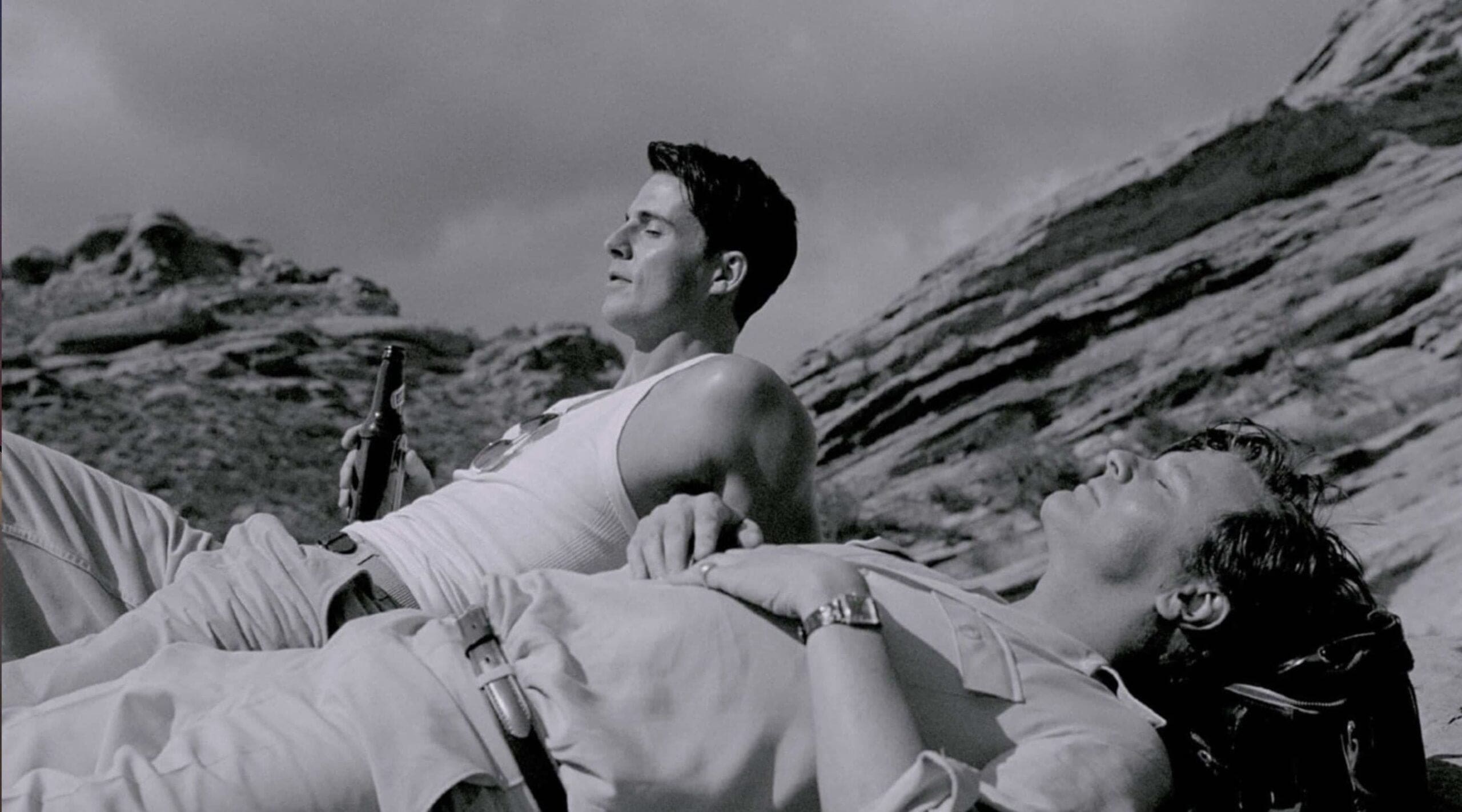
A Single Man – You’re the Firth, the last, my everything!


Hosted by
KT & Oti
Show Notes
In honour of Pride Month, we celebrate with the resonating film, A Single Man. Sometimes awful things have their own beauty.
Stats
Stats
Released: 2009
Director: Tom Ford
Novel by: Christopher Ishwerwood
Breakdown and Analysis
- We’ve talked about this in a few epsidoes but we talk about how we are watching this through our frame of reference. We cannot truly know what it is like to be dealing with what George was going through but there were certainly themes of universal human hurt.
- To not give your whole self to this film is a disservice to it’s beauty.
- Oti shares what it was like in Kenya, culturally and religiously, for gay people.
- George’s lecture of fear is fueled by causes. Whether the causes are real or not.
- Huxley – After Many Summers dies the Swan
- People that have to wear masks don’t realise how much of their true selves manifest on the surface.
- Sometimes the beauty of life is always there but you need to be receptive of it
- This movie builds to the most heartbreaking crescendo. Life is a Charly.
- So beautifully stitched together in so many ways it is a very still movie. All you have is yourself.
Unrelated but vital points
- Donations from our Patreon page will be used to pay for Oti’s Tom Ford. We haven’t launched one yet, so you have time to save.
- We explain phrases by using other phrases. It’s kinda what we do. Welcome!
- We are the Dean Winters of podcasts
For Your Reference
Oti’s pick
KT’s picks
Referenced

KT's Picks
Referenced in this episode

Moonlight
"Three time periods - young adolescence, mid-teen and young adult - in the life of black-American Chiron is presented. When a child, Chiron lives with his single, crack addict mother Paula in a crime ridden neighborhood in Miami. Chiron is a shy, withdrawn child largely due to his small size and being neglected by his mother, who is more concerned about getting her fixes and satisfying her carnal needs than taking care of him. Because of these issues, Chiron is bullied, the slurs hurled at him which he doesn't understand beyond knowing that they are meant to be hurtful. Besides his same aged Cuban-American friend Kevin, Chiron is given what little guidance he has in life from a neighborhood drug dealer named Juan, who can see that he is neglected, and Juan's caring girlfriend Teresa, whose home acts as a sanctuary away from the bullies and away from Paula's abuse. With this childhood as a foundation, Chiron may have a predetermined path in life, one that will only be magnified in terms of its problems when he reaches his difficult teen years when peer pressure affects what he and many of his peers do, unless he follows Juan's advice of truly making his own decisions for himself."

Pride and Prejudice
"Jane Austen's classic novel about the prejudice that occurred between the 19th century classes and the pride which would keep lovers apart."

Episode Details
- Duration
- 0:00
- Released
- June 25, 2019
- Category
- Episode
- Hosts

Transcript
Transcript (9,081 words)
Full transcript of A Single Man – You’re the Firth, the last, my everything!.
KT: Hello. It's For Your Reference, and we've got your phrase or mine. And I've got the phrase this week.
Oti: Oh, tell us.
KT: It's by the American philosopher Eric Hoffer, and it says, with some people, solitariness is an escape, not from others but from themselves, for they see in the eyes of others only a reflection of themselves.
Oti: Like, you get perceived as to what you see how people look at you, and that might be the ugly truth of what's being said and done. So yeah.
KT: Very poetic, but not correct. It's actually the opposite. It's actually more intrinsic. Your whole identity is built on the components of others. So when when you're in those quiet moments, you don't even know who you are.
Oti: Deep.
KT: Self awareness is key, guys. Know yourself. And let's get on to the show. Happy pride month, friends and lovers.
Oti: Woo hoo.
KT: As we are rounding off pride month, we definitely wanted to be a part of the conversation, be a part of the love, and be a part of the celebration. So today, we will be covering
KT: Tom Ford's directorial debut of A Single Man, a novel based on the same name by Christopher Isherwood, and it debuted in 2009. Very beautiful movie. It's it's it's very essential, and it's so deeply personal. Whether this whether you felt love or whether you're yearning for love, it it has all sorts of layers of relatability, which we're definitely going to get into today. But it definitely
KT: marries my love for love and also my love for Colin Firth. I finally managed to get Colin Firth onto this podcast. Well, not him personally, but you're more than welcome. We we leave this invitation open forever. But, yes, it's it's been a very good experience. And we'll definitely talk about the movie. But let's get into stats. You know how this runs. So in regards to the budget, we had $7,000,000 so quite a modest sort of budget. And it grossed overall in America $9,000,000 So having watched this after the time that it was released,
KT: I think that's quite a shame. After watching the film and after feeling my way through the film, it is quite disappointing that it didn't get as much as I felt it should have.
Oti: And this is your second time watching it as well, isn't it?
KT: Oh, yes. It is my second time watching it. I didn't watch it in 2009, but I did watch it a fair few years ago. And there was quite a lot that I didn't necessarily pick up on the first time watching it. And, also, I think I watched, like, a censored
KT: sort of version as well, but we'll get into that as well. So let's go into the cast for the movie. We have sir mister everything Darcy.
Oti: He's not a sir, but yeah. Need to stop.
KT: I have a trophy case of sirs, and Colin Firth is on the top tier. Don't you worry.
Oti: Oh, wow.
KT: I have been enthralled and been in an edifying, enticing viewership with Colin Firth since Pride and Prejudice, the BBC miniseries. And he is just through and through an outstanding actor. Let's let's continue because I could have a whole podcast.
Oti: And just in case there are Pride and Prejudice fans out there, there's a Pride and Prejudice Atlanta.
KT: You need to stop. You will not besmirch the BBC miniseries, not in my household. No. There is only one that exists, and we're also ignoring Keira Knightley's bastardized attempt at doing Pride and Prejudice. Wow. Stop it. Stop it. Okay. So we have Colin Firth playing George, who is the protagonist of this film. We have Julianne Moore playing Charlie, very layered character we will talk about. We also have Nicholas Hoult playing Kenny. And I always tell you who he is, and you keep forgetting who he is.
Oti: Someone from the X-Men?
KT: Yeah. He's Hankywank. Yeah. Yes. We also have Matthew Goode playing Jim. Solid. I thought he was quite good. I enjoyed him. And then we also have and I apologize. Jon Kortajarena playing Carlos. He's in High Seas, which we've been watching recently. So it's nice to see you.
Oti: Oh, so it's him.
KT: It is him. I told you. Tall, foreboding, smoldering man.
Oti: Seems like you have a good eye for the Spanish men out there.
KT: I'm looking at one right now. There's a different trophy case for that, guys. You know what? This is such a deep film. I was worried that there wouldn't be any sort of levity, but it's For Your Reference. This is this is the flavoring of what we do. So you're welcome, guys. Welcome to our podcast. So that's the cast. Like I mentioned, this has been out for ten years now. If you haven't seen the movie,
KT: go out sorry. I will call it a film. It it is way more than a movie. Go and watch the film. We will be talking in-depth about it, so I don't want that to ruin your experience. So go and watch a movie. Come back. We'll still be here. We'll still be your best friends, and we can talk about the movie. Yeah. So before we actually get into it, let's talk about not necessarily first impressions.
KT: Right? We're we're not really gonna do that today because I really do wanna just stay in the world of this film. Let's talk about the overall cinematography and the lighting and stylistically how it was presented.
Oti: I think it was quite brilliant how Tom Ford came up with using color to change the mood and the tonality of the movie. There's something so quite unique and subtle that if you're not that careful, you could miss it.
KT: Oh, yeah. I I don't think and I was watching it off my laptop many years ago. It's so nuanced that, exactly, if you're not paying full attention, you aren't going to pick up on that.
Oti: Yeah. It's it's quite a clever way of doing it and just showing how our mental state can go from one way to the other end of the spectrum quite quickly and easily based on the human interaction that we have.
KT: Yeah. And even back then when I watched this movie, I saw Tom Ford, but it just didn't resonate with me. And even when we were watching it just the other day, you're like, really? The Tom Ford? And then I was like, oh, actually, let me look it up, and it is the Tom Ford.
Oti: Yeah. Like, I can't afford his suits, but damn. That's just
KT: You can afford it just fine once we launch our Patreon.
Oti: Did you hear that, people? You'll be paying for my Tom Ford suits pretty soon.
KT: And my Gucci Peppa Pig.
Oti: Oh, you can get them now.
KT: Not even now. Wow. Just the the coloring, and I think it was just it was a tailor made film. There you go. There's your sound bite right there. But, stylistically, this film was so beautifully stitched together, if you'll pardon the pun. I was getting serious, but I just can't help myself, guys. It was so beautiful. And in so many ways, it is a very still movie. And it's it's uncomfortable in the sense that all you have is yourself.
KT: And, you know, we have our frame of reference, and we've talked about that in a few podcast episodes. And you can't help but relate something back to your own life. So, you know, if there's some demons that you haven't dealt with and you're you know, this movie is literally about self reflection and, you know, a lot more than that. It's a lot more deeper than that, but you can start to color it with your own frame of reference as well. And I really appreciated how quiet and how still
KT: this movie was this film was, rather. You know, listening to our podcast, the way that we banter is literally how it is when we're watching the movie. Unless we're in the cinema, then I'm just whispering it to Oti, he's telling me to shut up. But if we're in the comfort of our home, yes, the banter is as ridiculous as you hear on this podcast. But when we were watching A Single Man, Crickets, like, I was not saying anything. And I think to
KT: not give your whole self while you're watching this film is a disservice to it overall because it's a movie that is very quiet. And if you're not giving it your full attention, it won't it won't resonate within you. It won't build up within you. And, you know, there were some really, really deep moments that I got quite emotional over as well. But you need to stick you need to be like, you can't be on your phone,
KT: and don't do that. Like, there's a million Avengers movies you can do that for, but not in this. It's it's just a beautiful film. Like, it's it's like a beautiful vintage wine. You're not going to have it all the time. It's an event. You plan for it. You close the blinds. You put a record on. You put some Barry White on, and you indulge in that immersedly and fully.
Oti: Yeah. Just turn off Barry White before you start watching the movie.
KT: No. I'm saying with your wine.
Oti: Oh.
KT: I really beautifully
Oti: You did.
KT: I really beautifully explained that. I was like, you know, we didn't listen to Barry White while watching this movie. I was like, no. Probably not.
KT: If you're looking for depth come to your girl KT. If you're looking for low brow, low hanging fruit, then go to your boy Oti.
Oti: Really? Well, the low brow comedians are the ones that are killing it now. So you know?
KT: And that's why films like this should be supported and also appreciated. I also obviously, I have no semblance or sort of experience as being a homosexual man in the nineteen sixties in LA. Obviously, I don't have that. But to be invited into this world so beautifully presented was an honor to be able to experience that and to know that,
KT: you know, you have Tom Ford that's treating you with so much respect. And you also have, you know, Colin Firth, Nicholas Hoult, Matthew Goode that are really coming in and batting to play in this film. Before we get into the pivotal sort of scenes and dynamics within the film, I do just wanna raise something that I think is quite it was more of an observation, and I guess I would like to hear your thoughts on that as well. But it's I I think it's quite beautiful to see
KT: heterosexual men as far as we know, because sexuality is fluid. But, you know, Colin Firth, Nicholas Hoult, Matthew Goode, immerse themselves in a role that might not necessarily be them as people. You understand what I'm saying? So for them to play homosexual men and do it in a way that's normalized and that, you know, is is more of a truer representation
KT: of how that might have felt and having so much respect for that role, it's just such a beautiful thing. And it's quite sad that I have to say it's a beautiful thing. But, you know, even in 2019, we live in a world where, essentially and I love you guys, but if if you're not like a white man, a white straight man, then you're going to have to deal with some hardships that possibly straight white men don't have to deal with. Right? Right. So to have this film is so essential,
KT: and it's such a beautiful experience to be able to watch, to see the way that it's portrayed, and to normalize sexuality. It wasn't like, oh, hey. I'm gay, you know, sort of thing. I really loved how beautiful it was. And that is the sense of a true actor. Right? Because you're not unless you're my best friend, Dean Winters, you're not gonna play the same actor over and over again. Right? You know, the the enticement of an actor is to try on different roles that are completely different to yourself Yeah.
KT: And to be able to immerse yourself in that world. So I I just wanna give credit where credit is due. To be able to portray a life that is not your own with so much respect and with so much dignity is such a beautiful thing. And, you know, a lot of the time, even myself, I I poo poo a lot of people that act. I'm like, this isn't hard. Like, anyone can do it. Like, Oti, you can go and be the next Vin Diesel. Like, you know what I mean? Like
Oti: I don't know about that. The caliber of Fast and Furious is really high up there.
KT: Wow. See? Again, for depth, come to me. But it's it's just a beautiful thing to see. And I I I know I love Colin Firth, but there's a reason why I love him. To see him act in A Single Man shows how how much acting is a masterpiece, and it is a work of art. The layers and the complexity that he brought to that role, I really don't think anyone else could have done it.
Oti: I don't know about that, but I do know that he did it quite well. I do know that I felt his pain, especially at the start when he just found out that he lost his partner of sixteen years.
KT: Seventeen.
Oti: Seventeen years. Yeah. So we wanna get into that. Yeah. I'm just saying, like, how he delivered that.
Oti: It was one of those moments where I think this was the second time I told you, like, let's just pause for a bit because I can't handle. It made my heart hurt. It was so powerful and I couldn't handle the pain and the pressure because most of us have lost loved ones in our lives. Mhmm. And it's it's in that moment where you find out and the million things that are going through your brain and how he conveyed that. You could feel it, you could reason it with it, and you could empathize.
Oti: And I think that's the biggest thing that he could bring to other people watching this.
KT: And I think that's exactly the point because when times are tumultuous, that's usually when you expect shit to go wrong. When things are just normal and you're experiencing that period of stability, you don't necessarily expect something to happen. And, you know, the first time I watched A Single Man and that that phone call scene, because that's what we're focusing on now, when he hung up that phone and he dropped his glasses, it was such an intimate moment,
KT: almost to the point where I feel like it was we were intruding in his space because it was such a deeply intimate moment of him just finding out that Jim had died. Yeah. And he can't go to the funeral. And his family don't want him to know, but his uncle or his cousin was nice enough to let him know. Right? When I first watched that, I didn't even realize I was crying. My tears were coming down. I'm like, oh, what's happening here? What's going on? But it was such a deeply
KT: emotional moment. And exactly like you say, it might not necessarily be a romantic love, but everyone has had someone really close in their life. Right? Maybe not to the point of death, but, you know, just being able to know what it feels like to lose someone. They might have just gone away, but they they also might have passed away. That is a universally human hurt Yeah. That people feel. And just wow. And, apparently, they did that scene three times in a row. Oh, really? Yeah. But
KT: I I just wanna give accolades where accolades are due because, you know, like any sort of vocation, you have different levels of, you know, expert or amateur sort of levels. There are some actors that you love, but they don't really have much emotional range or, you know, they're they're they're not necessarily layered in any way. But this performance from Colin Firth, I would say, is his best performance.
Oti: Oh, better than The King's Speech?
KT: Better than The King's Speech. This this because so much of it is nuanced.
KT: So much of it is him appearing to be one way but being vastly opposite inside. And that's that's just not something that everyone has as an actor or as an actress. So I just wanna give a shout out to the actors that do it and do it well.
Oti: Yeah. True. It's it's something that really does need to be acknowledged and appreciated, especially in the world that we live today where okay. So I'm from Kenya and
KT: Hello. Jambo.
Oti: And you'd never really get anyone talking about, at least publicly, about homosexuality. It's just that it's taboo and that's where you leave it. You know, the government hasn't gone to the extent of, let's say, where Uganda go, where they publicly name and shame and try and execute homosexuals. So it's
Oti: it's sort of a taboo and, you know, really acknowledge it, but growing up in a society like that and at least to me, my parents never really told me anything about it. I had to find out all about these things on my own, you know, and I had no problems with it. I thought, hey, who you love is who you love. You know? And I grew up Catholic. So But also, it's none of your business.
KT: Yeah. Really. True. People like, if people have opinions, it shouldn't be embedded into laws that outrightly discriminate minorities, in this case, homosexual people.
Oti: That's true. And when you're growing up in a society where you're already feeling like like you're getting the short end of a stick, getting to that person that actually makes you feel like it's worthwhile living this crappy life is everything. Whoever that person is, you know. At the end of the day, it's none of your business who some what someone does in their private lives. And two, who fucking cares? You know? It's it's who they love, and that's what it should be. You know? Yeah. So
KT: the phone call scene is definitely a reference point whenever, you know, people talk about A Single Man, and it definitely deserves that much attention. Beautiful. Just a beautiful scene all around. Let's talk about the opening scene. So it's it's coined like becoming George. So, you know, it it starts off in a dream sort of sequence where George walks towards Jim, who has sadly passed away, in the car crash. Right? And then they have some sequences underwater, and he wakes up. And you can tell he's had a restless night. He has this really bleak
KT: and really blatant monologue about how fucking hard it is for him and how it takes a while for him to become George again. Yeah. And how he goes through, you know, the banality of your morning sort of routines. Mhmm. And, you know, he he talks about how Jim would be so happy in the morning, so happy that George just wanted to punch him. Like Yeah. Just and I think, you know, it it has those sort of bleak
KT: sort of hindsight where, you know, he'll he'll say that you know, he'll say to Jim, you know, simple people are always the happiest, and, you know, it it can't steer away from the fact that we all die. And that was at a time where everything was fine. But now reflecting back on that, it's got these morbid sort of undertones that perhaps George is wrestling with now. But it's such it's it's so still. Mhmm. You could hear a needle drop. Mhmm. Right? And there are so many he has, like, flashbacks. And I also appreciate the
KT: wide expansive shots, specifically through the opening scene, but also throughout the film because it really denotes to that, you know, that loneliness and that disparity that you can start to feel inside. Yeah. But that opening scene, you know, him trying to get yourself ready for the world.
Oti: Yeah. It does. And and I thought he played like a a symbol to me. His his his daily routine, the sort of mundanity of it all. He feels totally invisible to the world and he feels like some sort of outcast where with a suit, with his armor per se, if I may call it that, he brings some sort of level of
Oti: a link to the outside world or to the real world where he sees that where, okay, this is how I fit in and this is how I get perceived as because they really don't know me because I'm invisible. So if my armor in that in his suit would make him being perceived in in a particular way, then that's good for him and that's his routine to try and find a place where he belongs.
Oti: Especially in the sixties, you could just imagine how hard it would be even in today's world where it's such a hard thing. And we've heard stories of how many people are being marginalized and are being mistreated just because of their sexuality. The intensity of that in the sixties, I feel like it would have been quadruple, if not even more than that. Yeah. Definitely.
KT: But, yeah, that that opening scene was a perfect way to set the tone for the rest of the film. And, you know, even in the last sort of sentences that he gave in that particular scene was, I decided today would be different. As we start to see throughout the film, he's planning to commit suicide. Yeah. But he's such a meticulous man. It all needs to be planned out. It all needs to be organized. But once he decided to let go of continuing to live on, he started to have moments of humanity Mhmm. Where
KT: things literally started to come back into color. And I do wanna touch on this as well because, again, I don't have a frame of reference, again, for this movie. But there are so there's so much universal tones that happen in this movie. And I don't know about you guys, but I know what it feels like to wake up and just not wanna greet the day. Right? And everything just feels dull. You know, even tasting the food that you've loved all your life, it just tastes bitter. Right? I know what it feels like
KT: to go through that and to just just wanna stop the world for a second so you can catch up. And there was so much there was so much that resonated me
Oti: in that film, especially the way it was portrayed of him just finding it hard to keep going. And it's sad because I think he was only really ever close to Charlie, and Charlie is the one person that he kind of thought that understood him in a way that no one else did.
KT: Yeah. Because Charlie was the first person that George went to once he found out the news about Jim. And that's why it's so essential to have a support network no matter how complicated, because you could tell that Charlie had her own demon she was fighting with.
Oti: Yeah. True.
KT: And we did have qualms with her as a character. So let's talk about that. In the one of the one of the later scenes that we have, the dinner scene when he comes over, she you know, there are little hints about her dismissing, you know, the relationship that George had with Jim. And it all comes to a head when she feels frustrated that she's really not getting anywhere with George. Mhmm. Which, for some reason, she didn't get after all those years, and she didn't necessarily respect it. And, you know, George,
KT: after really taking as much as he could, said, I was together with Jim for seventeen years. You were with your ex husband for nine years. And she was saying that it's not real. It's a substitute for something else.
Oti: She knew that it was real, but in a moment of frailty or weakness, she just wanted that connection, and that connection was George to acknowledge her as a sexual human being and a potential partner because we see that Charlie is kinda lonely and she gets happy and or giddy when she's talking to George. So I feel like in the back of her mind, even when George was with Jim, I think she always felt secure in the thought that if she ever wanted George back, she could always have him. And that's gross.
KT: That's disgusting. That's unacceptable.
Oti: It is. It is. And for a friend that I've actually known you for all these years and they have been intimate together, I believe, you'd think that they should be more aware and sensitive towards the subject and actually treat George as some sort of good friend who she can try and be helpful and console.
KT: I think there are there are different types of people when they feel threatened and they're in a corner. You know? Some people see the error of their ways and they apologize, And some people look for the nastiest shit to say and throw it in your face. And I think Charlie is just one of those people. As disgusting as it was as her referring to George and Jim's relationship as a substitute for something, I also see two different factors there. I see the time Mhmm. In which this was happening in the nineteen sixties.
KT: You know, it's a disgusting thing to say, but also at the same time, there was a general consensus of that sort of thinking. And I'm not saying that's correct, but I'm also saying that doesn't automatically make her a bad person because she's passively accepting what the generally accepted perception is of gay people. And I'm not saying that's right. Agreed.
Oti: She's not a bad person by any stretch of the imagination. She's there for George. And I think it was just, like I said previously, a moment of weakness where she's feeling herself vulnerable.
KT: And the second factor that I was gonna mention is she is. She's just a miserable person. And, you know, you might have you might also have people in your life that love you, but they don't really love themselves. And they're not really happy themselves. So their capacity to love you is hindered by their self hatred.
Oti: True.
KT: And I feel like that's what was happening with Charlie's character. You know, the friends that you have that that deeply love you, but they're also jealous of you, and they're they're never really the first people to congratulate you on your successes. She's kind of like that. Because for her to acknowledge your successes, she realizes that she has shortcomings of her own. Yeah. Right? So in that sense, it it is sad, but also at the same time, she didn't need to spout that shitty stuff to George.
KT: Yeah. She did have. She could have been a bit more mature about it. And, you know, he he still relies on her as a support network. And, you know, even in that intense scene, George was like, you almost had me there. I almost had a corner like, a tear in the corner of my eye. And it might just be sad that that's his only support network, so he felt like he had to forgive her. But also, at the same time, you know, we might accept within ourselves that we're not perfect,
KT: and that also means the people that uplift us sometimes aren't perfect either.
Oti: Yeah. Agreed. I I think you've really put it beautifully. And it's just it was sad to see George that he was lonely. And I think the biggest theme in this is, aside from love, is isolation and loneliness and how that
KT: And grief.
Oti: Yeah. And and grief. And how you navigate that in your everyday life and how you get to interact with people while going off through this sort of thing.
KT: But it there's also an extra layer on there because not only is he grieving the love of his life, he's doing it in secret.
Oti: Mhmm. Mhmm.
KT: Even when Kenny's character came over, he referred to Jim as his housemate. Yeah. So it's life is hard, but life was definitely harder in the sixties for a gay person.
Oti: For sure.
KT: Yeah. Very, very sad. But, yeah, his dynamic with Charlie was quite an interesting one. And, you know, on the surface, you can dismiss her as a terrible bitch, but there are definitely layers to her. And credit to Julianne Moore because she is an exemplary actress. Everything I was saying about Colin Firth, copy paste, but replaced with Julianne Moore. She has this this innate ability to she in a lot of in a lot of roles I've seen of her, it's it's broken people. Like, people that have such a complicated foundation
KT: to them. Right? And she navigates that so beautifully and so perfectly.
Oti: Yeah. She has a lot of depth in her performances. Like, in everything she does, you know you're gonna get quality. She's like the Meryl Streep of all lesser and known. Like,
KT: Julianne Moore is quite up there. People are coming for us now. You know that. Yeah. Probably. Everyone's in their own lane. How about that?
Oti: Let's let's not try and get people to fight with us. Oh, it's just one lane, and everyone has to fight for the throne to be the best. Isn't that life?
KT: Isn't that Game of Thrones? I appreciate your unique perspective. Okay. So let's let's move on from that. Let's talk about the lecture that was early on in the film where he talks about fear. So the I'm paraphrasing, but, essentially, the crux of his response to a student is he's like, let's leave the Jews alone for a second. Let's talk about a minority that can sometimes go unnoticed. And he says something along the lines of
KT: the only the only time we become a minority and we become as one is when we are a threat to the majority.
Oti: And that's so true. Like, in a lot of you could say hatred of any kind, racism, they all have causes. It whether or not the causes are just or justified, they're still causes. And when you have a minority that is perceived to be invisible and thus causes a greater worry or greater fear of the unknown. It just goes on to build the hatred that we see and and and just the vitriol that's out there about sexuality. So it's it's quite understandable and it's and I think the book that we're reading was from, Aldous Huxley
Oti: where he talks about I think what was the name of the book? After Many a Summer Dies the Swan and it's just a book about a millionaire in Hollywood. He's trying to stay alive against all odds and gets and hires a doctor to try and keep him alive for the longest of time and it's just a juxtaposition of how it layers over this movie because we have George in Colin Firth trying to end his life.
KT: Yeah. And when he was delivering that lecture, there was a lot that stuck with those that needed to hear it. Right? There was a particular man in the crowd where every time Colin Firth would talk about going unnoticed and feeling invisible, it resonated.
Oti: Yeah.
KT: And, you know, to to have to operate in a coded sort of society must have been something really hard and very heartbreaking to do because you can't be your true self. And it's unfortunate in 2019, it's still kinda true that you can't be your full self.
Oti: Yeah. Agreed.
KT: And I I I guess that's why I feel this is an essential watch, and it definitely is timeless. And bonus point, it's great to look at. It's it's a beautifully made film. I didn't get over yourself. I know I speak in hyperbole, and I really do get very dramatic when I talk about who I stan. But I haven't even said that I stan Colin Firth because he has I have so much respect for him as an actor. I even told you, there's quite a lot of beautiful Colin Firth body scenes, but I am actually
KT: not even focusing on that. I was looking at your body instead. You're welcome. See? And this is why we can only get so deep if you'll pardon the pun. But stylistically, beautiful. And you talked about the coloring, you know, at the start of this episode, but it was such a beautiful thing. I just wanna touch a little bit on that as well because in this melancholy, in this, you know, this somber moments before his death, everything was in grayscale or in beige and in gray. And
KT: there were little moments bringing him back to life, Not literally, but, you know, just bringing him back to present day, having that coloring. You know, in some cases, it was lustful, and it was sexual, and him, you know, igniting that lustful part of him. But in some cases, it was just humanity, like talking to the neighbor, the neighbor's daughter in the bank. Let's talk about that.
Oti: So we have the neighbor's daughter approaching Colin Firth in a bank. Mhmm. And she goes to him and says, you look really sad today. And for a child to recognize sadness in someone, it just really goes to show how depressed and how sad George must have been.
KT: Yeah. And I think I think people that have to wear masks don't realize how prevalent it is on the surface.
Oti: Yeah. So true. And I think one of the other aspects of the coloring is is perhaps it also showed him interacting with the world or him fully paying attention to what's happening because in a lot of the other scenes, he's just sort of floating around. And I think I'll just go back to the scene where he was with the students in the in the classroom. Mhmm. And you could tell that they were using a floating camera for
Oti: when he was the children are discussing the book.
KT: Oh, director, Oti R. R. Martin.
Oti: Oh, you're welcome. And you could just see that he's in that moment, he was not paying attention to what's happening in this world. And as soon as that conversation ended and he started talking about fear, it all changed again. So it's in the moments where he's actually fully fully being aware of what is happening and him fully acknowledging and being a part of real life and him talking to other people. But I think at the same time,
KT: sometimes the beauty of life is always there, but you need to be receptive of it. Yeah. So true. Because he consciously made a decision because it was a a sad decision that it was gonna end his life. But because he made that decision, he tried something different. He actually put himself out there, and he was feeling the love all the way back. And when he started to feel any sense of happiness or, you know, humanity, he just stopped it right in its tracks.
Oti: Well, I'd have to disagree because I don't think he felt the love back because I think he felt guilty because the book pretty much just talks about a man who wants to stay alive by all means possible. And here he is, a man who wants to kill himself himself the same day. So the fact that he walked out of the classroom saying that I have failed and have not reached this student is because he felt in himself he's also failed because the book completely talks about the opposite of what he's trying to do.
KT: I don't necessarily think that's the case, though.
Oti: Well, he clearly says
KT: If anything, it was him wanting to kill himself by any means possible even if there were moments of levity. Yeah. But but If if he was to focus on the lecture, he would have seen that there were impacts, not on everyone in the class, but certainly by a handful of people that had to hear that.
Oti: Yes. But I'm talking in terms of more him self reflecting on what he felt at the moment rather than what he he could have perceived.
KT: Okay. You said he didn't feel the love back, and I'm telling you he did. Okay. Agreed to this, I Let's let's use an example. So let's go to are you done with the girl at the bank? Or did you want to come talk about it? I I just wanna give kudos to the costume design for this movie because when he does, like, come back to,
KT: the costume design, usually, it's like red lipstick, but that little girl in that blue dress, beautiful.
Oti: Yeah. It really was.
KT: So let's go to Carlos' character. So he bumps into Carlos when he's buying some drinks on his way to go and see Julianne Moore, and Carlos' drink gets spilled on the way in. I kinda think that was a ruse. But, anyway and then Colin offers to buy him a drink, and then they have this lovely little discourse that really can mean nothing at the end of the day. But sometimes, if you're having a hard day and you have a nice interchange with a stranger,
KT: it can kind of pep you up a bit. Mhmm. Not even in a sexual way. Right? If you just, like, if you just bump into someone and just, you know, relate to each other because the bus driver's an idiot. You know? Yeah. Like, sometimes that can give you the levity just to get through the rest of the night or just to get through the day. And it was such a beautiful moment, and that scene really stuck with me as well because you can start to see, potentially, George finding reasons to continue, that maybe
KT: this is not where his life ends. Maybe he can find happiness, and maybe he also is deserving of happiness.
Oti: Yeah. I completely agree.
KT: Something that Carlos' character says that I I just wanna mention because it was so it just pierced right through. It pierced right through into my heart, and I just wanna mention it. So in Spanish, and La Casa de Papel is coming up, but I'm rusty on my Spanish, so this will be in English. For our Spanish listeners. And he says, some some oh, sorry.
KT: This is when George was talking about the banality of life. And then Carlos says, sometimes awful things have their own beauty. What do you think that means to you?
Oti: I think in the most basic of meanings, let's take it because in the scene, it's it's smoggy. It's also similar to the same saying, every cloud has a silver lining. No matter how
KT: Are you explaining a phrase with another phrase?
Oti: Oh, yes. I am. This is For Your Reference inception edition.
KT: Thank you.
Oti: Well, it just goes to show that no matter what awful thing happens, there's always something you can take away from that that would either benefit you as a person, give you some learning moments of experience. There's always something positive to take away from an awful experience. That's all that that was pretty much my takeaway.
KT: I think that's spot on, and I would like to use another phrase to explain it. Mhmm. Like a phoenix, I will rise from the ashes.
Oti: That's good.
KT: And struggle builds character.
Oti: Yes. Are you going to see the phoenix movie that's out right now? No. But I can see your phoenix rising. It rose already.
KT: Oh my. Let's get the ashes. And I that was a big concern because this is such a heavy subject matter. I was really I was really worried we were going to be super, super sad. What am I thinking? We are who we are. Right? So if you are on the cusp of tears, we do apologize. It's kind of a mix. It's kind of a blend of what we do. We are the Dean Winters of podcasts.
Oti: Oh, yes. We are.
KT: We're the Oz of podcasts. You can be Adebisi.
Oti: Oh, I will take Adebisi any day.
KT: He'll take you as well. I'm sure he will. Let's get back to the let's get back to the movie. Okay? Let's spend some time talking about Jim and his relationship with George.
Oti: Yeah. So they've been partners for sixteen, seventeen years. Yep. And he passes away suddenly. When he gets the call, and we've already talked about this at the start, we come to find that Jim's mother or parents weren't really receptive of their relationship together. I don't even know if they knew he was gay, though. I think they knew he was gay because they did refused to acknowledge George. Gotcha. And they've met George already because George has a conversation in one of the flashbacks with Jimmy, and they talk about how sometimes dogs are stupid just like
Oti: Jimmy's mother.
KT: That was I I like that. I really like that. And then that flashback that they had, Jim was talking about how he wished he had the life of a dog. And George was like, oh, you wanna just be able to sniff all the butts that you can. And it's just you know, it reminded me of our dog because he literally does nada. I know I give him a producer's credit, but he does not earn it. He really doesn't. He is super spoiled, and he's essentially a a little child. He's just
KT: everything gets paid for. He doesn't need to worry about it. And one of the funniest scenes in this movie was first of all, in this flashback, Jim was talking about how the dog went and peed on the neighbor's kid. Mhmm. Right? Mhmm. They had a scene where George was on his way to go and see Charlie. And the kid was, like, pretending to shoot him with his toy gun. And George imagines himself pissing on the kid. On the kid's face. On the kid's face. Sorry. Yes. Thank you. Thank you. Thank you. Thank So
KT: it it was some levity. It was some much needed levity to the movie.
Oti: Yeah.
KT: The film. I'm sorry. It's the same thing. Take take $2 off our Patreon. But, you know, there it is such a bleak theme of wanting to kill yourself. Right? But there are pockets of joy that happen along this movie that just bring him back to to you know, maybe maybe it is possible. How how do you go on after being with someone for seventeen years? And they most likely would have gotten married if they were afforded the chance.
KT: And to not be able to fully grieve that, to not be able to fully express himself, which is something you said to Kenny as well. You know? I there are some things I can't say in school. Right? But just to catch her off on Jim, he came along into George's life. And George is quite an interesting sort of character. Right? Because he experiences joy, but he experiences it on a different level that it requires a bit of digging. Right? And when we went to the flashback, he was at the bar. Right?
KT: And he saw Jim. I'm not I don't know much about America. Was he a military? Was he a marine? I think White is marine, isn't it?
Oti: Yeah. I'm not sure. He was in the service.
KT: Oh, good on you. Yeah. So he was he was in the service, and Colin and I started talking to him. And then they started to talk about how the invisible people would go to the beach. Right? And that was quite an interesting
KT: sort of dialogue because, again, we don't have that frame of reference. But, obviously, this is something that most people living in LA in the 1960s must have some frame of reference for. Right? There must be some sort of truth in that. And it's it's quite nice. And it's it's definitely a perfect sort of dynamic that they need to have. Like, George needs someone that's full of life, that's gonna shake him up and reinvigorate his sense of being. Like, that's just kind of the balance that he needs. Kind of like us.
KT: You're, like, dead inside, and I've got and I've got the life of a thousand people. You're welcome. I'm as flamboyant as fuck. I can tell you that much. But it it was so beautiful to see the way that things unfolded with George and Jim. And then we start to transition into his, you know, cat and mouse game with Kenny. Because it does get quite similar, and there are some similar sort of conversations that they have as well. Mhmm. When he ends up at the bar nearing the end of the film,
KT: you know, Kenny comes Kenny comes into the same bar, and it's it's made quite clear that he kind of went around the town hoping he would bump into him, a meet cute, if you will, with George. And then they sit and they have a conversation, and Kenny actually mentions being invisible.
Oti: Yeah.
KT: I know I love Colin Firth, and I don't think my frame of reference is being biased by saying this. But I do I I do acknowledge the fact that I love Colin Firth. I feel like the character of Kenny wasn't good enough for George. Hang on. Hang on. What I mean by that is he didn't seem to have any depth to him, and I kind of felt like he was reading how George was his suffering that was on the surface, and he was trying to mirror that as a way to get closer to him.
KT: Also, at the same time, I don't think Nicholas Hoult was that great. I don't think his performance was that great. I did love him in About a Boy with Hugh Grant when he was a little kid, but that's for another day. We're never gonna talk about Hugh Grant, so I'm I'm kidding. We're not gonna talk about Hugh Grant ever. Yes. We are. Unless we do Bridget Jones, and then we will talk about Hugh Grant. A very British scandal is amazing. Okay. Well, we'll we'll just ignore his character then.
KT: But, yes, I I don't think Nicholas Hoult really shone in any way. But at the same time, I do also acknowledge that, you know, Colin Firth knows what he's doing. And to have to act alongside him in the same scene, you know, the only person that could really show their cajones with him was Julianne Moore. Like, they really it's it's beautiful. It's beautiful to see them at work. It was quite symbiotic. Yeah. Exactly. But, anyway, that's that's just my small little gripe because George as a character deserved someone with substance as well.
KT: But I also acknowledge that he was at a really dark time in his life that he needed someone to shake shit up, and that was Kenny. And I I acknowledge, and I'm appreciative of that.
Oti: I have to disagree with you on that.
KT: Wow. A headline, a development for all.
Oti: Just because Kenny was the one person that changed George's mind from killing himself.
KT: I agree that's what he needed in that moment in time. But, I mean, as a life companion, he just didn't stack up. He wasn't enough. That's all I'm saying.
Oti: Yeah. But then again, he did sense in George I think he knew George wanted to kill himself. Like, he had that feeling. It went deeper than sadness. And maybe in his earlier life or from his past experiences, he had someone who has committed suicide because I think that he felt he knew deep in himself that George is gonna do something, and that's why he went to the university administration and asked for George's address.
KT: Well, I thought it was for more kinkier reasons, but it's fine. Agree to disagree, I don't have that passionate of a gripe. I just wanted to note that as a life companion, I don't think Kenny was enough. He didn't have enough substance. That's all. Yeah. Cool.
Oti: And we can leave it for that, but he just sensed all this and realized, and he made himself available. I think he wanted it could be more than two things. It can't be it can't just be one mutual exclusive thing that he just wanted something from George. Whether it's sexual gratification or whether it's trying to rescue George, it could be both of those things.
KT: Okay. I I don't feel that strongly. I just wanted to I just wanted to lay out what I felt, but it's fine. It's cute. Super cute, guy. Is there anything else you wanted to touch on?
Oti: No. Not really. You?
KT: No. We did have some chuckles along the way, but I do hope that you guys understand how deeply we felt this. Like, it got to a point where Oti had to stop looking at me because I was crying, like, after every scene. And it's definitely such a delicate still movie that builds up over time,
KT: and it definitely crescendos into one of the saddest moments in the movie. You know, one of the last scenes that we have is him with his monologue, which is what I do wanna end with before we go to For Your Reference. And we have him imagining Jim coming towards him and kissing him the same way that George did at the opening sequence of this movie. Yeah. And it so beautifully tied together the film. And it it was a very nice way to put that all together.
Oti: It it really was a good way to put it all together. Yeah. And and even before that, I think one of the things when he'd actually decided against killing himself, it was quite paradoxical that he suffered a heart attack at the end and ended up dying once he decided to stay alive.
KT: Yes. And life is a bitch.
Oti: Life is a fucking bitch. Life is a Charlie.
KT: Life is a fucking Charlie. Yeah. Jesus Christ. Well, let's let's finish off. I do wanna read the last sort of monologue that George has, and then we'll go into For Your Reference. But thanks so much for listening, guys. I know we chose to take a heavier sort of tone for pride month, but we do stan, all of you guys. Hopefully, you're feeling all the love and all the depth you can, but you're also keeping safe because some people are ignorant as fuck, and they don't allow people the happiness that they're granted. So
KT: take care of yourselves, guys. Happy pride month. And, yeah, and we'll let's just finish off. But I I just wanted to mention that because we do care about you guys as well. Yeah. We do. Okay. So let's end with a final monologue before we move into For Your Reference, and this is George's final moments. A few times in my life, I've had moments of absolute clarity when for a brief few seconds, the silence drowns out the noise and I can feel rather than think, And things feel so sharp. And the world seems so fresh
KT: as though it has just all come into existence. I can never make these moments last. I cling to them. But like everything, they fade. I have lived my life on these moments. They pull me back to the present, and I realize that everything is exactly the way it was meant to be.
Oti: That's really beautiful.
KT: We should probably end on that, but let's go to you For Your Reference.
Oti: So my reference for this week is Rafiki. It's a Kenyan movie about two young female friends and lovers in Kena and Ziki, and it just goes to show you dealing with family and political pressure in a really rigid climate in Kenya. So it's really beautifully done. It was nominated for some really, really big awards. Please try and watch this. It's you won't be disappointed.
KT: I've got two.
Oti: Oh, yeah?
KT: Yes.
KT: The first one would be La La Land. No. I'm kidding on. Moonlight. That's another reference, guys. But, yes, Moonlight was such a beautiful film. And, again, the vessels that were afforded by the actors in Moonlight were fully realized. Jharrel Jerome is in that as well. Oh. As well as Mahershala Ali and a whole slew of talented actors and actresses. And the second that I would recommend is the Pride and Prejudice BBC miniseries.
Oti: I wonder why.
KT: Because it's a beautiful love story. It is a truth universally acknowledged that a man in wealth must be in needs of a wife. And I butchered that. But there you go. That's the first line of Pride and Prejudice, guys. So there we are. We're at the end of the week. Whoever you love, whoever you are, hope you're keeping well. Happy Pride Month, everybody.
Oti: Happy pride month.
KT: Our socials on Twitter and Instagram, we are @ForYourRefPod. We're also on Facebook if you wanna look us up.
Oti: And you can write us an email at hello@fyrpodcast.com.
KT: Subscribe on Apple Podcasts. Leave us a rating and review if you care enough. Thank you so much, guys. We'll see you next week. See you. Bye.
Related on FYR
Discussion
Loading comments...