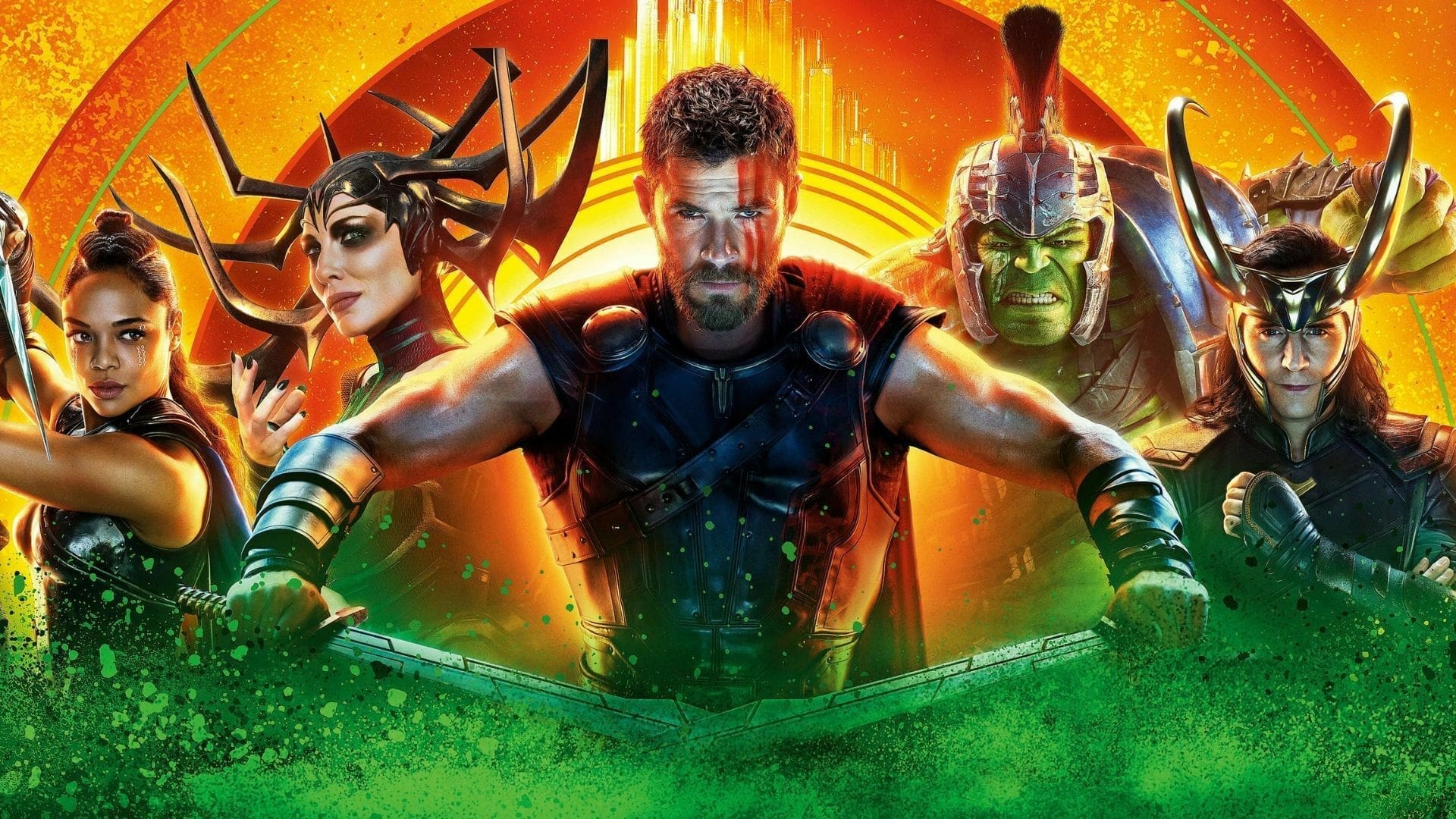
Thor – Put a Korg in it


Hosted by
KT & Oti
Show Notes
Welcome to our Reference Degustation where we take you through a four course menu of Taika Waititi tastetations. First course – Thor: Ragnarok.
Stretch those Sparkle fingers for our freaky circle rendezvous with Thor this week.
Director: Taika Waititi
Writer: Eric Pearson, Craig Kyle & Christopher L. Yost
Released: October 2017
Budget: $180,000,000
Worldwide Gross: $853,983,829
Actors: Chris Hemsworth, Tom Hiddleston, Cate Blanchett
Thank you to our patrons for contributing to the themes throughout our Taika Waititi Reference Degustation.
We did watch the first two Thor movies to inform our watching of Thor: Ragnarok.
Themes
Directing
This was the better Thor in the series. Elevating the story where every seamless shot, nails comedic effect, may seem cheesy but it all works. There are a lot of fundamentals to directing, the grandiose nature of Asgard and how we transition in Sakar. Taika is a whole entity of energy. Like that fun teacher in school, either way the work will get done but you will enjoy yourself more with Taika at the helm. There’s a base level to Marvel movies and this follows the same formula. He brought familiar talents on a global stage.
Tone
Quirky/eccentric tone: We wouldn’t allocate this specifically to Taika as Marvel movies tend to not linger on emotionally heavy moments. This is consistent throughout Marvel. An emotional boner stopping. It was the intersection of the popularity of Marvel and the marvelousness of Taika Waititi. There were still offbeat moments in the first Thor so that tone was brewing before Taika. Although the tone came to a crescendo in Ragnarok. There’s so much Americanisms we all are used to so it was nice to have Kiwi/Aussie humour in a box office movie.
Comedy as a way of dealing with harsh realities: As noted the format did not allow for addressing harsh realities.
Story
Belonging: Literally the throughline of this film. Always keeping it simple and finding the emotional attachment.
Characters
- Childlike Wonder (Precocious kids, The lovable fool): Thor and Korg are the lovable fools.
- Father son dynamic: Odin and Thor. Odin and Loki. Odin kept a lot from his sons. Had it not been for Hela, they were never to know.
- He makes a cameo: Absolutely as Korg!
- Real people as fantasy figures: Not met.
Breakdown and Analysis
- When you’re watching something you will realise it is not for you. Example of Odin saying “You only have one eye but even with both eyes you could only see half the picture”
- Archer goes to space section. Norse Lore of Odin, Hela, Thor, Loki.
- A more meaningful story especially away from the unnecessary love story. We get to focus more on who Thor is as a person. When he first gets exiled but he found himself more in Ragnarok.
- The first Thor is very straightforward hence making it the weakest in the series. It needed to find it’s flavour. Thor was early in the MCU so it was probably a decision to play it safe and get more fun as it grew in popularity.
- The hammer had more character development than Thor in the early films. The hammer did more pounding than Thor.
- Chris Hemsworth came into his own as Thor. He is fully in his element. There was cohesion about everything he did. Thor and Korg had the best scenes.
- Loki and Hela were not dealt with great care and it feels like they just come off bad just because.
- Loki already had resentment because Thor was naturally very capable. KT did not buy into the evil component of Loki and saw him with human struggles. With a scrutinous eye, there were moments of vulnerability with Loki.
- There is a rich story between Odin and Hela that was not addressed. Odin is old and decides he is a righteous man. Hela did what was needed and of course she was right to be confused that Odin changed his tune. Civilizations were not won through fanfare and good will. They were won through power. Rollo from Vikings and Abbas from 4 Blocks are perfect examples of 2IC that are there for the violent actions that are taken even further as there is a discerning leader making the decisions. Through Hela’s sparse dialogue there was hurt which was understandable because she was just doing what she was told. There was a lot more to Hela than her just being evil.
- It was clear that Valkyrie was going to join the team so the back and forth between her and Thor got very tedious. As per Oti, the classic tortured hero.
Unrelated but vital points
- KT only wants Mark Ruffalo in two instances. As the actual Hulk and in Spotlight.
- Watch the History Channel Vikings.
- Not all superhero movies are for kids.
- KT’s favourite Hemsworth is Kenan Thomspson from SNL.
Episode Details
- Duration
- 0:00
- Released
- February 2, 2021
- Category
- Episode
- Hosts


Transcript
Transcript (8,077 words)
Full transcript of Thor – Put a Korg in it.
KT: Kia ora, friends and lovers. Welcome to the second Reference Degustation.
Oti: Woo hoo.
KT: And essentially what that means is because Oti and I are certified hoinkers, not just movie wise, but also food wise, we do like to go to the cloth napkin sort of establishment, sometimes even with a champagne trolley, Oti. So welcome. This is going to celebration of Tantalizing Taika Waititi Tastetations. Again, we said wankers. Welcome friends and lovers. We have covered Miyazaki as our first Reference Degustation. We would implore you to digest
KT: what we covered in our first year of podcasting, but we also welcome you along the journey here. Interestingly enough, we did have the aim of covering Guillermo del Toro for this particular Reference Degustation. But I came across some really interesting information about Taika, and I just wanted to quickly share that with you guys just so you're aware of it. We talk about diversity a lot in front of the screen, behind the screen. Know, Taika tells some very insular personal stories as well as big blockbusters
KT: as we're getting through today. He worked with Screen Australia when they were filming Thor: Ragnarok in Australia to help get internships with indigenous talent in Australia to get involved. We also see Shari Sebbens who plays an Asgardian mother. We also see Steven Oliver from Black Comedy
KT: in there, albeit shortly lived but very much delightful. I just wanna read a quick quote from Taika in regards to this. Whenever I do my films, I make sure we try to get any locals who might be interested in the film industry to come along and get some work experience or just sit around on set and see how it's done because I never had that opportunity when I was a kid.
Oti: Very nice.
KT: And that's exactly the way to do it. I'm very excited. You know, I do feel that I'm very excited to see
KT: many more films, many more hopeful awards to come with Taika's career, but why not celebrate him now? So strap in friends and lovers and delight yourself with our month long celebration. Let's get on with the Degustation. Skull, friends and lovers. Welcome back to the For Your Reference podcast. You got your host, KT.
Oti: And Oti.
KT: Stretch those sparkle fingers for our freaky circle rendezvous with Thor: Ragnarok this week.
Oti: Very nice. Woo hoo hoo.
KT: As you would have heard from the intro, this is our very special Reference Degustation. This is where we cover Taika's filmography.
KT: Interestingly enough, I think this is the second time only that we've covered a Marvel franchise. But also, we're not covering the franchise, we're only covering Thor: Ragnarok today. But because we are learned even in the most comic book of sense, we did watch the first two just to help us feel the difference and be able to see distinctive styles of Taika in this film. So let's start off with the stats.
KT: We have director of Taika Waititi. We have writers of Eric Pearson, Craig Kyle, and Christopher L. Yost. There was also a very nice Stan Lee cameo
Oti: Yes. There was.
KT: In the film. It was released in October 2017. It has a very champagne cut budget of a $180,000,000.
Oti: Very
Oti: interesting.
KT: Aside from the intro that we gave at the start of the Reference Degustation, we do feel like this first tasting, this first course is really a way to get the palate ready. It's the most accessible. Obviously, as we continue through Taika's filmography, the budgets will be completely different. We have a worldwide gross of 853,900,000 denari.
Oti: Wow.
KT: I think I'm in the wrong lure. We have a cast of Chris Hemsworth, Tom Hiddleston, Cate Blanchett, and a whole slew of some specific star roles in Ragnarok particularly. So
KT: welcome, welcome, welcome. You have made it just in time for your reservation at the Reference Degustation. If this is the first time you were dining at our verbal podcast today, we usually go through a filmography. In this case, we seem to be going in the theme of directors, but it could definitely change in the future. And we like to talk about common or recurring themes throughout the filmography, in this case for Taika Waititi. So before we get to the specific themes,
KT: let's go into general first impressions because this is the first course, feel free to give your first impressions of Taika as well. And also, you know, this Thor franchise and then Ragnarok specifically. So spoiler spoiler spoiler just in case. Well, Dietary requirements, don't you reckon?
Oti: Exactly.
Oti: I think I was fatigued from Thor, especially after The Dark World came up. I watched it and it just sucked the life out of me. So when Ragnarok came out, I think I took about a year before I even watched it. Yep. So this was my second rewatch and I loved it. It's the best of the three by a distant mile. Yep. You could see Taika's qualities shine through. I think when we get to the themes, you'll kind of see the patterns. And
Oti: it was really fun. I didn't feel like I needed to look at the time to see how much time's remaining. It flowed through. It was really interesting to just hear different accents as well. Yeah. Korg was specifically funny and hilarious,
Oti: bringing that bringing that Kiwi humor.
KT: How can you talk about accents and not talk about our beloved Karl Urban?
Oti: Oh, yeah.
KT: And he didn't even notice that was him.
Oti: I didn't even realize that was bloody Karl Urban.
KT: Aside from the fact that he's a Kiwi, that voice.
Oti: The hair maketh the man, mate.
KT: Because it was like, you didn't even notice it until I told you and you still kinda didn't believe me and see.
Oti: Yeah. I closed my eyes and listened to his voice and he was just there. He was our boy, man.
KT: The boy in question.
Oti: Nice. When it comes to Taika's work, of his first introductions to me at least was his work on Hunt for the Wilderpeople, which was an office hit. And it's one of the things I was like bringing it home to KT to have to watch. You know, one of the best movies in 2016 in my opinion.
KT: Oh, cutely enough. That is of course later on in the Reference Degustation, Oti, if you're nasty. Let's
KT: start off with my first impressions. I've heard about Boy a lot and maybe I need to give my card back to someone because I still haven't watched it. And knowing that we were going to cover Taika's filmography, I was like, okay, well, let me just watch it with a bunch of his films together. But yeah, so it was in my brown circles, but I just never got around to it. It was one of those, what I thought Whiplash was gonna be like guaranteed qualitat
KT: whenever I wanna tap into it. But hopefully it doesn't disappoint me in the same way. Obviously, I'm aware of Taika. I think also at the same time, if you've watched an interview, if you've watched him accept an award, you get the gist of him and it's very clear when he creates a film. Even a blockbuster like Ragnarok. Specifically in regards to the Thor franchise, you know, we've around for a while. We also existed while Endgame came out. So you're probably wondering where that episode is. It did not get lost to the pod gods.
KT: KT just swings it better than Oti and that's why we don't have an episode. But aside from Black Panther, this is the Marvel movie that we've covered on our podcast. And, you know, there's a formula to it, and we'll talk about the film specifically after we talk about the themes. I'm not necessarily a fan of Marvel, just as a go to sort of point of entertainment. Thor, this was definitely the best Thor out of the franchise, I would say. Okay, so let's get into the themes.
KT: We also put the feelers out there to our patrons if they wanted to contribute, so you'll hear some feedback and some contributions in regards to that. So let's talk generally about the directing of Thor: Ragnarok.
KT: How did you feel about the directing?
Oti: Like we've said, this was the better Thor by a country mile in my opinion. Uh-huh. We could see Taika's quality shine through in this. Mhmm. Just elevating the story to a level where every every sort of seamless shot, it was either it nails its comedic effects, be it sometimes it may seem cheesy, but if it's or whether it's Hulk and Thor bouncing
Oti: banter or having banter with each other.
KT: For me, in regards to the directing, unless it's boss shaky cam, I don't really notice the difference in directing. And and maybe that's just something I need to refine my eye with. I feel like there are a lot of fundamentals to directing. And in regards to the dialogue and how that matches the grandiose nature of Asgard and how we transition into Sakaar, there's so many, you know, different worlds that we're traversing,
KT: and I feel like the directing really followed that. I feel like with Taika, he's such a great guy. And he's a lot of fun to be around even if you watch a lot of the interviews, you know, behind the scenes, on set. He is a whole entity of energy. Right? I feel like Taika is kind of like that fun teacher that you have in school, either way the work's gonna get done. It's just you enjoy the process
KT: more when you have someone like Taika around. So in regards to the directing, maybe we'll see more of it in his more personal or more sort of insular sort of films.
Oti: But for for a film like this, to me, yeah, it it ticks all the boxes. Yeah. I'm not sure there's an expectation too much on what like, there's a base level to this kind of movies of where the story and the action sequences and trying to meet this sort of base level expectation and anticipation, especially for the sort of a wide audience range that he's trying to cater to. There's a level of give or take. And
Oti: like you've said, I completely agree that in his more personal projects, we get to see more of who he is as a director compared to what we saw on Ragnarok. But that's not a fault of Taika or anything like that. It's just a matter of the sort of project this is and the scale of which Marvel is in the in the entertainment industry and what people expect of Thor, pretty much. But, yeah, I thought he he did quite well. He did quite well. He brought in new talents,
Oti: which was interesting to see.
KT: That's something familiar talent on a global stage.
Oti: Exactly. Exactly. And that was something left there from at least we didn't see in the last two movies. So it was really exciting to see and hear.
KT: All right. Well, let's sink our
KT: non vampire because we're not in the shadows yet. Teeth into the themes that we have for Taika's filmography. Grab your scorecard, friends and lovers. We are starting off with the tone. Taika is known for his Taika quirkisms coined on the podcast and having an eccentric sort of tone, we have our lovely patron Ben chiming in, comedy as a way of dealing with harsh realities. So how did you feel in regards to the tone of Ragnarok and whether it met these quirkisms?
Oti: It did, but I wouldn't put it down as a Taika quality, especially in this movie because I feel like all Marvel movies follow this sort of formula where they don't wanna linger on anything too emotional. Mhmm. Because in one line, you have this sort of emotional buildup or emotional scene or emotional line, and then it'll be followed up by a quirky sort of one liner, a comedic one rape or something that's just yeah. You know, it could have lingered in there, baby. But then
KT: It's an emotional boner stopper.
Oti: Exactly.
KT: Exactly. And yeah, exactly. It's it's within the scaffolding. It's within the structure of Marvel. So who's to say how much of it is Taika and how much of it is Marvel? Yeah. I do agree. I feel like it was the intersection of the popularity of Marvel and the marvelousness of Taika. I'm going to sell that show Marvelous Taika Waititi. Watch me win all the awards, I'll have Alex Borstein on it as well.
Oti: Oh, wow.
KT: Because, you know, even watching the first Thor movie, it was a little off center. It was selling a very traditional
KT: Norse mythology, but there were still some, you know, offbeat sort of moments, particularly with Kat Dennings and also Natalie Portman. I don't know if she still speaks to an existence in the Marvel universe, but there you go. So so that tone was already brewing before Taika came along, but it completely crescendoed in Thor: Ragnarok. So I think it was a perfect marriage of Marvel and Taika.
Oti: Definitely better executed.
Oti: Whereas in the early movies, it felt sort of off center and off putting, I might add. Yep. It it it was the the transitions were seamless. It there was no sort of weird it didn't feel corny. Some aspects of it didn't feel too corny.
KT: Okay.
Oti: And as much as, yeah, it's a bloody Marvel movie. I'm not gonna continue saying that but
KT: It was a bit corgi, wasn't it?
Oti: Yeah.
KT: Yeah. But what what I will say tonally about Thor: Ragnarok in particular was it worked. It worked absolutely. And I found myself giggle gaggling every time Korg came on the screen. And the reason why I started to identify it while we're watching the film was it not to say that it's only geared towards Kiwi Australian audiences and maybe even Britonians in some cases, but it's nice to have things that we can understand.
KT: Right? There's a lot of times when you watch films, even within this film, look at me, I'm calling it a film. Take away my cinephile credits if I have any. But you there's so much Americanisms that we just get used to consuming. So it's nice to have, you know, even the spaceships are named after Holden cars, which are Australian, the Commodore most famously for orgies. I'm sure there's a fact sheet somewhere in the world. Yeah. Read it at us nerds. But it was nice to have, you know, that niche sort of comedy.
KT: And the reason why it hit even harder when, you know, Taika Korg was on the screen was because of his accent as well. It made me feel great. And that's why I'm very excited to continue on with Boy and What We Do in the Shadows and Hunt for the Wilderpeople because that's exactly where it's going to hit.
Oti: Oh, exactly.
Oti: And I remember when we're just watching before even Korg came into the screen and I think your head had gone down a bit and you're like, oh, oh, wait. Like, yeah, I'm not sure about this movie, but Korg came in and you really lit up. You
KT: Yeah. I did.
Oti: You lit up immediately.
KT: And, you know, it's a gift and a curse because every time Thor was talking, I could just imagine Taika saying it to Chris Hemsworth. You know what I mean? And that's kind of what I was enjoying. I could also imagine Taika impersonating the incredible Hulk. Right? And while we're on this, I I don't know. I I did in the early days, the first year of our podcast, I did find a way to go on my rant about Mark Ruffalo. But what I will say about Mark Ruffalo is I only want him in two instances.
KT: Him as the actual Hulk and him in Spotlight. That's the only time I wanna witness
KT: Mark Ruffalo.
Oti: He's not bad. He's he's I think he's done some solid work outside of Marvel.
KT: Oh, yeah. Absolutely. But those are my preferences. You know, like Thor said, I prefer you. I only prefer those two parts of Mark Ruffalo. Right. Let's move on to the storytelling of Thor: Ragnarok. So Taika, you know, usually has a central theme of belonging. So shout out to our Smoke and Mirror patrons.
KT: All of those films have a common thread of home and finding your place in it. Do you think that hit the mark in Ragnarok?
Oti: Oh, yeah. I think one of the biggest things, at least in Ragnarok, is that Asgard isn't a place, it's the people.
KT: Vomit. And that last scene between Thor and Odin, oh my God. Eventually we're going to get to Tenet and you're going to hear how I feel about Tenet. But you know, friends and lovers, when you're watching something,
KT: usually it's dialogue, sometimes it's a visual cue, but something will happen in a film and you'll realize that this is not for you. You might enjoy it to a degree, but you realize that this movie is not for you. And that whole sequence, you know, after Thor loses his eye and Odin really thinks he's saying something, you've only got one eye, but even with both eyes, you could only see half Fuck the off. That is a full succession. Fuck off. What else was he saying in that scene?
Oti: When Thor had just lost his arm, I think he was like, but I don't have my hammer. I can't I can't defeat her. I was like, what do you mean? You're not the god of hammers. Which is interesting because up until then, he's been fully reliant on the hammer. And without the hammer, he barely could do shit all. Yeah. So it it was like a full circle realization of who Thor is as a person, as a character
Oti: in this world. So definitely finding him finding his belonging in the world or in the cosmos and fully embracing it. In regards to the theme of belonging and finding his way home, literally the through line of this film.
KT: Even in interviews with Taika, he does talk about, you know, because there's a lot of annoying interviewers asking him, how do you think you can direct a Hollywood film? Right? That's all of them actually sound like that. Right? They all sound like fucking Doug. So, you know, Taika will talk about, he always tries to strip it back to, you know, keeping it simple and where's the emotional attachment and it's Thor trying to make his way back home essentially. I didn't have that emotional attachment, but also I wouldn't expect Taika to have that responsibility
KT: because I didn't have that emotional attachment from the first movie anyway. Yeah. I feel like that theme definitely gets all the ticks.
Oti: Yeah. Oh, for sure.
KT: Let's move on to characters that Taika has in his filmography. We have childlike wonder. So Julio from the contrarians podcast talks about precocious kids. And Paul mentions the lovable fool.
KT: So do you think we we ticked off any of those marks?
Oti: Definitely the lovable fool in Korg.
KT: You don't think Thor is also a lovable fool? Or you think it's too attractive? There's like a there's like a graph. The more attractive you get, the less goofy you get. And
KT: that's the problem with Ryan Reynolds and
Oti: It's it's like the classic 30 Rock episode where we have Jon Hamm,
KT: Nice you reference. Love it.
Oti: Well, you have Jon Hamm not doing a thing wrong. His stupid ass bite. The world will not tell him that. He's in a bubble. Yeah.
KT: He's in a bubble. And I think that goes back to what you were saying earlier. Like, Thor thought that the hammer and the loss of it was his whole power, right? Well, his whole identity. But maybe it's just like he's such an attractive guy, any sort of,
KT: you know, revealing of having a personality or lack of just shrivels him in the sun. Maybe he just can't handle that. Yeah. Maybe so. Yeah. But I I definitely think that knocks it out of the park. I don't think we really had kids in this. So not so much precocious children in this regard. Well, we don't know how old Korg is. You're only as old as you feel, brother. The next characters that we have in Taika's filmography is a father son dynamic.
Oti: Oh, we get that in heaps and bounds in this. Yeah. The movie pretty much is all just about reconnecting with Odin and trying to get him back to Asgard because he's been exiled or for whatever reason. And it's it's very interesting to see that given in that fragile state Odin was in Mhmm. You know, there's a lot he's still masked over that he he didn't really tell his children about. Yep. Because if Hela wasn't there,
Oti: then that history gets swapped off.
KT: Wait until we have actual film talk because I have a lot to say about that whole storyline.
Oti: Yeah, so definitely, I think it was definitely met.
KT: Oh, absolutely,
KT: absolutely. And you know, there's Thor and Odin, there's also Loki and Odin. I think I don't know where else I can say this, but we recently finished the History Channel series Vikings. So watching the Thor franchise after finishing the masterpiece series that is Vikings, Thor did feel like the Kidz Bop version. The very watered down version, even though we did have Stellan Skarsgard because I was wondering why we saw him in the first Thor and then it kind of connected together because these were ridiculous childhood stories he was told as a kid.
KT: Another trademark of Taika's filmography is he makes some sort of cameo and I think we've kind of already touched on it.
Oti: Oh yeah, Korg, isn't it?
KT: Yeah, absolutely. So we've definitely met that one as well. Last theme before we get to the actual film, real people. So this is Ben makes another appearance and he talks about real people as fantasy figures. So
KT: Jojo Rabbit most famously with Hitler.
Oti: Yeah. I don't think there's any room for that in this Marvel
KT: Well, you you do have Thor and Odin and and, you know, even the Valkyrie as well, but that existed even before Thor: Ragnarok. So I would say in this particular instance, no. Alright. Well, those are the themes and continue to keep your recyclable scorecards because we will continue on with the courses of the degustation. Now we're going to continue on with the film in general.
Oti: Mhmm.
KT: Okay, Oti. Where do you wanna start? Because there's a lot that happens in Ragnarok. There's a whole we have the archer goes to space section with gladiatorial
KT: battles in space with Jeff Goldblum, otherwise known as the Grandmaster. We have the essentially all of the Norse lore, you know, of Odin and Hela, Thor, Loki, Skurge, if you're nasty in some instances. Also, we have Idris Elba making a reappearance as well. And I just wanna say, was I was paying attention and trying to point your attention to Shari Sebbens and you were busy looking at Idris. Look at me. I'm a true cinephile.
Oti: You sure are. You sure? So where do you wanna start my love? Let's start with the biggest one of all, Thor. Alright. I think this was a more meaningful story away from that fucking relationship with Bloody Jane. Yeah. I cannot stand that shit in movies. I don't know, man. Especially in superhero movies. Come on.
KT: That's all people are here for. But I think it's also you were getting some trigger moments of Tarzan and Jane. You just don't like the you had like a Martha moment.
KT: You just couldn't deal with it.
Oti: It felt like an anime where they just met in like two seconds and then they're best friends. Oh, yeah. Because Jane was going on in the first movie as if they'd been to the known each other for five years.
KT: It's because he's fucking attractive. Do you forget the power of attraction, my love?
Oti: I don't know. I just felt like, Jesus, I could not I was so glad there was not that nonsense in Ragnarok. And I think that's what elevate this elevated the storyline a bit more because now we focus something different. Because now we're really focusing on Thor. Yeah. And outside of all distractions, we're focusing on him finding himself as
Oti: his own person, you know, where he belongs, who he is, and he doesn't even realize it. You know?
KT: Like the Waiting to Exhale for Thor.
Oti: Pretty much. And you know what's you know what's you know what's really weird? When he gets exiled in the first Thor, it's more about him not knowing who he is as a person. Right? And that I would argue that in Ragnarok,
Oti: he found himself a million times more or knew who he was more than in the first movie. Because in the first movie, it was just a matter of getting some minge.
KT: Okay, Jay from Inbetweeners.
Oti: He got some minge and then he was like, oh, yeah, mate. I'm all heels now. Come on, Hammer. Flicking flicking all the birds.
KT: Yeah. It's ridiculous.
Oti: I was like, Jesus, who wrote this? Yeah. So definitely adding some more writing chops or at least people who
Oti: wrote better in this helped a whole lot more.
KT: But I don't know. I think it's also a matter of priming the public for superhero sort of movies because even in the first Thor, it is very cut and dry. It's very straightforward. And in that way, it makes it the weakest of the series because why don't you just go and watch Vikings or even just watch one of the opening sequences in American Gods where they portray the Vikings as well? Like, it was a very inferior sort of portrayal
KT: of Vikings. So you it wasn't hitting all the marks in that sense. And emotionally, we didn't care. But also at the same time, Thor was very early as far as I know in my limited nonexistent knowledge of the MCU. So they were probably keeping it very safe in regards to their approach. And then as everyone started to love Marvel, you know, you're already paying $50, a $100 at the cinema, but you'll continue to pay $50, a $100 more
KT: for the limited edition Thor cup. You know what I mean?
Oti: Yeah. And I think the first Thor was just super nondescript and to the point where I think the hammer had more character more had more hammer development in the movie than in the whole fucking series.
KT: Anyway I think the hammer was pounding more than Thor was. Yeah. Yeah.
Oti: But, Jesus, what can you say about Thor that I think we get to see him evolve a bit? He was very bratty. He was very Moses from Prince of Egypt in the first
KT: Oh, he was a spoiled brat in the first place.
Oti: Oh, absolutely. But by the third one, at least to get someone who has a semblance of responsibility Yeah. Who knows he he has to do better not only for his people.
KT: Uh-huh.
Oti: You know?
Oti: So it just made the story a whole lot more enjoyable for me.
KT: Yeah. And agree with that, but I think that's just more the primability
KT: of the peoples. Like people need to be more likely to be able to enjoy it. You know what I mean? Like people aren't ready to look out of their depth corners, shady corners of the world to say they like anime. You know what I mean? Like now it's generally accepted that, you know, it's fine to like superhero movies and you even have A listers coming on to Marvel movies. And also at the same time, we're going to see more specific sort of stories,
KT: Shang-Chi, for example. So we're seeing more different type of stories, but at the same time, I don't think it would have been able to have been delivered earlier in the Marvel cycle. People needed to be ready for it.
Oti: Maybe so. Maybe so. Oh, I could see some sense in that.
Oti: I think one of the most interesting things in this as well was the fighting scene
KT: fighting scenes?
KT: The only fighting scene I cared about was the last one. Yeah. We turned it to Raiden. Even though from what I could see, it was by Led Zeppelin, but it was called the Immigrant Song. So, you know, I'll need to do
KT: some research about that.
Oti: Because we're in the process of immigrating, mate.
KT: But why do you need to immigrate if you if Asgard was inside of you all the time? Too bad there was a space war. But I I do need to give some kudos to Chris Hemsworth, even though I do remember him as Kim in Home and Away. He had a very controversial storyline. And I guess this just talks to how the times were because this wasn't very controversial,
KT: but he was a young guy and he was with an older gal.
Oti: Oh, wow.
KT: Yeah. And this was in like the early two thousands. So that was controversial for Home and Away, but we're not getting into Well, they're not Cougar Town's knock in the dime. No Courteney Cox's. Okay. Good away just yet. So, you know, I'm not talking about Chris Hemsworth acting ability, but I will say he really came into his own as Thor. There are many more years to come for Chris Hemsworth.
KT: So I guess it depends on what sort of consumer you are, whether this solidifies him as Thor. But I there was many times when we were watching the first Thor and I just saw him sitting there as Chris Hemsworth. You know, in The Sixth Sense, I talked about Bruce Willis and how I could see him acting. This one, I could just see Chris Hemsworth sitting at a diner, breaking coffee cups. Like, I didn't see Thor there, but, you know, maybe it was just working out the kinks.
KT: But in any case, when we get to Thor: Ragnarok, he is fully in his element. You know, even having Taika at the helm as well was probably a great experience for him. Him and Korg, best scenes. I would say him and Korg, number one moments for me in the film, then him and the Hulk, and then the last battle. But not really the whole battle, kind of just where he gets the thunder and he starts zapping people with his Immigrant Song.
Oti: Zapping people with immigrants. Sounds like a Bob Marley mix. Oh, yeah. I I definitely came to enjoy his performances more here because I felt like now he had fully realized his role in he had fully realized himself in the role, and everything just seemed more there was cohesion about everything that he did Yeah. And how he interacted with other cast mates, albeit the Hulk, be it Valkyrie. I think part of that has to do with a lot of the good directions that
Oti: Taika was doing at the helm.
KT: Can we pour some sip on the concrete for Volstagg? Our Ray Stevenson, our Titus Pullo
Oti: Oh, yeah.
KT: Our Blackbeard.
Oti: You didn't want to believe that he was killed off. Yeah. Right. Just thinking those knives through the chest were decorative.
KT: I I'm just like, he's he's too much, and I'm I I don't prescribe to, you know, that whole masculinity, but he is a whole man.
Oti: And
Oti: you yet want to fight me on the fact that you're Lithia in Plebs. You would sit there, sit watching gladiators being ripped the heads being ripped off of me like, oh, what a performance.
KT: It's been a while since we referenced Plebs. I'm glad it's back on the podcast. Yeah. But I wanna talk a bit more about Odin and Hela specifically. And I think this comes to my gripe with, I guess, mainstream films in general, but I guess I'll refine my battle today to the Marvel sort of films. You know, it's available and consumable for younger children. I think that also brings a misconception that all superhero movies are for kids because I remember we went to go and watch Batman versus Superman, even Joker,
KT: and kids were in the cinema, which becomes a whole problem, but that's a whole parenting thing. And I'm not gonna parent any children. Even though Oti tells me he's got children all over the world, I'm not parenting anyone. Right? But in regards to the whole approach to Marvel is it is it's it's edgy. You know, they even talk about the word orgies, so I guess that's a fun discussion for parents when they get home. But they they just get to the line without crossing it. So it is consumable across a lot of demographics
KT: around the world. But also what that means is you can't really dive deep into real pain. You just talk about the suffering of people and then you just do some stupid joke or the ball hits you in the face when you throw it against the wall. Right? And it really inhibits the ability to be able to dig a bit deeper. And that's exactly the fault that I see, not in my stars, not in your stars, but it's the fault that I see in these stars. Right? Mhmm. Loki and Hela in particular.
KT: What really bothers me and what I don't really care for in film are characters that just come off very one dimensional, specifically in regards to them just being evil. Right? Them being scornful. And, you know, we haven't really captured Mulan, at least not on our main podcast, on our Patreon we have. In regards to where that just doesn't work. Right? And I feel like even Loki from the start, he was just the brother that was in the shadow of Thor. So naturally, you're going to breed some sort of resentment. Right? Even before Loki
KT: knew that he was adopted, he had that back foot, you know, that he wasn't that blonde hair, blue eyed, or Norse gods Thor.
KT: So, you know, I
Oti: Pretty sure they believe it's American.
KT: Nice.
KT: Eagles and everything, blood eagle, if your Viking's nasty. So I guess just focusing on Loki for a second, I didn't really buy into the fact that he was evil. Right? I didn't really buy into that. I just saw him as a brother with a successful sibling.
Oti: Well, he did try to kill people in Avengers. So there's that.
KT: Yeah. But that that didn't happen in the first Thor. Right? So I'm saying as we build the Loki sort of character, there was even that vulnerable moment that they had in the elevator
KT: where Thor was like, we don't need to see each other after this. And, you know, if you have that scrutinous eye even while you're watching a Marvel film, you could see that Loki had a sense of vulnerability about him, and that's not actually what he wanted. But like you said, we don't live in a sense we don't live in a world of vulnerability in this, which is weird because I think when you mentioned about Hela and Odin,
Oti: there's this rich story there.
KT: Oh, yeah. Absolutely.
Oti: I think absolutely brushed it off, where wherein wherein I can point out to movies like Black Panther where they fully embrace their villainy or or or the atrocities that were done, especially when you have villains like Killmonger. You know? Hela is coming from that perspective, mate. You know? We killed people for this. Yeah. They've built Asgard with golden towers, golden floors, and chairs from stolen fucking gold. Like, where do you think it came from, Thor?
KT: Exactly.
Oti: Where do you think your privilege came from, now. Now that I've done all that, I'm old now. I can just turn a switch and be like, oh, now I'm all good. Now I'm a I'm a I'm a righteous king.
KT: Yes.
Oti: Piss right off. Hela was fully right in her reaction.
KT: Yeah. Absolutely.
Oti: And wanting to conquer the fucking world because that's how she was she was she was born to do. She's born with it. Yeah. Yeah. Cate Blanchett was giving me body yada yada yada yada. Can I just say? Yeah. Wow. What a woman.
KT: I'm not sure how I felt. Like, she she she did well in the role because she excels. She's Cate XL Blanchett.
Oti: No. I can't just don't see a Cate Blanchett. Meg Thee Stallion? Meg Thee Stallion and Taraji all there just
KT: dancing the night away. I tap into your inception dreams, my love. Yeah. We live in a Edward and Bella world. Anyway, but what I was saying, I I really obviously, she is great and she tackled it well. But it was interesting seeing her switch up to something that leaned into comedy. And maybe that's just my lack of breadth in regards to my Blanchett viewing. But Hela, yeah, absolutely, absolutely. And again, I guess it's very easy to blame it on the rating and to blame it on the mainstream accessibility
KT: of the film, but let's be real. And we talked about this in our Prince of Egypt episode. Maybe someone needs to stop us. Maybe we're supposed to have a conversation, you know, correspondent to the rating. But we go all the way there if you're nasty, friends and lovers. But let's talk about it. Civilizations were not won through fanfare and goodwill. They were won by overthrowing people with power. And that's exactly what Odin and Hela did. In that particular instance, there's nothing really wrong with that. If we go back to the series of Vikings,
KT: we had Ragnar who rest in love and peace and power in a TV show. But he was he was scrupulous when he needed to be, but you had Rollo, who was the right hand man, and he didn't really have a, you know, a a censor of what was too far. But he was the guy that you go to when you need shit to get done. Rollo was Hela in the Vikings. Right?
KT: 4 Blocks, which is a German series that we're currently watching and we're going to cover on the podcast, we have Abbas. We also have Ali Toni Hamady. You know, you in any case, you have a 2IC that is there for the violent sort of actions that maybe you would take, but they take it even further. And then you're the more discerning leader that makes the decisions.
KT: And that's who Odin was. Right? But his hands aren't free of the blood. And I think that's part of it. Because if you listen to a lot of Hela's dialogue, albeit very sparse,
Oti: you can see that there's a lot of hurt from her because she was just doing what was agreed. Yeah. They were going to take over. Yeah. So just because Odin got tired, doesn't mean she'd know that Hela just has to back off. Yeah. Exactly. It was it was ridiculous that it was just swept under the rug and now we had this villain who's not really a villain. She's being gaslit by her own father.
KT: Man,
KT: parents can fuck you up. And that is the tagline if ever we've had one aside from being flicking daily because it's good for the doctor.
Oti: Oh, yeah. Wow.
KT: Yeah. But I I do feel like there was a lot more to Hela than just her being bad.
Oti: Well, I I I really do feel like they leaned into that energy in Black Panther with Killmonger than they did with Hela.
KT: And they just made Hela just like, just another villain, which she wasn't.
Oti: No.
KT: But Killmonger kind of just became another villain. Like, go and listen to our very first episode of the podcast because I did have qualms with the way that they villainize Killmonger. Because if I was a kid in the nineties in Oakland, California, and I was left
Oti: In the Oakland.
KT: Yeah. Shout outs to Donald Glover. Give us an Atlanta. But then again, you're a creative genius, so you can do whatever you like and we'll follow you.
KT: But yeah, I will definitely go on a rampage much like your manga as well. But we've come to find that I am the one with the swift sword on this podcast. Be it through Parasite, be it through El Hoyo, be it through many of the social commentary films and allegories that we cover on this podcast. But, yeah, Hela definitely had a lot of layers to her, And I feel like it was kind of swept under the rug, I guess to deal with other storylines.
KT: Yeah. But she definitely deserves a lot more credit than she was given on the film. I think another character that I wish we got a bit more, not necessarily screen time because we did see a lot of Valkyrie, but she did come off very one dimensional. Like I don't really care for the characters that are really like, stubborn and and the world is against them because you know just by the device of the film, even without knowing later on in the Avengers, like, Endgame, for example,
KT: you know that she's going to join their team. So why are we doing this back and forth? Especially because we have no rounded out sort of dimension to her, which we later get to see in the film, but it was just all of her gruff sort of interactions with Thor were unnecessary
KT: to me.
Oti: Yeah. She came off really weirdly up until we started to see more of her and at least understand it. I think once we saw the vision Yeah. Once Loki touched her forehead and she we saw what she had gone through, and she started opening up and starting being more of a character that we can start liking and resonating with. Yeah. Like Rosalie from Twilight.
KT: Volturi. You reminded me of the Volturi when you but,
Oti: yeah, like, I just it's always the classic sort of tortured hero, you know? It's
Oti: beaten to death by now.
KT: It's interesting that her name is Valkyrie though. Because isn't Valkyrie the name of the entity? Not necessarily all of the names.
Oti: Well, she's the remaining one, so she's embodying all of the Valkyries.
KT: Okay, Odin.
Oti: You're welcome.
Oti: Should be all under the rug, mate.
KT: As
KT: we are expanding the cast, I do wanna give a shout out to Rachel House who plays Topaz, who you kind of see on the right hand side of the Grandmaster. She finds a very nice way to explain slaves because the Grandmaster doesn't like it. I think it was prisoners with jobs. Yeah. Also shout out as well because we recently saw her in Soul and she is also in Hunt for the Wilderpeople, which will be on another course in the Degustation.
Oti: Nice.
KT: Do you have any other cast you wanna shout out?
Oti: I think that's a shout out to Luke Hemsworth who played Thor in the play.
KT: I I thought you meant the other Hemsworth brother, Kenan Thompson from SNL. Yeah. And then also Matt Damon was also in the play as well. Right? So
Oti: I just wanna bring a point here or at least ask you a question.
KT: Okay. Yeah.
Oti: So we have Surtur, the the guy that Thor fights beats easily at the start and then who ends up destroying Asgard at the end or probably killing Hela in the process. So
Oti: what was your take on that?
KT: Well, just to clarify, I think the prophecy was he was going to destroy Asgard and in the process destroy Hela. That was the only way Hela could get destroyed.
Oti: But we have okay. So there's this eternal flame apparently that was stolen from Surtur. And, you know, we have Hela walking down the corridor of walking in the down the corridor of the vault Yep. And saying how things are like, not strong, weak, weak. And then she ends up with the eternal flame. And she's like, oh, now this is true power. For someone who knows all those artifacts could
Oti: she knows the history of that place better than anyone else.
KT: Yeah. Absolutely.
Oti: I just feel like there was a loophole there where you can't have Hela knowing all this and then walk past the mask and be like, that doesn't play a part in my or it doesn't pose a threat to me because what?
KT: Well, it also goes back to the point that you were saying with Thor because he knocked those antlers off, like, in two minutes.
Oti: No. Apparently, the theory is that or at least my thinking is that at the start of the movie when Thor fights him, he's at a weakened state because he doesn't have the eternal flame or some shit. So
Oti: by the end of it, when he has the eternal flame, so Thor is beating him at a fraction of his power. So by the end of it, he's full blown powerful
KT: Okay. So your argument isn't that angle. Your argument is that Hela should have known.
Oti: Hela should have known. She should have hella known. It would if this was an Insecure episode, it would have been hella known, mate.
KT: Nice. Oh, I love that. Season
KT: five on the way, friends and lovers. For sure. Yeah. It did feel weird because I don't know. At first, I thought it was going to be the power of friendship that was going to defeat Hela. But it became very clear, especially when Skurge, our Karl Urban, you know, had a really pretty he actually had a pretty cool sort of jump from the ship. He was like, for Asgard. And then he went and then he started shooting everyone with his rifle until he really easily got stabbed by Hela. So
KT: it was made very clear that Hela wasn't going to be defeated that way.
Oti: Yeah. The power hierarchy in this is so messed up like Black Clover. Like It was similar to Pacific Rim, and it was similar to Mordor.
Oti: Because you have you have you have Odin saying, Thor, you're stronger than me. Thor putting all his effort and power into a bloody punch and does barely even scratches
Oti: Hela.
KT: He meant philosophically theorifices. Not fizzy. Literally. No. Literally. Oh, Alright. Apparently, Zachary Levi, your Chuck was in this movie.
Oti: Was he?
KT: Yeah. It was called Fandral.
Oti: Oh, wow. I did not see him at all.
KT: Just
KT: like any first tasting of a wankry degustation, all of our palates are open, not just our mouths, and we are ready to indulge in all of the delights. Usually, this is where we do For Your Reference, but because this is a set curated sort of degustation, we have some very tantalizing films for you to divulge in. Thank you so much friends and lovers for joining us on this Mammoth Ragnarok ish episode today. And thank you for continuing to join us on a month long celebration of Tantalizing Taika Waititi Tastetations.
Oti: Oh, Tastetations.
KT: Yes. I couldn't get the rights to the Temptations. It's gonna be called my corg instead. I'd go for that. I gotta scout on a corgi day.
Oti: Oh, wow. You're continuing this.
KT: How dare you? Don't trivialize art, Routine. Thank you so much. If you want to continue to hold the banner of art on Twitter and Instagram, we're @ForYourRefPod. You can write us an email at hello@fyrpodcast.com. And we're also on Apple Podcasts if you like to leave a rating and review. And we'll see you on the next course of this Reference Degustation. See you. Ciao.
Related on FYR
Discussion
Loading comments...