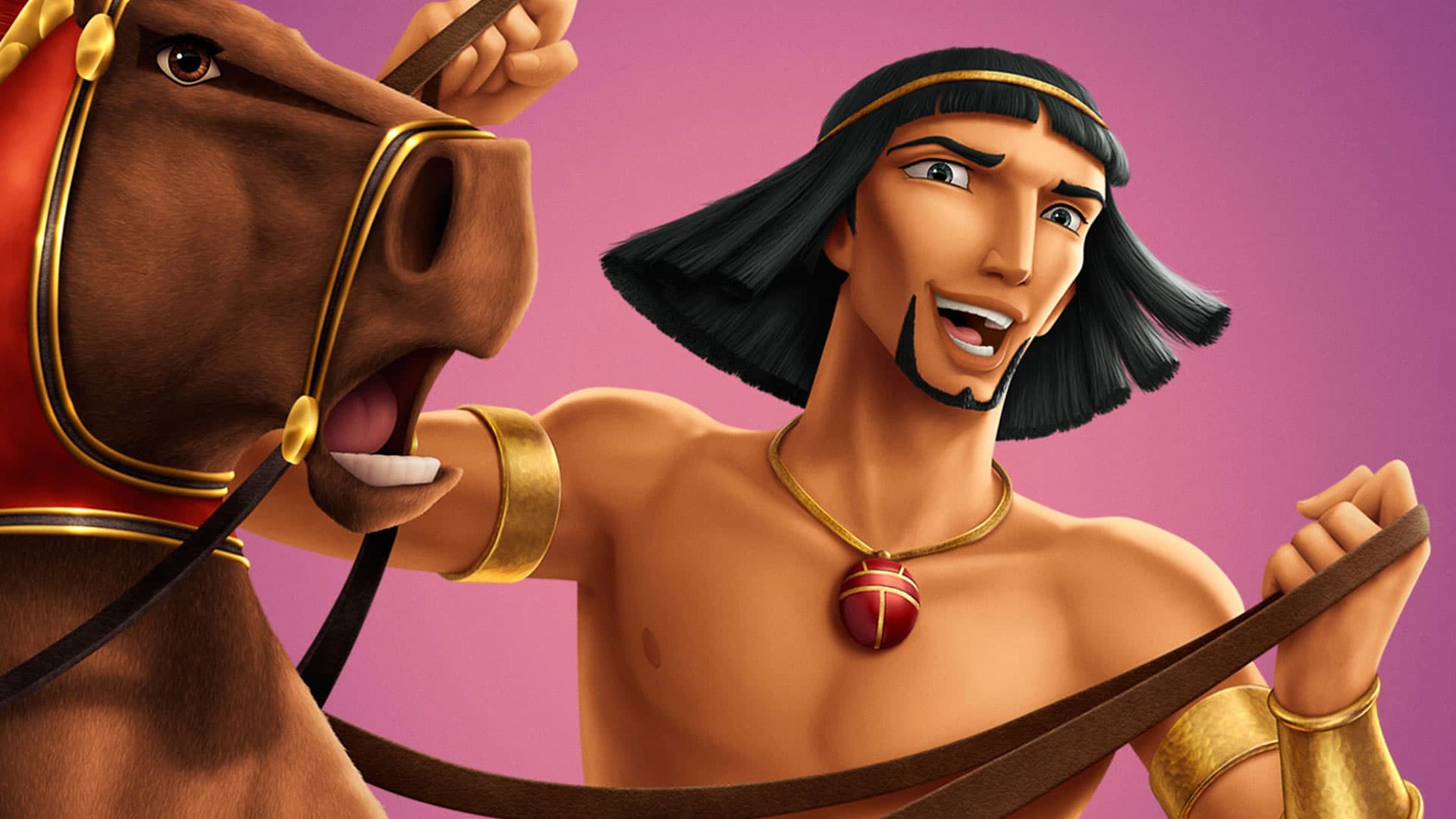
The Prince of Egypt – For rich or Tzipporah


Hosted by
KT & Oti
Show Notes
Directors: Brenda Chapman, Steve Hickner
Writers: Philip LaZebnik, Nicholas Meyer
Stars: Val Kilmer, Ralph Fiennes, Michelle Pfeiffer
Budget: $70,000,000
Worldwide Gross: $218,613,188
Breakdown and Analysis
- Our aim is not to be sacrilegious but we do have our views on organised religion.
- Oti draws on his experiences as an altar boy to help inform the accuracy from the text to screen.
- So long as we need a reason to honour our dead and need to move on, religion will always exist. So long as we need a way to control other people, religion will always be around. It’s very saddening but KT can also see how this can help personal journeys.
- Moses acted very entitled. Akin to Anastasia carrying herself like a royal person. He was aware of his privilege and the servants available to his every whim.
- There were a lot of cockamamee moments like when Moses spills the wine on the workers. So many people are suffering and offering their best food to the pharaoh and here Moses is spilling a luxury item for fun.
- Personally, KT did not buy into the character development of Moses. She didn’t buy that he should be the one to lead all people.
- When Moses gets confronted by Miriam, it’s clear that Moses has an air of privilege about him.
- From a story point of view, the character development didn’t feel earned and didn’t make sense. It’s understandable when the Hebrew people didn’t want to cause a fuss.
- To have slaves there is a loss of humanity. Viewing people less to have them working for and under you. There are obviously methods a normal person wouldn’t venture but Seti bravely went.
- To get from accepted Hebrew people were slaves to fully putting all trust in Moses felt unearned.
- Human nature is very selfish and if you’re not getting any benefits from Moses, you’re gonna start questioning.
- Because they tried to fit so much, we just had to accept the Hebrew people trusted Moses.
- Oti shares Moses stayed after getting married, he stayed for 40 years before returning.
- Seti had a lot of tenderness towards Moses which made no sense. He ordered mass killing of babies yet found in his heart to genuinely love Moses.
- KT didn’t believe that Rameses would have received Moses so warmly after disappearing for 40 years. The chip Rameses had about measuring up to his father was stronger than his love for his brother, Moses.
- Unfortunately, any furthering of a civilization is built on the backs of slaves.
- Christianity is linked to colonisation and this is seen around the world from South Pacific to Africa.
Unrelated but vital points
- Oti claimed responsibility for facts and research for this review. Kindly refer feedback to him.
- Oti was not one of the 600 religious experts consulted for the film.
- If you were hoping for Oti & KT to go deeper into religion, look no further.
- Can you spoil a bible story?
- Moses did a Dave Chappelle and went to Africa.
- We’ve all had hieroglyph fever dreams.
- Please contact us for a first draft of Egyptian Gods by Oti Gaiman. KT will play Bilquis.
- Oti Styles graces us with ‘The Sign of the Times’
- The Red Blood Wedding water.
Referenced


Episode Details
- Duration
- 0:00
- Released
- March 12, 2021
- Category
- Episode
- Hosts


Transcript
Transcript (8,718 words)
Full transcript of The Prince of Egypt – For rich or Tzipporah.
KT: Welcome, guys, in the space time nonlinear continuum. We are starting off with unguess me of biblical proportions, Oti. Mhmm. Let's say which testament we prefer. And I'm not talking about the Mormon one. I'm talking about the I'm talking about the Old Testament and the New Testament.
Oti: In three,
KT: two, one. Old Testament. Oh, the ever forgiving Oti.
Oti: I like my Sarita's content, mate.
KT: Well, there there's a lot of forgiving preemptively you'll need to do for me, so let's get on with the show. Greetings, friends and lovers. Welcome back to the For Your Reference podcast. You got your host, KT.
Oti: And Oti.
KT: And keep the baby in the river water while we sing about our most delectable of incense. By any sort of indication, we are speaking about the DreamWorks 1998 film, The Prince of Egypt. Mhmm. I promised myself I wouldn't sing
KT: the Mariah Carey Whitney Houston song just to keep the memory, but then I also watched the movie and heard the singing. Miriam and Zipporah did not do it any justice. No. Michelle Pfeiffer's, most of all. Let's start off with the stats. I'm very excited to get into our first impressions, but let's get through the stats, which is what we do around here. Directors of Brenda Chapman, Steve Hickner. We also have noted Hans Zimmer for the soundtrack. Writers of Philip LaZebnik and Nicholas Meyer. We have stars, Val Kilmer, if you will believe, Oti.
KT: Mhmm. Ralph Fiennes, and Michelle Pfeiffer's. Oh, nice. Yeah. So we have some future Batman lore and some Voldies. So I think we established that JK Rowling is the Voldies and the biggest Horcrux in the world. Oh, wow. I will not be silenced. Welcome. Welcome. Welcome, friends and lovers. Welcome to the For Your Reference Podcast. If you are joining us in the purgatory that is after Christmas and before the new, but not really new hell of 2021. Welcome. Welcome. Welcome. Our aim is not to be sacrilegious.
KT: Although if you have listened to a few of our podcast episodes, we definitely have views on organized religion. Mhmm. So we will definitely be talking about, obviously, the religious text of Exodus, not the genesis of Oti and I Mhmm. Getting nasty in a garden somewhere. But, yeah, I I guess just be aware of that. And also, interestingly, I would like to talk about the movie from a story point of view as well. Mhmm. But let's start off with our first impressions. Oti really puffed up his big vibrato chest when we decided to cover this movie.
KT: And, you know, a lot of the time, I do my learned research. Yes. I'll pull my IMDb trivia glasses up. But Oti held me back and said, I got this, babe. So this is if you've listened to our Christmas special, we did threaten, yes, to roll out an FYR curriculum. So this is a little tasting platter of Oti's unofficial abridged version of the Bible. So let's start off with first impressions.
KT: How many times have you watched the Prince of Egypt? Was it a big thing growing up? And how did it feel watching it now?
Oti: It was definitely big in my circles. It was really exciting.
KT: We love your circles. They're very exciting.
Oti: Yes. Because growing up Catholic, I was an altar boy. I was engulfed in this world. Yep. I this was my day to day, reading the bible Mhmm. Over and over and over. And
KT: You sound like Jackie Chan in Rush Hour over and over and over.
Oti: So when when this came out, it was fast. The Whitney Houston Mariah Carey song that just hyped it up for me. And then when it released, it was just different. It was different from what I'd seen and what I'd read. It was sanitized. Of course, it being a cartoon, I didn't expect too much from it because in my childhood, or at least growing up, I was watching Charlton Heston's Ten Commandments almost on a weekly basis.
KT: Is that live action?
Oti: Yeah. So it's the Ten Commandments. It's like four hours long.
KT: Jeez.
Oti: Was literally
Oti: like, our our go to movie in church or in Sunday school when parents are, you know, going to do the adult things, then you're told, ah, this is movie.
KT: Adult Catholic things.
Oti: Yep. This is what you're gonna do. This is what you're gonna watch. So it used to just keep us busy. It used that's what I grew up watching. So Prince of Egypt was a really good change of gear.
KT: Well, I I guess that was one of the questions that I had for you. Was this, like, the first visualization of a bible story? But obviously No. With what you're saying, you're well learned and well experienced. There was a, like, an intro sort of screen on there saying that, you know, as much as they can, DreamWorks has made this as accurate as possible. Executive producer Jeffrey Katzenberg also conferred with 600 religious experts. Even though Oti was refuting some of the things that happened in the movie, I guess Oti wasn't consulted, unfortunately.
KT: Mhmm. I guess look out for his unofficial version with a minus $5 budget. Okay. So how did it feel now, watching it now? Because it was it like an educational device back then, and now it's more of an entertainment? Like, what's the difference now?
Oti: I think I'm watching it now with a different lens, and I just watch it purely from a story perspective.
Oti: Back then, I watched it believing and taking it as as as as as the word, basically.
KT: A good word. So
Oti: it was different. It was definitely different. It took me back. I felt like I was a kid, but then I had to pull myself out when I had so moments in the movie. Was like, yeah. This is this is quite lining up to what, at least, I understand of what happened. Yeah. And I I can't wait to go into those details as well.
KT: If anyone is still playing how old is KT Bingo, I was under 10 years old when Prince of Egypt came out. It also came out the same year that Mulan came out. Mhmm. Tonally, different. You know, Mulan had its light and shade. Prince of Egypt was DMX all the way through the runtime Mhmm. In regards to how it would scare a child, I would say, personally. Mhmm. No? Yeah. Yeah. All of, like, the the whole blood on the walls and shit, this is, like, Old Testament.
Oti: Then again, this is not my first sort of watching Moses. At least even reading it, it was so brutal in my imagining of what was happening that them visualizing it in Prince of Egypt was like, this is kind of tame compared to my expectations of what happened on that day or at least what I've had watched in the Ten Commandments.
KT: I think it's also, like, given your frame of reference and your context of the history you were learning about your own country compared to, like, the history I was learning in Australia. I think that also speaks to how scary it was for me to hear about this because they really are just words. And, you know, being in a Mormon Sunday school, it's all like the pretty pictures of Moses and them walking into the wilderness. It's not necessarily
KT: isn't there a bible story about two mothers fighting about a baby and the king saying to cut it in half? Like, that is some real shit. That is, like, you know, George RR Martin inspiration. And I feel like Moses is Daenerys, but we'll come to that Mhmm. In a second. So, yeah, I I was always scared watching it. I never fully watched it. I think the thing that scared me the most as a kid or at least what I visually remember before we rewatched it, again, was the hieroglyphs.
KT: Because I'm like, how the fuck do these cartoons move around, and how do I stop them from coming into my dreams? That is scarier than the George paralysis demon in that Evil TV show that you keep trying to get me to watch.
Oti: It is the best thing on TV.
KT: It is something on TV. I think that's on Netflix, isn't it? It's on Netflix now. Yeah. We love Luke Cage, but I don't think that needs any more advertisement from me. As we are in the first impressions and also frame of reference,
KT: You know, as much as I really love Two Popes and I can't wait to cover it on our podcast, I am not a fan of, you know, institutionalized religion. I feel it it just bothers me that that that, you know, personal religious beliefs are chosen over family members, and it is used as justification to kill people. And, yes, I'm getting really heavy, but we're talking about the Old Testament. So when else to DMX KT, right? I just I I I don't care for it.
KT: And, you know, we we've talked about it many times and, you know, I guess one day on Patreon, we might talk about hell Satan again. But from a story point of view it is very interesting you know your beliefs are your own but the fact that the sea was parted and those are beliefs to people I don't know And then and then Jesus and
Oti: So in when you're growing up
KT: Yeah.
Oti: You grew up Mormon.
KT: Yes.
Oti: Were you taught about Moses?
KT: Yeah. Well, I I guess this is the thing, and we've touched on it on the podcast as well. I guess part of the spiel of Mormonism is that it's a newer calling to the world right The Americas that it's more of a modern sort of religion we have Joseph Smith in the eighteen hundreds yeah so kind of the selling point was that we were focusing more on the New Testament and Joseph Smith which is called the Doctrine and Covenants which is him creating oh sorry Him, you know, spreading scribing? Spreading the good word
KT: that existed in The Americas. So it wasn't real we didn't really focus on the Old Testament specifically. I think because also it is very blood and gore. It is very black and white. Like, you're either righteous or you're not. And there's no way to regain that. I feel like it was our Get Out episode. It was a very early podcast episode where we talked about how different it was even though both of us from a Catholic and Mormon upbringing were reading the Bible about Cain and Abel. And also in the Book of Mormon
KT: where when you were righteous, you turned lighter. And when you were evil or not so righteous, your skin turned darker.
Oti: Yeah. That explained everything when I met your family. Was like, it was interesting.
KT: First, you come for my family with our pig on a spit. Wow, Oti. But it it's funny because I you know, it was one of those things where you didn't understand what I was talking about, and I literally had to show you that these were Mormon teachings just so you know I'm not keeping a secret diary against you. Yeah. Right? So it's very it's it's very interesting. I I I feel like religions in general is very interesting so long as we
KT: need a reason to to to honor our dead and be able to move on, religion will always be around. So long as people will use it as a political device to oppress people, religion will always be around. It's very saddening and unfortunate to me, but I also understand on a personal level that there is healing through religion. It just bothers me that people have to die or, you know, children that don't grow up the way their parents want get disowned. That could also be cultural, not just religious either. Yeah. Fair enough. Fair enough.
KT: But watching it now, I enjoyed it. I enjoyed it. I don't remember Moses being so fucking privileged.
Oti: He he grew up as a as a Pharisee kid.
KT: Well, that's exactly it. I didn't realize that he wasn't told of his upbringing. Mm-mm. Because he was he reminded me of Anastasia when she ended up at the orphanage, but she kept carrying herself as a royal person. Right? So the the air that Moses would walk in was very privileged and, you know, very well off, and and he knew the power that he yielded.
KT: You know, one of the moments where he's feeling any sort of real conflict within himself, he starts singing about all of the trinkets and the luxuries and and and the the well procured incense that he gets. And those are the things that he holds most dear, not necessarily people, even his brother Rameses. Right? And I don't know. Maybe because it's supposed to appeal to a lot of people, including children. There were a lot of cockamamie sort of sibling rivalry sort of things that I just didn't care for. One of them being Moses,
KT: like, spilling the wine on Hotep and Huy. Like, I don't know. It just bothered me, but maybe it's because I'm old. I'm like, all of these people are suffering and they're giving well, they're being forced to give the best of their crop to the pharaoh, and he's just spilling the wine, which is a luxury item, like it's nothing. And I guess on some level, you can say that that's bringing a contrast into how he goes from privilege to being a voice of the people.
KT: But it just like it doesn't matter, like, what what sort of where you are in the hierarchy of society. Just don't be a fucking dick to people. So let's let's start off with Moses because that's pretty much the catalyst of this film. Personally, I did not buy into his character development at all. You know, I gave some recent, like, early examples in the film of how he was an entitled dickhead. Yep. And I I I just didn't buy it. I I didn't buy
KT: that he would be the one to lead the people. Mhmm. Again, maybe I shouldn't care that much because this is supposed to be accessible by all people, including children. But, you know, we've seen many films where that can be achieved. So, yes, I will hold it to account. Also, interestingly, Oti, the makers of the film didn't want any controversy about who was voicing God. So they tried to get all of the main actors to whisper it and then decided they needed a main voice. So Val Kilmer voices Moses and also God. Oh.
KT: And then they tried to justify it as in it it was like Moses' inner voice.
Oti: Voice. Mhmm. Yeah. When Moses gets confronted by Miriam Mhmm. You know, at first, he thinks it's just a slave. It's just another slave being subordinate. Yeah. You know? He so casually used the word like it was nothing. Yeah. Yeah. Yeah. And you're like, okay.
KT: Moses has an air to him. Yeah. Granted, he's been raised like that. Uh-huh. Well, I guess that is a very pertinent question for the FYR curriculum. Can humanity be raised out of you? Because I feel like humanity should be there even if you are taught to be greedy.
Oti: Yeah. But it's not until Miriam starts singing. You know? The power of song. The power of song. That's why we sing so much. And that's when he starts remembering or triggers something in his memory. And when he finds out, it gets to him. It really affects who he is as a person. Now everything around him becomes visible because he's he walked down that path. He saw slaves being beaten. It did nothing for him. Yeah.
Oti: And now that he's one of them, he's like, oh, I'm noticing this all now. I'm noticing the injustice. Yeah. So it was it was really interesting to to see the angle of how things just develop from there.
KT: Well, I I guess this is maybe if you would like to provide some context because I feel like there was a lot of years where this was happening because from a movie point of view, it didn't make sense that it like, there there's even a scene where there's an old person that continues to get whipped. Right? Because they're not moving fast enough because they're fucking old, mate. Like, leave them alone. Right? And then Moses, because he's so overcome and overwhelmed with his feeling of guilt because he realizes that the Hebrews are his people, he felt like he needed to take a stand right at that moment right however
KT: that will mean in the long term he needed to act at that particular moment right so he did he stepped in he also killed that guard by accident but apparently according to the bible it was deliberate but it's very understandable where you have scenes of the Hebrew people not wanting to cause a fuss because even as we see later on in the film which we'll get to Rameses doubles their work yeah right because obviously to to
KT: have slaves you have that that loss of humanity right You need to be able to view people lesser to have people working for you. Mhmm. Right? So it wasn't going to be resolved that easily. And, obviously, these, you know, Rameses, for example, but even Seti, our Sir Patrick Stewart, if you're welcome, you know, there are obviously methods that the normal person wouldn't enforce, but this is how the people stay on top. Yeah. Right?
KT: So it was understandable that a lot of the Hebrews were in umbrage of it, you know, even Aaron and Miriam, but according to the bible, Aaron didn't doubt him at all. And also Oti in my IMDb, I mean, bible readings, Aaron performed some of the miracles as well. So I I guess my point is to get from, you know, unfortunately accepting that the Hebrew people were slaves to fully laying all their faith into Moses, it seemed a bit unearned, if that's the word.
KT: And I think it might've just been the runtime. It might've just been, you know, the the way that they had to convey it. But, you know, even you at the end, do we can we spoil a bible story? Spoiler. Spoiler. Spoiler. You were saying about how after they made it to the promised land, they started to question and worship false idols. Yeah. Right? And I'm like, mate, they're not gonna do that. They're gonna end it very, you know, very, very jovial. Because bible. Because bible. Like you said to me. Because Christmas. Because bible.
KT: Right? That's why it needed to end on a happy note. But, you know, obviously, human nature is very, very selfish. As much as we talk about wanting to, you know, reach out and help people, it is also very selfish. And if you're not getting any sort of benefits from Moses for a little while, you're going to start questioning. Yep. Like, that's just unfortunately, even though he parted the whole sea, you're still going to keep your hand out for some more. Right?
KT: But I I guess that's I guess that's what I'm trying to say about the whole story. Because they try to fit so much, it's just like we just had to accept that the people accepted Moses
Oti: as the person to lead them out of Egypt. I think there's a gap. There's there's definitely a gap with Prince of Egypt because when Moses kills the guard and runs away Mhmm. I think it's Midian. Yep. And he marries Zipporah. Zipporah. Mhmm. He stays there as a shepherd for forty years.
KT: Forty?
Oti: No. Forty years No. Before he comes back to his people. Forty years.
KT: So after after hundreds of years of being slaves.
Oti: After so the theory is that
KT: Based on Oti's bible.
Oti: Yes.
Oti: The Israelites were descendants of Jacob. At least the descendants of Jacob were in Egypt for over four hundred years. Okay. And they grew so much that the Egyptians felt threatened that they were becoming too big of a force. Which is wild when you look at the map. Yeah. So they became the nation of Israel while in Egypt. Mhmm. So they were like, oh, they're getting too strong. They're getting too big. So they started, you know, enslaving them or just staying safe. Them. Just naturally. As things go. So
Oti: when when all this started happening Uh-huh. That's when the people prayed to God to say, hey. We need help. And that's what God's answer was sending them Moses as the leader, as the prophet, as the
KT: But you're fast forwarding in time. Right? So they were a bit praying for a
Oti: They were praying for a while. Yeah. They were praying for a while. Laurent and Slave just for two days or a year or something. They've been in Slave for quite a long time. Yeah.
Oti: So when Moses does run away Mhmm. Forty years goes by Jesus. When he's just living his shepherd life, mate. Very humble.
KT: Yeah. Yeah. He did like a Dave Chappelle when he went to Africa. Yeah. Pretty much.
Oti: So and when he comes back, or at least when he speaks to God and God's God reaches out so even if if you know, even from my mind, imagine once Moses does find out he's he's Hebrew Yep. And then
KT: But how does that then make him the chosen person?
Oti: Because God chose him.
KT: Okay. No. But I'm saying, like, is it because he had inside knowledge of the pharaoh, or was it just because he was chosen?
Oti: Because he was chosen. So I think all these are things are pretty be
KT: Predetermined.
Oti: Determined.
KT: Mhmm. You know? It's we've gone through the predestination thing all over again. Yeah. Yes. Ethan Hawke had a hand in it. Go and listen to our Predestination episode.
Oti: So to me, in my mind Mhmm. Even after he did find out, there are forty years that fucking lapsed where he did shit all. But maybe he needed to learn. But Prince of Egypt shows as if the guy came back the next day.
KT: Okay. Well, this is this is a point because when we were watching the film, you were bothered with the the burning bush scene because according to you, he turned into an old man.
Oti: He aged. He aged because he looked at the burning bush directly,
Oti: and you cannot stare at of God. And you can't stare at God directly. Uh-huh. At least that's what my Catholic bible told me.
KT: But I thought I thought God can transfigure himself or themself, yes, so you can gaze upon them. Or you're saying even when they transfigure themselves, you're still not supposed to look.
Oti: It's a level of respect. Put some respect on my name. You're not worthy enough to stare at god.
KT: Okay, Oti Kilmer. But maybe he did age, but the maybe it was like an animator's choice that they didn't wanna make them like, they didn't wanna make them in white Moses young and cute. Yeah. Em from Verbal Diorama. Feel free to fact check us.
KT: Yeah. But that that's interesting. But they did show that he aged by having longer hair. Before we move on, I do wanna touch on one of your points where you're saying, you know, the Hebrews were praying and they were asking for help because we have Seti having a moment with Moses after he realizes that he is a Hebrew. And he it's when he has that fever, hieroglyph dream. We've all been there, friends and lovers. I know we have. Mhmm. Whether naturally or not or supernaturally or not. Mhmm. He goes to the hieroglyph,
KT: and his father, Seti, meets him. Yeah. And that's when he said, I had no choice, which is much to what you were saying earlier, they were becoming too powerful, and we had to do something about it. It's interesting because I feel like, you know, a pharaoh like Seti doesn't even care about it, but he had a lot of tenderness with Moses, which I don't understand.
Oti: Yeah.
KT: I really don't understand. Unless the queen really had a hold, like a pussy hold on Seti, I don't understand why the pharaoh who ordered the killing of innocent babies to allow Moses to live in their house chambers. I don't understand. Do you have any context for that?
Oti: It's just a young Bobby pickup from the sea, you know, just another day.
KT: Oh, yeah. Is that an Aquaman origin story?
Oti: Yep.
KT: Wow. Wow, indeed. It is very interesting, and I guess, you know, there there is the benefit or unfortunate
KT: rating that's on the movie that it doesn't go too deep into the suffering of the people, but it does leave a lot of questions to be asked. It I I I guess, personally, from a story point of view, I found it weird that Seti was, you know, commanding these orders, but he allowed a child into his household. And he actually treated Moses as his own, which was very interesting to me. And it's like him and Moses had a reciprocity Yeah. Where they were both trying to rear Rameses into the pharaoh. Yeah.
Oti: And and all this could be put down to God's plan.
KT: Okay, Drakote. You're transfiguring into a lot of things in this episode, my love.
Oti: Because we know God interferes in this so much so that when Moses does come back to Egypt and tells them, hey, let my people go. Yep. God, in the Catholic bible
KT: In the Catholic Oti bible.
Oti: God hardens Pharaoh's heart so that he cannot accept these terms quickly.
KT: But why is that? Is that to strengthen the faith of the Hebrew people? Or why what what's the point of that?
Oti: I think some part is to that. We can only now
KT: But have the Hebrew people gone through enough?
Oti: Well, it's also to make Pharaoh see that he is the true god. Like, you will see some miracles, some shit that even your gods can't do. Mhmm.
Oti: And maybe that's the longer plan. We'll see, oh, Moses' god is the real god. He is the true god.
KT: I cannot wait to see the TV adaptation of Egyptian Gods by Oti Gaiman.
KT: I will play Bilquis.
Oti: Ah, okay.
KT: Very interesting. You know, Moses goes through a lot. I still don't buy it, though. You know? Even when he's as a shepherd. And then when he marries Zipporah, I'm like, are we just gonna ignore the fact that she was almost sold off as a wife slave?
Oti: Yeah. That that was big question to me, though. Really? Yeah. I I don't think I remember anything like that in my readings before.
KT: Yeah. It was it was one of those things where in 1998
Oti: I think it was more just to establish character and to build a connection so that not out of nowhere. Yeah. She's not out of nowhere. Just have to just have that basis for the relationship.
KT: Okay. So they they they meet while she's potentially sold off as a slave wife, so that makes it better?
Oti: No. They meet when Moses does wander off
Oti: and rescues them from these thugs. That's how they meet.
KT: Okay. I think I think she was promised to her by promised to him by Rameses.
Oti: Well, that's in this movie. I'm telling you what I'm telling you what transpired. I see your sketches over there. Mhmm.
KT: Yeah. I don't know. Like, there there's a lot where it's like, okay. We're following the story of the bible, but that whole celebration where Rameses is promoted and then he promises to Moses. It felt very Weinstein y. It felt very Basic Instinct. Yeah. But it was more
Oti: it was geared more towards the time. You know? And those things happened or, you know, she's a slave, and they were property. So those are not occurrences where it looked weird or you know? It was just It happened. This was the Sign of the Times.
KT: Oh, Oti Styles. You know it. Wow. We are getting all the facets of Oti in this FYR curriculum. But, yeah, I I don't know. Like, was Moses your favorite of the bible?
Oti: Nah. Daniel. Daniel rocked hard, man.
KT: In the with the lion?
Oti: Mhmm.
Oti: I couldn't get enough of that story.
KT: I'm not going to draw any comparisons to you and to you and being in Kenya. We do say frame of reference. We do say frame of reference. And we did have a lion come near us in the Nairobi National Park. Mhmm. So I'm not sure if you were enacting.
Oti: I was getting flashbacks.
KT: You're getting the OC James bible out. Mhmm. Yeah. Moses, from a story point of view, interesting. It was very interesting. But I also didn't buy let's let's let's talk a bit about Rameses. Mhmm. It's interesting because you have the Rameses you read in the bible, but then I'm not sure about Kenya, but you have the Rameses you learn about in ancient history. And they are two very different figures. How so? Well, I guess just on the fact that whether they were powerful or whether they needed to learn a Hebrew god lesson, if you will.
KT: So it it was a very different sort of atmosphere. Personally, I don't actually buy that he would be receptive to seeing Moses again. I feel like, as you say, if it was forty plus years that he's never seen his brother Mhmm. And obviously, along the way, he would have learned that his brother's a Hebrew Mhmm. Him being indoctrinated by Seti and him having that chip on his shoulder to always have to impress his dad, him feeling like he always needs to be the alpha. You saw when they had the statue,
KT: they really like that scene of showing Seti with that big sort of statue. Right? And then later on in the film, when Rameses becomes pharaoh, his is even bigger. Mhmm. That's some little dick syndrome. But, anyway, he made his statue bigger.
KT: I feel like the chip on his shoulder to have to be what his dad wanted him to be was bigger than his love for Moses, especially as he started to find out that Moses wasn't his real brother. So I guess from a story point of view, I wasn't really buying the fact that he welcomed him with open arms. But not even that. He continued to welcome his brother right up to you.
Oti: Grew up together. You know? There was this bond where, yeah, he's not blood, but it's Moses. You know? They understood each other. They bounced ideas off each other, and they supported each other. And at least Moses looked out for Rameses when
KT: But he also instigated a lot of pranks.
Oti: That was not. It was just banter between brothers.
KT: But when you said it to Moses, you made it sound like a NBC sitcom. It's Moses. He does the dastardly things. Mhmm. I I don't know. Like, I felt like Rameses was always a shell of trying to be what his father was.
Oti: Yeah. I think once the dad died, he grew into the role better.
KT: You think so? Yeah. Because there's a scene that Rameses and Moses have where he's saying, you can just let my people go. You know? And then Rameses is like, nah, man. Like, we've established a whole system here that is on the back of slaves. Mhmm. Unfortunately, any furthering of civilization is on the back of slaves. Yep. Right? So even if he had the good heart to let them free, who would build all of the impressive monuments to wank themselves over?
Oti: Yeah. So he he was never gonna do it. Yeah. He was never gonna let them go. And that gets us to the 10 plagues.
KT: 10? Did we see 10 in the movie? Yeah. 10. 10. 10. Oh, Oti, the Tien Artin king. Mhmm.
Oti: So we had the water into blood.
KT: That is a strong start. The Red Blood Wedding water.
Oti: It is. It is. But the pharaoh, though, was like, nah.
KT: All people can do that, mate. If your rivers are bleeding regularly that it doesn't cause suspicion, you've got a problem.
Oti: Then you had the frogs. Okay. You had the lice and gnats. Mhmm. You had the flies. You had the death of livestock. Yes. Then you had boils. Man, the boils would have gotten me. I would be like, yeah. Mate I'm done. I'm done. Take them. Take them. But he was still holding strong.
KT: And then you had had them too. Right? Yeah. Then he had the hailstones.
Oti: Uh-huh. He had the locusts. Yep. And then the darkness. By the darkness, I'll be like, oh, mate.
KT: Because we all know about seasonal affective disorder. Mhmm. That could have probably explained in the head. It's just one of those days. Oh, do you wanna pop quiz me? Which is what we like to say on a Friday night. Is it killing the firstborn being the tenth?
Oti: Yep. And I feel like you can't go from the firstborn we can't go from darkness to the firstborn of every Egyptian dies. Yeah. That's some whew. That's some levels.
KT: Apparently not. Not to Moses. I have a question for you. So Moses knew that this was going to happen. Yeah. Did only the Israelites know about it, or he just chose not to tell Rameses about it?
Oti: He just chose not to tell Rameses because he wants Rameses to let people Yeah.
Oti: Feel the wrath. Feel the wrath of my god.
KT: This feels like some kink shit. So they they hardened his heart so he could feel maximum pain. Jesus Christ.
Oti: So and this is where the holiday of the Passover comes in.
KT: Really?
Oti: Yep.
KT: How? Because
KT: because the Passover is something that's celebrated. Yeah. Is it not? Yeah.
Oti: Because god commands commands Moses and the Israelites to slaughter a lamb Okay. Put it on the on the on the on the doors of every Israelite's Passover means? And then eat the meat of the lamb with bitter herbs and unleavened bread. So when so when the angel of death was coming Yeah. He would know where to where to skip. And that, my friends, is your Passover.
KT: So he passed over your house? Yep. So you're celebrating that it passed over you and it killed other firstborns. Are you fucking kidding me?
Oti: Fuck off. Okay.
KT: Well, I feel justified in what I said in my first impressions. That is fucking wild. And he willfully knew that his nephew was going to die.
Oti: Well, you know, man, this is all my coupling teachers. Like, I was learning all this shit about similar to Abraham,
KT: like, almost killing his son? Yeah. It's pretty much To test his faith?
Oti: This you know what Moses is referred to? Or at least, this was the passing of baton. This was the renewal of the contract between God this was the renewal of the contract between God and the Israelites, the God's chosen people. Yeah. That were in slavery for hundreds of years. Yeah. Yes. Okay. So after Abraham was like, oh, some testy times, then God was like, yeah. We need to renew this contract, mate. You're my people.
KT: I feel gross now because we used to sing that father Abraham, how many sons? And now I'm like, you're just going to pass over all of that gruesome detail. Yeah. Pass over, mate. Jeez. Thank you, Joe Otiswanson You're welcome. For bringing the Bible
Oti: into this household. Probably the the today's interpretation will be different. Like, the Passover would mean something symbolic or it was all
KT: Yeah. But you're Catholic, so it's going to mean exactly what it means. Don't give us some new age Hillsong shit. Like, this is some OG Abrahamic religion right here. Yeah.
Oti: Wow.
KT: What what do you think? Because, you know, in my IMDb research, the filmmakers wanted to make it clear that it is possible that Rameses actually died in the ocean, and it was actually Moses manifesting that Rameses was calling out to him.
Oti: Rameses didn't die. He just continued living in bitter agony. Well, it's better to be living in bitter agony than not living. What's the point of hardening his heart than killing him and not being able to see that, oh, he is a true god. What's the point of that if he just dies after that? He hasn't really seen or or experienced the grief and the and the or lived in it to really understand the gravitas of the situation.
KT: But you're operating that the god is a god of logic with your intelligent design with a zed.
Oti: No. I think I think he lived. I think he lived so that he could just linger in his in his in his misery a bit longer. It's interesting.
KT: It's interesting that artifacts from thousands of years ago can be preserved, and whatever can be preserved, therein forms day to day.
Oti: Yeah. And that takes us to when the war now escaping after the death of the firstborn kids. Yes. And once Rameses was like, yeah. I'm letting you people go. They start, you know, heading towards the Red Sea, which apparently, the he the translation was sort of misinterpreted.
KT: Dead Sea?
Oti: Because it's supposed to be the the river of reeds or some shit.
KT: You mean Reid from Criminal Minds? Yeah.
Oti: So it's it's not really Red Sea or whatever the fuck we're thinking now. But when they get there and the and Moses gets to the edge of the Red Sea Mhmm. We see this fucking firestorm out of nowhere. I don't remember reading anything about that.
KT: Are you disputing the 600 religious experts?
Oti: I can't remember anything that I read that there was a fire that shot down to slow down the to slow down the Egyptians. It. Know is they got to the end of the sea. Moses parted it. They walked halfway through.
Oti: When they were starting to come through, the Egyptians, then it just started falling on them.
KT: Get out your abacus, friends and lovers, because 600 religious experts equals one Oti.
Oti: I'm just basing it off my bible.
KT: How long did the the is there any denotion of time of them crossing the Red Sea or not really? Because that's that's a lot of power. That's more than Thanos to have that amount of power to hold up the sea. Yeah.
Oti: Yeah. I don't know how much time they took to cross it, but I do know once they did cross it, and that's why the movie ends.
KT: Because it's it's the most positive note, I guess.
Oti: Because after that, there's, like, three months of them wandering before Moses even gets called Okay. By God to take the Ten Commandments.
KT: Okay. So this is where I need to hold you up. We talk about the Hebrews being enslaved for over a hundred years, them living the the locusts and everything that is the plagues that is going on as well. Then for some reason, they need to cons be continued to be tested in their faith. Isn't that why they were dwindling in the wilderness?
Oti: But we're taught that God is a jealous God. He wants to be praised. He wants to be worshiped. You know? He is the only one that needs he he needs affirmation. He needs the love. Uh-huh. So so by default, of course, he wants to test these motherfuckers. It's just not leading you out and then being like, bam, you're in the promised land. So it's just a friend not even a friends and lovers. It's a motherfuckers. Quick fact.
Oti: They don't even get to get to the promised land. They've gone in the wilderness for forty fucking years. Yeah. So it's not a quick fix, mate. Most of those people who escaped didn't even make it. Yeah. Didn't get to see the promised land. Mhmm. And it was well, I think maybe it was there because I think in the Ten Commandments, Joshua played a bigger role.
KT: Okay. And Joshua was among these Israelites?
Oti: Yeah.
KT: Okay.
Oti: Joshua was like Moses's 2IC.
KT: Not Aaron?
Oti: No. Joshua.
Oti: So I don't think we got introduced to Joshua at all. Maybe his part was more when they had already crossed the Red Sea, and that's why they chose not to show him or even mention him.
KT: Well, he wasn't pertinent to the story that was being told. Right?
Oti: Yeah.
KT: But you can imagine being led
KT: across the Red Sea, you've got high hopes for this god. Yeah. And then For forty years. Yeah. For forty years. I feel like a generation is about fifteen years, so that's two and a half generations. But
Oti: they got before they even reached the foot of Mount Sinai Uh-huh. And I think that was three months where Moses went to take the Ten Commandments. And by the time Moses came back, they were worshiping other gods. They had built idols.
KT: Well, at the end of the film, he's holding the Ten Commandments, so we just, like, glazed over all of that. We glazed a lot over a lot of stuff. Is 40 the magic number? It it seems like 40. Yeah. So where does Canaan come up?
Oti: Canaan is the promised land. So they don't get to Canaan until forty years. Because they say this is a big rich town.
Oti: Not that, Kanan.
KT: Go listen to our Power episode.
Oti: Not that, Kanan. But that's the promised land, and that's where they wanted to that's their destination. So the during the day, they get led by a pillar of cloud. Uh-huh. And at night, they get led by a pillar of fire. But, apparently, that's not even enough to make them think that, oh, mate, this god of ours is dope.
KT: I don't know. Like, at that point, like, yeah, it's human nature. It's been forty years. If you were because a lot of the time, I was seeing a lot of the slaves old.
Oti: Like, a lot of the slaves were old. They wouldn't have made it past that forty years. Yeah. But Moses even Moses died before they got to the promised land because Joshua is the one that led them there. Really? Yep. And that's when you'd skip to the book of Joshua to get his full account.
KT: I I don't mean to question you, oh, great, righteous Oti, but are you sure Joshua played that big of a role?
Oti: Yep. He he led the people into Canaan. Does He took over Moses.
KT: Okay. Let me go through my Mormon teachings. Genesis, Exodus, Leviticus, Numbers, Deuteronomy, Joshua. Oh, Joshua. Okay. So that Joshua. That Joshua. Oh, okay. I get it. I get it. Mhmm.
Oti: Oh, you know your bibles,
KT: Well, we didn't continue. So hopefully this stop that. Hopefully, this is my token into Mormon heaven, which by South Park, we believe is the real heaven.
Oti: Oh, mate. I'm gonna die for a bit.
KT: Did you just oh, mate me?
Oti: Yeah. I did. Okay. When you came back when you came to Kenya the first time Yeah. You came with some Mormon books, some Mormon bibles. Yeah. The Book of Mormon. Yeah. And you left them with me. Yeah. I did. My friends found those books. And they thought I was going finding our lingerie. And I and they thought I was going fucking insane. Because my mom read through them and she was like, what the fuck?
KT: That is a whole different podcast, my love. Yeah. It is. It is. That was weirder than them finding out sex shit. Yeah. Well, there you go, friends and lovers. Leave the Book of Mormon around to hide your deviant sex shit. Yep.
Oti: Wow. Instead of hiding where your porn is, just add a put a Book of Mormon on there.
KT: I said sex shit.
KT: Now you're incriminating us. Don't deepfake me, Oti. Shout out to our dog because I saw greyhounds in Prince of Egypt.
Oti: Yeah. Greyhounds are a big part of that. Shout out to Theo for doing nothing but always getting credit. And one of the things that really pissed me off since we're closing on this is that we never really got a lot of mentions of black people or, you know, it was just in passing that these people this guy had darker skin. Because this happened in Egypt. Yeah. Like, other than Egypt, like, there was no fucking representation.
KT: Okay, Oti Waif.
Oti: Who are the people, mate? What's the culture?
KT: You mean let my people show. Hey?
Oti: Fucking hell, man. He used to fucking piss me off. Yeah. He used to piss me right off. Because you're talking about Egypt, which is in the African Continent.
KT: Yeah, man. I Was he in your what was his name in the Ten Commandments videos?
Oti: Charlton Heston.
KT: Yeah. Were there black people in that? Nah.
Oti: Nah. Not that I can remember. Definitely, would have let he would have left a mark because I just remember being an altar boy reading through the bible Mhmm. And fucking not getting any semblance of why we are the way we are, and that's what I was looking for. I was looking for affirmation that we are indeed god's fucking creatures.
KT: Chosen people.
Oti: We're And not even chosen. Just that you're god's people. We're built in his own fucking image because you have different people, and they never really got to that. At least in Catholic lessons, I really never got to that until I changed into Protestant. And then, yeah, Oti went through a religious journey, mate.
KT: I just wanna note, there was a KT facial expression.
Oti: And then when I became protestant, there was like
KT: You mean protestant?
Oti: Yeah. There was, like, some stuff about us being different and why we're different. And they used to talk about having a box of crayons and giving it to kids. And if you just give kids a box of crayon with one color,
Oti: there's nothing fun about it. So God wanted to make the world exciting. And that's why everyone's different colors, you know, and that's why black people, you know, we we to make the world a better place, to make it more magical, to make it exciting.
KT: Was that your springtime of youth?
Oti: I don't know. I was looking for answers which I could not get in the Catholic church, so I kept on moving until I found semblance of why I am the way I am. And I never really got it. Uh-huh. And which is a fucking loophole in this fucking religion. I think that's why I one of the reasons why I really started finding my own way in my teenage years or at least trying to find out the answers to all this, where I just I'm trying to just I was like, I'm up. I'm up. Interesting.
KT: Yeah. Interesting.
Oti: But, like, that was just one of the things that act to be about religion.
KT: Yeah. I don't know. Like, history is Hesterre is
Oti: Hesterre. And
KT: I guess it depends on what frame of reference you're coming from where it becomes a gospel text. I like to think of religion as, like you say, a vivacious way, a spice cabinet, if you will, you know, to keep the world going. But also, at the same time, there's a lot of nefarious things that happen in a lot of ancient texts that just beyond human belief. True that. True that. You know? So a 33 year old man descending from heavens into the earth,
Oti: it's a lot. It's a lot. And then again, you know, I in my at at least in my church, I think they used to call it diocese or whatever the fuck that was. Diocese. Yeah. All our priests are fucking white. Yes. So you can imagine growing up black in Africa with white priests.
KT: Near Egypt.
Oti: Near Egypt. Not being mentioned, not being referenced, being possibly mentioned as a curse of Cain. And I'm like, why are we fucking cursed? Or being mentioned as as fucking slaves or just I don't know. I just didn't I didn't get hold of that.
KT: But isn't that an interesting thing? And maybe this is something we will take on a, like, a Patreon sort of conversation, but it is a interesting thing if you acknowledge colonization and what that has done to the world, but also find a way to compartmentalize how Christianity sometimes went hand in hand with colonization. And I'm not just saying that, you know, looking at Africa's history. I'm also saying that on behalf of, like, Tonga and Polynesia.
KT: You know, if if you didn't expect the Prince of Egypt movie review to have any sort of semblances in colonization, then I guess you also need to understand that this was happening in Egypt, but we also have European, you know, clergy around the world. And, you know, thank you for letting us get so deep. We appreciate it so much more in our sex shit rather than our parents finding the Book of Mormon, if you will. But thank you so much for joining us on this journey. Obviously, there was a lot
KT: that was covered in this film, but there was also a lot that we provided context on. And again, don't try to find your theology credits with Oti also myself. I know there are things called church colleges and you won't be able to redeem any of your credits. That. Mhmm. But thank you so much for joining us. Like we say, we are heading into the Red Sea of 2021, where the Oti whether Oti has the power to allow you to passage through 2021. Who knows?
KT: But thank you so much for joining us on this journey today. I really enjoyed it. It seemed like Oti really had a lot of qualms that he was ready to roll out in this episode.
Oti: We're For Your Reference for a reason. Everything is based off our frame of reference. Mhmm. So this played a really big part in my childhood, religion that is. Yep. So Moses and all that, I grew up in all that stuff, so it's just suffice it to say that it was only logical for it to sort of bleed out a bit on this episode. If you'll pardon the river pun. Yeah.
KT: Let's end with a segment we call For Your Reference, Oti on the most high.
Oti: This will be a callback to earlier. Charlton Heston's Ten Commandments is a must watch.
Oti: So
KT: A must?
Oti: It's a must watch. Four hours of your life. Yeah. A must. Otherwise, you get smacked down. What about you, KT?
KT: If we are talking about a story of people that are downtrodden, people that are oppressed, that have had fucking enough, that are about to revolt and need a charismatic leader that will take them all the way through, I will reference the Starz series, Spartacus.
Oti: Wow.
KT: I did it. Andy fucking Whitfield for the win. Rest in peace, Andy Whitfield. One of my favorite podcast episodes, Spartacus.
Oti: My favorite everything.
KT: My favorite everything is Oti, and you can find us, maybe not him, maybe fake Oti, on Twitter and Instagram at @ForYourRefPod. Or you can write us an email at hello@fyrpodcast.com. We also have Apple Podcast friends and lovers if you like to leave us a rating and review, and we'll see you in another year.
Oti: See you. Bye.
Related on FYR
Discussion
Loading comments...