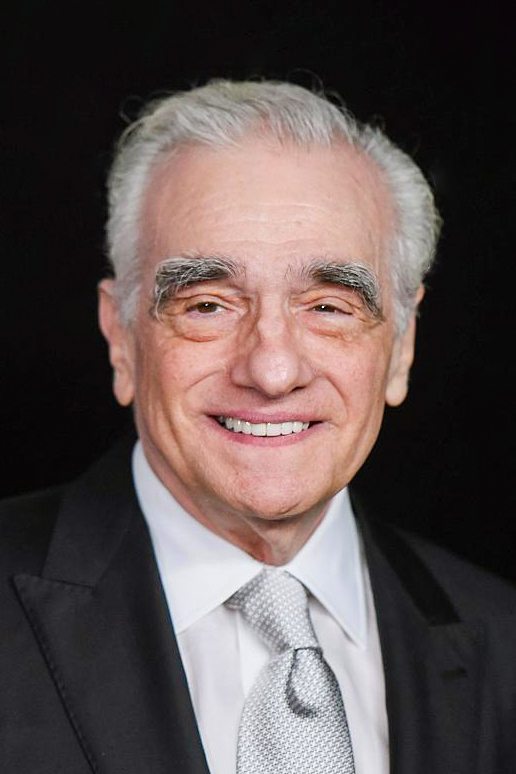
Martin Scorsese
Martin Charles Scorsese (/skɔːrˈsɛsi/ skor-SESS-ee, Italian: [skorˈseːze, -se]; born November 17, 1942) is an American filmmaker. One of the major figures of the New Hollywood era, he has received many accolades, including an Academy Award, four BAFTA Awards, three Emmy Awards, a Grammy Award, and three Golden Globe Awards. He has been honoured with the AFI Life Achievement Award in 1997, the Film Society of Lincoln Center tribute in 1998, the Kennedy Center Honor in 2007, the Cecil B. DeMille A...
Films Analyzed
Splooshies wins
1 award on FYR PodcastTheme Analysis
The recurring motifs and narrative DNA of Martin Scorsese's filmography.
Cinematography
Long ass movies
New York
Voiceover as an effective storytelling tool
Scorsese Bingo: Freeze Frames, Slow Mo, Split Diopter, Tracking Shots, Extreme Closeups
Throwback films
Marty cameo!
Walking the tightrope when depicting morally compromised characters in a way that doesn't condone their actions while also keeping them interesting as protagonists.
Conflicted protagonists who are charming and righteous in their cause, they really believe what they're doing is right
Commentary on World
Challenging protagonists who are ethically and morally flawed yet human and layered
The minutia of large scale operations presented as an entry point into our characters' world and lifestyle
Historical retelling of real events
Powerful cabals and the inner workings of absolute power
Living by a specific code of conduct
Violence as the means to resolve conflict
The toll of keeping necessary secrets from the people you love
The idea that sooner or later our sins catch up with us and sooner or later you learn that crime doesn't pay
Narrating
crime/gangster drama
Religion or religious overviews, sacrifice, temptation and the seduction of good by evil
The struggle to be spiritual in a materialistic world
Catholic guilt (or just guilt) revealing itself through self-flagellation/self harm (mental or physical)
Catholic guilt. That's a big one
Analyzed Episodes
5 TotalDirector Trivia
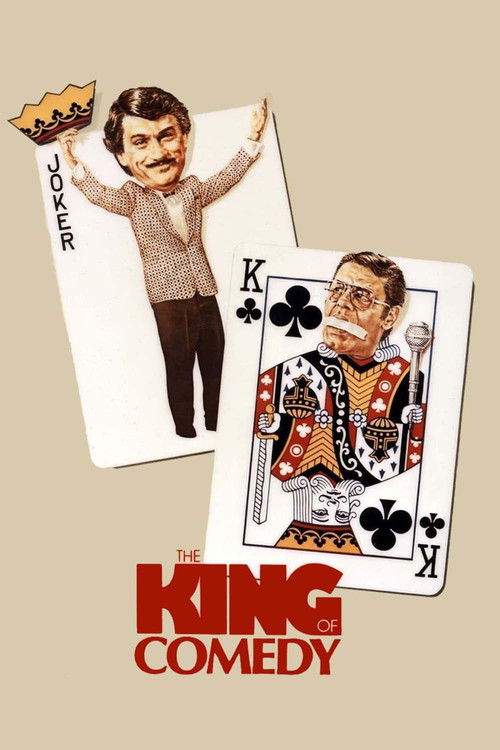
1984 Winner BAFTA Film Award Best Screenplay - Original Paul D. Zimmerman
Martin Scorsese has said that he thought Robert De Niro's best performance under his direction was in this film.
Robert De Niro used anti-Semitic remarks to anger Jerry Lewis while filming the scene where Rupert Pupkin crashes Jerry Langford's country home. Lewis, who had never worked with method actors, was shocked and appalled, but delivered an extremely credible performance.
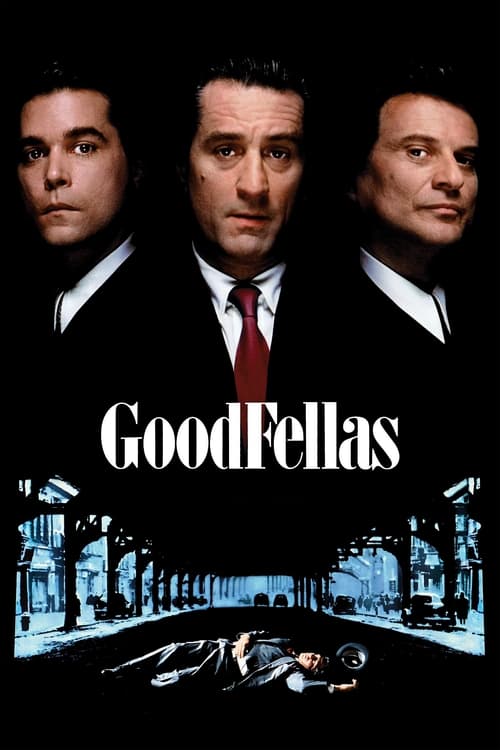
Martin Scorsese first got wind of Nicholas Pileggi's book "Wiseguy" when he was handed the galley proofs. Although Scorsese had sworn off making another gangster movie, he immediately cold-called the writer and told him; "I've been waiting for this book my entire life." Pileggi replied; "I've been waiting for this phone call my entire life."
The "How am I funny?" scene is based on something that actually happened to Joe Pesci. While working in a restaurant, a young Pesci apparently told a mobster that he was funny, a compliment that was met with a less-than-enthusiastic response. Pesci relayed the anecdote to Martin Scorsese, who decided to include it in the film. Scorsese didn't include the scene in the shooting script, so that Pesci and Ray Liotta's interactions would elicit genuinely surprised reactions from the supporting cast.
In The Real Goodfella (2006), which aired in the UK, Henry Hill claimed that Robert De Niro would phone him seven to eight times a day to discuss certain things about Jimmy's character, such as how Jimmy would hold his cigarette.
Ray Liotta's mother died of cancer during filming. Liotta says that he used his anger over losing his mother for certain scenes, the pistol-whipping scene in particular.
According to Ray Liotta, Martin Scorsese was so involved in every detail of the cast's wardrobe that he tied Liotta's tie himself to make sure it was accurate for the film's setting.
Al Pacino was offered the role of Jimmy Conway. He turned it down due to fears of typecasting. The same year, Pacino ended up playing an even more stereotyped gangster, Big Boy Caprice, in Dick Tracy (1990). He admits regretting the decision.
After Joe Pesci's mother saw the film, she told him the movie was good, then asked him if he had to curse so much.
The film, told from Henry Hill's perspective, portrays him as a major player in the world of organized crime. Real-life gangsters of that era have said that Hill was a minor figure, and more of a hanger-on like most of the other guys who took part in the Lufthansa heist (apart from Jimmy Burke, who was an important Mafia associate).
Henry states that he and Jimmy could never be "made", because they weren't of full Italian descent. That rule was changed in 2000 by the Commission (the five New York City families). A man can now be "made" if his father is of Italian descent, and his last name is Italian. That would still exclude Henry and Jimmy; Henry's father in the film was Irish, and Jimmy's surname is not Italian.
Lorraine Bracco found the shoot emotionally difficult because it was such a male-dominated cast. She realized if she didn't make her "work important, it would probably end up on the cutting room floor."
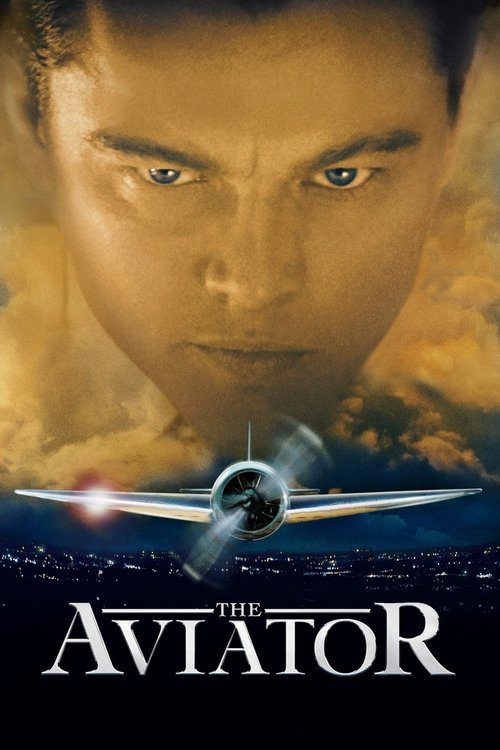
Received the most Academy Award nominations for 2005, with eleven total.
Director Martin Scorsese requested that Cate Blanchett watch the first fifteen movies of Katharine Hepburn, to learn her mannerism and her poise.
Also in preparation for his role as Howard Hughes, Leonardo DiCaprio spent some time with an O.C.D. patient named Edward. He advised him on several different aspects of the condition, in particular, the tendency to repeat sentences over and over, as in the scene where Hughes repeatedly asks to see the blueprints for the Hercules.
Cate Blanchett's portrayal of Katharine Hepburn makes her the first performer to win an Oscar for playing a real-life Oscar winner (Hepburn won a record four).
The Marvel Comics character Tony Stark AKA Ironman, portrayed famously by Robert Downey Jr. in the Marvel Cinematic Universe, was based heavily on Howard Hughes.
Cate Blanchett felt that accurately reproducing Katharine Hepburn's distinctive upper class New Englander accent was crucial to her portrayal of this Hollywood icon. She did daily voice exercises with voice coach Tim Monich (with whom Blanchett had worked previously on The Talented Mr. Ripley (1999)), and also studied Hepburn's early movies and documentaries about her to learn her mannerisms.
Christopher Nolan intended to make a film on Howard Hughes starring Jim Carrey, and spent a year researching and writing a screenplay. The day after he completed the screenplay he received word that this film was announced as Martin Scorsese's next project, making his own film unfeasible for a production greenlight. Nolan later admitted that he was so disappointed by that that he has never been able to watch The Aviator.
Juan Trippe hated his first name and strongly preferred being addressed by his middle name, Terry.
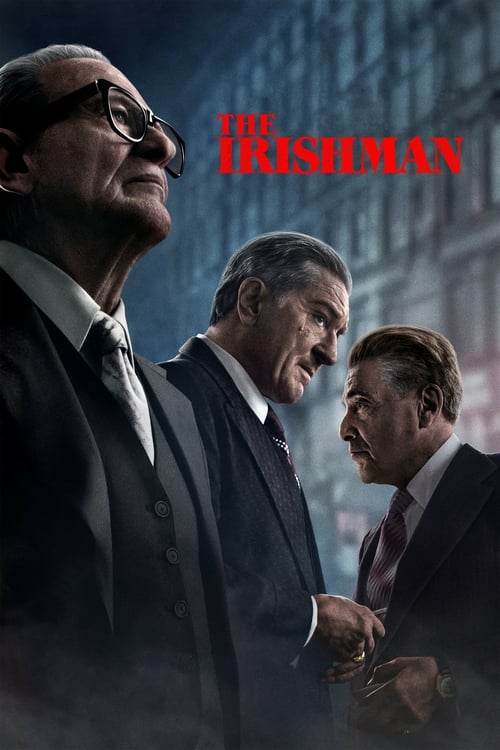
Scorsese has said that a unique 'posture coach' - uncredited Gary Tacon - was on set for much of the shoot to monitor the physicality of the older stars portraying themselves as younger men.
The house that appears at the beginning of the film is the same house that appears in Goodfellas (1990).
According to Deadline, before accepting the role of Russell Bufalino, Joe Pesci refused multiple times to come out of retirement in order to appear in this film. Some sources say the actual number of refusals was fifty.
Martin Scorsese has said that he couldn't get a Hollywood studio to back his epic mob movie, claiming nobody was interested in making a film with him and Robert De Niro anymore. Fortunately Netflix CEO Ted Sarandos ultimately stepped behind the production with a proposed budget of $160 million and the film was finally greenlit.
This is the second movie directed by Martin Scorsese to receive 10 Academy Award nominations, and not win in any category. The first one is Gangs of New York (2002).
This is the ninth feature film collaboration between actor Robert De Niro and director Martin Scorsese, with their prior films being: Mean Streets (1973), Taxi Driver (1976), New York, New York (1977), Raging Bull (1980), The King of Comedy (1982), Goodfellas (1990), Cape Fear (1991), and Casino (1995).
Spike Lee was known for his love of jazz music and innovative use of modern music during his career. Also all of his films being considered as “Spike Lee Joint” - ANDRE